

 SHARE:
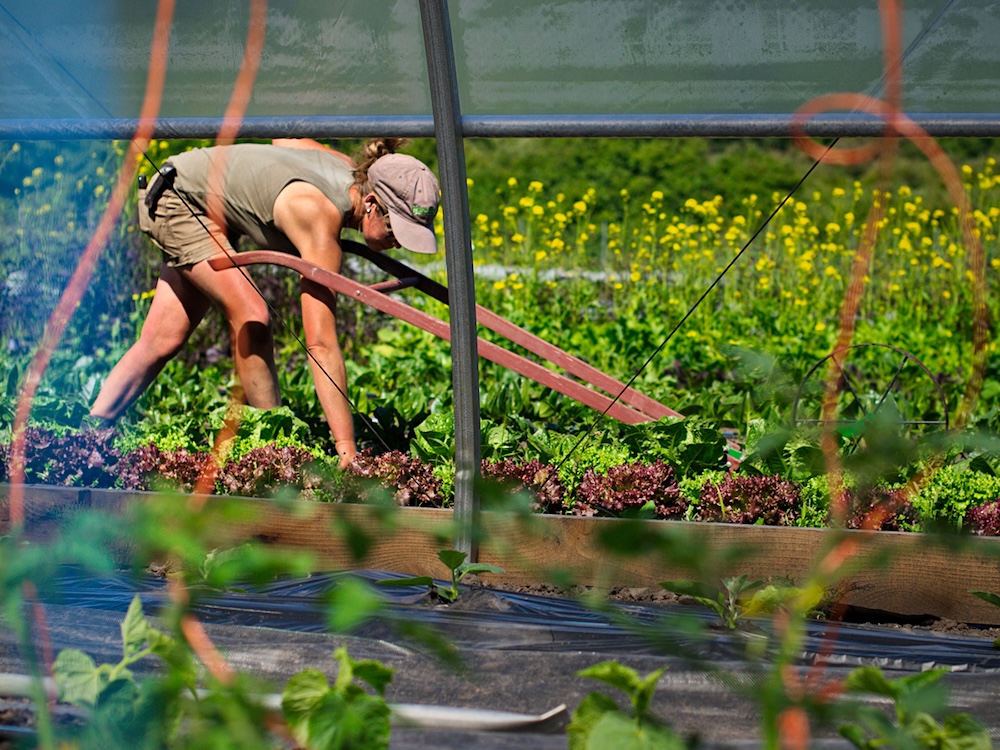
Farmers across the spectrum in B.C. are in trouble. Young, old; small, large; organic, conventional. Established farmers are struggling to pass on their farms, and new farmers are struggling to enter — and stay in — the game.
Yet the next generation of farmers — passionate, hard-working people who truly want to do this work — is out there.
How do I know this? Because I’m part of that next generation. I’m a 37-year-old woman who got into farming in my early 20s. I’ve been farming small-scale, certified organic mixed vegetables for over 15 years now — a mix of seasonal positions and running my own farm on leased land, to now, where I’m the year-round farm manager of an established farm.
I found farming when I was studying environmental studies and took a summer job at a local organic vegetable farm. As I was getting increasingly concerned with the state of our natural world, I found in farming a passion and purpose that captured me wholly. It was challenging and engaging for both body and mind.
After university I decided to dedicate myself to farming, convinced it was the career for me. I didn’t come from a farming family or have access to land, but I had grit and a proven ability to work hard.
And while my passion for farming hasn’t ebbed and the need for farmers has not decreased, I’ve found myself considering a change of career.
The economics of farming aren’t working out for me. This is not the fault of the farmers I’ve worked for, or my own work ethic. Rather, this is the result of working in an economically challenging industry with razor-thin profit margins and high operating expenses. I’ve yet to make a wage — while self-employed or otherwise — that would allow me to save adequately for retirement or other financial goals I’d like to be working towards. And I’m certainly no closer to making the kind of wage where I can afford to buy farmland in B.C., which would let me claim a small amount of stability in the highly unstable business of farming.
Farmers everywhere are facing increasing challenges: drought, dwindling water sources, extreme weather events like wildfires and flooding brought on by climate change, shaky geopolitics that bring supply chain disruptions (or worse), and skyrocketing costs of production. On top of all these things, B.C. also has some of the highest-priced farmland in North America — according to a report by FarmFolk CityFolk, “the average cost of farmland in southern B.C. is the most expensive in Canada.”
The economics of farming are getting harder to make work for many reasons for all farmers, but far and away the biggest reason in B.C. is the cost of farmland itself — and this disproportionately affects new or young entrants into agriculture.
There are fewer farmers in B.C., and they’re aging. According to Statistics Canada, the number of B.C. farms in the 2021 census was 15,841 — down 9.6 per cent, or 1,687 farms — since 2016. From 2011 to 2016 the number of B.C. farms declined 11.3 per cent. The average age of farm operators has gone from 56.3 in 2016 to 57.8 in 2021.
What all of this means is that as farmers age out and retire (most farmers cannot afford to retire without selling their land at market cost), their land, businesses and expertise are not being passed to the next generation of farmers. This is not because there aren’t people out there who want to farm.
With B.C.’s successful farm operators making a top-end salary of about $50,000 to $80,000 (though wages vary), a farming income can no longer come close to paying a mortgage on farmland in B.C. According to Farm Credit Canada, farming is not financially viable when the cost of farmland exceeds $80,000 an acre, particularly in southern B.C. A five-acre farm down the road from me just went up for sale for $2.4 million — nearly $500,000 an acre.
In short: Farmers can’t afford to buy farmland.
B.C. tried to safeguard against this exact issue with the creation of the Agricultural Land Reserve in 1973. The ALR was created to protect farmland — and B.C.’s food security — forever. However, the ALR has proven insufficient for the task at hand.
While the ALR has slowed development on farmland, the land base within it has been steadily eroded by pro-development municipalities. Land within the ALR is often valued as highly as non-ALR land due to desirable locations. Despite the fact that ALR land comes with strict development restrictions, it still appreciates mightily in value over time and is therefore a good financial investment for those who can afford it. And those who can afford it are, increasingly, not farmers.
Time for big changes to the ALR
To stop the not-so-slow bleed of farmers out of agriculture and keep farms in B.C. profitable and operational for the long haul, we are going to have to change how we think of and manage farmland and challenge the dominant paradigm around private land ownership when it comes to farms.
This isn’t just a question of wanting to preserve a pleasant agrarian ideal from the past. It’s about feeding ourselves in an increasingly unstable world.
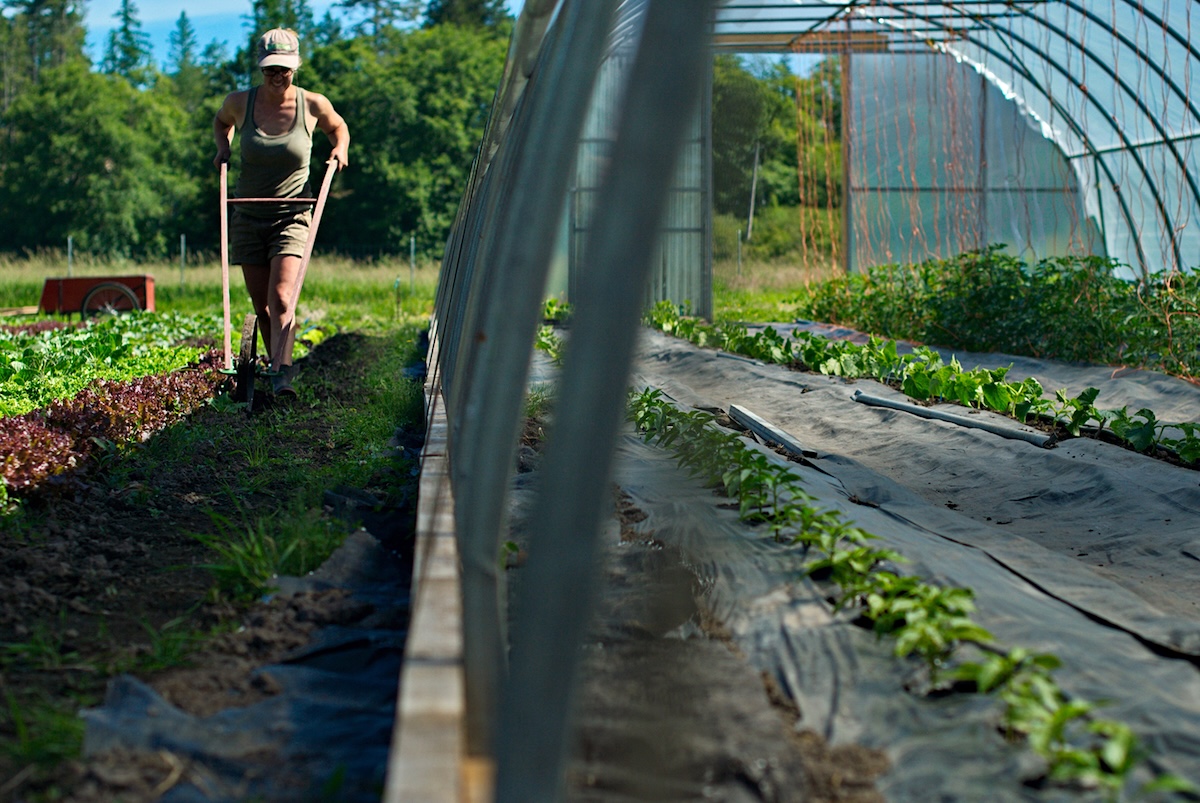
One intriguing concept comes from farmer and activist Stephanie Wang from Quebec. Wang proposes something called perennial farms, where the land and infrastructure needed to farm aren’t owned by individuals. Instead, the land and infrastructure are owned by the communities where they’re located, and treated more like a hospital or school — with farmers covering the operating expenses of their businesses but not being required to purchase the land or costly permanent infrastructure.
Wang argues that to properly protect farmland and soil health, these farms would be required to operate in a sustainable, agro-ecological way to be of the most benefit to their communities. In this way, farmers would be true land stewards and food providers where they live and operate, without being shackled with the nearly impossible-to-manage debt that purchasing farmland brings.
The concept of perennial farms is similar to that of farmland trusts, which hold farmland “in trust” and then offer long-term leases to farmers. Farmland trusts operate in many places across North America, such as at Lohbrunner Community Farm in Langford, B.C. Farmland trusts are an excellent tool for alternative land management, but they are still vulnerable — they’re only as strong as the organization that runs them.
Perennial farms, in contrast, would be owned and funded by the local communities where they’re located, and any incoming government would be legally mandated to keep them operational. This would give local farms, like our local schools and hospitals, a measure of permanency and resiliency sorely needed in agriculture.
Seeding for the future
This spring, I have been starting thousands of vegetable seedlings each week, doing machinery maintenance, training our seasonal farm crew, spreading compost and preparing land for planting. I’m excited. I love this time of year.
But I’m also uncertain what will come next, as I’m slated to return to school in the fall to diversify my career options. Because I’m no longer sure I can make a viable career out of farming. I certainly know I won’t be able to purchase farmland — ever — by farming alone.
And while my departure won’t leave that big of a hole in the agricultural fabric of the province, I worry because I’m unwillingly part of a concerning trend.
In Pemberton Valley, where I currently live and farm, we are losing two established farms this year alone. One certified organic mixed vegetable operation that lost its land lease, and another, conventional potato, carrot and beet farm where the kids can’t afford to buy out their parents. While the scenarios look different, the ultimate reason behind both of these farms shuttering has to do with land prices, and the inability of the farmers to secure affordable, stable land access.
If we care about agriculture and food in B.C., and supporting the farmers who do this important work, perhaps we need to take a good hard look at how we treat and value farmland.
Perhaps it’s time we advocate to our government to treat our farms as we do our hospitals and schools.
Perhaps it’s time to start taking the land itself — the single most important part of a farm after the farmers — out of B.C.’s highly inflated speculative real estate market before it’s too late, and we lose even more of the people with the knowledge, skills and passion to farm our land and grow our food. ![[Tyee]](/design-article.thetyee.ca/ui/img/yellowblob.png)
Read more: Food, Environment





Tyee Commenting Guidelines
Please note that email notifications for replies are not currently working due to a software issue which may be resolved in a future update.
Comments that violate guidelines risk being deleted, and violations may result in a temporary or permanent user ban. Maintain the spirit of good conversation to stay in the discussion and be patient with moderators. Comments are reviewed regularly but not in real time.
Do:
Do not: