


 SHARE:
Years ago, I was at a political science conference where the after-dinner speaker gave a history of electoral boundary processes in Canada. It was boring. It was so boring that I remember it 20 years later. It was so boring, it was an out-of-body experience.
This is a good thing! You know a democracy is stable when the rules governing electoral competition are well-intentioned, non-partisan and so widely accepted that no one feels the need to pay close attention.
Sadly, there’s nothing boring about electoral boundaries in Alberta right now.
We had a bipartisan boundaries commission. The chair (a retired judge) and the two NDP-appointed commissioners wrote a majority report that did a pretty good job of balancing the legitimate need for rural representation against the need to represent rapidly growing cities.
But this compromise involved reducing the number of rural districts by two, because the legislature only allowed the commission to add two new seats.
The two UCP-appointed commissioners, who were unwilling to accept the loss of rural seats, wrote a minority report that the majority rejected.
The majority report offered a devastating critique of the minority report, dismissing it as unconstitutional gerrymandering.
But the chair of the commission also went solo to suggest that, if the government couldn’t bring itself to adopt the majority report, it should add two more seats and then have a legislative committee draw a map that would “restore the two electoral divisions that this Commission has removed.”
“The rest of the province as we propose must be maintained to the extent possible. This would need to be studied by an all-party Select Special Committee or other equivalent Legislative Committee in accordance with its Standing Orders.”
The Smith government is now going to create a legislative committee (with a UCP majority) that will create a new advisory group that looks a lot like a boundaries commission. Let’s just call it the “commissionette.”
The commissionette is going to spend the summer and early fall poring through the work of the commission and will propose a new map to the legislative committee. Sorry, no time for public hearings! No time for anyone to look at the map and comment!
I suppose it is possible that this process is going to yield a fair map. But I fear that the more likely outcome is a map that attempts to cement the UCP’s dominance by further over-representing rural electoral districts and under-representing urban ones.
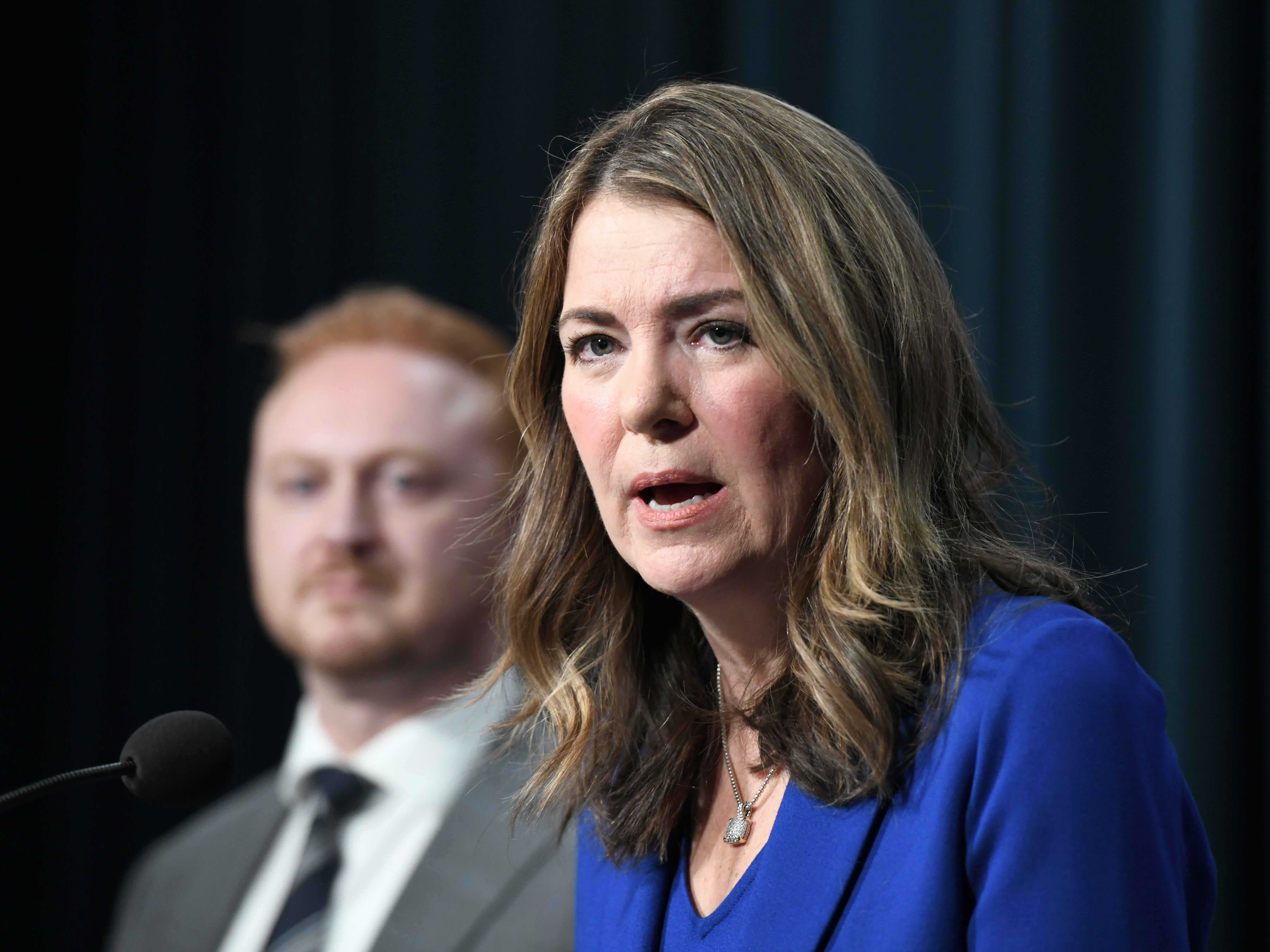
Premier Danielle Smith tipped her hand on her Saturday radio show when she stated (incorrectly) that the retired judge who had chaired the commission raised the possibility of using voters, rather than residents, as the basis for drawing boundaries.
It wasn’t the chair, but rather the two UCP appointees who suggested this, in their minority report. The majority report is quite clear — Alberta’s legislation governing boundaries directs the commission to take into consideration population, not number of eligible voters.
“We must be sensitive to the fact that electoral divisions that have a significant number of non-voters are often those with a large number of individuals who have recently immigrated to Canada and are not yet citizens,” the commission found. “It can be challenging to represent those electoral divisions… Further, constituencies with large numbers of minors may place additional demands on an elected representative in their ombudsman role to represent constituents. Indeed, this underscores why effective representation, rather than strict voter parity, is the lodestar of this commission’s mandate.
When the Smith government passed legislation in 2024 to increase the number of seats in the legislature, it could have increased to 91, not 89. It could have established that voters, not population, should be a primary consideration in defining “effective representation.”
But it did not. And now, with just 18 months until the scheduled provincial election, the government is proposing a do-over because the commission’s proposal isn’t to its liking.
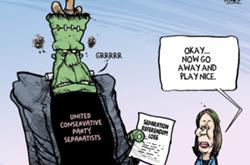
We have seen the government change the rules on the fly when the separatist movement demands it: lower the number of required signatures, do away with the Chief Electoral Officer’s ability to refer petitions to the courts to ensure they are constitutional. Now we appear to be seeing a similar effort when it comes to electoral boundaries.
The similarity between the much-reformed legislation governing citizen initiatives and what’s going on with electoral boundaries isn’t just legislating on the fly.
Rather, both appear to be motivated by a desire to ensure a particular outcome. In both cases, the viewpoint of conservative rural Albertans is protected while the perspectives of city dwellers and newcomers to the province are dismissed as unimportant or even illegitimate.
With stakes this high, it’s hard to imagine electoral boundaries in Alberta becoming boring any time soon. ![[Tyee]](/design-article.thetyee.ca/ui/img/yellowblob.png)
Read more: Alberta





Tyee Commenting Guidelines
Please note that email notifications for replies are not currently working due to a software issue which may be resolved in a future update.
Comments that violate guidelines risk being deleted, and violations may result in a temporary or permanent user ban. Maintain the spirit of good conversation to stay in the discussion and be patient with moderators. Comments are reviewed regularly but not in real time.
Do:
Do not: