


 SHARE:

I turned 22 years old on March 9, 2025, the day that Mark Carney won the Liberal leadership contest to replace Justin Trudeau.
I got a job with the NDP the same week and took my first ever trip to Ottawa on March 23 as the writ dropped for the federal election.
Two weeks later, I was proclaimed the NDP candidate for Etobicoke Centre, a suburban Ontario riding I have never lived in.
Given Etobicoke’s extensive Liberal-Conservative electoral record, it was low on the party’s priority list, alongside about half of the country. These ridings all got the same treatment: last-minute, name-on-the-ballot parachute candidates, many of whom were NDP staffers.
Don’t campaign — don’t reply to voters’ emails or media requests, my managers instructed. It would risk muddling national campaign messaging.
I disobeyed, of course.
I stayed up late doing my research and writing back, about Palestine, housing policy, bike lanes and more.
I guess it started then, my path to NDP insider defiance.
For most of my life, I had no faith in what politics or governments could do to help. My working-class immigrant parents always paid too much in taxes while never qualifying for benefits or services, struggling to put food on the table.
I long stuck to non-partisan mutual aid work, soup kitchens and food banks.
I only interacted with politicians when protesting them for failing us.
I’ve since changed my mind, evidently.
I’ve met amazing advocates under the NDP umbrella who showed me that faith and hard work can make impossible things come true: stronger health care, dental care, pharmacare, stronger workers’ rights and making strides towards equity, justice and reconciliation.
Though many voters today feel that the NDP is not a viable political option for them, it can become the party to advocate for everyday Canadians’ interests — especially given the current Liberal government’s swing to the right with increased corporate welfare, government overreach and climate destruction, all funded off our backs.
But to achieve this, I believe the NDP needs to make a decisive move away from leader-centric politics and allow for a new kind of politics to emerge.
One that might just motivate the very people who are the most affected by the shortcomings of politics to get involved.
To stop looking for a Canadian Zohran Mamdani — a charismatic American municipal mayor — or any one saviour, especially given how white and privileged our options are in the ongoing NDP leadership race, save one exception.
I say all this while supporting one leadership candidate not to contradict myself, but to make a case for what I hope we can all agree on as concerned, progressive Canadians: the NDP leadership race is just one component of the work ahead.
Can a federal party move away from leader-centric politics?
Our current reality, where people work multiple jobs to barely afford to live, means we have no time, resources or capacity to organize politically. The jobs that do afford breathing room often come with implicit or explicit conditions of non-partisanship.
So, only those with enough to spare ever make a foray into politics themselves.
With no time in our daily schedules to delve into political details, we seek a quick and dirty way to differentiate our ballot choices: boil it down to who I want for prime minister, thanks.
A role like federal party leader, then, is the result.
Resources can be pooled into one person to represent a political identity. One person to live and breathe being the shorthand for that party, to be paid for it.
We love or hate them, maybe give some money, vote and get back to work.
Leaders come and go, and party support consequently fluctuates greatly. We know this, given how quickly Canadians re-favoured the Liberals following the Trudeau-Carney switch and Trump-Poilievre scare.
I argue that the NDP can break out of this mold. What’s more, it’s already happening.
Reclaim and Renewal
With leadership candidates Tony McQuail and Tanille Johnston making history by mutually pausing each other’s campaigns as needed for the other to meet fundraising deadlines, it’s undeniable that there’s something new in the air.
A bubbling desire of the masses for bold, unprecedented change, perhaps.
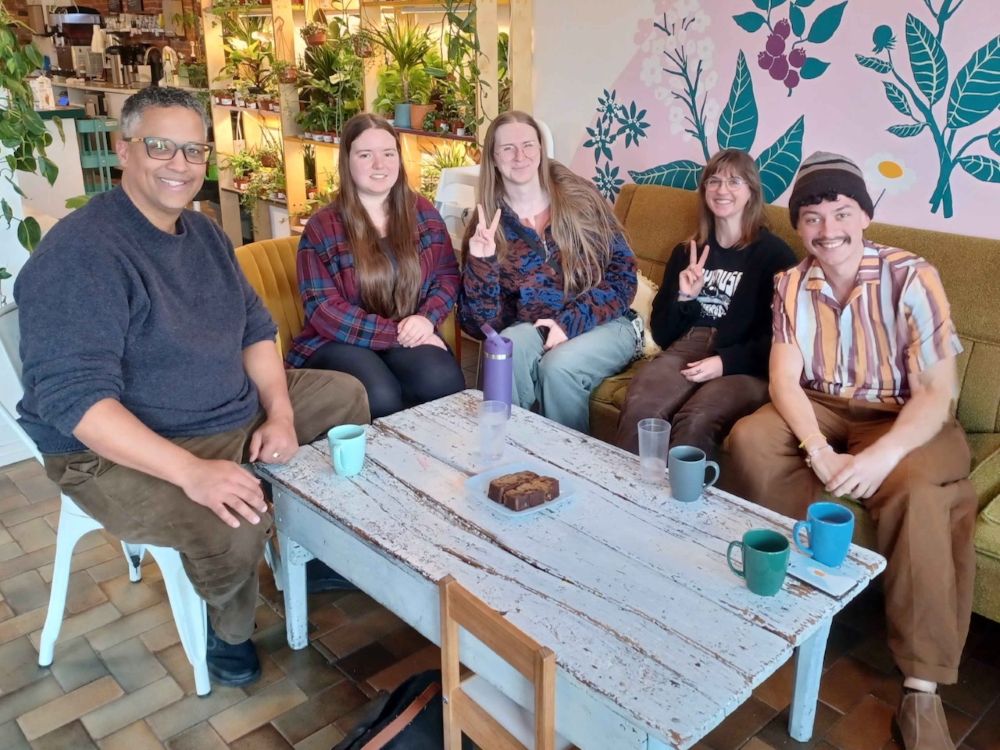
The Reclaim Canada’s NDP movement, started by a group of us — former candidates, staff and MPs — aims to reclaim the party from its upper management by rebuilding the party’s on-the-ground presence in reinvigorating its local branches, Electoral District Associations, into community hubs that offer information, resources and helping hands.
Reclaim Canada’s NDP has since grown to nearly a thousand members across the country and dozens of EDAs, and hosted several virtual and in-person events featuring former and sitting NDP MPs like Gord Johns, Leah Gazan, Lisa Marie Barron, Blake Desjarlais and Bonita Zarrillo, welcoming hundreds of attendees.
Des Bissonnette, co-chair of the NDP’s Indigenous People’s Commission and 2021 candidate for Lakeland, spoke at Reclaim’s Alberta Town Hall about how her EDA started a free community fridge initiative, for example.
Then there’s the NDP Renewal project. Launched by former NDP MP Peter Julian alongside former NDP MP Matthew Green and activist Doris Mah, Renewal aims to reignite the progressive movement across Canada through grassroots dialogue.
NDP Renewal has organized several in-person and virtual community engagements in both English and French. One of the recent sessions involved NDP MP Alexandre Boulerice and Nimâ Machouf, a former candidate and co-president of the NDP’s Quebec section. The group is now preparing a package of proposals for the NDP’s future based on the input of tens of thousands of people.
It’s notable that both Reclaim and Renewal have been able to grow so much, given that they are entirely volunteer-run and funded — and firmly committed to remaining neutral in the ongoing leadership race.
A choice to organize outside of one leader should be antithetical to political norms, yet it’s resonating. Could it mean that change is here?
The road to Winnipeg
The NDP’s next national convention, running from March 27-29, will be the real test.
It operates on a delegate system, though access is guarded with bureaucracy, a substantial registration price tag, time off work and travel/accommodation costs.
Road trips, group bookings and couchsurfing will be our best friends, seriously.
Once we’re there, we’ll motion and debate and vote on the NDP’s path forward, maybe about whether the party should end its interception of Elections Canada local campaign expense rebates or how the party can address issues of internal racism and sexism.
Then, we’ll elect a federal council that represents us in making decisions for the party. The NDP has democratic systems, however much the scales are tipped.
It’s not perfect, but it’s what we’ve got.
I hope I see you there.
Let’s do whatever it takes to get our voices heard, bring forward the changes we want to see and come back swinging in the next election. ![[Tyee]](/design-article.thetyee.ca/ui/img/yellowblob.png)
Read more: Federal Politics








Notice about commenting changes
The Tyee’s commenting system will be moving to a new platform on Nov. 12. If you’re already a Tyee commenter you must register with the new system on or after Nov. 12 with your preferred username.More information can be found here.