


 SHARE:
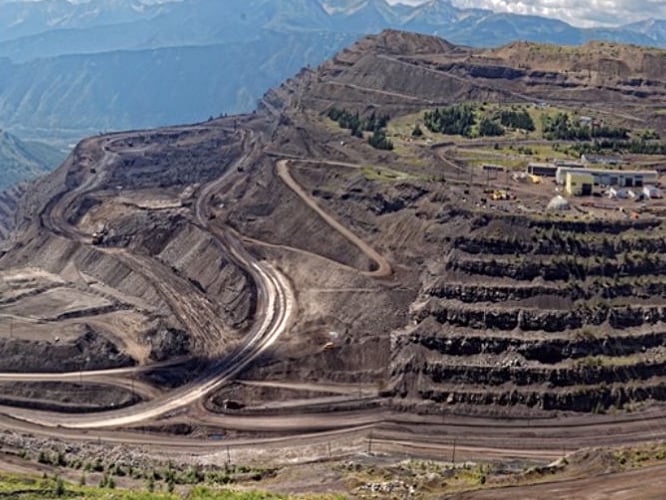
Grassy Mountain is a defunct coal strip mine trying, like a phoenix, to rise from the rubble on the eastern slopes of Alberta’s Rockies.
The mine is owned by Northback Holdings Corp., part of Australian billionaire Gina Rinehart’s business empire.
Rinehart knows well the time-tested technique of “Heads you win, tails we flip again” for keeping her dream of a mine alive.
This time the project in southwestern Alberta’s Crowsnest Pass region is being described as a “new, improved” mine.
As you might remember, the “old” proposal, which seems very similar to this one, failed the test of a joint federal-provincial review. The reasons for the panel’s rejection were not trivial.
According to Northback, this new flip is the answer to all the issues of selenium contamination, high water use, impacts to a threatened cutthroat trout population and reclamation of a hole where a mountain once stood. All this with glib promises of economic development. Selenium, released during mining, becomes increasingly concentrated in the tissues of organisms as it moves up the food chain and leads to fish deformities and reproductive failure in exposed fish communities.
In an artful effort to distinguish this proposal from the previous one there are some cosmetic changes to alleviate concerns. Allegedly, a smaller footprint, complete control of runoff, a multi-stage attempt to control selenium and complete reclamation of all of the footprint of mining, both old scars and new.
Too good to be true, you say? A classic attempt to put lipstick on a pig? The promotional hype is laudatory, but the detailed mine plans are still secret.
But to the promoters of a coal mine, facts are not essential — although sometimes they are useful.
The idea that shrinking the mine footprint by 40 per cent and the amount of rock moved by 50 per cent represents a major reduction in environmental impacts on water quality, hydrology and biodiversity requires more than just basic, back-of-the-envelope math. A smaller footprint does not directly equate to reduced impacts.
Mine footprint reductions are often used as a dodge to avoid federal government involvement. Once approved, a piecemeal approach is then used to expand the mine. If this reduction in mine size is legitimate, wouldn’t that translate into fewer jobs, a less rosy economic picture, shorter mine life and a reduced appetite for effective reclamation as well as legacy site management?
Mining requires the blasting and dumping of rock overburden. Rocks don’t just levitate, waiting to fall back into the hole created. “Progressive reclamation” sounds positive, but the logistics of filling in a hole as you are digging it justifies skepticism.
If overburden isn’t going to be placed in the Gold Creek watershed, then will it be dumped into Blairmore Creek or into Daisy Creek? Both contain cutthroat trout.
The idea of “mixed rock pile reconfiguration” as some kind of selenium reduction seems dubious. In reality this just means the rock overburden and coal waste will be “layered” — the former top will be at the bottom and the former bottom will be at the top. That this would “seal” the selenium from exposure to air and mobilization by water is, at present, theoretical.
This is all predicated on some novel, untested, unproven ways of dealing with the inevitable leaching of selenium and other toxic materials from the rock overburden. No other mines, despite costly attempts to reduce selenium to levels safe for aquatic life, have succeeded, and the downstream impacts remain.
It might be well to remember that selenium from legacy mines in the Crowsnest Pass, including Grassy Mountain, already negatively affect fish populations.
Alberta Premier Danielle Smith, Energy Minister Brian Jean and Environment Minister Rebecca Schulz have been talking about the government’s selenium prevention policy and the zero “discharge standard for selenium” for new coal mines since December 2024.
But prevention means zero. It doesn’t mean retaining 95, 98 or 99 per cent of the selenium generated from mining. It doesn’t mean using existing and failing practices in the hopes of getting to zero. It means zero — none, nil, nothing, never, no way to any addition to streams.
It’s not clear from Northback’s promotional materials if the Alberta Energy Regulator has informed the company that its planned application for a new mine at Grassy Mountain must comply with these new standards. These would have to include proven (not speculative) technologies to remove all the selenium (zero addition) before a mine could be approved. This is unlikely to occur.
Hidden in the smoke of promotional hype is runoff management.
Northback suggests that somehow any water running off mined areas will be controlled. An image of a gigantic wall surrounding the proposed mine springs to mind. What could go wrong in attempting to manage runoff in topographically challenging terrain with more wicked weather events? Lots!
Northback contends that there will be no water withdrawal from streams and that their entire water requirement will be met from water collected on site. Where does Northback think the water flowing in a stream comes from? If you siphon off the runoff from Grassy Mountain, this is a withdrawal from Gold and Blairmore creeks. In effect, it is drying up streams at their source.
Northback’s mine promotion is a classic case of overpromise and underdeliver. Like smoke, it seems substantial until you review the promises.
For all intents and purposes, Northback’s latest flip is still the same old derelict car. It just has a shiny new paint job. Don’t buy it! ![[Tyee]](/design-article.thetyee.ca/ui/img/yellowblob.png)
Read more: Alberta, Environment









Notice about commenting changes
The Tyee’s commenting system will be moving to a new platform on Nov. 12. If you’re already a Tyee commenter you must register with the new system on or after Nov. 12 with your preferred username.More information can be found here.