


 SHARE:
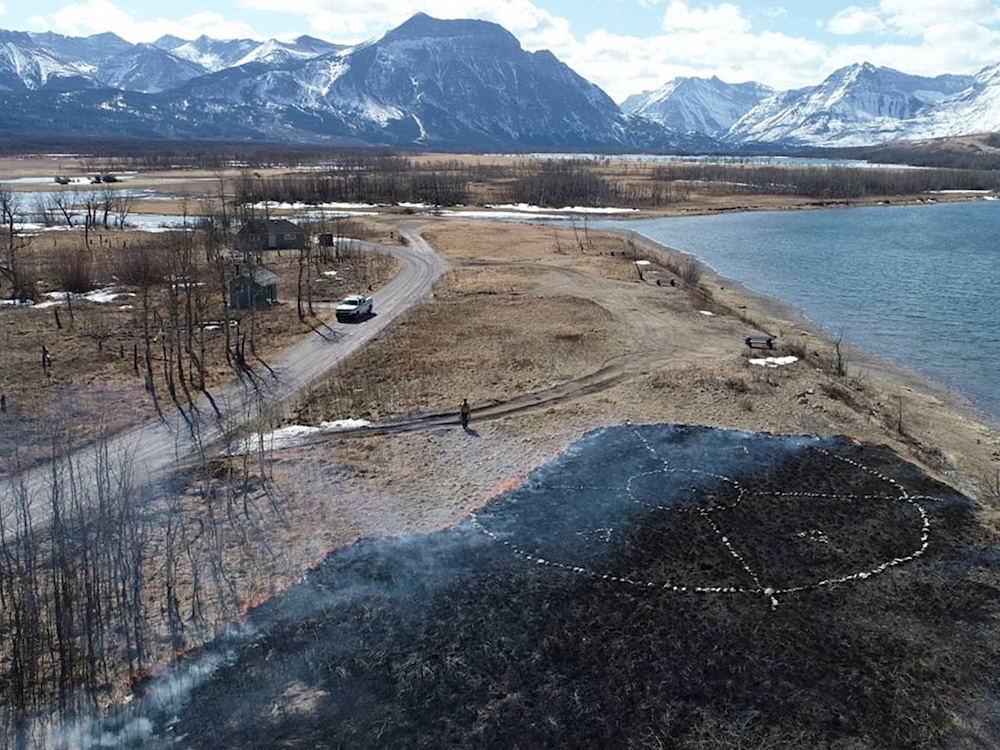
The biggest comprehensive literature review to date has confirmed that Indigenous stewardship bolsters conservation goals.
The literature review was published recently in People and Nature and found “a clear, positive relationship” between conservation and Indigenous stewardship, said lead author William Nikolakis, associate professor at the University of British Columbia faculty of forestry and environmental stewardship.
“The evidence is clear that Indigenous Peoples’ lands do deliver conservation outcomes that are superior to, or at least equal to, state-run protected areas,” he told The Tyee.
This is despite Indigenous lands largely not being protected by or formally recognized by their country, and Indigenous Peoples around the world largely not being paid for their stewardship by the state, Nikolakis said.
In Canada, the federal government helps fund Indigenous Guardians who steward their traditional lands.
Indigenous stewardship has a “value to humankind globally,” he said, and there’s an opportunity to boost it even further.
A little over three-fifths of the articles in Nikolakis’s literature review recommended strengthening the tenure for Indigenous lands or recognizing and safeguarding the exclusive rights of Indigenous Peoples to occupy them; providing resources for Indigenous Peoples to steward their lands effectively; and/or supporting their governance.
“There’s a real need to safeguard these lands,” Nikolakis said, and that need extends to non-Indigenous people.
“If we’re going to be serious about the climate crisis and the biodiversity crisis, we’ve got a clear mechanism to support this by safeguarding Indigenous Peoples’ lands,” Nikolakis said.
In this study the word “Indigenous” generally refers to groups of people who created Earth-centred societies, “meaning they take their spirituality and religious foundations from the relationship to the Earth,” Garry Merkel (nadi’ denezā), co-author of the literature review and director of the Centre of Indigenous Land Stewardship at UBC, told The Tyee.
Merkel is Tahltan from northwest British Columbia.
Not all Indigenous people think the same, but people from Earth-centred societies tend to have a leg-up on being able to think about innovative and practical conservation solutions because their worldview understands all life to be equal and as having a right to be there, Merkel said.
“Our job is to try and figure out how do we fit in with the world, not how to try to control, shape and dominate the world,” he said.
That’s important when thinking about true conservation, rather than protection, which Merkel said can be another form of trying to control the landscape.
Conservation recognizes humans as part of the landscape and asks how we can “find our place in a good way,” Merkel said.
As an example, Nikolakis pointed to Indigenous fire stewardship in Canada, where First Nations used fire as a tool to mitigate wildfire and manage invasive species.
“You need these ecosystems to be actively managed and protected by people,” he said.
Indigenous fire management was suppressed for generations and even made illegal, but it is starting to make a comeback and today is supported by the federal government.
The literature review
The literature review found 343 studies published in English and then narrowed them down to 111 peer-reviewed studies — the bulk of which were published in the last decade and focused on the Amazon rainforest.
Three-quarters of the studies found Indigenous stewardship boosted forest cover, biodiversity and/or carbon storage.
Eight studies found conservation decreased on Indigenous lands. Reasons included less fertile land, or land with less water, lands that had a high intensity of use and lands that had inadequate resources for enforcing laws.
It was important to clearly lay out what the scientific literature said about Indigenous stewardship given rising anti-Indigenous misinformation, Nikolakis said.
A lot of this misinformation stems from a 2024 study published in Nature that debunked the common misconception that 80 per cent of biodiversity is concentrated on Indigenous lands around the world.
Bad-faith actors have used the Nature study to question Indigenous stewardship in its entirety, so it was important to look into what that stewardship was actually doing for conservation, Nikolakis said.
It’s also important to recognize how little land Indigenous Peoples have control over in B.C., he said, adding that he recently calculated only 0.4 per cent of land in B.C. is under the formal control of First Nations.
“That’s really insignificant compared to Crown land,” he said. “There seems to be this idea that Indigenous Peoples have a lot of land, that they get an overabundance of benefits and resources compared to non-Indigenous Peoples, and the facts show that isn’t the case. Working through that misinformation is critical.”
Merkel said he hopes more people can work on recognizing they are interconnected with the natural world around them and start to think about how they, and their society, could have a better relationship with the land.
It won’t happen overnight, and it’s not as if Indigenous Peoples were monks — “We live in this world, too, our kids love Nintendo and PlayStation and we like going to Starbucks,” Merkel said — but small shifts in thinking can eventually change the world, he added. ![[Tyee]](/design-article.thetyee.ca/ui/img/yellowblob.png)
Read more: Indigenous, Environment








Tyee Commenting Guidelines
Please note that email notifications for replies are not currently working due to a software issue which may be resolved in a future update.
Comments that violate guidelines risk being deleted, and violations may result in a temporary or permanent user ban. Maintain the spirit of good conversation to stay in the discussion and be patient with moderators. Comments are reviewed regularly but not in real time.
Do:
Do not: