


 SHARE:

In late January, a letter arrived at Rebecca MacIntosh’s home in Olds, a quiet agricultural town in southern Alberta. The letter said Synapse Data Center Inc., a global data centre developer, intended to build a “state-of-the-art” AI data centre a short walk from her doorstep.
Signed by Synapse’s CEO, Jason van Gaal, the letter introduced MacIntosh to a project that would include both an AI data centre and a natural gas plant, and encouraged residents to attend an open house led by the developer on Feb. 5.
Because the renderings attached to the letter showed a grey boxy building surrounded by parking, a structure as generic as every other warehouse in an industrial park, MacIntosh didn’t make much of it.
At the time, the millennial mom of three believed data centres were little more than warehouses for servers, like the facilities dedicated to cloud computing.
“My husband and I were drinking coffee and said, ‘Oh, I guess we’re going to have some warehouses beside our home,’” she said. “That was the full thought process.”
It wasn’t until Feb. 24, during a resident-led town hall, that MacIntosh grasped the magnitude of Synapse’s proposal.
“I’m sitting there hearing that one of the largest gas plants in Alberta could be going across the street from my house,” MacIntosh recalled. “It was flabbergastingly shocking.”
In fact, what Synapse had planned for the hamlet of 10,000 people would be the largest AI data centre of its kind in Canada, consuming as much electricity as used by the city of Edmonton.
And the massive facility would be equipped with backup diesel generators that would kick in if the primary gas turbines failed. As other towns hosting similar AI facilities have learned, the complexes can strain local water supplies and pose a health hazard by generating noise and air pollution.
Synapse didn’t respond to The Tyee’s request for comment.
Provincial and federal governments have rushed to support AI and its infrastructure, arguing Canada needs to support the technology for economic growth and digital sovereignty. Like MacIntosh, many Albertans across the province are not learning about the scale of these facilities until a proposal lands near them.
But now, Albertans across the province are starting to organize, demanding governments establish adequate regulations and provide sufficient information on the risks artificial intelligence and its outsized homes pose.
“In a representative democracy, decisions are often made by elected officials,” said Roberta Lexier, a professor at Calgary’s Mount Royal University whose research focuses on social movements. “But when we disagree with the decisions being made by those in power, we have the right to find other ways to ensure that our perspectives and our values are being represented.”
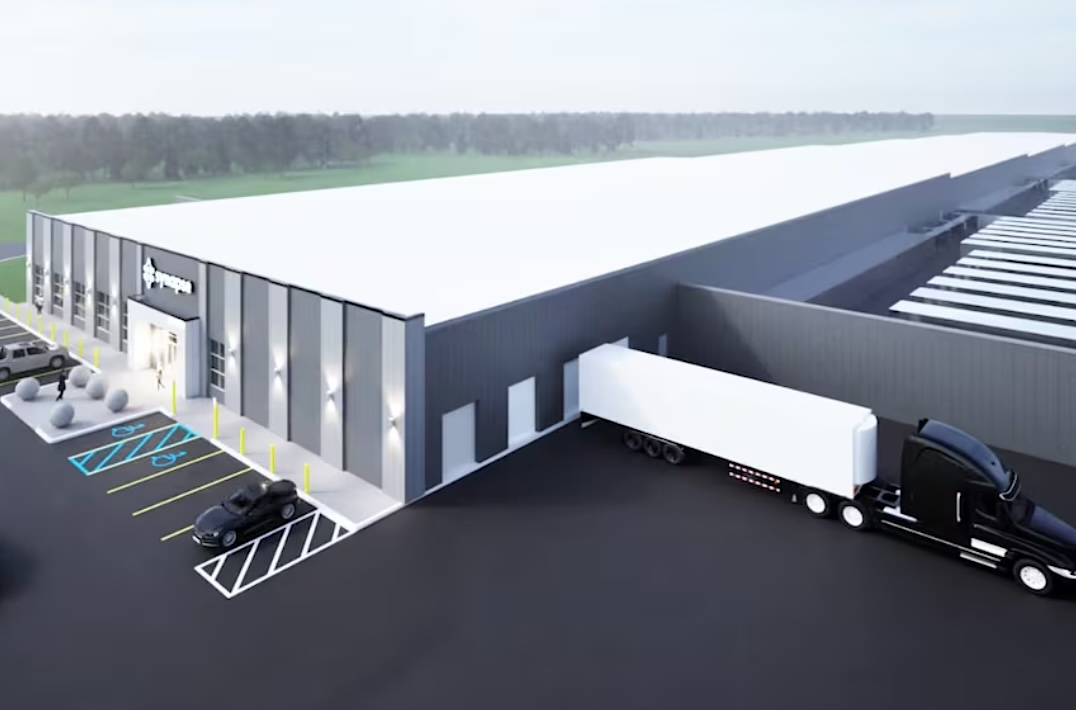
Synapse’s proposed 16-hectare facility may be Canada’s largest to date — but it’s not an anomaly.
In a global rush to build the computing capacity needed to train generative AI products such as OpenAI’s ChatGPT and Anthropic’s Claude, AI data centres are becoming exceptionally large, or hyperscale, as they’re known in data centre lingo.
“Data centres for generative AI are about 10 times the size of an older data centre,” said Mél Hogan, an associate professor at Queen’s University and a data infrastructure expert.
Unlike traditional data centres, hyperscale facilities require a large amount of energy to process, not just store, data.
Akin to a supercomputer, AI data centres can host hundreds of thousands of graphics processing units, or GPUs, arranged into thousands of server racks. Each GPU runs on an annual 3.74 megawatt hours, or about a third of the energy the average Canadian household consumes in a year.
To ensure maximum performance, advanced cooling systems keep GPU servers from overheating, recirculating some 10,000 litres of water per rack, or about as much as a typical water truck hauls.
“They are massive and require a lot of energy because there’s an almost religious belief that processing more data bumps up the accuracy rate of generative AI,” Hogan told The Tyee.
For this reason, Alberta encourages data centre developers to build their own power-generating facilities, and at least eight of the 17 AI data centres included in the Alberta government’s major projects list are set to be powered by natural gas, including Synapse’s proposal in Olds and Kevin O’Leary’s proposed Wonder Valley data centre near Grande Prairie.
Due to their massive footprint and energy needs, hyperscale data centres are often proposed in regions boasting a combination of cool climate, abundant land, broad power-generation opportunities, and pro-business regulations.
Looking past the promises
AI data centre proponents pledge to create thousands of jobs and to bolster economic growth — but research has shown their promises often fail to materialize.
Earlier this year, the Harvard Gazette reported that the claims developers make about job creation are “a significant false promise.” Typically, when an AI data centre is built out, fewer than 50 local workers are hired to look after the hardware, the report found. Although construction workers are hired to build the centres, the IT jobs created by the technology, if any, go elsewhere.
In the United States, proponents have also tended to underplay the environmental impacts of AI data centres, favouring voluntary measures to mitigate excessive water and energy use. This strategy, however, has started to backfire south of the border.
Most AI data centres in the United States guzzle millions of gallons of water every day, severely affecting residents of drought-ridden regions.
Existing air and noise pollution regulations are also proving insufficient in the United States.
Such outcomes are driving Americans to protest against AI data centres, and politicians to the left and right of the political spectrum are listening.
So far this year, 14 states have introduced moratoriums on the construction of new facilities, including Virginia, Maryland and New York.


Experts in Canada are calling for governments to step in to regulate the AI data centre industry.
“Governments should be creating rules and regulations so AI data centre developers can be held accountable,” said Simon Enoch, a senior researcher with the Canadian Centre for Policy Alternatives. “But there’s hardly any regulations around how these facilities can be built.”
In Canada, few guardrails for data centres
For close to a decade, the federal government has collaborated with the AI sector to drive the widespread adoption of this technology in Canada and to attract investment. But few guardrails have been put in place to protect Canadians from a resource-intensive industry.
Instead, data sovereignty has been at the forefront of Canada’s AI strategy, led by Minister of Artificial Intelligence and Digital Innovation Evan Solomon.
“Canada cannot compete in the AI economy without the infrastructure to back it up,” Solomon said in a recent announcement of federal support for three AI data centres in British Columbia.
“We are taking concrete action to build sovereign AI capacity here in Canada, so Canadian innovators, researchers and businesses have access to the compute they need, while keeping Canadian data, intellectual property and economic advantage on Canadian soil.”
Like the federal government, Alberta’s government has also created a provincial data centre strategy.
Launched in the fall of 2024, following a promotional trip to San Francisco led by Alberta Minister of Technology and Innovation Nate Glubish, the document promotes the advantages Alberta offers for AI data centres — from ready access to fossil fuels and water to “regulatory efficiency” and low corporate taxes.
Some of the document’s goals are now influencing policy.
In April, MLA Brian Jean introduced Bill 30, the Expedited 120-Day Approvals Act, to fast-track the development of major projects, which include AI data centres.
Meanwhile, some Albertans feel they’ve been left behind.
“People don’t know a lot about AI data centres,” said Jesse Cardinal, executive director of the Indigenous-led group Keepers of the Water, pointing at the outsized amount of water and energy these facilities consume, as well as the air and noise pollution they are known to generate.
“These projects are being pushed on us with no accountability, while the communities are left with the consequences.”
The office of Alberta’s minister of technology and innovation did not respond to The Tyee’s request for comment.
Albertans organize to educate about health risks
To fill the information vacuum, Albertans across the province are stepping in.
Urged by the advocacy of residents in Olds, Alberta members of the Canadian Association of Physicians for the Environment, or CAPE, recently produced an information sheet outlining the public health risks associated with gas-powered data centres, which range from respiratory conditions and heart disease to increased risk of cancer and birth defects.
“When we were approached by the community in Olds, we realized that we needed to be providing information for people who could be directly affected by AI data centres,” Dr. Julia Sawatzky, co-chair of CAPE’s Alberta chapter, told The Tyee.

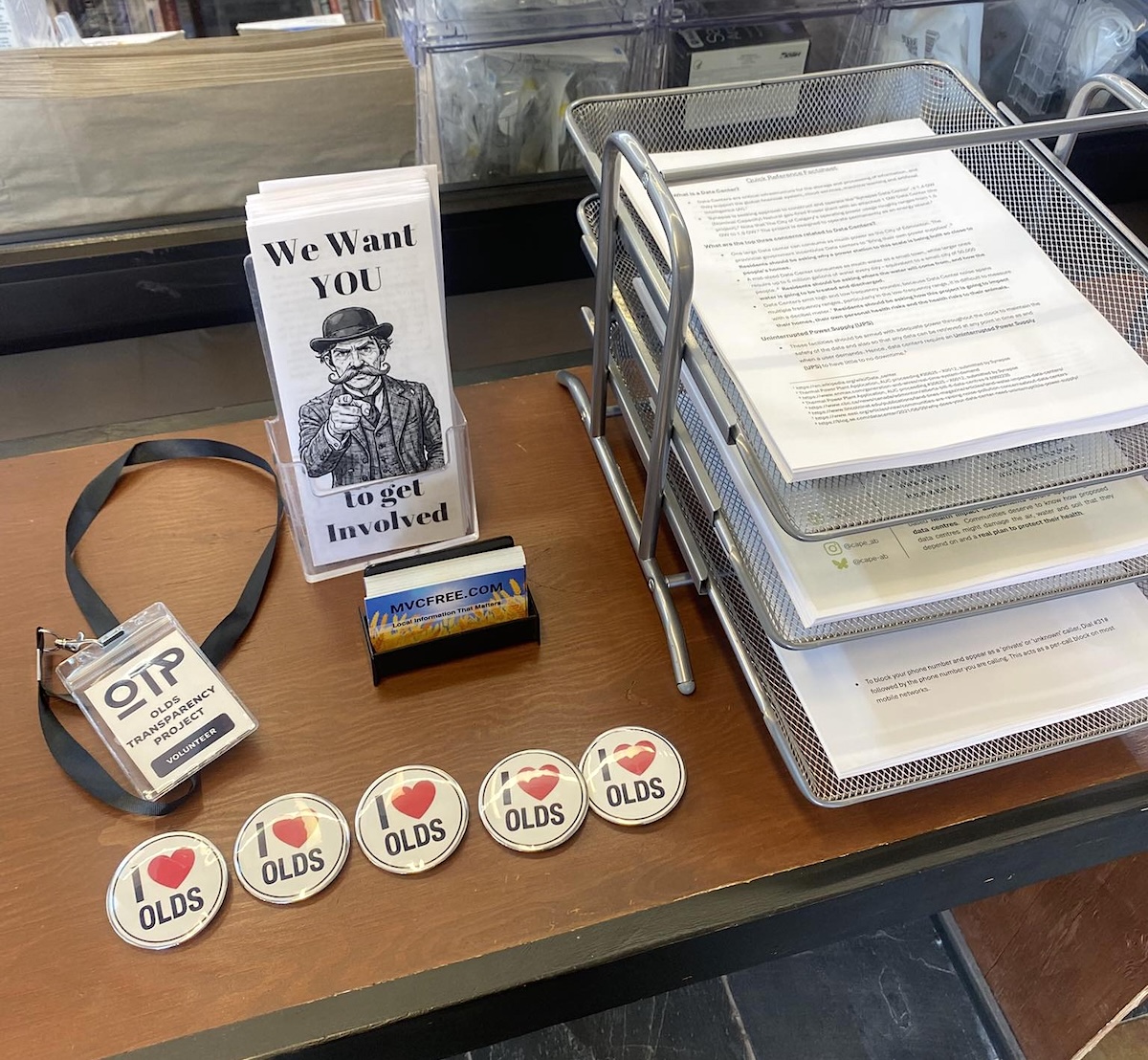
On April 28, the Edmonton physician travelled to Olds to speak about the health issues caused by the pollutants gas generators release, and the positive relationship between air pollution and hospital visits.
While Sawatzky is happy to help keep Albertans informed, she believes that educating the public on the impacts of AI data centres is a government responsibility.
As AI data centre proposals across the province move further along the development pipeline, members of Public Interest Alberta, a non-profit organization advocating for the public interest, are also concerned about the limited information available about these projects.
“The government of Alberta has been very bullish and excited about the opportunities, from an economic growth point of view, without getting into a lot of the details on the potential impacts of AI data centres,” said Bradley Lafortune, executive director of Public Interest Alberta.
“But the province hasn’t even said that they’re interested in having this conversation.”
To raise awareness about the environmental, social and economic impacts of O’Leary Ventures’ Wonder Valley, Public Interest Alberta is set to host a virtual town hall on May 21.
Other Albertans who have joined the organizing effort include Xavier Phipps, a 15-year-old who helped organize a rally in March. He’s since gone on to help start a group called Anti-AI YYC to “educate how AI is affecting younger generations and address the decline in media literacy and critical thinking.”
‘Apply the brakes,’ says Alberta labour leader
Alberta workers are also growing anxious.
“AI is accelerating at a pace that exceeds the capacity of our governments, of society to adapt,” said Gil McGowan, president of the Alberta Federation of Labour, an organization representing the voices of more than 170,000 unionized workers across the province.
“We need governments to apply the brakes now, and make sure that productivity gains aren’t being gobbled up almost exclusively by the billionaires who own the technology at the expense of everyone else — otherwise, AI is setting the stage for what could only be described as a new kind of feudalism.”
In an emailed statement, Riyadh Nazerally, a spokesperson with Innovation, Science and Economic Development Canada, told The Tyee: “Canada has an established foundation of laws, regulatory frameworks, and public institutions that help protect Canadians and support the responsible development and use of AI, including in areas such as privacy, competition, public safety, and financial oversight.
“At the same time, the government is working to modernize these frameworks and advance a forthcoming AI Strategy focused on safe and sovereign AI, innovation, economic growth, and ensuring Canadians benefit from this transformative technology.”
In March, the Alberta Utilities Commission rejected Synapse’s application, citing missing information in the application and “lack of clarity.” A cautious sigh of relief by some residents of Olds was short-lived. Less than a month later, Synapse reapplied.
This time the application includes measures to mitigate noise and emissions aligned with existing regulations. But the project itself remains unchanged.
The people of Olds are back in learning mode, trying to further educate themselves about how their lives will be affected if one of Canada’s largest AI centres comes to town. ![[Tyee]](/design-article.thetyee.ca/ui/img/yellowblob.png)
Read more: Health, Alberta, Science + Tech, Environment









Tyee Commenting Guidelines
Please note that email notifications for replies are not currently working due to a software issue which may be resolved in a future update.
Comments that violate guidelines risk being deleted, and violations may result in a temporary or permanent user ban. Maintain the spirit of good conversation to stay in the discussion and be patient with moderators. Comments are reviewed regularly but not in real time.
Do:
Do not: