


 SHARE:
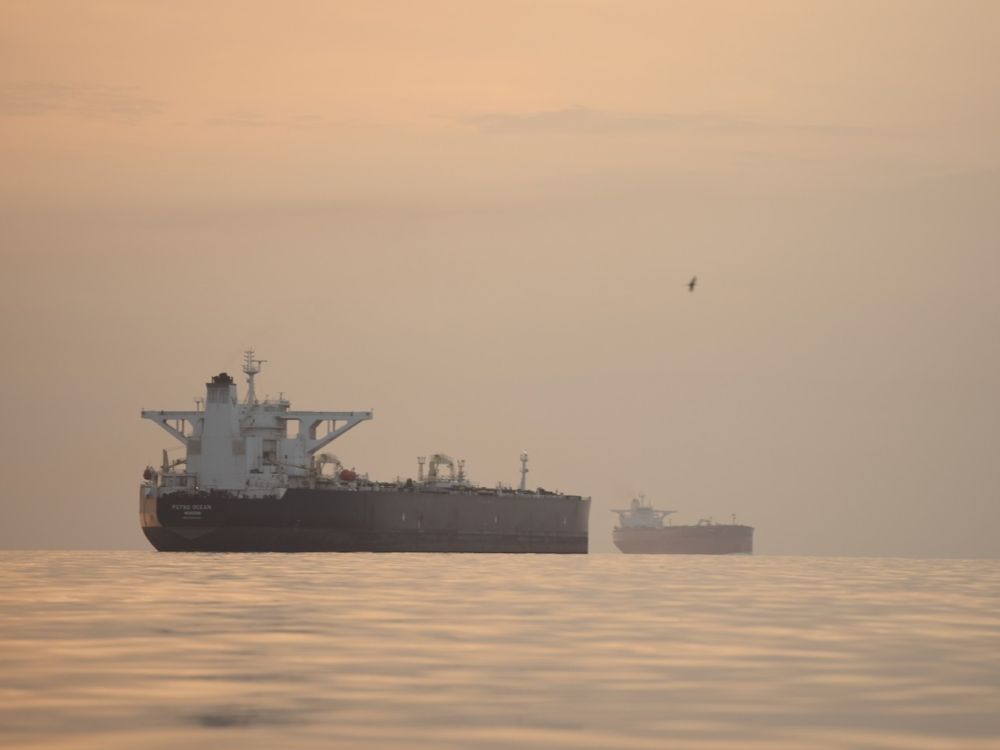
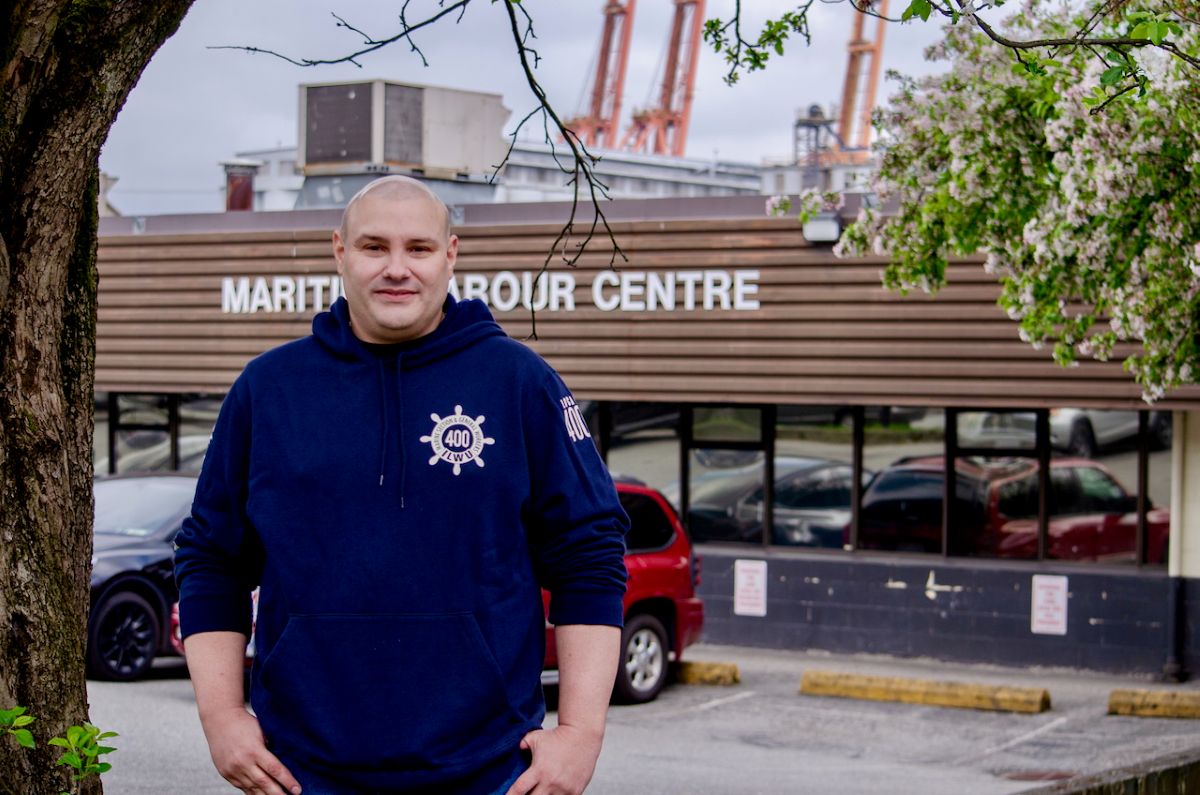
It’s been nearly two months since Iran closed the Strait of Hormuz in response to U.S.-Israeli attacks. Nathan Smith, with the International Transport Workers’ Federation, has been thinking about the sailors on board container ships and oil tankers.
He estimates there are about 20,000 seafarers stranded near Iran since the country closed the strait at the beginning of March. From his office here in Vancouver, Smith has been speaking with families who reach out trying to see if seafarers are still alive.
“They’re not part of this war,” Smith said. “They’re not soldiers, but they’re getting bombed because of it. And they’re innocent.”
At least 12 seafarers have been killed in the conflict so far in more than 35 attacks on ships or port infrastructure during the war, according to maritime news journal Lloyd’s List.
The journal’s editor-in-chief, Richard Meade, said at an intelligence briefing Thursday that Iran has fired on some ships attempting to move out of the region, while others have been able to move through the region.
“There is confusion over what is and isn’t happening,” Meade said. “It is a very, very complex and evolving situation.”
The conflict and confusion has left about 2,000 ships stuck both at ports and at sea. Smith said all the issues that come with working at sea are growing more acute, including abandonment at ports, mental health issues and missed wage payments. And as the crisis drags past the two-month mark, many sailors are running out of food and water.
“They’re scared and they’re worried,” Smith said. “Every movement could mean that there’s a missile that hits them.”
Operation Epic Fury
The United States and Israel launched their attack against Iran — dubbed “Operation Epic Fury” — on Feb. 28. U.S. President Donald Trump’s administration said its aim was to destroy Iran’s missiles, eliminate its navy and prevent a nuclear weapon.
In response, Iran started attacking ships that tried to pass through the Strait of Hormuz — a key shipping corridor south of Iran, and north of the United Arab Emirates and Oman. About 20 per cent of global LNG travels through the strait and last year 20 million barrels of oil and oil products moved through the waterway each day.
In the two months since, several seafarers in the area have been caught in the conflict.
According to Lloyd’s List, two tankers near Basra, Iraq were hit by underwater drones on March 12, causing fires to break out on board. Iraqi authorities extinguished both fires and the crews evacuated.
The same day, a container ship near Dubai, UAE, was hit by a projectile. The damage to the vessel is unclear.
On March 16, according to Lloyd’s List, a petroleum carrier was hit by an “unknown projectile” and damaged. On March 31, a crude oil tanker near Dubai was hit by suspected Iranian drones.
On April 13, the United States started its own blockade of Iranian ports. Iran, meanwhile, has reportedly laid mines throughout the strait, making navigation difficult.
During a ceasefire between Israel and Lebanon, Iran opened the Strait of Hormuz on April 17. But within a day, as the United States kept up its blockade of Iranian ports, Tehran re-imposed tighter control over the strait. It remains closed at the time of publication.
On April 20, United States forces seized a container ship in the Gulf of Oman and diverted the boat, according to Lloyd’s List. On Wednesday, Iranian forces seized another container ship near the strait, and fired on a second vessel nearby.
“Hopefully, no more seafarers die,” the ITF’s Smith said. “They’re not part of this war.”
His organization, the International Transport Workers’ Federation, is a global federation of about 700 trade unions, representing about 20 million transport workers across the world. He said the affected sailors come from a wide range of countries, including India, Russia and the Philippines.
‘They’re not eating’
Smith added the conflict has also caused several companies to abandon seafarers at affected ports.
Even during times of peace, companies will sometimes end the employment of seafarers in a foreign port, without providing any way for them to get home or paying the wages owed. The issue, called “abandonment,” often happens when a company goes out of business before sailors get back home.
The ITF and the International Labour Organization (the United Nations’ labour agency) track abandonment cases in an online database.
The data shows that since the United States launched its attack, four crews have been abandoned at ports in the Persian Gulf and Gulf of Oman. Another four have been abandoned at ports in the mediterranean sea, off the coast of Israel, Turkey and Syria.
At the time of publication, none of the eight cases have been resolved, meaning the sailors have not yet been repatriated.
While it’s too early to definitively attribute any of these cases to the conflict, Smith said it’s likely a factor.
“Seafarers are always number one to get abused,” Smith said. “Companies always try to save money on the backs of the seafarers.”
Other ships, according to Smith, are attempting to navigate the strait illegally, without documentation and without crews represented by the ITF. That means there’s nobody checking up on the sailors and enforcing international labour laws.
“There’s no crew welfare on board,” Smith said. “What we see on these sanctioned vessels is that seafarers are not getting paid on time and their living conditions are horrible.”
The shipping industry calls such boats the “shadow fleet.” As of Wednesday, Lloyd’s List tracked 10 shadow fleet tankers actively sailing past the U.S. blockade line.
But the primary issue looming over the stranded sailors is food, Smith said. The Maritime Labour Convention, recognized by the International Labour Organization as global labour law, requires ships to have “sufficient” provisions on board for sailors who often travel for weeks at a time.
Smith said that means there’s no standard amount of food that these ships are required to have on board. And as the conflict drags on, Smith said sailors are reaching out saying they’ve run out of food.
“They’re not eating,” Smith said. “To get them provisions is a difficult thing, and it’s going to get progressively worse as time goes on, because there is no way to get provisions on board.”
He said the ITF has been pressuring companies to get supplies to stranded sailors, and has been trying to organize an effort to get food and water to the seafarers.
As the conflict drags on, some ships have been able to move through the area. According to Lloyd’s List, between April 13 to April 19, vessels were able to move through the area 75 times. Fifteen vessels that attempted to cross the area were forced to turn back.
The world’s largest shipping container line, Mediterranean Shipping Company, was able to get vessels out of the area. One U.S.-owned tanker was also able to leave. But since tensions ramped back up, traffic has slowed back down to a trickle
“We are left in a period of confusion, where we are essentially waiting to see what happens next,” Lloyd’s List editor Meade said in the briefing Thursday.
Meanwhile, Smith said the best resolution for the stranded seafarers would be for forces on both sides to leave them out of the conflict.
“Hopefully the governments can get their act together and not kill seafarers,” Smith said. “They’re not soldiers.” ![[Tyee]](/design-article.thetyee.ca/ui/img/yellowblob.png)
Read more: Labour + Industry











Tyee Commenting Guidelines
Please note that email notifications for replies are not currently working due to a software issue which may be resolved in a future update.
Comments that violate guidelines risk being deleted, and violations may result in a temporary or permanent user ban. Maintain the spirit of good conversation to stay in the discussion and be patient with moderators. Comments are reviewed regularly but not in real time.
Do:
Do not: