


 SHARE:
Artificial intelligence is already reshaping the world of work. Drivers are pitted against AI-powered autonomous vehicles. Many software engineers report rarely writing their own code anymore. Canadian accountants say they are overwhelmed by AI-generated tax errors.
Meanwhile, the people behind the technology — CEOs like OpenAI’s Sam Altman and Anthropic’s Dario Amodei — are warning a range of white-collar work may be next on the chopping block.
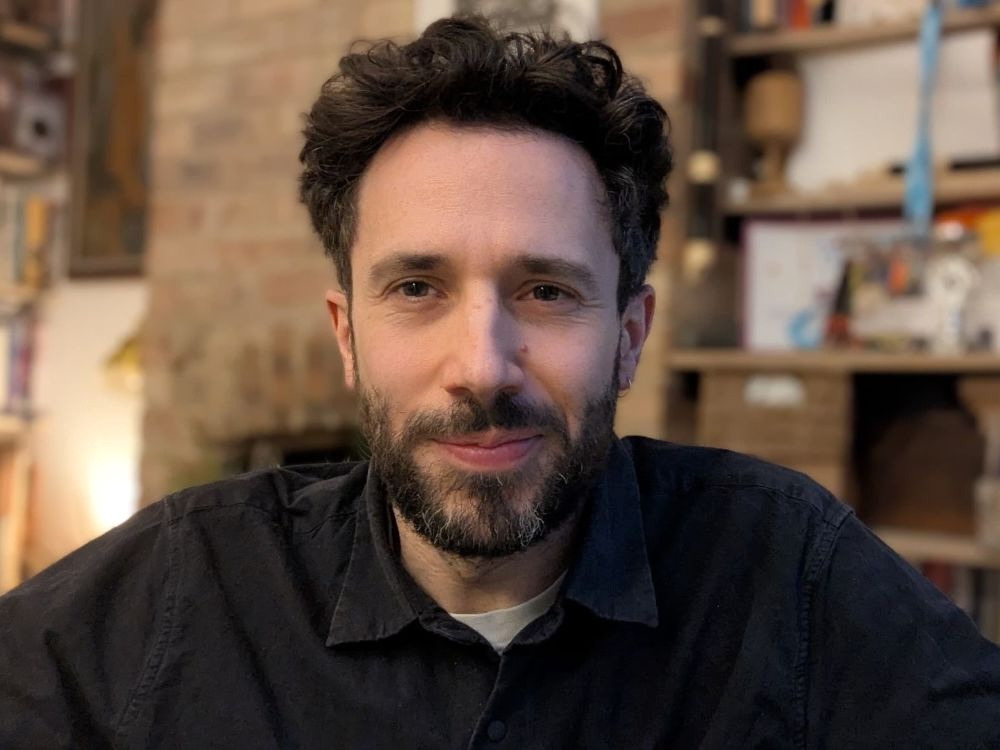
But amid the hype, Rowland Manthorpe sees history repeating itself.
To better understand the next wave of workplace automation, the Sky News U.K. tech correspondent looked back to the adoption of the personal computer — and what that meant for secretarial work. He wrote about his reflections in his newsletter.
It’s why The Tyee sat down with Manthorpe for a discussion about tech CEOs’ bullish AI predictions, how these tools might change your job and what we can learn from the last wave of automation.
“This is an incredibly important moment,” Manthorpe said. “Artificial intelligence is an incredibly important technology because it touches so many things at the same time, and it's moving so quickly.”
The conversation has been edited for clarity and length.
The Tyee: We've been hearing predictions for years now that AI tools are going to automate away some parts of our jobs. What have you been hearing?
Rowland Manthorpe: The same thing. Some frankly hard-to-believe predictions.
Mustafa Suleyman, the CEO of Microsoft AI, said that lawyers and accountants will be fully automated in 18 months. That would be a prediction from a very credible figure, someone who has had a very long career in this area, that I would find extremely hard to believe.
But there are also predictions which seem hard to believe and have come true. Dario Amodei, CEO of Anthropic, has made a number of predictions. One of them was last year, that most code would be written by AI in nine months. He got it wrong by about a month.
So on one hand, we're seeing these huge predictions that seem to be hard to believe. On the other hand, significant automation is happening, and this is going to have really big effects.
What did you find was missing from these predictions?
I suppose a sense of exactly how things work on the ground, and the real difficulty of putting technologies into action in real workplaces.
It's all very well to automate something in theory. But people are people. They find these things complicated, and they're working in rich contexts. A lot of this talk seems kind of highly theoretical to me, and so what I was trying to do for myself is ground that in some kind of reality.
AI is a generalizable technology. That's one of its unique features. But, we've had generalizable technology before — look at the computer, it’s the original generalizable technology. So what was it like when the computer arrived? And as it happened, I had a strong personal connection there. So I tried to explore that more.
In your newsletter, it seems that you conclude adoption comes down more to human behaviour than to how proficient technology is. What can the last wave of automation tell us about how humans adopt new technologies?
The inspiration for the piece was my mum, who left school and went to secretarial college to learn shorthand and typing. For 10 years, that's what she did. She was a secretary, and these skills were essential in the workplace.
Around 1982, the personal computer came out and suddenly the bosses started doing their own typing. Her precise job was eliminated. But talking to her about exactly how this technology was introduced, you get the sense that it’s not as simple as “You introduce technology, everyone gets it immediately, everyone uses it in just the right way, and then that's it.”
No, it took ages to work out what the hell a personal computer was and how it worked in different contexts.
It was funny going back to the predictions that people made at the time. My mum, she remembered people saying there will be paperless offices and that people would have so much more leisure time, because we would hardly be working anymore.
People are saying exactly the same with AI. Maybe it's possible that things are completely different this time. But I think if history is a guide, people are people.
If we look back at this last wave of automation brought about by the computer, a few things stand out. First, it happened much more slowly than people expected at the time. Second, it didn't actually produce the job losses that you would think from a logical perspective — the personal computer brought about this flood of work and the need for a lot more administrative co-ordination. Third, those jobs did not ultimately go away; they just transformed.
What I'm trying to get at, and what I think people in tech miss, is that this technology really will change people’s worlds, but not in a one-size-fits-all way. The kind of vision of the future that we get from people on the frontier will end up being changed and altered. People are going to do their own things with this technology that no one can anticipate.
How did that exploration challenge some of the predictions that you've been hearing?
Specifically on software development, I know developers who are feeling really spooked about their job. The panic among developers is incredibly intense.
But what I found is that in previous waves of automation, both in the research that I published, in other research that I've looked at, you're much more likely to see a boom in jobs that are thought to be under threat when a new technology arrives.
In the AI context, we're going to see a huge amount of software produced, an absolutely enormous amount. But it strikes me that there is an unbelievable latent demand for software that a lot of developers don't really realize because they work in tech.
They have this huge fear that it might be theoretically possible for people to code by themselves. But does that mean they will? For developers it's hard to understand that given these tools, you wouldn't do that.
But for example, we have tools right now that enable people to do their own accounts. Accountancy software is incredibly proficient, and I don't want to diminish the job of accountants, but a large part of accountancy right now is basically running and monitoring certain software. Does that mean that accountants have disappeared? No. Because nobody wants to do their own accounts. It's terrifying. So those jobs have changed, but they haven't disappeared.
It strikes me that a lot of this kind of fear and panic might actually just be general worrying about a change, rather than something that will actually materialize.
I'm curious if there's any evidence that makes you think that this next wave of automation actually will echo the last.
A great place to start is looking at trends in software development jobs. The growth in AI coding agents is simply unbelievable. These things really can write code.
So the logical assumption is that software development jobs are done. But if you look at the early data, and it is just early data, job postings in software development are going up.
People find it hard to internalize that the future might mean a lot more software development jobs. Those jobs might be different, but the early evidence suggests that there's going to be more developers, not fewer.
I'm a dad. I know dads who have got kids going to university, and they're really worried because their kids are studying computer science. I think there's a good chance the job will be around in the future. Maybe in 10 years’ time, things will be different — but 10 years’ time is quite a long time to work things out.
I went looking a little bit deeper at your Substack and saw you dug up how Alexander Graham Bell received some pretty skeptical reactions to his predictions about the telephone.
How should we be interpreting all of these predictions that we're hearing from the Sam Altmans or Dario Amodeis of the world?
I'm torn, because I really do think AI is going to be incredibly important. The thing people always say about technology is that we overestimate its impact in the short term and underestimate it in the long term. In my career, that's proven to be true.
But the situation is still incredibly unpredictable. If you look at the last layer of automation, it occurred in a very different media and geopolitical environment. These other aspects make the situation very unpredictable, which is why I kind of feel sort of nervous about making predictions, or saying “It's going to be OK.”
But all transformative technologies arrived and had their impact slower than people thought at the start, and then grew to be just as big as everyone said. It strikes me that we're still at the early days of AI, and I think it's going to be really huge. I'm just not going to buy the timelines. ![[Tyee]](/design-article.thetyee.ca/ui/img/yellowblob.png)
Read more: Labour + Industry, Science + Tech





Tyee Commenting Guidelines
Please note that email notifications for replies are not currently working due to a software issue which may be resolved in a future update.
Comments that violate guidelines risk being deleted, and violations may result in a temporary or permanent user ban. Maintain the spirit of good conversation to stay in the discussion and be patient with moderators. Comments are reviewed regularly but not in real time.
Do:
Do not: