


 SHARE:
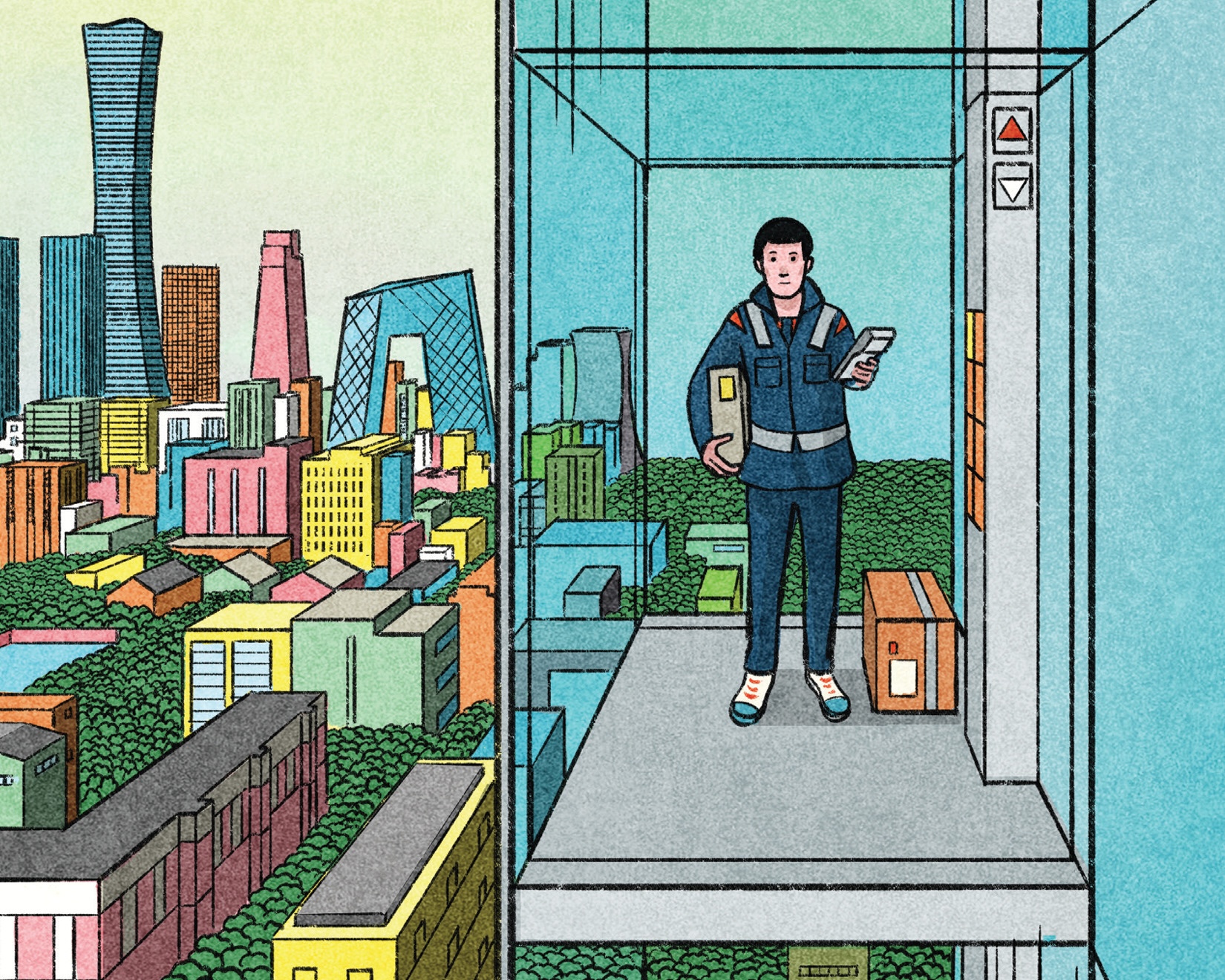
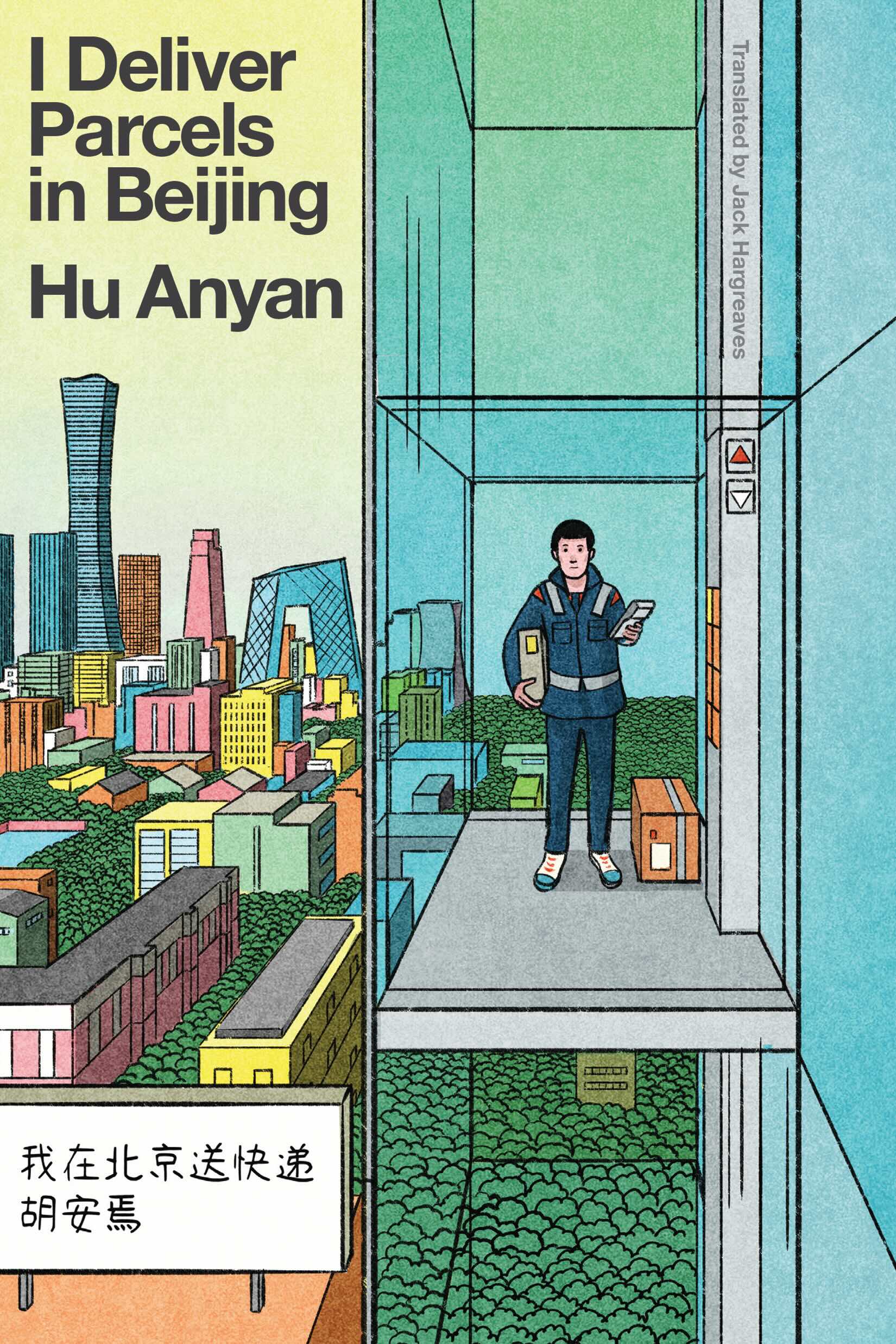
I Deliver Parcels in Beijing
Hu Anyan
Astra House (2025)
My family is from Guangdong, a province on the southeast coast of China near Hong Kong and Macao. It’s an unforgivingly hot part of the world. As writer Hu Anyan describes it, the province is home to an endless summer that lasts “for three-quarters of the year.”
It’s in a sweltering Guangdong warehouse in 2017 where Anyan begins his memoir, I Deliver Parcels in Beijing. Covered by a large metal roof, the warehouse is the length of about 10 soccer fields. During 12-hour overnight shifts, Anyan and his colleagues worked in fast-moving teams to pack, unpack, label and sort parcels before they were sent out for delivery.
“In the day, the sun baked down on the metal roof until it was scorching hot, and the evenings were not that much cooler. Often, sweat was dripping down my back within the first two hours of a shift that would not stop dripping until the next morning,” Anyan writes of his year in the warehouse as a package handler.
“I eventually bought a three-litre flask for water that I finished every night, but I sweated so much I never once needed to pee while on shift.”
Anyan’s first-person account of the 19 jobs he’s held since graduating high school, including the warehouse gig, was originally published in Chinese by Shanghai Insight Media Co., Ltd. in 2023. Two years later in 2025, Jack Hargreaves translated Anyan’s memoir to English through Astra House, an American publisher.
Anyan’s prose is straightforward and unadorned, but his book reveals realities that are impossible to ignore.
I Deliver Parcels is a rare look into of the lives of workers whose circumstances are such that speaking publicly about their experiences or critiquing their employers could have serious consequences. They could lose their jobs as well as their housing.
In many instances, Anyan’s employers provided him with a place to live.
But as he recounts in more than one gig, he held jobs where he slept in his workplace.
I Deliver Parcels offers a pointed critique of late-stage, turbo-charged capitalism. China’s trajectory of globalization runs parallel to the span of Anyan’s life. He was born in 1976, the year Mao Zedong died, and immediately before Deng Xiaoping radically ‘reformed and opened up’ China’s economy, a turning point that made the country what is today.
Anyan’s experiences as a gig worker took flight alongside the rise of WeChat, smartphones and the COVID-19 pandemic. Meanwhile his parents lived under the direct impact of Zedong’s rule. Rebecca Liu of the Guardian newspaper writes that the author’s mother was sent to the countryside during the Cultural Revolution, and his father joined the People’s Liberation Army at age 16.
Like many people of their generation, Anyan’s parents largely spent their working lives in the same place, unlike their son.
“My parents had old-fashioned, conservative mindsets and already felt unsettled by the dramatic changes occurring in society and at work. They were isolated themselves, struggling — with money and with understanding and accepting this new world; no wonder they had so little time for me,” Anyan writes.
“They also had no other family or friends in the city, so they didn’t need to trouble themselves with saving face. When they first heard I was going to work in a gas station, they were genuinely happy for me.”
Amidst relentless strife, a search for dignity
Throughout the book, Anyan never asks for readers’ sympathy. His depictions of poverty are straightforward and honest. The thought of breaking for lunch or taking time out to use the bathroom is set against a crude calculation of how much income could be gained, and what time could be saved, if he goes without attending to basic physical needs.
Many of these stories reminded me of my grandparents, who fled the Great Leap Forward for the unknown in other parts of the world. One side of my family left Macao for Lima, Peru; the other half immigrated from Hong Kong to small communities in northern Alberta and B.C.
While thrift and strife are words I would use to describe my grandparents’ lives, I don’t think they themselves would use those terms. Struggle and suffering were simply the blunt stuff of survival. My grandmother worked at a chicken processing plant in East Vancouver until she physically couldn’t do the job any longer. When I asked my grandfather if he ever wanted to visit China again, he would resolutely shake his head. He never once went back; they had lost so much already.
The long silences that punctuated my family life are also part of Anyan’s experience. He writes at length about his shyness, his social anxiety and an overwhelming fear of conflict that he carried with him from a young age. “My parents had only ever taught me to be kind to others,” he writes. “They failed to mention I also had to stick up for my own interests.”
Of his decision to decline one company’s offer to go on its insurance plan for fear it would bring disunity to his team, “I had no notion of individual rights,” he writes. Here and in many moments in the book, there are unsparing reflections of how Anyan’s upbringing and family culture shaped how he related to work and the people around him.
But there are also remarkable scenes that offer a glimpse of his artist’s heart, and the perpetual, deeply human search for beauty in the everyday.
Working as a courier in Beijing, he is paired with a delivery partner who can’t help but stop to pick bright bunches of blossoms from flowering trees. Anyan takes days off in IKEA and naps on the couches until the people he describes as “the capitalists” kick him out.
During his last days of work as a courier before the company lays him off, Anyan’s workload is lighter, and he experiences a rare grace. “I suddenly had plenty of time on my hands, like a once-scorned pauper who had struck it rich overnight,” he writes.
“I got to enjoy the luxury of squandering time, as if it was a form of revenge. I had felt crushed by the constant need to exploit every second for so long, my time as tightly strung as my nerves, that I’d become used to work being just about coping.”
All at once, he had space to read again. “Work had long meant that I couldn’t take in the words or information, which made me not want to sit down with a book at all.”
He entered a period of reading and writing, and eventually published an essay about parcel delivery during the COVID-19 pandemic that went viral. It formed the basis of more published work. I Deliver Parcels is his first book.
Anyan met his wife in an online literary forum and they both now work full-time as writers. It’s a dream, this life of relative freedom, that seemed impossible not long ago.
Anyan honours this liberation with a startling equanimity. “I have no lingering anger or resentment — I admit I once did, but I have let it all go,” he writes of his years of precarious work.
“The more I have lived, the clearer it has become that a life filled with hate and anger is not one worth living.” ![[Tyee]](/design-article.thetyee.ca/ui/img/yellowblob.png)
Read more: Books, Labour + Industry










Tyee Commenting Guidelines
Please note that email notifications for replies are not currently working due to a software issue which may be resolved in a future update.
Comments that violate guidelines risk being deleted, and violations may result in a temporary or permanent user ban. Maintain the spirit of good conversation to stay in the discussion and be patient with moderators. Comments are reviewed regularly but not in real time.
Do:
Do not: