

 SHARE:
Last month, my kids got a phone.
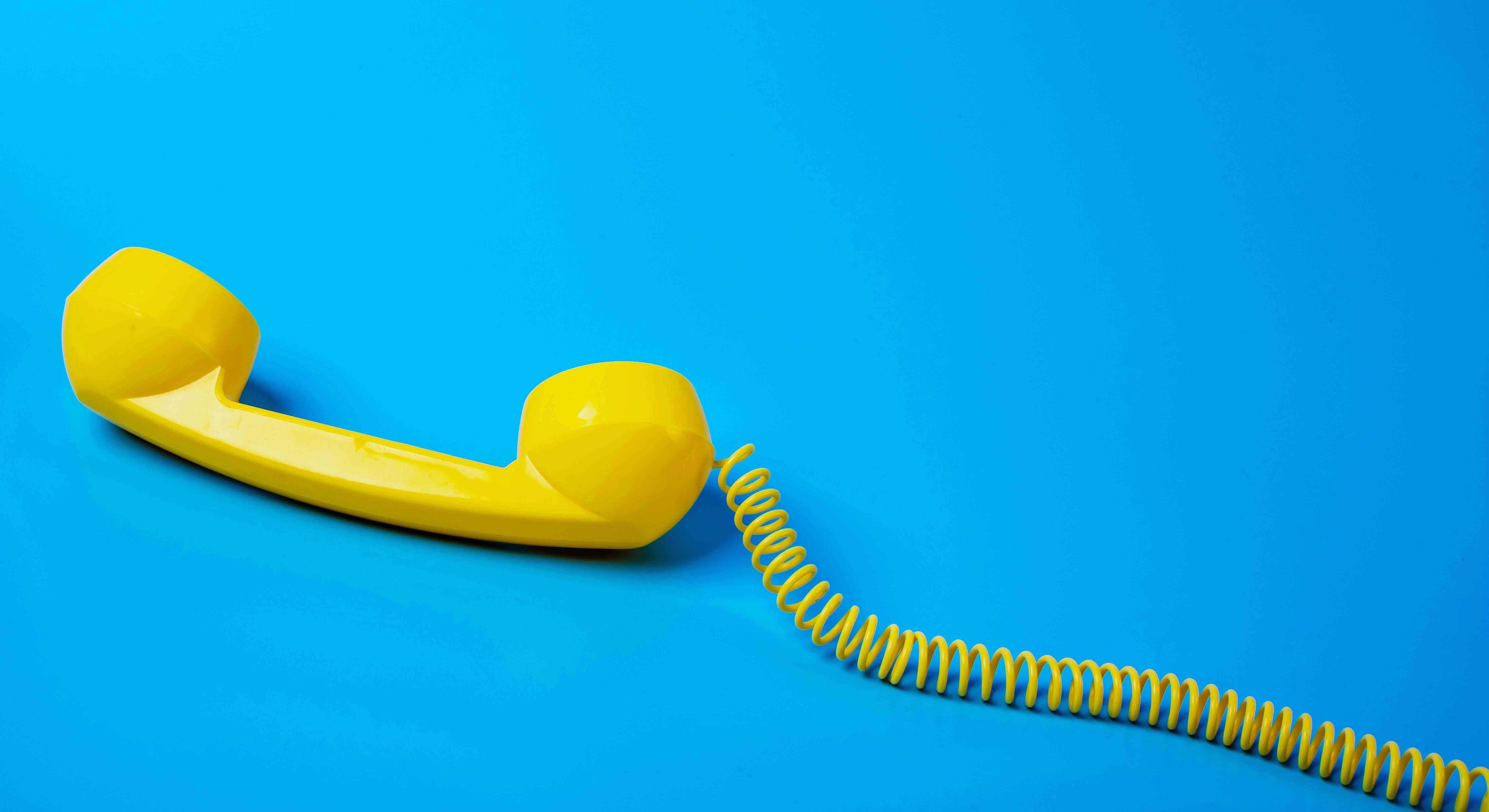
Not a cellphone. Not a smart phone. A landline — or as the Atlantic called it, noting this new parenting trend, a dumb phone. The phone is a cordless handset that plugs into the router, but otherwise works like a classic pre-Internet model, with no games, no apps, no bells, no whistles. It has the range of a bad Bluetooth speaker. It might sound obsolete — and when it rings, it really does — but that’s the point.
In part, it was about giving our kids the opportunity to talk on the phone to their school friends, their grandpa and even their parents without giving them access to mine, or to TikTok, Roblox, YouTube Kids or Twitch.
But it was also about getting rid of the iPads and becoming less dependent on the internet, which isn’t what it used to be.
It’s been decades since I had a landline phone. I thought those days were long gone. There are times when I feel a fond nostalgia watching my kids use a piece of technology that is now charmingly obsolete. But mostly I feel like we’re fleeing a future that used to seem hopeful.
My children get excited whenever it rings, and I’m happy for them. But I’m also depressed by our choice, by our need, to return to the Stone Age for their sake.
I know I’m protecting my kids, but it feels like I’m failing them too.
What the internet used to be
The early internet changed my life. Scratch that. It improved my life. Adopted and homeschooled, I grew up in a right-wing bubble in Abbotsford, divorced from reality, isolated from important schools of thought. It was intentional and very effective. I rarely encountered a single perspective that didn’t align with what I learned at home.
That is, until I got online in the year 2000, when I was 15. I used the desktop computer in the family room, a Dell Dimension 4100 powered by Windows Me, that came pre-loaded with Internet Explorer 5.5.
In early Yahoo! chatrooms, not to mention pioneering chat services like ICQ and AOL Instant Messenger, I found myself speaking with people who claimed to be roughly my age, offering much-needed alternative views that differed greatly from those I’d grown up with.
Early web-hosting services like Geocities, Angelfire and Tripod showed me that I could make space for myself, first online and then in the real world. And as I fell into more niche communities — fantasy wrestling, the Internet Scrabble Club, Christian music message boards and, eventually, new social media spaces like LiveJournal, Tumblr and Twitter, I connected with fellow adoptees, aspiring writers, frustrated ex-Christians and other folks brought up on nonsense and logic that didn’t hold up.
The internet radicalized me and it radicalized me for the better. In many ways, it set me free.
It used to have that power. It wasn’t just me. At the same time that I was evolving as a new citizen of the World Wide Web in the post-Y2K landscape, other folks who grew up in oppressive religions experienced similar growth.
Remember Megan Phelps-Roper, the former Westboro Baptist Church member whose social media exposure, which began with running Westboro’s Twitter account, allowed her to see her church’s truly hateful teachings? I watched that unfold in real time back in 2009, and I knew that I wasn’t alone.
Moments like these don’t feel likely anymore. Rather than building community, offering context and developing empathy, websites like Twitter, now X, have since been transformed into something more sinister: social media spaces that reify the misanthropic nonsense they used to subvert.
“A large part of the venture capital model is serving as a recruitment mechanism into tech fascism,” Silicon Valley reporter Gil Duran explained to me in an interview this fall. “You’ve got all these people with these companies who want this money from the venture capitalists, and increasingly it’s seen as sort of a litmus test of whether you’re gonna go along with these ideas.”
For a lot of us, being online used to have the opposite effect. It was a space where a young person like me, the only Black person in a white conservative household, could expand my horizons and begin to develop the self I’d later become. But the technocrats have changed the rules, making it likelier for a new digital citizen of 2025 to join a Westboro Baptist Church than become inspired to leave it.
The online world of the not-so-distant past wasn’t just a space to galvanize personal change. It sparked social change, too.
Barack Obama didn’t get elected without social media. The #MeToo movement against rape culture and sexual abuse gained traction on the social web of 2017 that is not at all the same today. The Black Lives Matter movement couldn’t have happened unless we were all online together, looking for something to do during the social isolation of the early COVID-19 pandemic.
The same is true of the paradigm shift that we’ve seen in response to the genocide happening in Gaza, or even the collective and global resistance to Donald Trump’s first White House term. As individuals, there’s often very little we can do. But as a collective, united online, the influence we harness is terrifying to those who would seek to abuse and oppress us.
We’ve seen it time and time again. So have they. That’s why it had to stop, even if it meant the systematic destruction of every online space that could be used to empower the people.
The enshittification of the internet feels more than accidental. It’s not about revenue, shareholders, digital ads or the needs of the business community.
It’s about turning the power of these tools on their heads and discouraging those who would use them to build something better for all of us.
The social web feels dangerous. But what are the alternatives?
The spaces where we used to organize, or even just gather and laugh through the horrors, have all been reprogrammed as dangerous places.
I talk to my professional contacts still lurking on Twitter and notice their views drifting further from mine, more in line with the people who hate me. They don’t even know.
And on Bluesky, I watch as the people who used to weigh in on the news of the day without filters are forced to self-censor for fear of reprisal or losing their jobs. It seems there is no longer any digital space where we can be who we are — unless, of course, we’re Nazis. X is into that these days.
I left X earlier this year, like a lot of progressives, forgoing my sizable following, beginning again on Bluesky.
I left Facebook too. It used to be useful for keeping track of everyone I knew (and their birthdays), but now it’s a website whose primary utility seems to be the spread of misinformation. You can still keep an eye on your friends, but it’s hard to enjoy when your friends are all frogs in a pot, boiled alive, being brainwashed by fake news and mislabelled, AI-generated content.
I still peruse TikTok and Instagram from time to time, but even those platforms feel captured and tweaked to prevent us from coming together.
It’s hard to trust anything. AI is everywhere. Even the most viral clip could be fake. The truth can be likewise impugned.
Being online feels like being in the basement of a haunted house. Who knows what you’ll see, or be forced to attempt to unsee. Are you being informed or misled? You can’t Google it either.
Ask a question and wade through a sea of paid content and deeply inaccurate answers generated by AI. In addition to being dead wrong, they’re increasingly far right, designed to suggest that the technocrats’ view of the world is supported by facts. They’ve ruined the spaces that might have fomented resistance against them.
Social media continues but the social part is gone. Time was, you could say something online, and if it resonated with people, you’d find yourself communing with others who felt the same way. Nowadays, if a comment goes viral, your mentions are flooded with ugly replies, from bad actors to bots whose collective response is designed to discourage you.
Often it feels safer just to keep your mouth shut and sit in the dark. Many of us maintain a lurking presence on social media, the least social activity in which we sit watching the action from the sidelines without participating.
But how do you commit to a discourse when you can’t be sure that the person you’re talking to even exists? The tech libertarians don’t even want us. We’re too hard to manage, too human, and that’s why they’ve flooded their sites with fake people, more likely to say what they want, and much easier to reconfigure, like Grok, if they don’t.
Seeking human connection online today feels like being the last one who hasn’t been body-snatched.
The internet hasn’t been fun for several years. But 2025 was the first year it didn’t feel relevant, either. There’s nothing to see. Every moment spent online is just added exposure to awful ideas, awful people, awful interactions that leave you feeling awful when you put down your phone and get on with your day.
The algorithm keeps you from the things you want to see. It keeps you from the people that you trust. It feeds you slop.
Logging off feels increasingly necessary. It also feels lonely, like leaving a cult. I know I had to get away, but all my friends are there. Where do I go? How do I stay informed, still feel connected or even like I still exist? I honestly have no idea and it’s awful.
At home, my landline rings. It’s grandpa, and it makes me happy watching my kids learn to answer the phone. But I wonder sometimes if they’ll ever experience the internet the way I did — as a place to grow and connect with their peers without being misled or misinformed. I wonder, too, if I ever will again.
I don’t think I’m alone in all this. That’s little consolation, but it helps me feel connected and that’s something. If 2025 goes down in history as one of the loneliest times to be human, at least I’ll know that I wasn’t alone. ![[Tyee]](/design-article.thetyee.ca/ui/img/yellowblob.png)
Read more: Media, Science + Tech








Notice about commenting changes
The Tyee’s commenting system will be moving to a new platform on Nov. 12. If you’re already a Tyee commenter you must register with the new system on or after Nov. 12 with your preferred username.More information can be found here.