


 SHARE:
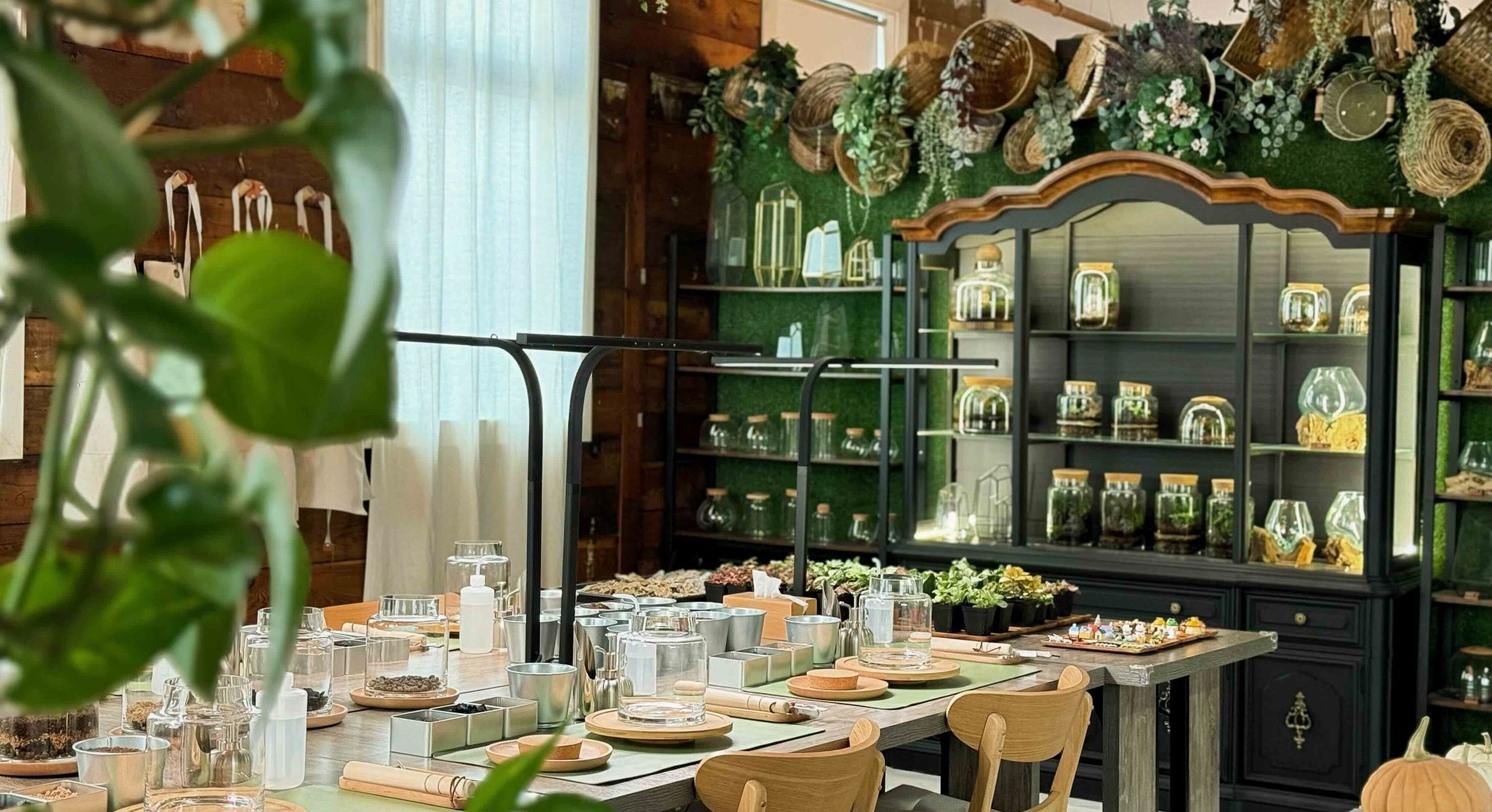
An unmarked black door sits at the end of a dusty, nondescript driveway on East Pender Street, just east of Clark Drive’s endless roar of truck engines. Inside, a short set of stairs leads to a sunken, high-ceilinged studio space. To the right is a living wall — a winding art piece made of real plants. To the left is a large table, each place-setting kitted out with a wooden lazy Susan, on which sits a large glass jar with a cork top.
Behind the table, tall shelves are filled with an array of items for people to choose from as they build their own terrariums. There are plants, pebbles and tiny little houses. Everything is placed just so.
It’s in this quiet, calming room that Ryan Senguk Baik runs Oasis Studio, his terrarium art business, which offers custom creations as well as hands-on workshops. It’s the latter that Baik is quickly becoming known around Vancouver for. His two-hour classes guide attendees through the process of making a terrarium: a small, self-contained garden — a bite-sized ecosystem of plants (and sometimes even small animals) housed within a sealed glass container.
The process of making one offers people a chance to get out of their heads and into their hands.
“It helped me to relax and find peace of mind,” Baik says of terrarium-making. “So I thought it would be good to share with other people.”
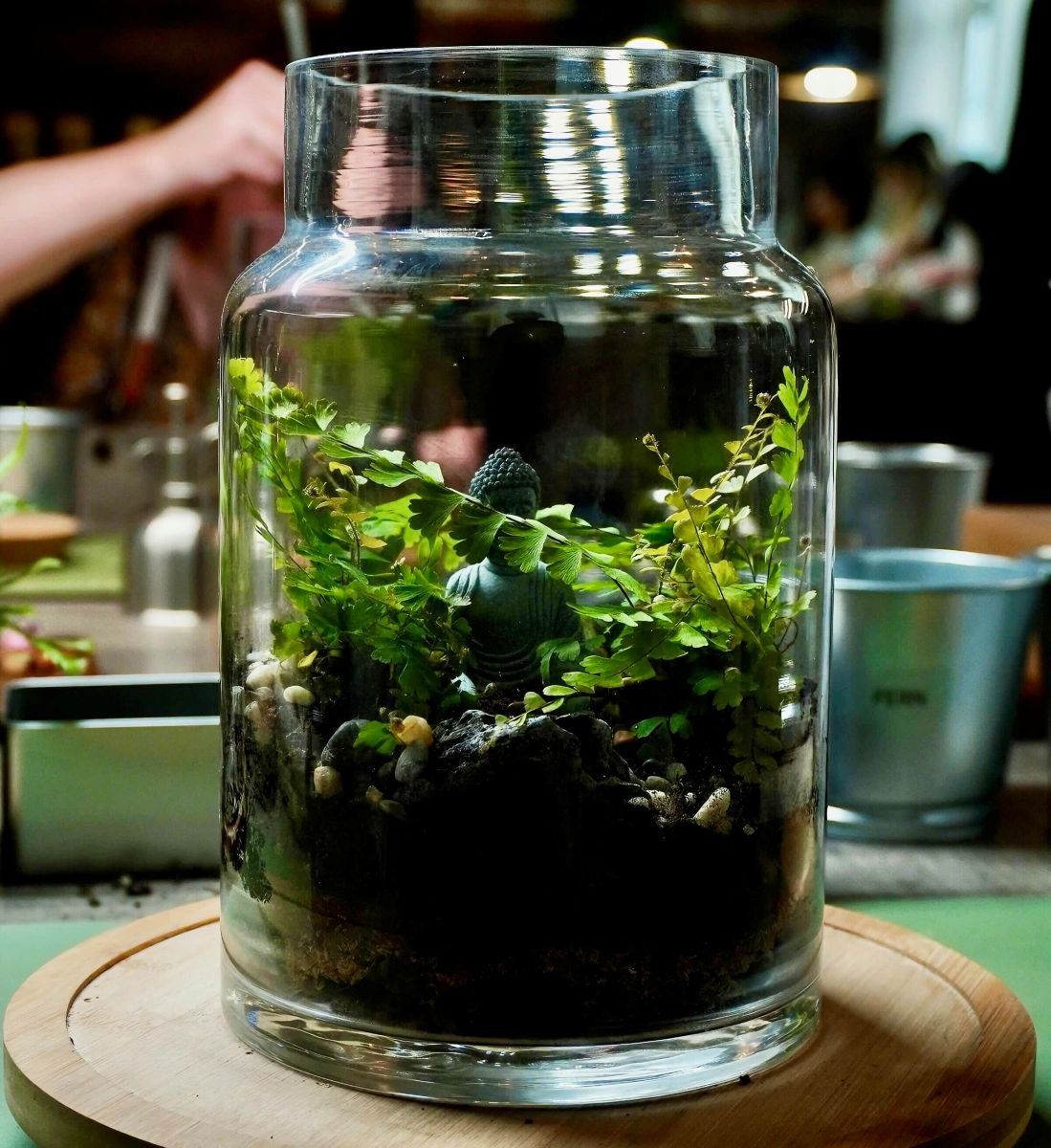
The concept dates back to 1820s England, when a gardener accidentally discovered that sealed glass could help control humidity and air quality, allowing certain types of plants like ferns, moss and ivy to grow and thrive.
A terrarium requires a delicate balance of layers, each one playing an important role: clay balls or pebbles at the bottom for drainage; activated charcoal for odour control and water filtration; sphagnum moss for water retention and lower-layer protection; moist soil on top for planting; and finally, the green, leafy plants themselves. If constructed properly, terrariums require little watering and can last for years.
Terrariums have come in and out of vogue, seeing a spurt in popularity from the 1970s to mid-’80s — at which point technology started to take people’s attention away from indoor gardening.
And now they’re seeing another resurgence, fuelled in part by photos and videos that people post to social media — the lush, bespoke beauty of a terrarium seems perfectly suited for this era of curated feeds — but the appeal of making a terrarium is also, contrastingly, shaped by our desire to disconnect from technology.
“As soon as we start the class, they don’t look at their phones,” Baik says of his workshop attendees. “That’s what I was hoping for.”
He recalls one glamourous participant who came in with very expensive-looking fake nails. Even she couldn’t resist getting her hands dirty. “Before the class, she was texting and taking pictures,” he says. “But as soon as she started creating, she got focused.”
Baik thinks that’s because as adults, we rarely get to follow our creative impulses.
What terrarium-building provides, alternatively, is the chance to have a free-wielding artistic vision and to see it through; to build a mini idyll all your own. The New York Times echoes this, declaring that “terrariums are one thing you can control.”
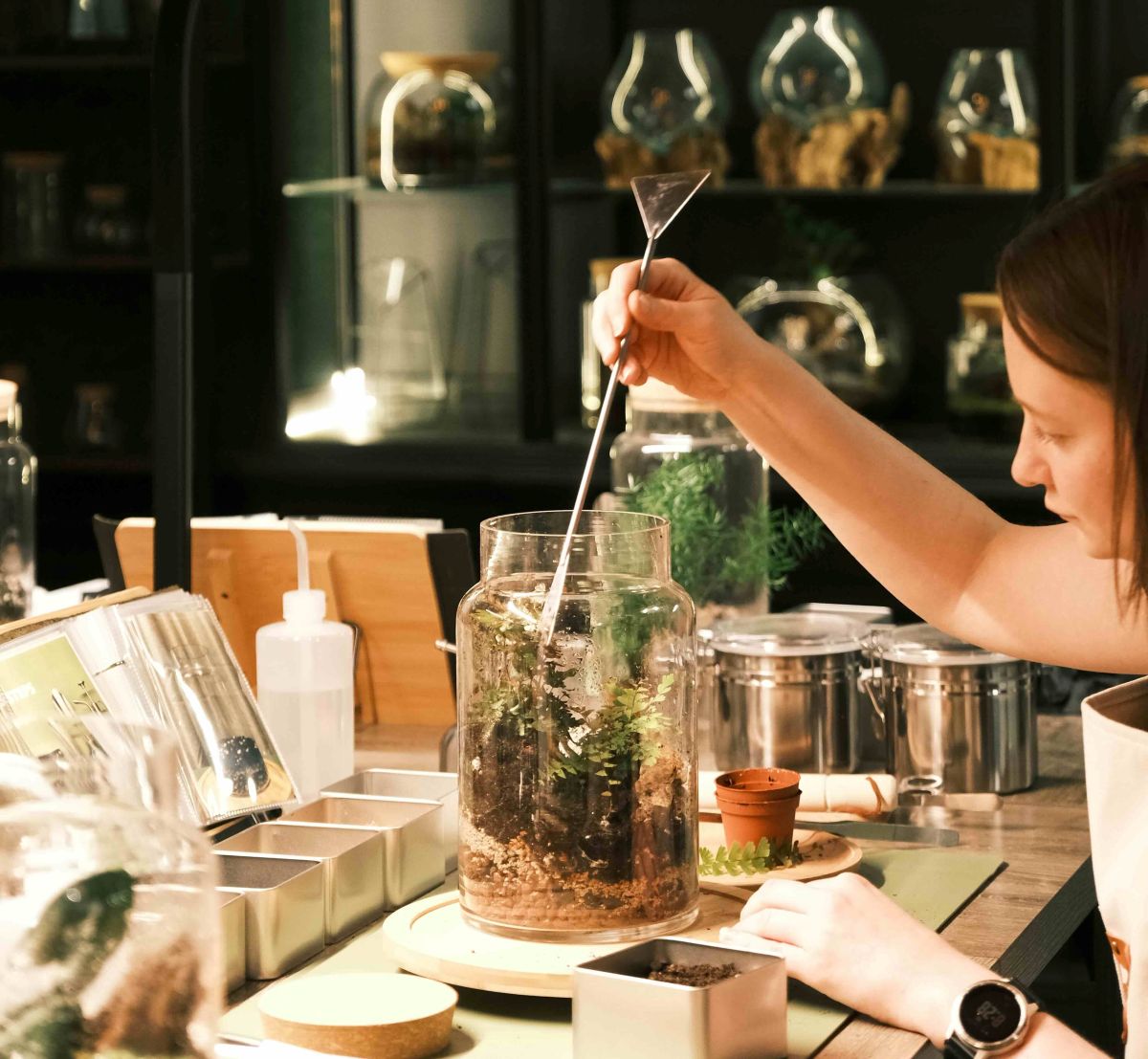
It’s also, for many who take an Oasis workshop, a form of therapy. Gardening is known to positively impact both our mental and physical health, with the act of tending to plants helping to reduce stress and anxiety, and even help lessen symptoms of depression.
Of course, not everyone has access to a backyard, or even a community garden plot — especially in a density-crushed city like Vancouver. Terrariums can provide a mini gardening experience, offering up the same sense of accomplishment and reprieve from the pressures of daily life.
Baik has experienced this firsthand. Originally from South Korea, he moved to Canada 20 years ago with his parents; his dad wanted him to become a professional golfer, but the part he liked the most was being out in nature. After he quit, he took various jobs, including one at a funeral home, where he helped people with their arrangements.
One day, a young woman came in to plan a funeral, though she didn’t share who it was for. The very next day, she died by suicide; her mother came into the funeral home after finding a business card with Baik’s name on it.
“That was the moment: life is way too short to be doing something I don’t enjoy doing,” he recalls. “I should focus on things that make me happy. That’s when I decided to walk away from corporate jobs and then open up a studio.”
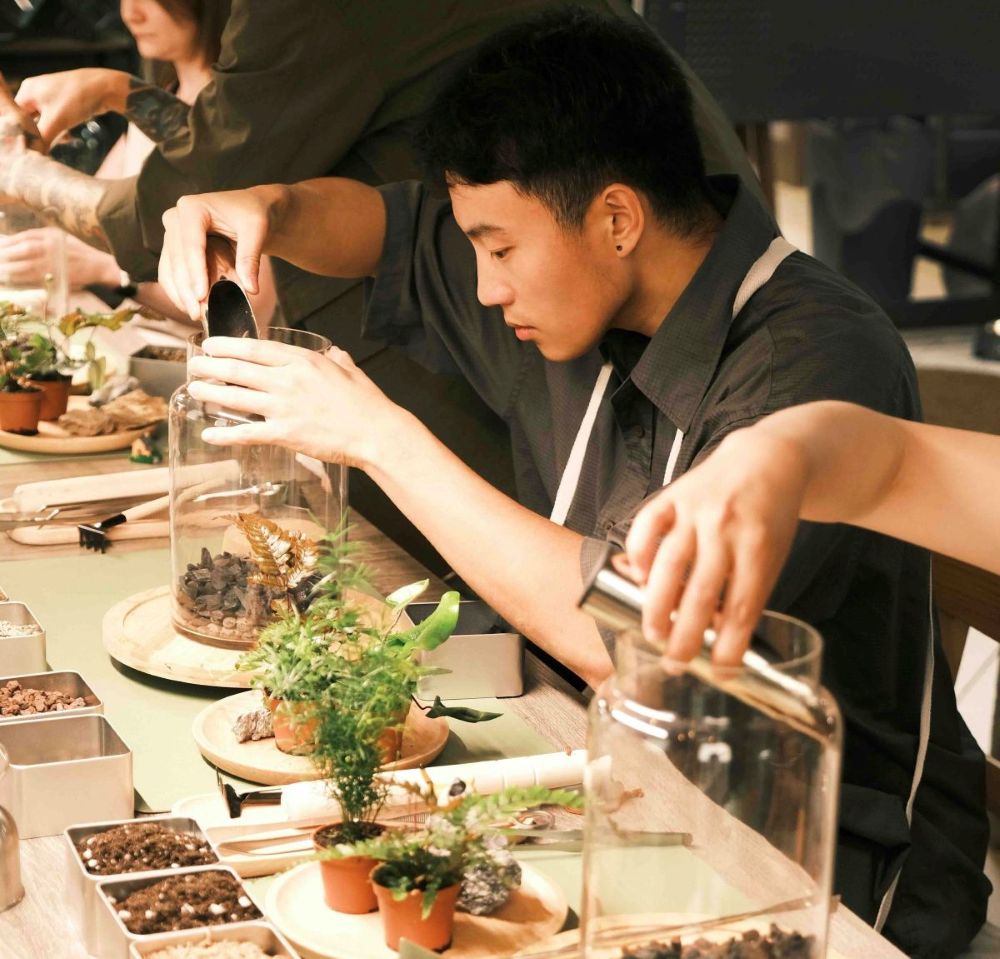
An Oasis workshop costs $125, which includes two hours of guided terrarium building, along with the necessary materials as well as practical tips for long-term care and future creations.
Still, it’s a price that is prohibitive to many, which Baik acknowledges; he plans on starting to grow his own plants instead of sourcing them from local stores as a way to get operating costs down.
Whether it’s through an Oasis workshop or at-home experimentation, Baik says the beauty of a terrarium is that there is no right or wrong when it comes to aesthetics. You are your own boss, your own muse. The master of your own domain.
“We need something that doesn’t need to be judged,” he says.
“We get judged by our outfit, we get judged by our race, and we get judged by our career success. At least this can be my own mini world.” ![[Tyee]](/design-article.thetyee.ca/ui/img/yellowblob.png)
Read more: Health, Science + Tech











Tyee Commenting Guidelines
Please note that email notifications for replies are not currently working due to a software issue which may be resolved in a future update.
Comments that violate guidelines risk being deleted, and violations may result in a temporary or permanent user ban. Maintain the spirit of good conversation to stay in the discussion and be patient with moderators. Comments are reviewed regularly but not in real time.
Do:
Do not: