

 SHARE:
The closure of the Strait of Hormuz. Just another faraway oil story? Just someone else’s problem?
Nothing could be further from the truth. And the bigger story may not be energy at all. The real danger may be food supply.
The United Nations reports that more than 260 million people face an acute food shortage that could threaten global stability.
As usual, the poorest countries suffer the heaviest consequences of the blockade. Similarly, in the United States, the poorest people suffer the most when the global economy is damaged.
But most Americans eventually will be affected, because war is a confidence killer. When energy and food prices soar, even people with secure incomes often decide to take fewer trips, postpone major purchases and cook their own meals rather than dining out. More people are laid off as demand for goods and services drops. Inflation runs higher, so the central banks may ultimately have to raise interest rates. Cutting back on discretionary spending often leads to a downward economic spiral that takes months or longer to reverse.
Some countries are more vulnerable than others. Gulf countries are highly dependent on imported staples such as vegetable oils, corn, rice and wheat — restricted by the Strait of Hormuz blockade. When there is food insecurity, countries can quickly become politically unstable. As the saying goes, “Society is three missed meals away from chaos.”
Where drought or catastrophic flooding compound disruptions in the supply line, governments can be rocked by the unfolding chaos.
Persian Gulf as fertilizer hub
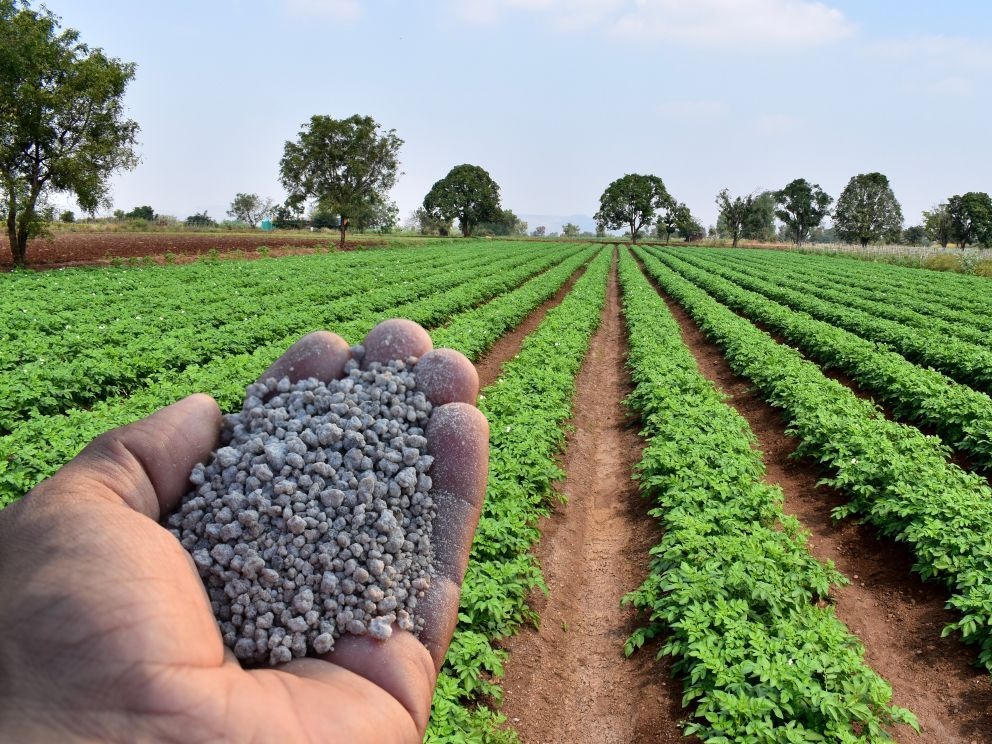
But it’s not just the Middle East that is vulnerable to such upheaval. Many countries around the world rely on fertilizer supply chains now suddenly strained by the war.
Iran, Saudi Arabia, Qatar, the United Arab Emirates and Bahrain are major suppliers of fertilizer. That is because the industry is heavily dependent on cheap energy for production. Normally about 16 million tons of fertilizer passes through the Strait of Hormuz annually — representing a whopping one-third of the world’s fertilizer trade.
But after the military strikes on Iran, fertilizer plants were closed and the gas supply that maintained them was left at risk. Even if plants are again able to make nitrogen fertilizer, delivery to farmers through the closed Strait of Hormuz is now impossible.
Signalling a looming crisis, the World Bank has warned that fertilizer prices could soon explode by more than 30 per cent in 2026 due to the blockade of the strait.
Urea is the world’s most widely used nitrogen fertilizer. The price of urea jumped 53.7 per cent in March to $725.60 per tonne. And guess where the United States gets much of its urea? From the Middle East.
Any significant fertilizer shortage poses an obvious danger. It threatens to lower crop yields significantly, which in turn would raise food costs even higher around the world.
This could spell catastrophe for some countries. India, for example, buys 40 per cent of its urea and phosphate fertilizers from the Middle East. When the demand peaks in June, small farmers may be crushed if fertilizer supplies are interrupted and prices continue to climb, further threatening food security.
Harvests in Africa may already be at risk due to the shortage. About 80 per cent of fertilizer across sub-Saharan Africa is imported, and at higher prices than Europe pays.
Looming fertilizer shortages have also affected traditional exporters. China, normally a major exporter of fertilizer, has banned exports of phosphate fertilizer to protect its own farmers and agriculture sector.
Hard times on the farm
At the same time, family farms in North America are struggling with rising fertilizer and fuel costs. Donald Trump captured 62 per cent of the rural vote in 2024, based largely on promises to help small farmers hold on to their land. Keeping ownership has become a life-and-death situation, as a single dire statistic shows. The suicide rate for farmers in rural America is already more than triple the national average.
Tariffs, and now rising fuel and fertilizer costs, are going to make life on the farm even more difficult. During Trump’s much-touted $12-billion farmer bailout, more than 60 per cent of farm aid authorized in 2025 went to the county’s largest agribusiness firms. Many were major Trump donors.
Here in Canada, which has its own fertilizer supplies, farmers are worried about rising fertilizer costs that are subject to global commodity pricing — just like oil. The price of fertilizer here has risen by as much as 40 per cent as the price of diesel for tractors and trucks has nearly doubled.
Another stark statistic to keep in mind: fertilizer accounts for 20 to 25 per cent of the price of growing some crops. If fertilizer is reduced, underfertilized crops will have a lower yield, reducing world food supply.
Even if farmers can afford fertilizer, there may be shortages due to ruptures in the supply chain by the closure of the Strait or Hormuz. While many larger farms bought their fertilizer last fall, farmers markets may be the first place Canadians will see price increases for fresh food in this country.
Canada’s potash stash
The one bright spot for Canada is an increase in production of potash for both export and domestic use. Potash contains water-soluble potassium used primarily in fertilizers to increase crop yield and to build disease resistance in plants. Potash, along with nitrogen and phosphorus, is one of the main components of fertilizer. Saskatchewan has the largest known potash reserves in the world, with 10 potash mines.
Two major expansion projects are currently underway. The Jansen mine is expected to produce 8.5 million tonnes of the valuable mineral annually when completed in 2031. Potash is also used in animal feed, soaps and prescriptions, as well as in fertilizer.
And here’s a calculus that will no doubt factor into trade talks between Prime Minister Mark Carney and President Donald Trump: Canada is the world’s leading producer of potash, accounting for 31 per cent of world reserves. The United States is the largest importer of Canadian potash, depending on 39 per cent of Canadian production.
That said, no country, including Canada, is immune from events in the Middle East. As many as 800 ships are stranded with their cargoes, unable to sail through the blockaded strait. On May 3 came the latest report of a cargo ship attacked by small craft, adding to the “critical level threat” assessed by a British military monitor.
President Trump’s illegal and unprovoked war has already upended the world economy. People are feeling the pain. In the United States, gasoline spiked more than 30 cents in a week. Regular gas for Americans now costs an average of $4.39 a gallon, up more than a dollar a gallon in the two months since Trump went to war.
Many of those who elected Donald Trump hate his war, and they don’t like paying an extra $20 to fill their gas tanks. Their fury will only grow when the increased price of fertilizer drives food prices higher in the United States.
Trump has created a potential food security problem in his own country and around the world — a dubious accomplishment from a politician fond of saying he holds all the cards.
With energy and fertilizer prices spiking, those cards look like jokers for now. ![[Tyee]](/design-article.thetyee.ca/ui/img/yellowblob.png)







Tyee Commenting Guidelines
Please note that email notifications for replies are not currently working due to a software issue which may be resolved in a future update.
Comments that violate guidelines risk being deleted, and violations may result in a temporary or permanent user ban. Maintain the spirit of good conversation to stay in the discussion and be patient with moderators. Comments are reviewed regularly but not in real time.
Do:
Do not: