


 SHARE:
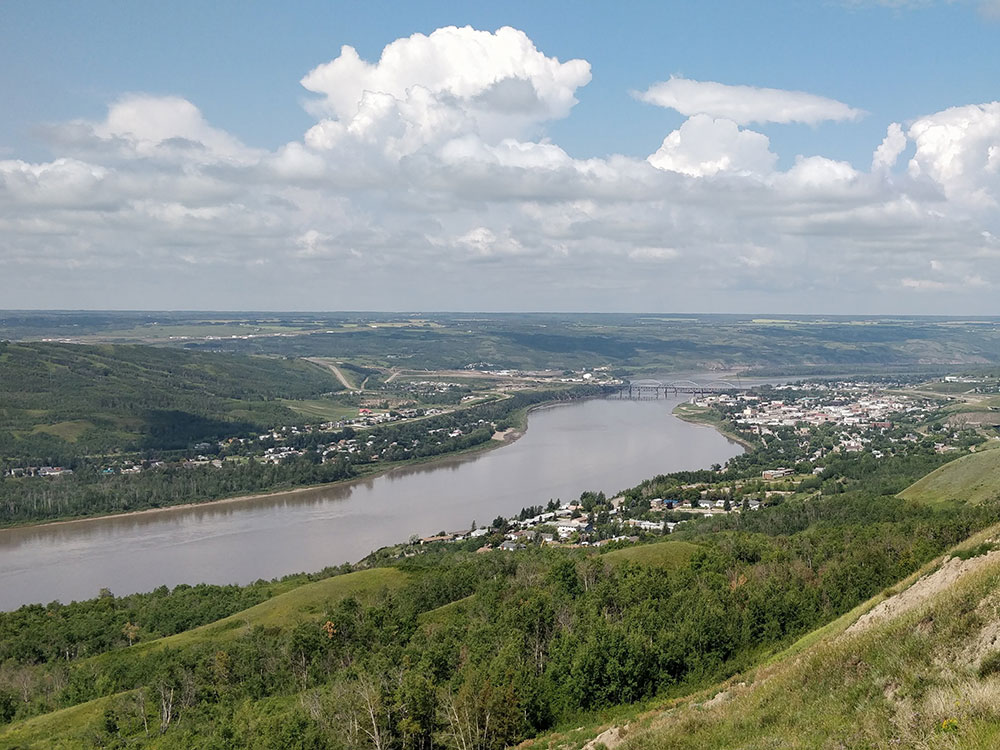
Three major earthquakes that rattled Alberta’s Peace River country in 2022 and 2023 had nothing to do “with natural tectonic activity” as initially claimed by the Alberta Energy Regulator and everything to do with the oil and gas industry’s hidden waste problem: toxic water.
A new study led by University of Alberta geophysicists has once again confirmed, as The Tyee originally reported, that “the largest known induced earthquake in Canada” was triggered by injecting large volumes of wastewater produced from bitumen facilities deep into the ground.
The temblor knocked people off their feet and pushed the ground up three centimetres.
An injection well operated by Obsidian Energy, a Calgary-based firm, was the primary trigger of the earthquake cluster “with secondary contributions from multiple distant wells more than 20 km away,” said the study.
Since 2012 Obsidian’s 2000-metre-deep disposal well has injected more than one million cubic metres of salt water into the ground. A record-breaking earthquake occurred on Nov. 20, 2022, near the disposal well after fluids migrated into a nearby fault about 50 kilometres from the town of Peace River.
Those actions later set off two more moderate earthquakes of magnitudes 4.8 and 5.0 on March 16, 2023.
Scientists note that earthquakes of similar magnitude would have been damaging or even deadly if they had taken place in populated areas such as Vancouver or Toronto.
The oil and gas industry moves, separates and injects so much water into the ground that it has become a formidable geological force on the planet, causing earthquakes, ground deformation, well blowouts and groundwater contamination.
For every cubic metre of oil (six barrels) extracted from the ground, the oil and gas industry produces approximately three to five cubic metres of wastewater (18 to 25 barrels).
In Peace River oilsands operations typically recover a mixture of 25 to 30 per cent bitumen and 70 to 75 per cent water.
To date the oilsands industry has injected 100 million cubic metres of wastewater back into the ground in various formations around Peace River. That’s a waste stream of 40,000 Olympic-sized pools over several decades. As a result, the industry has now created three separate zones of industrial seismic activity in the region.
Managing the industry’s colossal stream of toxic water has become a regulatory and seismic nightmare around the globe as industry has begun to run out of safe disposal sites. Every day the fossil fuel industry must dispose of 250 million barrels of toxic wastewater containing salts, metals, hydrocarbons and radioactive material. That figure could soon climb to 600 million barrels a day because aging oilfields invariably produce more water.
A global phenomenon
Nearly half of that wastewater, three times saltier than sea water, is injected deep into the ground where the technology has triggered substantial earthquakes not only in Canada but in Texas, Kansas and Oklahoma. In British Columbia alone, where the LNG industry now drives extensive fracking in the Montney shale formation, the BC Energy Regulator has had to curtail or modify operations at 11 disposal wells due to rising seismic activity.
Meanwhile other forms of fluid injection have changed seismic patterns around the world. Hydraulic fracking, which blasts high pressurized streams of water, chemicals and sand into shale formations, has caused earthquakes from British Columbia to Argentina.
In Europe and Asia the injection of cold water into deep hot rock formations to create renewable enhanced geothermal power has also triggered swarms of earthquakes.
And in China high fluid injection of fresh water to dissolve salt in underground caverns over a 30-year period built up enough pressure to release a swarm of earthquakes and break another induced global record: a magnitude 6 tremor. That quake caused 13 deaths and injured more than 200 people.
Meanwhile the fracking industry in Texas has injected so much wastewater into the Permian Basin — about five billion barrels a year or what New York City consumes in eight months — that it has over-pressurized reservoirs and triggered hundreds of earthquakes.
In an attempt to dampen seismic activity in the Permian Basin, the Texas Railroad Commission, which regulates the oil and gas industry, permitted wastewater injection at shallower depths. But that practice has created a different headache.
As a result, salt geysers have punctured the landscape after erupting through faults or abandoned wellbores. The Wall Street Journal noted in a 2025 report that “swaths of the Permian appear to be on the verge of geological malfunction.”
Last year the Texas Railroad Commission issued warning letters restricting new disposal wells because they “had resulted in widespread increases in reservoir pressure that may not be in the public interest and may harm mineral and freshwater resources in Texas.”
The railroad commission, which is considering treating and disposing wastewater into rivers, added that “drilling hazards, hydrocarbon production losses, uncontrolled flows, ground surface deformation and seismic activity have been observed.”
No such warnings have come from the Alberta Energy Regulator, but during a recent hearing on the Peace River quakes the regulator admitted that there were so many wastewater disposal operations and so many clusters of related seismic activity in the oilsands region that “identifying which disposal operation or operations are responsible for specific seismic events is challenging.”
‘A domino-like sequence’: report
The new study on the Peace tremors, published last month by Geophysical Research Letters, concluded the earthquakes acted “as a domino-like sequence triggered by wastewater injection and sustained by interactions between fault structures.” In effect the geology channelled the wastewater into a deep ancient fault zone.
The study warned that “ongoing injection may rebuild pressure and initiate new sequences” of earthquake activity.
At the time of the quakes the Alberta Energy Regulator initially downplayed industry’s role but later changed its tune when a 2023 Stanford study identified water injection as the cause of the earthquakes.
The regulator then issued an environmental protection order against Obsidian, a mid-sized Calgary-based company. The order requested that the company act at one of its injection wells to reduce the tremors felt throughout central Alberta and submit a mitigation plan.
But the firm appealed the regulatory order on the grounds that “the evidence linking the Obsidian well to the seismic events is ambiguous” and that other industrial activities in the area such as other bitumen producers are “substantially more likely” to be the cause of the seismic events.
Obsidian also argued that the seismic events “were more likely induced than natural seismicity, but that this conclusion is not definitive.”
After a 2025 hearing on the matter, an Alberta Energy Regulator panel concluded that its order was warranted and that the tremors were indeed “caused by human activities.” The panel also noted that Obsidian’s wastewater disposal operations directly caused or contributed to the earthquakes along with other high-injection wells in the vicinity.
Grant Ferguson, a hydrogeologist at the University of Saskatchewan who studies deep groundwater systems, said the new study suggested that operation of injection wells is “increasing the risk of seismic activity in the Peace River region.” Ferguson also told The Tyee that it showed “the possibility of induced seismicity at depths of several kilometres are also consistent with what has been documented in other regions, notably Kansas and Oklahoma.”
He added that such studies underscore the need for more research on industry’s impact on the subsurface. “Areas with rising levels of injection associated with oil and gas recovery may have elevated seismic risk, especially as production expands to frontier areas.”
Ferguson noted implications for efforts to transition away from fossil fuels or lower the emissions associated with producing them. Citing carbon sequestration, geothermal power, hydrogen storage or lithium production from brines, Ferguson said: “All of these activities are going to involve injection of fluids, potentially at large scales.”
The volume of wastewater, fluids and gases now being injected into the ground also illustrates another predicament: the growing impact of industrial waste streams on natural underground ecosystems.
Overriding Earth’s processes
In 2024 a study published by the journal Earth’s Future and authored by Ferguson and colleagues showed that the oil and gas industry, combined with deep underground mining such as potash extraction, is now moving and injecting more water deep under our feet than what the subterranean ecosystems would do naturally. In other words, industry has become a much more powerful geological force underground than natural processes.
Moreover, all this industrial water flow is taking place in a rich microbial environment that scientists barely understand.
“Whatever the subterranean world is doing in terms of moving flows of microbes, chemicals and water, human beings are doing more of that at a depth of several hundred metres,” Ferguson told The Tyee.
Or as the study put it: “Fluid flow rates associated with oil and gas production likely exceed natural groundwater flow rates at depths greater than 500 metres.”
The study warned that renewable technologies touted as green could magnify the impact. “Projected carbon capture and sequestration, geothermal energy production and lithium extraction to facilitate the energy transition will require fluid production rates exceeding current oil and co-produced water extraction,” wrote the researchers.
Over the past two decades scientists have discovered more microbial communities living in the deep subsurface at depths of up to a few kilometres. Little is known about their essential work in the deep biosphere for chemical and nutrient recycling.
“We don’t know what their functions are or how they are involved in the carbon cycle,” added Ferguson.
“We are doing this to an underground system that we don’t understand. There might be some important functions we are tampering with that we can’t undo.” ![[Tyee]](/design-article.thetyee.ca/ui/img/yellowblob.png)
Read more: Energy, Alberta, Environment










Tyee Commenting Guidelines
Please note that email notifications for replies are not currently working due to a software issue which may be resolved in a future update.
Comments that violate guidelines risk being deleted, and violations may result in a temporary or permanent user ban. Maintain the spirit of good conversation to stay in the discussion and be patient with moderators. Comments are reviewed regularly but not in real time.
Do:
Do not: