

 SHARE:
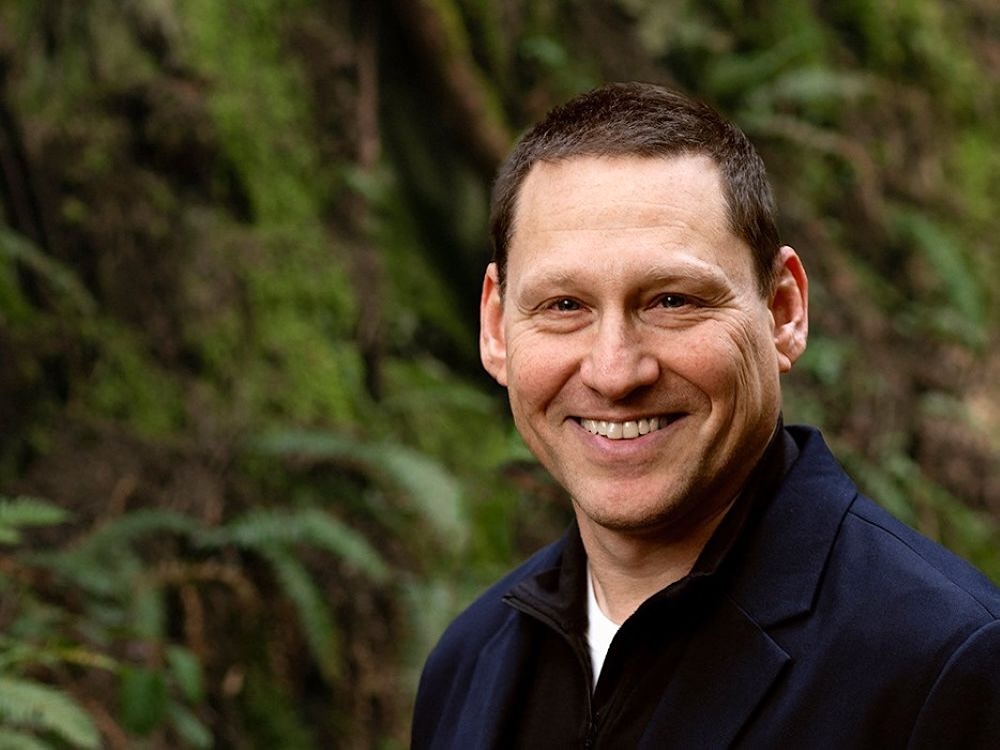
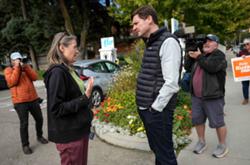
The new leader of the NDP, Avi Lewis, is party royalty. After all, his grandfather helped found the party and his father not only led the NDP in Canada’s largest province, but publicly debated John F. Kennedy.
Now we’ll find out if Lewis has the royal jelly — and the right ideas — to save a moribund party.
The lineage
Avi Lewis’s grandfather David Lewis was a labour lawyer and social democratic politician who became one of the key founders of the New Democratic Party in 1961. Elected as an MP in 1962, David Lewis rose to lead the NDP from 1971 to 1975. He had a central role in the creation of the Canadian Labour Congress in 1956.
Known for his powerful debating skills and leadership ability, he operated as an incrementalist in dealing with non-socialist governments, advancing his views bit by it, issue by issue.
David Lewis was elected NDP national leader at the 1971 party convention after former leader Tommy Douglas lost his seat. Both Lewis and Douglas voted against the War Measures Act during the 1970 Front de libération du Québec crisis. During the 1972 federal election David Lewis coined the enduring phrase “corporate welfare bums.” The NDP held the balance of power until 1974, propping up the Liberals in exchange for support for NDP proposals, such as the creation of Petro-Canada as a crown corporation.
Stephen Lewis, the eldest son of David Lewis and the father of Avi Lewis, led the Ontario NDP from 1970 to 1978 — which meant father and son led the two largest NDP movements in the early to mid-1970s.
Stephen Lewis became the Canadian ambassador to the United Nations from 1984 to 1988. In the 2000s, after his political career ended, he was special envoy for HIV-AIDS in Africa, winning wide acclaim for his work.
Stephen Lewis famously debated John F. Kennedy at Hart House in Toronto in 1957, examining the question “Has the United States failed in its responsibilities as a world leader?” Lewis has 33 honorary degrees and, like his father, was awarded the Order of Canada. He watched this NDP convention from his hospital bed and demanded daily updates along with his IV.
The female side of the Lewis family is equally distinguished. Avi Lewis’s mother is the writer and journalist Michele Landsberg. Avi Lewis also boasts that he is the husband of acclaimed author and activist Naomi Klein. Speaking at a packed church in downtown Winnipeg on the eve of the convention, he wore a pin urging delegates to “vote for Naomi’s husband.”
Introducing her husband at the convention, Klein described him as funny, kind, generous and an amazing father. They have had a 30-year conversation about art, friendship, the health of the living world, and his bid to beat the disaster capitalists in Canada.
The New Democrats’ new leader is a broadcaster, academic activist and twice-thwarted political candidate. He is also a filmmaker — he and Klein have produced documentaries including This Changes Everything.
In recommending her husband to be the one to change everything about the fortunes of the federal NDP, Klein urged the audience to rebuild the party, wrest the country back from bankers and overlords and “dream big once again.”
The ideas
In his speech, Avi Lewis vowed “to bring our party back from the wilderness.” What map, then, will he follow to inspire a fractured party and attract new voters to its retooled agenda?
Lewis pledged to be laser focused on the affordability crisis. He called out the genocide in Gaza, declaring, “We are at a high-stakes moment in human history.”
Lewis’s policies include creating public grocery stores and banks, building public housing and expanding health-care access. He also wants a moratorium on building AI data centres. He has vowed to make proportional representation the NDP’s “one demand” if the party holds the balance of power in Parliament. And not surprisingly, Lewis has floated the idea of a wealth tax.
Lewis and other activists wrote the Leap Manifesto in 2015 — a radical response to climate change, income inequality and racism. He continues to propose an end to new oil production.
In the past, such ideas have not necessarily gone over well with voters. Lewis ran in federal elections in 2021 and 2025*, losing both times.
But in the leadership campaign, Lewis raised the most money, $1.2 million, more than double that collected by Heather McPherson, who finished second in the race and whose more pragmatic politics have been honed by serving an Alberta constituency as MP.
What Lewis offers his beaten-down party is hope for a great awakening to eco-socialism, and people have responded to his optimistic energy.
The state of the party
Despite its current weakness, only six federal seats, the NDP showed considerable bench strength during the leadership race. Interestingly, three of the candidates — Lewis, Rob Ashton and Tanille Johnston — are based in British Columbia. Their various resumés and prescriptions for fixing the NDP reveal competing currents within the party that Lewis will need to navigate to succeed.
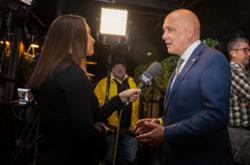
McPherson has represented the riding of Edmonton Strathcona as a federal MP since 2019 — an orange dot in a sea of blue. She has defeated Conservatives three times and was the only leadership candidate with a seat in Parliament.
She sharply diverged from Lewis and the recent NDP leadership by supporting the expansion of the Trans Mountain pipeline. But she also has advocated to limit coal mining in the Rocky Mountains and to increase environmental oversight over the mining industry.
McPherson campaigned on “building a bigger table” for the party. In her speech, she stressed that “people are struggling” and that the NDP had to show Canadians “we have their backs.”
During the leadership campaign McPherson was endorsed by former MP and activist Charlie Angus and by former Alberta premier Rachel Notley. Notley introduced her onstage before her rousing convention speech, noting that McPherson naturally connects with people and that she is a “builder.”
McPherson, a strong advocate for human rights, holds a master’s degree in education and has worked in international development. She is for a two-state solution between Palestine and Israel. As party foreign affairs critic, McPherson proposed recognizing the Ukraine war as a genocide.
At the end of her speech, McPherson reminded what Tommy Douglas, the father of Canadian medicare, had to say when he lost his seat in Regina, Saskatchewan, in 1962. Douglas quoted a 15th-century ballad: “I am hurt but I am not slain. I will lay me down and bleed awhile, And then I’ll rise and fight again.”
McPherson, who finished second in the voting, received standing ovations at the beginning and the end of her speech and strong applause throughout. She was also the only one on the stage who had won an election. (Douglas, by the way, did return to Parliament as the MP for Burnaby-Coquitlam.)
Rob Ashton, the dockworker who became national president of the International Longshore and Warehouse Union Canada, gave a stirring speech that hearkened to the NDP’s strong labour roots by focusing on workers and the working class. Ashton, who has warned that New Democrats are "in really bad shape" because workers are “running towards the Conservative party,” promised a party run by electoral district associations and members, not the party’s leaders, if elected.
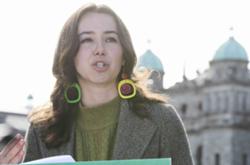
Tanille Johnston, a young Indigenous activist and social worker, showed great energy and generated a rousing response from the audience. Among the key priorities she campaigned on: “increasing the representation and participation of Indigenous persons in local, regional, provincial and federal decision-making.” She came in third.
Despite an inspiring convention and a slate of attractive candidates, here is the reality for new leader Avi Lewis and his colleagues. The road ahead for the NDP is perilous. Cash-strapped and without party status, the NDP has no easy path to relevance, let alone power.
It’s not just that mainstream Canadians are ignoring the party. Almost half of NDP voters didn’t recognize the names of the most recent leadership candidates.
The hope, of course, is that a new leader can lead to a reversal of fortune for the NDP. In Sunday’s victory speech, Avi Lewis exuded confidence that he would deliver. “The NDP comeback starts now,” he told party members, their cheers filling the hall.
Ahead lie all the thickets of political wilderness, ready to put their new leader’s survival skills to the test.
*This story has been updated to correct the years when Avi Lewis ran unsuccessfully for Member of Parliament. ![[Tyee]](/design-article.thetyee.ca/ui/img/yellowblob.png)
Read more: Federal Politics


Tyee Commenting Guidelines
Please note that email notifications for replies are not currently working due to a software issue which may be resolved in a future update.
Comments that violate guidelines risk being deleted, and violations may result in a temporary or permanent user ban. Maintain the spirit of good conversation to stay in the discussion and be patient with moderators. Comments are reviewed regularly but not in real time.
Do:
Do not: