 SHARE:
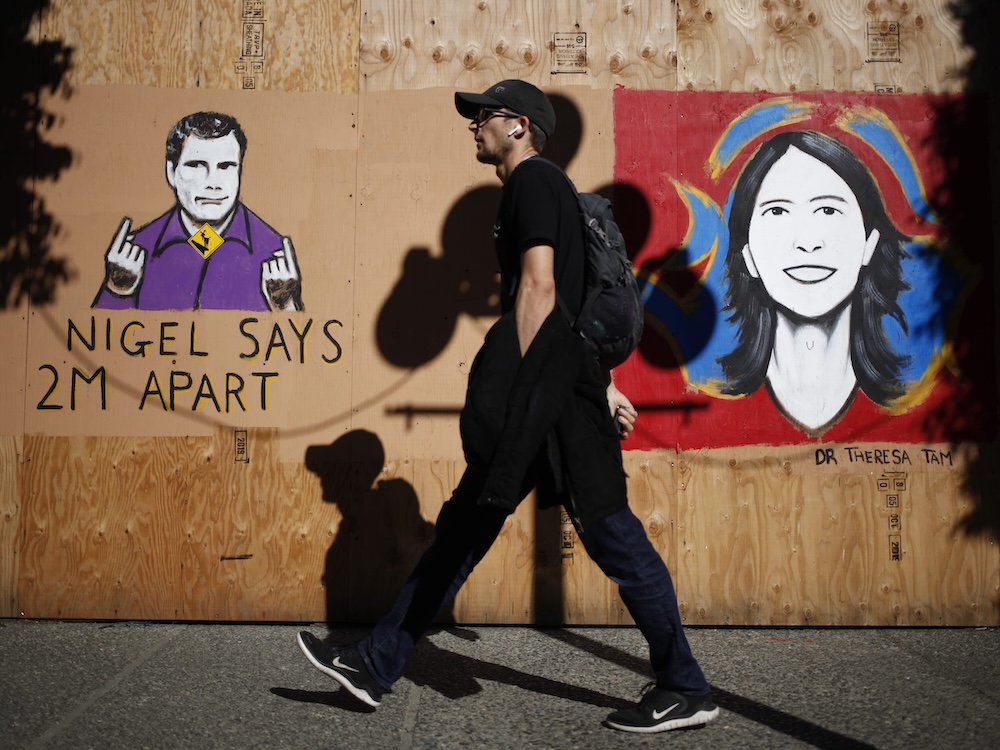
Last year on this date, I published a Tyee article about the fifth anniversary of the first public announcement of what we now know as COVID-19.
My conclusions then were that we hadn’t learned much from the experience. A year later, many of us have unlearned the value of vaccination. Outbreaks of measles and whooping cough have predictably followed. Alberta has stopped reporting COVID-19 in hospitals.
But looking back over the past year, I can see that some of us have learned a lot. For example, a Toronto hospital is now helping patients pay their rent, giving them a financial “vaccination” against eviction and homelessness — conditions known to produce bad health outcomes.
We’re also learning, for example, how such viruses can spread through the air, and what their long-term impacts can be on us and our children — not to mention our politics.
We’re beginning to worry about avian flu, H5N1, which has killed millions of American chickens and turkeys and which continues to infect U.S. dairy cattle.
Mercifully, H5N1 hasn’t yet learned how to jump reliably from human to human. But it keeps mutating and recombining with other viruses; it will stumble on our immunity password eventually.
H5N1 is also pretty clearly an airborne virus that can move from infected poultry to animals. We had grounds for suspecting that as early as 2013, when a Red Deer nurse came back from a visit to family in Beijing. While there, she had simply walked past a “wet market” (where animals are slaughtered only after purchase) and contracted H5N1. She died of it in Red Deer Regional Hospital, where she worked, the first Canadian case and fatality.
We’re also seeing strong new evidence that the ongoing H5N1 epizootic in North American poultry farms is spreading through the air. In November 2025, the online news site ProPublica published its findings that avian flu has been spreading through the air from farm to farm, while the U.S. Department of Agriculture insisted it was being transmitted by wild birds and by people and vehicles moving from one farm to another.
A miasma of doubt
As U.S. science writer Carl Zimmer pointed out this year in his book Air-Borne: The Hidden History of the Life We Breathe, medical culture doesn’t like the idea of viruses and bacteria moving through the air unprotected by tiny droplets of saliva or mucus. Maybe it’s too close to the ancient theory of miasmas, patches of atmosphere that were supposed to transmit diseases. (“Malaria” literally means “bad air.”)
Or maybe it’s just too damn hard to defend against an airborne microbe, so health experts and health-care workers alike gave up the effort. Imagine shopping for groceries or teaching a class or working on a construction site if you had to stay 10 metres away from everyone else even in well-ventilated spaces.
As it turned out, respirators like N95 masks are usually effective against airborne infections, and some hospitals are allowing staff to wear masks again. (During a hospital stay this past summer, I saw many health-care workers wearing masks — usually, however, they were the blue “surgical” type, which are ineffective in protecting their wearers from airborne disease transmission.)
We are also learning that COVID-19 is not just another kind of cold. Every infection increases the risk of long COVID. A 2023 Statistics Canada report estimated that long COVID by then was still affecting 2.1 million Canadians.
Long COVID isn’t going away
In the United States, the independent health polling and research group KFF estimated in 2024 that 17 million adult Americans had long COVID at the time. The report also mentioned that long COVID was most common among transgender people, disabled people and women. Those populations also reported difficulty in finding health care, paying the rent or mortgage, affording adequate food and holding on to their jobs.
Long COVID can last for years; it’s a personal disaster for those suffering from it, and a social and economic disaster for the country. Worse yet, a study in The Lancet Regional Health — Americas found repeated infections increase the risk of incurring long COVID.
The COVID-19 virus, SARS-CoV-2, isn’t only a respiratory threat. It can migrate through the body, doing damage to many organs. One study found that the virus can invade the brain, causing injury and cognitive deficits.
A recent Australian study reported that brain damage inflicted by COVID-19 can last years, long after people feel recovered from the disease. The consequences include problems with memory, cognition and overall brain health.
Researchers and advocates keep the pressure on
Encouragingly, Canadian agencies and universities are doing considerable research through the Post-COVID-19 Interdisciplinary Clinical Care Network, including a number of B.C. institutions in partnership with national programs like the Long COVID Web and RECLAIM trial.
But governments remain averse to publicizing such research, or keeping the public informed of best practices for preventing COVID-19. They seem to have learned mostly to avoid the whole subject of public health, even as Canada has lost its measles elimination status thanks to low vaccination rates, and other respiratory ailments like whooping cough and respiratory syncytial virus keep spreading.
As a result, COVID-19 survivors, those experiencing long COVID, and people who are immunocompromised have taken up roles as advocates. The ME/FM Society of BC advocates for people living with myalgic encephalitis, fibromyalgia and long COVID — all post-viral diseases with similar symptoms.
A national group called Long Covid Kids Canada offers support to children and their families. And the Canadian COVID Society advocates for clean air in schools, safer health care and providing long COVID resources and awareness.
While hospitals remain largely mask-averse, pressure is growing on them to clean up their air. Back in 2023, the British Columbia Medical Journal, published by Doctors of BC, released a report on the effectiveness of HEPA filtration in reducing hospital spread of COVID-19, especially when used with improved ventilation, isolation of acute cases and N95 masking.
Think globally, act locally
Hospitals are not the only hazardous places; workplaces and classrooms are as well. We don’t know how many children have caught COVID-19, but some have, and have spread it inside and outside the classroom. We wouldn’t tolerate contaminated drinking water in schools, and we shouldn’t have to tolerate contaminated air.
While local groups seek local solutions, the movement for clean air is worldwide. In September 2025 the United Nations launched the Global Commission on Healthy Indoor Air. The commission’s key goal will be to develop a framework suited to each country’s needs: funding, policy, education, public awareness and advocacy.
The emergence of such a framework for Canada would enable advocates, health-care workers and politicians to co-operate in establishing standards for clean air in every building. The consequences in improved health and reduced demand for health-care services would soon become obvious.
Just as we no longer tolerate smoking indoors, we would no longer accept poor indoor air quality — whether it were contaminated with PM2.5 particles, wildfire smoke or dangerous microbes.
Happy holidays, readers. Our comment threads will be closed until Jan. 5 to give our moderators a much-deserved break. See you in 2026! ![[Tyee]](/design-article.thetyee.ca/ui/img/yellowblob.png)
Read more: Health, Coronavirus