


 SHARE:
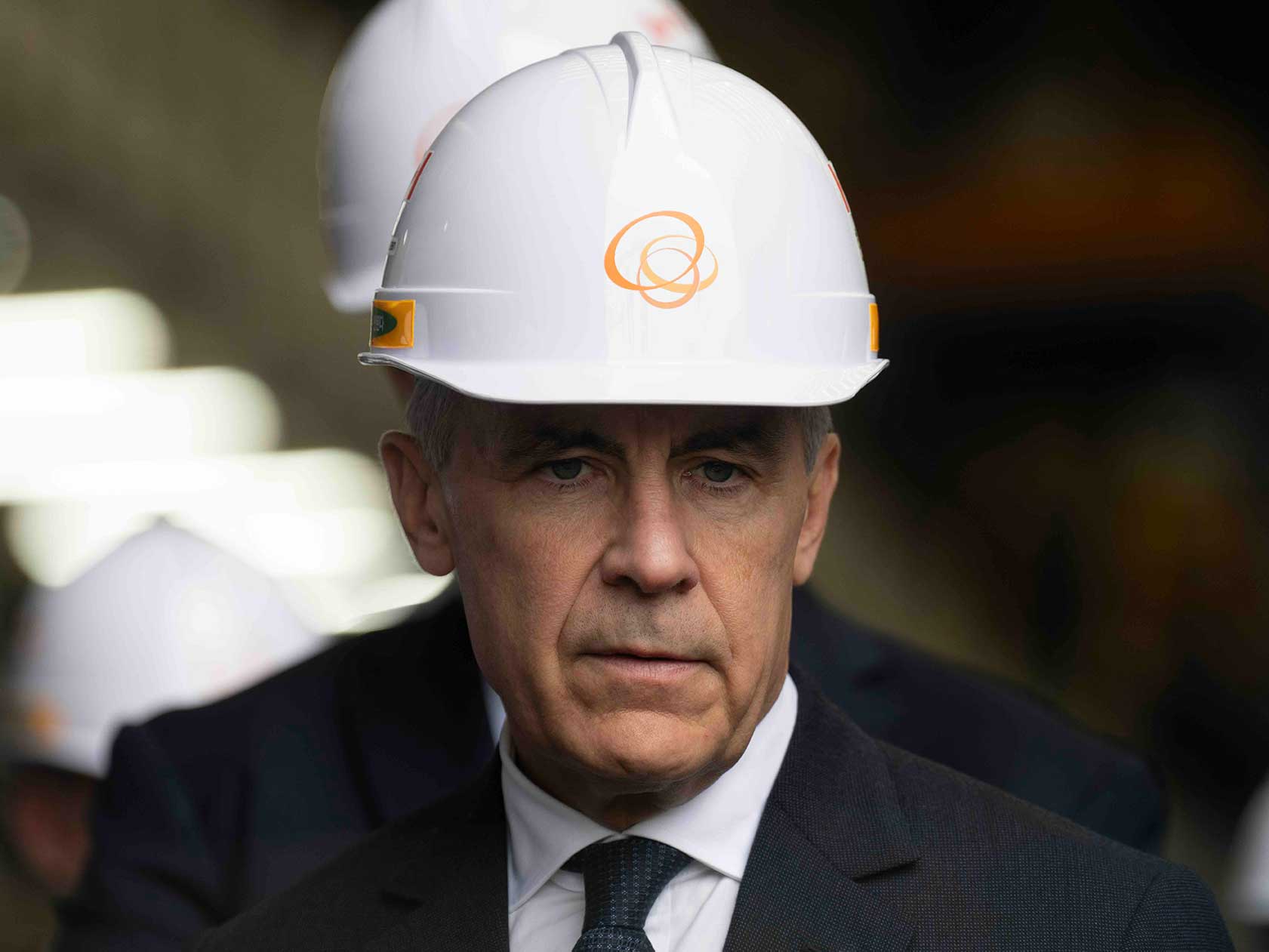
Before the release of his first budget, Prime Minister Mark Carney said that Canada had to “swing for the fences,” baseball jargon for trying to hit it out of the park.
It will be up to Canadians to decide if Carney hit a home run, got a base hit, walked — or struck out.
That won’t be easy. The budget features seemingly contradictory actions — a massive $78-billion deficit and billions in new spending, alongside more billions in cuts to the government’s operating budget.
How people view those two big directions will determine how they rate the budget.
If spending and stimulus are your things, Budget 2025 has much to offer — including $141 billion in new spending over the next five years.
That expenditure aligns with Carney’s promise to massively invest in this country as one of the ways of addressing the ruinous impact of Donald Trump’s tariff war.
As Carney recently told students at the University of Ottawa, “The decades-long process of ever-closer economic relationship with the United States is over. As a consequence, many of our former strengths as a country, based on close ties to America, have become our liabilities.”
Here are some of the government’s new expenditures in this “something for everyone” budget.
There is $84 billion in defence spending over the next five years, which is no surprise with big-ticket items like new fighter jets and submarines on the military’s shopping list.
The huge expense is in keeping with Carney’s promise at June’s NATO summit to ramp up Canada’s investment in defence from two per cent of GDP to five per cent.
There’s $150 million in funding for the CBC to “better reflect the needs of Canadians.”
The budget scrapped the luxury tax on boats and planes to help stimulate those industries.
There’s $594 million over two years to create 100,000 summer jobs for students.
And the Canada Revenue Agency will get an unspecified amount to automatically prepare tax returns for some Canadians. The measure is designed to ensure that one million low-income Canadians will have access to government programs such as the GST/HST credit, the Canada Child Benefit and the Disability Benefit.
There’s an expenditure of $97 million over five years for the Foreign Credential Recognition Action Fund. The aim is to allow internationally trained workers to get their credentials recognized more quickly.
And the government plans to spend up to $1 billion to attract talented foreign workers to Canada. This program is primarily aimed at enticing American talent disgruntled with Donald Trump’s policies to move north.
An expenditure of $75 million a year over the next three years will boost apprenticeship programs, focused on the building trades.
There is funding for 1,000 additional Canada Border Services Agency officers, at a cost of $617 million over five years.
And a new $1-billion fund to support Arctic transportation infrastructure.
All of this spending comes at a cost — a massive deficit of $78.3 billion, one of the highest in Canadian history. All that red ink makes an easy target for deficit hawks like Conservative Leader Pierre Poilievre.
Poilievre told the House of Commons Tuesday his party will vote against the budget. “On behalf of all Canadians who can no longer afford to eat, heat or house themselves because of Liberal inflation, we, Conservatives, cannot support this costly Liberal budget.”
No surprise there. Before Finance Minister François-Philippe Champagne even tabled the budget, Poilievre was setting out conditions for his support that were never likely to be met.
In a letter to Carney, Poilievre declared that he wanted the deficit kept to $42 billion. He also wanted the government to reduce taxes across the board — on income, capital gains, home-building, farm equipment and fertilizer.
Government House Leader Steven MacKinnon called those demands “ludicrous.”
Bloc Québécois Leader Yves-François Blanchet was not as categorical as Poilievre in rejecting the budget, but decidedly pessimistic. “I don’t see how we can vote for this,” he told reporters.
In advance of the budget, Bloc Québécois finance critic Jean-Denis Garon set out 19 conditions in return for the support of the BQ.
They included six that were “non-negotiable” — the refund of $814 million in carbon taxes, an increase in the Old Age Security benefit at age 65, interest-free loans for first time homebuyers and an end to oil and gas subsidies.
Even Green Party Leader Elizabeth May said that she cannot support the budget in its present form, though she is open to negotiations to come up with amendments.
The best hope for the Carney government to get the support it needs to pass Budget 2025 is the NDP. The party never sent the government a list of demands for its support, as the other parties did.
Instead, they made a generic statement. They would not support an “austerity” budget. So the question for the NDP comes down to this: what will they focus on in Budget 2025, the spending side, or the $51-billion in cuts?
Poilievre is not the only person concerned over the size of the deficit. Interim Parliamentary Budget Officer Jason Jacques warned earlier that Canada was on a fiscal path that “isn’t sustainable.” And that was before the enormous deficit was announced Tuesday.
But Carney can point to supporters for his spending budget, including Kristalina Georgieva, the managing director of the International Monetary Fund. She said that Canada not only has room to expand the deficit, unlike most G7 countries, but at this “testing time” actually needs “to use their fiscal space.”
But spending is only part of the story of this budget.
The other narrative is Ottawa’s decision to cut, including a reduction in the size of the federal public service, aimed at bringing it back to a “sustainable level.”
In all, the government will be reducing the federal workforce by 40,000 jobs. The government thinks it can do this gradually by attrition and tweaking its retirement rules, rather than through mass firings. It plans to reach its full target for cuts by 2029.
The cuts are consistent with Carney’s recent instructions to cabinet ministers to reduce their budgets by 15 per cent over the next three years.
Carney’s goal is to slash the government’s operating budget. Under former prime minister Justin Trudeau, the federal public service added more than 100,000 jobs.
In addition to big spending and big cutting, the budget featured some key regulatory changes to stimulate trade and the economy.
The goal is to get the corporate sector investing in Canada. One of the ways the budget encourages that is through a program called “productivity super-deduction.” The plan will let businesses write off a larger portion of new capital investments more quickly.
While Ottawa hopes the private sector will act on these incentives, it intends to lead by example on investment spending. The budget projects that its capital spending in Canada will rise to $60 billion in 2029-30, which would be double the rate in 2024-25.
As bold as Budget 2025 is on spending and cutting, it is decidedly wimpy on climate policy. Carney’s “climate competitiveness strategy” was not fleshed out and there were no details about his much ballyhooed “climate target priorities.” And there was no decision to either keep or scrap Trudeau-era caps on oil and gas emissions. No one in either business or the Green community has much to be happy about.
As with every fiscal blueprint, there are questions about Budget 2025’s assumptions and efficacy.
In changing the way that federal budgeting is done, has the government made the case that there is a difference between capital expenditures and operating expenses? Or is it all just a way to rationalize big, scary spending?
Can Carney’s budget initiatives generate $300 billion in new trade, as projected? Can Canada really double non-U.S. exports over the next 10 years by increasing trade with Asia, the E.U. and Mexico?
And most important, can the government get this budget passed in a minority Parliament where it needs the support of at least one other party to survive?
The answer to that question will be the difference between business as usual in Ottawa for the next year and a Christmas election. ![[Tyee]](/design-article.thetyee.ca/ui/img/yellowblob.png)
Read more: Politics











Tyee Commenting Guidelines
Please note that email notifications for replies are not currently working due to a software issue which may be resolved in a future update.
Comments that violate guidelines risk being deleted, and violations may result in a temporary or permanent user ban. Maintain the spirit of good conversation to stay in the discussion and be patient with moderators. Comments are reviewed regularly but not in real time.
Do:
Do not: