Books

In Defence of Trans People

Author Christopher Shelley on the pain bigotry inflicts on transsexual and transgendered persons.

By Sarah Buchanan, 23 Sep 2008, TheTyee.ca

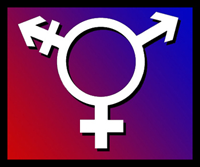
Transgender symbol

For many, a symbol of pride.

  • Transpeople: Repudiation, Trauma, Healing
  • Christopher A. Shelley
  • University of Toronto Press (2008)

"It is extraordinarily painful, as social creatures, to be told that you don't belong," Christopher Shelley has written. "When you're pushed out, it's damaging, it's abusive, it can mark a person for life."

I still remember my first week on the soccer field in Grade 7, when Krista Smiley told me that if I was going to fit in, I would have to stop playing football with boys and grow my hair, because "people were starting to wonder."

I had been dressing and acting as a boy for a steady eight years; I was tired. I wanted to be able to walk confidently into a bathroom without confrontation.

I made a decision at that moment to give up. I grew my hair. I wished for breasts. I wore ribbons. I felt like a total imposter for about 10 years, until I eventually grew into a strange yet comfortable mish-mash of femininity and masculinity, which had little to do with ribbons or breasts.

The people profiled in Chris Shelley's Transpeople did not listen to the Krista Smileys of the world, and chose instead to redefine their bodies to feel at home in them.

Whether it be through physical modifications like sexual reassignment surgery, transgressive clothing, or simply by embracing a new pronoun, Shelley has done a fantastic job of presenting a diverse and empowering range of actions taken by transpeople (by this he refers to both transgendered and transsexual people) to create and maintain their own gender identities, as well as the fear and rejection that this often inspires in a heteronormative culture.

Outsider looking in

Since Shelley does not identify as a transperson, he relies primarily on the experiences of Vancouver's trans community to address these issues. "I think transpeople are the primary experts on their own lives," he claims, sipping a coffee at the shop where he wrote much of the book.

"I wouldn't be able to do a book like this as a non-transperson without taking an assumed position of authority. So I took a collaborative approach, and let transpeople educate me." He laughs. "I didn't know a lot of people in the trans community at first... I met a few key trans allies who introduced me around. In every case I felt that transpeople were very open to allies, as long as I worked respectfully. It's when you take their narratives and stories at their expense, as many academics do, that things go wrong."

This is a refreshing approach to research in the queer community, considering that the experiences of folks of many sexual identities is often co-opted by academics and media alike, and turned into sensationalized stories of sexual depravity.

As a psychotherapist, Shelley came into contact with many stories of violence and abuse, most of which he decided to leave out of the book.

"The things that were told to me were hair-raising, shocking and very private. I could tell from people's levels of discomfort when certain things should not have gone in the book. I was also very aware that there could be people that have a kind of paraphelic interest in transpeople as a group, and I'm not here to sexualize transpeople or their lives. I didn't want that pain to be stirring up more curiosity."

'I was fumbling'

Shelley has learned a lot from his research, and admits, "I started this project 10 years ago when I, as an ordinary queer man, didn't feel that I had a good enough grasp of transpeople's lives... I was fumbling." This fumbling is a common feeling, and helps explain why there is often transphobia and rejection even among the gay, lesbian and queer communities (also referred to as LGTBQ).

Shelley's deep analysis of transphobia in surprising places like women's shelters, gender clinics and gay bars is one of the major strengths of the book, making it relevant within the LGBTQ community as well as for those new to the subject.

A brief warning about lexicon

I will warn the reader that in presenting Chris' words, I am assuming a certain level of understanding of terms such as "queer," "gay," "lesbian," "transsexual," and "transgendered." If you are not familiar with how these terms are different, please look them up, or simply refer to item #2 in Chris's list at the end of this article.

In our conversation, here's what else Shelley had to say...

On 'transphobia', and the mistake of calling trans people 'head cases'

"I happen to know people who are not afraid of transpeople, but just don't buy it [that there is such a way of being]. What they do in that process is refuse an identity claim. By refusing that claim, they're repudiating, they're stepping back from the trans-embodied person, who they're more likely to describe as head cases, homosexuals who just don't know what they're doing, or as drag queens who went too far.

"I think transphobia is part of a range of repudiations that trans people encounter. Some have a phobic cast and some don't. Some people reject transpeople because they are deeply committed to religious or political ideologies that are offended by the very idea of crossing or transgressing. In virtually every case, the individual wouldn't even know it as transphobia itself. They are stirred up by what trans bodies entail.

"I don't think these questions have been fully thought through by a lot of people. Among most folks in small town, B.C., unless they've seen Oprah or something, they wouldn't even know what a trans man was. Trans women have been sensationalized for such a long time."

On the origins of sensationalism

"People have a really hard time treating trans people equally. They are either awed by them, with that gaze of fascination with an exotic oddity, like 'I'm going to figure your body out, and maybe you're some kind of weird alien.' That's not equanimity, but a strange elevation of an object which is almost never sustainable. When you put people into those binaries, they flip. They can go from being really good and attractive to really bad and disgusting very quickly. Some trans people have mentioned that they find this just as uncomfortable as the fear reactions.

"We're never going to be able to stop this elevation, because sensationalism sells. It captures audiences, it increases market shares. Cheap talk shows like Jerry Springer... they create a freak show atmosphere. Anyone who is exotic is sensationalized because it makes money to do so.

"I think this is a problem of ethical journalism. I feel that we have a long way to go as a society before trans folks are accepted in the same way as gay, lesbian and queer folks often are now. Trans people are still very much at risk in many sitatuations."

On transphobia among gays and lesbians

"Gay and lesbian people can misunderstand transpeople to the same extent that straight people can. I think sometimes in the gay male community, there is an investment in hyper-masculinity, a worship of the stereotypically male body. And often in strictly lesbian communities, one of the things you're not allowed to do is have sex with men. .

"But queer communities are about defining your own sexuality, your own body, your own identity, and not living under rules. A place where, if I have a history of being with men, I'm not going to feel ashamed about it. A lot of people don't fit into the binary of heterosexual/homosexual.

"I think that in the gay and lesbian community, there's a lot of discrimination against gender variance, where queerness tries to accommodate people who don't feel a sense of belonging, and might shift from day to day.

"That being said, there are transpeople who are lesbian-identified and don't want to be in a queer community, there are transpeople who see things very much in terms of the binary. They were born in one box, and that's the wrong one, and they want into the other one."

On the case of Kimberley Nixon, a trans-identified male-to-female woman, who tried to volunteer with Vancouver Rape Relief and was told that, because she was considered male, she was not welcome, causing her to legally fight that decision, losing in the Supreme Court of Canada

"If we go back to the things that happened with Vancouver Rape Relief and Kimberly Nixon... there was a lot of overt and admitted hatred. The radical cultural feminist school has taken a really hard line against transpeople. There are exceptions -- some radical cultural feminists are pro-trans.

"I also happen to know that Rape Relief does some very good work -- I may be critical of them, but I'm not out to get them.

"But for the most part, their beliefs are largely rooted in quasi-religious beliefs about the body. It's the mirror opposite of a patriarchal gaze -- you're evaluated on your body to the extent that you conform to what a woman should be. It basically says that women ought to look like women. That a feminist organization does this is very disturbing."

On why Shelley dedicated his book to Kimberly Nixon

"I think she has done more for transpeople in this country than anybody else. What Kim Nixon did was to make it possible for trans women across the country to access many women's assault centres and rape relief houses. Her battle, although she lost in court, raised awareness and got policies changed voluntarily across the country. I think Kimberly Nixon is a hero."

After the interview, some reflections

When I left the coffee shop after speaking to Shelley, I noticed a crew of fundraisers on the corner of Commercial and 1st for Vancouver Rape Relief. A strange coincidence, no doubt, since our parting words had been about this very organization. I stopped, addressed a man in a ball cap holding a tin cup and sign.

"Excuse me," I said. "I'd like to donate, but I hear that trans women aren't welcome in your organization. Is that true?"

"Well, our policies have not changed," he replied, "but men can still join the fundraising committee. We need to create a safe atmosphere for women to exist in, so that's why we don't allow men."

I couldn't help but notice how many times he said the word "men," despite my question being about trans women.

"You'll have to ask the women in the organization about this, though," he added. "They know the politics behind it."

I thanked him for his time, and for all the important work that Rape Relief has done for women in Vancouver. On my way home, I wondered how I would have reacted to this situation had I not listened to Krista Smiley on the soccer field years ago, and what this man would have assumed about my identity. As a woman in a female body, I have access to this service, and have the ability to volunteer there. If I had put on a baseball cap, cut my hair, and called myself Dave, things would have been very different.

Which is why I asked Chris to compose the list below, and hope that a few folks take it to heart.

Ten Signs of Transphobia in Our Culture, by Christopher A. Shelley

  1. Denial that the problem exists in the first place.
  2. Inability to distinguish between categories such as queer, gay, lesbian, and trans.
  3. Lack of meaningful discussion in educational and workplace settings.
  4. Anxiety over not being able to tell if a person is male or female.
  5. Crude jokes directed towards trans people or with trans-related content.
  6. Refusal to accept trans people as one's own teacher, doctor, politician, dentist, etc.
  7. Thinking that being trans is OK but also dismissing the idea of ever dating a transperson.
  8. Reducing trans to being merely and solely a psychiatric category.
  9. Trivialization and media spectacles centred on trans-ness as an object of 'fascination.'
  10. Refusing the fundamental claims of transpeople as being genuinely mis-sexed.

Book launch for Transpeople: Repudiation, Trauma, Healing. Event begins at 7 p.m., Thursday, Sept. 25, at Little Sister's bookstore, 1238 Davie St., Vancouver. RSVP to awilson@utpress.utoronto.ca.

 [Tyee]

16  Comments:

  • snert

    22-09-2008

    So it's OK to be 'trans'

    Quote:
    Thinking that being trans is OK but also dismissing the idea of ever dating a transperson.

    but not hetro......right!

    Sorry. That just blew the other 9 reasons right out of the water.

  • zalm

    22-09-2008

    And #10's not too clear either

    Quote:
    Refusing the fundamental claims of transpeople as being genuinely mis-sexed.

    Is that merely a restatement of #8 or is it that transpeople believe themselves to be mis-sexed?

    I'm realizing I'm quite clueless when it comes to all these new verbs and adjectives....

  • JL

    23-09-2008

    the politics of trans

    Last federal election, i was stuck on whether to vote Hedy Fry, as my Liberal boss suggested, to vote Svend Robinson, despite my displeasure of him using bipolar as an excuse (hurting the many bipolar people who don't need employers thinking that bipolar disorder results in theft), or to give the Greens $1.75. It came down to an all-candidates question printed in Xtra West on trans rights.

    When asked what trans people needed, Svend gave the only answer that indicated a real understanding of the issue. Hedy, the Conservative and the Green offered platitudes. It was really telling to see how superficial LGTBQ knowledge was. Come election season, I'll be listening to the candidates who care about LGBTQ issues and not just LGBTQ votes. Maybe they ought to read this book.

  • Sarah_Buchanan

    23-09-2008

    Yes, in fact it is OK to be trans

    Sorry snert, I'm not quite sure what you are trying to say here.

    Are you implying that transpeople cannot identify as heterosexuals? Or that transpeople dismiss the idea of dating heterosexuals?

    I think maybe you missed the point of the article, which was to challenge this dismissive and harmful tendency to categorize people, and limit what they can and cannot do.

    And, for the record, there are many trans folks out there happily dating people who identify as heterosexual, or may identify this way themselves.

  • Grrlbrain

    23-09-2008

    It is OK for women's groups to choose our members!

    It was a pleasure to see this article compliment Vancouver Rape Relief's 35 years' of work toward ending violence against women.

    However, I must object to:
    - Printing Shelley's remarks on Van.Rape Relief, without any supporting facts! I hope the book publishes a link to comprehensive coverage of our winning the basic right to choose our membership. Several concise articles here:
    http://www.rapereliefshelter.bc.ca/issues

    - Quoting a voluntary fundraiser without his permission. Surely he would have found it more ethical of the journalist to identify herself as such and get his agreement to be quoted?

    It could have lead to a much more thought-provoking and accurate article if the journalist had contacted Vancouver Rape Relief that Saturday and talked with me. I am one of the organizers of these fundraising strategies that allow Van. Rape Relief to be not only a 24 hour rape crisis line and transition house for battered women and their children, but a progressive force for significant social change for women.

    As we have for 35 years, my collective would have welcomed the invitation to open discussion.

    I hope Tyee readers accept my invitation to fill in the gaps in your information by visiting www.rapereliefshelter.bc.ca.

    Best,
    Jacqueline Gullion
    Vancouver Rape Relief Collective

  • snert

    23-09-2008

    I missed nothing, Sahra.

    You are trying to make a case for acceptance of transgendered people, fair enough. Although some in this forum may not consider me so I think I am reasonably tolerant of whatever curves life likes to throw. Now, as in item 7, would I actually date a transgendered person? Not on your friggin life. Does that make me a bigot? I think not. Does that make me bad person? No, it's a matter of personal choice and you seem to think it shouldn't exist.

  • nightbloom

    24-09-2008

    This is a very good article

    This is a very good article that touches on a lot of contentious and difficult issues. Bravo.

    As for quoting the Van Rape Relief volunteer, there's nothing out-of-bounds about that. You put these volunteers out there to carry your brand and collect money on your behalf - it's therefore reasonable to expect them to speak in public on behalf of the organization. As a provider of necessary services to "born women" in need, Van Rape Relief fulfills an admirable mission. However, as a participant and stakeholder in ongoing debates on gender issues and sexual abuse advocacy (as opposed to service provision), Van Rape Relief has often been a less-than-constructive presence, and is frequently an obstacle to mature non-polarized non-ideological debate on gender issues and sexual violence. Their collective heart is in the right place, but their ideology is way out there. I don't think that's going to change any time soon, so concerned donors should simply direct their funds elsewhere if they view exclusionary policies or excessively dogmatic ideologies on the part of Van Rape Relief objectionable. And tell them that the next time you walk by them.

  • anne cameron

    24-09-2008

    oh, really?

    I'm on side with Vancouver Rape Relief.

    I really do not understand why so many people are willing to continue an "either/or" definition of sex and gender. If there is "nothing wrong" with being Trans, why not just use the word? Why can't we be comfortable with more than two categories, why can't we have male, female and trans?

    You can all line up to throw little balls of crud at me, it's been done before now and I don't even duck any more. VRR has a well explained (for open minded people) analysis of why they have the policy they have. And I support it.

    That doesn't mean I think trans are in any way any less than anybody else. They have a unique viewpoint. It's sad if they can't be proud of it but that isn't exclusively MY problem.

  • profeminist

    24-09-2008

    political responsibility

    26 years ago I contacted Rape Relief and said that I was a supporter of women's liberation who wanted to help out in any way I could. I described my background and was readily given work to do. I am still doing it. Nixon received a similar offer.

    Patriarchy and sexism are the problems here. I urge everyone who wants to learn a radical approach to patriarchy, sexism, and the concept of gender to volunteer to work in support of Rape Relief.

    Everyone is welcome, and you can learn about the complexities of the issues while doing something constructive to challenge them. I salute the organization for its 35 years of radical work and its continued commitment to excellence in the struggle.

  • nightbloom

    24-09-2008

    I find the last two posters

    I find the last two posters (anne cameron and profeminist) are speaking out of both sides of their mouths and are glossing over the real issue with pure cant. If it's about non-categorization and non-binarism pertaining to gender, if it's about everyone being welcome, then why the exclusionary policies and ideology? Why has Van Rape Relief been consistently criticized on these grounds over the years?

  • ordinary queer woman

    24-09-2008

    How about fighting for both trans rights and women's liberty

    Radical feminism opposes the fact that though women make up more than half of the global population, we have little decision making power even over our own lives, and little control over resources, including land, money and our own bodies.

    No doubt transwomen and other trans people face many pressures similar to those faced by women and no doubt these are partly the fault of sexism.

    But half the population of the world is oppressed and some of us women-born women are organizing in the spaces we established more than 30 years ago to end that oppression. There is nothing wrong with keeping these spaces as part of our own liberation strategy.

    We’re already being attacked by the Father’s Rights movement, the government, therapists, business, and other men who want to protect their privilege. It’s hard to understand this attack on feminist organizers at Rape Relief as different from that of those right wing forces. Although we have our differences, and I admit we do, pro-trans and feminist groups also have a lot of common enemies and shared interests. Taking the radical feminists down is not going to help end oppressive (as in physically dangerous, not just emotionally difficult) gender-sex rules.

    Obviously, Christopher, you are taking advantage of an already long drawn out and expensive fight to build your own professional credentials. This ordinary queer woman is totally pissed off at your self-interested anti-feminism. Us feminists are already consciously refusing to conform to gender norms on a daily basis. So how about you get off my back and start fighting transphobia in a way that protects both transpeople’s rights and women’s liberty.

  • nightbloom

    24-09-2008

    I don't think women's rights

    I don't think women's rights are advanced by oppressing and excluding others. The Kimberly Nixon case demonstrated that when push came to shove Van Rape Relief didn't stand behind the gender-ideology it espoused.

    Two things stand out here: Anne Cameron's use of the possessive "my collective" in reference to Van Rape Relief (is it a service provider for people in need, or is it a private club house for disaffected feminists and lesbian separatists?), and also the false distinction between "physically dangerous" versus "emotionally difficult" gender-sex rules. I think there's a paradox here which no amount of ideology and cant can obsure.

    I am also puzzled by the assertion that Van Rape Relief has been attacked by proponents of equal rights before the courts for male parents. Most moderate feminists have conceded that there are some injustices there. I don't know what the poster is talking about, but I'm starting to see the pattern. Perhaps this pattern is the real issue here, and is the real problem behind Van Rape Relief's exclusion of the transgendered.

  • Bluenose

    24-09-2008

    Trans Pride

    A wonderful and informative article. It's great that Shelley dedicated his book to Kimberly Nixon: she deserves at least a dedication, if not a dedicatory stela.

    I agree with Nightbloom's analysis, and I gladly direct my funds elsewhere.

    As I wrote on the Tyee forums a couple of years ago, Jack Layton basically supported Stephen Harper's bid to become Prime Minister. If the Martin government had been able to remain in office a little longer it would have been able to pull itself up in the polls; and if Martin had won the election, Harper would have been gone by now. Thanks, Jack. I used to vote NDP: never, ever again.

    I predicted then that the next Canadian federal election would result in a Conservative majority government, and I don't think I'll be proved wrong. Now I would go ever further and forecast a succession of Conservative majority governments, for at least the next two or three elections after this. We're probably facing Conservative majority rule for the next twelve to sixteen years. This will have devastating effects on trans folk and other sexual minorities (especially those on the lower financial rungs of the social pecking ladder). The far left will offer their usual rants and raves and ideological posturing. Completely ineffective, as always. Real people will suffer real consequences.

    The best advice has always been to never give the devil a foothold. Or one might say, don't leave any window open that the enemy could use to get in. Well, Mr. Layton not only left the window open, he invited him in. It takes a long spoon to sup with the devil, and Jack was a few inches short. As the Conservatives proceed (which, mind my words, they most certainly will) to further marginalize and stigmatize trans folk and others in this brave new Canada we will soon find ourselves living in, the courts rather than the benches of Parliament may be our only refuge. Provided Harper doesn't appoint too many of his friends.

  • The discussion for this story is closed. No more comments can be added.