

 SHARE:
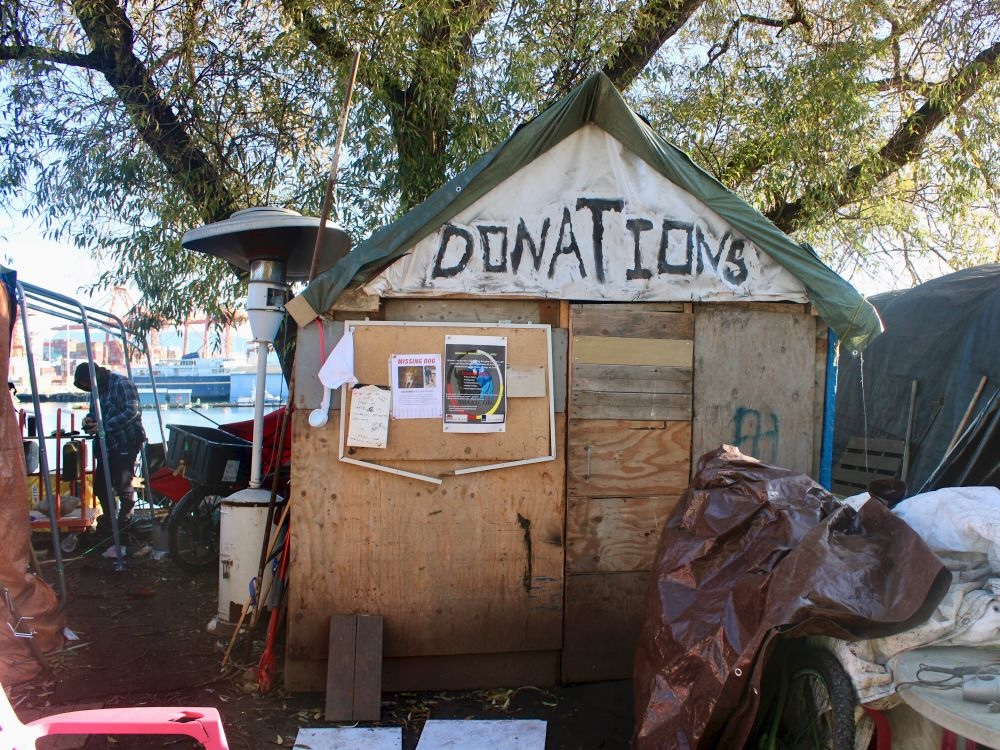
What does housing as a human right actually mean in a housing crisis that is only getting worse?
As the calendar turns to another National Housing Day on Nov. 22, housing precarity continues to be a huge problem in most B.C. municipalities. But one thing is different — in the last year, we have seen an increased number of municipal governments formally acknowledging housing as a human right in legislation and policies.
At its annual meeting in September, the Union of BC Municipalities passed a resolution that recognized housing as a human right and is now calling on the provincial government to do the same. Previously in July, we saw similar motions passed by 10 city councils, including in Vancouver, Victoria and the City of Langley. What does this increased recognition in B.C. of housing as a human right mean as so many of our neighbours continue to navigate housing insecurity and homelessness, while the housing crisis seems to only worsen?
We are members of the University of Victoria’s Right to Housing Aspiration Research Cluster, a group of university and community-based researchers who study the impacts of limited housing rights in B.C. policies. We have been following the rising number of acknowledgments by local governments of the human right to housing. While the increase in municipalities passing such declarations is recent, this right has been legislated federally in Canada since 2019 as a cornerstone of the National Housing Strategy.
Internationally, housing was recognized as a human right as early as 1948 by the United Nations’ Universal Declaration of Human Rights, and through the International Covenant on Economic, Social and Cultural Rights, which Canada signed on to in 1976.
Most notably for Canada is the fact that Indigenous populations disproportionately experience housing adversity and homelessness, whether urban, rural or on-reserve. This represents a violation of the UN Declaration on the Rights of Indigenous Peoples.
Despite this history, in the current housing crisis the right to housing is violated every day: whether through the casual disregard for landlord-tenant laws; the destruction or defunding of low-income housing in the name of real estate profit; circular supply-and-demand policy “solutions” that do little to improve the crisis; or through overpolicing, displacement and incarceration of those who are underhoused or unhoused altogether. These realities serve to further entrench people in homelessness and housing precarity, worsening trauma and harm.
For example, across B.C. we have seen city councillors vote across party lines to declare housing a human right — but many of those same councils have also voted against other motions or policies that hold potential to improve the housing security of those most affected by housing crises. Examples include shutting down a renters’ advocacy office, freezing funding for new supportive housing in the Downtown Eastside, demolishing tiny homes and withdrawing support for modular housing.
Even within these examples, we see the ways these interventions are sometimes momentary gains that are then withdrawn to accommodate private property interests. Housing crisis solutions sometimes arrive in a temporary structure that can be easily removed when its existence becomes inconvenient.
It seems contradictory to vote to support housing as a human right with one hand and then vote against the very policies that are desperately needed to put even the smallest dent in the housing crisis. So we must ask ourselves: Whose right to housing is being protected, and at whose expense? How can we meaningfully ensure a right to housing is a right for everyone? What does a right-to-housing approach that is inclusive of everyone actually look like?
We argue that a community-led approach to a right to housing is vital in government responses to housing crises, so that the expertise and everyday experiences of individuals most directly affected by the crises are centred in policy responses. A community-led approach to a right to housing means that these individuals and communities are recognized as the drivers, the leaders, the experts in what is needed and what tactics might make the biggest impact in reducing housing insecurity.
Resolutions and policies that enshrine housing as a human right are a vital first step. It is positive and valuable that governments are passing these declarations. But they are just that — an acknowledgment by governments of the crisis that envelops them, and a goalpost for correcting it. But a key missing ingredient is meaningful engagement and incorporation of the knowledge and expertise of those living the worst aspects of this crisis in their daily lives. It is only through their vision that we can begin to chart a pathway forward to resolving the significant gaps in funding, infrastructure, legal protections and inclusive, community-centred planning. It is only through listening to people at the centre of this crisis that a human right to housing might actually be achieved.
Let’s use this National Housing Day as an opportunity to reflect on and imagine what a right to housing can and should stand for in the face of our province’s housing crises, which are fuelled by profit, displacement and violence. ![[Tyee]](/design-article.thetyee.ca/ui/img/yellowblob.png)
Read more: Rights + Justice, Politics, Housing











Notice about commenting changes
The Tyee’s commenting system will be moving to a new platform on Nov. 12. If you’re already a Tyee commenter you must register with the new system on or after Nov. 12 with your preferred username.More information can be found here.