

 SHARE:
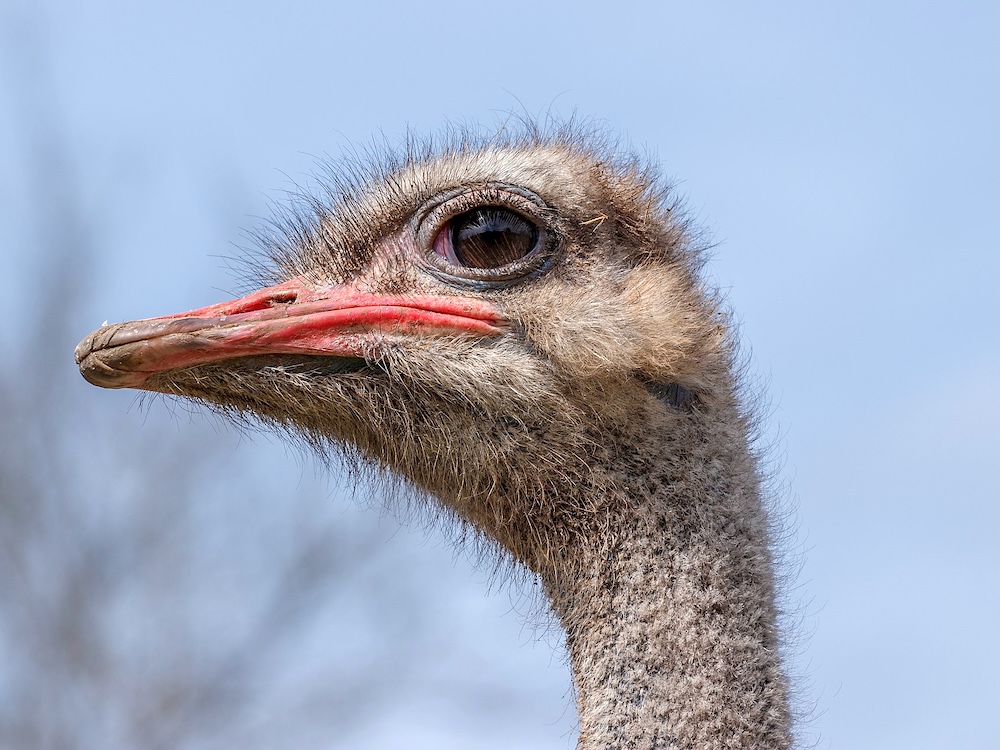
One of the owners of a controversial ostrich farm that defied a government order to cull its flock after an avian flu outbreak is now looking into starting a new farm on Vancouver Island.
Dave Bilinski, co-owner of Universal Ostrich Farms, has incorporated a new company called Ostrich Vitality Inc., B.C. business registry documents show. According to the registry documents, Hal Hewett, a Comox Valley man who is active in the B.C. separatist movement, is a director of the company. Business registry documents list a Campbell River address for Bilinski.
The new venture has some local farmers concerned, said Arzeena Hamir, an organic farmer and food security advocate on Vancouver Island.
According to the Canadian Food Inspection Agency, or CFIA, Universal Ostrich did not follow guidelines to contain its avian flu outbreak after 69 of its ostriches died of avian flu.
The disease has a 90 to 100 per cent mortality rate for farmed chicken and also has high mortality rates in other animals. While relatively few people have been infected with the current strain of avian flu, or H5N1, those who have gotten ill have become very sick, and some have died of the illness. B.C. farms are particularly at risk, with more than 10 million birds already affected by avian flu — the most of any Canadian province.
There’s a big worry that the farm could repeat the same practices that were used previously, Hamir said.
If avian influenza is found in the flock, the concern is that “the flock aren’t going to be kept indoors, in any kind of indoor structure, and that they’ll be allowed to be outside and pass on the disease through other wild birds, and have it be a spreader site for the entire community,” Hamir said.
Universal Ostrich, which is co-owned by Bilinski and Karen Espersen and located near Arrow Lake in Edgewood, B.C., resisted a CFIA-ordered cull of its surviving ostrich flock, which the government agency said was necessary to limit the spread of avian flu.
The farm’s cause attracted a committed group of supporters, some of whom had been involved in the “Freedom Convoy” protests against COVID-19 restrictions in 2022. Universal Ostrich’s fight against CFIA’s cull order became a popular cause among right-wing political figures, and even caught the attention of U.S. Health Secretary Robert F. Kennedy Jr., who advocated to save the birds.
After months of legal battles, CFIA took custody of the flock in September 2025 and the birds were killed in November.
Comox Valley considered for new operations
In an interview with The Tyee, Bilinski confirmed that the new ostriches are the offspring of the original flock from Universal Ostrich Farms. He said he hasn’t yet bought land for the farm but is considering locating the new operation in the Comox Valley on Vancouver Island.
“It is kind of full circle, because that’s how our family first heard about the ostrich industry was from a little farm in the Comox Valley” in the 1990s, Bilinski said.
Bilinski declined to say where the new flock is currently physically located. Both Hewett and Bilinski also declined to provide information about their investors but said they’re located on Vancouver Island. Hewett himself is an investor in the company.
The Tyee asked Bilinski how he would respond to concerns about handling any future outbreaks of avian influenza in his and Hewett’s new venture. He didn’t directly answer that question, but he did say that when the H5N1 outbreak began at Universal Ostrich, he and Espersen thought it was a different illness. He then acknowledged the ostriches did have avian flu, “and they got over it, same as we have COVID and we get over it.”
In a video originally posted to Hal Hewett’s Facebook page, Bilinski and Hewett talk about their intention to “get the ostrich industry going again.” In the video, Bilinski and Hewett talk about moving their flock and say the birds are healthy.
Hewett also says the funds for the new farm come from “private capital” and not from any of the fundraising Universal Ostrich did during its legal battle, when Espersen and Bilinski raised over $300,000 on crowdfunding sites.
Bilinski told The Tyee he’s working with Steven Pelech, a supporter of Universal Ostrich who testified on behalf of the business during court hearings over the cull order. Pelech is a professor of medicine in the division of neurology at the University of British Columbia. He became an outspoken opponent of COVID-19 vaccines and public health restrictions during the pandemic.
When The Tyee asked Pelech if he was working with the new farm, Ostrich Vitality, he said he was being asked to work with them. “He asked me if I would be interested in being a scientific adviser for the company,” Pelech told The Tyee.
Bilinski, Espersen and Espersen’s daughter, Katie Pasitney, have made a number of claims about their ostrich flock having unique genetics and producing antibodies that will be able to prevent numerous illnesses.
According to a documentary produced by the CBC show The Fifth Estate, Immune Biosolutions, a lab in Quebec, stated that its later testing of the antibodies from Universal Ostrich “did not demonstrate the quality, purity or specificity required for therapeutic development.”
According to the documentary, the CFIA “said it had received no documentation to support the claim the birds were genetically unique and that there was no indication scientific studies took place on the Edgewood farm, nor was the environment suitable.”
The Tyee asked Bilinski about the statements from Immune Biosolutions and the CFIA that appeared in the Fifth Estate documentary.
Regarding Immune Biosolutions, Bilinski said the partnership between the farm and the company was originally going well and there were “plans to start producing product” after a promising lab result. “Within a few days after this result, Immune were bought out and our program permanently shut down. They never sent us any followup data or answered our calls,” Bilinski said.
Regarding the CFIA statement, Bilinski said Universal Ostrich had argued in court that “we may have had ostrich from one or two very rare genetic lines in Africa.” He said the farm was not set up to conduct lab work but sent inoculated ostrich eggs to a lab “for analysis and future processing.”
Bilinski said he continues to own 50 per cent of Universal Ostrich.
Links to the BC Prosperity Project
Hal Hewett is vice-president of a B.C. separatist group called the BC Prosperity Project. The Tyee recently reported that a member and now-former moderator for the group’s Facebook page, Curtis Stone, was open about his white nationalist beliefs, including a strong interest in Adolf Hitler and other Nazi leaders.
When The Tyee asked Hewett about his involvement in the BC Prosperity Project and his relationship to Stone, Hewett said Stone was involved early on when the BC Prosperity Project launched. “He wanted to help out moderating.... He was an off-grid guy, like myself,” Hewett said.
“There’s a lot of open antisemitism [on X]. I don’t agree with that,” Hewett told The Tyee. “I think it’s legitimate to go and research what Hitler was saying and listen to it. The methods there, everything should be open to research, was my view. If you want to touch on the white nationalism, I think there’s a case to be made that when all other culture is upheld, that we should also be allowed to uphold our culture.”
Natalie, a small hobby farmer in the Campbell River area, told The Tyee she had concerns about Bilinski and Hewett’s plans to open a new ostrich farm. She said there’s already so much stacked against small farms, and she’s concerned that the Universal Ostrich farm owners have “a well-documented history of not looking out for their neighbours’ best interests.” The Tyee is using Natalie’s first name only because she is concerned about being harassed online.
“We are a small community here,” said Hamir. “Agriculture isn’t particularly wealth-generating, and so any kind of impact, like having disease spread within animals, be it avian or cattle or even pigs, it’s a huge worry. For many farms, their sole income is what they’re producing on, from the land.” ![[Tyee]](/design-article.thetyee.ca/ui/img/yellowblob.png)











Tyee Commenting Guidelines
Please note that email notifications for replies are not currently working due to a software issue which may be resolved in a future update.
Comments that violate guidelines risk being deleted, and violations may result in a temporary or permanent user ban. Maintain the spirit of good conversation to stay in the discussion and be patient with moderators. Comments are reviewed regularly but not in real time.
Do:
Do not: