Opinion

A Tyee Series

Can 'Eco-Density' Be Beautiful?

New initiative means new architecture. But how will it look?

By Adele Weder, 18 Mar 2008, TheTyee.ca

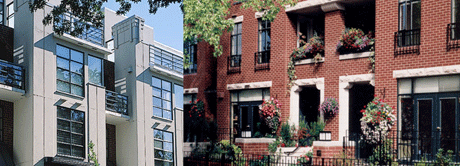
Arbutus Walk (architectural rendering)

Vancouver's Arbutus Walk: one successful model (courtesy HMCA).

With Vancouver's city councillors listening, a citizen of upper Kitsilano took the lectern and offered a plea against the controversial Eco-Density Charter. The gist of his complaint: Eco-densification has so far been a rash, hasty and seemingly undemocratic process.

Then councillor and mayoral hopeful Peter Ladner posed one simple question: What ideal outcome would you envision for the Vancouver of the future?

Mr. Upper Kits replied something about wanting a city nurtured by a grassroots process and community input and . . .

"Let's just leave process out of it for the moment," clarified Ladner. "What outcome do you want?"

An outcome that is formed by the views and needs of residents . . .

"Not process -- outcome," repeated Ladner, his voice growing crisp.

The now-stammering presenter wound up his manifesto not with a bang but a whimper. He seemed to know what kind of process he wanted, but not what kind of outcome. Stage fright, perhaps. But as he shuffled back to the pews, the guy's real contribution to the debate became clear. He reminded us that nobody has a clue what an eco-dense city will actually look like -- or even what we want it to look like. New York? Shanghai? Disneyland?

Where are the buildings?

At this and other eco-density public hearings, presenter and star eco-densifier Peter Busby has brandished a freshly produced, beautiful little booklet entitled -- what else? -- Busby on Eco-Density, as he offered an impassioned manifesto. Busby on Eco-Density contains clear and attractive illustrations of what Vancouver might "look like" under varying degrees of eco-density -- but in the abstract. The illustrations of towers, mid-rises and low-rises are configured as symbols, like Monopoly houses, or geometry homework. Not a hint whether our eco-dense future portends sterile boxes or architectural gems. Even the booklet cover shows poetic images of grass, water, docks, clouds -- everything but buildings.

Here's what the Eco-Density Draft Charter says: "Design density with new and existing architecture that meshes greener performance, with values for neighbourhood context, character and identity, for high quality and neighborly buildings and developments, at all scales." Sounds great, but those big broad words have a lot of leg-room. We could end up with some pretty sound projects like Arbutus Walk or the West End's Mole Hill Community Housing -- or, could we end up with something oppressively boring or just plain stomach-churning?

'Good, bad and ugly'

Architect/developer Michael Geller, ardent eco-densifier and mastermind of Simon Fraser's UniverCity housing development, knows the risk. After his presentation, he conceded that the first multi-family complex he was involved in designing, back in Ontario in the 1970s, did not yield a happy outcome. "It ended up looking absolutely awful!" winced Geller. "But I blame the guy who was working next to me at the office. He disagreed with me that we should design it all together as a coordinated project. He said that each home could have its own character." The complex ended up looking like a dog's breakfast. And who was that guy working next to him, fomenting all the hodge-podge? "His name was Daniel Libeskind."

Libeskind -- future starchitect-du-jour, designer of the overgrown sharded-glass barnacle on Toronto's Royal Ontario Museum, and would-be sculptor of New York's upcoming Freedom Tower at Ground Zero. And: a bust at making a decent multi-family complex. If having a future starchitect on your team doesn't lead to a good outcome for high-density projects, than what can?

"The reality is that there will be a range of architecture, just as there is now: good, bad and ugly," says Dream City author Lance Berelowitz, another urbanist in the audience waiting to speak his piece. "What I would not want to see is some kind of dead-hand style rules that would say: You can only do this or that."

To put it another way, as one architect at the public hearings asserted bluntly in a sideways whisper: "There's no doubt about it: Eco-density architecture can be as shitty as any other kind."

Burden of 'responsibility'

Vancouver's chief planner Brent Toderian offers us what you might call the Spider-Man Proviso for Eco-Density: "With greater density," asserts Toderian, "comes greater responsibility." He means the responsibility to do it right, with the best possible design (better than our past track record, I'd infer), good neighbourhood amenities and convenient transportation links.

"Most of the single-family houses in the city are not designed by architects but by design-builders," Toderian adds, diplomatically leaving us to draw our own conclusions. But he, too, is uncomfortably aware of the challenges to come. Too much architectural diversity and you have visual chaos. Too much monotony and you have a big, boring city.

"Beauty in aggregate becomes ugly," notes Toderian. Take our skyline, for instance. Some like it, but others have told Toderian they think it's ugly. "When I probe, they eventually explain that it's too much of the same," he adds.

"Sometimes our guidelines go too far and want everything to look too similar," says Toderian. "Perhaps the RS5 guidelines [which govern basic shapes of single-family homes] have been too proscriptive. Have we gone beyond mandating quality to mandating taste?"

To Toderian, the trick is to get more of the city's better architects into the housing game. The eco-density draft actions include overhauling the RS-5 guidelines that are supposed to be responsible for maintaining the character of older neighbourhoods like Kits and Kerrisdale, and replacing them with eco-based guidelines.

Neo-traditional cheese?

Just what kind of architecture an "eco-based guideline" will produce is still a great unknown. But at the housing scale, I'd say, it couldn't be any worse than the status quo. RS-5 guidelines, after all, have not stopped developers from continuing to build cheesy neo-traditional knockoff homes in those tony neighbourhoods, or anywhere else in the city.

And as some longtime players point out, an architect's stamp of approval is no guarantee of good architecture in any case. "I must say that the licence itself does not validate the design," says Vancouver architect Peter Oberlander, who was also Canada's first professor of city planning. "We really ought to launch a broad, city-wide campaign to improve the quality of design," says Oberlander, "because as the density goes higher, the quality of the design becomes crucial." But, he adds, "There's some pretty ghastly stuff around here that architects have designed, that has been passed by [city] design panels. The quality of design is going to depend on the owner and on the designer. Good taste cannot be mandated."

Former city councillor and eco-density advocate Gordon Price doesn't quite buy it. After all, he himself voted in council for the current residential RS-5 and R210 guidelines in the late 1980s, in response to the mass construction of the so-called monster homes. He does acknowledge what he calls the "Vancouver Special Paradox." By allowing the most basic, affordable but perhaps aesthetically challenged houses to crop up, we can also provide more basic shelter to a greater number of people -- including a lot of the newcomers who have enriched our city culturally in recent decades.

Still, Price's stance is that design guidelines and good planning will make eco-density work. "We're good at this," says Price. "Do it with confidence. No city thrives on suspicion and distrust."

Related Tyee stories:

 [Tyee]

38  Comments:

  • rotlin

    17-03-2008

    Where does it fit in?

    Quote:
    ...nobody has a clue what an eco-dense city will actually look like...

    Well said.

    Right now to me EcoDensity is a buzz word with no clear definition. Is it just related to building architecture and details like setbacks and styles or is there more to it?

    How does it relate to other plans such as the Metro Vancouver (FKA GVRD) Livable Region Strategic Plan which deals with zoning, parks and transportation (well at least prior to Kevin Falcon bulldozing his new Transportation Authority in to override the Metro Vancouver/GVRD).

  • Luke Skywalker

    18-03-2008

    Quote:Right now to me

    Quote:
    Right now to me EcoDensity is a buzz word with no clear definition.

    Yeah it's a buzz word... no doubt about it. But the key phrase still remains the word density. An additional 1 million people are estimated to populate the Lower Mainland over the next ~30 years and where are they going to go?

    Metro Vancouver's land base confinements: The ocean to the west, the mountains to the north, the border to the south, and the ALR and mountains to the east.

    No room for sprawl or freeways like the traditional North American city. Ergo, the only way to build is up!

    And since most of the City of Vancouver's land base still remains single-family neighbourhoods, there remains the reluctance for change... the ol' NIMBY factor.

    Frankly, based upon climate change and the environment, the term ecodensity may seem to the powers at be to be a better marketing tool for, you guessed it, higher density in accordance with the LRSP (with subsequent amendments) and its objectives.

  • Moat

    18-03-2008

    Argh, there is lots of land

    Eh... there is lots of room for sprawl. Unfortunately there is lots of land in Richmond, Surrey, and Pitt Meadows that we can tear up. We can also build up the mountains in Port Moody and Coquitlam.

    It really sucks. And you are right, the NIMBYs who have the fear of skyscrapers are indirectly pushing this - at the cost of forests and farmland. Vancouver could still sustain itself if it still had too, but it is rapidly losing that ability.

    Are we going to close the gates? Not anytime soon - so let's build up instead of out.

    I will take a massive (and well designed) apartment complex in my neighborhood if it means saving some land somewhere else. The problem is that my neighbors won't. They will take a junky set of low-rises, and think that they have "won" against the property "pimps" and greedy retailers who may want to put a convenience store or pub nearby. That might bring skateboarders....

    Anyways, maybe I will plant a tree in a park somewhere. But my neighbors will complain that it will grow too high and block their view.

  • mjf

    18-03-2008

    Eco-density

    A few observations:
    - Compared to the large European cities, Vancouver is grossly underdeveloped.
    - The most interesting neighbourhoods in Vancouver are those with high population density: the West End, the older parts of Kitsilano and a few others, where the streets are lively, everything one needs is nearby and it is possible to live without hardly ever using a car.
    - the least interesting neighbourhoods are the single family areas, where amenities are far away and one is condemned to drive to access the most basic services.
    - Arbutus Walk is a nice development, safe for children, but a bit dull and sanitized, somewhat lacking in the street life that makes successful cities so interesting.

  • eclecto

    18-03-2008

    Eco-Density

    How the development looks and flows. Fair enough. But what isn't addressed here is that eco-density does nothing for affordability. I was born, raised, and eventually left Kits (after living there for 34 years). Why? Because as an artist (cultural worker if you prefer), I couldn't afford to stay. Well, Kits also lost its appeal as a vibrant neighbourhood. Most of the artists left. They went East. Now East is expensive too. Density, even eco-density, without affordability will eventually drive us out of the city and kill the cultural life of its neighbourhoods. By lack of culture I mean a neighbourhood where everything is reduced to consumption value, and difference is reduced to consumer choice. Contact, real contact, is mostly absent. It's happened elsewhere. It happened to Kits. Affordability has to be at the forefront of issues. Without it, eco-density just creates another playground for the wealthy.

  • SharingIsGood

    18-03-2008

    just spent the week-end

    having spent a fair number of week-ends in Vancouver hotels over the last 20 years, I must say that my last foray into the city left me never happier to leave. Somehow, in just one year, the city has lost the last vestiges of the charm and beauty it once held for me. I may never return. Whatever little cultural activity takes place in Vancouver can go on without me. I find the mountains and sea of Vancouver more beautiful when not looking at them from concrete, glass, and steel. What a mess! with not a break from a shining nor pealing man-made surface, nor even from traffic for a tired mind to contemplate in stillness.

  • Budd Campbell

    19-03-2008

    ECODENSITY? DON'T HOLD YOUR BREATH

    Vancouver has always been opposed to meaningful increases in density since the game is to restrict supply and raise prices through contrived scarcity. Increments to density are pieced out judiciously to allow the next wave of construction, but little more, so as not to put downward pressure on apartment prices though ghastly competition.

    If Sullivan and Toderian were serious one of the first things they would do is repeal the Floor Space Ratios for single family and townhouse developments. These regulations do nothing for aesthetics and are purely in restraint of trade.

  • City Person

    19-03-2008

    Politics

    This issue is nothing new. Vancouver has been grappling with it for years. Remember the hubub over "illegal" suites in the late 70's? All was swept under the carpet then and look at the mess we have now.

    The real issue here is what will happen west of Arbutus. The Arbutus Walk project is indeed well done but it is east or Arbutus. It is going to take some real political guts to take on home owners in multi-mullion dollar homes west of Arbutus. That area amounts to a suburb within the city. It is grossly under serviced in terms of retail space, forcing resident to drive to get anything.

    In the 70s the Kerrisidale Clique torpedoed any extra density. They have now either sold out or gone to the grave and they area is being bouught by foreign speculators. This is what is driving real estate prices in Vancouver more than anything.

    Do we have a mayor from any camp willing to take these people on? I doubt it.

  • Budd Campbell

    20-03-2008

    SUBURBS AND DRIVING NOT LIMITED TO SURREY AND MAPLE RIDGE

    "That area amounts to a suburb within the city. It is grossly under serviced in terms of retail space, forcing resident to drive to get anything."

    I have tried to tell some of the self-described urbanists like Stephen Rees that most people who live in Vancouver City's many single family neighborhoods, West Side, East Side, South Side, ... will do just as much driving for shopping and social needs as anyone in South Surrey or Maple Ridge.

    But the urbanists, so busy fighting a take-no-prisoners holy war against the Port Mann - Highway 1 project, don't want to hear that. They keep claiming that if single family subdivisions are constructed in those easatern municipalities the world will come to an end, or at least heat up too much, because mothers are driving the kids to school and hockey games and to go shopping at the supermarket. This kind of drivel passes for informed commentary in Greater Vancouver's "livable" region discussions.

  • Moat

    20-03-2008

    Yeah, whatever Budd... go take a drive

    Budd Campbell wrote:

    Quote:
    any single family neighborhoods, West Side, East Side, South Side, ... will do just as much driving for shopping and social needs as anyone in South Surrey or Maple Ridge.

    You really think that is true? Hmmmm, give your head a shake, and after you do that, go a few routes that are used to travel to and from the suburbs in the morning and have a look at the type and volume of traffic. Actually, just drive around Coquitlam center for an hour.

    Are you telling us that the stockbroker living in Walnut Grove, in a massive "executive home", who drives into town before the market opens, is driving the same as one who lives near Trout Lake on the eastside? Oh, yeah, I guess s/he walks to the Costco on the weekends, so that makes up for it.

    I guess the miles of parking lots out in the suburbs do not seem to register with you.

    Yeah, people living on the westside are always traveling to Langley for social events such as concerts, sporting events, social visits, etc....You are probably going to tell me that Canucks are going to build a new rink in Aldergrove.

    I really do not know what passes for your sense of "informed commentary".

  • Canis Latrans

    20-03-2008

    population density 1

    In my view, eco-density is a buzzword, as someone else described for population density: Corral 'em in, pack 'em in, deeper and higher, higher, higher. And whilst it is put forward by well meaning enough wide-eyed green liberals, I suspect, with a wink and a nod of approval from developer capitalists, it still means greater quantities of shite, air pollution, and over time, what land has been "temporarily" saved will still be consumed into the insatiable maw of capitalist never ending development needs. At best it is a short term, feel good illusion. Bullshitt dressed up as a FeeL Good Green solution.

    It is like the article on Gabor Mate's observation that, because it is much harder to go after the drug lord capitalists, and their allies in business, government and the secutity machinery of the state, the War On Drugs focus instead is on the victim, the pathetic drug addict.

    Well it's the same here. We all or should really know by now who/what the real source of the planetary pollution, over-population and over development problem is. We have met him/her/it many times on our daily commute. It is the greed driven, never ending development, there is never enough profit dynamic that is the beating heart of capitalism. But because it is a more fearsome thing to take on and wrestle to the ground, instead we will now all quietly line up noses to asses and cheek by jowl, armpit to armpit and allow ourselves to be stacked higher and deeper into cities like good little communters on the Tokyo rail/transit system. And to dress it up, in an effort to prettify it, we'll paint it Green and call it Saving the Environment.

    Horse feathers!!

    Continued Next Post...

  • Budd Campbell

    20-03-2008

    HARD TO SEE REALITY BEYOND THE MOAT

    "Are you telling us that the stockbroker living in Walnut Grove, in a massive "executive home", who drives into town before the market opens, is driving the same as one who lives near Trout Lake on the eastside? Oh, yeah, I guess s/he walks to the Costco on the weekends, so that makes up for it."

    Perhaps I didn't make it clear enough that I was specifically refering to trips other than the main commute to work. For people living in suburbs such as Langley and working long distances from home better transit services are needed for that major commute. They need systems similar to the West Coast Express, not some rinky dink light rail system with its crush loads and lack of any consumer amenities. Transit cannot serve all travel to work needs, but it could serve many more than it does.

    For other trips, shoppping, social engagements etc., I am sure that an accurate survey (ie one NOT done by the Vancouver or Burnaby "planning" bureaus) would show only marginally different kilometreage per year as between residents of single family neighborhoods in East Van, and those in Newton, just to pick two examples.

    The whole anti-Port Mann thing is really a warmed up version of Walter Hardwick's 1960s nitemare vision, in which executive grade employees in downtown office towers would, if they had poor taste and lousy breeding, be cheapening out on things. Instead of buying a classy residence in Pt Grey some of these people would take the easy way out and buy a larger house on a larger lot for less money in South Surrey, and then commute to work every day in a Chrysler Imperial with a thousand pounds of chrome at a rate of 12 miles to the gallon.

    Forty years later such profound "thinkers" as David Cadman and Peter Ladner and Derek Corrigan and Stephen Rees and others have updated the nitemare vision. The Chrysler Imperial is gone, only to be replaced by a Cadillac Escalade. Other than that, it's same middle class angst as before.

  • City Person

    20-03-2008

    I agree

    Quote:
    I have tried to tell some of the self-described urbanists like Stephen Rees that most people who live in Vancouver City's many single family neighborhoods

    As someone living on the west side, I think Budd is correct. To get decent shopping, we have to drive OUT of the west side to get it. I cannot afford to shop at Safeway.

    Most west side neighbourhoords are sterile and a poor use of land.

  • Moat

    20-03-2008

    I stand by the comment...

    Sorry Budd, I cannot agree with you here having experienced both the city and suburbs. People living in the city are able to walk to pick up two litres of milk. To purchase a snowboard, a 20-something is not going to go to a big box in Langley or a mall in Surrey, they are going to shop at the specialty shops on the west side at 4th and Burrard. Same with camping equipment, etc. People from the city are not driving 30k to shop at a Canadian Tire in Coquitlam.

    As for playing sports.... I guess you got me there. There is not a major 8-plex hockey rink downtown, but 8 rinks is located 15km away in Burnaby.

    But this ties into planning - could a hockey rink be built above something like a Superstore or Costco? Surely it can easily be done, and the parking lot may be shared.

    Ah well. That is where creativity and vision comes into play.

    Something "freeway people" do not have.

  • Luke Skywalker

    20-03-2008

    Budd Campbell: Quote:most

    Budd Campbell:

    Quote:
    most people who live in Vancouver City's many single family neighborhoods, West Side, East Side, South Side, ... will do just as much driving for shopping and social needs as anyone in South Surrey or Maple Ridge.

    Absolutely... the single-family suburbs you describe within the City of Vancouver are no different than those of any other municipality.

    The further one is situate from major shopping areas the more likely they will utilize the automobile. Vancouverites drive just like everyone else, notwithstanding that they are the best served by Translink.

  • G West

    20-03-2008

    Jeez Budd - give it a rest

    What have you got against Walter Hardwick?

    He was hardly the only planner with that prescription - as I've pointed out before.

    No one is 'best' served by Translink - unless that some one is a member of their 'appointed' and unaccountable board.

    Where's Grumpy?

  • Budd Campbell

    20-03-2008

    "People living in the city

    "People living in the city are able to walk to pick up two litres of milk. To purchase a snowboard, a 20-something is not going to go to a big box in Langley or a mall in Surrey, they are going to shop at the specialty shops on the west side at 4th and Burrard. Same with camping equipment, etc. People from the city are not driving 30k to shop at a Canadian Tire in Coquitlam."

    Yeah, sure. I lived in the West End in 1979 and I drove to the Safeway to pick up groceried because my apartment was 10 blocks away on Pacific Ave. And who the hell buys 2 litres of milk? Someone who likes to pay extra? If you're getting a small amount, sure. But when you're getting more than two bags, including toilet paper, etc., are you really going to carry it all? I don't think so.

    If they don't drive 30kms to get a snowboard, fine. They're not going to walk more than a few blocks. They might take it home on the bus, if that's convenient.

    I also lived in Kits for about three years on West 3rd in the 1990s. And I would sometimes walk to the Safeway at 4th and Vine, but if there was too much to carry conveniently I drove, and so did everyone else.

    Also, these are apartment neighborhoods, not single family areas on the West or East side. There the use of the car would be no different than in Coquitlam.

    I got a big laugh a few months ago when the WestEnders fashion writer screamed bloody murder that he and his chic friends had to pile into a car and drive all the way to the Coquitlam Centre to shop at the new H&M! How shocking that it hadn't been located downtown where all the decent folk live!

  • Budd Campbell

    20-03-2008

    HARDWICK WAS A SNOB

    "What have you got against Walter Hardwick?"

    Are you joking, G West? Just what I said. The guy was a snob with who represented the privileged who could afford to live in Vancouver, and regarded everyone else's needs as, well, those of the unfortunate or the Americanized. Either way, they were not to be accommodated.

  • G West

    20-03-2008

    Be that as it may

    As I pointed out earlier, Hardwick was far from the only UBC planner who was involved in the movement that stopped the freeway at Vancouver's border and saved Strathcona from the wrecking ball.

    It had little or nothing to do with the west side of the city.

    Perhaps you've forgotten:

    “Chinese seethe over Freeway.” This was in reference to the anger in the city’s Strathcona neighborhood over plans to run a freeway through the area—many of the residents were Chinese who had lived there for decades. Wrote Taras Grescoe in The Greater Vancouver Book: “A San Francisco-based firm concluded that a waterfront freeway would best be served by levelling 600 houses in Strathcona and laying a ten-metre-high overpass over Carrall Street, in the centre of Chinatown. Immediately, protest came from every part of the city, and a crowd of 800 people gathered in City Hall to shout down the consultants' proposals. The Chairman of the city's planning commission resigned on the spot, and a year later, the plan was scrapped. Apparently, the spirited editorializing of the local papers in favor of cutting out civic blight with a concrete knife had influenced no one but a handful of architects.”

    John Atkin, author of a book on Strathcona, has commented: “It was because of its mixture of housing and industry and the fact that it was the entry point to the city for successive waves of immigrants, that the East End name came to have a derogatory meaning. By the 1950s planners had declared it a slum for demolition, despite evidence to the contrary. By 1967, despite protests, fifteen blocks of the neighborhood had already been acquired and cleared for urban redevelopment when the city announced a freeway to downtown. Strathcona residents were horrified by plans to use the blocks in between Union and Prior for the freeway, connected via a new Georgia Viaduct to the larger network of roads that were to carve up the downtown. The outcry from the general public, community activists and professionals was loud and clear about the lack of public consultation and the amount of destruction the new roads would cause. In the end the Georgia and Dunsmuir street viaducts were the only pieces of the system to be constructed . . .”

  • Luke Skywalker

    20-03-2008

    Proposed Vancouver Civic Freeways

    G West:

    Quote:
    ...the movement that stopped the freeway at Vancouver's border and saved Strathcona from the wrecking ball.

    It had little or nothing to do with the west side of the city.

    The City of Vancouver commissioned many plans for a civic freeway system within its boundaries from the 1950's onward.

    The penultimate plan, in terms of ambition, was the 1968 Transportation Plan.

    Many east-west as well as north-soth corridor options were identified including:

    North/South:

    1. Arbutus Corridor (East Boulevard/West Boulevard) - west side;

    2. Cambie Street - west side;

    3. Main Street;

    4. Knight Street;

    East/West:

    1. McGill St.;

    2. Grandview Hwy/Cut;

    3. 16th Ave. west side

    The west side's creme de la creme felt it better to stop these proposals in their initial tracks, on the east side, before they would cross over into west-side boundaries.

    Here's an earlier 1964 City of Vancouver freeway proposal map showing the west-side Arbutus and 16th Ave. corridors.

    http://www.vcn.bc.ca/t2000bc/learning/background/history/1964.html

    Quote:
    By 1967, despite protests, fifteen blocks of the neighborhood had already been acquired and cleared for urban redevelopment when the city announced a freeway to downtown.

    15 blocks cleared is a huge swath of land. Having never heard or seen this cleared swath of land, exactly what street and blocks are referred to??

  • G West

    21-03-2008

    I'm not arguing that at all Luke

    I'm merely responding to the unitary nature of Budd's attack on the planning department at UBC.

    Hardwick was the far from the only member of that fraternity who was 'down' on freeways.

    In fact, if, instead of freeways, the next step had been taken to develop an integrated public transit plan instead of the nonsensical piecemeal program of Skytrain/dog's breakfast that we have now the situation all over 'greater' Vancouver would not be what it is today.

    As a politician I have no problem with attacking Hardwick...as a planner, he's far from the only guilty party.

    Have a look at the width of the cut down 16th below Dunbar...you'll figure it out.

  • Budd Campbell

    21-03-2008

    A SCHOOL OF THOUGHT

    "Hardwick was the far from the only member of that fraternity who was 'down' on freeways."

    You're right about this part, G West. It's a received school of thought, the received doctrine and dogma at the UBC School of Community Planning, and everyone there is expected to adhere to it. It impacts new hires of anyone in the transportation field, so that you end up with a unitary viewpoint, one that these people will advertise to the Vancouver press and public, but which they would never present in its bald, pure form to some international academic conference of their peers.

    In fact, you can look through the online CVs of professors who have publicly denounced Gateway and try to find their published paper on the subject. And you won't find one. They aren't going to publish the lopsided drivel they offer up at anti-Port Mann rallies because they don't want to liquidate their professional reputations. My point is simply that Hardwick was the founder of this tradition, and is still revered by the disciples as a prophet.

    I often disagree with Luke Skywalker but he's right on here:

    "The west side's creme de la creme felt it better to stop these proposals in their initial tracks, on the east side, before they would cross over into west-side boundaries."

    Perhaps even more important, under the City Charter Act Vancouver is responsible for highways in the City. So City's property taxpayers, not the BC Govt, would have had to pay for any freeways, land acquisition, construction, the works. Wealthy WestSide taxpayers, besides being worried as they are today about increased competition in the real estate market coming from land in the Valley, were damned if they were going to pay substantially higher property taxes for a freeway that would mainly benefit those no-account outer suburbs and, what was even more galling, EastSide City residents who would have had through traffic taken off their local streets and put onto a dedicated highway, be it a freeway or even just a major, dedicated arterial. Hardwick perfectly represented that kind of WestSide calculation.

    If you're interested, I can give you a link to a Vancouver traffic bureau hearing concerning First Ave, held in the 1990s, in which the crowd asked why the City didn't drop the anti-highways policy and build a dedicated highway connecting the Georgia Viaduct to the Trans Canada so that traffic flows would be reduced on East First. The City didn't want to listen then any more than it did during Hardwick's time.

  • G West

    21-03-2008

    Budd - thank you

    That's much better - as I said, it was hardly just Hardwick...it was Hardwick, Artibise and others too numerous to mention, (including Harcourt - although he certainly wasn't/isn't a planner) and the rest who came up with the policy of fighting freeways and a whole lot of other folks chimed in too.

    For a variety of reasons...as you and Luke point out.

    But, I don't think anyone can seriously argue that Vancouver (the terminus of all that freeway building) would have been any better today IF the freeways had been built. You and the wife would be able to get in to the Q.E for the symphony a little easier from the burbs and there'd be several dozen more (otherwise) vacant lots piled high with concrete car parks. [I won't mention the neighbourhoods it would have destroyed and turned into a variety of Hastings corridors though].

    The point is that no matter why the decision was made, or who made it, freeways would not have done anything positive for Vancouver or its people.

    I certainly agree that the west side needs to change, but so does the whole region and more and wider roads is the WRONG choice; it was then and it is now.

    So, can the bitterness, recognize that the last 50 years have been pretty much a write off from a planning and integrated transportation point of view and lets try, from now on, to do something right for once.

    By the way, have you been out to the Pt Grey Campus lately? A quick visit there will soon help you realize why the products of the faculty aren't to be trusted as planners as far as you can throw them.

    What a mess.

  • eclecto

    21-03-2008

    Gentrification

    I realize the article was framed in terms of Eco-Density being "Beautiful," but doesn't anyone want to take on the issue of affordablity? What exactly are we fighting for here? The privilege of the privileged to have neighbourhoods that are aesthetically pleasing to walk around in and make them feel good about their negligible contribution to global warming? Any kind of density without subsidized housing of some sort pushes low income people out of the city. Most of the west-side neighborhoods that are referred to in this blog have become "spaces of consumption", or what I call lifestyle neighbourhoods, lacking in genuine social contact, including contact with "difference." Contact with "difference" is essential to both individual growth and the maturity of a city as a whole. Contact with difference isn't always comfortable, but it's essential to the vitality of a city and its neighbourhoods. Despite the ethnic diversity of Vancouver, socio-economic difference is being eradicated in Vancouver's increasingly wealthy (west-side, and increasingly east-side) neighbourhoods.
    Let me reconnect this to the issue of gentrification and the artist's role. Artists are attracted to low-income neighbourhoods for a number of reasons: because they themselves are usually low-income; and because these neighbourhoods allow for a greater degree of contact with values that are not exclusively based on consumption. Yes, artists are complicit in the gentrification process because they "aestheticize" these spaces making them attractive to developers looking for new real estate to flip. But this is not the artist's intention. And the artist suffers by having to move when rent gets beyond their means. The point is the artist becomes a kind of canary in a coal mine: when the artist leaves it is an indicator that the neighbourhood is no longer affordable or vital. Difference has been minimized.
    Eco-density? Who cares? It's a cultural wasteland. How about mechanisms to increase affordablity and maintain difference?

  • The discussion for this story is closed. No more comments can be added.