Opinion

Smart Meters, Boondoggle in the Making

Why this doomed to fail, billion-dollar mega-project should make BC taxpayers tremble.

By Will McMartin, 4 Apr 2011, TheTyee.ca

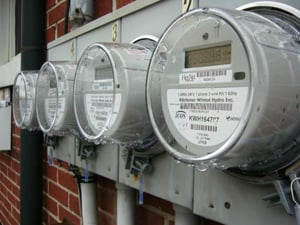
BC Hydro smart meter readers

How smart? Spend a billion dollars to save a quarter billion?

Related

A single word -- mega-project -- has been known to make even the hardiest B.C. taxpayer tremble.

We all recall the Coquihalla Highway in the 1980s ($500 million in cost overruns hidden from the legislature), the Fast-Cat Ferries in the 1990s ($400 million plus down the drain), and the newly-expanded Vancouver Convention Centre in the early 2000s ($346 million over budget because the government forgot to draw up a business plan) -- to mention just three.

All looked great, on paper at least, when first proposed. In fact, it's hard to think of one that was certain of failure (or massive over-spending) before getting started.

Not so with BC Hydro's $1 billion smart meter mega-project.

Before even a single one of the new devices is installed, smart meters are doomed to fail. They'll never achieve the stated objective of the BC Liberal government, which is to cut consumers' use of electricity.

And one of the main reasons why smart meters are a dumb mega-project will surprise many -- B.C.'s aging population.

BC households are shrinking

Over the last 20 years (from 1991 to 2010), the number of B.C. residents grew (see Table 1, here) from nearly 3.4 million to over 4.5 million. That's an increase of 34.1 per cent.

The early part of the period saw remarkable growth: in 1994 and 1995, B.C. gained a phenomenal 108,000 and 101,000 people, respectively.

Since the mid-1990s, however, population growth has been slowing.

In 2011, according to BC Stats, we'll add about 66,000 people. And in the years ahead, that number is expected to decline annually, so by 2031 the yearly increase will be in the range of 53,000.

SMART METERS A PROVINCIAL CASH GRAB?

Smart meters will allow BC Hydro to introduce differential rates, whereby electricity will be more expensive during peak hours, and less so during off-peak periods. The theory is that Time of Use (TOU) rates will encourage consumers to, say, do the laundry or cook a meal at 2 a.m. in the middle of the night when rates are relatively inexpensive, rather than at 6 p.m. when rates are much higher. TOUs, however, will not reduce the overall demand for electricity, but merely shift consumption to off-peak periods. Indeed, some critics believe that the only real benefit of smart meters it that they will allow BC Hydro to raise rates, and send additional revenues to the provincial treasury. -- W.M.

Aging is a major reason for our slowing population growth. Forty years ago, in 1971, the median age in British Columbia was 27.8 years of age. Today, that figure is 41.1 years, and by 2036 it is forecast to be 45.6.

An aging British Columbia means fewer births (as a proportion of the total population), because, obviously, older people have fewer babies (or already have had them) than do younger people.

Indeed, by 2027-28, B.C.'s rate of "natural increase" is expected to turn negative, because after that date the number of people who die each year will be greater than the number of newborns.

So, whereas B.C.'s population expanded by 34.1 per cent over the last 20 years, the rate of growth over the next twenty (2011-2030) is expected to be just 25.9 per cent.

Here is the salient point -- an aging population also means that households are getting smaller.

The year 1981 marked a watershed in the demographic history of our nation. In that year, Statistics Canada found that the number of one-person households had surpassed, for the first time, the number of large households (defined as having five or more occupants).

That trend has continued unabated over the last three decades, and in the 2006 census the number of one-person households was three-times that of large households (27 per cent to just nine per cent).

The fact is, more Canadians live alone today than ever before in our nation's recorded history.

Statistics Canada also reported in 2006 another historic event -- the number of census familes without children was greater than the number of census families with children.

There are many reasons behind the evident shrinking of the size of households in B.C. and Canada, but one of the most important is our aging population. In 2006, Statistics Canada found that 34 per cent of people living alone were age 65 years or older.

Divorce and separation also have led to an increase in the number of people living singly, and fertility rates have been falling across the country for decades.

Five years ago, the 2006 Canadian census reported that the average B.C. household had just 2.47 occupants (compared to the national average of 2.6).

Why smaller households matter

What does an aging population and decreasing household size have to do with smart meters?

To repeat a point made earlier, B.C.'s population between 1991 and 2010 rose by 34.1 per cent. But over the same time frame, the number of BC Hydro residential accounts grew by 43.6 per cent.

(In 1991, the Crown corporation had 1.1 million residential customers; in 2010, 1.6 million. BC Hydro financial and operational data are available in the Crown corporation's annual reports. For data in the 2010 annual report, see p. 112-115 here.)

Why would the number of residential customers be growing faster than B.C.'s population? It's because of our shrinking households.

Determining the average number of British Columbians at each BC Hydro residential account is relatively easy. We merely have to divide the provincial population by the number of residential customers.

By making those calculations, it becomes evident that in the early 1980s, each residential account had an average of more than three occupants; today that figure is under 2.8.

And as British Columbians continue to age, that trend is certain to persist over the foreseeable future (that is, the next 20 years or so).

Smart meters will not -- can not -- have an impact on two of the three factors that drive the consumption of electricity by BC Hydro's residential customers, a growing, and aging, population.

Rate of consumption has fallen for decades

It's straightforward: a growing population means increasing demand for electricity (more people need more power), and an aging population means an ongoing reduction in the size of the average household -- which will continue to keep the rate of growth in the number of BC Hydro residential accounts above the rate of population growth.

Only the third factor -- the quantity of electricity consumed by individual British Columbians -- might be affected by the installation of smart meters.

Indeed, this is the argument put forward by both the BC Liberals and BC Hydro. They claim that smart meters will increase consumer awareness of electricity use. Armed with this information, residential customers will make a conscious decision to cut back on consumption.

Yet, the fact is that the demand for electricity by residential consumers already is in decline -- and is clearly shown to be doing so by BC Hydro's own data -- even before the wasteful, unnecessary expenditure of $1 billion on smart meters.

In 1971, the average BC Hydro residential account consumed 6,949 kilowatt hours of electricity. At the beginning of the next decade, in 1981, that number had jumped to 9,001 kWh, and it grew again in 1991, to 10,089. (See p. 113 of BC Hydro's 2010 annual report here. The line, "Average annual kWh use per residential customer," has been a regular feature of the Crown corporation's annual reports since the 1960s.)

But consumption by the average residential customer has begun to flatten during the last 20 years. In 2001, the typical BC Hydro household used 10,344 kWh of electricity, and last year, in 2010, that figure was 10,857.

By examining decade-over-decade growth -- that is, taking the average for all the years in a decade, and comparing it to the preceding 10-year period -- it's easy to see just how dramatically has been the fall in the rate of increase.

From the 1970s to the 1980s, the growth in the consumption of electricity by the average BC Hydro residential account was 18 per cent.

That figure fell almost in half, to just 9.4 per cent, from the 1980s to the 1990s.

And then it fell in half again, to 4.5 per cent, from the 1990s to the first decade of the 2000s.

Can anyone discern a pattern here?

The point is, even before the expenditure of nearly $1 billion on smart meters, the rate of increase in the consumption of electricity by BC Hydro's residential customers has been falling for several decades.

No independent analysis of smart meters

So, why is our publicly-owned Crown corporation, BC Hydro and Power Authority, embarking on a costly mega-project when the empirical evidence so clearly shows that it will have a negligible impact on the consumption of electricity? (Or, put another way, when the demographic factors that drive the consumption of electricity are beyond the ability of smart meters to control.)

A mere eight months ago, in the summer of 2010, the BC Liberal government rammed through the legislature Bill 17, the Clean Energy Act. The new statute committed the province and BC Hydro and Power Authority to doing a lot of different things, but two are vital to the smart meter saga.

First, BC Hydro was required (by section 17) to "install and put into operation smart meters and related equipment" at every home and business in British Columbia "by the end of the 2012 calendar year."

Second, the statute removed from scrutiny (by section 7) by the BC Utilities Commission an array of BC Hydro capital projects (estimated to cost in excess of $8 billion over a four-year period). One of the projects so exempted was the smart meter initiative.

Consequently, no independent analysis of the nearly $1 billion expenditure on smart meters was slated before the first contracts were signed and B.C. taxpayers' (and BC Hydro rate-payers') money started being shoveled out the door.

(Tyee readers will recall that the very first smart meter contract -- $73 million to install the devices at every home and business -- went to a company owned by a New York investment firm whose Vancouver operations are headed by a government-appointed member of BC Hydro's board of directors, and where a BC Liberal insider works as a "senior adviser.")

Dumb and very expensive

So, instead of a tough, empirical review by the BCUC, the only analysis of the smart meters to date has been by BC Hydro's newly-reconfigured communications department -- headed and staffed by public relations veterans recruited from the defunct Vancouver Olympic Organizing Committee (VANOC).

The contents (and especially the math) of that "Business Case" study are laughable -- and clearly refuted by other, empirical studies by none other than, yes, BC Hydro.

A subsequent column will examine the howlers in the smart meter business case, but consider this whopper: the expenditure of nearly $1 billion on smart meters will save -- yes, save -- British Columbians $520 million over the next two decades. (We have to spend money, you see, to save less money.)

This assertion, of course, is from the same Crown corporation that in 2004 pledged to save British Columbians at least $250 million over a 10-year period by outsourcing certain BC Hydro operations to Accenture.

With nearly two years left to go in that contract, BC Hydro already has paid Accenture the full amount budgeted for the entire decade-long period. Instead of achieving "savings" from the Accenture outsourcing, BC Hydro rate-payers and beleaguered B.C. taxpayers will likely cough up an extra $250 million before the contract expires.

The smart meter initiative, it is plain to see from an examination of BC Hydro's own data, is a dumb -- and very expensive -- mega-project. Merely the latest, sad to say, in a long list to have caused B.C. taxpayers to tremble.  [Tyee]

42  Comments:

Login or register to post comments

  • seth

    1 year ago

    the real skinny - the prequel

    Because new lucrative IPP contracts will soon take 75% of BCHydro's revenue while providing only 20% of its energy, BCHydro requires a 100% rate increase over the next 4 years.

    The first 50% rate increase is spun as justified by infrastructure improvements. The smart meter program will cover for the second 50% part spun up as an effort to fight global warming by moving load to the nighttime hours doubling daytime rates and revenue.

    Initially, BCHydro justifies its' smart meter program on the $110M expected to be saved by cutting off 850 GWh in grow shop power thefts priced at the IPP contract power rate of 12.9 cents a kwh. Since the loss of that 850 GW load will not result in the elimination of a single IPP power contract all of which are surplus to current needs well into the future, the real value would be close to zero - its real value on the Columbia grid. That same hypothetical saving could be achieved for less than 2% the money by installing 25K feeder meters instead of 2000K customer units then comparing feeder totals to current monthly customer meter readings. Existing meters could be also modified for about $10 allowing remote reading off telephone or internet lines.

    BCHydro's plans to add a 1 watt 900 Mhz wireless unit to your meter is going to unleash a storm of lawsuits from BC's eco sensitive populace. That 1 watt of RF power compares to 10 mw for a typical cordless phone but may be nailed 6 inches away from a child's sleeping head if the bedroom is adjacent to the power meter. Imagine the hapless apartment dweller who's bedroom is a thin wall away from the building meter room.

    Another big saving justifying the meters, is assumed to come from folks volunteering to stay up all night annoying their neighbours in violation of all kinds of strata and apartment rules doing laundry and dishes and watching their TeeVees. That will get old really fast.

    The cost for additional fibre capable of carrying telephone, television, internet requirements of BC households is less than 1% of the cost of the initial almost zero traffic smart meter fibre cable and installation that BC Hydro will be running into just about every block in every neighbourhood in the province. For a tiny additional less than $2 a month - the smart meter fibre optic network could be expanded to provide 1000 Mb/s internet service to every household in the province giving BC the best internet service in the world at by far the lowest cost. The real fear of the crooked politicians that give BCHydro its orders is that the new Smart meter network could be expanded by the NDP, to offer this best in the world universal internet/IPTV/telephone communication channel to BC ratepayers for less than $2 a month putting lucrative campaign donations from Big Telecom in jeopardy. The fry your brain 1 watt wireless transmitter is the result.

    Of course they are mistaken as the NDP is equally beholden to the Big Telecom unions.

  • Cool Hand

    1 year ago

    Second Thoughts

    I'm starting to have second thoughts on this $1 billion capital expenditure based upon the old adage "If it ain't broke, don't fix it".

    Sounds more and more like some gold-plated social engineering by BC Hydro (and the Clean Energy Act) that ain't required. Save the $1 billion for more useful purposes such as upgrading aging dams/transmission lines.

    And while I support the Site C dam... I'm also starting to think that perhaps 'state of the art' natural-gas fired electricity generation might be a better alternative.

    Site C Dam - ~$6 - $8 billion;
    Capacity: 900 MW;

    Natural Gas Generation Plant - ~$1.5 billion
    capacity: 900 MW;

    The Site C Dam would have zero input costs in terms of the water supply while natural gas would be the obvious input cost for the ng plant.

    Carrying costs for the Site C Dam would be about $300 - $400 million/annum compared to ~$75 million/annum for an ng plant based upon a 5% discount rate, which might balance out the ng input costs.

    Certainly BC Hydro should consider natural gas electricity generation for the Prince George region and complete cost/benefit studies on same prior to making a final decision on Site C. Just across the border in AB, TransAlta is doing just that.

    With BC to overtake AB in natural gas production by the end of the decade, it's definitely worthwhile to look into in terms of cost savings that may be in the additional $billions$.

  • Grumpy

    1 year ago

    Except for the dams.................

    ...........all BC's mega projects have been about building overpriced projects to funnel taxpayer's money to friends of the government.

    We pay up to ten times more....tes that is right.....ten times more for SkyTrain than light rail because that gives the government up to ten times more "spreadin around money".

    SkyTrain is not faster, nor can it carry more people than LRT.

    The Canada Line went from $1.3 billion to over $2.5 billion and where did the extra money go? Simple, the cement companies, engineering firms architectural firms, unions, etc. It is called spreadin around money.

    The Gateway highway project is more of the same, as one only has to look at the massive Delta Port Way/HWY. 17 interchange to see that.

    Hydro is now planning major rate increases to install so called 'smart metres' which will not save energy, but enable BC Hydro to increase rates during peak times.

    Campbell and his clones have tied BC Hydro to the IPP projects and the taxpayer is expected to pay for their 'spreadin around money', which mainly will go South into huge US corporate coffers.

    We have been duped by the Campbell Liberals, like the Clark NDP, like Bill Bennett's Scored's, into paying way more for mega projects than we should, so friends of the government get the taxpayers 'spreadin around money'.

  • kmorgen1

    1 year ago

    $520 million savings vs. $520 million NPV

    Three points:

    On the savings: In BC Hydro's business case report the $520 million are given as the Net Present Value (NPV) of the smart metering project . While NPV does not represent real money in anybody's account it does factor in the $1 billion investment, i.e. $520 million are saved after spending the $1 billion compared to NOT spending it. In that sense the statement "We have to spend money, you see, to save less money." is false.

    On the electricity consumption per household: I thought the argument there got a bit foggy scrambling per customer and per household figures. If household consumption is staying more or less flat but the number of people per household is decreasing the consumption per person is rising, right?

    On energy saving: There are two arguments against smart meters here. The second is dumb execution (on oversight etc.) I cannot speak to that. The first goes something like that: Electricity consumption depends on number of people, number of people per household and consumption per household. Smart meters don't do anything to change the first two. The third is going down already. So lets not do it. By that argument no energy saving measures need to be implemented, since none will change either the population increase or the number of people per household. Of course that way, the consumption per household might not continue to fall, but then one cannot have everything in live...

    Disclosure: I live in Germany and don't pay taxes in B.C. As I said I cannot speak to the political side of the argument, but surely the factual side of the argument should be executed in a logical manner.

  • DPL

    1 year ago

    We don't need a smart meter,

    We don't need a smart meter, to tell us Hydro rates are going nowhere but up, nor to know that when it's cold and dark we burn more electricity. Ex King Gordo woke up one morning with one of his visions, and we get smart meters. Cancel the damn things and get our money back.

  • davidex

    1 year ago

    It's NOT about power saving you guys

    It's about BC Hydro having its own internet data path into each and every subscriber's residence in BC! Once those meters are in, we'll see Hydro offering competition to Telus and Shaw for all of the same services AND they'll have a legal mandate to muscle their way into your home.
    This will get interesting.

  • seth

    1 year ago

    gas

    Cool Hand seems unaware that we have a giant 950 Gw gas plant at Burrard thermal that is shut down awaiting emergency use. We need neither site C nor another gas plant. BTW Site C is only 500 MW average comparing apples to apples.

  • peetey

    1 year ago

    Isn't this a lot about

    Isn't this a lot about getting rid of pesky, unionised, fleet of vehicles, meter readers?
    It would be interesting to see the price tag for that function.

  • Van Isle

    1 year ago

    Thanks Will for pointing out

    Thanks Will for pointing out one of the methods on how economic hit men break a viable company. Now the question has got to be asked; How does one fix this financial mess that the Liberals have created? I know how the Liberals would do it and that is sell off BC Hydro's assets. That to me is not an option; its down right dumb and stupid.

  • Van Isle

    1 year ago

    For your info Peetey BC

    For your info Peetey BC Hydro contracted out the meter reading division years ago to Accenture, on off shore company which had connnections to Enron; and we all know who Enron is don't we?

  • Van Isle

    1 year ago

    A good part of North

    A good part of North America's electrical distibution problem is that our grid systems are North to South instead of West to East. We have to generate power for peak times and when everyone is in the same time zone, we all are doing the same thing (coming home for dinner, doing laundry, having showers) all at the same time. In Europe the electical grid is West to East (or East to West) so peak consumption is stretched out over different time zones.

  • jimmy_laroux

    1 year ago

    @ Cool Hand

    Quote:
    I'm also starting to think that perhaps 'state of the art' natural-gas fired electricity generation might be a better alternative.

    Interesting. Not so long ago you were shilling for high-priced IPP power (you called yourself "Luke Skywalker" back then, in case you've forgotten). Now you want natural gas because it's cheap? What of your (ex-)Fearless Leader's plans to cut GHGs by 33% by 2020?

    And, as Seth points out, BC has a natural gas plant, and the government won't even let BC Hydro use it for planning purposes.

    Quote:
    Certainly BC Hydro should consider natural gas electricity generation for the Prince George region...

    Build a 900 MW thermal facility 700 km from the bulk of its load? Surely you're joking.

  • Cool Hand

    1 year ago

    Seth

    The Burrard Thermal Plant is a 50-year old facility meant for emergency back-up power - nor for peak load.

    The proposed natural gas fired plant by BC Hydro on Duke Point was meant to be utilized for peak load.

    The proposed Sumas 2 natural gas-fired plant just across the border was also to be connected to the sub-station in Abbotsford.

    Why is there opposition to same here in Metro Vancouver? Because of our constricted airshed with resulting pollutants drifting up the Fraser Valley. Just look out you window during the summer when there is an inversion.

    Different story up north. AltaGas is converting its thermal coal generation facilities in AB and WA State into cleaner burning natural gas generation, which is relatively cheap and we have the massive feedstock up north appropriately priced for long term contracts.

  • jimmy_laroux

    1 year ago

    @ Cool Hand

    Quote:
    The Burrard Thermal Plant is a 50-year old facility meant for emergency back-up power...

    Well, not really. It's back-up for planning purposes, because it was defined as such by the government.

    Quote:
    - nor for peak load

    Peak loads are exactly what it is meant for.


  • Cool Hand

    1 year ago

    Monday Morning Snafu

    "Peak Load" should read "Base Load".

  • jimmy_laroux

    1 year ago

    @ Cool Hand

    Quote:
    The proposed natural gas fired plant by BC Hydro on Duke Point was meant to be utilized for peak load.

    You really don't know what you are talking about. According to BC Hydro Duke Point was meant to be a combined-cycle plant, which are not used as peaking plants (unlike Burrard).

  • jimmy_laroux

    1 year ago

    Quote:Different story up

    Quote:
    Different story up north.

    But they don't need that power. So transmission infrastructure to Vancouver must be built. How much will that cost?

    The planned Maritime Transmission Link between Newfoundland and Nova Scotia, which is much shorter than a link to the North East of BC, and easier to build since it is underwater (no right-of ways, consultation, etc.), is predicted to cost $1.2 billion. So who will pay for this? Will the rate-payers of BC get fleeced? Like in Alberta?

    At any rate, your comparison of a natural gas plant vs. Site C is grossly unrealistic if it is meant to be built near Prince George or thereabouts.

    Quote:
    AltaGas is converting its thermal coal generation facilities in AB and WA State into cleaner burning natural gas...

    Also, you mean TransAlta, not AltaGas, right? Which facilities are they converting?

  • swizile

    1 year ago

    Smart meters /aging population

    In a few years it will not matter if we age out, Smart Meters will have done their job by then.
    A number of research papers are now showing that the low levels of radiation the smart meters will emit is enough to interfere with the bee's navigation systems and the bees will not be able to return to their hives. Bees are responsible for pollinating over 1/3 of our food crops. Is it BCHydro's intention to to destroy food production in BC.

  • bud carlos

    1 year ago

    The lead

    Buried, but I finally found it.

    "Yet, the fact is that the demand for electricity by residential consumers already is in decline -- and is clearly shown to be doing so by BC Hydro's own data -- even before the wasteful, unnecessary expenditure of $1 billion on smart meters."

  • jnewcomb

    1 year ago

    USING SMART METERS IS SMART

    The argument that per capita electricity consumption is reducing anyway, so who needs the smart meters doesn't address the emergences of a stronger conservation culture that using smart meters will help build. Not just for electricity, but for natural gas and for water too. There are hundreds of smart meter projects globally - Italy is now 100% smart meter.

    To introduce the smart meter program, Government had to bypass BCUC because the utility commission is really only empowered to look at economic arguments - not environmental cases, and while the business case makes a sound argument for an economic rationale, the smart meter- smart grid - smart city network really empowers people to begin the huge task of reducing their consumption of and increasing demand management of other resources besides electricity, such as water and transportation.

    However, having to change the BCUC's mandate to be more focused on environmental issues would really have delayed the introduction of smart meters hugely.

    I'll look forward to seeing the criticism of the BC Hydro business case for smart meters.

    Actually, a major part of BC's electricity consumption is already regulated by smart meters, but thats for the large General Transmission and many of the bigger industrial customers. They're few in number, but they consume a big part BC electricity. Making smart meters available to households is really important to building that conservation culture.

    California's PG&E is offering wired meters at cost for those who are concerned about RF transmission from the smart meters, which only amounts to a couple of minutes total in 24 hours - its certainly not constant transmission.

    Link to worldwide smart meter map:
    http://maps.google.com/maps/ms?ie=UTF8&oe=UTF8&msa=0&msid=115519311058367534348.0000011362ac6d7d21187

    Health Canada's RF safety site:
    http://www.hc-sc.gc.ca/ewh-semt/radiation/cons/radiofreq/index-eng.php

    PG&E wired smart meter story:
    http://news.cnet.com/8301-11128_3-20047091-54.html

  • slowthinker

    1 year ago

    why smart meters

    I still don't get it. Why do I need a gizmo to tell me that I turn on the lights in the morning when it's still dark and the oven/coffee/toaster also in the morning after I get up. And I turn on the oven/microwave when I make lunch. And turn on the oven/microwave/lights around dinnertime.

  • Iteranco

    1 year ago

    Looks like it needs more study

    One of the lessons we've learned from these MegaProjects, if this is one, is that when you rush into them, costs tend to be underestimated, and benefits exaggerated.

    Why don't they install smart meters in a few neighbourhoods or cities and get some of their own data to work with to see how things actually work here in BC.

    Then perhaps we could make a sensible decision about the need or value of these things.

  • jnewcomb

    1 year ago

    smart meter pilots were done

    BC Hydro DID do smart meter pilot projects in several BC towns and cities:

    "Our own Conservation Research Initiative pilot (2006) shows an overall consumption reduction by 7.6% with energy usage during peak hours reducing by as much as 11.5 per cent...Since 2005, BC Hydro has conducted several theft detection pilots using distribution system meters to complete energy inventory balances with customer smart meters. All of these pilots have successfully demonstrated that BC Hydro can readily identify areas where electricity theft is occurring. In total these pilots have resulted in the termination of 22 electricity thefts."
    - http://www.bchydro.com/news/press_centre/media_updates/smart_meter_facts.html

  • G West

    1 year ago

    22 electricity thefts?

    WOW!

    Now THAT is something!

    Could we get those smart meters working on the theft of BC RAIL?

    How much did the pilot studies cost?

    And, if we already know consumption is declining, I'd like to see that factored out of Hydro's rosy evaluations....

  • seth

    1 year ago

    BCHydro Spokesman or Shill ?-

    Knowing what my meter reading is 4 different times of the day is going to help me save energy? I mean I can just walk out the door and look 4 times a day for a week and get the same info saving the $500 new meter.

    Consumption reduces only if tariff changes force people to take a detailed look at their habits - part of deciding to do their laundry at 3 AM . The cost in consumer's time and inconvenience if not the cost of the meters alone would be many times the real cost of power saved. Man working for the machine rather than the reverse.

    Since BCHydro's costs have very little to do with peak load and everything to do with average, the only effect of a day to night load shift is in the import of more free nighttime power from Bonneville for daytime resale making a few pennies on the turnaround.

    By going to a time based tariff system the power company stands to make beaucoup bucks shaming people into thinking their enormous power bill is the result being too lazy to stay up half the night doing the laundry.

    There are some really stupid mistakes the Italians made in the power industry. They are really bad example.

    Closer to home, Puget Power in 2001 canned smart meters because there was a less than 2% move in consumption.

    There are many alternative conservation scheme that have a far better environmental cost/benefit ratio than smart meters - another economic argument. The entire business case is an economic argument which BCUC is eminently qualified to analyze.

    BCHydro's massive IPP purchase program has shown us that it is now a political organization that makes its decisions on based on politically motivated graft. The BCUC would force BCHydro to reveal the sordid details of it's unusually wacky analysis so citizen's could see the real numbers behind these decisions.

    I just finished destroying BCHydro Business case and I'm sure Will will administer a devastating trashing later on. The theft cost saving numbers are a joke and if not feeder meters would solve the problem at a much lower cost. If theft prevention and labour savings are the goal than a $10 krazy glued zigbee device monitored by internet, drive by or phone line would do the trick dirt cheap.

    A lot of 900 MHz AMR units (mesh for example) have carrier up 24/7 even if they are polled only a few times a day. I'd love to know what meters BCHydro is planning on using. Unfortunately that information is secret. But say you are right. Try holding on to a 1/4 watt 1.5 ohm resistor across a flashlight battery while holding it in your fingers for a second or two. Ouch that burns doesn't it. Now picture the same 1 watt terminating in your childs brain for a few seconds while Hydro does its downloads.

    But that's great of PGE charging $270 + $14 a month for a wired meter - no discount for returning the old one either. Is that BCHydro's plan? If they went wired in the first place it would have cost them around the same price as the wireless any way.

  • frank2

    1 year ago

    I gather that the pilot

    I gather that the pilot testing showed that the Smart Meter program would more than cover its costs. How does it look from the consumers' point of view? There is less opportunity to tail consumption patterns to reduce system cost. Result: excess generation and transmission capacity (with their environmental costs). Also, the point about theft is not trivial -- and will become even less so as electricity rates rise.

    that said, one would like the system to be evaluated by the Utilities commission, and procurement to be free of any insider-cronism as seems to be alleged.

    In addition, surely this is a program which is totally suitable to implementation over time, with future tranches depending on experience with earlier ones?

  • slowthinker

    1 year ago

    justificaton

    Seems people keep trying to justify the use of the 'dumb' meter when the 'smart' meter (the human brain) can do it without having to spend $1B. This is typical justification/feasibility studies that seem to abound these days where one justifies their solution without considering more practical solutions that cost less or even the 'do nothing' solution which works. I don't need a meter to tell me when I turn on my over. And I guess the Hydro study had many of the customers cooking/doing their laundry/turning on their lights at 3am in the morning.

  • lynn

    1 year ago

    smart thinking by slowthinker

    Love your posts!

  • Magdalena

    1 year ago

    Smart Meters

    I fully agree with Will McMartin's assessment as well as with "Seth"'s comments.
    But there is another serious factor missing in this story.
    The effect these Meters have on the health of the people.
    Smart Meters work similar to Cell phones.
    They use wireless signals to transmit usage information every 5 minutes back to the utility. The amount of continuous pulsed radiation from thousands of Smart Meters on a single neighbourhood [speak highrise condominiums] is raising RED FLAGS among critics of EMR pollution.
    It has caused problems already in California and Ontario with all kinds of Health problems, even causing Cancer.
    In several States in the USA the people even are demonstrating against those Smart Meters.
    I live in a Condominium Complex, where the Meters are all located in different areas in a wall cupboard. One of these cupboards is located behind my kitchen wall and contains 16 Meters. After B.C.Hydro installs these Smart Meters I will be continuously asttacked by radiation like living on a Cell Phone amplifier tower or being fried like in a Microwave oven,
    Question : What is B.C.Hydro going to do about my situation to protect my health ? ? ?
    AND I am sure I am not the only person suffering, only most people are not aware of it, because B.C.Hudro is keeping it very secret.

  • zalm

    1 year ago

    I can see the need

    ...for smart meters for those who want to use them - to measure their own power generation back to the grid as well as Hydro usage out of the grid. Unfortunately, we have no individual Feed-in Tariff for homeowners who might want to bury the huge cost of a two-way power circuit in their new home's cost and make some money back on it through the life of the mortgage.

    Interesting thoughts from those who commented that Hydro might be setting up a big network as competition to provide wireline services to households. If only such a thing could be done for the priciest wireless services in the OECD too...

    ???But what on earth is all this "radiation" crap about bees and brains? Have none of you ever wandered around with a gold-leaf electroscope and wondered at the vast array of electric fields present in today's home? I would imagine none of the above would have ever used a cellphone in their lives either.

  • Okanagan Orchardist

    1 year ago

    What's the connection?

    Will McMartin is trying to make a connection between unnecessarily spending big bucks on smart meters and our population decline. Governments who look at this decline (Germany is a good example) and see how this is going to effect their GDP, immediately look at solving this problem by encouraging immigration. BC governments would probably do the same. With an increase in the number of migrants who will be buying homes, condos, apartments, etc., they will more than make up for a die-off of our senior citizens. I don't favour smart meters basically because of the cost, although they may have proved themselves effective in countries where electricity is much more expensive than here. And, for sure, I don't like IPP's; however, I believe we do need another big source of power, whether it be Site C or natural gas.

  • crankypants

    1 year ago

    Let's face it

    Let's face it, this is just another con job being perpetrated upon the citizens of BC by the BC Liberal Party. Nothing more, nothing less. These meters serve only one purpose, which is to eventually implement peak period pricing.

    Around the time BC Hydro announced that they were going to two-tier pricing, Bob Elton, the captain of BC Hydro's ship at the time, was on Christy Clark's radio programme stating that the average households would never have to pay the second tier. By Will's article, the average usage of power by BC Hydro's clients was over 10,000 KWH per year. Yet, the threshold to remain in tier one is approximately 8,000 KWH per year. As I see it, the government had to subsidize BC Hydro's revenue to cover the costs of farming out part of BC Hydro's duties to Accenture.

    Now, it seems as if the smart meter programme is being utilized to subsidize the exhorbitant contracts BC Hydro has entered into with the IPPs.

    Well folks, the 25% reduction in provincial income taxes brought in by Gordon Campbell in his first term have been clawed back in spades. The increased user fees, tolls, excess charges on ICBC optional rates, two-tiered hydro rates, carbon tax, HST etc. have lowered the standard of living for the majority of BC residents. The smart meter programme is just more of the same.

  • Terrys_Hot

    1 year ago

    Earth Day

    We just went through EARTH DAY where we are supposed too shut off all of our lights and so forth and so forth...Well my point being is did anyone drive passed any of the BC Hydro Sites and see how many lights were shut off in those buildings because I can tell you since I have worked in some of those sites.....NOT ONE LIGHT IS SHUT OFF FOR ANY REASON EARTH DAY or a weekend They just leave them on since it takes too much energy to shut them off...Or I forgot whatever the reason is they expect the citizens of BC too shut theirs off but not the Government nor BC Hydro they are left on for some stupid reason which is only known by Gordon Campbell and Dave Emerson

  • coop

    1 year ago

    Another big BC Hydro lie

    Industrial power demand has dropped 40 percent due to the closure of so many mills. It is a fallacy that we need more power and thus more dams and IPPs. Thanks Will for keeping us aware of how BC Hydro and the Fiberals are fleecing us with smart meters for a dumb electorate that votes for a party that serves the corporations instead of the people.

  • seth

    1 year ago

    radiation levels

    There is lots of radiation around the home. Wifi at 80 mw cordless phone at 10 mw can be dealt with by most folks by not getting too close for too long.

    This new power source at 1000 Mw is getting well into the range where it can cause serious damage with microwave heating effect especially if it's hidden behind a wall and you don't know when its transmitting.

    Since there are much cheaper ways to do it with a wired connection, BCHydro is playing roulette with peoples health just to avoid facing the political question of why not give every household in the province a best in the world ultra high speed wired internet connection for 5 bucks a month or less with their wired smart meter connection.

    The answer is of course we have a bunch of most crooked in the OECD politicians on both sides that think nothing of selling out the taxpayer for a few bucks in Telus, Shaw, and TWU union donations.

  • Saysme

    1 year ago

    Stunning. Or stunned?

    Wow!

    There is actually no argument to connect the premise (aging population) to the conclusion (smart meters won't work).

    There is a lot of smoke and mirrors and abracadabra, but the author never actually connects the two points in any logical way.

    Stunning that the Tyee would publish such a weak piece.

    Yes, there is much to object to in Liberal policy and in BC Hydro's plans, but this article is a total red herring.

  • zalm

    1 year ago

    Still having trouble

    ...understanding how a 4W (thats 4000 mW for those who like to use bigger numbers) held one cm from your brain for minutes and even hours on end is somehow not damaging to your tissues and nerves, but the occasional 1W (thanks for the rating, seth) spike from a power meter is a major risk to life and health responsible for the rise in everything from fibromyalgia to ricketts.

    Just like I never understood the fuss about cellphone towers.

  • seth

    1 year ago

    Zalm

    A cell phone is 100 mw not 4W. Once again

    Try holding on to a 1/4 watt 1.5 ohm resistor across a flashlight battery while holding it in your fingers for a second or two. Ouch that burns doesn't it. Now picture the same 1 watt terminating in your childs brain for a few seconds while Hydro does its downloads.

  • Dahlia

    1 year ago

    The health effects of yet more radiation

    As Seth mentions, and no one picks up on -- we are already inundated by microwaves, and all sorts of other waves (I'm not a scientist, but a common sense granny). Some doctors warn that we are due for a huge brain cancer epidemic from cel, and cordless phones.
    So why increase the overload by something that really doesn't seem to be necessary?

    I want my kids and grandkids to stay healthy. It's hard enough to survive as is. Just last week we attended the funeral of a young friend dead of cancer at 30!

    When I was young we didn't need a children's cancer ward!Now it seems to be epidemic. Let's test these meters on volunteer households for ten or 20 years before making us all into yet more guineapigs!

  • For a better world

    1 year ago

    The fallacy of meters

    Thanks Will for another excellent analysis.

    Teresen tried to coerce Metro Vancouver (then the GVWD division of the GVRD) with a similar strategy. Teresen's plan involved installing meters for most residential consumers. Since this was a capital cost that local governments could not afford, the pretence was meters would provide a fairer billing system. Major problems with this approach were the cost of supplying the service would increase water rates by 50% or more, and a very large revenue stream would be turned over to Teresen in perpetuity. Also discrepancies between the various users would remain. For example, large users would continue to receive beneficial rates. The rates were and remain designed to aid large consumers (i.e. as their volumes increases their rates decline).

  • kcaughill_accenture

    1 year ago

    Correction of false information

    Accenture takes this opportunity to correct the statements made in this article, by Will McMartin, referencing Accenture and its outsourcing agreement with BC Hydro. Mr. McMartin has misled readers about the savings and value that our strategic sourcing arrangement has provided the people of British Columbia.

    We would like readers of The Tyee to know that through fiscal year 2010, seven years into the agreement, Accenture has enabled BC Hydro to achieve total gross savings of approximately $190 million. BC Hydro is on track to save more than $250 million over 10 years of the agreement with Accenture.

    Accenture’s more than 1600 employees in BC are proud of the work they do for BC Hydro and our many other BC clients, and are equally proud of the contribution they make to the communities in which they live and work.

  • Will McMartin

    1 year ago

    Kristen Caughill -- Accenture

    That's it? That's the best you've got? "... savings of approximately $190 million"? Do you people in Toronto count funny, or do you count at all?

    Here in B.C., we use these things called "numbers", and we add them up to arrive at totals. By adding up all the payments BC Hydro made to Accenture Business Services between 2003/04 and 2009/10, we get a total of $1.245 billion. Then you add in payments by other BC Hydro affiliates, and the grand total is $1.329 billion.

    That's the seven-year total of a 10-year contract put at $1.450 billion. So, BC Hydro can send no more than $120 million to Accenture over the last three years just to stay within budget.

    But guess what? The average payments to ABS have been $190 million annually!

    We just ended (on March 31) the 2010/11 fiscal year, and we have two more to go before the Accenture contract expires.

    And you say we're going to save $250 million? Please.

    But, my initial over-budget number was probably wrong, too. It now looks like the BC Hydro-Accenture deal will cost British Columbians a minimum of an extra $350 to $400 million.

    Btw, one reason you Toronto folks probably don't like numbers is because the last time a Maple Leaf (Gord Drillon) led the NHL in scoring was in 1938 -- 73 years ago.

    The last time a Vancouver Canuck won the scoring title was, hey, this year (Daniel Sedin), and the previous time was last year (Henrik Sedin). Yup, we like numbers in B.C.

    Enjoy the playoffs.

    Will

    • The discussion for this story is closed. No more comments can be added.