Books

Mel Hurtig, Tough Love Patriot

The author of 'The Truth about Canada' on damning stats, deluded pride, foreign control, and more.

By Michael LaPointe, 14 May 2008, TheTyee.ca

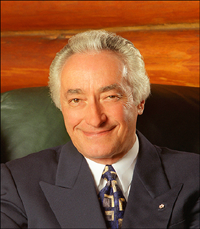
Mel Hurtig

Hurtig: 'No longer the people we think we are.'

  • The Truth about Canada
  • Mel Hurtig
  • Random House Inc. (2008)

Mel Hurtig might be the angriest man in Canada. He's angry at our "myopic" politicians, he's angry at our "selfish" big business, he's angry at our "continentalist" media -- and if you aren't angry at them, too, then he's probably angry at you. Hurtig has just released The Truth About Canada, which he claims is "one of the most anti-establishment books published in my lifetime" -- no small feat for a man of 75.

But don't call him pessimistic, he'd prefer patriotic. While The Truth About Canada may be the angriest book released this year, Hurtig's aim is didactic. "Canadians are incredibly proud of their country, with justification," he says. "Just look at the space we have, the resources, the people. The main point of my book is to show people that we're losing it."

We met in Hurtig's Vancouver home, where he was relaxing on the eve of an extensive book tour. His lifetime of Canadian pride was written on the wall: honorary degrees from six universities, the Lester B. Pearson Man of the Year Award, and the Order of Canada -- an award he remembers best for the reception, where he watched his four daughters dance with Mounties.

A native of Edmonton, Hurtig operated one of the largest book retailers in the country, then his own publishing house. From 1980 to 1985, he oversaw the creation of The Canadian Encyclopedia -- now a staple of the Canadian classroom. Then in 1991, Hurtig hit the bestseller lists with an indictment of the Mulroney era, titled The Betrayal of Canada. Hurtig's titles since then reveal his increasing apprehension: At Twilight in the Country, The Vanishing Country, Rushing to Armageddon.

The Truth About Canada is the culmination of his fears. With a flair for the dramatic and an eye for the harrowing detail, Hurtig fiercely argues that "we are no longer the country we think we are, and no longer the people we think we are." After years of intensive research, Hurtig's brain is crammed with damning statistics casting a bleak light on such subjects such as health care, immigration, and the status of Canadian women.

Rather than simply comparing Canada to the United States, Hurtig pits Canada against the other 30 nations of the Organisation for Economic Co-operation Development (OECD). Suffice it to say, we don't fare very well in most categories. Hurtig is happy to ruffle a few feathers, but even he admits that this is his most controversial work.

Yet Hurtig thinks his anger will set Canada free. Only once the ugly truth is revealed will effective change commence. Does he fear retaliation for bursting Canadians' self-satisfied bubble? The angriest man shrugs and seems downright cheerful. "I told a friend that if my body is found on Bay Street, he'll know what happened."

As we conversed, here's what else Hurtig had to say...

Mel's appalling fact #1:

"The poorest 94 per cent of Canadians own three per cent of the wealth in Canada."

On the embarrassment of Canadian child poverty:

"In 1989, the House of Commons passed a unanimous resolution, claiming that they would end child poverty by the year 2000. This was considered a major breakthrough. Nineteen years on, and where are we? Child poverty today is exactly the same as when they passed the resolution. So what happened? The GDP has more than doubled since that resolution. That's about $900 billion.

"With child poverty still a problem, you would think our social spending would be at least on par with other European countries, but no. Of the 30 OECD countries, we're 25th in social spending. There are developed countries that have a quarter of the child poverty that we do, and they're still more competitive in business than us. Their taxes are higher, and they're still ahead of us. Where did all of our money go?

"Beginning with the Mulroney government, there's been a huge downgrading in the role government plays in combating poverty. Right now, the level of welfare in Canada is far below the level it was back in 1980. Meanwhile our largest corporations have charted all-time record profits for four consecutive years. Of the 30 OECD countries, we rank 21st in citizen taxes, while we're 27th in corporate taxes. So it's the people who bear the high cost of poverty and taxation. That's no way to run a country."

On the illusion of Canadian peacekeeping:

"Canadians are incredibly proud of their peacekeeping, but the truth is that we're now a war-fighting nation. Our military actions abroad are not peacekeeping efforts, they are aggressive efforts. Canada ranks 33rd among the world's peacekeeping nations. There isn't a single Canadian officer in the UN peacekeeping headquarters in New York. No wonder people ask us, 'What's happened? Where have you gone?' We used to be on the forefront, but the truth is we've changed what we think we're best known for."

On protecting Canada's Arctic:

"If Stephen Harper announced tomorrow that he's really going to build those two armed icebreakers, and he's really going to establish decent bases in the north, I think Canadians would be in favour. Canadians have always looked at their maps, and at the top of the world they see a big mass of pink. We've always felt that's a part of our country. But the Americans say, "We can sail through there any time we want, it's international waters." Now I'm not anti-American, but there's nothing wrong with defending your own territory from people who are aggressive."

Mel's appalling fact #2:

"Aboriginal people constitute about three per cent of the Canadian population, but they make up about 20 per cent of all prison inmates."

On the danger of foreign takeovers:

"Since Brian Mulroney abolished the Foreign Investment Review Agency and replaced it with this Mickey Mouse, incompetent, do-nothing organization called Investment Canada, there have been 10,924 takeovers of Canadian companies. The total value of those takeovers is $847 billion. Now here's a question: what percentage of that money was for takeovers, and what per cent for new business investment? 2.4 per cent was for new business investment, the rest for takeovers. As a result, our levels of productivity have plummeted, and we're now the 13th most competitive country in the world.

"You would think big business would take their all-time record profits and invest in new machinery, especially since the dollar has strengthened, and so the cost of equipment would be significantly lower. But what are they doing? They're sending their money out to tax havens. No other developed country in the world would allow this to happen.

"How is Canada going to be a competitive country if we sell ourselves off like this? I've got grandchildren. I have no intention of letting my grandchildren grow up in a world where they're tenants in their own country."

Mel's appalling fact #3:

"In 2005, over $22.3 billion of foreign-controlled corporate profits left Canada."

On the day of the 'bag man':

"I was a member of the Liberal Party from 1967-1973, and we used to have a guy we called the 'bag man.' He'd go east once or twice a year with a big, black satchel. When he'd come back, I'd ask, 'How much have you got this time?' and he'd say something like, '$650,000.' Then I'd ask, 'How do we know you didn't collect $750,000?' He'd look me square in the eye and say, 'You'll never know.' That was the 'bag man' attitude, back when there were no receipts for donations to political parties. I blame those days for a lot of the problems we have now. Covert funding of political parties has had a profound effect on Canadian policy.

"Thank God we've made that change, at least. That's one of our only hopes: no corporate or trade union donations to political parties."

On the failure of a Canadian education:

"The educational establishment has not done a proper job of teaching young people what this country is all about. We've developed a caring society, a tolerant society, and a compassionate society, but students have never been taught why it's important to know our history and values. As a result, young people don't know why it's important to participate in Canada. It's not that they're afraid to be patriotic -- people love their country instinctively -- but why it's important to participate has never been properly explained to them. This is an unacceptable situation. I really do fault our educators for not teaching Canadian history and Canadian values. But then again, what can they do without the necessary funds? Canada, for public spending on education as a percentage of all government spending, ranks 91st of the world's countries. Ninety-first, for Christ's sake!"

Mel's appalling fact #4:

"For social spending as a percentage of Canada's GDP, Canada ranks 25th of the 30 OECD countries."

On the vanishing Canadian identity:

"Canadian performing arts have more revenue than all of our sports put together. This boggles most people's minds. All you have to do is open up the daily newspaper and see how many pages are devoted to sports, and how many to performing arts. Yet there are more jobs in Canadian cultural industries than in agriculture, mining, and forestry combined. Despite this, we're still not doing a good job of protecting Canada's cultural industry. Would you live next door to the world's most powerful culture-exporting country in the world, and then agree to sell-off major components of your cultural industry? Eighty-nine per cent of Canadians say the CBC helps distinguish Canada from the United States, but we decide to cut the CBC's budget by $400 million. This is no way to maintain the Canadian identity."

Mel's five steps to fix Canada:

"Step 1: Reform the way we elect members of government. This is absolutely the top priority. The system we have now does not reflect the true will of the people, and it exacerbates regional tensions. Many other countries have better results in their elections than us, and all of them have a mixed-member proportional representation system. These countries have a very high proportion of votes that count. Canada's system, on the other hand, has a low amount of votes that count, so people feel powerless.

"Step 2: Increase taxes on large corporations. Right now corporations are not bearing enough taxation, so they have no incentive to do anything meaningful for Canada. Only 3.8 per cent of Canadian industrial revenue is spent on research and development. Let's make them work a bit. I would give them a tax incentive to do meaningful research.

"Step 3: Curtail the foreign takeover of Canadian corporations. I would do this tomorrow if I could. Canada does not need any more foreign ownership or foreign control. The Canadian Council of Chief Executives might say, "Foreign investment is the foundation of the Canadian economy!" but they don't present any evidence, they have no facts. Here's a fact: I once went to a Canadian Gulf Oil refinery, and before they could let us in the gate, they had to phone Chicago to get permission.

"Step 4: Increase social spending. It's absolutely essential to increase spending on education and health care. Thirty-three per cent of university students can't remember the third line of the national anthem, and we rank 54th in the world for number of doctors per 100,000 citizens. One piece of good news is that public-opinion polls, time after time, show that most Canadians think a top priority in this country is the support of social programs. If only our CEOs thought the same way.

"Step 5: Eradicate child poverty. We have to do something meaningful about this. It is unconscionable for us to have the levels of child poverty that we have in this country. There is terrible human misery in Canada, and it is a huge injustice."

 [Tyee]

78  Comments:

  • G West

    13-05-2008

    Mel

    Where have you been?

    All this stuff, and more, have been subjects of discussion, illustration and debate right here at Tyee for years.

    You should stop around some time and see what kind of reaction the naysayers deal out when you discuss these kinds of facts.

    I invite respectful comments to my posts at Tyee.

    G West

  • ME2

    13-05-2008

    GWest

    Well, Garth, the proper answer to your question is to ask "Where have YOU been" if you don't recall that Mel spent most of his money setting up the National Party, which flourished only a few months following a very premature attempt in the 1993 Federal election.

    In my little Socred town of 500, we learned of the new party only six weeks prior to the election, but managed to sign up 16 members and collect over $1500 in donations in that short time.

    The convincer was Mel's book A New and Better Canada, the content of which, my guess is, is much the same as Mel's new book, as described above.

    The Party was destroyed by internal wrangling with a major financial sponsor, and externally with loss of control at its first convention to a bunch of crazies, IMO a put-up-job by NDP lefties.

    In the process Mel lost the rights to his book, which had been signed over to the Party, and that's the last we've ever heard of it. And also (until now) of a politically prominent Mel Hurtig, who rumour has it, was totally bummed out by it all, and I can't say I blame him.

    The point of this post is to note that if his new book is anything like A New And Better Canada, it could well be the foundation for another attempt for forming a new party on the Left, for it will outline what is required to capture the imagination of the Center-Left Canadian voter who comes far closer to constituting a majority vote than most people think.

    I say that while remembering the ease with which we recruited people who had never before belonged to a political party, along with NDP drop-outs.

    Conservative NDP'ers will no doubt characterise Mel's points as "old bromides", but even so, they are still very much in the public's mind, and moreso as we all watch those chickens coming home to roost.

    I agree that we've discussed these issues to death, but if we don't have a Party willing to make them major planks in its platform, what's the point in even discussing them anyway?

  • G West

    14-05-2008

    ME2

    Unless there's a change in the way we elect governments - see Mel's step #1 - the idea of creating a new party will do little more than provide some cathartic relief for the disenchanted, disgruntled and disheartened.

    I don't know what the answer is, but Mel doesn't seem to be the guy to organize it...any more than David Suzuki is.

    Which doesn't mean that both of them, much of the time, make good (but hardly earth-shattering or new) points.

    I think the objective is clear - how we get there is the problem.

    There’s an interesting little story about Juneau, Alaska in the New York Times this morning. Sometimes the only thing which actually creates change is a knock-down; (or even a knockout) - maybe that’s what we need right now:

    http://www.nytimes.com/2008/05/14/us/14juneau.html?_r=1&hp&oref=slogin

  • Jeffrey J.

    14-05-2008

    Pen Mightier than Sword

    The pen has always been mightier than the sword. Unfortunately, it is the damage and destruction the rich and powerful do with their swords in the meantime that worries everyone.

    Hurtig has always understood the logic behind social justice and democracy. His book will be a wake up call for people who haven't yet realized that Canada's media monopoly no longer reflects the truth about this once great country. Let's hope we can save what's left.

  • Cynic

    14-05-2008

    I haven't read the book yet

    I haven't read the book yet but does Mel include proper use of the Bank of Canada in his analysis? Doesn't sound like it and therefore he blows it. Mel, the way that money is created must be reformed or all other attempts to "fix" Canada will falter. Step #1 is to change the Bank Act and rein in the private banks from loaning too much money into existence. Then use the Bank of Canada to properly fund the programs and services that Canadians want and deserve.

  • City Person

    14-05-2008

    Falling Skies

    Interesting to see Olde Mel back at it again. Mel's been tellin' me the sky is fallin' for quite a while now. And he's made a ton of dosh doing it, but I digress.

    Mel is correct that other nations have higher social spending but there are other factors he is not telling you, like systemic unemployment in said countries. Go there and ask around.

    Gotta get my umbrella in case the sky falls!

  • Van Isle

    14-05-2008

    Do you remember last year

    Do you remember last year when our dollar soared to new highs and everyone was behaving that happy days are here again. The mass-media just sort of forgot to tell us the reason for our leaping dollar; foreign take overs of Canadian companies, using Canadian dollars which created a shortage of Canadian dollars and that's why it went up. Has any one payed attention to our dollar in relation to the Euro since then? It's gone back down to the level before 'the great leap up'

  • Van Isle

    14-05-2008

    Hello City Person and where

    Hello City Person and where have you been looking? I was in Scandinavia last year and all of those countries are doing really well and a lot better than Canada in my opinion. I'm not saying that they don't have problems but I would say that the average Scandinavian is better off than the average Canadian.

  • monty

    14-05-2008

    Time to re-read

    The Grand Ayatollah the tyee.ca Sept.12/07

    then check out www.ceocouncil.ca/en to see what Tom d"Aquino is up to now. Then, we'll see what the neocons have in store. Cheers.

  • Fiat lux

    14-05-2008

    Foreign investment is a

    Foreign investment is a fraud as it brings nothing to a country. It is an irrepayable loan that enslaves the proprietors of certain resources.

    When you have resources, you don't need foreign investment, because you can convert them into development capital, for you own benefit.

    Then we come to the phoney "free trade agreements", in reality, licences for total exploitation with the free movement of imaginary capital, created from the air by some bank for the takeover of other people's properties.

    The most disgusting part is that they give immediate citizens' rights, in the form of "national treatment", to some of the biggest crooks, with miles long lists of fines and convictions, all over the globe, giving them the power to buy political parties and governments to ensure the limitless continuation of their crime waves against the environment and humanity.

    Ed Deak.

  • City Person

    14-05-2008

    Scandanavia

    Van Isle, there is a lot I admire about the Scandinavian countries, particularly their extremely tough stance on carbon taxes. However, they only have about 20,000,000 people among them and have been blessed with some incredible natural resources, Norway in particular. They are also ethically homogeneous for all purposes.

    A better study would be Germany and France and how they calculate their unemployment rates.

  • ursus

    14-05-2008

    National Party

    I was a member of the National Party and the NDP didn't kill it at least not in Vancouver, there were a lot of Socreds Conservatives NDP and Liberals who were very unhappy with their parties working for the National Party.

    Like many I worked hard for the National knocking on doors in my riding after work going to meetings to listen and learn lots of strange stuff was happening, the head office on Kingsway was broken into and a lot of valuable equipment was stolen, contact numbers etc.

    The media was backing prestone doing little things like showing on t.v. an image of Mel taken from a newspaper all dark and sinister and prestone with a warmed light shining down on him from above and behind creating a halo like effect, probably a 81b filter.

    When I read about the spiderman breaking into that office it brought back memories, wonder if he was a member of the National? No it was not the NDP lefties who destroyed the party from within, more likely a bunch of corrupt right wingers, I remember arguing with some of them they were pretty twisted couldn't for the life of me understand why they were in the National Party, makes sense now, they were there to destroy the party from within.

  • Van Isle

    14-05-2008

    Comments back to you City

    Comments back to you City Person about comparing us to European reagions. Yes I agree that Norway has done wonders with it's oil resource but you got to admit that the riches from it is going back into the country and the wealth is spread around. The oil is owned by Stats Oil which is owned by the Norwegian Government. They sell the oil on the international market not like the oil companies do here. There are a number of complaints that the Norwegians have about the system but the biggest one is that they sell their oil in $U.S. which is so unstable. I can babble on about how other things that they do right but there is one thing that you mention that I disagree on; and that's being a homogeneous people. The Finnish Language isn't even close to the other Scandinavian languages. Finland is a bi-ligual country, Finnish and Swedish; there are Finns who don't speak Swedish and Swedes, on the west coast of Finland who don't speak, Finnish. The Sami people still live a different style than the rest of the population. The Islandic language has transformed so much in a 1000 years it's hardly recognizable as is the same for the people on the Faroe Islands. The people in Finn Mark, in northern Norway, feel left out of the loop with the southerners. Yes I agree with you about France and Germany are going through tough times but Ontario and Quebec are having the same difficulties.

  • lynn

    14-05-2008

    We stand on guard for thee

    Great book review.

    Quote:
    The Betrayal of Canada. Hurtig's titles since then reveal his increasing apprehension: At Twilight in the Country, The Vanishing Country, Rushing to Armageddon.

    The Truth About Canada is the culmination of his fears.

    The sad tragedy of those titles, each growing progressively more so, is shattering but Hurtig is right - this is the very alarming state this great country.....this greatly loved country.... and greatly betrayed country has found itself in.

    Some people are ahead of their time and Mel Hurtig is one of those people. He saw years ago the way Canada was disappearing before our eyes, becoming unrecognizable and he is quite right that Canada has become the culmination of the fears he expressed then...and that "we are no longer the country we think we are, and no longer the people we think we are".

    I am glad that he is angry and that he expects we should be as well. Anger is a good and necessary thing sometimes - necessary, as ursus points out in his comment, because those who would sabotage this country are among us, befriending us to betray us. The selling of Canada down the road did not happen without a well- orchestrated and intentional plan to do so, one based on control of the press, complicity, co-option, secrecy and lies :

    Quote:
    When I read about the spiderman breaking into that office it brought back memories, wonder if he was a member of the National? No it was not the NDP lefties who destroyed the party from within, more likely a bunch of corrupt right wingers, I remember arguing with some of them they were pretty twisted couldn't for the life of me understand why they were in the National Party, makes sense now, they were there to destroy the party from within.

  • Skywalker

    14-05-2008

    Thanks ursus!

    I think you describe the situation very well. There were a lot of the NDP who greatly admired Mel and his positions. Reform Preston was getting all the attention as the darling of the media. I may well be that the the NDP will regret not joining forces with Mel.

  • dorothy

    14-05-2008

    homo-what?

    "...blessed with some incredible natural resources, Norway in particular. They are also ethically homogeneous for all purposes."

    I trust there is an 'n' missing, so that the postulate is, that the Scandinavian countries are 'ethnically' homogeneous?
    The other thing, if that is what is meant, would be patently untrue. I can testify to that as a former Scandinavian.

    I am always frustrated, when people say things that start with 'now for instance the Scandinavian countries...' The blessing with natural resources would only be true for Norway and Sweden, certainly not Denmark, which only has 'soil and fish' to its name, and for the rest lives on its wits. Which are not inconsiderable. Rather, I think the success of those countries depended, and depends, on their exposure to the limits for growth on a much more brutal scale than has yet hit North America. Denmark in particular, was rather cut and bruised in the 1800's and had to learn to 'inwards gain what was outwards lost'. Study this part of history, and take a good look at the World Values Survey website, in order to understand what they do that we might wish to emulate. Many of Mel'spoints will be borne out there.

  • RickW

    14-05-2008

    Scandinavian Countries

    The "big thing" about the Scandinavian countries is that, if nothing else, they at least APPEAR to be doing something -- in contrast to Canada, which has reverted to it's antedeluvian image of "hewers of wood and drawers of water".

  • realisticman

    14-05-2008

    Van Isle

    Quote:
    I was in Scandinavia last year and all of those countries are doing really well and a lot better than Canada in my opinion.

    Quite right. We, here in BC, need to seriously consider what both Norway and now Sweden have done and that is to drill for and reap the benefits of off-shore oil.

    http://www.npd.no/English/Emner/Ressursforvaltning/Promotering/whynorway_oil_gas_cluster.htm

    Quote:

    The Government Pension Fund - Global (Norwegian: Statens pensjonsfond - Utland) is a fund where the surplus wealth produced by Norwegian petroleum income is put. The fund changed name in January 2006 from its previous name The Petroleum Fund of Norway. The fund is commonly referred to as The Petroleum Fund (Norwegian: Oljefondet). As of the valuation in June 2007, it is the largest pension fund in Europe and the second largest in the world [1] with a value of NOK 1.939 trillion, although it is not actually a pension fund as it derives its financial backing from oil profits and not pensions.

  • ursus

    14-05-2008

    Offshore Drilling

    So what your are telling us is Norway keeps the money for its citizens unlike Canada who gives it to foreign corporations to profit while our roads and infrastructure are falling apart like in Alberta.

    I just came back from fort mac and believe me the roads are falling apart, don't get sick or like me you will spend 7 hours waiting in emerg then leaving when told you will have to wait another 6 or more.

    Our politicians are sooo good at taking care of their foreign friends or their own offshore accounts is more like it.

    Cheers.

  • G West

    14-05-2008

    So I take it, Realisticman

    You're a fan of Stat Oil too then. Should we start re-purchasing Petro Canada now - or set up a new company of our own? Certainly, we can't even consider permitting private buccaneers to get into the offshore business and we need to be sure all the profits won't just move south of the border or the whole exercise won't turn out any better than the current utter failure has.

    The government of Norway holds about 65% of the shares and controls the company, its policies and procedures and the disposition and uses of its funds.

    I'm glad you're finally coming around.

    Of course, given the fact that we don't really 'need' the offshore, a simple exercise in regaining public control of our current production and turning off the tap to foreigners while building a pipe line to serve central and eastern Canada sounds like a made in Canada solution to me.

    Furthermore, under that kind of discipline there would be no need to continue the insane pace of oil sands development either.

    I always invite respectful comments to my posts at Tyee.

    G West

  • Luke Skywalker

    14-05-2008

    ursus...

    Quote:
    our roads and infrastructure are falling apart like in Alberta.

    I just came back from fort mac and believe me the roads are falling apart

    Come on, you're kidding right?

    Alberta Infrastructure has been spending more funds on highway infrastructure than any province in Canada over the past few years, even puts Ontario and BC to shame.

    Billions of dollars being spent and billions of dollars planned. That's the power of provincial revenues derived from oil/gas royalties.

    As for Fort MacMurray, here are the plans for the 6-lane freeway (10 lanes if you include the adjacent new services roads)

    http://www.infratrans.gov.ab.ca/INFTRA_Content/docType140/Production/proposedfwyplan.pdf

    As for Alberta overall, here is an extensive and detailed list of Alberta highway construction for the period 2008 - 2011.

    http://www.infratrans.gov.ab.ca/INFTRA_Content/docType181/production/ProvincialHighways2008-2011.pdf

  • Luke Skywalker

    14-05-2008

    Realisticman...

    Quote:
    We, here in BC, need to seriously consider what both Norway and now Sweden have done and that is to drill for and reap the benefits of off-shore oil.

    At least you "get it". Former BC New Democrat premier Dan Miller also "gets it" and supports offshore oil/gas development.

    The additional billions derived therefrom in terms of royalties into provincial coffers will certainly assist in higher quality health care, education, infrastructure as well as provide additional funding for social services in terms of the poor.

    The east coast is certainly benefitting from offshore oil/gas and it appears that Newfoundland will soon become become a "have" province. Who would have known.

    http://www.ctv.ca/servlet/ArticleNews/story/CTVNews/20080429/cda_economy_080429/20080429?hub=QPeriod

  • SharingIsGood

    14-05-2008

    My take on it too, G West

    G West:

    Quote:
    Of course, given the fact that we don't really 'need' the offshore, a simple exercise in regaining public control of our current production and turning off the tap to foreigners while building a pipe line to serve central and eastern Canada sounds like a made in Canada solution to me.

    Furthermore, under that kind of discipline there would be no need to continue the insane pace of oil sands development either.

    I couldn't agree more.

    He who owns/controls the energy and owns the raw materials and has an educated workforce should have no problem competing on the world stage. As Ed Deak always says, we just need to cut out the middlemen.

    I think we need to reinstitute much of the National Policy. Canadians can build their own car companies, we don't need Ford, Chrysler or GM. We don't need Japan. I'll bet we can build a great ammonia/hydrogen infrastructure that converts leftover wind and water power to ammonia. Farmers have been safely using ammonia to fertilize their fields for a couple of generations now. We know how to handle and use the material. Burning it releases water and nitrogen gas. Nitrogen already makes up 72% of our atmosphere.

    In BC, we have coal, oil, natural gas, other minerals, hydro-electric power and potential, timbre, farmland and ranchland. We have areas of great tidal power, wind and sun power. We can use our energy resources to see us through building a wind/water/solar/ammonia-based economy. We have abundance, yet our government seems intent on selling it off natural resources, and the hell with added value. As the world is becoming more populous, if we are patient, the resources will always be worth more in due course. And if the rest of the world has to buy those resources with at least some value added, then we will double our profits while being able to save resources for future generations.

    http://www.memagazine.org/contents/current/webonly/webex710.html

    http://www.energy.iastate.edu/Renewable/ammonia/ammonia.htm

    http://findarticles.com/p/articles/mi_hb5260/is_200508/ai_n20368451

    Any CO2 that may be generated during production of ammonia from methane etc. is easily contained. It can also be produced with plane electrolysis of hydrogen, heat and a catalyst.
    http://www.ausetute.com.au/haberpro.html

  • siamdave

    15-05-2008

    more hole and more future ...

    Mel does a good job as always, but scary as he is, the rabbit hole is much deeper - he alludes to it in passing by saying education is failing, but do you suppose this is just innocent incompetence, or is there a reason that our kids are being so poorly educated? I would suspect the latter. For a look at another level of the rabbit hole, you could do worse than They're Building a Box - and You're In It - http://www.rudemacedon.ca/dlp/box/box-intro.html - and for a vision of a positive future, try Green Island http://www.rudemacedon.ca/greenisland.html .

  • Frank

    15-05-2008

    Luke

    Quote:
    As for Fort MacMurray, here are the plans for the 6-lane freeway (10 lanes if you include the adjacent new services roads)

    Maybe ursus didn't drive on the planned one, maybe he drove on the real-world one?

    Quote:
    As for Alberta overall, here is an extensive and detailed list of Alberta highway construction for the period 2008 - 2011.

    Most of those dates seem to be in the future...

    By the way, what's the effect of the tar sands on the environment? Good or bad?

    Because apparently former Conservative (Neo_Liberal) premier Lougheed of Alberta "gets it".

    Quote:
    Lougheed is more honest. He sees the world's most destructive project taking place in his home province as "wrong in my judgment, a major wrong . . . . So it is a major, major federal and provincial issue."

    Quote:
    The additional billions derived therefrom in terms of royalties into provincial coffers will certainly assist in higher quality health care, education, infrastructure as well as provide additional funding for social services in terms of the poor.

    Alberta has had oil since just after WW2. Are you telling me that in 60 years none of those problems are fixed but they all will be real soon now?

    According to the Conservative ex-premier of Alberta it might be a few more decades before that oil pays for anything.

    Quote:
    In Canada, the provinces, not the federal government, "own" the natural resources, so that the bitumen is in fact the property of the people of Alberta, says Lougheed. Yet the royalty they receive on it amounts to 1 percent of the selling the price of the oil it produces, barely enough to cover the enormous infrastructure services the tar sands projects are occasioning.

  • RickW

    15-05-2008

    Even Gordon Campbell has Admitted.....

    ....that drilling for oil in a known fault zone is risky. After all, didn't he just comment on the awesome power of Mother Nature, as witnessed by the earthquake in China?

    BTW, the Alberta gov't is a doppelganger of the current federal government (or vice versa) -- much talk but little action.

  • G West

    15-05-2008

    Well.......

    As the price of gas moves into the stratosphere it might be kind of nice if some of those profits had continued to flow into the privy purse for some good works to assist all Canadians and not just a few Albertans.

    If you don't want to pony up the cash to re-purchase a bag full of Petro-Can shares it's fine with me Luke Skywalker. Let's just pick up majority control in one of the smaller Alberta companies and 'grow' it into some competition for the big boys.

    Isn't that the way the folks who 'get it' do it?

    Time for a few more blatantly left-wing solutions - and BTW - did you notice the Federal Court of Canada just slapped Imperial Oil for 'flawed' work on its Kearl operation?

    Canadian judge rejects Imperial Oil application for permit, halts bid to build oil sands mine
    May 14, 2008 - 5:59 p.m.
    CALGARY, Alberta (AP) - Imperial Oil Ltd. failed Wednesday to get a judge to reinstate a key water permit to build a $8 billion oil sands mine in Northern Alberta.
    Federal Judge Douglas Campbell dismissed Imperial's application to have Canada's Department of Fisheries and Oceans reinstate the permit at the Kearl oil sands mine.
    The company has said losing the permit could set the project back by a year.

    In his ruling, Campbell ruled that Canada's Department of Fisheries and Oceans was right in yanking the permit, since it was based on a "fundamentally flawed" environmental report.
    The permit is central to Imperial's plans to drain a vast stretch of northern Alberta bog land in preparation for its vast, open-pit
    mine.

    (Source: Canadian Business)

    I always welcome respectful comments to my posts at Tyee.

    G West

  • Luke Skywalker

    15-05-2008

    Frank...

    Quote:
    As for Fort MacMurray, here are the plans for the 6-lane freeway (10 lanes if you include the adjacent new services roads)

    Maybe ursus didn't drive on the planned one, maybe he drove on the real-world one?

    Aside from the planned freeway within Fort MacMurray's limits, there is also the ongoing construction in the twinning of highway 63 from Edmonton to Fort Mac in the ~$1 billion range.

    http://www.infratrans.gov.ab.ca/2611.htm

    Quote:
    Because apparently former Conservative (Neo_Liberal) premier Lougheed of Alberta "gets it".

    Your are absolutely right. Lougheed certainly "gets it" regarding the out-of-control development of the tar sands, which should be reigned in - too much, too fast.

    Quote:
    According to the Conservative ex-premier of Alberta it might be a few more decades before that oil pays for anything.

    Due to the royalty regime put in place concerning non-conventional oil extraction, ie. the tar sands.

    Quote:
    The additional billions derived therefrom in terms of royalties into provincial coffers will certainly assist in higher quality health care, education, infrastructure as well as provide additional funding for social services in terms of the poor.

    Alberta has had oil since just after WW2. Are you telling me that in 60 years none of those problems are fixed but they all will be real soon now?

    Alberta with no provincial debt (BC's roughly around $28 billion, tax-payer supported that is), is currently in the process of catching up with its infrastructure deficit due to the massive in-migration and growth over the past decade.

    Poor planning. BC is also in that same situation.

    Back to BC's offshore oil and gas. All the science is sound and North Sea oil is also situate in a seismic zone.

    Former BC New Democrat premier Dan Miller supports development of offshore oil and gas.

    Development of that resource will provide additional billions into provincial coffers just like Newfoundland is now experiencing.

    So are you saying you don't want the provincial government to receive those billions in order that we can improve upon health care, education, infrastructure as well as provide additional funding for social services in terms of the poor?

    The NDP government of the 1990's would have loved to have that revenue stream!

  • realisticman

    15-05-2008

    GWest

    Quote:
    turning off the tap to foreigners...

    Don't be silly. Norway exports oil to the USA.

    http://tonto.eia.doe.gov/dnav/pet/pet_move_impcus_a2_nus_ep00_im0_mbbl_m.htm

    Furthermore, Ottawa gets the bulk of oil money, it's just stupid for anyone to suggest that all the revenue goes to international corporations.

    Quote:
    Alberta's main cash flow will be from royalties, as the underlying resource is owned by the province, but looking at taxes, the federal government's coffers is the place that could be pelted with a gusher of petrodollars. The report suggests that of $123-billion in expected government revenue, Ottawa is set to reap the biggest share, $51-billion or 41 per cent

  • kootenay

    15-05-2008

    Tar Sands, The Selling of Alberta

    I wonder how many people caught the CBC documentary aired on May 13 regarding the Alberta Tar Sands.

    They did an excellent job highlighting the Environmental, Social and Financial consequences of this project.

    Also a comparison was made between the oil revenues Alberta collects compared to Newfoundland and Norway. Essentially, Alberta has lost control of their resource and not only will the province generate much less revenue than either NFLD or Norway, they also have lost control over the development and ownership of their own resource.

    Even an extreme right winger should have more sense than to continue to support the Alberta model of capitalism. When the project is completed, the province will have an environmental catastrophe on their hands that will affect people and the land for generations to come.

    Using the Norway model, the entire country could benefit immensely from this project, what a bloody waste.

  • realisticman

    15-05-2008

    Triple those numbers

    ...since then oil has, more than, tripled.

    Quote:
    Estimated total government revenues to be collected from the Alberta oilsands from 2000 to 2020:
    - Federal government -- $51.1 billion
    - Alberta government -- $43.8 billion
    - Canadian municipalities including those in Alberta -- $16.9 billion
    - Other provincial and territory governments -- $11.5 billion
    Source: Canadian Energy Research Institute

  • ursus

    19-05-2008

    Oil

    We should build our own refineries in western Canada instead of letting the U.S. refine our oil.

    I try to get my fuel from a Co-op or if necessary a Husky, haven't bought fuel at a Shell since I read about them being in the headwaters of the Skeena and will never buy fuel from Shell again.

    Cheers.

  • G West

    19-05-2008

    Damn right

    The Americans can and do look after themselves.

    We should build pipelines to get Canadian oil to Canadian consumers and, as I also stated, sell any excess beyond our current and strategic needs through East Coast ports in Newfoundland.

    The distance between Vancouver and Los Angeles is irrelevant. The jobs and the benefits of building for our own future are not.

    Additional refining capacity in the West is also vital - to meet local needs. Expanding the tar sands extraction beyond our own requirements (given current technology and the state of the environment) is insane - even voices from the distant past like Peter Lougheed understand such simple facts.

    I invite respectful comments to my posts at Tyee.

    G West

  • Tigana

    19-05-2008

    Thank you, Mr. Hurtig

    I don't know where we would be without you.
    See you at vivelecanada.ca!

  • The discussion for this story is closed. No more comments can be added.