Books

Plan Well or Perish

Vancouver architect Richard Balfour on readying his region for oil scarcity.

By Rex Weyler, 27 Mar 2008, TheTyee.ca

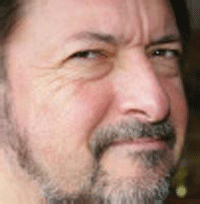
Richard Balfour

Balfour: radical fixes.

  • Strategic Sustainable Planning: A Civil Defense Manual for Cultural Survival
  • Richard Balfour and Eileen McAdam Keenan
  • Old City Foundation Press (2007)

In the post-peak-oil world, says Richard Balfour, highways crawling across farmland represent insanity. We should be building light rail transport, now, and designing neighbourhoods linked to the farmland that sustains them.

Balfour is an architect, strategic planner, director of the Metro Vancouver Planning Coalition, and a member of the Vancouver Peak Oil Executive, a group of citizens attempting to warn politicians about the challenges ahead.

Balfour points out that B.C. produces about 48 per cent of the food we consume. That's manageable when oil is cheap and we can ship food from the tropics. "Our food from Mexico," says Balfour "is running out of gas."

Balfour and Eileen McAdam Keenan have written a "Civil Defense Manual" for Vancouver and the Lower Mainland, not a defense against terrorists but against our own consumption habits and illusions about economic survival. "We are already in the post-peak-oil era," says Balfour, "the rising price of liquid fuel will change everything. We must now learn to relocalize our economy or suffer the unpleasant consequences."

So how does a progressive city like Vancouver prepare for a fuel-starved future? Not, according to Balfour, by repeating the planning mistakes of the oil era. "The top planners do not even have the end of cheap energy, global warming, or mass migration on their radar," says Balfour. "We cannot keep on making the same silly mistakes of the last hundred years and that includes most current planning and engineering in our urban environments."

In 2005, Balfour established the Vancouver City Planning Commission forums with the VCPC executive. The forums included Bob Williams, Marta Farevaag, architect Oberto Oberti, Dr. Bill Rees from UBC (father of the "ecological footprint" concept) the Post-Carbon Institute, and other planners. Last year, Balfour and Eileen McAdam Keenan compiled their research into a book: Strategic Sustainable Planning: A Civil Defense Manual for Cultural Survival (Old City Foundation Press, 2007).

The book describes how the end of cheap oil leads inevitably to the end of cheap food, how food shortages will erode social cohesion, and how unrest will limit planning options.

For example, the UN attempts to feed about 70 million of the 800 million people living with starvation, but must cut back due to rising oil prices. Meanwhile, people erode 20 billion tonnes of top soil every year, and convert more farmland to growing biofuels, all leading to higher food costs.

Balfour describes planning for these interlocking crises by returning to local economies, which he calls "relocalization." Building suburban bedroom communities linked to cities by petrol-guzzling roads is already 100-years out of date.

During the last month, I met with Balfour and traded e-mails. Here are more of his thoughts . . .

On the need for change:

"We have already crossed too many important points in time where we could have managed a gentle change to a post oil society. We now enter a period of painful adjustment. The weakest links in society, the deniers, still wield too much influence.

"When we delay the changes, our culture has less chance of survival. Planning for a soft landing is about working together to avoid the painful crash. We must accept radical change, quantum-leaps, lateral thinking, and shift to patterns of community, and we must do this in short order."

On post-oil food supply:

"Farmlands represent our common public asset for food security. Urban populations must have access to a gardening commons within walking distance in a very near future.

"A farmer who believes he can plough 100 acres more efficiently than 10 acres is making the assumption that he can still get diesel for his tractor in 10 years, that he still owns the land, or that he does not have to take on 100 landless refugees."

On BC's Agricultural Land Reserve (ALR):

"The ALR is critical to the survival of town sites and must not be considered for urban development, the sprawl that some newly arrived hired guns call 'new urbanism.' This avant-garde green language is a disguised robber baron plan to erode the precious public commons of the ALR.

"The farmer who provides our sustenance has been marginalized and his land devalued. In his place, we get tasteless green strawberries with no food value delivered by trucks from California.

"We should not only protect agricultural land and green belts, but also turn back the clock to the smart decisions of the 1970s. This is not some idealistic notion of the good old days, but an absolute necessity beyond our control, that we must prepare for now. Your children will thank you."

On Vancouver's EcoDensity push:

"The EcoDensity initiative is a bit of a farce because it misses out on the 'eco' part, but densification and a move toward sustainable forms is important. Our current mishmash of poor buildings and wasteful land use has to be reengineered in short order, before the energy is gone.

"Single-family houses, high rises and lousy, leaky apartments are vestiges of our colonial mentality in the rain forest. The problem lies with Vancouverites looking at homes as investments first and community housing second. We have become a city of yakkers.

"The EcoDensity plan proposes arterial redevelopment and urban villages that should have happened a hundred years ago. We have little time to correct a century of bad planning. If we don't clean house soon, radically, nature will clean house for us."

On Vancouver's expansion:

"We're building on the flatland that we will need for food in the near future. Green regions are not just negative space left over after planning the urban area, but the vital part that provides life. Urban areas have social limits. Two smaller communities separated by productive green land creates positive social benefits over sprawl.

"If the mistakes proposed for Maple Ridge, destroying ALR land, are allowed to become reality, it will bode poorly for the rest of Metro Vancouver that would soon regret this criminal dismemberment of the ALR.

"B.C. is mountainous, so we should learn how to take proper urban development to the hills. Thorn Hill is one of the best sites in BC to demonstrate this, an area of poor soils but otherwise a classic site for a stand-alone sustainable town on a gentle south slope. Thorn Hill could be a demonstration for true smart growth for a post oil economy."

On the end of suburbia:

"Over-inflated false economies like oil-subsidized, single-family subdivisions are at risk most of all. To sustain our communities and heal the planet, we have to throw out the oil era planning and engineering documents and start over.

"The old land management plans of the Wacky Bennett era paved over green space as described by former Minister of Municipal Affairs, Dan Campbell, who envisioned, 'Some day soon, it will all be paved from Vancouver to Hope.' His heirs are trying to speak green while still plotting for 1950s-style suburban sprawl.

"Any suburb or city artificially propped up is toast. We're building highways to a future oblivion. Green fingers of land must penetrate town sites to make them sustainable when there is no gas for cars or for shipping food from Mexico."

On the speed of change:

"The green baby steps we now proclaim as progress are too little, too late. What sense does it make to give a green award to a building where everyone has to drive to get there? The longer this emergency is ignored, the worse the crash will be."

On new economics:

"The cheap energy era allowed us a veneer of civilization in which people collected money for doing nothing of significance for the real betterment of society. We count useless products and the war as positive GNP. This practice suggests a sick society. Mother Earth is keeping another set of books, however, and the two forms of accounting are not reconcilable.

"The 'grow, grow, grow' planning folks have an Achilles heel. Each growth scenario relies on key resources that are running out. The shortages will depress expected growth. In most cases, the dream of finding alternatives is wishful thinking.

"The practice of creating more palaces of temporary bliss, where we breed more consumers to perpetuate the paving of the planet, has to collapse."

On nuclear power as a solution:

"We have only 85 years uranium resources at current consumption. If there is a huge ramp up of nuclear, the supply life of uranium will be shorter than the design term of the new facilities built to use it. And still we have not dealt with the issues of disaster insurance, waste disposal, and weapons proliferation."

On saving soil or selling lawns by the yard:

"Last year, Scientific American and New Scientist investigated "soil mining," the use of corn and soya for biofuels. There is nothing left to return nutrients for sustainable yields. We do the same thing in the Fraser Valley for growing lawns, which we waste gas on to mow. The sod farms on class one soils roll up a crop of sod every few months, taking with them a whole layer of the best agricultural soils. In some places, the sod farms are over a meter below the fields around them."

On relocalization:

"The rising outrage against big governments and big corporations making unhealthy decisions 'for us' is a healthy sign of repossessing our life and survival. Relocalization is a rediscovery of how to do things for ourselves. We must quickly re-learn forgotten skills. This is not a small task, but a great challenge.

"We cannot force relocalization. It will happen as a survival shift, like the Victory gardens of World War II. Six years ago, when I suggested relocalizing sewage treatment to a community level, the engineers laughed. Then they discovered the cost to replace the big pipe systems that were breaking down. Now the talk is about local treatment. It means using the edges of schools and community centres to recreate wetlands for purifying water."

On life after peak oil:

"Price escalations will not wait until the world's oil tank is empty, but will appear earlier, at the last quarter-tank mark. We are there.

"The oil era globalization monoliths are not people, nor community, nor essential to our survival. Safeway, Save-On-Foods, and Wal-Mart rely on cheap liquid fuel and cannot keep breathing in the same way beyond the next few years. Chains like Wal-Mart destroy local mom and pop community businesses, the very institutions we'll need to survive."

 [Tyee]

45  Comments:

Login or register to post comments

  • Frank

    3 years ago

    Rex

    Interesting article. However, I was hoping I could have got confirmation that our premier's carbon tax has fixed everything and we don't have to consider changing our ways.

  • snert

    3 years ago

    Marginal soils can be recovered.

    Witness the millions of dollars spent on ex dairy farms in Pitt Meadows to improve growing conditions for blueberries and cranberries.

    In a metropolitan area the size of the GVRD compost could be collected and used to upgrade other areas.

    "The farmer who provides our sustenance has been marginalized and his land devalued. In his place, we get tasteless green strawberries with no food value delivered by trucks from California."

    And we don't have local strawberries, OK.

  • NicS

    3 years ago

    Acting Now or Paying the Piper!

    This manual by Balfour and McAdam Keenan sounds like an excellent first step in the right direction. The number of proactive steps we could be taking are almost infinite. Many of us know what has to be done and are doing our part. This manual should help us "all" focus on the real issues and assist us in separating the wheat from the "greenwashing of chaff". Thankyou Tyee for this interview/review.

  • Budd Campbell

    3 years ago

    RAMBLING, UNINFORMED, LUNATIC MATERIAL

    I don't know what school of architecture Balfour graduated from, but from the rambling, uninformed, lunatic material in this article I can say I wouldn't feel safe standing in or near any structure he designed. Let me refer to two passages:

    "The ALR is critical to the survival of town sites and must not be considered for urban development, ...

    The farmer who provides our sustenance has been marginalized and his land devalued. ... "

    The legislative purpose of the ALR is to designate arable land for farming, not to provide some kind of urban amenity or green buffer, though it may also serve that purpose incidentally. But as one farmer in Kelowna said recently in a producer-community newspaper, the ALR protects farmland, but not farmers. The land "devaluation" Balfour then refers to is the direct result of ALR designations, a consequence that public policy needs to be cognizant of and make some kind of suitable compensation for.

    The "new urbanism" stuff, while certainly debatable, has nothing necessarily to do with taking land out of the ALR. That doctrine can be implemented on non-ALR lands and redeveloped lands as well.

    "If the mistakes proposed for Maple Ridge, destroying ALR land, ...

    B.C. is mountainous, so we should learn how to take proper urban development to the hills. Thorn Hill is one of the best sites in BC ... "

    Where does Balfour get his information? There have been numerous applications for ALR exclusions in Maple Ridge, some approved by the local council, but as far as I know none of any size has been approved by the ALC.

    Environmentalists and agricultural advocates in Maple Ridge are firmly oppposed to urban development in the Thornhill area. While not agricultural, this rural residential area consists of small, and some larger acreages, mostly on well water over an acquifer. More intensive development of any part of Thornhill would compromise the well supplies of those wishing to retain rural acreages. Better to look to the hillsides to the north of Maple Ridge, towards the Research Forest, Golden Ears Park and the like. Those mountainsides are being developed into subdivisions now, and that is probably the best location for future single-family developments.

    If Balfour wants to advocate urban densities throughout the Valley, he's going about things backwards. When he has finished persuading Vancouver and Burnaby to genuinely densify around and along transit routes already installed and paid for by all Canadian taxpayers, when he has convinced those irresponsible councils to get rid of preposterous regulations like the Floor Space Ratios and in Burnaby's case antiquated secondary suite restrictions, which result in less housing services on a given land area, then perhaps with some suitable research and homework he may be in a position to offer useful advice to communities in the Fraser Valley.

  • JonBC

    3 years ago

    Name-calling won't make these issues go away

    It sounds like Budd Campbell is knowledgeable and legitimately concerned about the Fraser Valley -- bravo! It also sounds like he has some specific issues with Balfour's prescriptions for handling the upcoming peak oil/food/land use crisis -- fair enough. How that adds up to "rambling, uninformed, lunatic", I don't get. The problems Balfour is talking about are all well-documented, and when you add them together they spell imminent danger, if not disaster, for the Metro Vancouver area. Personally I find Balfour's healthy sense of outrage refreshing, because he's personally working hard to make sure that people like me will have water to drink, food to eat, a way to get around, and a sovereign country to live in 10 years from now. That seems like a goal we can all agree on -- let's channel our outrage towards the government officials, corporations and individuals who aren't working to support that goal, and not aim it at each other over small disagreements on how to get there.

  • Budd Campbell

    3 years ago

    ALARMIST RUBBISH

    The problems Balfour is talking about are all well-documented, and when you add them together they spell imminent danger, if not disaster, for the Metro Vancouver area.

    The quality of Balfour's more generalized material can be judged from the complete misinformation he offers on specifics, such as the Thornhill area. Alarmist nonsense about peak oil may be a popular gig for environmental NGOs seeking to extract more cash from their contributor base, using fundraisers who work on commission, of course, but it's hardly food for reasoned thought.

    One of my favourite bits of fluff is the line that the world's food supply is being produced and transported by the use of oil. Oh my God!

    Can anyone please suggest to me one or two more intrinsically valuable uses for oil or other finite resources than the production and distribution of fresh food the world over? Sure the '100 mile diet' is a neat idea for specialty cafes and food afficianados, but how do you incorporate into that citrus, bananas, tea, coffee, pineapple? Do you really think this is an implementable idea for public policy, affecting the diets of every Canadian?

  • Grumpy

    3 years ago

    Um Bud, hold on a minute....

    .... your quote:

    "One of my favourite bits of fluff is the line that the world's food supply is being produced and transported by the use of oil. Oh my God!"

    But it is, how does that California and Mexican produce reach us? Truck and train, all run by oil.

    Why should we importing produce, when we can grow it here? The ALR is very important and I think in a few decades we will rue the day when we paved over farmland.

    I see in recent news that a French company is even transporting goods by sailing ship!

    As oil prices increase, watch for the economy to implode!

  • Budd Campbell

    3 years ago

    SO WHAT? NAME A BETTER USE FOR OIL

    But it is, how does that California and Mexican produce reach us? Truck and train, all run by oil.

    Grumpy, do you really think before you write? Of course oil is a key input into agriculture and transportation. And you know something, Grumpy? Natural gas, another finite mineral fuel is a key input into all the greenhouses in Delta that will grow the lettuce locally instead of trucking most of it from Calif/Mexico.

    My question still hasn't been answered. Can anyone think of one or two more valuable uses for oil or other finite fuel supplies than producing and distributing food? Compare that to Formuala 500 racing, luxury cruises, discount airlines, and mid-life crisis drivers in 400 cubic inch Vettes, ... what do you think is the prefered use?

  • Grumpy

    3 years ago

    Um Bud, hold on a minute....

    .....Formula 500 cars run on methanol

  • auntiesocial

    3 years ago

    To Answer Budd's Quesion...

    I'd much rather see oil used to:

    1. Produce electricity to run the incubators of premature babies.
    2. Produce any medical supplies that must be disposable and plastic, (syringes etc.)

    Than use it to make sure your fruit cocktail contains an adequate amount pineapple, Budd.

  • Budd Campbell

    3 years ago

    DON'T FOLLOW NASCAR

    .....Formula 500 cars run on methanol

    Didn't know that, Grumpy. But I think the general point stands. Using oil to produce and distribute food is one of its less questionable uses.

  • wiley

    3 years ago

    lunacy of denial

    Far from being lunatic ramblings, I find Balfour's reminders of what's coming down the pike very valuable in assessing some of the insanities that our government is still spending money on. Just look at the stupid Gateway project, most arteries of which will soon enough be underwater, thanks to our obscene levels of consumption of Walmartian "fluff" from China. Surrey will indeed be a new Gulf Island in far less time than has lapsed since electricity came to Vancouver, and most of the Fraser Delta will be eel grass beds.

    Polar melt is one calamity, and peak oil is another. Funny they should be coincidental, eh? That says something about the rate of anthropogenic change, surely. Can we actually adapt that fast? As the Cantarella oil fields in Mexico go dry, their industrial farming patterns will collapse, and exports will vanish first as they relocalize and take care of their own needs. Ditto for any other region in the world we currently get "surplus food" from. There are no grain reserves anywhere, any more. Hmmmm...

    We need to wake up and admit we were all suffering from this consensus trance that has been induced by a relatively brief once-only binge on the planet's ancient legacy of fossil fuels, and that the price of this egregious bender means that all our children will have to go cold turkey. And they sure don't look ready for it.

    Maybe the title of this article should be a bit more painfully accurate: Plan Well or Watch Your Hopes for Your Children Perish.

  • ME2

    3 years ago

    I agree wit Budd

    I find myself completely on-side with Budd Campbell, and though I wouldn't describe the article as "lunatic", I agree it is "misinformed" and aimed at the Chicken Little element of the enviro community.

    The writers tell us:

    "We have only 85 years uranium resources at current consumption. If there is a huge ramp up of nuclear, the supply life of uranium will be shorter than the design term of the new facilities built to use it."

    *85 years"??. The best estimates I've seen are 40 years, but then I'm convinced nobody really knows, and I wouldn't be surprised at 1,000 years. And then there's the Breeder Reactor which can halve the fuel requirements, along with the use of Thorium, of which there are far larger known deposits than of Uranium. Undoubtedly more deposits of each will be found.

    And then they drag out that old canard "On life after peak oil:"

    "Price escalations will not wait until the world's oil tank is empty, but will appear earlier, at the last quarter-tank mark. We are there."

    "The last quarter-tank"?. Nonsense. The world price is rising not because of an oil shortage, but because the days of CHEAP OIL are gone. Today's oil prices reflect the rising costs of development and production, and the workings of cartels and monopolies.

    It is estimated that oncoming reserves to be found in the Actic will double those of known reserves. No-one knows just how much oil will be recovered through new deep-well technologies, since the necessary seismic work remains to be done. On top of that, there are virtually limitless reserves in oil shales and sands awaiting newer technologies and higher prices.

    And then there are the vast deposits of "Ice Methane" in Seas and Oceans all over the world awaiting the development of the right technology.

    And finally, there is the quick-fix favoured by enviros which recognises our profligacy in the use of hydrocarbons, the call for more efficient and less wasteful use of them.

    Given the extreme utility of hydrocarbons in the generation of energy and as a base for such things as plastics, the ONLY things that will limit their use will be their cost and/or the development of cheaper alternates, such as in power generation.

    The point is that any planning based upon the "imminent" depletion of nuclear or hydrocarbon resources is based on fallacy and so will lead to faulty decision-making..

  • Bobby Peru

    3 years ago

    Irresponsible, illogical rubbish

    I'm disappointed that Tyee permits Balfour to spout such rubbish on its pages. The reason we have industrial, large scale farms is the economies of scale and lower prices they generate. Going to community or home garden plots is neither economical or productive. Few people want to grow their own. Balfour is effectively saying that nations should stop trading and put up walls and go back to the Dark Ages.

    'Peak Oil' arguments are as doubtful as global warming, but the environmental radicals have seized upon them to push their warped political agenda of hopelessness and visions of 'Waterworld'. Of course Vancouver and BC's bureaucracy is overpopulated with these ardent social engineers. That's why we don't have proper highways and the mess of clogged streets today. Their perverse logic says creating more traffic jams and pollution will actually encourage people to ride bicycles. They are anti-growth and generally hate anyone who is rich or successful. Economic success is considered evil and dirty.

  • Skookum1

    3 years ago

    Quote:Balfour points out

    Quote:
    Balfour points out that B.C. produces about 48 per cent of the food we consume. That's manageable when oil is cheap and we can ship food from the tropics. "Our food from Mexico," says Balfour "is running out of gas."

    Back in the mists of time, up until the 1960s or early '70s, I remember being taught that BC produces (or, now, "produced") 90% of its food supply. That included BC beef and dairy but primarily, and amazingly, it was a reference to he market gardens along the Fraser River and in the Valley. Something like half the fresh vegetables in the province used to be produce by Chinese-run market gardens between Southeast Marine Drive and the river. And we all know what happened to Richmond's arable land....and a lot of our dairy farmers left for Whatcom County when the marketing boards forced our stores to carry more Quebec milk and cheese than that from BC....

    As for snert's coment about us now growing strawberries, well, that would be because Clearbrook is all condo fields now. I remember the big juicy Fraser Valley strawberries, some as big as your first. Sure, seasonal only for the most part, although some greenhouses were around then, but we DID produce strawberries, excellent ones.

    Thornhill? One of the prettier bits of Maple Ridge, we used to take the drive via Spilsbury up from Whonnock to get to upper Albion the back way, just because of its prettiness and old-valley flavour; and we were from Ruskin, which is no shirker on scenic values. Thonrhill has one of the only decent views in the area, no doubt why it's of interst to developers, like Silverhill farther east. Crappy soil it may be but this should be heritage landscape, not a new test-design for condo-dom.

    My main comment though is about the Vancouver-centric nature of the general discussion an the book it's about. Cities like PG, Kamloops, Cranbrook, Castlegar, Kelowna, Nanaimo - all more dependent on stripmall/automobile life than even Vancouver, which at least has transit and walkable areas. Even small towns are unwalkable because of autmotive-era expansions; Whistler, which is the most planned town in the province, still allocated subdivisions miles from its oh-so-walkable village.

    Some of these cities will collapse without the oil supply; PG in particular is not viable without gasoline......

  • Skookum1

    3 years ago

    typo

    Quote:
    I remember the big juicy Fraser Valley strawberries, some as big as your first.

    "Fist"

  • Budd Campbell

    3 years ago

    THAT'S WHAT I MEAN, SKOOKUM1

    Thornhill? One of the prettier bits of Maple Ridge, we used to take the drive via Spilsbury up from Whonnock to get to upper Albion the back way, just because of its prettiness and old-valley flavour; and we were from Ruskin, which is no shirker on scenic values. Thonrhill has one of the only decent views in the area, no doubt why it's of interst to developers, like Silverhill farther east. Crappy soil it may be but this should be heritage landscape, not a new test-design for condo-dom.

    Your description of the Thornhill area is familiar to those who live there now and want to keep it the way it is. For others who live there, and want to develop their properties for a substantial capital gain that they were "promised" by both the realtor and previous Maple Ridge councils, who started refering to the area as an "urban reserve" on their playpen "planning" maps, your description is an irritant, an obstacle to their ambitions.

    Balfour has plainly placed himself in the latter category as far as Thornhill goes, but wraps his position in some green rhetoric that leads some people to overlook the actual implications of what he's saying.

  • realisticman

    3 years ago

    Bio - for your perusing

    As per;

    Post World Planners Congress Seminar Planning for Food
    Vancouver - June 21, 2006

    Quote:
    Richard was educated in Engineering (RCAF/ROTP, Royal Roads Military College), Sociology
    (UBC B.A., 1972) and Architecture (UBC, B.Arch. 1974). He has spent 30 years working in the
    planning design and construction professions in British Columbia. As a Council member of the
    Architectural Institute of British Columbia, Richard has served on professional committees and task
    forces dealing with community and government affairs including the Urban Design Committee and
    the Housing Committee. In addition he has chaired the Discretionary Planning Task Force and was
    a coordinator of the Vancouver 2001 Public Planning forum (1982). Recently he served as vice-
    chairman of the Design Panel for the Corporation of the District of Surrey. Richard is particularly
    sensitive to the concept of community and is concerned about the complex issues which affect a
    community’s growth and change. He is a founding member of the Metro Vancouver Planning
    Coalition, and a director of the New City Institute. Since 2004 he has been a member of the
    Vancouver City Planning Commission and is currently Chair of the Strategic Sustainable Planning
    Committee of the VCPC.

  • Bytesmiths

    3 years ago

    Budd Campbell wrote: "Can

    Budd Campbell wrote: "Can anyone think of one or two more valuable uses for oil or other finite fuel supplies than producing and distributing food?"

    It isn't that simple, Budd. Petroleum is a free-market commodity, at least in most of North America. We don't have a mechanism for prioritizing use -- except for the perceived value of little bits of coloured paper. So your statement makes little sense.

    As long as people with considerable stacks of coloured paper have enough food so they can drive to expensive jobs and jet back and forth, poor people will starve.

    That is, until someone points out that the emperor has no clothes -- that fiat currencies have no intrinsic value. When a large western currency collapses, THEN people will wake up to the fact that they should have been pursuing local food security, rather than eating grapes from Chile.

  • snert

    3 years ago

  • greencoast

    3 years ago

    Nitpicking

    The finer points of this article are open to debate. The finer points are not what this article is about. Sorry to say Budd, you are missing the point here. Whether Peak Oil is here or on the distant horizon, some kind of radical transformation in how we do things must take place eventually. Sooner or later we will be forced to change our habits, for better or for worse.

  • ME2

    3 years ago

    Nitpicking?

    Here's something to think about, greencoast.

    Without in any way disputing your point that:

    "Sooner or later we will be forced to change our habits, for better or for worse."

    Cheap oil - and at $110 a barrel it's still pretty "cheap" - is so necessary to a nation's economic competitiveness, and for Western nation's lifestyles, the very last habit we will change is our addiction to oil.

    Despite current posturings with Carbon Taxes, if and when high oil prices begin to threaten productivity, governments will then subsidise the production and use of oil.

    If current Carbon Taxes are to make any sense at all, any revenue from them must be directly diverted to the research and development of alternate forms of energy.

    But that would then require a Socialistic approach, wouldn't it?

  • Luke Skywalker

    3 years ago

    Not Very Progressive...

    ME2:

    Quote:
    If current Carbon Taxes are to make any sense at all, any revenue from them must be directly diverted to the research and development of alternate forms of energy.

    But that would then require a Socialistic approach, wouldn't it?

    You seem to forget the social justice issue arising therefrom. That's why carbon taxes are intended to be revenue neutral.

    Otherwise, based upon your approach, the average working family would be hit hardest finacially, which they can ill afford.

  • realisticman

    3 years ago

    Eventually

    The old fuels like oil and coal will become less used as supplies either dwindle, in the case of oil, or become less acceptable. As that happens nuclear will be accepted. The aging generation remembers Chernobyl (an old type of plant that will not be replicated) but the new generation now cannot remember it, or they've never heard of it. Early jet aircraft crashed or broke up in flight and travelers didn't want to take a chance but successive generations ignore that now ancient history.

    When the almost perfect record of nuclear power, along with it's almost zero CO2 effect, is properly presented people will readily accept it.

    Quote:
    In summary, the actual recoverable uranium supply is likely to be enough to last several hundred (up to 1000) years, even using standard reactors. With breeders, it is essentially infinite. Hundreds of thousands of years is certainly enough time to develop fusion power, or renewable sources that can meet all our power needs.

    —James Hopf, Nuclear Engineer

    France already derives over 70% of its energy needs from nuclear power, and there's no complaint from the populace.

    Nuclear power will also be used for desalination. Plentiful water will then be used for agricultural development where needed.

    The world isn't going to go backwards and energy use will only increase. Nostalgic academics and others that imagine and yearn for a return to an earlier time when life was simple and idyllic will be left to gaze at their Norman Rockwell prints. The world will move on. Conservation will only solve the thirst for energy in the short term.

    The imperative of fuel for heat, air-conditioning, transportation and the increasingly electronic world will have to be provided. The long term is nuclear.

  • AMP

    3 years ago

    A necessary bite

    History shows us that denial is a habit of society - one that often accumulates before and even during serious calamities...

    As individuals we must also struggle against this tendency and face the upheavals of life - from basic problems with family to ecological catastrophes propelled by our habits and obstinate political forces.

    Balfour's work is helpful by getting us out of the box of conventional and often surface thinking with regards to ecology and takes us to the heart of the matter: we have a serious and escalated problem to deal with now and there are solutions.

    Until something else hits me this sharply I will be keeping these pages in my back pocket to take my mind off of illusory greener pastures and on to the real and land we need to cultivate and protect immediately. This involves unconventional and completely new ways of thinking. After all, what we have already considered has only gotten us this far.

  • SharingIsGood

    3 years ago

    nuclear not yet correct answer

    Realisticman asserts: "When the almost perfect record of nuclear power, along with it's almost zero CO2 effect, is properly presented people will readily accept it."

    Perhaps widespread use of nuclear power will someday be the answer, realisticman; however, humans cannot yet be trusted with it.

    The use of uranium and plutonium represents increasingly greater risks for people as time goes on. The law of probabilities (and Murphy) means that we have a compounding of risks the more we use these elements. The greatest single trouble with Pandora's Box of using power from uranium is that the contents of the box are deadly for thousands of years. Once this box is opened, hundreds of generations of humans are thus enslaved to dealing with the products and byproducts of our mining, refining, using, and storing of spent nuclear fuel. It is very dangerous.

    There are a great many problems associated with using nuclear energy: exploration, mining, milling, refining, transportation, use, storage of refined and spent fuel, new generation breeder reactors, weapons; the linked sites show some of those problems.

    http://www.anawa.org.au/chain/index.html

    http://www.ccnr.org/Findings_Tailings.html

    http://www.anawa.org.au/mining/problems.html

    http://www.eu-eco.eu/abstrakt/environmental_problems_of_uranium_ored_extraction_and_primary_processing_regions_in_ukraine.htm

  • realisticman

    3 years ago

    Can't stop it

    Sharing, just saying there's resistance and problems isn't going to make it go away. The benefits will overwhelm the problems and the call for stopping global climate change will further edge it along. Only old hippies are going back to the land. You might find some people in university cafés interested in investing in organic cabbage seed farms or domestic chicken coops and wood splitters but the trend is towards nuclear. The next and present generation isn't nostalgic for mud and huts in remote hamlets.

    Some of your links are 12 years old. The world is moving fast. These links below are mainly from this week;

    http://in.reuters.com/article/worldNews/idINIndia-32699220080326

    http://money.cnn.com/news/newsfeeds/articles/djf500/200803281504DOWJONESDJONLINE000870_FORTUNE5.htm

    http://uk.reuters.com/article/domesticNews/idUKL2773355520080327

    http://canadianpress.google.com/article/ALeqM5jUcpSucoomDA1aaahuOscgBeSHWQ

    Quote:
    As of 2004, nuclear power provided 6.5% of the world's energy and 15.7% of the world's electricity, with the U.S., France, and Japan together accounting for 57% of nuclear generated electricity. As of 2007, the IAEA reported there are 439 nuclear power reactors in operation in the world, operating in 31 countries.

    Quote:
    Russia has begun building floating nuclear power plants. The £100 million ($204.9 million, 2 billion руб) vessel, the Lomonosov, to be completed in 2010, is the first of seven plants that Moscow says will bring vital energy resources to remote Russian regions. While producing only a small fraction of the power of a standard Russian land-based plant, it can supply power to a city of 200,000, or function as a desalination plant. The Russian atomic energy agency said that at least 12 countries were also interested in buying floating nuclear plants.

    http://www.upi.com/International_Security/Energy/Briefing/2008/03/26/russia_egypt_sign_nuclear_deal/1961/

    Quote:
    January 2008, the United Kingdom confirmed a new generation of nuclear power plants to be built in order to meet the country's growing energy crisis. The government hopes that the first station will be operational before 2020.

  • realisticman

    3 years ago

    Although I do agree with...

    Balfour, when he says:

    "Our current mishmash of poor buildings and wasteful land use has to be reengineered in short order,", and, "The EcoDensity plan proposes arterial redevelopment and urban villages that should have happened a hundred years ago."

    But Sam Sullivan's Eco-Density is being reviled by a mass of lefties who say it's a sop to developers. Vancouver just can't win.

  • SharingIsGood

    3 years ago

    You are right, R-man

    Talking about waht is wrong with nuclear power will not make it go away. It takes action, and it will take considerable action on the part of people to protect future generations from the risks of our using nuclear power now.

    It has been but a couple of decades since the Chernobyl and 3-Mile Island disasters and already the military industrial complex has been able to work propaganda into our papers on a near daily basis. Your sources: Canada.com, Reuters, UPI and CNN are mouthpieces for the corporate world. They are co-owned by many of the same people who own uranium mining and electrical generation and transmission companies. They gladly repeat the mantra that this is green energy.

    They love it that nuclear is a regulated industry; it means that they can have complete control of the power that is generated. The money made from its generation will not fall into the hands of the common folk like it can with wind power or passive solar. They are not concerned about what happens to the nuclear waste nor the tailings left behind. No-one is going to dig a uranium mine in the backyards of the corporate honchos; and, even if they decided to put in a mine or an enrichment plant in their backyard, they can afford to move. Ordinary people and their children's grandchildren's children will be stuck with the mess and the poison on their land.

    Who can guarantee that a country will continue to exist for even 50 years? The poisons produced and released by using nuclear energy hang about for thousands of years! Until the nuclear energy sector can mine, refine, use, and dispose of its waste in a manner that makes it at least as harmless as the uranium would be if left unmolested beneath the soil, then we should never agree to building more power plants.

    Saying that something is reliable, cheap and safe, does not make it so. Labelling the people who return to the land "old hippies" seems to be an attempt to demean those people. I have been going back to the land, R-man. My water is sweeter, my eggs are yellower than what you will find in the city. My fruit and vegetables are far more nourishing than any substance grown, picked when green by exploited migrant farm-workers, sprayed with pesticides and shipped to BC from California and Mexico ever can be.

    Before going nuclear, let's replace cars and planes with light rail in our cities, high speed rail coast-to-cost. Let's power our remaining cars with compressed air and hydrogen. Let's get wise and begin acting like we are thinking 50, 100, and 1000 years into the future. Let's build true sustainable infrastructure.

  • Skookum1

    3 years ago

    Albion, Thornhill, Whonnock, Ruskin, Silverdale et al.

    Quote:
    Your description of the Thornhill area is familiar to those who live there now and want to keep it the way it is. For others who live there, and want to develop their properties for a substantial capital gain that they were "promised" by both the realtor and previous Maple Ridge councils, who started refering to the area as an "urban reserve" on their playpen "planning" maps, your description is an irritant, an obstacle to their ambitions.

    Yes, language is everything isn't it? "Urban reserve" - "set aside for people to profit by speculation and development and flipping" - vs "historic rural community". Interestingly bald shift of syntax, but it's what planners do, re-define the world around us, in no small part by playing word-games like that one. What's interesting to note in Maple Ridge community development, and in other Fraser Valley municipalities, is the subsumation of various old rural centres/identities that comprised the district as a whole; Maple Ridge wasn't just Imperial Haney in other words. In Mission, it was more clear-cut because of the separation of the Town and the District before amalgamation, and there some of the old rural localities have - until now - survived the "planning process".

    Alas, not all; some like Albion and Websters Corners have just become part of suburban Haney, while Silverdale and Silverhill are about to get a major landscaping job, to put it lightly. Upper Ruskin (280th up through to Iron Mountain, east of Whonnock Lake), Stave Falls and Steelhead so far seem remote enough to so far deter mega-planning. Lower Ruskin is already a small town in its own right, in a population sense if still, after all these years, only one gas station and store. Well, there's a bar now, but we don't have the drive in theatre anymore. Or they don't, I moved out aeons ago.

  • Skookum1

    3 years ago

    Albion etc cont

    What I wanted to post in response to your comment was not so much about the obvious politics of it; the god-given right to make a profit off your property. And that applies to longtime owners, too, not just live-in speculators who may have bought in the last twenty years or so. But one reason the "urban reserve" language game is so easy for "them" is because the rich flavour and character of our little group of northside rural communities, aw heck some of the southside ones too, have never been written up, never been given a group history, or only in scattered fashion. People wax eloquent abou quaint bits of the GulfIslands and Okanagan and wherever; Thornhill and various bits of the other places I've mentioned you and I know are exquisite bits of country and heritage settlement. None of our poetry has ever been captured, as it were; still less has any of it really been promoted, or made visible. When people think Fraser Valley they think Langley and Chilliwack, not Stave Falls or Hatzic Prairie or Deroche or Websters Corners. Websters Corners as it was, I suppose.

    One tack around the overwriting of our landscape, and our identities, by corporate-governmental agendas, is to make sure that heritage, visual, historical, even poetical, gets seen and heard. So it's not lost landscapes like the ones Michael Kluckner documents as they're going; they're ones we saved.

    Ah, the bits of Silverhill I'll always remember; the old community hall; the particular ramble of the fencing around the school and the farmland vista up Wolfe Road across the forest to Stave Falls, or the views across the lower Stave off Manzer Road, over Silverdale towards Ruskin and the Golden Ears. Or driving through Thornhill, or parts of Silverdale, where trees and fences draped in blackberry bushes for miles, mixed with broom and cherry both in flower, or even sometimes coming up out of the Whonnock fog to surface into the sunlight, looking out over the sea of white towards where you knew Albion would be, down in the darkness of the mist...

    Yeah, we're losing a lot to money. Or another way to put that is "money is a lot more expensive than you think it is".

    Oh, about those long-time owners. Hopefully at least some of the old-time community I knew there will profit off Genstar's rape of Silverdale and Silverhill; I know some of the landscape changes already underway, private clear-cuts and such to open up views from Manzer and Malquist, weren't just outsiders, and everyone has a right to make a profit. It's when the planning could have gone in other directions altogether, instead of yet-more-automotive-tract-housing, designer-planned or not. It's time for a new paradigm.

    but not just in urban planning or transportation, I suppose. No, indeedy....

  • lynn

    3 years ago

    "Down in the darkness of the mist....."

    Agreed, SharingIsGood. Excellent comment.

    Skookum 1 wrote:

    Quote:
    Ah, the bits of Silverhill I'll always remember; the old community hall; the particular ramble of the fencing around the school and the farmland vista up Wolfe Road across the forest to Stave Falls, or the views across the lower Stave off Manzer Road, over Silverdale towards Ruskin and the Golden Ears. Or driving through Thornhill, or parts of Silverdale, where trees and fences draped in blackberry bushes for miles, mixed with broom and cherry both in flower, or even sometimes coming up out of the Whonnock fog to surface into the sunlight, looking out over the sea of white towards where you knew Albion would be, down in the darkness of the mist...

    Skookum 1, Beautifully written - the way your memories re-kindle the past. I hope you write a book one day so that this is all not lost.

  • snert

    3 years ago

    Not the past

    Quote:
    Skookum 1, Beautifully written - the way your memories re-kindle the past. I hope you write a book one day so that this is all not lost.

    It's all still there. You just have to look for it.

  • realisticman

    3 years ago

    I second that emotion

    Skookum 1, your writing is not only poetic and a pleasure to read but it is also clearly an important historical memento that should be written so that others that come after us will have a beautiful memory of how that land was perceived by an eloquent visitor.

    Please do it!

  • Skookum1

    3 years ago

    No, it's not all still there.....

    Quote:
    It's all still there. You just have to look for it.

    Not even close. The Birks Building and the Orillia are still there, then; all you have to do is stand across the street from where they used to be and imagine them. Sure, yeah, uh-huh.

    No, Albion "as it was" is long-gone, likewise Webster's Corners. Ruskin.....don't get me started, it's just changed a LOT since the days of the drive-in and the old store getting taken away to "Port Haney", and there's visible clearcuts on Iron Mtn and Steelhead Mtn overlooking the area now, too. Silverdale and Silverhill still have beautiful little bits, but that's just because the tractifiers haven't blitzed the place yet.

    Yeah, there's bits of the backroads and certain properties that remain untouched, so far. But there's no way it's "all still there".....for me, the groomed-grass pathway now up the west side of Hayward Lake feels like Vanier Park relative to its older nature as blackberry/salmonberry jungle mixed with ruined trestles, the newly-bulldozed fishery channels below Ruskin Dam have obliterated the old natural mudbanks and sandbars, and the old scrub wilderness up behind "camp" (what we called the Ruskin Dam hydro townsite) is now a golf course; our old maze of trails on the east side of Hayward Lake Hydro has cut open in one area, and there's now a city-style circuit trail running through where our old log cabin used to be....

    No, it's not all still there.....and on the south side of the river, even less so. Mount Lehman and Glen Valley have so far remained relatively untouched; not so for Clayburn or even Fort Langley.

    cont.

  • Skookum1

    3 years ago

    cont.

    BC's media occasionally gloat about how the whole Lower Mainland and up the Sunshine Coast and the '99 corridor will all be city one day (if their advertisers get their way....). One way they do this is b y pretending that there's nothing there yet; whether it's Maple Ridge or Mission councils redesignating Thornhill and Silverhill for urban development and, in MR's case, moving all the bits of local heritage from elsewhere in the district to the faux-heritage Port Haney, or in Whistler's case trumping up a museum boasting about its invented history while completely ignoring the much richer history of the region it was parachuted into ("we don't want people seeing what's further inland, we want them spending their money here"). It's all a way of squeezing people out until the right people own it; once they do, THEN they start hyping the by-then-obliterated heritage.

    I'd love to have time to write such a book, or the ones on Lillooet etc many of you know I have inside me. But I don't have the financial stability/lifestyle or leisure time to be able to indulge that. And, from my experience, BC publishers have turned their nose up at topics of the areas I'm from "because nobody's ever heard of it" (Douglas & McIntyre gave me that one about Lillooet, but I've heard it about Ruskin too). Maybe if I was of a visible minority, handicapped and transgendered I could get Canada Council funding on growing up in a rural community in that capacity; growing up as a budding intellectual-artiste in a redneck town like Mission wouldn't qualify unless I wanted to focus on making that the whole bandwagon; but to write about its beauty and its heritage and "what it was like" for its own sake. Well, that's not very Canadian, apparently; you have to write to a "cause"; or be content with truckstop/kitchen histories that the literati ignore, in preference to the distorted and warped twistings of people like Barman or the literary posturings of....oh, don't get me started.....

    It's interesting about Ruskin, by the way; because of the name I found out about John Ruskin and his talent for descriptive prose as well as the particular values he had about human design and architecture and landscape etc. Must've ingrained on me early; although I think I was already "this way" when we arrived at Ruskin when I was six (from Bridge River aka South Shalalth today).

  • lynn

    3 years ago

    Artificial turf

    Skookum 1 wrote:

    Quote:
    One way they do this is b y pretending that there's nothing there yet; whether it's Maple Ridge or Mission councils redesignating Thornhill and Silverhill for urban development and, in MR's case, moving all the bits of local heritage from elsewhere in the district to the faux-heritage Port Haney, or in Whistler's case trumping up a museum boasting about its invented history while completely ignoring the much richer history of the region it was parachuted into ("we don't want people seeing what's further inland, we want them spending their money here"). It's all a way of squeezing people out until the right people own it; once they do, THEN they start hyping the by-then-obliterated heritage.

    That perfectly describes the whole lack of intelligence and foresight behind the process of privatization as well. The inherent slyness behind the process - that insists that something is faulty or flawed or non-existent when clearly it is not....so THEY can replace it with an artificial replication of the real thing. Artificial health care rather than real effective health care, and on and on. Everything is pretense, a stage set to look the part. The old phrase comes to mind: "Knowing the price of everything but the value of nothing." Basically the lack of ability to know.... and honour the "life" value of genuine things. Things that are ultimately irreplaceable. Then stupidly and expensively having to create "faux" things to replace real things of real value. The utter senselessness behind that kind of "thinking". As Skookum 1 alludes to in one of his comments above:

    Quote:
    Yeah, we're losing a lot to money. Or another way to put that is "money is a lot more expensive than you think it is".

    I hope you do find time to write your book.

  • SharingIsGood

    3 years ago

    thanks lynn, and nice skm1

    thanks lynn,

    Let me add to the chorus, Skookum1 - beautiful prose!

  • ME2

    3 years ago

    Buyer beware

    Getting back to the Doomer - Warmist theme of the story for this thread, here's some cautionary reading:

    http://www.theaustralian.news.com.au/story/0,25197,23411799-7583,00.html

    No, I'm not yet clinbing aboard Mopled's hobby-horse, just merely suggesting to those who did not learn from the Y2K schmozzle, that it's not all that hard get the whole world believing in a fallacy.

    Caveat Emptor.

  • Bobby Peru

    3 years ago

    Old Hippies In Power

    Balfour is representative of the aging hippies who have infected our society with their holier than thou, sanctimonious rabble. Come on, who wants to live their commune lifestyle which they are foisting on us? Modern society needs cheap and plentiful power and nuclear power is the way to go. The enviro-nuts blind themselves to the fact that France and Japan have been generating most of their energy needs with nuclear plants.

    In this day and age, who has the time to grow their own produce and take light rail? It's time these hippies came up with realistic solutions rather than trying to impose their lifestyle on the rest of us.

  • Skookum1

    3 years ago

    Quote:Let me add to the

    Quote:
    Let me add to the chorus, Skookum1 - beautiful prose!

    thank you, but credit is to all the authors I've read whose taste/style in language I suppose I've absorbed. The odd part is I never even read a lot of John Ruskin, who is the ultimate master of poetickal prose, though I browsed some of his writing...he would have liked his little namesake townlet, too, had he seen it (look up the Ruskin "disambiguation" page in Wikipedia for the other Ruskinite "communes" around North America....).

    As for Bobby Peru and his rant about hippies. Well, hell, this Balfour guy doesn't sound like an antidisestablishmentarianism to me, and he doesn't even have hair down to his shoulders - I do. The other evening outside the SMU bar (I'm in Halifax currently) as I walked by with my hair and over-the-shoulder guitar (it was open mic night) I heard a German girl say to her friends "Einer echte wanderfluegel!!" - "A real hippie!". Well, a wanderfluegel properlly isn't a hippie, and neither am I (I graduated high school in '72, so wasn't really "in the right place at the right time" to be a bona fide hippie).

    But isn't it funny how "hippie" continues to be a knee-jerk derisive for the jerks?

    As for nuclear power satisfying the voracious needs for "cheap" power, nuclear power ain't cheap. And in the long run, costs a LOT more than anything else. The reality is with the population of the planet doubling every so many years, nothing is gonna be cheap in the future, and if we all want to have the hepped-up high-power-demand lifestyle, well it just ain't gonna happen, it's impossible, the planet's resources will collapse first.

    Nuclear power to help the burgeoning boom in consumer electronics? Nuclear power to make it easier for people to live with their lights blazing and heat turned up (or air conditioning turned up)? It's not a "hippie" thing at all to point out the inefficient ways we use power, and the incredibly inefficient ways we've used the landscape, or to point out the shellgame played by politicians and developers to sweep aside historic communities and rural landscapes.

    If all that's being "hippie", then I guess someone with Bobby Peru's views is a wasteful, slothful, cheap-minded hick. And better a hippie than a hick...

  • Skookum1

    3 years ago

    about the writing thing....

    After the responses above, I wanted to say that maybe it's like Joyce and Dublin, the writing about where I'm from can only be done when I'm somewhere else, far away. Something about the perspective of distance, and also to do with the discomfiture of being in the place itself, with its rainy landscape (and rainy people), and with the place itself not really being there anymore, not like it was. And spending my days writing when there's so much living yet to be done.....Maybe I'll get to it, some day; in the meantime I've got other fish to fry. I'm not enough of a "hippie" to want to commune with the flowers and the trees of the country of my childhood, nor ready to give up the wide world beyond to hole up in a house somewhere in Ruskin or wherever to get it written in situ. I think I have more than enough reminiscences available in my over-stuffed noggin/heart to be able to write about it once I'm somewhere like....oh, Bora Bora, Delphi or Minorca would do just fine....

  • clubofrome

    3 years ago

    Stupidity

    The only resonable explanation for the posters above who try and perpetuate their lazy life style of getting something for nothing! The stupidity lies in the simple fact that they can't perform the math or understand growth and consumption. [OFFENSIVE COMMENT REMOVED. -MODERATOR.] They're not alone, and that is the tradgedy. So many voters unwilling to change for the good of the commons, too wrapped up in their own little wealth creation games! The rest of the herd unable to get off the couch to even make it to the poll booth. Pathetic!

  • SharingIsGood

    3 years ago

    Monkey see, monkey do

    Bobby Peru:

    Quote:
    The enviro-nuts blind themselves to the fact that France and Japan have been generating most of their energy needs with nuclear plants.

    Just because someone else does something, Bobby Peru, it doesn't make it right. Hell, we have had a Premier drink and drive and carry on in an adulterous relationship, but that doesn't mean I will.

    Bobby Peru, one needs to look at the environmental cost (including clean up) before one says that something is cheap and easy.

    Both Japan and France have huge problems with storage of nuclear waste and decommissioning nuclear facilities. It ain't cheap and it ain't easy to overcome.

    www.greenpeace.org/raw/content/international/press/reports/nuclear-waste-crisis-france.pdf

    http://www.greenaction-japan.org/modules/english0/index.php?id=8

  • RickW

    3 years ago

    Quote:B.C. is mountainous,

    Quote:
    B.C. is mountainous, so we should learn how to take proper urban development to the hills.

    Except that BC builders are a lazy lot, and it's a lot easier to scrape away a few inches of topsoil (which can be sold to garden centres), than it is to blast rock.

    • The discussion for this story is closed. No more comments can be added.