
Books

Taliban Tenacity

What to read before judging Canada's mission.

By Jared Ferrie, 7 Nov 2006, TheTyee.ca

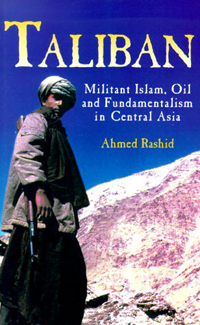
Taliban

  • Taliban: Militant Islam, Oil and Fundamentalism in Central Asia
  • Ahmed Rashid
  • Yale University Press (2001)

In the Afghan province of Kandahar, Canadian soldiers have marched -- it is hard not to say unwittingly -- into a second Taliban uprising. This one is almost as poorly understood as its predecessor, which saw the Taliban seize power in the mid-1990s. A level of ignorance pervades the debate about Canada's role in the country.

Consider the folly offered by some anti-war activists that to pull international troops out would lead to an Afghan democracy. Instead it would lead to a horrific civil war.

On the other hand, if Canada and the rest of NATO don't change tactics quickly, the Taliban will regain complete control over the South, and the country will slide again into full-fledged civil war.

It's important then, that Canadians engage in a debate about what our soldiers and diplomats are doing in Afghanistan. But debate should be based on information, not ideology, and there is plenty of information available.

Women as enemy

A good starting point is the work of Ahmed Rashid. Rashid, an acclaimed Pakistani journalist, has written extensively on religious insurgencies and terrorism in Central Asia. In Taliban: Militant Islam, Oil and Fundamentalism in Central Asia, he tells the definitive story of the Taliban's rise to power.

The foot soldiers in the first generation of Taliban insurgents were mostly recruited from Afghan refugee camps in Pakistan. "They were literally orphans of the war, the rootless and the restless, the jobless and the economically deprived with little self knowledge," Rashid writes.

"The mullahs who had taught them stressed that women were a temptation, an unnecessary distraction from being in service to Allah. So when the Taliban entered Kandahar and confined women to their homes by barring them from working, going to school and even from shopping, the majority of these madrassa boys saw nothing unusual in such measures. They felt threatened by that half of the human race which they had never known and it was much easier to lock that half away, especially if it was ordained by the mullahs who invoked primitive Islamic injunctions, which had no basis in Islamic law. The subjugation of women became the mission of the true believer and a fundamental marker that differentiated the Taliban from the former Mujaheddin."

There is nothing to suggest the new Taliban's attitude to women is any different. From a humanitarian point of view, pulling Canadian troops out of Kandahar and ceding control of the province to the Taliban would be disastrous.

'Every country's payroll'

But that's not to say the alternative is attractive. The country is riddled with corrupt warlords and gangsters who, like the Taliban, never really went away after the U.S. invasion in 2001. Many now hold positions in President Hamid Karzai's government. The northern Uzbek commander Abdul Rashid Dostum is a prime example. Dostum, now a military chief of staff, once fought alongside the Soviets as an officer in the Afghan army. He continued to fight for the Soviet-supported Afghan government until it was clear that Kabul would fall to the mujahedeen in 1992. Then the formerly godless communist joined the ultra religious mujahedeen. "The hard-drinking Dostum then became a 'good Muslim,'" according to Rashid.

"He had, at one time or another, allied himself with everyone...and betrayed everyone with undisguised aplomb. He had been on every country's payroll receiving funds from Russia, Uzbekistan, Iran, Pakistan and lately Turkey. In 1995 he managed to be on the payroll of both Iran and Pakistan, then at daggers drawn over the Taliban. Although he controlled only six provinces in the north, Dostum had made himself indispensable to neighbouring states."

In 2001, Dostum and other warlords in the Northern Alliance became indispensable to the United States, supplying the manpower for its invasion of Afghanistan. Today they are still well armed and well funded, and they feel entitled to power. Whatever happens in Afghanistan, dealing with them will be a problem.

While Rashid painstakingly documents the factors on the ground in Pakistan, Afghanistan and Central Asia that led to the rise of the Taliban, Steve Coll's work focuses on the global geopolitics that has fed the conflict since the late 1970s. In his Pulitzer Prize-winning Ghost Wars: The Secret History of the CIA, Afghanistan, and bin Laden, from the Soviet Invasion to September 10, 2001, Coll looks at how a relationship between Saudi, U.S. and Pakistani intelligence agencies fed the violence in Afghanistan.

Alarmed at the atheistic Soviets' invasion of Muslim Afghanistan in 1980, the Saudis soon began fuelling cash to local insurgents. The CIA, still stinging from public attacks on their operations in South America in the 1970s, stuck mostly to cash contributions as well. That left Pakistan's ISI to decide who got the money. And the ISI favoured hard-line Islamic mujahedeen factions.

Brutal saviours

After the Soviet Union left Afghanistan in 1989, the Americans soon lost interest, with predictable results. At one point in the book Coll recounts the last days of Afghanistan's communist government, headed by Najibullah (many Afghans use just one name). As the mujahedeen closed in on the presidential palace in 1992, Najibullah told reporters, "If fundamentalism comes to Afghanistan, war will continue for many years. Afghanistan will turn into a centre of world smuggling for narcotic drugs. Afghanistan will be turned into a centre for terrorism."

A few pages later, Coll quotes a memo from the American Ambassador, Peter Tomsen, who was trying to convince his superiors in Washington not to abandon the country.

He warned of "Islamic extremists' efforts to use Afghanistan as a training/staging base for terrorism in the region and beyond."

But with the Cold War over, Afghanistan was no longer a priority; Tomsen and his embassy staff were withdrawn and a new stage of the civil war began. "Kabul plunged into violence and deprivation in 1993," writes Coll.

"The old mujaheddin leaders realigned themselves in bizarre temporary partnerships. They fought artillery duals along Kabul's avenues, dividing the city into a dense barricaded checkerboard of ethnic and ideological factions...Roads closed, food supplies shrank, and disease spread. About ten thousand Afghan civilians died violently by year's end."

A couple more years like that and Kabulis welcomed the Taliban when they swept into the city. Residents, though, were quickly horrified by their draconian new rulers.

One of the Taliban's first acts was to capture Najibullah, who had taken asylum in a UN compound. The Taliban tortured the former president and his brother, castrated them and hung them from a lamppost near the presidential palace now occupied by Hamid Karzai.

A generation away

That was 1996. A decade later, with the country still infested with warlords and a rising Taliban insurgency in the south, the picture is brighter. But only because Afghanistan is on the brink of civil war rather than engulfed in it. Karzai's government -- as fractured and flawed as it is -- probably wouldn't last a week if international forces were not there to maintain some semblance of security.

The attention to detail in both these books is almost startling. What emerges is a complex web of tribal, ethnic, religious, regional and global interests. The picture is complicated, but stark, and neither author falls into a deeply ideological interpretation of events. While the books don't offer any easy answers, we can certainly learn from the authors' disciplined approach, as well as their subject matter.

There is much in these books to fuel conspiracy theories about why the U.S., Canada and other countries invaded Afghanistan five years ago. For example, both authors devote many pages to an elusive pipeline that would run through Afghanistan to massive Central Asian oil reserves.

But while oil may be one of the reasons for western involvement in Afghanistan, it isn't the only one. There are more important reasons for being there, like protecting human rights and fostering a government that respects the rule of law and rejects international terrorism. These lofty ideals cannot be achieved overnight, or in five years, or 10 years.

The complicated history laid out in Taliban and Ghost Wars suggests that it will take at least a generation for Afghanistan to reconcile with its dark past. Canadians may decide they are not up to the challenge, that the risks are too high, or that it's not in our national interest. But if we decide to withdraw, after an honest and informed debate, we should at least understand the consequences of that decision.

 [Tyee]

42  Comments:

Login or register to post comments

  • Alcibiades

    5 years ago

    Comments on "Taliban Tenacity"

    The careful and informed debate, one hesitates to add, should have taken place long before now. When the Liberals were in power it was a high priority of then leader of the opposition. Now, not so much.

    The obvious disinterest in the attitude of our chief ally, the United States, in fundamental economic and infrastructure rebuilding - not to mention liberalized trade - was apparent just months after the war on the Taliban began. Absent a real commitment, as the whole world is now becoming aware, this exercise was doomed from the beginning. The west is very big on engendering false hope. Canada would have been better to stay out and concentrate on humanitarian assistance from the very beginning.

    Neither the US nor Canada comes anywhere close to the .07 percent of GDP G8 target for aid and development. The suggestion that the current and the former Canadian governments’ ‘full blown military’ draft of a 2000 man battle group indicates our country has stepped up to the plate – which is what our parliamentarians think gullible Canadians will now believe – is utterly disingenuous. We are part of a half-hearted system of promises reneged upon by ourselves and others.

    Whether or not the unraveling of events will result in a worse outcome than the death and starvation which is accompanying our soldiers to the present remains to be seen. To suggest that we have been, up to now, involved in what could honestly be considered a real and thoroughgoing effort to rebuild the place is just plain nuts.

    Read the Times of London, Read the Guardian, Read the New York Times.

    We are currently, as are the Americans and the British, in bed with warlords (I know General Hillier doesn't like it when someone calls his allies that) who are every bit as brutal and single-minded about the hegemony they want to see enforced in their districts of this tribal land as the Taliban.

    There are no easy answers, but the mothers of starving babies deserve the food they need to save their lives. At present, we seem to be more interested in building roads and making jingoistic speeches about our feats of arms in country. Bring the women to Canada, put them on the planes and get them out if they want to leave. That at least will do some good. I see no indication that Stephen Harper and his government, or the Canadian people for that matter, understand the kind of failed effort we have gotten ourselves enmeshed in. Before 2001 Afghanistan might as well have been on the moon for all we knew about it. Next time, before we step into a fight with our guns blazing, we’d do well to understand what we’ve gotten ourselves into; and who we’ve picked as allies.

    The Taliban, disgusting and revolting as they are, especially from our point of view, are of that place – something about which we will never be. Give the soldiers a service medal and bring them home. Put the billions that are currently being wasted on blood and guts into real aid and feed those children – my opinion.

  • 4Cryinoutloud

    5 years ago

    One thing that could be done to curb the situation in Afghanistan without ever leaving Canada with a gun would be to LEAGALIZE ALL DRUGS NOW!

    Wait two years and then go in with the proper aid to help rebuild their infrastructure.

  • The brain

    5 years ago

    Good points, Alchibiades. Jared Farrie also has some excellent points as well. But lets face it. Its not human rights or womens rights or the battle against poverty as to why we are there. While military spending in Canada continues to skyrocket and aid spending continues to plummet, the money trail doesn't lie. We have been allies to the U.S. since Martin and now, especially Harper (when you look like a Republican, talk like a Republican, walk like one, and dine at all their tables (i.e. NCC), it doesn't take much to put two and two together as to why we are really in Afghanistan... to promote the globalization of the Middle East through war, coups, whatever means necessary and to that end, if I was living there and occupied by nations who sole aim was to steal my countries resources and that of my neighbors, I wouldn't be friendly.

  • anarcho

    5 years ago

    "Consider the folly offered by some anti-war activists that to pull international troops out would lead to an Afghan democracy."

    Never heard this before. Which anti-war activists made a statement like that? Certainly none that I am familiar with.

  • dolphin

    5 years ago

    A look at a map of central Asia, with western military presence in Iraq, Turkey, Kuwait, Saudi Arabia, Dubai, Oman, Pakistan, and Afghanistan, reveals an obvious encirclement strategy for the country in the centre--Iran. As long as Iran poses a serious military threat to the Persian Gulf oil fields (as its recent long range missile tests suggest), western armies will be mired in Irag and Afghanistan.

  • murdock

    5 years ago

    anarcho:

    "Never heard this before. Which anti-war activists made a statement like that? Certainly none that I am familiar with."

    any line - repeated often enough - will become the truth.

    The enitre article is referencing the book from the perspective that it, the book, supports the need to defeat the Taliban ~ which it, the book, does not.

    This article writer wants to see NATO increase the deployment.

  • jwstewart

    5 years ago

    The reviewer says that pulling out would result in civil war, as well as staying aand failing to change tactics will also lead to civil war.

    But I can't find mentioned what the tactics should be changed to.

    Fundamentally, I must agree that the consequences of remaining in Afghanistan to be quite similar to the consequences of leaving.

    So we are essentially not contributing to their common good, and should leave.

  • Patricio

    5 years ago

    "But I can't find mentioned what the tactics should be changed to."

    jwstewart, check out some of the reports published by the Senlis Council, particularly:

    Losing the Hearts and Minds of Afghanistan: http://www.senliscouncil.com/documents/Canadian_Policy_Paper_October_2006

    and

    Canada in Kandahar: No Peace to Keep: http://www.senliscouncil.com/documents/Kandahar_Report_June_2006

    In terms of tactics, I also think Canada would be well advised to remember that not a single invading military force has ever, long-term, successfully completed its mission in Afghanistan, and therefore Canada needs to adjust its strategies (military and otherwise) accordingly. They have all been kicked out by Afghans (this happened to the British twice and to Russia, which at the time had a much larger military-industrial complex supporting it than Canada has now).

    Cheers.

  • speedo

    5 years ago

    I'm no fan of war but I think our being in Afghanistan is justified and I think our flinchiness is because we assume our motives for being in Afghanistan are the same as American motives for being Iraq. We didn't invade the country only to occupy it so our own interests could be served. We're not indiscriminately bombing the crap out of cities. We're not torturing people we've arbitrarily detained. We're not swaggering around with a lot of bullshit about liberty and democracy. The Taliban have proved themselves pretty unpleasant people and I don't think there's anything evil about our standing between them and the people they mean to repress.

  • The brain

    5 years ago

    "We didn't invade the country only to occupy it so our own interests could be served. We're not indiscriminately bombing the crap out of cities. We're not torturing people we've arbitrarily detained. We're not swaggering around with a lot of bullshit about liberty and democracy." - speedo

    No, speedo, we're just buddy buddies with the country south of the border who are doing the exact same things. We only have a governing government that is doing and following all things Republican. Hate to break it to you, but if you talk like, look like, fly like, stink like and think like Bush and Shrub, thats exactly what it is like. Birds of the same feather.

    Are we on offensive missions for the first time since WWII? Yup. Are we using " we don't cut and run at the first sign of trouble" slogans? Yup. Are we pumping up the pride with our brave soldiers who will stay the course until death, fearless with the enemy, unintimidated, unwaivering in the cause for "peace" and "justice" and "freedom" and liberty"? Yup! Are we side by side in support of Americans who invaded Iraq and Afganistan only to occupy it based on lies so their intersests could be served? Hanging with the boys who are bombing places indiscriminately? Chumming it up with a nation self admittedly torturing people who have been arbitrarily detained? Not swaggering around with alot of bullshit about liberty and democracy? You might want to think again on that one.

  • speedo

    5 years ago

    Fair enough. But indulge me in the following thought experiment: your neighbours are in their house, coming to blows. Do you intervene? If you know them and like them you probably go and knock on their door and hope that this embarrasses them into settling down. The alternative is not throwing up your hands and saying, “Well they can kill each other for all I care” it’s calling in a disinterested and well-trained third party (the cops) to get between them and at least stop the violence. Doing nothing shouldn't be an option.

    Canada has stepped in as the closest thing to a cop that anyone could find. As you say, being allied with other parties can be problematic but not if Canada makes it clear it’s acting as a peacekeeper whose job is to protect the bullied from the bully.

  • Alcibiades

    5 years ago

    speedo
    No problem. But you’ll have to get the message to Harper and Hillier. They are fairly reveling in the effort to ‘take it to the enemy’ and they’re doing it with the assistance and connivance of warlords who are worse than the Taliban. Cast your mind back to the time before September 2001….when we were nowhere to be seen in Afghanistan and the quarrels were going on apace without anyone knocking on the door. Remember?

    Because that's not what's on the signs our soldiers have hanging around their necks. In fact, there mission is much more succinctly summarized in Hillier’s little mantra _ ‘We’re here to kill some scumbags.’

    I’m al for the CF doing our traditional role in Afghanistan – although I think it would be a lot more persuasive if we’d started in the mid 1990s with humanitarian aid – but that’s certainly NOT what we’re doing now.

  • anarcho

    5 years ago

    Speedo, I think the problem is that whatever you do nothing will change. The whole history of the area proves that invaders cannot do very much except go down to defeat. We are being asked to put our soldiers at risk for bascially nothing. Furthermore, we have to ask "Why Afghanistan?" Why not Ruanda?" Where it would have made more sense? And here you get to the second problem. The Afghan adventure has little to do with defending the people, democracy, etc. This is a cover for the US geopolitical concerns in the area. We Canucks are being used as tools by the US. ( By the way, historically wars are rarely about fine things like democracy or protecting people, they are about power, wealth and ego.) The few wars that do have some ethical content are those of national liberation or the defeat of Fascism in WW2, but this has not been the case with the US and its many wars post-1945.

  • Frank

    5 years ago

    But nobody stopped Canada from intervening in Rwanda. We just didn't want to. Same as why we didn't intervene in Afghanistan earlier.

    And it wasn't Harper that got us into Afghanistan. It was the Libs, Harper just agreed with it and then extended the mission.

  • The brain

    5 years ago

    Unfortunately, speedo, Canada is not making it clear that Canada has either the will, nor goal, nor plan to act as a peacekeeper. The reverse is happening under the Harper administration. As I've said before, we are playing an offensive role in Afghanistan, not a humanitarian aid or peace keeping role weve done for 4 generations previous. As for our nieghbors coming to blows, bombing indiscriminately...

    http://www.cbc.ca/world/story/2006/11/07/cluster-bombs.html

    And who's the largest arms dealer in the world? Who built these bombs? You can start with Lougheed Martin, made in Columbine, U.S.A.

    Its like this. We used to send Canadian peace keepers in trouble spots throughout the world in places where no one would go... without rifles! Without armed weapons!! And guess what. It worked!!! We didn't take casualties like we do now... we didn't die in the streets for the letting of bloodshed from our pulled triggers or the fingers on the triggers of those who knew better than to shoot and why?

    Hearts and minds. In Rhawanda and Serbia, Canadians offered humility, perhaps the most telling trump of all. Humility trumps brutality. Justice (records of war crimes) later trumps oppression. If you don't think so, ask yourself how and why Ghandi won the hearts and minds of the world and thus the war against Britian without firing one shot.

    We've forgotten what it takes to be truly brave... forgotten what it takes to win war. It takes sanity (the honest, sincere search for truth). Love. Compassion. Forgiveness. And most of all, it takes an EXAMPLE of such. For 40 years, we knew these lessons. Its a matter of record. We knew better. Now, suddenly we don't, needing to learn and re-learn tough lessons the hard way with a persuasive morally corrupt media that bangs the drums of war for war hawks war mongering for $$$.

    Who are we fooling, trying to be the next powerbroker of "peace or else" with a nation of 32 million and a national concensus that is against violence? Are we Canadians, or "Republican Canadians"? Why are we supporting ideologically corrupt U.S governmental Republican strategy, when, barring voter tampering by E machines, it is highly likely that Americans in the U.S. no longer support Bush's war in todays elections? And the results will be telling in all respects.

    Don't kid yourself in any of this, speedo. This war in Iraq and Afganistan is highly unpopular throughout the world, and quite likely its own country. Why should we throw away our morality to support war mongers (Bush & Shrub) who are finding themselves increasingly alone? Even Tony Blairs former Carlyle Chairman can no longer openly support them (being reduced to a figurehead by his own party who knows they are toast if they support Bush). England is no longer blind. The worm turns.

    Throughout international papers, when Harper won on election day and chose his cabinet, it wasn't Fortiers appointment that made headlines. It wasn't Emersons defection. It was "Harper forms minority government, appoints defense lobbiest as minister of defense." Some of us might be blind here at home, but the world is not. And the world wasn't blind to Canada's efforts before Martin and Harper, I can assure you... but memories fade.

    We can still win hearts and minds, but not without a complete rehearsal from offensives, to "peacekeeping" and should we do it without guns, the death of each Canadian soldier will be worth a thousand times what it's worth now under the international eye. And where's the humanitarian aid? Where's the reasoning to prop up an Afganistan government with blood on its own hands? We need to distance ourselves from past and present foriegn policy as we once did for decades, until the rise of Harper and to a lesser extent, Martin. Otherwise, failure in the middle east is certain. As it stands, it might now be too late, regardless of what we try now. When hearts harden from loss and minds close from hatred...

  • The brain

    5 years ago

    Memories fuzzy, but didn't we have 500 peacekeepers in Rhuwanda at the time of its genocide, Frank, perhaps solo or with the UN? We could have done a whole lot more, but were one of few nations who did anything.

  • Frank

    5 years ago

    "We could have done a whole lot more, but were one of few nations who did anything."

    Which is what I've said before. Canada's efforts internationally are all about making us feel good about ourselves but never actually making anyone's lives better.

    The reason we like peacekeeping is the casualties are low, its inexpensive and it doesn't help anything. Aggressor nations are more than happy to allow peacekeepers to be deployed once they've finished attacking someone. And coming in to prevent further bloodshed when there wasn't going to be any anyway and maybe dumping some surplus wheat at the same time is what we've decided our role should be.

    Canada is not a peaceful nation, we have high rates of violence within our own society that suggests otherwise. When it comes to protecting the people of Burma from a dictatorship we make speeches at the UN but if it comes to beating up our wives or our kids or a stranger at a party then we're all for it.

    Its all well and good to say Canada should be helping the oppressed in Darfur or something but we never do it. We didn't do it before Afghanistan we won't do it after Afghanistan.

  • Alcibiades

    5 years ago

    Frank,
    I shouldn't get into this but I think our efforts in Cyprus, Suez, Gaza, the West Bank, Lebanon (once upon a time) Bosnia and (although I think Daillaire should have acted in spite of the no-go from New York and Washington) Rwanda, Canada had a lot to be proud of. [I'm sure I've left out a lot of places.]

    The bang bang is easy, messy and unusually does more harm than good...Afghanistan is just another example.

    Other than that, I'm convinced you're right.

  • Frank

    5 years ago

    If, as Coyote said, we should never intervene in the internals of other countries and the population supports that policy then I'll live with it even though I'm not that staunch a supporter of the Treaty of Westphalia.

    But if we also claim to be doing great things for the world by never standing up for the little guy then I think we're fooling ourselves.

    I think that if a situation like Rwanda arises we should send in our troops. If the UN can be ignored by anyone who wants tto invade a neighbour then it can also be ignored by anyone wishing to help. We should have learned that, if nothing else, from the failures of the League of Nations.

  • jwstewart

    5 years ago

    Patricio;

    My question was semi-rhetorical, I wasn't expecting a reply with a susccessful shift in tactics.

    Brain said;

    "it is highly likely that Americans in the U.S. no longer support Bush's war in todays elections?"

    I think it is highly likely that Americans no longer support losing Bush's war, as opposed to no longer support fighting it. I think their main source of disappointment is not winning and becoming heroes. It appears that in their view, victory defines rightness.

  • Frank

    5 years ago

    "I shouldn't get into this but"

    Ya, I said that to myself too but, like you, I suppressed it :-)

    The examples you list :

    Bosnia was more peace-making than peacekeeping wasn't it?

    In Suez, it wasn't so much the number of our troops but the shock of us actually doing something that rang the bells. And of course the fact that the US wasn't onside and the Russians were making threats. Hmm, maybe our peacekeepers didn't play that big a role? Although I do appreciate the sentiment and the headlines generated. Lots of countries agreed with us and it would have been a good start.

    And as for gaza, West Bank etc, if the Israelis wanted to go through us they could have. Were we really protecting Israel's neighbours or was what we were providing more of a simple policing role?

    Anyway, since I brought this up weeks ago I hope that some are thinking about what a "peacekeeping role" actually means and whether it really is the best use of our limited strengths and resources.

  • G West

    5 years ago

    Frank. I remember one I'm not so proud of - Mogadishu and the Airborne. Those sure were fellas to tell your grandkids about. Cautionary tales. Sadly, I’ll bet there’s a few such tales gonna come home with the boys and girls from Afghanistan too. Sock it to those scumbags. Hit him between the belt and the flip flops! Remember?

    I think we did fire a few guns in Bosnia - sort of a back off - get your own sandwich kind of operation. The guy I was most proud of there was the officer who spent several hours handcuffed to a pole in the middle of a firefight between the warring parties. You can give him a medal too. We were in Cyprus for at least 30 years - that's no flash in the pan either.

  • Frank

    5 years ago

    Who exactly were we protecting in Somalia? I forget and I'm too lazy to google.

    As for Bosnia, I see that as the wrong kind of peace keeping. The USA for example doesn't want to do peace keeping. They see it as being "below" what a military should be. So they think things like peacekeeping should be left to Canada and Bangldesh and other non-entities.

    Canada is thus doing exactly what the Americans want us to do. They fight real wars and we patrol the place afterwards while they move on to the next crises. I remember exactly how when I was working in the US this came up in conversation. That the USA would handle the bad guys and Canada will be counted on to send in peacekeepers when its over.

    That is really the way most countries see peacekeeping. Just something so we can feel good about ourselves because we aren't strong enough to actually do anything.

  • G West

    5 years ago

    Yeh! you're probably right. Maybe Sweden has the best program.

    I think Somalia had something to do with warlords and gangs tearing around in the back of Toyota pickups - Black Hawk down style stuff. We tortured and killed a 12 year old for looting the compound. The rules of engagement were shoot ‘em between the midsection and the flip-flops. Afterwards some of the airborne's clubby initiation rites came to the public's attention.

    The kid they killed was called Sidane Arone (sp???) - I think we paid off his family with some goats and other livestock. Canadians are very culturally sensitive to local values.

  • G West

    5 years ago

    The military disgusts me. As if you hadn't guessed.

  • Frank

    5 years ago

    I was getting vibes.

    Anyway, Suez was the right kind of peacekeeping. Bosnia wasn't. In my opinion of course. Cyprus was good but I think if it had required more men and resources we wouldn't have lasted 25+ years.

    I would prefer if it was Canada that sent troops to topple the Pinochet's and Somoza's of the world and then our military moved on and Bangladesh patrolled the streets for 5 years :-)

  • Frank

    5 years ago

  • Alcibiades

    5 years ago

    How many of those brown suited guys does it take to deliver one Leopard tank?

    We're definitely gonna kick some Taliban ass now - if we can just manage to pay the freight and get them outta the bonded warehouse.

  • Frank

    5 years ago

    Its not even like the tanks are new...

    I'll bet dollars to doughnuts they used UPS. The "border fees" those guys charge is tantamount to terrorism. If it was me, I'd have refused delivery and told them to ship it back.

  • Alcibiades

    5 years ago

    Yeh! who the hell needs used tanks. At those rates we'll never be able to afford the ammo anyway.

  • Alcibiades

    5 years ago

    I especially liked the line about using tanks to reduce casualties. Maybe they're not planning to use the cannon and the MG - just utilize them as taxis to get to and from work each day. Moreover, you could heat your rations on the manifold.

    Truly, I think they want them there as a backdrop for pee wee when he arrives for his next photo session.

  • Frank

    5 years ago

    They should have shipped them through the Taliban, those guys can smuggle anything across a border dirt cheap

  • Alcibiades

    5 years ago

    LOL that's it for me, good way to end the day - with a laugh!

  • Frank

    5 years ago

    They'll be used for carrying large quantities of Timbits to remote villages Alci. Considering the vintage (made to kill T-62's) I think the cannon is just for show.

  • macsasquatch

    5 years ago

    Could be that after the crusade by that ambassador from USA to get us to spend more on arms that this is the next phase of getting us to pony up more bucks for defence industries. Just commit our military to some combat zone, and watch the militarism rise at home. Then we will be ready to buy whatever the generals want bought.
    Our PM and Defence Minister are already saying that we are sending tanks and space guided artillery shells because that's what the military is asking for.

    (Hey- how come this print is so tiny? Now all my fans are going to have to put on their specs.)

  • Colin

    5 years ago

    Frank wrote
    They'll be used for carrying large quantities of Timbits to remote villages

    Now that's funny

    Actually if you check out Combat camera, you can see they are loading HESH rds which will be good for dealing with the thick walled mud huts that the Taliban favour as fighting postions. there job will be direct fire support as the taliban do not have any armour. They also have one of the best thermal/sensor units mounted in any tank and that can be used for overwatching an area from high ground.

  • Alcibiades

    5 years ago

    With cartage costs at that level, do you suppose they'll be worth bringing home? Maybe the Taliban would be willing to make a deal and take them off our hands.

  • Colin

    5 years ago

    Actually the figures being thrown around as the cost of shipping "include" the cost of shipping the tanks there, they shipped a bunch of other stuff also, plus the spare parts, 125 men and thier equipment. The last series of fights showed that the troops needed a direct fire support vehicle, so they bit the bullet and hired aircraft on short notice to send the tanks that should have been sent in the first place. The Dutch and/or the Danes used their to good effect in Bosina.

  • Alcibiades

    5 years ago

    And Afghanistan is so much like Bosnia.
    Bring on the timbits, I think Frank has it right.

    We can't afford to fund a law reform commission but we can shell out 189 M$ to fly ancient tanks to Afghanistan with their spare parts of course.

    The CF definitely needs something. They need to get out.
    I think I've seen somef those tanks at Suffield - they seemed to spend an incredible amount of time in the shop. It's obvious they'd need a lot of spares.I hipe they brought the hd mechanics with them too. And a wrecker.

  • Frank

    5 years ago

    From the NY Times

    "It was the largest opinion survey conducted in Afghanistan. In it, 44 percent of Afghans interviewed said the country was headed in the right direction, compared with 64 percent in 2004 on the eve of the first democratic presidential elections in Afghanistan. Twenty-one percent said the country was headed in the wrong direction — compared with 11 percent in 2004 — and 29 percent had mixed feelings. Four percent were unsure. Security was the main reason for the increased concern, the survey said."

    "Security was the main source for optimism among those who said the country was headed in the right direction. But among those who expressed pessimism, more than half said the biggest problem was a lack of security, the Taliban threat and warlords. Indeed, two southern provinces were excluded from the survey due to extreme security problems."

    "Fifty-four percent said they felt more prosperous than they had under the Taliban, but 26 percent said they felt less well off. "

    "Corruption, which has become one of the main criticisms of the government, was less of a concern for respondents than unemployment and lack of services, with only 8 percent naming it as the biggest problem locally. But when asked specifically if corruption was a problem nationally, 77 percent of respondents said it was, and 60 percent said it had increased."

    "The survey showed strong support for democratic elections, and strong approval of new national institutions, including the Afghan National Army, of which 87 percent approved, and the Afghan National Police, of which 86 percent approved. A similar amount expressed trust in the electronic media, and 57 percent in nongovernmental organizations, whose performance has often been criticized. The justice system, local militias and political parties were not trusted, the survey said.

    Eighty-six percent supported equal rights for women. Freedom of speech also received wide support.

    Deep respect for religion also was apparent. Sixty-one percent said religious leaders should be consulted on issues and problems."

  • Colin

    5 years ago

    Most of the stuff at Suffield is British as they have a training base there, all armoured vehicles require a lot of TLC, nature of the beast. the Leo's in Bosnia allowed the UN their to deal with incidents that were getting out of control, snipers were making lfe miserable for the UN troops, so they brought up the Leo's and killed a couple of them and they never had the problem again.

  • Alcibiades

    5 years ago

    THey were Leopards I saw Colin, maybe German, but Leopards.

    SO you really don't expect these old cats will actually be operational for long then, given the conditions (far from Bosnia)?

    I guess we can save another 186 million by leaving them there,

    • No best comments selected by an editor for this story yet. To see all comments, click the All Comments tab, above.
    • The discussion for this story is closed. No more comments can be added.