
- Mary Carlisle is a Tyee Builder. You can be, too.
- Prem Gill is a Tyee Builder. You can be, too.
- Nancy Flight is a Tyee Builder. You can be, too.
- Justin Everett is a Tyee Builder. You can be, too.
- John Westover is a Tyee Builder. You can be, too.
- Nora Etches is a Tyee Builder. You can be, too.
- Edward Henderson is a Tyee Builder. You can be, too.
- Bharadwaj Chandramouli is a Tyee Builder. You can be, too.
- Dean Chatterson is a Tyee Builder. You can be, too.
- Marius Scurtescu is a Tyee Builder. You can be, too.
- Robert Parkes is a Tyee Builder. You can be, too.
- James Murton is a Tyee Builder. You can be, too.
- Susan Doyle is a Tyee Builder. You can be, too.
- Vincent Strgar is a Tyee Builder. You can be, too.
- Helen Spiegelman is a Tyee Builder. You can be, too.
- Subir Guin is a Tyee Builder. You can be, too.
- Kimball Finigan is a Tyee Builder. You can be, too.
- Joanne Manley is a Tyee Builder. You can be, too.
- David Leach is a Tyee Builder. You can be, too.
- Joel Berger is a Tyee Builder. You can be, too.
Why the Code? Because We Share
In a po-mo, mass-market world, unfortunately, that trumps literature.
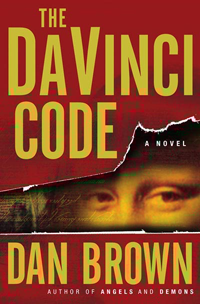
- The Da Vinci Code
- (2004)
- Bookstore Finder
A funny thing happened on the way to the theatrical release of the film adaptation of author Dan Brown's Da Vinci Code, that coked-out marketing orgy putting the 'circus' back in panum et circences. A prestigious panel of literary figures -- including Nadine Gordimer, Studs Terkel, Wole Soyinka, Don Dellilo, Julian Barnes, Alice Hoffman and many others -- responded to the New York Times's Book Review call for them to name the best work of American fiction of the past 25 years, and they chose, "solidly ahead of the rest" (according to the accompanying essay by Times critic A.O. Scott) Toni Morrison's novel of slavery and emancipation, Beloved.
Scott goes on to highlight the ways in which Morrison changed the landscape of the American literary canon, having "enter[ed], as a living black woman, the company of dead white males like Faulkner, Melville, Hawthorne and Twain." The rest of the top five featured the works of similarly revolutionary authors such as Philip Roth and Don Dellilo, white ethnic writers once very controversial in terms of subject matter and aesthetics respectively.
So what does this have to do with the Da Vinci Code? Well, keep in mind that, having been born in 1980, I'm of that post-Warhol, post-Sontag generation supposedly incapable of distinguishing between high and low culture. I went to school with guys writing theses on David Bowie, and I myself wrote an essay, for an upper division course in Marxist theory, all about Batman.
I'd be willing to bet that the vast majority of us saw the fractured and parodied component scenes of Citizen Kane on the Simpsons (some Simpsons' creators have bragged that they've done nearly every one) long before we'd ever seen the film itself. My generation so abhors canons, you'd think we were shell-shocked. And that pop culture populism is part of why people my age are so willing to shell out for Da Vinci and Harry Potter without the slightest guilt. Small wonder, when grown men and women are unashamedly reading children's books in public, that our generation has had both a hit band and hit TV series each called Arrested Development.
The levelling tendency to obliterate the Canon was once a very noble, very necessary one. As Scott implies in his depiction of Morrison above, the Canon was restricted to those with, to use Edward Said's phrase, "permission to narrate." The contradistinction between High and Low was toxically raced, classed and gendered. 'Craft' was substituted for 'Art' when women were preponderant in a given form; jazz lacked the seriousness of orchestral, classical European symphonies. Other writers have examined the celebration of George Lucas's American Graffiti in relation to the vastly superior Coolie High. The list goes on indefinitely.
We share what we're sold
Then somewhere, along the way, we started reading Dan Brown and J.K. Rowling. I can't count the number of times I've been called an elitist for suggesting that there are better ways for grown-ups to spend their reading time and book money than on Harry Potter, and the conversation always goes pretty much the same way: 'It's for fun. Not everything has to be Shakespeare. It's escape.'
But it's not, is it? If it were just about relaxing once in a while with a light, entertaining book then we'd all choose different ones, and read them at different times. The fact is, people are reading Harry Potter and Dan Brown for the same reasons that we're supposed to be reading important works: to engage in a creative social experience and conversation that connects otherwise atomized and alienated imaginations. Today's only shared literary experiences amongst those who've moved past mandatory high school syllabi are mitigated almost exclusively by pulp. Speculations as to "Who's a Hufflepuff and who's a Gryffindor" are guaranteed conversation-starters, whereas one of my favourite jokes in the world – "Luba Goy? Sounds like something Portnoy would do"— is essentially useless.
So, is this a victory for the blue-collar everyman over the pointy-headed intellectual stranded in the ivory tower with his Adorno Reader? Hardly. Like its cousin demagoguery in the world of politics, literary populism pretends to a defense of 'the people' whilst actually serving the economic interests of a very small elite.
Sure, stories like that of Rowling's climb up from poverty, or of local publisher Raincoast Books' securing the rights to sell her series, warm the heart. But for the most part, the development of a monolithic, largely inoffensive and easily-saleable ersatz-literature with the potential for major marketing tie-ins is a lot more profitable to publishing and retail giants than a world of small, heterogeneous publishers, authors and book retailers (though an enormous correction has been proffered to we Chapters-bashers by the very recent success of the CAW in organizing a union and attaining a first contract at the flagship Robson street store in downtown Vancouver, a feat unlikely in most small bookshops).
Our invisible success
That said, Morrison's triumph (handed out by a panel of "writers, critics and editors" whose political, ethnic and gender heterogeneity also mark enormous strides since the bad old days) is part of a growing body of evidence that suggests the Canon has been significantly democratized, as have the bodies who name it.
So, is it snobbery to suggest that we start reading serious literature again? Some would think it inexcusable to suggest that there is a serious literature that can be discussed outside of quotation marks. Then, of course, there are those who say "at least they're reading" – a noble sentiment when the subject is children barraged by video games and HDTV (catered to those with ADHD), but the worst kind of 'Let Them Eat Cake' elitism when referencing adults.
Besides, Canadians readers have a magnificent advantage: we live in a country that has produced a serious and extraordinary literary output over the past 20 years that is so out of proportion to our tiny population that the only thing more stupefying than our capacity for authoring brilliant domestic works is our propensity for spending scads of money on brainless imports like Da Vinci. "How dark the con of man," indeed.


6
Login or register to post comments
nobody22 (not verified)
5 years ago
Comments on "Why the Code? Because We Share "
I'm glad I never read the book!
arrr_matey1978
5 years ago
No, no, no... I can't speak for the Da Vinci Code, but you've got it all wrong with Harry Potter.
People have got to stop with this knee-jerk elitist reaction to anything that's popular. Take a moment (well, a few weeks I guess) to read the Harry Potter books and you'll see that they're much more than escapism.
Not only does JK Rowling address really important themes in her work--class differences, the workings of the media, society's obsession with fame, multiculturalism, friendship, etc. etc.--she does so in a way that lots of people actually *want* to read. Shocking, I know.
These books are more than throwaway escapism, so drop the snobbery. If you look back at 99% of the accepted "canon" of English literature, they were all popular works first and only became "Important Works of Art" when the academics started making everything official.
But really, the Canterbury Tales, Hamlet, Jane Eyre, Great Expectations, Beowulf, Rime of the Ancient Mariner... these were all the popular fiction of their day. Harry Potter, I believe, is part of that line of great works of art that are great because people enjoy them, not just because university professors tell them they should. I think Beloved is one of them too. I've worked at a bookstore and it always sold extremely well.
Instead of being annoyed, you should be happy that the most popular books of our time are as intelligent as the Harry Potter books are. And if you really want to change the habits of readers, go directly to the source. Start telling all the so-called "serious" writers to start writing books people might actually want to read.
redward
5 years ago
Luba Goy???!!!! Ha ha ha ha ha ha ha ha ah ah ha ha hahahahahahahaha
lol
that's fucking great
incredulous
5 years ago
I'm always confused about what defines official induction into "the Canon", polls of great authors sponsored by the NYT and personal induction by Harold Bloom into the Norton Anthology notwithstanding.
If we use the Said quote "permission to narrate" as a departure point, then I would say that this goes only part-way, and not half-way at that, I would argue. Narration into a vacuum has existed since the first tree fell in the forest with no one around to hear it - it is rather reader-response(not in the Fish sense) that determines canonization.
If "Beloved" has been on a fast-track to canonization (even faster than Saint Josemaria Escriva - Wha-Hoo! Do I get triple-word score for the Opus Dei tie-in?), then it's less for the lack of the telling of the story aka. narration, than the realization that this is a significantly outstanding narrative.
Instead of narrative permission, my personal theory about what gets crammed into the canon are works that - with the benefit of hindsight - are deemed historically important and different. Ahem - I hereby declare the following categories to be self-evident, and all other sub-categories to be utterly derivative:
1) The Linguistic Fossil: Wow, like this is the first time anyone's written a long ballad in heroic couplets in a language akin to English about a dude fighting a monster in Iceland. These members of the Canon are linguistically important irrespective of their inherent literary value(if you feel the two are separate)
2) The Social/Political/Religious Fossil: Hey, isn't that socio-religio-political commentary thinly disguised as a book about a guy travelling to faraway lands populated by tiny people, giants and talking horses? Boy, the satire's so darn thick you can wipe it away with your dead baby. So, THIS is how they REALLY thought about politics of the day.
3) The Literary Style Fossil: Heh, what's with all those lower case i's, weird spacing and who's that olaf guy and why are they sticking a hot bayonet up his bunghole?
The operative word in each category being "fossil" That's what induction into the Canon is, it's a curatorial exercise that seeks to freeze a moment in literature. It is death by "greatness", perfectly preserved. The fact that it's now happening to living authors is of great concern. The Canon is turning into the Rock and Roll Hall of Fame - and if they let Blondie and the Sex Pistols in there fer chrissakes, then at this rate Justin Timberlake will be a member by the time he's 40.
This is the trouble with our constantly accelerating world - things that used to take longer are happening much more quickly. Going back to the Said quote - with permission to narrate part of the equation - combined with a readership receptive of the narrative, and applying my three immutable categories, it could just be in a few years - accounting for the constant rate of acceleration - that some significant and outstanding blog site might just be inducted into the Canon by a jury of esteemed robotic writers.
incredulous
5 years ago
Oops sorry, the unspoken assumption being, of course, that it could be THIS blog. . . and maybe Charlie could be calcified along with Steve Burgess at a Literary Canon Induction Ceremoney podcasted directly in people's retinas the world over just before they are compressed into Soylent Green. . .
"It's made of writers!!!!!!It's. . .made. . .of. . .WRITERS!
charlesdemers
5 years ago
Handel, you're not really suggesting that Blondie is on par with the Sex Pistols, or that the Sex Pistols are on par with Timberlake?
How're we supposed to choose a Canon when you can't distinguish between the pros, triple-A and fat camp intramurals?