



Libs' New Water Policy: Half Full
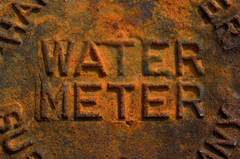
We're not really serious until we install meters.
British Columbia's Liberal government basked in international applause earlier this year when it unveiled North America's first comprehensive carbon tax. The difference the tax will make to daily life in the province over the next quarter-century is infinitesimal.
By contrast, the province's new water strategy, announced last week to considerably less fanfare, could change the face of our communities, the internal workings of our homes, the future for endangered species and perhaps most significantly, our collective resilience to the changes in the weather that the province's pioneering carbon tax cannot hope to avert.
Sadly, it neglects the one tool that, by its own admission, is essential to ensuring that those benefits are achieved.
My recent book, Dry Spring, lays out the evidence, reconfirmed again last month by the U.S. National Science and Technology Council's most up-to-date Assessment of the Effects of Global Change on the United States that yesterday's weather no longer offers a reliable forecast for tomorrow.
Here in B.C., we can expect more and more violent autumn and winter rainstorms of the kind that devastated Stanley Park, earlier spring runoff from the mountains, followed by longer, hotter summers when rivers and streams dwindle to dry gravel. These shifts will stretch the capacity of our utilities to store winter's surplus water for use during droughty summers, and severely test the limits of ecosystems to tolerate both extremes.
Keys steps toward adapting
Dry Spring also heeds the unanimity among experts in water planning who recommend four ways in which we can better adapt to this new climate. From the most abstract to the most physical, these are:
- Manage our water on the basis of nature's geography not man's, with "governance" scaled to the river basin
- Put a price on water that reflects the true cost of preserving its supply and quality in perpetuity
- Treat underground and surface water as one resource
- Employ eco-mimicking green designs in homes, commercial and industrial buildings and in community landscapes
To its credit, the government's new Living Water Smart Strategy, announced last week, moves some way in all four of these directions.
On some of more provocative details, it's true, its advances are more rhetorical than real. On the sensitive issue of raising water prices, for example, the strategy merely threatens that "we may have to start" doing so if other conservation measures don't do the job. On regulating withdrawals from groundwater -- a hot button for my neighbours in the Cowichan Valley and many other parts of B.C. not served by municipal systems -- the strategy proposes to do so only in what it terms "priority areas" (the lower Fraser Valley is surely one) and for large-scale pumping -- and even that not until 2012.
(There is one other item that figures prominently on Dry Spring's menu of strategies for weathering the coming climate that the Liberals overlooked. The B.C. strategy is silent on replicating here the gains that other jurisdictions have seen from establishing markets for certain water uses.)
Wake up call to city halls
Still, what the Liberal's strategy promises is far more significant than what it omits. The several deadlines it sets are already resonating through municipal government halls and will shortly echo down the province's construction and development industry grapevines as well.
In particular, local governments are on notice that by 2020 they will need to "save" one litre of water through conservation for every additional new litre they take from nature. To municipalities that must plan new water infrastructure two decades or more before it's needed, this 12-year warning is almost last-minute. Builders and municipal engineering departments have just 18 months to begin installing distinctive purple pipes to carry grey water from sinks and shower drains to irrigate landscaping or flush toilets.
The government's strategy, two and a half years in the making, creates other significant expectations and responsibilities for local communities. The most sweeping is a broad goal for the province as a whole of using water one-third more efficiently by 2020. If it is met, B.C. could welcome the 1.4 million new residents who are expected to be living in the province by then without needing to withdraw any more water from nature.
To that end, developers who design efficient water management into their plans will be fast-tracked: expect to see more subdivisions with natural landscaping, home cisterns and permeable pavements. Low-flow plumbing will no longer be a virtuous option but a code requirement. Communities that take the initiative to work with residents and neighbours to plan basin-scale management of their local watershed are promised Victoria's support.
The strategy gives potential laggards among municipalities the same warning they earlier received about carbon: provincial grants will in future flow only to communities that demonstrate progress toward meeting the government's targets. In this case, those go beyond simple reductions in water use to include steps to preserve rivers and their riparian zones as lines of resiliency against climate change.
It's that kind of detail that makes this strategy one with the potential for a far more palpable benefit for the welfare of British Columbia's on-the-ground environment than the same government's carbon reduction targets. The latter are laudable, but will have an impact only in the longer term and only if the rest of the world soon follows suit. Commitments in the water strategy, such as promised new legislation to ensure that streams retain enough water for the needs of wetlands and wildlife even in low-flow seasons, could dramatically improve the outlook for ecosystems in the here and now.
We must start metering water
All the good in the new water plan makes it especially odd that on the one practical step that would mark the starting point for progress on all four dimensions of a saner water strategy, the Liberals whiff. Although the water plan calls more efficient water use "a key objective," below a headline acknowledging that "we can't manage what we don't measure," it nonetheless fails to require province-wide installation of water meters in every home, business, institution and industry. Without an accurate measurement of our actual water use, there's really no way to know whether the rest of the strategy is delivering, or just a blue pipe dream.
Even the best-intentioned government policy must be a balancing act between the desirable and the politically doable. It may be that the provincial cabinet plumbed the voting public's likely reaction to an initiative that might (rightly) have been seen as setting the stage for higher water prices, and simply lost its nerve. Or it may be that the government intends to start, as the strategy says, with compulsory metering only for large water users, with universal mandates to follow.
I will hope the latter is true. The weather is changing. The extremes of precipitation the provincial strategy forecasts are coming -- indeed we are already witnessing them. The objectives in the government's plan are not only courageous, they are essential if we expect to continue to enjoy our quality of life. Yet with this one omission, the province's water plan declines to take up the one tool that would tell us whether we are meeting them.
The Liberals, in short, have laid out a plan that's good, in some respects even very good, but not yet good enough.
Tomorrow: The Tyee runs the first of two excerpts from Chris Wood's new book Dry Spring: The Coming Water Crisis for North America.
Related Tyee stories:
- Trickle Down
Interview with Maude Barlow, author of Blue Covenant: The Global Water Crisis and the Coming Battle for the Right to Water - Rough Weather Ahead: How global warming will hit BC
A reader supported, Tyee investigative reporting fellowship series by Chris Wood. - The 4th World Water Forum (series)
Of 800 international journalists that covered the Fourth World Water Forum held in Mexico City, Chris Wood was the only Canadian.


33
Login or register to post comments
UnCivilizedEngineer
3 years ago
Universal Metering Should Be Phased
This is generally a good article except this is not a well-thought-out criticism.
Universal metering is very expensive to implement in one shot. Most municipalities have a program in place to install meters by attrition - that is, any redevelopment or large building permits require the installation of a water meter. Eventually in these muncipalities, the remaining unmetered properties can eventually be finished in one go.
Water utilities do know whether or not water conservation measures are effective, as they meter the amount of bulk water that is supplied and distributed throughout the systems. Large users are already metered in almost every municipality.
This isn't to say that metering doesn't reduce water usage, but realistically, we typically only observe a 10-20% reduction from single-family homes with meters. It will be tremendously more difficult to monitor existing private wells and enforce compliance with groundwater management plans. Fast-tracking metering for private extraction could present a serious problem for adminstration of the program. Also, even with meters, water rates are so low here, no one cares except large users. So any metering initiative should be paired with peak and non-peak rate structures to discourage outdoor usage.
The government does have it right on fast-tracking compliant developments and witholding grant money. This is where a lot of effectiveness will occur. The other part comes from people's habits, but until green lawns go out of style, don't expect too much progress. Don't you love it when people water the sidewalk in the summer rain?
brian gough
3 years ago
Sure now that the building is about over
Just what we need,more expenses on house building,are you going to replumb existing homes,who pays?
10 % of water is lost in old infrastructure,just replace it all its only money.
Do we meter what spills over the dams in the fall and spring rains,our dams can`t hold all that water in rainy season we have to spill it.
I believe in cisterns uderground on all (new)housing.
How about everyone buys rain barrels?
Can I be arrested for showering outside in the rain?
Smart green hydro meters are going to cost billions to install.how much to install water meters?
I see absolutely zero evidence that BC is not going to be a rainy place,in fact the last few years have been setting rcords for rain,did you look out the window today?
How about one shower a week rule,then we will all stink as bad as goverment.
UrbanWorkbench
3 years ago
Excessively Glossy Brochures
Did anyone actually check out the literature they are peddling? Shameful excessively glossy brochures with minimal content aside from pretty pictures of kids enjoying plentiful supplies of water - until the last two pages which hit you like a bombshell - Oh yeah, and you gotta do this, and this...
There is good science behind the ideas, it's a shame that the government doesn't trust us enough to share that with the general public. Many of the targets are already being met by communities, but as indicated in this article some things will have a major impact on the daily business of planning and running a city.
I'm a city engineer, it's not all that scary, just a reality that the water hogs of BC may find hard to swallow.
Jeffrey J.
3 years ago
Bring On the Water Meters
Historically, a society interested in their future survival would seek to monitor consumption of finite resources. We monitor the amount of fuel, food and electricity we use. Water is clearly now of finite supply. Ergo, monitoring its consumption is a no brainer.
Which means precisely nothing to regimes like Campbell's Liberals and Canada's elites. Because their primary goal is to shrink government to the size of a kitten so they can drown it in a bathtub. No wonder their 'public policy' is so bad. They don't have any, and don't believe in it.
But for the fast majority of citizens, public policy IS important, and thus will continue to be debated, even when our 'elected' regimes ignore it. In this case, it is clear that monitoring the use of water by water meters, a simple process that can be easily implemented by one of the wealthiest cultures in world history, would immediately result in water conservation and conservation. All for the public good.
A great idea and a great article!
snert
3 years ago
Pure speculation
That being said everything in my yard has to be drought tolerant. I live in the lower mainland and do not water my lawn or flower beads. I only have to cut my lawn twice in the summer if the season is at all dry.
There is nothing wrong with prudent water management but the scaremongering in this article is not realistic.
" Universal Metering" is about as silly as the carbon tax.
Skywalker
3 years ago
In wet BC as a provincial strategy?
Unless you live in one of those urban centers that are sprawling out of control this might be a problem. In most of rural BC, even in the small towns unless you live in Cache Creek or Kamloops or some such hot place, this makes no sense at all. I can just imagine how this would go over in Prince Rupert or some other coastal and wet place. Leave this decision to municipalities for heaven's sake.
City Person
3 years ago
Time
Since we have only really been measuring storms and rainfall in a serious way for about the last sixty years or so, I find some of the scaremongering here a little hard to swallow. Even the esteemed (by some, anyway) Dr Suzuki has come to the conclusion that end of the world stories are not useful. Heck, forest blow-down is as old as forests.
All new buildings in Vancouver have meters. We, however, still have a more than ample supply for the foreseeable future. Summer bans on watering and car washing are largely a PR exercise.
brian gough
3 years ago
City person
What up,you and I agree on something.
I am heading outside to raise the flag
Cheers
Van Isle
3 years ago
One would think that if
One would think that if there were to be a water meter system and a proper water policy, there would be a law stopping the sale of conventional laundry washing machines and only the front-end load style which we know uses a hell of a lot less water and energy. Same applies for the less water consuming toilets which they have in Europe. The conventional North American hotwater tank is old technology, go with the flow, (sorry about the pun) all new construction should have on-demand tanklees hotwater heaters. The house grey-water can be recycled too. All these water and energy saving ideas are already implimented in Australia. Energy and watersaving technology is already out there, it doesn't needed to be invented. Parts of Europe is in the second generation and here in North America, we're hardly into the first generation.
gglave
3 years ago
re: One would think that if
One would think that if there were to be a water meter system and a proper water policy, there would be a law stopping the sale of conventional laundry washing machines and only the front-end load style which we know uses a hell of a lot less water and energy.
Why should my older parents, who do a load a week, have to pay extra money for a fancy front loader. With metering the market can determine what kind of toilet I buy.
alda
3 years ago
It's a question of supply
It's a question of supply and demand. Clearly, increases in Canadian population and industry stress the water supply. Chris Wood's own article on water in the Okanogan and how it (and the American Army Corps) will be eyeing Kootenay water for supply within a couple of decades, foretold a frightening prediction.
The oft-spouted idea of "capturing" (damming) spring and winter run-off to combat drought summer use is brilliant example of the illogical minds at work here. As global warming continues to diminish the mountain glaciers/snow packs that supply much of the interior's water to begin with, and as population and industries continue to deplete that water - you can build all the dams you want, but they'll trickling soon enough, given time.
The whole problem with the supply of water in Canada is that its diminishment "seems" decades away (yet could be sooner), and because of that, the sheeple can't lift their hooded eyes from American Idol long enough to think down the road to their own children's future drinking and food growing supply.
Xeriscaping, compost toilets, and greywater collection should be mandatory for ALL new and renovated buildings, and, as Germany is apparently doing, converting a percentage of existing homes and buildings should be mandatory, as well. Population growth should be dissuaded as well - but there's a growth-at-all-costs, stubborn, close-minded taboo on discussing that topic. Some members of even this "forward-thinking" forum have shouted down such discussion with glee.
Think twice, folks, there are many from Alberta and other places world-wide who see drought on their own horizons and who are looking at moving to B.C. in the near future. Because my own government here in Alberta is obstinately and pig-headedly deaf to all pleas to conserve, slow growth, and plan resource allocation properly, I'm one of them.
Peter Dimitrov
3 years ago
Modernizing water governance: Ideas
Excellent article, thank you Chris Wood & The Tyee!!
Once again the BC government is setting standards for municipalities to meet - how much consultation there is ..is questionable, how much downloading of costs is unknown, there needs to be a democratic balancing respecting water policy formation, implementation and monitoring. My preference is for "meet or exceed provincial standards" fairly negotiated between all governmental levels, including First Nations, quantifying of costs to implement over a multi-year period, transferring a portion of the 'provincial tax base' to regional authorities so they have the monies to implement without excessive off-loading on local residents, and a regional scheme for implementation, management, monitoring of water allocation, conservation planning, etc.
As it is, too much 'dictat' from above, in this and many sectors...and when you factor in TILMA and its fuller implementation in Spring 2009...many implications to the BC Liberal strategy.
If you are more interested in water and its governance, as well as political ideas such as "subsidiarity" and "proportional harmonization" I invite you to read "Modernizing Water Governance: Ideas for Discussion"- at:
http://www.bcpolitics.ca/editorials.html
snert
3 years ago
Then send them the water meters
CobbleHillian
3 years ago
Monetizing Scarce Resources
It strikes me as odd that we always jump to the conclusion that monetizing something that is abused, or overused, will somehow lead to its proper and measured use. Yes, there is a link but it is not as strong or lasting or effective as other measures designed to reduce consumption.
The side effect of constant and major price increases does not effect the consumption amounts and rates for the rich. Rather the effect is often to penalize low income consumers (read fixed income) who are often conserving and responsible users before any further penalties are inflicted. As the number of fixed income persons increases (baby boom retirees) rampant monetization of abused resources will achieve far less than education and conservation.
Let's design our new ways of doing things around good stewardship instead of enhancing and highlighting class difference. We make winners and losers this way. We don't make conservers.
For human life to continue on earth we've got to have social change that has less emphasis on competition and more on cooperation.
snert
3 years ago
I wish you luck
Good stewardship is a luxury that can only be had by those with ample supplies to steward. Sooner or later the demand will exceed the supply and then it becomes survival of the fittest.
Grumpy
3 years ago
This is not a desert town
In Metro Vancouver, most of our water comes from snow melt that normally goes directly to the ocean. We just detour it through our water mains for our use.
What I see is a massive bureaucratic make work project to create more jobs for people so incompetent, that they can't get a job in real life.
We do not need metered water.
spark.1234
3 years ago
Population growth?
Alda, the population growth is tending towards becoming negative. Without immigration, Canada's population would be in decline. Even with immigration, population is tending towards a net decline in the near future.
Please see the Government statistics website:
http://www41.statcan.ca/2007/3867/grafx/htm/ceb3867_000_1_e.htm
This is what happens in industrialized countries. It boggles my mind that population is villified in such a way - if the industrialized countries concentrated on industrializing the 3rd world rather than enslaving them with debt, the population of the planet would stabalize far quicker. Even the UN's best estimates have the world population peaking at 9.2 billion before entering a natural decline.
http://www.un.org/esa/population/publications/longrange2/WorldPop2300final.pdf
(page 15)
Is 9.2 billion a problem? Some say yes, some say no. A quick calculation says that 9.2 billion people can fit into australia (7 692 024 square kilometres) at 1200 people per square km. Inner London has a population density of 8980 people per sq/km (http://www.statistics.gov.uk/STATBASE/ssdataset.asp?vlnk=7645).
So everyone could live in Australia with 13% of the population density of inner London and leave the rest of the planet free for farming, trees, water, animals and such like.
ME2
3 years ago
CobbleHiller
Excellent post CobbleHiller, Social cooperation is a pipe dream only for neocons.
Needless to say, they will and do strive with all their might to ensure it doesn't happen, since it opposes their every belief.
blujaycan
3 years ago
city slickers
why are we few years behind in comparison to other developed countries? We have all the answers and examples to learn from, as presented in responses here. Yet, we are as always suggesting that penalizing users is the way to go, while breaking down the control by regionalizing/localizing. When no policy are implemented/suggested, none are followed. Why are all the essentials penalized/taxed/overtaxed and no above mentioned solutions are implemented?
Desalination, water recycling, management/storage, alternative energy source, all subjects requiring investment which government needs and meets by increasing population growth. Right here is the a fundamental management error, which also goes to show that we do not have management future vision, nor people dedicated to maintain such course until achieved. Better late than never is pathetic excuse, however at this point better something than nothing is progress. Where are the new thinkers, the new graduates, please come out, and act what you have been taught, these bimbos in action have no solutions except increase of taxes as preventative measures that do not work. Do not regionalize, just increase taxes and govern for the people. The privilage and pride of politician should show in their actions. It's time to change people, thinking, and traditional taking for granted what we have. We all live in this country, or where ever we may find ourselves due to whatever circumstances or choices, but if there is no leadership/conscience and awareness there is no solution or a progress. And this the where we are now, in limbo. Any action taken will require finances and when population sees activity in right direction the support will be there by proactive and conscious reaction/conservation etc. But endless discussions are a by product of inability to reach conclusion due to fundamental division/conscience/awareness and greed for recognition.
To serve and to protect, an example of a quote.....to symbolize unity. One goal, one track, one action to achieve results. Simplifying? Think twice, act once! Learn to shut up when you hear a good idea, don't argue for the sake of argument.
Dave2
3 years ago
longer, hotter summers
When is this scheduled to start? In 2007, the long hot summers lasted all of three days! My basil can't wait!
lynn
3 years ago
Know your enemy
I agree with Grumpy.
Despite what the present government says, and despite their phony green camo gear, everything they have done so far has resulted in the little guys paying more and more, and the big corporate guys profiting more and more. Not to mention that the little guy is blocked from access to valuable information - while the big guys have keys to all the needed files....and backroom doors.
Water metering under the present regime will be just one more scamming of the public for private benefit. Our every drop will be watched and monitored ( at our expense) to ensure the flow gushes on...... for industry.
alda
3 years ago
to Spark
Perhaps Australia could hold everyone at that high density, but unfortunately, that's not how the world is built.
Here in Alberta, the explosive population growth is eating, exponentially so, into outlying areas, slowly but surely knocking out, piecemeal, productive farmland every year as it goes. Even if those people were stacked in highrises in downtown Calgary and we employed technological conservation techniques, yes, Virginia, there is an ecological LIMIT TO THE WATER, despite what our governments and corporations try to tell us. Ask the farmers. Ask the scientists who are predicting drought this century.
Although B.C. might have the water capacity to hold more people, I can assure you that Southern Alberta does not, not by much, at any rate. Likewise, if the tar sands producers hold their promise to ramp up production 4-fold in the next decades, the North won't either, give or take a few decades. Water kaput, and all.
In any case, truly sustainable communities don't believe in "growth at all costs." It's a ponzi idea that creates dog-eat-dog, rat race living conditions, for everyone, that is, except the bankers and friends.
snert
3 years ago
It's interesting.
When the discussion of water shortages arise we always talk about the stressed out sources of supply that we are currently using. These sources just so happen to be the easiest to obtain but we forget about one large source of fresh water that never gets used, the Fraser River.
As a source of fresh water it is at least as viable as 90% of the other sources in NA. We just need to filter it a bit more and monitor upstream users to ensure that any water discharged into the river is properly treated.
Water for agriculture should be monitored to make sure that it is being used to maximum effect as it is unlikely to be returned to it's source directly.
On the other hand waste water from human consumption could be suitably treated and returned to the source or used for agricultural purposes.
spark.1234
3 years ago
alda
The population growth isn't exponential. It's linear. I just graphed the stats at the government statistics website: http://www40.statcan.ca/l01/cst01/demo04a.htm
Exponential sounds better though if your aim is to hype the problem.
Are you saying that transporting resources from one region to another is impossible?
Given that statistics Canada estimates that the population will decline in 2028, or immediately if immigration were stopped (http://www41.statcan.ca/2007/3867/grafx/htm/c), hadn't we better concentrate on stopping the privatisation of the water supplies? Privatisation means that US companies can buy the rights to our water, based on a 40 year contract, after which time they will not even be contractually obliged to sell the water back to us. Not a hint of military intervention even required for the US to control our water supply! Thank you Gordon Campbell.
alda
3 years ago
reply
Semantics. In my lifetime, I've seen the growth increase from 200 thousand to over a million. Far too fast, and it's U-G-L-Y, not conducive to a healthy, sustainable life.
As for transporting water from one province to the next, it's a nonsensical idea, imo. Costs vasts energy and cuts into even more valuable land to do it, not to mention quickly helping diminish the natural supply in the supplier's province. Can you imagine the expense for the infrastucture not to mention the insecurity of such a supply? But then, I come from an old-school "live within your means" mentality.
I agree with your point on stopping privatization, however.
spark.1234
3 years ago
alda
I agree with you on 'live within your means'. I just see a certain portion of enviromentalism as a government smokescreen for the real issues/agenda.
Talk over water conservation is ultimately irrelevant given that in 40 years time we may not even be legally allowed to drink from the water that flows in our own valley without paying exorbitant fees to US corporations. Or in the situation that the US deems that it needs the water more than us, we won't be able to purchase any. That's a problem that I'm willing to make an effort to stop.
Water shortage MAY happen in the future due to slightly increased population (although as I pointed to earlier, it is forecast to drop in 2028). Water privatisation is REAL and it is NOW. It will definitely affect our water supply. If we allow privatisation to go through, water shortages will be a problem guaranteed and not for the reason that environmentalists are fighting for now.
spark.1234
3 years ago
p.s.
I don't think that the difference between exponential and linear is semantic. It means the difference between increasing at an ever increasing rate vs increasing at a stable rate. Exponential gives the impression that the population increase is out of control whereas linear means that it is steady and predictable. Linear is slightly less alarming, and more importantly - true.
alda
3 years ago
spark
Good points. Whenever you hear governments refer to "environmentalism" or "sustainability" you can be assured that whatever it's announcing will be a green-washing of sorts, and that it will have little to do with true environmentalism or sustainability.
The terms have been shamefully co-opted by big business and government to mean anything they want it to. The latest trick is to include under the rubric of sustainability, "fiscal sustainability" as though growing or maintaining the current economy is an equal contributor to a healthy world as the environment, when it's the opposite - powering down growth and conserving resources that actually will.
spark.1234
3 years ago
alda
Yes, a country with a fiat monetary system uttering the words 'fiscal sustainability' is the height of hypocracy.
Junking the currency in line with the federal reserve cartel of the US to save the bankers is driving up inflation for us people.
I hope folks don't stay on the bandwagon too long before they realise what's going on.
alda
3 years ago
spark
Exactly. (But my fear is, they will. I guess it's just too hard to pull your attention away from the Disneyland/Matrix we live in to to check over your own bank account, once in a while.)
freebear
3 years ago
Limits to Development
The reason the govt. is rushing to establish water conservation and the formation of water commissions is because water is limiting development.
This is not something the govt. wants as their developer pals need water to build and sell more homes!
Just another reminder of how unsustainable our way of life is!
And then throw in climate change!
Good luck people of Earth!
spark.1234
3 years ago
freebear
I can see your point freebear, but don't you think privatisation is counter to that methodology? Surely exorbitant prices charged by US corporations will suppress development?
ME2
3 years ago
But don't hold yer breath
Dave 2 said 2 days ago re "longer, hotter, summers" :
"When is this scheduled to start? In 2007, the long hot summers lasted all of three days! My basil can't wait!"
Geez, Dave, we've been waiting for ten years now, what's a few more days? Cheer up, we're all gonna be fried soon because Al and the Good Dr Suzuki have promised it to us .....Just keep the faith, man :-)