
ENERGY & EQUITY, a Tyee column by Andrew Nikiforuk, this week explains the secret of EROI.
Mirage: 'Drill baby drill' is a false promise of growth, says ecologist Charlie Hall.

-
Exploiting new big reserves like the oil sands will create far more greenhouse gasses per barrel. Let's face that.
-
Peak oil doomsayer James Howard Kunstler on the mega-impact here.
-
Expect a rise in greenhouse-gas emitting heavy crude oil production in North America, says federal government report.
Charlie Hall, the outspoken ecologist who charges that neoclassical economists largely write fairy tales, is having a good day in Puerto Rico. The sun is shining and girls in bikinis are walking down the beach.
But Hall, as usual, is thinking about how surplus energy makes the world go around and why the U.S. economy is faltering.
Now Hall, a 68-year-old New England born professor with a gift for plain speaking, has made a name for himself by championing a revolutionary idea known as energy return on energy invested (EROI). Every plant, animal and human civilization lives by EROI.
The law isn't rocket science. Whenever a salmon, bear, lodgepole or Dow Jones company spends more energy on an activity than they get back, death follows. Or in corporate terms, debt builds and things fall apart.
While studying migrating fish in the U.S. eastern seaboard and juvenile salmon in Nanaimo, B.C., 40 years ago, Hall derived and got obsessed with the idea.
At the time he discovered that 27 species of fish in North Carolina's New Hope Creek would spend a considerable amount of energy to migrate upstream. This great swim guaranteed their offspring a rich nursery where the young wouldn't have to spend so many calories trying to find food. In fact parents of all species behave much like these temperate fish.
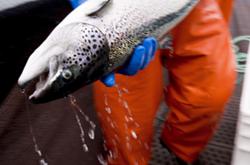
The biologist then studied why tiny Pacific salmon smolts would bother migrating all the way to Alaska and the Aleutians instead of hanging around at the mouth of the Fraser River for a free meal. Energy gains once again figured in the answer. Higher densities of zooplankton that moved up the coast toward Alaska during the season just insured higher energy returns and faster growth.
These novel fish studies convinced Hall that the world revolves around surplus energy: "Everything in life is about energy costs and energy gains." (In Hall's line of thinking, the best advice a parent can ever give a child is strictly fishy: invest your energy wisely.)
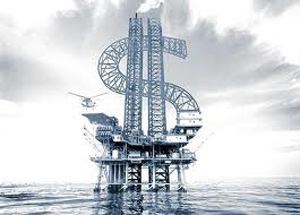
Puzzling picture of oil drilling
After his fish energy studies Hall, a student of the great ecologist Howard Odum, started thinking about energy gains in the oil patch in the early 1980s. He wondered if the industry experienced that same sort of declining returns over time that dogged the world's fisheries. As ships, nets and quantity of oil burned got larger, the protein returns per unit of energy invested shrank dramatically.
Cutler Cleveland, then a muscular undergraduate and now an energy brain in his own right, investigated and came up with a puzzling graph.
It was N shaped and showed energy gains for oil going up and down like a yo-yo. "The yield per foot of drilling would reach a minimum and then jump back up, then down even more sharply." Hall then asked Cleveland to add the number of feet drilled per year and then the graph showed a dramatic decline over time. "It was just like the fisheries."
The Wall Street Journal reported on the findings with a headline that declared "Increased Drilling for Oil May Consume More Energy Than It Gleans." Like most of the media it then forgot all about EROI.
"Politicians who say, 'Drill, baby, drill' have their head up their asses," adds Hall. "You don't get more oil by drilling more. You just get less efficient returns. You only get more oil by drilling thoughtfully."
But Hall's EROI work (and that of students and colleagues) unsettled the energy status quo. "We never got any money to do this," he reflects. "It all happened on weekends or pro bono. No government agency is interested in the information. Most science, to be honest, promises some form of candy. EROI doesn't do that and we don't do that."
Steep decline in energy returns
In a new analysis for Sustainability Journal (along with 19 other papers on EROI) Hall spells out how steep the decline in energy returns has become in the oil industry. The trend almost looks as dismal as catches for the wild salmon fishery.
In 1919 petrolistas got marvelous EROI returns for finding oil at 300 to one. (It simple terms, it took but one barrel to find 300 more, yielding perhaps the greatest energy surplus and capital gains in human history.) Today that EROI has dropped as low as five or three to one.
The energy returns for producing oil are plummeting too. In 1919 they hovered around 20 to one and then rose to 30 to one during the age of big oil field discoveries in the 1960s. Now they've declined to 10 to one. "Society is now living on old oil fields and we're spending more energy to find less and less energy," says Hall. Moreover North America has built a society dependent on energy returns higher than 10.
Given such grim declines, industry is exploiting ever more extreme and difficult resources (from the tar sands to Arctic oil). (Or it burns more oil to create ethanol from corn than ethanol's net return.) Yet these high-priced fuels deliver less and cost more in terms of water, land and capital. (Oil analyst Peter Tertzakian calculates that the energy-eating tar sands, for example, offer returns of seven to one for raw bitumen which drop to three to one once the junk crude has been upgraded and refined into gasoline.)
Neoclassical economists, of course, reply that technology and markets will magically overcome depletion and even resolve dramatic losses in energy gains, the heartbeat of every civilization.
But Hall says that's bunk. He argues that economics -- which is currently touted as a social science, is really about "stuff" and how people change the natural world to get stuff. Not surprisingly, he wants to reconnect economics with the reality of resource depletion, and has started a whole new school of thinking called biophysical economics. (He's even written a provocative book on the subject: Energy and the Wealth of Nations.)
How can you capture more surplus energy from a resource that is increasingly getting more costly to produce with lower and lower energy returns? asks Hall.
He also notes that neo-classical economic thinking is pretty much a byproduct of hugely increased oil consumption. Prior to the petroleum age, which begin in the late 1850s, and didn't start galloping along until the 1900s, people mostly lived on farms and thought a lot about work, muscle and effort all the time. As a consequence, earlier "classical" economists wrote about limits, scarcity and prudence.
But oil seemingly banished these conservative deliberations. Fossil fuels returned such extraordinary energy surpluses and so much easy wealth that economists got dumb and stupid. They even dropped land, resources and energy from their models and equations. Thanks to oil they became a faith-based group that worshipped markets. Or as Hall puts it, "The abundance of oil allowed them not to think about energy."
EROI, however, explains a lot of dismal realties. On an island like Puerto Rico, where Hall has studied energy returns in the rain forest for years, the importance of EROI rolls sharply into focus.
Before the advent of oil, the island was a poor and hard-working village that sacrificed its forests for calories. But after oil and Operation Bootstrap, well, Puerto Rico became an industrial marvel in the Caribbean. Thirty per cent of its forests promptly grew back.
Now that the price of oil has reached $100 a barrel, and given that most of the island's power is generated by oil-fired generators, Hall wonders if the clock won't turn back. "I'm beginning to wonder when energy becomes less available if the same parameters that drove Puerto Rico development will have to be run backwards."
Why the US is in decline
Hall also thinks that EROI explains the damnable predicament of the United States. The world's first petro state, a resplendent creation, dazzled the planet with energy returns of 300 to one. But now the nation's energy jazz has shrunk and sputtered with returns of 10 to one or less.
"I have seen the future and it's here. Do you get what I'm saying?" says Hall. "Everywhere you turn in the United States you see economic constriction. About 46 of 50 states are broke. Our universities are broke. All the Tea Partiers are bent out of shape by the national debt. The country just can't do a lot of the things that it used to do. We have had no increase in GDP and no increase in energy use for six years. And that's not a coincidence."
Hall doesn't see another future of exponential growth in the cards either. The U.S. economy will either hover around no growth or barely exceed one per cent. The nation that got the world hooked on oil culture, Chicago school economics and cheap stuff has simply peaked and spent all of its cheap energy returns.
"We are sitting around waiting for growth to happen," says Hall. But like fishermen waiting for another catch, the nets are coming up empty and the big boats are spending more fuel to chase smaller fish or the ghosts of fish.
Now being a good ecologist, Hall doesn't think that EROI should necessarily become the only scientific tool for decision-making. But he thinks it's one critical and important idea that regulators and policy makers need to ponder.
Before building more wind farms or digging more bitumen mines or polluting more groundwater for shale gas, policy makers need to ask what they are sacrificing for energy as well as what the real energy costs and gains will be.
Given the declining returns for difficult oil and shale gas, as well as low EROIs for most green alternatives (solar is moving up), Hall predicts that EROI will shape our lives in the days ahead as much as the fish he studied in New Hope Creek.
Not so long ago the biologist stood in the middle of Puerto Rico's Luquillo Experimental Forest and talked about the importance of energy costs and gains for the Discovery channel. What works in a rainforest, he told viewers, also works for civilized society and empires based on oil.
"I think it's very simple," he said. "Just as the forest cannot use more energy than is available by photosynthesis, human civilization cannot use more energy than what's available from the sun or from our temporary joy ride on fossil fuels." ![[Tyee]](http://thetyee.cachefly.net/ui/img/ico_fishie.png)
This is the latest of Andrew Nikiforuk's weekly Energy and Equity column for The Tyee. Nikiforuk is an award-winning author and journalist, and a contributing editor to The Tyee. Read his previous Tyee storiesĀ here.
18
Login or register to post comments
Oil Covered Fowl
1 year ago
Good article
EDITED FOR PERSONAL INSULTS. PLEASE READ THE TYEE'S COMMENTING CODE.
http://thetyee.ca/Comments/FAQ/#7
MODERATOR
Bernardo
1 year ago
The sadly ironic part is...
... I've seen these same basics laid out before, in very similar ways; this understanding isn't something "new"-- it's just been either neglected or even swept under the carpet.
Or as I've heard quoted a number of times recently (because of the Marshal McLuhan centenary), quite often a "prophet" is really just someone who simply describes what's already happening and plain to see -- if people would just open their eyes and look!
Fiat lux
1 year ago
Monetary economics, now
Monetary economics, now ruling the world with an iron hand, are an outright fraud and the sooner people realize this simple fact, the better chances for the survival of our children and gandchildren.
Of course, it costs more energy, than what is gained from the present economic system, the same as wars waste and destroy more wealth and energy that what is gained from them.
What have the US and satellites gained from the invasions and wars in Vietnam, Iraq, Afghanistan etc.
What has any nation gained from 2 world wars ?
The same rule applies to the criminal idiocy of the tar sands, especially if our braindead and bought politicians,of the Harper kind. force the pipelines through so our capitalists can please our great communists brethren in China,enriching them to come back and buy the country from under our feet.
Ed Deak.
SlipKnot
1 year ago
diminishing returns on energy exploration you say
Good article. For further insight, please read Joseph Tainter's 1988 book, "The Collapse of Complex Societies." It's amazing how clearly our present day is described. And it's all happened before, whether with ants or Romans...
Jeffrey J.
1 year ago
Insight After Insight
How many times can Nikiforuk pull a rabbit out of a hat? I've stopped counting. Just wait, expectantly, for his next essay, and plan on on being amazed. Like today's latest installment.
Energy Return On Energy Invested (EROI) has clearly been ignored by our corporate media. How obvious, how logical, and how profound. Particularly when this foundation is compared to the glib marketing talk of "continuous growth economics", "drill, baby, drill" and the rest of the gobbledygook that is manufactured by the Fraser Institute and CanWestGlobalPostMedia MSM.
In the past, "people mostly lived on farms and thought a lot about work, muscle and effort all the time. As a consequence, earlier "classical" economists wrote about limits, scarcity and prudence."
Indeed. This is the principle which governed the first 1 million years of human existence. Does anyone REALLY think this principle no longer applies? It is only for the past 100 years that we have pretended reality doesn't apply anymore. Now it's back. The sooner we embrace this fact, the better we can prepare ourselves for it.
Incredible coverage as always.
Ramona
1 year ago
It happened in Rome
I enjoyed reading this article and it is interesting to look at things in terms of energy. I have read that the decline of the Roman Empire was due to the fact that it was taking more energy to manage their empire than they had coming in(no more convenient countries to pillage),and this probably holds true for all great civilizations including the British Empire. It is also interesting to see how people get stuck in their belief systems such as the Free Market Economic ideology, when it is obviously not working.
Fiat lux
1 year ago
I've studied and researched
I've studied and researched the "common denominator of history's tragedies" for over 60 years, not for publication, but for my own interest. It has always been the same: Empires grew by stealing resources and energy from others, until they went that fatal last step too far and self destructed. As our system is destroying us now.
The world is urged to become "more competitive" but what the proponents if this crime wave never figured out is that competitive systems need constantly increasing energy demands to survive and stay on top, until they run out, burn out and collapse.
This has been the story of all empires and it is happening now , as we can see. observe and record it.
Now on a global scale, with a criminal element in control of the colonization of the world. In the past the rulers have done it with arms and religions, allegedly to "spread the faith", today with the perceived power of imaginary money, used as a pseudo religion, taught in our universities as the religion of "neoclassical market economics", leading to the same destruction and ultimate collapse as happened in all ages of history.
But our "leaders" and so called "economists" can report constant "growth of the GDP", with phony monetary figures, claiming that everything is A-OK.
The world has always been ruled by idiots and crooks, albeit on relatively small scales, until they self destructed, taking millions of innocent lives with them to the grave, but now they can do it globally, to the whole world.
While calling themselves "conservatives".
Ed Deak.
hg
1 year ago
Conservative
Unfortunately the meaning of the word "conservative" has been completely changed to "exploit". It just is proof of Goebbels' saying, tell a lie often and long enough it will become the accepted truth
edoherty
1 year ago
Good timing for EROI and Growth
Good timing! Anyone in Vancouver who wants to learn more about EROI and real economics can attend the De-growth conference starting this evening with the main event Saturday. No need to pre-register and the cost is very reasonable, see www.de-growth.com/vancouver/
OwlRol
1 year ago
History teaches, will we pay attention?
Kudos Fiat, that's been it in a nutshell. I too have been studying for many years the motivation of empires to ally or fight each other over control of resources (more than just professional).
WW1 was a competitive contest of European empires to control colonial resources, mostly based on coal energy.
WW2 was surely based on control of oil energy as Hitler attacked the Soviet Union, ostensibly for Liebensraum (living space), but more essentially the Soviet energy resources, notably in the Caucasus, and alsp well in the N. Africa campaign to cut off Suez to Britain and to gain control of the middle east oil. When Roosevelt embargoed Japan's oil supply, the U.S. must have known that Japan would strike out to control the oil of S.E. Asia.
Iran is a historical oil empire control issue, as is Iraq, and indirectly, Afghanistan today.
The problem of Freidman's Chicago school of demand side economics, elucidated by the Canadian Fraser and CD Howe institutes is rooted in the Cornucopia model of unending wealth creation. This form of Voodoo economics, with all its pseudo scientific graphs and calculations, ignores supply of resources, especially energy use and externalized effects. (just keep growing, coal and nuclear anyone?)
I would add one more analogy to Charlie Hall's. It's the Sea Lice and other parasites that cause weakened fish to die off, just as the corporations suck away valuable energy wealth and the military industrial complex wastes that energy from this resource.
At 100 to 1 or better, a healthy fish could tolerate those parasites, likewise we were willing to turn a blind eye to these, but at 10 to 1 or less we are subject to the same fate as those weakened fish.
Can we divert a good portion of that remaining fossil fuel energy (minus coal) to develop large and small scale renewable energy or will we piss it away into the atmosphere and disposable landfill material? The former suggests a new beginning while the latter spells an end.
Cycling Commuter
1 year ago
"[ROI on] solar is moving up" says Andrew
True. Electricity from photovoltaic panels is already cheaper than nuclear.
See: http://www.ncwarn.org/2010/07/solar-and-nuclear-costs-the-historic-crossover/
The cost of solar continues to decline quickly. The first photovoltaic panels had an efficiency of a couple of percent. 20% efficient panels are in high production now. Multilayer photovoltaic prototypes have been built with efficiency in the 40% range.
Evacuated tube solar hot water heaters with efficiencies in the 85% range have been available since the 1970s. These devices can produce hot water even when it's raining or the ambient temperature is 40 degrees below zero. The price per kWh equivalent is already far less than nuclear and continues to decline with automated mass production techniques.
The cost of nuclear power continues to rise due to rising materials costs and higher safety system costs as more and more public safety risks are identified. If the nuclear industry was required to purchase private insurance to cover the up to 7 trillion dollars of economic damage that could be inflicted by a nuclear meltdown near a large population centre, the cost of nuclear power would be in excess of $2.00 per kWh.
See:
http://www.globalnews.ca/Nuclear+plants+viable+only+when+uninsured/4653983/story.html
http://www.japantoday.com/category/commentary/view/nuclear-dilemma-adequate-insurance-too-expensive
http://www.google.ca/search?hl=en&lr=&q=%22bear+the+potentially+enormous+risk+of+a+nuclear+disaster%22&btnG=Search&aq=f&aqi=&aql=f&oq=
Since photovoltaic panels are electronic devices using thinfilm deposition techniques similar to techniques used to build computer data storage devices, it should be no surprise that the relentless decline in photovoltaic cost has paralleled the decline in the cost of data storage. Electronic devices constantly get more and more performance out of less and less raw materials.
The first magnetic hard drive commercially produced was the IBM 305 RAMAC 5 MB Hard Drive which came on the market in 1956, weighed over 1 ton, cost over $100,000, consumed over 2,000 watts, was slow (600 msec average seek time) and not too reliable.
See:
http://i70.photobucket.com/albums/i99/gibbj77/Stuff/305RAMAC.jpg
http://cache.gawker.com/assets/images/comment/4/2010/09/52e83dfbc9893b3bd1c037616d31a671/340x.jpg
http://ed-thelen.org/RAMAC/IBM-305-227-3533-1-mostlyRAMAC-CE-RefMan.pdf
Today, a 32 GB (3,200 MB) MicroSD memory device is the size of a small fingernail, weighs 2 grams, uses under 0.1 watts of power, has an access time under 2 msec, can be purchased for under $50 and is very reliable. So that's a 58 billion percent reduction in weight/raw-materials per MB, a 1.28 billion percent reduction in power consumption per megabyte, a 128 million percent reduction in cost per MB, and a 30,000 percent improvement in seek-time/access-time per MB compared to the first hard drive.
Cycling Commuter
1 year ago
Part II: "[ROI on] solar is moving up" says Andrew
The main difference between the electronics industry and the energy industry is that intense competition has always forced the electronics industry to reinvest a substantial amount of revenues into research to find more efficient ways of doing things. Energy production has tended to be a legislated monopoly with little motivation to invest in research to find more efficient ways of doing things.
Cycling Commuter
1 year ago
32 GB = 32,000 MB, not 3,200 MB
Typo above. 32 GB = 32,000 MB, not 3,200 MB.
Improvements in memory storage performance can be multiplied by 10.
Fiat lux
1 year ago
Just imagine the potentials
Just imagine the potentials if those industries would cooperate with each other for the benefit of humanity, rather than competing to put each other out of business to set up oligopolies and monopolies for market control and profits for a small percentage.
Also, if the armament industries would be turned to peaceful purposes to feed and make people happy, instead for the legalization of mass murder, again for energy control, colonization and profits.
Ed Deak.
david hadaway
1 year ago
Ramona
It has been suggested that one reason behind the collapse of the Roman Empire and the classical world civilization was its trade imbalance with Asia. Manufactured luxury products brought from the East along the Silk Road were paid for with bullion, Rome having nothing to trade that China wanted. Over time the Mediterranean economy was degraded by the debasement of its currency.
This isn't a popular theory today, the idea that a currency can derive its strength from an underlying gold or silver value is anathema to modern economists, and of course is by no means comprehensive for the complex situation between 100 and 500 AD. However looking at the way the USA is apparently willing to sell its public debt in exchange for private trinkets I can't help but be impressed by the parallel.
pwlg
1 year ago
The more they change the more they stay the same
Despite declining energy returns one thing continues to grow...the oil industry profits.
As more and more of our personal earnings go to purchasing energy is it no wonder that the remaining sectors of our economy (except it appears finance) continue to fall.
We need to use a new language when we talk about growth. GDP, although a common growth measurement, does not reflect development and its nuances.
RickW
1 year ago
Ed
It's all about (and has been for a long time) who gets to handle the booty FIRST. Everyone talks about empires and nations - but it's the relatively few individuals within those bodies who control things and scoop the cream off the top.
seth
1 year ago
renewable nonsense
The current cost of Canadian nuclear power is 2.6 cents a kwh according to the OECD. The recent quotes from AECL and Areva for the Darlington upgrade was under 2 cents a kwh for the 60 year term of the bids.
The most recent Candu build in 2004 in China was under 2 cents a kwh. Current builds of American reactors in China are less than 1.5 cents a kwh.
http://www.cnnc.com.cn/tabid/168/Default.aspx
http://www.bloomberg.com/apps/news?pid=20601080&refer=asia&sid=aJPyNB5Q_Fr0
There are no energy efficiency improvements anywhere that cheap.
Latest solar tech Archimede Italy Google it
At $80M producing 9,200 MWh/yr Archimede is 52 cents a kwh in a public utility over 100 cents in a private.
Real wind cost.
Latest big wind farm Cape Wind is 24 cents a kwh going to 34 over 15 years - approved tariff Google it.
Because of the need to loas balance wind and solar with low efficiency gas plant these energy sources actually produce more GHG's than they save.
The ncwarn report was the usual junk science sponsored by the denier shop down at Big Oil. The authors have no knowledge or expertise in energy matters.
The report was so biased that the New York Times had to issue a extremely unusual retraction after publishing an article based on it.
http://www.nytimes.com/2010/07/27/business/global/27iht-renuke.html?_r=2
The report itself is debunked here.
http://neinuclearnotes.blogspot.com/2010/08/is-solar-really-cheaper-than-nuclear.html
A similar piece of antinuclear trash was published recently by our own Seth Klein's outfit at the Centre for Policy Alternatives on nuclear power in Saskatchewan. He should be disgusted with himself as it puts all the good work at CPA under suspicion and doubt.
The article [UNSUBSTANTIATED CLAIM REMOVED. -MODERATOR.] deviates from the old standard of nuclear deniers quoting each other as authorities and citing old debunked academic tomes. It appears that Big Oil and its wholly owned Big Green subsidiary having seen how effective climate denier junk science can be have decided to use the same tactics.