A reporter's Peace River journey against a powerful current of dubious assumptions and official spin. First of five parts this week.
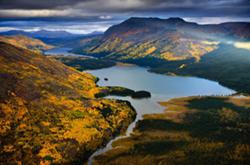
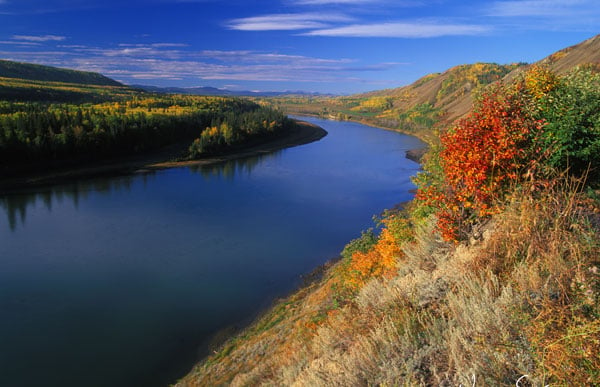
Slated for execution? Photo: Wayne Sawchuk, Northern Images.

-
Port Mann Bridge, Site C dam top premier's sparse agenda
-
-
Price seems way too high to NDP critic, who questions Lib donor tie.
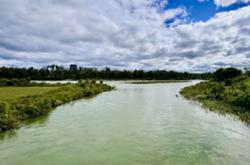
For the third time in less than 30 years, the Peace River Valley is slated for execution. After two aborted attempts to build a third dam on the Peace River, located in the northeast corner of the province, the provincial government has signaled its intent to once again pursue the controversial project. Those with an interest in the so-called Site C project won't have to wait much longer to find out its fate, either. According to news reports, a final decision on whether the dam will advance to the environmental assessment stage and one step closer to construction will be made at some point this spring.
The dam, BC Hydro says, will provide the province with a new source of clean, green energy, one that is essential if the government is to meet both the commitments of its long-term energy plan and its promise to build new sources of renewable power. Its construction would pay significant local dividends as well, the government argues, as it would provide approximately 8,000 man-years of employment over a seven-year construction period to a part of the province that desperately needs the work.
But while the project's utilitarian calculus might satisfy the decision makers in the provincial government and at BC Hydro, it is decidedly less popular among those who stand to be directly affected by its construction, from those who live in the Peace River Valley to residents of the surrounding communities of Chetwynd, Tumbler Ridge, Hudson's Hope, and Dawson Creek. In the Peace, where the consequences of the dam's construction will be felt most intimately, the ends come nowhere close to justifying the means. In fact, to many of its 22,000 residents, Site C is nothing more than a case of the Robin Hood principle in reverse, the rich stealing from the poor without even having the decency to look them in the eye while they're doing it.
Origins of the dam plan
The idea of creating a third major hydroelectric dam on the Peace River, one that would join the massive W.A.C. Bennett Dam and the smaller Peace Canyon Dam that lies downstream from it, first arose in the early 1970s. After examining a few different sites on the Peace River near Fort St. John, BC Hydro settled on the so-called "Site C" located seven kilometers southwest of Fort St. John. The proposed kilometre-long earth fill dam, which BC Hydro estimates would cost somewhere between $5 and $6.6 billion to build, would deliver enough electricity to power approximately 460,000 homes. The reservoir that would produce that power, an 83 kilometre-long behemoth deep enough to submerge even the tallest building in Vancouver, would flood an estimated 5,340 hectares of land, the equivalent of almost 34,000 hockey rinks.
In 1980, BC Hydro applied for an Energy Project Certificate to allow it to build the Site C dam. The then-newly formed B.C. Utilities Commission (BCUC) held numerous hearings on the issue, listening to over 70 witness panels at formal hearings and 100-plus representatives at local and special First Nations meetings. Ultimately, the BCUC wasn't persuaded by the government's arguments in favour of the dam, noting that it had failed to provide both a load forecast that demonstrated the importance of building the dam, and a comparison of the available alternatives and the social, environmental, construction, and engineering costs attached to each. On Nov. 9, 1983, the BCUC ruled that the cabinet should defer issuing a certificate until those questions were addressed. Soon afterwards, premier Bill Bennett spiked the project.
But while advocates of Site C may have lost that particular battle with local interests, they were still making preparations to the win the war. Just three years later, BC Hydro signed a "study agreement" with a U.S. federal energy agency and several utilities in the Pacific Northwest and California that resulted in a 1987 report concluding a market for power from Site C existed in the U.S. The study agreement referred to Hydro's willingness to consider building the dam and "allocating power generated... in excess of domestic requirements for export to the United States under long term contracts having economic benefit to British Columbia."
In 1989, BC Hydro began holding public consultations on building the dam, but those quickly died out as the combination of political instability and economic turmoil made the project unfeasible. In a 1993 interview with the Vancouver Sun, BC Hydro's president said the Site C project was "dead" because it was too costly and environmentally unacceptable.
Listening to the people of the Peace
Last October, I arrived in the Peace Region right as the latest attempt to revive the Site C Dam was about to reach a critical juncture. After a four day trip from Toronto in early October that was mercifully light on both snowfall and speeding tickets, I piloted my 1995 Honda Accord across the British Columbia border and into the Peace, headed for the small resource town of Chetwynd and a job there as the editor of the town's weekly newspaper. I had prepared myself for the challenges of small town life in northern British Columbia, from the bad food and even worse coffee to the need to install something called a block heater in my car, but I didn't expect to find myself right in the middle of a modern day retelling of the biblical story of David and Goliath. That this particular Goliath was a crown corporation that I had grown up thinking of as a benevolent giant, a friendly behemoth that provided British Columbians like me with cheap, green electricity, made the discovery even more surprising.
Like most people who grew up in the Lower Mainland, the only interactions that I had ever had with BC Hydro were in the form of my surprisingly inexpensive electricity bills. I regarded BC Hydro as a kind of golden goose, one that delivered low-cost, environmentally-friendly electrical power to the province without significantly disturbing any of the rivers, streams, or lakes that provided it. But outside the Lower Mainland, and particularly in small and remote parts of the province like the Peace River Valley, that fiction isn't nearly as easy to maintain, nor the less desirable aspects of BC Hydro's influence to ignore. The lakes, rivers, and streams that BC Hydro dammed up to generate the electricity that me and my friends in the Lower Mainland used to power our computers, video game systems, and television sets were right in their own back yards. They saw the costs associated with power generation, and were not nearly as willing to write them off in the name of the greater good.
I encountered this more complicated relationship between BC Hydro and some of its shareholders first-hand when I attended the local public consultation meeting on the proposed Site C Dam. It was early November, and I was still getting used to the rhythm of my new job and the people who would come to define it for me. I sat down at the long rectangular table in one of the Pomeroy Hotel's conference rooms, jotted down my name and position on the note card provided for me, and braced myself for what I thought would be a run-of-the-mill procedural exercise in which BC Hydro's well-dressed representatives would endure the unreasonable demands and incoherent observations made by the local cranks with the kind of grace that was expected of someone in their position.
But it quickly became clear to me that the cranks weren't being unreasonable, and that many of them weren't even cranks at all. BC Hydro's representatives, meanwhile, were treating them the way a parent might a colicky baby or a child throwing a temper tantrum; with measured, soothing responses, but ones that always betrayed a hint of irritation at the unreasonableness of the behaviour to which they were being subjected. What I saw reminded me of what I had left behind in Ottawa, and why I'd decided to leave it there, when I decided to quit a career in partisan politics in favour of one in journalism six years earlier. BC Hydro hadn't come to Chetwynd, Hudson's Hope, or any of the other communities that would be affected by the proposed Site C Dam to hear the concerns local residents might have about it. Instead, they were there to suppress them.
A consistent majority of 'no'
BC Hydro's representatives were applying the same cynical formula that I had seen used so many times in the interactions between elected officials and their constituents, one that sought to either minimize or marginalize the issues being raised by them. BC Hydro repeated this cynical exercise in communities across the Peace Region, from big cities like Fort St. John and Dawson Creek to small towns like Tumbler Ridge and Chetwynd. The results of those meetings, as well as the voluntary online, telephone, or written feedback provided by area residents were rolled into a formal report on the public consultation process, a predictably sunny document that reserved the opposition expressed by local residents to the foot and end notes. In the end, the public consultation process for the proposed Site C Dam was in fact not a consultation at all, but instead what public opinion experts refer to as a push-poll, a heavily managed process that produces a predetermined outcome.
Yet despite the fact that they were never directly asked whether they wanted the dam or not, Peace region residents still managed to express their objections to it. When asked their opinion about a range of energy options that could be used to meet B.C.'s long-term needs, the construction of a new hydroelectric dam was viewed by far the most negatively, with 45 per cent of respondents indicating "strong opposition." Greater investment in the province's current assets, more aggressive conservation efforts, funding alternative energy sources, building power plants fired by natural gas, and even raising energy prices gradually to promote conservation were rated more positively by Peace Region residents than the construction of another major dam.
Interestingly, when the question was rephrased and the dam was presented as a last resort ("Site C should be considered if conservation, refitting existing equipment and investments in new sources, including sustainable energy, were not going to be enough to meet the energy demands of consumers and business in B.C.") Peace Region residents still voted against the dam, with 40 per cent expressing strong opposition to only 33 per cent voicing strong support. Despite these figures, though, BC Hydro still passed the process off as an unqualified success, a vote in support of the dam's construction.
Why were so many people in the Peace Region opposed to the Site C Dam, a project that ostensibly provided low-cost and environmentally friendly power to the province? To find out, I travelled the hour-long drive from Chetwynd along Highway 29 through the town of Hudson's Hope and down to Bear Flat, a tiny farming outpost along the Peace River just a few minutes west of Fort St. John. I was heading to Bear Flat to talk with Ken and Arlene Boon, Sandra Hoffman, and Ken Forest, who together formed the nucleus of the Peace Valley Environment Association, an organization created in 1975 to oppose the first incarnation of the Site C Dam and one that has been fighting it ever since.
In the Boons' kitchen
It was one of those magical early October days in the Peace, one last serving of the dying summer's warmth that when compared with the long winter and short days that were already on their way made its influence feel like that of a strong narcotic. Even the jittery crowds of deer that hang out along the side of the highway seemed pacified by the good weather, temporarily uninterested in the game of chicken that they so enjoy playing with the cars that travel along the narrow line of pavement that bisects their territory. I made a left off Highway 29 just passed Bear Flat and pulled my car up the bumpy dirt road of the Boon property, past the work site where some men were working on the small pre-fab log cabins that they produce, and up to the front of their house, hounded for the last twenty metres or so by two rambunctiously friendly dogs. We sat down in the kitchen of their modest log house, one that sits just inches above the proposed dam's flood plain. After dealing with the introductory pleasantries, we began to discuss what the project meant for and to them.
For Boon, Forest, and Hoffman, Site C represents an abrogation of duty on the part of the province's public utility. In trying to downplay the costs associated with the project and refusing to seriously consider the available alternatives, BC Hydro, they believe, is acting less in the public's interest than in its own.
"Here's their greater good," said Ken Forest, a retired school principal who has lived with his wife in the Peace River Valley since the early 1970s. "We're willing to flood the entire valley, throw people out that have been there since the 1900s, and are taxpayers and have never had a problem, we're going to displace First Nations again, we're going to eliminate our tourism and wildlife and agricultural abilities in the valley, in exchange for 70 to 100 years of power, all of which will be exported to the United States or the tar sands.
"The result of that," Forest continued, "is profit for the province, 90 per cent of which ends up in the Lower Mainland, and we end up with the mess. What do we get in exchange? We get five to seven years of jobs, most of which will be tendered and given to people outside of this area."
Tomorrow: The conversation in the Boons' kitchen continues, including the question: Why drown a vital breadbasket? ![[Tyee]](http://thetyee.cachefly.net/ui/img/ico_fishie.png)
Max Fawcett is a freelance journalist and the former editor of the Chetwynd Echo. To see more of his work, visit www.maxfawcett.com.
36
Login or register to post comments
Grania
3 years ago
Where is Alta. on this?
Is the Alberta government not actively opposing this plan? Most of the Peace River Valley is in Alberta...close to Grande Prairie. There are market gardens all through that valley as I recall.
RickW
3 years ago
Campbell LOVES Big, Costly Construction Projects!
What more "rationale" is required than that?
Market Gardens you say? Unfortunately, "progress" requires "sacrifice" -- as long as the sacrifice is not felt at the top of the food chain.
YCSTS
3 years ago
Site C vs Nuclear. The Winner is:
$5B to $6.6B for 900 MWpk of power. That’s $5.5k to $7.3k per kwpk. At a 60% capacity factor that’s to $9.2 to $12.2k per kwavg. Add another $1k per kwavg for long distance power transmission upgrades, and you are up to $10.2k to $13.2k per kw del’d. And Hydro is max in the spring and early summer when power demand is minimum.
With Nuclear certainly able to come in at under $5k per kw del’d, for green, 24/7, rain or shine, summer or winter power – located close to load centers, it makes much more sense to simply build the NPP’s. And Hydro uses 10X the water of Nuclear, due to the increased evaporation from the large water reservoirs.
Consider that the goal is to replace fossil fuel, GHG belching power plants. So with IGCC Coal power plants running > $3k per kw, even at a high $5k per kw for a NPP that’s an additional cost of $2k per kw. And Coal Power plants have double the O&M cost of Nuclear. So the Carbon Abatement cost of going Nuclear is AT LEAST 4X lower than the Site C Hydro. A NO-BRAINER – build the Nukes.
And if the B.C. gov’t is still paranoid and irrational about traditional Nuclear Power, consider that the cost of supplying Neutrons has dropped enormously over the past 50 yrs. That means that subcritical Fission Reactors are now or soon can be practical. GemStar claims they are ready to build a 100MW subcritical accelerator based fission reactor for $500M or $5k per kw. This will burn just about any nuclear material. Spent Nuclear Fuel (so-called nuclear waste), depleted Uranium, natural Uranium, natural Thorium.
http://csis.org/files/attachments/091007_chang_virginia_tech.pdf
http://nextbigfuture.com/2010/04/molten-salt-based-accelerator-driven.html
Another company is close to developing a Fusion-Fission Hybrid sub-critical Fission reactor that will also burn Nuclear Waste or Natural Uranium/Thorium. There is enough depleted uranium to supply all of our power needs for centuries burnt in these types of reactors.
http://www.helionenergy.com/Helion_Presentation-Web2.pdf
Matt T.
3 years ago
BC Hydro's Site C Dam
Lets' see. If we would have taken the same position during the 1960's and 1970's, the dams along the Columbia and Peace Rivers would never have been built.
BC Hydro would not have had these legacy dams today and BC citizens would not be the beneficiaries of relatively low electricity rates.
When BC Hydro first applied to construct Site C during 1980, the Revelstoke dam along the Columbia had yet to be constructed.
Time to get BC Hydro back into the energy game big time. I mean come on people we don't all want new power generation to be constructed by IPP's or do we?
Also time to take a page out of Manitoba Hydro's notebook. That is, construct large dams such as Site C, enter into long-term energy purchase agreements with various U.S. states making these U.S. states pay off a good chunk of Site C's capital costs over time.
By the time BC Hydro requires the power for its BC needs, Site C's capital costs could potentially be substantially paid off and thus BC Hydro will be once again producing relatively cheap power from Site C with concurrent lower electricty rates
Janie Jones
3 years ago
Keep the Peace.
For those of you who have never travelled Highway 29 between Fort St. John and Chetwynd, it is a drive out of heaven with homesteaded family farms on one side of the road and unfenced wild lands full of herds of deer on the other.
NE BC has already paid a very high price (water table contamination, sour gas leaks etc.) meeting the energy needs of the rest of the province and the last thing we need to be doing is drowning more farm land.
According to soil scientist Vladimir Ignatieff (Michael's uncle) the destruction of the Finlay River by the creation of Williston Lake inundated approx 600,000 acres of potential agricultural land.
woodworker
3 years ago
Farmland
Yes there is farmland their, but it has a three month growing season at the best. And if the soil is that good move it to higher ground and with the micro climate that comes from having the reservoir and water for irrigation available you can improve what is there now. Also if there is such good farmland there how come it only grows cattle feed. No market gardens and never has been. The one in Taylor is below the dam.
dave49
3 years ago
How arm's length is BC Hydro?
For me, a key question is, how arm's length is BC Hydro? In theory, as a Crown Corporation, there SHOULD be a fair degree of independence. In reality, it seems NOT MUCH.
The Province keeps BC Hydro on a short leash, but keeps up the appearance of firm policy direction by crafting various energy policies and directions to the Utilities Commission.
In my view, the most independent CEO of the last 25 years was Larry Bell's first term in the late 1980s, where he essentially created Power Smart. But that was over 20 years ago!
As for Site C and that whole system of dams, how did we manage to get away with so much less fisheries impact than on the US side of the border? The Americans have spent hundreds of millions to address fisheries impacts. So did we not have similar impacts or have we just not acknowledged it (and lived with the damage)?
dave49
3 years ago
Outside viewpoint: BC as a banana republic?
A neighbour of mine moved up from the States a few years ago. He's amazed at how the economy of BC is run like a third world banana republic. He observes the main role of being in government here is to transfer public money into your friends' pockets.
He's also found the job market tough, concluding if you don't know the right people and have connections to the favoured business networks, you are completely out of the loop.
Janie Jones
3 years ago
for woodworker
From Finlay's River by R.M. Patterson:
"(Nicholas) Ignatieff's vision, the dream that led him on, was of the fertile portions of the floor of the Trench laid down to grass and raising seed - a valuable product . . . Meanwhile other varieties of grass, tested in the mountains and proved to be suitable, would be employed in converting other areas of the Trench into pasture land . . . A detailed plan was worked out, a prospectus was drawn up, the desired capital of $350,000 was subscribed . . . Unfortunately the plan remained nothing but a dream - one that can now never come true . . . Now only a vast stormy lake with an ugly shoreline will take its place, for the Gap and wide areas of the Trench in those parts are doomed to vanish beneath the waters of a monstrous dam . . ."
ReeferMadness
3 years ago
No good options
There are no good options for generating electricity. That means we should focus on conservation and choose the least bad options to generate the power we need. There are problems with Site C but consider the alternatives. Coal? Natural gas? Oil? All GHG producers. Nuclear? Nobody knows what to do with the waste? Fusion? Science fiction. Solar/wind? Great as long as the sun shines and the wind blows.
I'm glad I don't have to make the decision.
cboo44
3 years ago
"Execution"??
"the Peace River Valley is slated for execution."
Well, isn't THAT dramatic ! So, let's look at alternatives:
1. Wind, unproven, IF proven, same power grid required
2. Nuclear: proven, but has a limited operational life and VERY expensive refits with substantial downtimes. NOT reliable enough without a number of plants on a grid.
3.ROR: HUGE infrastructure for small power returns
4. Massive ROR(Bute Inlet): Expensive, massive NEW transmission lines required
Peace Power: Already established transmission routes, single ADDITIONAL site, upgradeable.
So, except for NIMBY, it's no contest IF OBJECTIVELY rationalized.
If you don't believe BC will need more electricity in the future, if you believe that "conservation education" is the be all to end all, pull the plug on your computer and think about not expressing your opinions.
Janie Jones
3 years ago
Alternatives
Or go off grid.
cboo44
3 years ago
Or Go Off Grid
Somewhat simplistic, isn't it? So, what do you propose, "Shop by petroleum-based candle-light" ? "Warehouse refrigeration by squirrel wheel" ? Wood-burning heat for all city-dwellers in BC? Computer by pedal-generation?
Oh that's right! A hydro dam, but not in my backyard !
Fish-counter
3 years ago
Three words: Link Lake Reservoir
The dam at Ocean Falls was working at 25% capacity when I was there in 2001. It was consdidered ecnomic to provide power to Shearwater and Bella Bella. It would only require a hookup line to the grid to bring the dam online for the province. The water is already impounded and the folks who own the generators would LOVE to sell more electrons to BC Hydro.
Site C dam may be needed, but it looks like expensive juice to me. Maybe that is the message we should all take home; any and every option in the future is going to be expensive, whether it is environmentally desirable or not. The Link lake Dam is sitting there, waiting - for a link to the power line.
YCSTS
3 years ago
Nuclear is superior to Hydro
cboo44 the only thing proven about Wind is that it is a useless, expensive form of intermittent energy. A complete waste of money.
Nuclear power plants last as long as Hydro plants and retrofits are at most $4k per kw after 40 yrs of service. That's for Business-As-Usual Nuclear not Save-Our-Civilization nuclear. The two are entirely different concepts.
Even $4k a kw is a lot less than site C at $12k per kw del'd and retrofits are just as expensive and down time just as long for Hydro as Nuclear. And you are ignoring small factory produced reactors like the Hyperion, at $1.2k per kw. Deliverable by rail, barge or road.
And where in the hell do you get Nuclear is not reliable enough, capacity factors for Nuclear are now typically over 90%, whereas Hydro is typically about 60%.
Sandra H
3 years ago
to woodworker
You can't just move the soil and expect the same result... it is far more than just the soil but also the warmer microclimate unique to the low lying lands of the valley that make this prime agricultural land. It is undeniably a shorter grower season than in southern BC but the longer daylight hours in the growing season compensate for that. There are agricultural reports that have said the land there is comparable to the lands of the Fraser valley. It is the only class one soils north of Quesnel.
There has been market gardens there in the past. In particular, it is well suited for vegetable production. The reason why there is not currently any market gardens is mostly due to the fact that BC Hydro has placed a flood reserve on those lands. It is hard for farmers to commit to such investments when the land could be taken away from them at any time in order to build a reservoir.
bfearn
3 years ago
Too many Canadians...
are obsessed with too much. It's is always more, power, floor space, cars, roads, more stuff, etc. etc. Too few Canadians try to tread gently on this planet. A new nuke plant, good idea, even though nukes have been plagued with numerous problems including being inextricably linked to nuclear weapons. A new dam that floods 13,000 ac of farm land, no problem. Nuke fans tell us that, "only thing proven about Wind is that it is a useless, expensive form of intermittent energy. A complete waste of money" without mentioning that this useless energy is the fastest growing energy segment on the planet.
There is a choice here and it is called being respectful of the only planet we know. Being greedy is not the way to a successful future.
bluerev
3 years ago
re: Too many Canadians
You are correct, however you missed a vital point. We want more and we want it now. If we were whiling to slow down and use less, our planet, which is by far our greatest resource, would have time to replenish itself. Instead, we take all we can, as fast as we can, killing the planets ability to replenish. We do not need more power, we produce enough for everyone and then some. We need to use it much more efficiently.
kootenaybelle
3 years ago
site c-a project for the dinosaurs
site C is old technology -for the dinosaurs extinction bound crowd -and the corporate and investment shareholders who have a rather kinky way of feeling successful
there is a new technology available now that is fish friendly, no dams required, no fuels or emissions -called the vertical Axis turbine that can easily be installed in any flowing water
A person could also install the Leviathen turbine in their household pipes and generate plenty of electricity
gee, a person could create electricity with their own methane
and lastly the huge grid of ashalt which covers North america could supply enough electrical power for all time.
there is no lack of the potential for electricity -other countries are already gnerating thru alternative ways. check out Inhabitat.com
Where are the dinosaurs going to send this power - to the states? - you have got to be kidding me!
the U.S. has a huge electrical generating potential on it's streets
Piezioelectricity , solar, asphalT, methane could power absolutely every need.
Nope , it's the dinosaurs wanting to prove once again that EXTINCTION IS THE WAY and take everyone else with them.
site c? IDIOCY!
Green collar Jobs are in our alternative energies - sustainable, environmentally friendly, steady state income
just needs us to bring them to reality here in North america - land of the dinosaurs (croak)
kootenaybelle
3 years ago
SITE C - COLUMBIA BASIN LEGACY?
I beg your pardon!
Don't any one dare to say how great the Columbia Basin Dams were built in B.C.
I witnessed 4 of the dams go in and have researched the earlier dams.
These dams have been the death of the environment of the Kootenay.
Our meager numbers of fish are starving due to the nutrients locked behind the dams. The reservior levels fluctuate -so the fish eggs dry out. Fish populations are isolated -and going extinct despite 100000's of dollars invested in mitigation.
Asthma is huge here due to the blowing dust off the lakes.
The stench is nauseating.
Docks are high and dry, lousy tourism.
Golf courses by the reservoirs are like accordians due to fluctuating water levels.
Fish nutrients are dumped out of a bag off one of the ferries -sound secures eh!
and we lost 16 million spawning salmon!!!!! Our rivers used to run red with spawners - this was a paradise sacrified to power Hanford bombs and Boeing aluminum warplanes so they could go to war and make big profits.
Flood control - well guess what happens when people burn all the trees off the mountains - the snowmelt floods the towns downriver that were so stupid that they built in a floodplain
Damming is IDIOCY
There are alternatives and they are being used right now!
there is plenty of sustainable electricity to be had.
THERE IS NO SCARCITY!
WE ARE NOT DESPERATE FOR POWER.
do not be so gullible
WAKE UP B.C.
EDUCATE YOURSELVES-ENTER THE 21ST CENTURY!
www.inhabitat.com
Site C is a really stupid idea of of ignorant short-sighted people. and so is nuclear power - they are all corporative stupidity
yours truly,
a lifelong witness to the impacts of the dams
happy (not verified)
3 years ago
Build walls then?
BC's the fastest growing province in the Confederation. Faster than Ontario, faster than Alberta.
Even though there has been countless Tyee articles describing the wretched conditions here, the MSM has buried all that and the fools keep coming here in droves.
These sheeple will all demand electricity. So.....how do we stop the influx?
The only way I've seen is elect the NDP and we can have a repeat of the 90's when the interprovincial immigration went outbound, not in.
Thats one way. Any other ideas?
http://www.theprovince.com/technology/leads+national+population+growth/2728715/story.html
TGR
3 years ago
Have BC Hydro dam the
Have BC Hydro dam the Fraser, Squamish or one of the other rivers in the Lower Mainland. This is where most of the power of the province is used. It would be greener because their would be very little loss of energy because of long distance shipping over the Transmissions lines. The gov't doesn't have the intestinal fortitude to do this. Politically it would be suicidal for them.
The lower mainland has only sucked the life out of the northern part of this province and given very little back.
I remember WAC Bennett told the people of the Peace that the first dam would bring great prosperity to the region and that the power in that area would be supplied to them at a cheaper rate that the rest of the Province. Guest what it never happened. What did happen was that there thousands of acres of harvestable forest covered with a few hundred feet of water. No less expensive power for the local population. On top of that many guide and outfitters along with trappers had their cabins flooded without compensation.
Natural gas and oil come from this area but the Peace and Fort Nelson pay much high prices for their gasoline and heating than most places in the rest of the Province.
One of the biggest problems is that the area has always voted Social Credit, Reform and now Liberal. The seat is so safe they don't have to hand out any goodies to the "locals". When the NDP is in power they don't have to hand out any "goodies" because they will never get elected in the Peace Area, regardless of what they do.
Suggestion: Instead of a Casino beside BC Place how about a "cute" little Nuclear Power Plant instead. Close to the customers and it can have a nice little dome like BC Place. What a wonderful tourist attraction.
dave49
3 years ago
YCSTS - You clearly don't know the history of CANDU
YCSTS - You clearly don't know the history of CANDU. What is your source for all these wonderful life cycle, long-term costs?
RickW
3 years ago
If Nuc is the Alternative to Site C......
.....then it had better be built in the middle of the GVRD.
And if dams are the preferred way to go, then dam the Fraser at Chiliwack or Abbotsford.
vegguy
3 years ago
Site C
My understanding is that most of the hay land (let's not talk as if this is prime farmland) is owned by BC Hydro and leased back to the farmers at a very favourable rate. This is not idyllic crop land - it is used primarily for hay. Site C will flood a big chunk of land but the environmental impact will be far less that the Plutonic disaster at Bute inlet and far more reliable. There needs to be a focused effort to ensure that if it goes ahead the lake will be planned and managed better than the other 2 dams on the Peace
Moonbug
3 years ago
so do we want one big dam or 300 little ones?
If we need the power (if) - I would much rather see site C developed than watch the whole province get cannibalized.
I don't trust the Libero-Cons to actually make Site C a good deal for British Columbians (they only care about themselves and their friends) - but the northeast has chosen to be an industrial region - so if we need the power it makes sense to develop it in a region that is already pretty much a mess.
If we want to save agricultural land there are other much more pressing and productive parcels to worry about.
All energy production and industrial development comes with an environmental cost - it sort of makes sense to me to concentrate development on a river that is already altered beyond recognition than to fragment wilderness areas across the province and ruin hundreds of streams and rivers.
Janie Jones
3 years ago
[OFFENSIVE COMMENT REMOVED HERE...]
Guess what moonbug, the Campbell regime is going to ruin the rest of the Peace, fragment wilderness and ruin hundreds of streams and rivers at the same time.
It's not an either or situation.
"the northeast has chosen to be an industrial region - so if we need the power it makes sense to develop it in a region that is already pretty much a mess."
[...AND HERE. -MODERATOR]
seth
3 years ago
Nuclear Deniers - The religion
I see a few out here dissing nukes with their dogma, espousing the thoroughly debunked renewable scam - like Gordo except dumb instead of crooked.
Until the world starts to get serious about ending air pollution/global warming/peak oil, BC which gets 65% of its energy from fossils and is a major fossil fuel energy exporter, has plenty of electricity for the next few years.
However as an alternative to our morally and intellectually challenged energy minister funneling even more taxpayer dollars into the greedy pockets of his IPP stockbroker cronies, an Enhanced Candu 6 pair at less that $3 billion taking up some dirt ar Burrard Thermal producing 1.5 Gw 24/7 is a much better idea than a $7B dam/ transission project flooding 10000 hectares and producing .5 Gw. Site C is more than 6 times the cost per kw of the Candu.
Google AECL Qinshan China Candu to see how the successful that project was and how the Chinese love the machines. They are now being fueled on Chinese nuclear waste from other reactors.
RickW
3 years ago
seth
Or, we could try to recoup the approx. 60% waste in the existing system before forging ahead with new power, regardless of the source.
RickW
3 years ago
And to those who say that the land is marginal at best......
.....well, once upon a time vintner quality grapes couldn't be grown in the Okanagan. Now BC produces some of the best wines in the world from the Okanagan.
Go figure.
seth
3 years ago
waste
What waste are you talking about?
mrgreen
3 years ago
Build power projects close to usage
Well here we go again with NIMBYists proclaiming that it's OK to translocate people who live in nowhere land. I must say that I agree with posters who are suggesting that eithter a dam project or a nuke project should be built in the lower mainland. That would solve all of the problems for the people who make their living in the Peace Region. The BS behind the locals benefitting financially from the construction is no different than any other project where outside firms and workers will be building the thing. Stop accusing us as being NIMBY's and push the BC government to build the electricity projects in your backyard. If this power is destined for the USA then you need to ask why the US isn't building their own projects? Maybe just maybe they don't like the messy leftovers either?
adriftn
3 years ago
Dammit
Years back, Buckminister Fuller proposed sending power lines across the pole so when we're sleeping, the other side of the world could use it. And vice versa. Made too much sense, other than voltage drop. Although probably unrealistic, the very idea that someone was thinking it, should make someone reading this, come up with some ideas to help rather than those thinking different.
Frank
3 years ago
happy
Sorry buddy, I know its going to cause you to lose sleep but BC experienced higher population growth rates during the NDP era. We looked that up and posted it roughly 6 months ago.
You were probably looking at the child poverty rates.
RickW
3 years ago
seth
Waste in transmission; waste in inefficient electical devices; waste in unnecessary usage, such as lighting entire office buildings so a few people can work/party late; waste in inefficient conversion of O&G into energy. The list goes on.
lifeboat19
3 years ago
execution, give me a break!!!
Wow that article is bordering on propaganda! first of all the most vocal critics of site C are those who are leasing farmland from BC Hydro in the peace river valley. They have a vested interest in not upsetting the sweet deal. If there was a execution in the peace it happened many years ago. With the construction of the WAC Bennett dam and peace canyon dams and nothing can change the fact we have altered the river forever. In spite of our environmental consciousness we still consume more and more power every year. Yes conservation is a good start but don't delude yourself. we are in a net energy loss every year. Is buying power off American nukes? or Alberta coal fired the answer? It may not be in our backyard, but we all share the same world. We have a huge advantage in being able to turn on and off the juice easily unlike thermal generation. The reason we have the hydro rates we do is were able to sell to Albertans and Americans on the spot market. Sooner or later we have to grow up and realise there is no free lunch. The urban lies and half truths are just another form of oppression from the lower mainland media elite