
News

A Tyee Series

Future of 'Green' Wood Hangs on US Decision

New LEED rules poised to remake market for environmental forest products, Canadian timber. First of five parts this week.

By Monte Paulsen, 15 Mar 2010, TheTyee.ca

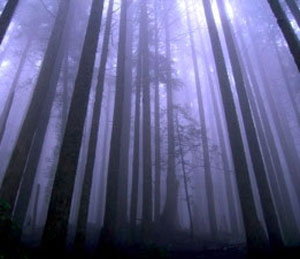
Foggy Dark Woods Forest

A new kind of war in the woods.

Related

A powerful body in Washington D.C. is about make a decision about green labelling that will have sweeping impacts for Canadian wood producers and for those who have spent years working to define the best practices for environmentally approved forestry.

Much more Canadian timber could be hammered into environmentally friendly buildings throughout North America if the U.S. Green Building Council (USGBC) approves newly drafted rules under which wood products are accepted into its Leadership in Energy and Environmental Design (LEED) green building programs.

But the Forest Stewardship Council and its allies in the environmental community charge that the proposed LEED standards would allow status-quo forestry to be called "green," and warn that looser LEED rules would decimate the sapling marketplace for wood produced under ecologically sensitive conditions.

"There are big stakes here, and the repercussions will spread across the forest products industry for years," said Corey Brinkema, president of the American branch of the multi-national Forest Stewardship Council (FSC).

"If the current draft is passed without modification, it is possible that barely-legal forestry would be green-washed by industry and accepted into the LEED program," Brinkema told The Tyee in an interview. "It would be a major blow to FSC [and] a major black eye for the USGBC."

The rival Sustainable Forestry Initiative and its allies in the timber industry return fire with the charge that the new rules would not loosen LEED enough, and warn that the Forest Stewardship Council's de facto monopoly within LEED requires North American builders to use FSC wood from countries such as Russia or Sweden -- at the expense of U.S. or Canadian-grown timber.

"This position should not be taken lightly," said Kathy Abusow, president and CEO of the Washington D.C.-based Sustainable Forestry Initiative (SFI).

"If the USGBC maintains the status quo and does not recognize the SFI Standard, many LEED builders who chase points will turn away reputable third-party certified SFI wood which is grown in their backyard... and instead turn to FSC wood," Abusow said in a prepared statement. "The vast majority of the FSC's global supply comes from overseas and often from countries without effective social laws."

The pending LEED decision will not only redefine green forestry, but also stands to reshape both Canada's sprawling forest products industry and its booming green building sector. Within British Columbia, the LEED determination stands to influence signature projects as diverse as the North Coast's remote Great Bear Rainforest, which is predicated on the financial viability of FSC-style eco-forestry, and Vancouver's high-profile Olympic Athletes Village, which has a resale value based in part on its LEED certification as the greenest neighbourhood in the world.

The Tyee will endeavour to unravel this acronym-packed conflict over the next five days as part of our occasional series entitled "How Green Is Your Wood?" Today: How the war of the woods came to town.

Environmentalists launch FSC

The seeds of this thicket were planted almost two decades ago, when the war of the woods crept from the forest floor to the Home Depot aisle.

Public concern for the environment rose through the late 1980s and crested at the United Nations' 1992 Earth Summit in Rio de Janeiro. But the UN's failure to secure significant binding agreements among governments caused many of the summit's more than 17,000 non-governmental observers to leave Brazil feeling frustrated. (Much like last year's post-Copenhagen ennui.)

Some returned to protest in their own backyards. The 1993 logging blockades in Clayoqout Sound attracted more than 12,000 protestors and remain the largest act of peaceful civil disobedience in Canadian history.

Others sought to reform the marketplace. So while the Clayoqout protestors were shouting for an international boycott of MacMillan Bloedel and related companies, a new group emerged and whispered "buy this wood instead." The Forest Stewardship Council was founded in Toronto in the fall of 1993.

The first FSC assembly included 130 participants from 26 nations. They created an multinational family of not-for-profit organizations committed to three activities: drafting rules to define how environmentally friendly wood should be grown and cut, hiring auditors to verify that the rules are followed, and creating a consumer label to certify the resulting wood products.

The Forest Stewardship Council grew, and FSC now certifies wood from more than 123 million hectares of forest in 82 countries. Some 35 million of those FSC-certified hectares are in Canada, accounting for about 28 per cent of FSC's global land base. All told, about one out of every four hectares of certified forest in Canada is FSC certified.

USGBC creates LEED building standards

Consumers responded readily to the FSC's forest-friendly label, in much the same way they responded to organic food and other environmentally friendly home products. Major mail-order firms such as LL Bean and Victoria's Secret now print their catalogs on FSC-certified paper, while Home Depot has become the largest seller of FSC-certified wood products.

But consumers don't really buy much wood. Rather, the lion's share of lumber is bought by builders, who tend to choose low price over low impact. As fate would have it, however, there was yet another environmentally minded organization launched during the year of the big Clayoqout logging blockades -- the non-profit U.S. Green Building Council.

The USGBC works to promote environmental sustainability through its LEED standards, which rate how buildings are designed, built and operated. And when the USGBC first drafted its forestry standards in the 1990s, it borrowed heavily from the work of the like-minded Forest Stewardship Council. As a result, FSC-certified wood was -- and still is -- the only wood recognized under the LEED system, causing a de facto monopoly that is credited with expanding the market for FSC-certified wood products.

Green building grew slowly. Years passed before LEED certified its first buildings. But today there are 4,890 LEED-certified buildings and more than 27,359 LEED-registered projects, comprising more than 8.8 billion square feet of construction.

Likewise, while green building represented just two per cent of the construction market in 2005, it is projected to grow to a quarter of all commercial and institutional building starts and 20 per cent of the value of residential starts by 2013.

That adds up to a U.S. green building sector soon be worth more than $80 billion a year.

Forest industry responds with SFI

And that $80-billion-a-year market remains off limits to the more than three-quarters of Canadian forest that is not FSC-certified.

That's a problem for the conventional forest products industry -- both in Canada, which is the world's largest exporter of forest products, and in the U.S., which is both the largest consumer of Canadian forest products and as a major producer in its own right.

The American Forest and Paper Association (AFPA) responded to the creation of FSC in 1994 with the program that came to be called the Sustainable Forestry Initiative. The U.S. trade association spent six years working to persuade the public that its consumer label was just as green as that offered by FSC, but the AFPA-run version of the SFI label was not widely perceived as objective.

In the fall of 2000 -- the same year the LEED standards were introduced -- the AFPA spun off SFI into the hands of a new not-for-profit corporation run by a large board of directors. The new SFI hired an aggressive new leader who strengthened the organization's forestry standards and significantly expanded its land base. And the Sustainable Forestry Initiative now represents more than 75 million hectares certified to its standards in North America -- with more than 40 million of those in Canada -- making SFI the largest forest certifier in the world.

The Washington D.C.-based SFI also boosted its budget from about a half-million U.S. dollars a year mid-decade (a total roughly equal to what FSC spends in the U.S.) to $5.3 million in 2007 and $6.3 million in 2008 according to its tax returns. Those public documents also show that SFI spent more than half its income on advertising in 2008 -- with payments of more than of $3.4 million to Chicago advertising agency Porter Novelli.

Like FSC, the non-profit SFI has met with considerable success among makers of consumer products. For example, the paper used to make 3M's popular Post-It Notes and the board used to make Tropicana juice cartons are now made from SFI-certified wood fibre.

But SFI has not yet been successful in persuading the U.S. Green Building Council to certify SFI wood products for credit in LEED-certified buildings.

Two tribes, two tactics

Since The Tyee last reported on this battle, the combat has spilled into venues unimaginable during 1993's "Summer of Protest." But the tribal nature of the battle lines has not changed. For while warriors on both sides of this struggle readily admit to not fully understanding the complex technical issues on which this conflict is waged, most environmental groups remain predominately aligned with the Forest Stewardship Council while most of the industry side is aligned with the Sustainable Forestry Initiative.

In September of 2009, lawyers representing the environmental group ForestEthics filed complaints with the U.S. Federal Trade Commission and the U.S. Internal Revenue Service in which they accused the SFI of deceptive practices that amount to greenwashing. They also challenged the legitimacy of SFI's tax status as a public charity.

"The Forest Stewardship Council was put in a position -- with the LEED decision and SFI's ramping up -- of having to make a decision," said Seattle attorney Peter Goldman, who represents ForestEthics. "Were they just going to sit back and let SFI claim the green mantle? Were they going to watch SFI position themselves as an equal player in the paper and lumber market? Or was FSC going to do something about it?"

In October of 2009, lawyers for a group called the Coalition for Fair Forest Certification retaliated with their own trade commission complaint, in which the FSC stood accused of allowing sub-standard wood slip into the U.S. from other countries. They also accused both FSC and the USGBC of engaging in anti-competitive practices.

These administrative complaints are warning shots fired across the bow of the U.S. Green Building Council, which is collecting public comment on its proposed new rules for the use of green wood in LEED buildings until March 14. And both complaints are likely precursors to legal action.

"We believe the USGBC and FSC are engaged in anti-competitive behaviour that violates both trade law and the Sherman Act," said Tom Collier, a Washington D.C. attorney representing the SFI-allied coalition.

"North American timber is being forced out of the green marketplace. And timber from foreign countries is being sold here when there is no meaningful difference in how that timber is grown," Collier told The Tyee.

Goldman, the lawyer for the FSC-allied group, set the stakes even higher.

"This is our opportunity to draw a line and say, 'Look, if you're not really green, then you can't say you're green," Goldman told The Tyee.

"If we allow them to do this, there will never be a green building marketplace," Goldman said. "Because everybody's products will qualify. So there will be no such thing as consumers paying more for something green. The concept will just never take hold."

Tomorrow: The trade complaint against FSI.  [Tyee]

14  Comments:

Login or register to post comments

  • AlgonquinPark

    3 years ago

    A badly researched article devoid of facts

    The author of this poorly researched article omits mention that Canada has the largest amount of certified wood in the world, the oldest national forest standard, that 94% of producing Canadian forestland is public and subject to the laws passed by democratically-elected governments. He does not mention that LEED itself is based upon a 1996 CSA standard whose original reference was the CSA’s sustainable forest management standard, or that the original LEED Canada rating system granted full equivalency to both the FSC and the CSA standard. In particular, he omits that drafters of the USGBC references to FSC were in a position of conflict because they were at the same time managing the US initiative to introduce the FSC to that country.

    Readers should also note – in particular – that neither the USGBC or the FSC are standards writing bodies, so that it is impossible to incorporate their documents into legislation or codes.

    The charge that was given the USGBC committee that has reviewed its certified wood credit was tainted from the outset because the USGBC rejected a consensus process. It hired consultants that did not include a practising architect, engineer, forester, or individual with project management, construction management or standards writing experience. As a consequence, their report was nothing more than a literature review. The USGBC has also withheld all of its internal information on the amount of FSC certified wood that reaches its projects.

    I am a member of the CaGBC (and prior to its creation of the USGBC). As a Canadian, I must also observe that the arguments of those who want to maintain the status-quo - "FSC vs. SFI" - have been framed in such a way as to ignore the certification standards of the CSA and the American Tree Farm System (ATFS). FSC supporters are afraid that the CSA and ATFS sustainable forest management standards - which are older and more thorough than FSC - will gain acceptance. They have also co-operated with US forest industry members of the coalition that seek to place restrictions on Canadian softwood exports.

    The USGBC certified wood review has been gamed from the outset by special interests and self-dealing, and has become a foot-dragging exercise. In the meantime, we in Canada now sit on a sea of wood certified by the CSA, FSC and SFI, but ironically on LEED projects there is almost no attempt to obtain the certified wood credit. Essentially, like most of the material resource credits, design teams can't be bothered and grab for other credits instead. (By the way, the much larger problem in Canada is that 60% of LEED registered projects are not proceeding to certification and the CaGBC hasn't figured out how to make them go away).

    If the USGBC were really smart, it would just change its requirement for 50% FSC certified wood to 100%, but accept ATFS, CSA, FSC and SFI certification. This would create real incentives to certify forestlands and expand the certification pie.

  • Swifter

    3 years ago

    Eco Bullying

    One thing that some people never think about is that most(almost 90%)of the construction lumber manufactured in BC(2x4,2x6,etc) comes from the Interior of the province,not the Coast.
    Most of the lumber sawn at Coastal sawmills is used for finishing the inside or outside of buildings with high grade,high value wood,not the building the "guts" where most of the cheaper construction grade lumber is used.
    It is misleading to use the "Great Bear" Mid Coast or any of the Old Growth watersheds on the West Coast as examples of where lots of construction lumber comes from. Go by any job site in the Lower Mainland and you will be hard pressed to find any Old Growth Costal Lumber used for framing. You'll find it used in the doors,trim,siding.shingles and a few beams,but not buried under the gyproc where 90% of construction grade lumber is.
    What's more sexy to sell rich urban dwellers who support your( insert any enviro group) cause, big old growth groves with moss and ferns all over, or dry,red,dead trees in Williams Lake?

  • Fiat lux

    3 years ago

    Come out to Big Lake and you

    Come out to Big Lake and you can find several woodlot holders operating under the highest degree of sustainable logging certification.

    The problem is that nobody gives a damn when they sell their logs to the mills of how they were logged.

    The biggest damage is caused by the collectivization of mills in the hands of about a half dozen companies province wide, whose only interests are profits, regardless of the damages they cause, enforced by governments in the pockets of big business.

    30 years ago there were hundreds of small mills all over BC, now only a very small, probably single percentage number remain. I'm buying my lumber from my friend and neighbour Rod Krimmer with the highest certification and his own mill,

    A couple of guys can make a good living with a minimum investment, small mill from about 50 loads of logs per year, but the large, automated mills use up to 500 loads per worker, per year.

    How in hell can you make this sick economic system that dictates and survives on destruction, sustainable ?

    Ed Deak, Big Lake

  • Takuan

    3 years ago

    apres moi, le deluge

    apres moi, le deluge

  • ryder

    3 years ago

    Hoping for some honest reporting

    I sure hope Monte Paulsen does better than the eco-babble Christopher Pollen gave us in his opinon pieces about certification last June. While I doubt the stakes are as high as the intro would have you believe, this is definitely an intriguing topic. Unfortunately, the reports I've seen just repeat the same old tired stuff – and most reporters, like Pollen, show no interest in fairness or balance. I ’ll bet a little deeper research would unearth lots of interesting angles. Call me naïve, but I am willing to give the Tyee another chance. I used to be fan, and would love to be one again. Go ahead, Monte, let’s see what you can unearth.

  • Dynamo

    3 years ago

    Forest Stewardship Council can't compete?

    Corey Brinkema says about the new LEED rules "If the current draft is passed without modification...[i]t would be a major blow to FSC..." Is he suggesting Forest Stewardship Council can't stand its own without favours and protection from its U.S. Green Building Council sugar daddy?

  • Luck

    3 years ago

    BC Forests and Leeds

    We do not need a british certification group telling BC what to do.

    We are not in the EU and never will be.

    This is our Forests and We are sovereign. Listen to our national anthem.

    If ever we needed Cnadian governments all levels to step up to the plate it is now.

    We need unions and FSC and people of BC to stand up and say NO.

    This liberal and conservative Gov are selling us off for free.

    Lets write letters, hold back taxes and demonstrate and aay NO to this crap.

  • FWL Hill

    3 years ago

    Forest Stewardship Council is finally out of the closet

    I always suspected that ForestEthics was a front for the Forest Stewardship Council and Peter Goldman just confirmed it. Talking about the ForestEthics complaint to the U.S. Federal Trade Commission he admits that it was Forest Stewardship Council’s “decision”. Now we know who the power behind the throne is.

  • barney

    3 years ago

    Porter Novelli (1)

    Paulsen notes:

    SFI spent more than half its income on advertising in 2008 -- with payments of more than of $3.4 million to Chicago advertising agency Porter Novelli.

    Mega-PR firm Porter Novelli has a dubious reputation for shameless opportunism that manifests in the form of front groups (astroturf orgs), fake letter writing campaigns, interference in democratic elections abroad - a company that loves to play both sides of the fence. The list is long, here's a sample:

    PR Week gave its "Public Affairs Campaign of the Year 2007" award to the Porter Novelli firm and the Abundant Forests Alliance, a front group for the "wood and paper products industry." The campaign was launched in response to "environmental activist" efforts to "change the foresting industry's procurement practices." The campaign's goal was to convince "college-educated women ages 35 to 54 with children" that the logging industry is "encouraging recycling and other environmentally responsible practices." The $10 million "multifaceted campaign" included a children's book by The Rolling Stones' Chuck Leavell titled, "The Tree Farmer," a television satellite media tour, Earth Day and Arbor Day events, and "environmental grant programs" in Dallas and Los Angeles, developed in conjunction with Project Learning Tree. In addition, "lifestyle expert" Katie Brown and "paper artist" Lynette Young promoted "the use of wood and paper in homemade gifts," including through "scrapbooking demonstrations at 500 Wal-Marts around the country." (PR Watch, http://www.prwatch.org/node/5874)

    (continued next message)

  • barney

    3 years ago

    Porter Novelli (2)

    Consider the following:

    "Missions that might be considered conflicting are not new for Porter Novelli, "a PR firm that has worked for both the National Institute on Alcohol Abuse and Alcoholism and for Guinness stout and Johnnie Walker Scotch." But Porter Novelli's $2.5 million contract with the U.S. Department of Agriculture to update the food guide pyramid concerns some. "You have a company on one hand pushing McDonald's or almonds or whatever, and on the other providing objective advice on government nutrition programs," said the director of the Center for Science in the Public Interest. The New York Times reported that "several former or current Porter Novelli clients," including Campbell Soup and Dole, "offered formal comment on the guidelines and the new icon." Co-founder William Novelli said the firm's combination of private and government accounts "benefits both clients. Consumers are not purists." (PR Watch, http://www.prwatch.org/node/3591)

    And this:

    The pharmaceutical industry-funded front group Center for Medicine in the Public Interest (CMPI) is helping its corporate funders fight health care reform by disseminating misinformation and orchestrating campaigns to generate fear about health care reform. CMPI arose out of the Pacific Research Institute, a corporate front group that worked with Philip Morris in the past to fabricate academic support for the tobacco industry. CMPI has been sponsoring anti-Obama Tea Party protests, producing attack ads against health care reform and creating Web sites that feature "horror stories" about citizens in countries that offer universal health care. CMPI is headed by Peter Pitts, the head of global health care for the international corporate public relations firm Porter Novelli, which specializes in helping drug companies evade FDA marketing restrictions by using stealth marketing techniques, like creating fake, unbranded "public service ads" nominally to raise awareness of diseases, but that really drive people to drug-company funded Web sites that advertise drugs.

    This is a firm that specializes in making irresponsible behavior appear socially responsible. It therefore doesn't surprise me that SFI is using this firm to spin its 'green' forestry message.

  • barney

    3 years ago

    Citation for above...

    Oops, here's the citation for the last excerpt: http://www.prwatch.org/node/8703

    A quick search of this firm in SourceWatch and PR Watch reveals a long list of such PR antics.

  • Terrys_Hot

    3 years ago

    BC and Federal Governments

    As an unemployed forestry worker have been selling out too the americans for so long that it is pasted a job they export our logs for next to nothing they export or hydro for nothing everything that goes across the border and all we get are the NAFTA agreement that is stickly for the americans too enjoy we got nothing in return it is about time that we kicked these two government bodies out and administered the only trade agreement that the americans know and that is no trading with them go to another place and trade then watch the americans cry the blues that it isnt' fair well nothing they do is fair either.

  • edh

    3 years ago

    When will the last tree be cut down?

    A hundred years ago there may have been hundreds of lumber mills operating in BC but they were combined only cutting a small fraction of what is possible today with only 8 or 10 mills.
    I like tree's. They seem to like me. I think we should keep them alive.
    We should not expect to employ thousands of workers in the lumber industry as we have in the past, modern methods make it unnecessary.

  • The Marmot

    3 years ago

    LEED

    The FSC has certified forests in 82 countries around the world. But the FSC has completed the development and approval of forest management standards in only 16 of these 82 countries. Only 69% of the area of FSC certified forests are in the countries with FSC approved standards. The FSC diplomatically terms the standards used in the other 66 countries where it operates "interim" standards. Some may be standards in the process of development by FSC sponsored committees, but others may be 'standards' developed for the purposes of that project by the FSC auditors.

    Certification to draft or 'interim' standards is an astonishing departure from internationally recognized standardization practice. When carried out on such a large scale it must be part of FSC policy. It is certainly not an unplanned event.
    The FSC proclaims itself to be the "Gold Standard". Perhaps this 'gold' should be taken to the Asseyors Office in Barkersville, BC for testing.

    The CSA SFM standard CAN CSA Z809 is a National Standard of Canada. It has been developed by a multi-interest technical committee working under the aegis of the Canadian Standards Association (CSA). The CSA is a national Standards Development Organization accredited by the Standards Council of Canada.
    78 million ha of forest in Canada has been certified to the requirements of the CSA SFM standard. This is approximately 47% of the total of 148 million ha of certified forest in Canada, approx. 32% has been certified to SFI and approx. 20% to FSC.
    So, 78 million ha of forest certified to a National Standard of Canada gets not even a mention by the researchers of the TYEE. Why? I guess Admiral Horatio Nelson is once again on the "poop" deck with his telescope fixed firmly to the blind eye. Mind you Nelson is a revered national hero. Unlike some others who have a blind eye.

    The Marmot

    • The discussion for this story is closed. No more comments can be added.