Mediacheck

The Power of Twitter

And Facebook and Unconferences, too. Social media's amazing tools for positive action.

By Steve Anderson, 21 May 2009, TheTyee.ca

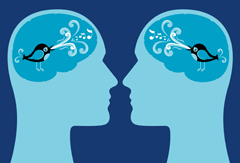
poweroftwitter.png

'A return to a pre-print, oral culture.'

Social media tools like Facebook and Twitter are all the rage these days. We often hear about social media's incredible potential or conversely, its lack of relevance compared to traditional media.

But what exactly is "social media"?

Social media is a term used to describe the web-based tools, applications, spaces, and practices that people use to interact with each other and share information online. For example, social networks like Facebook, Twitter, and MySpace provide online tools that can be used for sharing media and engaging in online conversations, while also providing users with online personal space that forms a repository of shared content and social interactions.

Social media is highly participatory, unlike most traditional (offline) media. With traditional media like television, audience members are passive participants, consuming content that is produced by others. In stark contrast, online social media represent something of a return to a pre-print oral culture -- more of an ongoing dialogue than a form of production and consumption -- in the form of commentary, anecdotes, and shared stories (in audio, video and text forms). Through social media, the means of communicating and producing social meaning, narratives, and values have been returned to what citizen media commentator Dan Gillmor calls "the people formerly known as the audience."

Canadians love Facebook

Canada has a remarkably vibrant social media community. According to cyberlawyer Michael Geist, we have the second highest per capita usage of Facebook in the world. Our cities are also stacked with revered social media innovators and well-followed media and technology commentators, many of whom reach thousands or more people with just the stroke of a key.

Most importantly, the use of social media enables the large portion of society that has access to its tools to connect with endless numbers of people, and in real time. Social media facilitates the mobilization of people who are able to unite under common fronts via their cell phone or computer. The remarkable movement for fair copyright legislation in Canada -- the result of an uprising of concerned Internet users -- is testament to its power. The 1.5 million American citizens who lobbied politicians in 2007, demanding an open Internet, is another example of how these tools can be used to mobilize for social change.

Please attend the 'unconference'

Social media use is also enabling a plethora of offline meet-ups, collaborations, and events. Many of these face-to-face or "real world" activities are in part inspired by and infused with the collaborative practices and values associated with social media. Unconferences, for instance, are a new form of radically democratic conferences inspired by open-source software development processes.

Many conferences revolving around technology or media issues are now set up as "unconferences", where participants direct the conference through a combination of online chat/wiki technologies and face-to-face interactions. For example, BarCamp is a series of technology-focused unconferences formatted as an "ad-hoc gathering born from the desire for people to share and learn in an open environment."

These unconferences share an element of online social media practices like distributed decision making, and apply it to offline activities. BarCamp co-founder Ryan King "figured there was much more expertise in the audience than there possibly could be onstage." New media commentator Kate Milberry notes, "if users actualize values of cooperation, collaboration, voluntarism, sharing and trust in their social interactions online, this surely has implications for social engagement offline."

Power for social change outweighs negatives

Social media comprise an important toolkit for social change, with huge potential for reinvigorating local communities and opening up government. For example, this year a new set of autonomous local conferences called ChangeCamp are underway, where citizens and government workers gather to address the question: "How do we re-imagine government and citizenship in the age of participation?"

There are valid concerns about Internet usage, the digital divide, and the social surveillance undertaken by the owners of commercial social media platforms. But with current economic, political, and ecological challenges in mind, the social experiments enabled by social media are more than necessary, and potentially critical to finding our way through these challenges.

Related Tyee stories:

 [Tyee]

9  Comments:

Login or register to post comments

  • VivianLea Doubt

    2 years ago

    nice quote

    "if users actualize values of cooperation, collaboration, voluntarism, sharing and trust in their social interactions online, this surely has implications for social engagement offline."

    Fun to imagine the possibilities here...

  • shabbaranks

    2 years ago

    Time to Flex

    Hyperbole.

    This article suffers from the same technological deterministic attitude that accompanies almost all discussions of these new medias.

    Social media is not inherently "radically democratic". The USER needs to make it useful to that step. This hasn't happened and will continue not to happen.

    The claim that the new media has changed the model of the audience as content consumers to content producers is a possibility, but not a reality. I don't see a swell of user-generated content, I see a trickle. Using the participants at these unconferences and "camps" (why do we insist on adopting the "cool" language of these insiders?) is a poor example as they are a small group that actually desires to partake - or, they are not representative of most of us.

    Most of us want to watch. I don't want to learn video editing and upload clever parodies to Youtube - I want to watch someone else do it. Someone with drive, talent, desire and skill. I've seen numerous blogs, twitter accounts and the like that start with a flood of content, and then eve3ntually trail off into a few "Sorry I haven't updated in a while" and other "I'm not keeping up my end of the content production bargain" excuses.

    Being an active, participatory member takes work. there's a reason so many of these bloggers and social media experts are "consultants" and don't work a regular job - they are spending all their time creating content. Most of us don't have this luxury.

    Sorry for the negative tone, but there is a complete lack of the critical side of these developments. We never question the claims that were made in the past and never question the reality that even though technology changes, people don't.

    What has a Facebook group, online petition or "Youtube" phenomenon ever actually accomplished?

    Don't get me wrong, I think open source development, user generated content and the like are all very progressive and positive, but we need to put the brakes on what we expect them to do.

  • PatrickMcEvoyHalston

    2 years ago

    Helpful feedback,

    Helpful feedback, shabbaranks. Thanks.

  • shabbaranks

    2 years ago

    An alternate argument

    I think Twitter pages do a better job arguing against it than I ever could:

    It's quickly commodified: http://twitter.com/StockMarketNews

    Most of us have nothing to say (but we say it anyway): http://twitter.com/LauraRooney82

  • VivianLea Doubt

    2 years ago

    very quickly comodified, no doubt

    I would have to agree with you that social media is not "radically democratic", but I would disagree about content; there is indeed a massive flood of content of all kinds, so much so that sorting it is difficult...and I think that many of us are surrounding ourselves with content that is just like all the rest of what we read/view/listen to. On the other hand, you are posting here, Shabbaranks - and you have provided us with another view. And in whatever way you want to characterize it - we are interacting, which has to mean something in contrast to passively taking in.

    I am coming to see "social media" in a very different way this past year or so...I won't bore you with the details of that. However, I create a lot of content, and I am happy about that, in contrast, say, to watching television.

    "Being an active, participatory member takes work." Indeed...and being an active, participatory human takes work. If "social media" help some of us to do that, there is a rather magnificent potential there.

  • VivianLea Doubt

    2 years ago

    and now

    you have me thinking of the inanities I just posted on my Facebook wall... that, and the fact that I apparently can't spell...

  • Steve Anderson

    2 years ago

    feedback

    shabbaranks, thanks for your feed back.

    I should say my original title was "What is social Media". I mention that because this is a short introduction of what social media is,not a detailed analysis. I note briefly at the end that it is not without its complications, but did not have space to detail these. I hope to do so in a later column.

    I should say the piece is hardly technology deterministic. It is talking about technology as a tool that alters and is altered by social practices.

    I didn't say all social media is inherently radically democratic. I said some of the practices it inspires are.

    My experience of camps and unconferences does not match up with your comments.

    I agree that it takes work to participate, and I want to write about this in the future. Although, it taking work is necessary, and not a bad thing. However, it does also mean that it is not accessible to those who do not have the energy/time to do that work. It's a valid point and I plan to return to it at some point.

    There are plenty of examples of success in using social media as a tool for activism. I've listed a couple in the column.

  • DSB

    2 years ago

    I'm with you, shabbaranks

    I just read an article by The Tyee that criticized Vancouver Sun reporter, Jeff Lee, for writing an article for The Olympic Review where he should be an unbiased reporter.

    And now we read an article in the The Tyee by a campaign manager for "democratic media." How could this article be anything else BUT a piece of campaign collateral?

    Shabbaranks, I think you're correct. We've gotten a little hog wild with our enthusiasm for the Internet, but it will be difficult to get a critique of it from an Internet magazine.

  • Steve Anderson

    2 years ago

    really?

    DSB, what campaign exactly is this collateral for?

    • The discussion for this story is closed. No more comments can be added.