
Life

A Tyee Series

Getting Canned

The 100-Mile dieters stock up, and wish for a legion of grandmas.

By J.B. MacKinnon and Alisa Smith, 29 Sep 2005, TheTyee.ca

Canned

If the advocates of a raw-food diet are correct, Alisa and I will be dead by Groundhog's Day. Our 100-Mile Diet experiment in local eating doesn't offer a lot of fresh greens in January, a fact that is only now beginning to sink in. We've been dining on the horn of plenty for months, sometimes actually rubbing our friend's noses in just how bohemian a lifestyle we're leading. Now we see the storm clouds on the horizon. Even in Vancouver, the Canadian winter is long.

So: the house is filling with food. Not to mention the odours of food.

"No more sauerkraut," says Alisa, drawing a line in the sand. I look at her with disbelief. Ten days earlier, I had spent a night slicing cabbage until I'd raised a blister on my chopping hand, then gently tamping the salted slivers into a crock. Now we are eating the finished product, tender ribbons with a buttery richness totally unlike the store-bought version. I had just declared myself King of Sauerkraut, was imagining my fame, planning my empire….

Of course, I'd also been away much of the week that the sauerkraut ripened. It was Alisa who endured the growing cloud of fruit flies, the different shades of mold, the whiffs of a stink like sour meat. "It's hard to enjoy it knowing where it's come from," she says, moving the stuff around her plate with her fork.

Preservation society

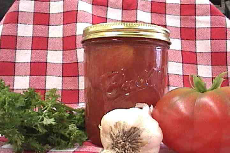
Autumn, it turns out, is exhausting. Like most people raised since 1960, Alisa and I have never spent a lot of time preserving or storing food. A little jam every once in a while. Now, every corner of the apartment is at work. On a recent weekend we had hot peppers and sunflower heads drying on the balcony, herbs drying in a closet, 45 pounds of tomatoes waiting to be canned, onions curing in my clothes cabinet, two enormous salmon to be cut into steaks, and spinach, cauliflower, carrots, collards, Brussels sprouts, basil and edamame waiting to be blanched and frozen. Ah, and a second cabbage ready for the crock.

Preparing for a 100-Mile winter is like adding a part-time job to our full-time lives. Like most Vancouverites, we're stupidly overscheduled most of the time. Adding hours of gleaning and canning to our days has more than once pushed us into the wee hours of the morning. "Sometime in the winter, this will all pay off," says Alisa like a mantra. "We won't have to buy any food; we won't have to cook any food." In the meantime, though, tempers flare as midnight ticks past and there are still 48 ears of corn to husk, blanch and cut into niblets for freezing.

We are beginning to realize that a 100-Mile Diet doesn't only hint at a more ecologically sustainable way to eat and drink. It also points to a deeper shift-an actual change in life patterns.

Not that all this harvest-moon hard labour is nothing but misery. There is, to begin with, something about acts of self-sufficiency that seems to please the Paleolithic mind. More directly, my inner miser does a dance every time we score yet another sweet deal on a bulk-load of local food. Twenty-five pounds of long-keeping organic onions for a buck a pound. Fantastic organic corn from Surrey, $44 for nearly 200 big ears that changed all our day's (and night's) plans when we learned that corn's taste and nutrition crash rapidly unless it is frozen the day that it's picked. Two dozen meals' worth of coho for less than $50 on a handshake with the Ladner fisherman who caught them . . . U-pick organic tomatoes, 75 cents a pound and they threw in a watermelon and cantaloupe . . . organic blueberries for $2 a pound from a small Vietnamese Buddhist temple where they fed us grapes for free.

That final visit was a particularly telling one. We stopped for the blueberries (we spotted the hand-painted sign in South Burnaby while driving farm-friendly backroads) and ended up leaving with fresh ideas on our minds. Hanging from a trellis alongside the berries was a kind of long, tromboning squash I'd never seen before. All I can say is that in Vietnamese, it is pronounced something like "wach"-and that the woman wouldn't sell me one because it was all for use in the temple.

It was a reminder that what most of us think of as "local food" is just beginning to be explored. British Columbia's development over the past three hundred years has been dominated by European influence to the point that the most familiar market vegetables are like the ingredients for a good German Eintopf (literally "one pot") soup. Trolling the farmgate gardens of South Burnaby or buying from the Maya Demonstration Garden Project, we encountered a much different homegrown cuisine, loaded with chois, fuzzy melon, chayote squash, mo gua, yerba mora, amaranth, Asian mustards, Andean radishes, and some (for me) unpronounceable green that instantly thickens a broth. All of these foods, and many others, grow perfectly well in British Columbia.

World of choice?

With star fruit and durian now available at the mega-mart, it is easy to believe that turbo-capitalist globalization is the best -- perhaps the only -- way to diversify what we put on our plates. In fact, these forces have tended to diminish our collective food culture. According to Edward O. Wilson, the man often called the world's greatest living biologist, some 7,000 species of plant are known to have been used by different human societies throughout history. Today, just 20 species provide 90 percent of the world's food. In his book The Diversity of Life, Wilson points to fruit as the greatest illustration of a "pattern of underutilization." About a dozen familiar species dominate the northern market and have been heavily adopted in tropical regions as well. Meanwhile, some 200 additional species are currently cultivated or collected in the tropics, and at least 3,000 others are waiting to be put into use. All told, at least 30,000 plant species are known to have edible parts.

Keep those figures in mind the next time you shop the "plentiful" aisles of your local globalized grocery.

Will we ever have mass markets for 30,000 plant foods? It's unlikely, if not impossible. That sort of diversity only makes sense at the small-scale, family or community farm and garden level. Moreover, it requires a profound awareness of place and accumulation of autochthonous knowledge.

Which brings me back to this idea of a deeper kind of shift. Facing the challenge of winter, I'm reminded above all that a 100-Mile Diet demands a 100-Mile Culture. Despite the National Center for Home Food Preservation website, the internet community isn't enough. I want to share the load -- to sit around drinking and talking with friends, all of us shucking corn or peeling boiled tomatoes. I read with envy about the community canning kitchens that were common during World War Two. I find myself wishing for a legion of grandmas to teach me the tricks that have fallen from the modern radar. I want everyone to be doing this, so that we could come to a simple agreement: It's harvest season. The world is going to have to grind to a halt while we fill up the freezer and smoke the fish. And that smell that's filling every apartment in town? That would be the sauerkraut.

Alisa Smith and J.B. MacKinnon will be writing twice a month for The Tyee about their attempt to eat well on the 100-Mile Diet. For more information on finding locally produced food visit the web site of FarmFolk/CityFolk.

Read the whole 100-Mile Diet Series.  [Tyee]

21  Comments:

Login or register to post comments

  • Cycling Commuter

    6 years ago

    Comments on "Getting Canned"

    My goal is a 100% back yard diet. It's great to have tomatoes, green beans, potatoes, onions, blackberries, apples, plums etc. growing a few steps away. I'm currently working on building a large greenhouse/solarium on the south side of the house and the roof of the house to grow a variety of fresh foods on-site year-round. This should reduce the need for preserving food.

    One key to making all this practical is to use reliable, low-cost automation techniques to take care of the tedious, time-consuming aspects of small-scale agriculture. It's not realistic to expect that people will willingly give up their cushy office jobs, go back to backbreaking dawn to dusk farm work, then stick with it year after year. The challenge is to adapt for residential use some of the techniques used by mega greenhouses. My experience in industrial automation equipment research and development is proving to be useful in this small-scale agricultural automation project.

    Another critical piece of the puzzle is to combine extremely efficient insulation and waste heat recovery techniques with a heat flywheel approach to store lots of summer afternoon ambient heat and slowly release it when needed during cold winter nights.

    With adequate imagination and effort, this approach can be made practical and reliable enough so that eventually it'll be considered a basic human right for everyone on the face of the planet to own a small home with attached automated food growing machine, solar heating and some solar electric panels. Connections to wind turbine grids can provide extra electricity for secondary needs such as transportation. Now that's a REAL security scenario. When everyone can have the basics at their fingertips and directly own the means of production, it reduces the likelihood of desperate groups of people trying to steal the basics from each other.

    Some people seem to think the ultimate form of security consists of everyone receiving colourful little pieces of paper from the government every month. But you can't eat those pieces of paper. They won't keep you warm for very long. More pieces of paper chasing oil-based food, heat and transportation will simply hasten oil depletion. If alternate systems are not in place by the time the oil runs out, things will get very ugly.

  • skeptikool

    6 years ago

    Another excellent article. And a great post, Cycling Commuter. We are certainly both in the same corner.

    If you're not vegetarian, it's suggested that a few rabbits in a small greenhouse will provide adequate heating to advance your growing season.

    After tasting mo qua at the local Asian food court I had to buy some from the vegetable stands. I don't know whether it grows locally, but I've kept seeds to give it a try.

    For me, being gouged at the pumps has its upside. As I cycle around, over the last three months I haven't had to buy a potato (dropped by trucks) have put up three dozen jars of fruit compote (all free) and, since I start my cycling at 5.30am, it's a rare day that I don't pick up a dollar's worth of empties.

    On those photovoltaic panels, CC, with the increasing interest in hybrids (even trains) I look at the potential for tractor trailers with that huge expanse of roof above the trailers and cab to reduce the diesel fuel component.

  • akk

    6 years ago

    Hey--if you're looking to bond with others while canning and shucking, maybe look into either Vancouver Community Kitchens communitykitchens.ca or the Vancouver branch of the Slow Food Movement slowfoodvancouver.com I bet you could find some interest there.

  • chameleon

    6 years ago

    Great idea for a series! My partner and I recently went picking wild apples here in the Kootenays (on abandoned farmsteads) and canned up a storm--best damn applesauce I ever tasted! Makes supermarket apples taste like styrofoam by comparison.
    What we couldn't help noticing was how many people here have apple trees in their yards or acreages yet leave the fruit to fall and rot. Meanwhile, they dutifully get into the family van or SUV and trundle off to Safeway to pay up to $1.79 a pound for commercially grown apples. The brainwashing is clearly complete!
    Not only that, but according to the UN Food & Agriculture Organization, as much as 70% of the nutrition has been stripped from fruit and vegetables over the past century due to chemically intensive farming. Grain grown in 1900 was 90% protein; it's now only 19% protein. Even organically grown food is subject to this unless the land was not formerly used in commercial farming.
    But best of all, by growing and canning truly organic or wild foods, we avoid the looming plague of cancer. According to medical scientist Dr. Samuel Epstein, research overwhelmingly demonstrates the links between various man-made chemicals--from fire retardants used in everything from computers to living room furniture and food additives--and cancer. Thus, again, prevention is the best cure, not more drugs.
    Soon enough, when the oil economy collapses, we'll all be canning food--not as a lifestyle choice--but simply to survive.

  • skeptikool

    6 years ago

    I couldn't agree more with your views on the quality of apples, chameleon. Homegrown, wild and abandoned are best. And if you have to compete with the occasional maggot or worm, that's okay. They know what's best.

    The true crab apple, if you are lucky enough to find them, are great for jams and jellies because of their natural pectin.

    I find that in preserving, pears mixed with apples works well. If the pears are fully ripe very little, if any, sugar is needed.

    I'm looking at a mass of rosehips. Might try something with those this year.

  • scylla

    6 years ago

    If part of squirrelling your winter food supply involves the use of your freezer/frig, and there's a bit of the survivalist in your makeup, you might consider buying a small power generator to get you by if there's a power interruption, since a powerless freezer is at best good for three days if left unopened, and a frig even less.

    The cost of the generator could well be much less than the cost of the food at risk, not to mention going without the food, since all the store's food will be going bad, too.

  • yarrow

    6 years ago

    I recall my grandma and mother doing less and less canning and more and more freezing in the 60s. They added drying in the 70s. Beyond a freezer, do our heroes have a good root cellar for vegetables and apples?

    For January greens try sprouts -- maybe Westcoast Seeds in Delta has Hundred Mile Radish seeds.

    Anybody with a garden should check out Westcoast Seed's winter hardy vegetables -- kale and leeks can be pretty hardy, and there are great later winter/early spring cauliflowers and broccoli that can be producing before March in milder winters. The winter garden (you plant it July/August) can work in our rain.

  • Fiat lux

    6 years ago

    There's a great push all over the world, including here in Canada and BC, to wipe out small farms and replace them with multinational agribiz conglomerates to cover everything with chemicals and rake in the profits.

    There have been mass suicides of farmers in certain countries, as in India, where farmers have been pushed off the land. In China some 400 million are being planned to be forced into huge highrise complexes to get them off the land. I've seen photos of some. They're incredible and I would sooner be dead than exist in them, because it can not be called any kind of life.

    This is neoclassical market economy, to make people incompetent and totally reliant on big business for their daily survival, as it raises the GDP etc. etc. Meanwhile the prices are rising in the supermarkets every day. We do our very simple shopping twice a month and my wife, who knows all the prices by heart, calculates that our living costs, with all our organic meats, eggs and most of our vegetables grown by ourselves, goes up about $10. per month.

    As far preserving is concerned, we find freezing much preferable as it is easier, less work and the foods remain more natural. As we live in the boondocks, where we often have power interruptions, sometimes for days, we have a small, built in generator of 1800 W. we can start in a minute, which is enough to feed built in lights around the house, special sockets, 1 fridge, 3 large freezers, computer, TV, etc. small tools. Ed Deak, Big Lake.

  • scylla

    6 years ago

    One of the first things Bush & C0 did in Iraq was to order the destroying of all the stored seeds for the grains Iraqui farmers had developed over the millennia, make it illegal to possess them, and replace that traditional seed with the "new improved" GM seed developed by Monsanto & its clones.

    They're slowly working towards that goal here too,
    & the continuous shift to Corporate farming is making it easy to do.

  • skeptikool

    6 years ago

    Another hit on the Bush crime family. And another solid argument for canning.

  • skeptikool

    6 years ago

    Be daring. Having entered that dead zone might be a good time to go "off topic" - or slightly so.

    Today's front page of the Province concerns a car-thief with over 1,000 vehicles to his credit. He is currently cannedand is shortly expecting to be parolled.

    He was the one whose video-image was flashed around the world as he was caught stealing a bait-vehicle.

    Okay, let's give them fifty cars. You would think that after that, an extremely close watch would have been kept on the individual.

    In the video-clip heist he appears not to be wearing gloves. His fingerprints were on record. So what about those 950-plus vehicles.

    I'm concerned that there has been more interest in bureaucracy- building and, perhaps, other more-sinister motives, than in bringing car-thieves to justice.

    It might be interesting to consider who benefits and who loses.

    The losers are, those who don't want their vehicles stolen, those killed and injured with vehicles involved, all who pay increased auto insurance.

    The beneficiaries? The whole auto industry from sales, to parts, to bodyshops, loves car thieves. They also give auto-insurers justifcation for raised premiums. And let's not forget the windfall in taxes to government.

    There are other beneficiaries, but it may appear ghoulish to mention them.

  • BC Mary

    6 years ago

    Nice to see such a constructive discussion.

    Hasn't anybody adopted solar energy component, rather than back-up generators?

  • skeptikool

    6 years ago

    BC Mary,

    Quote:
    Hasn't anybody adopted solar energy component, rather than back-up generators?

    There are so many solutions, that we should not be even considering building more dams but taking some out of commission and reclaiming, as much as possible, the natural rivers and fertile valleys.

    Lighting, and very much in the home can be converted to 12-volt. Those units requiring greater power can be run from an inverter. This would require a substantial photovoltaic array plus solar water heating.

    LED lighting systems should assist much toward such a conversion plus, the hot water on-demand system much in use in Europe. One of our biggest wastes is keeping 30/40 gallon water near boiling.

  • Fiat lux

    6 years ago

    We've used solar panels and 12 volt lighting for 8 1/2 years. The problem is the huge batteries you have to have, which are very expensive, have relatively short lifespan and are polluting themselves.

    Also, you can not use any tools, household kitchen appliances, or make a living. When we first moved up here we didn't want to have any Hydro coming in, but found out that the generator we had to have to run our machinery and equipment to make a living with, cost far too much in money and pollution, plus had a limited use.

    Then when we had no sun, especially in the winters, when we needed lights from 3 pm on, we still had to have a small 12 volt generating system with a 3 hp gas engine clattering away for hours, polluting the air with noise and gases. So, after 8 1/2 years we had to admit that we were wrong and had Hydro come in.

    Of course, that was between 1979 and 87 and in the meantime the technology has improved, but 12 volts are still 12 volts and batteries are still batteries with a lot of lead and acid in them. I could go into great detail about our experience, but this should be enough as a rough picture. Ed Deak, Big Lake.

  • scylla

    6 years ago

    Thanks for that, Ed. For quite a while I was a solar booster, too. I found it's OK only when there's no alternative, otherwise it's just cutting off yer nose to spite yer face.

    Shortly before I arrived here, there were still some who had done their own generating and boy, did I get an earful when queried them re generating and storing your own power. Their experience was identical to that of Ed's.

    On top of that, besides the high per-watt cost of solar cells and batteries, it's still an environmentally zero-sum game when you factor in the power and materials used in producing them and the cost of production and purchase - which is financed by todays "cheap" fossil-fuels.

    But all that becomes irrelevant when you have no power, making generators a sensible last resort.

  • skeptikool

    6 years ago

    Fiat lux, scylla,

    I take issue with both of you.

    While it is desirable to remove oneself totally from the grid, initially one may be able only to reduce that dependence - just as hybrid vehicles are still needful of gasoline. (Unless driven at moderate speeds, on short trips and recharged from a wall-socket or solar panels or both)

    A large Vancouver house of mine had two suites.
    With solar water heating that I built and installed for less than $200, my Hydro bill was reduced by a third - even though the water tank remained connected to the grid.

    There are alternatives to lead-acid but, as with the solar panels, you will be punished for attempting to go green by artificially high prices. You really need to shop around to get past the unconscionable markups.

    If you doubt the punishment thing; A lottery
    offers a prize of that puddle-jumper, the SmartCar, or $25,000. Hell, it's little more than a motor cycle with a cab on it. Would I like one? Sure! But not until I'd haggled down to $10,000 incl. stripes and whitewalls.

    I recommend a book to you both The Sun Betrayed

    Sorry this got pushed to the side before I got back to you.

  • foggybottom

    6 years ago

    I am a farmer, I grow food for people.

    The first question that most people ask me is 'can you make a living being a farmer?'

    This question indicates that society as a whole is aware that the farm 'economy' is challenging.

    However the 'economic' problems are minor compared to the societal 'disconnection' that allows the question in the first place. -If farmer's can't make a living then who is going to manage the nurturing relationship between the earth and society, surely the question should be more relevant to the survival of non-farmers before farmers.

    My answer is this, in current economic terms my farm is not viable. [so if you define 'making a living', as making money then I'm dead, -but then so are you] However if you allow yourself to see that my farm is still producing enough food to sustain several families including my own then you will see that, yes, I am making a 'living' and some of your 'livings' too.

    The land I farm doesn't grow money, it grows food which sustains life, this relationship is valid and exists completely independent of economics. As with all of nature, the nature which I interact with on my farm to produce food has no responsibility to behave 'economically'.

    Economics is a flawed ideology, there is no useful relationship between life/nature and economics. Our focus must be to reconnect ourselves to each other and the earth. Ultimately our 'living' depends on whether human society is able to become a responsible member of 'nature's social union'

    Consider these two questions:

    Food comes from farms -where's your's coming from?

    and, If you are what you eat,-do you eat where you are?

  • scylla

    6 years ago

    Tell that to the Trolls, foggybottom. I'm sure they'd tell you back that destroying the ALRs is good economics.

  • skeptikool

    6 years ago

    foggybottom,

    a.k.a. mistyass :-)

    There are still those ignorant specimens who will call one a farmer, thinking it to be an insult.

  • Yeehah

    6 years ago

    Another interesting read:

    http://www.lintrezza.com/

    An Australian family whose goal was to not spend any $s for 6 months ... they had to make exceptions, but I reckon they ended up doing better than the 100-mile scenario.

    I've been reading this site for months now, and I think they're amazing!

    I keep taking in so much information on so many topics ... permaculture, 100-mile food radius, energy reduction ... and even though I can't do the whole lot, I'd like to think I'm moving closer all the time to my ideal way of living.

    Someone once hypothesised that if 80% of people did "the right thing" environmentally 80% of the time, we wouldn't be having environmental crises. Problem is, a small percentage of us doing more than our 80% still isn't enough.

    I still keep taking my own baby steps, though, no matter how loony the neighbours think I am!

  • BC Mary

    6 years ago

    Yeehah, good for you! Even baby steps can be trailblazing.

    • No best comments selected by an editor for this story yet. To see all comments, click the All Comments tab, above.
    • The discussion for this story is closed. No more comments can be added.