

 SHARE:

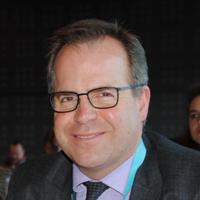
[Editor's note: Political science professor Byers delivered this speech to graduating students at UBC's "Great Arts Send-Off".]
In medieval England, before the development of written land registries, local children were conscripted as witnesses to real estate transactions. At the exact moment that a piece of turf was symbolically handed from seller to buyer, the kids were whacked on the side of the head. By making the transfer of land memorable, the assault provided security of title for as long as the children lived.
Twenty-one years ago this month, I wrote my last exam as an undergraduate Arts student. I remember the occasion vividly because, with just 30 minutes left to go, the university was struck by a power outage.
There we were, rows upon rows of anxious students, sitting at temporary desks in a windowless gymnasium in pitch darkness. A quick-witted invigilator opened two outside doors, allowing a dull light into the hall -- along with a blast of cold air.
Four years of English literature classes had equipped me to recognize the symbolism. The lights had gone off -- not on -- at the conclusion of my Arts degree. As for the blast of cold air: what better metaphor for the harsh realities of life outside the university?
The true value of an Arts degree
In retrospect, I learned many useful things during my studies. I learned about passion and politics from William Shakespeare, evil from Joseph Conrad, cynicism from Niccolò Machiavelli and hope from Immanuel Kant. I learned that differences of culture, religion, ethnicity and sexuality make the human species more interesting. I learned that history matters; that asking questions is a mark of intellect, not ignorance; and that words, wielded well, have the power to change the world.
I even learned about the existence of the female orgasm -- though only because my French professor talked about it in her class.
In the past two decades, I've also developed a more positive view of adversity. Sometimes, it takes a challenge to bring out the best in people. Monumental challenges can inspire true greatness. Would Winston Churchill have achieved heroic status in the absence of the Nazi threat? Would Mahatma Ghandi and Nelson Mandela have been immortalized without the obstacles of colonialism and apartheid? Would Terry Fox have become a Canadian icon without losing his leg?
Every Edmund Hillary needs his Everest; every Joan of Arc her crusade.
This is not, I should stress, an argument for an "everyone-for-herself" approach to life. Many of our fellow human beings are too ill-equipped by fate or circumstance to overcome the adversities they face. Some people are heroes for just staying alive.
But you -- the UBC Arts graduates of 2009 -- are well-equipped for challenges. You've learned to think critically, communicate well, and cooperate with others to achieve common goals. You've acquired a respect for the insights and accomplishment of past generations, so that you stand on the shoulders of giants -- rather than starting at ground level again.
There are many future heroes present here this evening; more, indeed, than in most graduating years.
I say this with confidence because we can already see some of the monumental challenges you face.
Economic collapse
In the last nine months, the global economy has experienced a deep contraction. Trillions of dollars have been lost; hundreds of millions of livelihoods destroyed. Banks have stopped lending; trade flows have dried up. The ranks of the homeless and hungry grow deeper by the day.
Governments have responded by nationalizing scores of companies deemed too large or important to fail. Truly staggering sums of borrowed money are being spent in a desperate effort to resuscitate business and consumer confidence.
Most of you will have been touched by the economic crisis already. All of you will know students who could not afford to be here this evening. Many of you will not have a job lined up for after university. At the same time, the competition for places in graduate or professional schools has become truly fierce.
Climate breakdown
If the economic crisis were not enough, two months ago, 2500 of the world's leading climate change scientists issued the starkest possible warning to humanity. Climate change is accelerating more quickly than they had anticipated. Powerful feedback loops are beginning to operate, like the warming of the Arctic Ocean by solar energy that snow and ice would previously have reflected back into space. Yet greenhouse gas emissions continue to rise -- as politicians shy away from taking the decisive measures necessary to reduce them.
A two degree Celsius increase in the average global temperature is now almost inevitable. This September, Oxford University is hosting a conference to discuss the implications of an increase of four degrees or more.
Consider just one of the consequences of a temperature change of that magnitude: sea-level rise caused by the melting of glaciers in Greenland and Antarctica and the simple expansion of ocean water as it warms.
Most climate change scientists now believe that we'll see a rise of at least one metre this century. When that happens, much of the Fraser River delta will be inundated, including hundreds of thousands of homes and some of this province's best farmland.
Around the world, fully one-tenth of humanity will be displaced. That’s 600 million climate change refugees -- 20 times Canada's current population -- by the end of this century. How many of them will find refuge here, whether we want them or not?
George Monbiot, the Guardian newspaper columnist, argues that the term "climate change" no longer describes the situation we're in. It's time, he says, to speak of "climate breakdown."
Short-term thinking
The two monumental crises we face -- economic collapse and climate breakdown -- share at least one underlying cause.
In the late 20th century, Western societies and governments adopted shorter time horizons for decision making. By speeding up the flow of information, advancements in communications technology shortened the attention span and patience of media and citizenry. Politics became about the sound-bite and quick fix rather than the substantive speech and long-term solution.
In the corporate sector, there was a parallel shift from long-term dividends to short-term stock prices as the principal measurement of business success. Corporations began to focus on mergers, acquisitions, outsourcing and advertising rather than making better widgets and training better workers.
At the same time, it became widely accepted -- to the point of being considered beyond question -- that markets were always more efficient than governments in distributing resources, generating wealth and providing services.
But measurements of efficiency depend on the timeline used and the kinds of wealth you include.
Over the short term, subprime mortgages, derivatives and other financial innovations generated considerable wealth. Over the slightly longer term, they've prompted a global economic collapse.
Heavily subsidized roads, low taxes on fuel and lax energy-efficiency standards drove decades of economic growth in Canada and the United States. But those same decisions look stupidly short-sighted when you factor in the climate change impact, the health and social costs of people spending dozens of hours each week alone in their cars, and the absurd lack of fit between our sprawling cities and the reduced ecological footprints now required by both climate change and peak oil.
Doing things differently
Arts graduates have the tools to do things differently. We teach you about history, sociology, philosophy, psychology, literature and so much more because human experience—the collective memory of generations—provides a depth and wealth of knowledge and insight that guards against blinkered and short-term thinking.
Thanks to people like you, even the worst crises can be overcome.
So yes, we live in extraordinarily challenging times. And some of you will rise to the challenges in truly extraordinary ways.
Two decades ago, when the lights went out during my last Arts exam, the invigilators offered each of us a choice. We could finish the exam in the cold air and dull light, or return later in the week for a rescheduled last half-hour.
Most of us kept writing. And though I didn't see the symbolism of that decision then, I certainly do now.
Don't shy away from adversity. Carpe diem. Seize the day.
Related Tyee stories:
- Teaching that Inspires
A teacher learns from the best educators he can find. A Tyee Solutions-Reporting Fellowship Series. - Why Are College Enrolments Falling?
Prime suspects: Tuition hikes, barriers to returning drop-outs. - My Rich Kids Reunion
A tax-the-rich economist goes home to Upper Canada College.
![[Tyee]](/design-article.thetyee.ca/ui/img/yellowblob.png)
Read more: Education, Environment


Tyee Commenting Guidelines
Comments that violate guidelines risk being deleted, and violations may result in a temporary or permanent user ban. Maintain the spirit of good conversation to stay in the discussion.
*Please note The Tyee is not a forum for spreading misinformation about COVID-19, denying its existence or minimizing its risk to public health.
Do:
Do not: