
BC's Carbon Tax Shell Game
Economist who invented 'eco-footprint' analysis is not impressed.
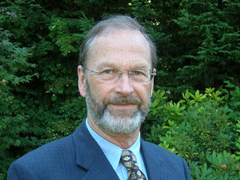
Professor Rees: growth unchecked.
There are plenty of things society could do to avert a full-blown ecological crisis but we don't do them and what we do do doesn't work. It seems that the ecologically necessary is politically unfeasible but the politically feasible is ecologically irrelevant.
Nobody doubts what got us into this mess: in the 20th century alone the human population quadrupled to over six billion, energy use (mostly fossil fuel) increased by a factor of 16, fish catches (but not fish) increased 35-fold, industrial production expanded 40-fold, agricultural output exploded, etc., and all corresponding waste streams ballooned by equivalent multiples. Result? Soils erode 10 to hundreds of times faster than they develop, the oceans are emptying and acidifying, biodiversity is imploding, natural gas and petroleum are being depleted, atmospheric carbon dioxide levels are a third higher than in pre-industrial times and the climate is going into convulsions.
We also know at least the crude dimensions of the solution: for example, our best science tells us that to avoid a potentially catastrophic 2 C increase in mean global temperature, the world community needs to reduce carbon dioxide emissions 80 to 90 per cent by mid-century. Our ecological footprint studies similarly show that for sustainability we should be taking steps to reduce the North American per capita eco-footprint by 80 per cent, from 9 global average hectares to 1.8 hectares (the amount of biocapacity presently available per capita on Earth).
All of which brings us to contemplating British Columbia's newly announced carbon tax.
Reason to cheer?
First, let's acknowledge what Sightline Institute's Alan Durning has already emphasized: B.C.'s Campbell government has introduced what is "by far the most aggressive carbon pricing regime in North America. In fact, it's one of the more aggressive regimes in the world." Strong praise, indeed. But the whole purpose of this "most aggressive of carbon pricing regimes" is to reduce the province's carbon-dioxide emissions, so the test of its effectiveness is its likely effect compared to the required 90 per cent reduction. Here we find many reasons to hold the applause.
Carbon taxes work by raising prices -- higher prices on fossil fuels should induce conservation, stimulate more efficient technologies, reduce emissions and make alternative forms of energy more economically attractive. But B.C.'s carbon tax will add only 2.4 cents per liter to the cost of gasoline on July 1, 2008, rising to 7.2 cents by 2012. Certainly this is the right direction but it's not nearly enough.
We have seen a "natural" increase in gasoline prices in the past few years several times greater than the final value of the carbon tax and this has hardly kept a lid on consumption. The new tax sends a weak signal to consumers, at least at the outset, one that will be neutralized for many by anticipated increases in income.
The tax may actually be surpassed in amount and effect by continuing price increases induced by tightening world petroleum supplies -- many analysts agree that "peak oil" has arrived or is at least coming up the walkway. Even if all this does serve to stimulate greater technical and economic efficiency, we may still have a problem -- historically, efficiency gains have stimulated even greater consumption.
Green light for consuming more
A second concern derives from the government's commitment to "revenue neutrality," more specifically, Finance Minister Taylor's avowal that all money collected through the new tax will be returned to the people through a package of tax cuts and credits. In effect, neither business nor the average consumer will feel much financial bite from the tax and is free to spend his/her tax savings and credits on alternative forms of consumption. This amounts to "impact neutrality." (No wonder the Vancouver Board of Trade called it a "smart carbon tax" and gave the budget an 'A' grade.)
The problem is, that redirected consumption may have negative ecological impacts equivalent to those of any carbon emissions avoided. Keep in mind that climate change, while important, is only one of many symptoms of what has become rampant human ecological dysfunction.
Vacation time!
There's an even bigger potential problem. If I am sufficiently excited by current federal and B.C. policies to abandon my gas-guzzling junker for a fuel-sipper, I get a generous eco-car rebate from the feds, reduce my carbon tax payout, and save a few hundred bucks in fuel costs each year. This is enough to buy a return ticket to France -- annually. (Actually, next year I might trade the trip for a nice big and very polluting flat-screen TV.) My holiday travel would cancel my personal carbon savings and the jet fuel consumed would not itself be subject to the carbon tax. Meanwhile, I've otherwise added to my personal eco-footprint by purchasing a new car and to the waste stream by dumping my junker.
In this light, the most positive thing about B.C.'s carbon tax may be the fact that it is on the table for all to see. The B.C. budget has started a serious conversation. At the least, this will make it easier for future governments to implement tax-shifting policies that may actually help to reduce our ecological footprints by significant amounts. Also, B.C.'s action has already had the effect of forcing the Harper government in Ottawa to stop resisting independent activity in this domain by the provinces.
But let's be clear. To achieve the necessary deep cuts in consumption and waste production will require major restructuring of the economy that should have begun years ago.
As matters stand, B.C.'s seemingly "aggressive" move is politically designed to have minimal impacts. The province is still dedicated to outmoded notions of economic growth at any cost -- and if the costs exceed the benefits (as many suspect is the case at the global level) we are actually encouraging uneconomic growth that will ultimately impoverish us all.
Related Tyee stories:
- How Will You Spend Your $100?
We'll each get a cheque to offset the carbon tax. Tell us your plans for the money. - How Fair Is BC's New Carbon Tax?
And will it make rich people greener? - Coping with Climate Dread
Enviro experts battle despair as doom scenarios roll in.


SharingIsGood
25-02-2008
Well said!
Well said, Professor Rees!
Now if we can just get the government set the real tone by building quality, useful, user-friendly public transit, we may have a chance to downsize consumption.
Perhaps incentives for turning large existing homes into multi-family homes would be good avenue for the government to explore.
sdgreen
25-02-2008
But the Problem is
practical economic alternatives for both energy and transportation simply do not exist. I do not have a problem with the concept of a 'bad energy tax' where there are affordable alternatives. As it stands right now, electrical energy whether solar, wind just does not work. Transportation alternatives are completely out of reach, and too expensive in the long run to operate.
Clearly the government needs to advance specific plans; like a a full project to construct central large scale solar, storage, and distribution systems, or large scale wind or tidal power generation projects, or expand existing hydro projects. Cost out these projects then look at the taxation requirements or re jigging of the current budgets.
We cannot just stop, pay a whole bunch of money for basically nothing. The current so called revenue neutral scheme is bogus, it is not. We do not have any alternatives, except in the central highly urbanized cities. The rest are ignored.
The $100 per person 'Green Gift' is completely ignorant, as that allocated $440 million ought to be provided to identified projects. What can a person really do with $100 to reduce their carbon foot print.... basically nothing of any significance.
We currently pay significant fuel taxes at both the Federal and Provincial level, and in some cases at the Regional levels. This tax should be used exclusively for 'green tranportation' projects.
Governments and political parties are completely off base on this entire subject.
BillMelater
25-02-2008
politically unfeasible
As the politicians can only see the next election cycle, and corporations can only see the bottom line, it will be dependent upon the people to affect change. Yet the people are ill-organized, ill-informed and largely apathetic. Everybody who can talks a good game, but when it comes down to it, people will accept no reduction of the typical North American mega-consumptive lifestyle.
To the automobile addicted, a three cent raise in gas means nothing. Those least able to pay will be hit hardest, while those most able to pay are further enabled to pollute.
Crass
25-02-2008
Mr. Rees hits the nail
Mr. Rees hits the nail straight on the head!
I think we must abandon our current economic model and embrace one where goods are shared.
The Cooperative Auto Network (CAN) is a good example of how this could work: Instead of having 20 people own and use their own vehicle, you have one vehicle for 20 people. A public library is another excellent example of conserving resources: 20 people sharing a book instead of the same 20 people each buying their own book, wasting an enormous amount of paper and energy to produce those extra books, and taking up a lot of space and time and effort to recycle and dispose of them.
These are the kinds of consumption models politicians need to implement on a large scale for other cunsumer goods and services.
However, I feel extremely unhopeful this type of delivery model of goods and services will be implemented in my lifetime, because it socializes the economy.
Ruben
25-02-2008
More than population
Paragraph number two is the best answer I have seen to the hand-wringing over the population explosion in the "third world". I see that sort of comment on many forums, and it often strikes me as thinly veiled racism. I am going to link to Rees' stats from now on.
johndwyer3000
25-02-2008
Why not do something
The province should consider dropping the multibillion Translink plans for heavy rail and boost the bus system.
Cement production is the largest point source of C02 production in Metro Vancouver and the construction adds another load and the Canada Line is likely the biggest chunk of that for a 2 year period.
Multibillion dollar plans for the Evergreen line, upgrades to the Expo line and further heavy rail initiatives if carried out will boost C02 further.
Translink/BC should put way more buses out there including express and rapid bus lines on all the main routes including Highway One, Marine Drive, 49, 41, 25, 12 Avenues, Main etc. For a billion BC could do this over a year or two instead of the 10-20 years to find the money and build 3P heavy rail.
BC/Translink could combine this decentralized approach with a modest initiatives to get car drivers to pay a greater portion of their share of the cost of road and related infrastructure and to get some people living near where they work.
In this approach, instead of the relatively modest goal of doubling transit ridership over 10 years, quadrupling ridership and quartering auto use over 3 years is possilble - while improving urban livability.
A tough sell that would likely have to start with a comprehensive environmental assessment comparing lifecycle environmental/economic/social costs of variouis transit options over 10, 50, 100 year periods to confirm, possibly, my theory. Then the hard work of addressing local, national, US auto sectors labour and capital as well as people who like to drive.
Tough to conceive? I think of it because of, for me, the awful saturation of daily life with automobiles and, for everyone, the fearful work of C02 most particularly in the Arctic. Do we all have to die for cars?
johndwyer3000
25-02-2008
ps
Re my comments above, I am know that the public transportation sector is just one source of C02 but it strikes me as one of the easiest to address. And addressing it can lead to a quieter, less polluted, and safer city. Cheers.
Grumpy
25-02-2008
Professor Rees, if you really want to reduce......
....... dependence on the all polluting car, then tell your buddies at UBC and SFU, that their grand transit planning is based on an obsolete - SkyTrain light-metro - model.
We need a LRT network in the region that will offer the all important seamless (no transfer journey) that has proven to attract the motorist from the car.
Cities like Portland Ore. and Denver Col. have got the message. Denver is spending $6 billion to built an additional 6 line 195 km. network, while our lot in Victoria is spending $14 billion to build about 60 km. of SkyTrain! France, as well is investing heavily in modern LRT, making medium density cities easy to travel by tram.
I'm afraid the 'rubber on asphalt' crowd at UBC still plan for 'rapid transit' that will not interfere with the car and end up spending up to 10 times the amount to build a simple rail line.
So Professor Rees, before trying to sell Carbon taxes, etc. tell those 'Luddites' teaching planning (heavens forbid, UBC doesn't even teach transit mode!), that this is the 21st century and modern LRT is 21st century public transit philosophy.
Until we can offer real and affordable transit solutions for cities and not BRT or other highly polluting 'looser cruiser' solutions, the public will never get on board with a carbon tax.
So Professor Rees, denounce SkyTrain or else the auto will rule supreme and we will drown in rising oceans or suffocate in our waste.
Oh by the way, Calgary's LRT system (which carries 250,000 passengers a day) is powered exclusively by wind turbines.
NicS
25-02-2008
Is The End Near For Some?
Thank you Prof. Reese for speaking truth to the Liberals carbon tax greenwash spin-cycle. Mind you, almost all of us are doing it, to varying degrees, some sincerely, some not. But who are we to judge!
The only positive part of the above quote is the depletion of fossil fuels, which may be what saves earth, but not as we know it. Certainly most of us are not prepared to make the sacrifices to make the required difference. There is definitely a consensus out there in the world of so called doomers and gloomers that we are heading towards a massive die off. And how can one argue with that when our Liberal Gov't is being considered a world leader fasc(h)ionista carbon credit pusher.
Afterall isn't that what its all about, fashion. The greenwash fashions are in full swing. Buy a new Priius and feel good about your latest purchase and keep on driving.
It appears our worlds are about to change in a way unique to the history of mankind and we just keep whistling dixie. I guess in the end we are all only human!
Grumpy
26-02-2008
The problem with RAV and the Evergreen Line is..........
......... that they fail to service where people live, rather give bus riders a faster trip over a part of their journey.
This transportation philosophy has failed miserably and is one reason why light-metro's like SkyTrain have failed to find a market.
If I will not take a bus, I will not take a bus to a light-metro. Simple transit fact, sad though it is.
Currently, we are in the transit 'Dark Ages', where transit schemes are spectacles for the masses, not good transit. A Renaissance in public transport has happened in Europe and is slowly spreading Westward. The USA have grasped it. but not Canada and certainly not the 'Metro, area.
Professors are not unlike the alchemists of old trying to turn lead into gold, or rather forcing SkyTrain to work with dubious densifying tactics, such as 'Eco-density'. Ant Professor who rejects the current sate of affairs is figuratively 'burned at the stake!'
Simple fixes like the Carbon tax will not work, we must start with a large, yet affordable transit network that the customers will be drawn to.
Clue #1 ~ it ain't a bus.
Clue #2 ~ it runs on rails.
Clue #3 ~ there are around 600 applications of the mode in operation around the world.
LRT anyone?
puppyg
26-02-2008
How's that working for you?
Great piece. Insightful posts.
My faith in Gordon Campbell to take the right approach, however, is on a par with my faith in George Bush to bring peace to the world.
There are places in the world where the prices of gasoline are multiples of what it is here (thinking Europe). How is that working out? Are those countries on the path to ecological restoration? If not, I must think this is all just a money grab.
canary
26-02-2008
LRTransit
Well said, Professor Rees!This is the kind of clear thought that shows how incomplete patchwork penalties on citizens does not change environmental impact.
I am a member of a group here in the Lower Mainland that is calling for a sensible solution to get people around to where they need to be, quickly,efficiently and at close pick-up depots. It was done last century;the light electric rail from Chilliwack around the now vanished Sumas Lake and up to the thriving metropolis of Vancouver. Yes, why reinvent the wheel when electric rail is a perfectly suited idea for the issues of our time. Go to www.railforthevalley.com and please,everybody, please tell Mr. Campbell that the Delta Superport and the so called Gateway through the farming heartland of this province which could supply food for part of the 100 mile diet is wrong,wrong,wrong.
Europe has light rapid transit. Australia has all kinds of electric rail running through high population areas that make it convenient to use alternate transportation.
The mayor of Mississauga, Ontario spoke over CBC recently and discussed the economics of commuting. She's convinced that because urban centres are the economic generators of the country's wealth (and tax base for 3 levels of gov't) that commuters need to have local,clean rapid transit to get to points of contact.Barrie,Ontario has recently been set up with a "GO" train to Toronto. Mississauga Mayor,Hazel McCallion says that health costs need to be factored into the big picture. Bad air, long hiway stressful commutes,sleep dprived,anger induced stress-related accidents all make the rubber wheel era a blight on mankind.
realisticman
26-02-2008
Jeffry Simpson is impressed
As well he should be. In today's Globe & Mail;
This "drive change" vision is the same one articulated by the Romanow commission that urged governments to spend a lot more money to "buy change" and make the system more sustainable. Predictably, subsequent infusions of cash have failed to slow the increases, as the latest statistics from the Canadian Institute for Health Information reveal.
The Campbell government is the best provincial government in Canada, tied perhaps with Gary Doer's in Manitoba. It enjoys a big lead in the polls. It has demonstrated tremendous courage in tackling climate change, putting the province's finances on a sound footing and opening better dialogue with aboriginals. And yet, like other provincial governments, it just cannot crack the nut of this health-care-spending juggernaut, despite all the best intentions, public dialogue and administrative innovations.
rac
26-02-2008
Road Construction is the Real Problem
Get a grip people, the problem is not rapid transit construction, it is highway construction.
Not only are vast amounts of CO2 used in the construction of highways, new road space results in more vehicle use and higher CO2 emissions. The province's own numbers on Gateway confirm this. While rapid transit construction does emit CO2, with the Canada Line, this is counteracted by a drop in emissions per year. It will take about 7 years of operation for the total reduction to overtake the emissions during construction. Rail emits far less CO2 per km than diesel buses so on routes with high ridership, there is an advantage for rail over buses. We still need a lot more buses, don't get me wrong.
Fight highways, not transit projects.
freebear
26-02-2008
Veiled More of the Same!
Well said Mr. Rees!
Especially:
"The province is still dedicated to outmoded notions of economic growth at any cost -- and if the costs exceed the benefits (as many suspect is the case at the global level) we are actually encouraging uneconomic growth that will ultimately impoverish us all."
How many fiddles before Earth burns?
Budd Campbell
26-02-2008
SIX DOLLARS A LITRE
In other commentaries Prof Rees has put forward a figure of $6 per litre as the appropriate total price for gas or diesel if taxes were raised to the level needed to defray all the social costs and externalities of driving.
Fiat lux
26-02-2008
Back in the late 40s we were
Back in the late 40s we were living 5 m. from Cambridge and without adequate public transport, I was using a bicycle and later a 1933, 250 cc. Ariel motorcycle for going to my classes.
I can't remember exactly the amount of gas we were getting on the rations, but when I petitioned for extra and received 1 gallon per week to go to school with, I was in heaven.
And the world was going on without any problem.
Right now we're living 55 km from the nearest town and do our shopping twice a month, covering approx. 3,000 km per year in our truck, plus the fuel for our farm equipment, about 1,500 to 1,800 l. per year.
What economists and politicians forget to mention in their insane search for the GDP, and "cost cuttings", is that the monetary demands they're trying to fill are putting a huge pressure on the environment in the form of wasted resources, like oils.
When a few workers are replaced by hundreds of horsepowers of energy, to expropriate their wages into the pockets of the artificial entities of shares, costs are automatically go up on the long run.
Then, the survival needs of the fired workers and their families must be supplied
from other resource bases, who may have to commute long distances to other jobs. All these are putting more pressure and waste on the ecology, again much of it it the form of oil.
What our brainwashed economists and politicians can not comprehend is that human labour doesn't cost anything to an economy, because it is energy neutral.
Now let's hear the faithful scream that I'm suggesting going back to the Stone Ages, because that's about the limit of their comprehension of the facts.
There's a tremendous difference between real labour saving and enhancing tools and equipment, as opposed to automation for profits.
I've spent 50 years in manufacturing as a tradesman and owner manager, so I have a good idea what I'm talking about.
Also, when the same economists and politicians boast that manufacturing jobs can be replaced with service jobs, what they really say is that the producers can be fired if the number of janitors and office staff is increased, paid from the sale of the inventory and infrastructure, so everything is A-OK.
Well, our children and grandchildren will pay very high price for this nonsense and the welcoming of "wealth creating foreign investors", stripping the country bare with their demands.
Ed Deak.
gitpnts
26-02-2008
Why the numbers?
I have to wonder why Dr. Rees would juxtapose the numbers he has given for population increase, versus increase in energy use, fish catches, and so on. He then goes on to ignore the population issue, saying instead that we need to focus on cutting consumption and waste. The very fact that he posts those numbers, in the manner he has, indicates that he sees it as a sort of justification for de-emphasizing population issues and focusing instead on consumption.
To play devil’s advocate with those numbers, if increasing human population by a factor of four is accompanied by an increase in energy use by a factor of 16, of fish catches by a factor of 35, and so on, then shouldn’t the same ratios hold for a decrease? Decreasing the population by a divisor of four should be accompanied by an energy decrease by a divisor of 16, a fish catch decrease by a divisor of 35, and so on. Decreasing population thus seems like a big “bang for the buck” if we want to have a significant impact on consumption.
Or was Rees just randomly putting up numbers with no real purpose?
Rees calculates that 1.8 hectares biocapacity is available per capita, presumably using the current population. He is rather unclear in this section, as he talks about the North American eco-footprint but the biocapacity of the planet. In any case, anyone who understands per capita calculations knows that continued population growth will continue to drive this target figure downward. So, I guess one relevant question is this: How low do we want it to go, or can it go, before we finally halt population growth?
record
26-02-2008
Glad to see this piece
Rees knows the score which is more than can be said for some of my friends in the environmental organizations.
Growth and consumption are the biggest killers of all. We need firm carbon caps and an economic policy that reverses growth.
http://tinyurl.com/2qmpdf
JohnF
26-02-2008
Invalid comparison?
Not sure what Rees was trying to show, but I agree with gitpnts that the numbers, as presented, can be misleading. We can't compare population growth with total energy consumption because the latter is the product of population growth and average per capita consumption.
Here's a recent quote from John Holdren, recent president of the American Association for the Advancement of Science, and one of creators of the I=PAT formula, on the relative contributions of population growth and per capita consumption growth in energy use to total energy use:
"Figure 1 shows the composition of world primary energy supply during the bulk of the fossil-fuel era to date, from 1850 to 2000 (40). Energy use increased 20-fold over this period–that number being the product of a somewhat greater than fivefold increase in world population and a somewhat less than fourfold increase in average energy use per person."
http://www.sciencemag.org/cgi/content/full/319/5862/424
Population growth has historically been right in there with per capita consumption growth as a contributor to the growth of total energy consumption.
Birch
26-02-2008
The overall picture
Professor Rees pretty much has his finger on the (becoming fainter) pulse of the planet with his observations. The added notion that barber-surgeon Gordon Campbell will bleed his patient (while assuring us of the "do no harm" philosophy of all medicos), although an invention of mine, is a quaint form of agreement with Rees.
The fact that Campbell is even SAYING some of the right things is a miracle just short of Lourdesian. The disappointing futility of the actions outlined in the budget is depressing largely because of their basic deceit. (A generous observer would allow that Campbell might be deceiving HIMSELF, but that spin would require considerable nobility of spirit on behalf of the spinner.)
So, the challenge is out there. Aside from patting Rees on the back for his clarity of analysis, and from gritting our teeth in the face of another finesse by the Liberals, what will we do about it? Perhaps we could all donate our $100 rebates to a campaign to unseat the bastards and replace them with...hmm...someone who understands the environment? Bill Rees for premier?
Tim neo Malthus
26-02-2008
DORIS DAY COULDA WROTE A SONG ABOUT THIS
Would a discussion on population explosion or consumption be complete without someone playing the race card? If "Ruben" thinks Rees' stats do anything to take the "P" out of Ehrlich's IPAT equation (environmental impact = Population times Affluence or per capita consumption times technology) as soft Greens have been trying to do for two decades now, he's wrong. On the contrary. If one exta person indeed generates four extra units of energy use or 9 units of fish consumption, that is the most powerful argument yet advanced for stopping that person from being born or emigrating to a high-consumption society.
Like Doris Day used to say in her classic song about Love and Marriage, Population and Consumption go together like a "horse and carriage".
You can't have one without the other.
realisticman
27-02-2008
Mark Jaccard likes it
Interesting piece by Vaughn Palmer in the Feb.27.08 Vancouver Sun on the provincial Liberal budget.
http://www.canada.com/vancouversun/columnists/story.html?id=88d8da9d-9cc6-4439-8931-4710392765d5
This from someone who, as he confided before the speech, never expected to be in a position of delivering such extravagant praise of the Gordon Campbell government.
Jaccard got his start in shaping public policy in this province as a New Democratic Party appointee, serving in several capacities during the Mike Harcourt, Glen Clark and Dan Miller administrations.
He chaired the B.C. Utilities Commission and headed inquiries into gasoline prices and the structure of the electricity market.
After returning to SFU in the late 1990s -- he teaches in the school of resource policy and environmental management -- he continued to offer advice on energy policy, environmental issues and, increasingly, climate change.
But looking back over the advice that Jaccard dispensed in the 1990s, it would appear he had more influence on the B.C. Liberal Opposition than on the NDP government that appointed him.
Seems that there are many old NDP'ers that are flummoxed into praise for what Carole Taylor and Gordon Campbell have bought forward in their latest, inspiring, budget. Future generations, as well as today's concerned environmentalists herald this carbon tax budget as a bold move into a positive and greener future.
HawkEyes
27-02-2008
Mass Mentality
is real.
I too fail to comprehend why tossing a couple of pennies at this "problem" is fabulous and ground breaking. “…the world community needs to reduce carbon dioxide emissions 80 to 90 per cent by mid-century…” IS too little, too late.
Our premier has said and will say anything. If he was sincere, the two hour shifts he brought back would not be. Ridiculous environmentally, the repercussions also suck socially. Driving laundry to another province would not have happened. Etc. Where was everybody then? Not on my economic radar, so it doesn’t matter socially or "environmentally"?
It is amazing how a politician can repeat anything provided by staff and the masses swoon, no matter their actions. Certainly explains why Campbell and even Bush are back. It explains why everyone’s darling can say she doesn’t like to tell people what to do -after she authorized the pay raises and pension bonuses -for the people to pay! It explains how our premier bully has the gall to wear pink today.
The solution is clear. “None of the above” must be on the ballot. An interim government could never have done the irreparable damage this one has.
gitpnts
27-02-2008
With much hype and hoopla,
With much hype and hoopla, the Australian WWF is promoting an annual "Earth Hour" as a solution to our problems, where everyone is encouraged to turn off lights for one hour in order to reduce greenhouse gases.
The claim is that global warming is the most serious issue facing this planet.
That, of course, is completely misguided. Global warming is not the most serious issue facing this planet, it is only a symptom of a much larger issue.
Human population growth accompanied by economic growth have created this problem.
Human population growth accompanied by economic growth have led to an unprecedented rate of species extinctions and loss of biodiversity on this planet.
Human population growth accompanied by economic growth have led to resource wars, and contributed to local and global conflicts.
Human population growth accompanied by economic growth have led to futile efforts at conservation, as any benefits from reduction in per capita consumption are quickly negated by further growth. At the same time, the increased population makes other problems significantly worse.
Human population growth accompanied by economic growth have led to population overshoot and to resource depletion, and thus have impoverished and threatened our future generations.
Human population growth accompanied by economic growth have led to virtually every significant problem facing mankind on this planet, and threaten the very viability of our species.
So what is our reasoned and rational response? Hey, let’s turn out our lights for an hour.
Sure, that will work.
The fact that blackouts have been documented as leading to an increase in population makes it even better.
gitpnts
27-02-2008
That of course should read
"Global warming is not the most serious issue facing this planet, it is only a symptom of a much larger issue, if it is even an issue."
Sorry, missed that.
Budd Campbell
27-02-2008
SOME "ENVIRONMENTALISTS" ARE EASY TO PLEASE
"Suzuki, The Sierra Club, The Sightline Institute, Mark Jaccard, etc. etc."
Marc Jaccard is an expert in his own right, and doesn't need to suck up to anyone. If he says this tax is a good measure, I am not going to complain, even though I accept Bill Tieleman's excellent point that revenue neutrality has to mean more than just the net difference in total taxes/expenditures. There are distributional issues, such as where the offsetting tax cuts/expenditure increases went.
David Suzuki is a clever politician. He has made himself very useful to the Liberal Party both federally and provincially. He launched a jihad against Jack Layton and Nathan Cullen over the federal Clean Air Act because he wanted the NDP and the Liberals to force an election on the issue so the Liberals would get back in. At the end, he was lining up praising the amended act as an improvement. Nice try.
Provincially he and his foundation were among the founders of the anti-Port Mann "Livable Region Coalition", who ultimately succeeded in suckering not only David Chudnovsky and Shane Simpson, but also Carole James herself into denouncing the PMH1 project. With the "dumb and dumber" outburst James threw the next general election to the Liberals, since the suburbs will have no choice but to plug their noses and vote for Kevin Falcon's party. If she tries to backtrack, the Livable Coalition will be there to cry betrayal and backslide and to direct people who value this earth to vote Green, and men like Eric Doherty and David Fields will get lots and lots of TV air time to repeat their exhortations, just as they recently got air time to talk about EnvCda's critique of the project. MOTH/Gateway has already replied to that critique, but their reply got no coverage.
It's going to play out pretty much as straight repeat of the 1979 election when Dave Barrett came up two to three seats short, all in the Vancouver suburbs, by opposing the construction of the Annacis Island Bridge, a project that had begun its life in the Highways Dept when he was Premier, and which was originally intended to be rolled out as the NDP's flagship public works plank in a 1976 re-election drive. But Barrett called the election a year early and the project wasn't ready for prime time, so it sat on the Dept's shelf for another three years till Bill Bennett was ready to use it.
So, David Suzuki's foundation helped to cripple the NDP by suckering them into a losing anti-Port Mann positioning. At the Al Gore Dinner, Suzuki had his Livable Region disciples outside in the rain hollering "Hello Al, Goodbye Gateway", while he went inside to schmooze with Gore and Premier Campbell. He promised not to bug Campbell about the highway project, saying that, as an upper class environmentalist, his responsibility was to keep communications channels open. Very smooth stuff.