Opinion

A Tyee Series

The Myth of Dense Vancouver

Stats show city isn't countering flight to suburbs.

By Lance Berelowitz, 21 Jun 2006, TheTyee.ca

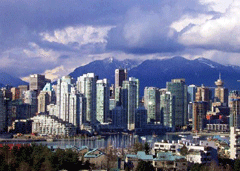
vancouver_skyline.png

The brand doesn't fit reality.

The city of Vancouver is just one of 21 municipalities that make up Greater Vancouver, and accounts for less than 600,000 people out of a total metropolitan population of over 2.2 million. Our urban region is facing many of the same problems of unsustainable sprawl that other North American cities are grappling with. Our suburbs are not better than their suburbs. We just can't see ours much from Vancouver. And we try not to talk about them in polite circles.

But Vancouver can't afford to ignore the suburbs: they are our problem too. Re-engineering the suburbs is the next real challenge we face.

There is a general assumption that Vancouver is leading the way regionally and that we have substantially slowed the flight to the suburbs that so many other city centres are struggling with.

But have we really?

Yes, we have densified the downtown core, and that is a real achievement. But when you zoom out and look at the bigger picture, this rosy picture turns a quite different shade.

Not shouldering our load

Consider some recent statistics:

According to B.C. Stats, we have added about 25,000 residents to downtown Vancouver in the past decade. In the same period the city of Vancouver overall added about 47,000 people. This means that across the entire rest of the city, excluding the downtown peninsula, we added a grand total of maybe 22,000 people over ten years, or 2,200 per year. Not a very impressive record. During the same 10-year time frame, the Greater Vancouver Regional District added about 250,000 people to its population, growing to about 2.25 million. So, what this means is this:

The GVRD grew by about 13 per cent over the past decade, while the city of Vancouver grew by about 8 per cent, which means that Vancouver is actually losing its share of growth within the region. Or put another way, the surrounding suburban municipalities are growing faster than Vancouver is.

Furthermore, more than half of the City's growth was in the downtown peninsula, which means that the growth rate for the rest of the City's land base was at an anaemic five per cent, compared to almost three times that level of growth for the rest of the region. The fact is that the substantial majority of people in greater Vancouver don't live within the city of Vancouver's municipal boundaries, and the gap is widening.

Vancouver's inner 'burbs

One of the main reasons for this is that much of Vancouver's land base is zoned for single family housing, and there is strong neighbourhood resistance to densification. So we have concentrated our recent growth efforts where there were very few pre-existing neighbours to complain: the downtown peninsula's former industrial lands and rail yards. Here we have been spectacularly successful. But what this really means is that Vancouver, rather than being a beacon of progressive growth for the rest of the region, is actually a part of the problem and is in effect exporting a portion of its rightful share of growth to the outlying suburbs, where the impacts are much more severe.

So we need to acknowledge this troubling trend, and Vancouver cannot be too judgemental about the low-density forms of development that predominate out there in the suburbs when we have created a kind of cordon sanitaire around most of Vancouver.

We still need to come to grips with intensifying the city's low density, single-family housing neighbourhoods. City hall has certainly tried, but it is slow work. We have begun to see isolated successes, such as Collingwood Village, the Arbutus Lands, and more recently the area around Kingsway and Knight Street. These are promising signs. But we still need to address residents' legitimate fears, while painting a compelling picture of why densification is in all of our long-term interests. But this will take political leadership, which, until very recently, I did not see present in our region. Then last week, the mayor of Vancouver announced his EcoDensity initiative. Here, for the first time in Vancouver's history, was an elected leader publicly championing the cause of densification, and making explicit the link between densification and more sustainable, less wasteful urban settlement.

It was a watershed moment, since our leaders have yet to make the case that residential intensification is not only the right thing to do for our future and our children's futures, but that it can be done in ways that preserve many of the qualities that make our neighbourhoods so precious to people. And that densification is part of the answer to ever-increasing house prices in Vancouver.

Beyond the slim hi-rise

There are many ways we can begin to do this, without radically transforming the characteristics of Vancouver's residential neighbourhoods. For example, we should explore alternative forms of housing than just the traditional detached single-family house or the hi-rise condominium tower. We need to explore those other forms of housing that Europe has mastered over the centuries, such as the central courtyard block housing of Barcelona, Paris or Berlin, the mansion block and adaptable row housing of London, the semi-detached narrow lot duplex housing and brownstone housing forms of North America's east coast cities, the side courtyard housing of southern California, the galleria housing forms of South America. And smaller secondary houses inserted into the rear of larger single family lots.

We also have an opportunity to optimize the physical infrastructure we already have, such as using Vancouver's extensive lane system much more intensively for some of these alternative housing forms. Why can't we have housing that faces onto the lane, above (or instead of) the parking garage? And we need to consider radical changes to Vancouver's parking bylaws to reduce the required amount of parking, which currently helps perpetuate many of the problems we are trying to address.

Re-zoning has been particularly successful in densifying Vancouver's major arterial streets, with new housing above shops that are supported by public transit. This is an important part of the strategy for a more sustainable city, and adding housing density along these arterials, which closely follow the original streetcar lines of early Vancouver, makes a lot of sense. Which makes it all the more ironic that recent restrictive amendments to the C-2 Zoning Bylaw made it just that much harder for developers to do these kinds of projects.

This doesn't make sense, given that the development pressures on our limited land base will only get stronger. We will continue to see a steep rise in the cost of land, and housing prices in Vancouver will keep going up, unless we substantially increase the housing supply to match the ongoing demand.

Get coordinated!

I predict that, unless we change our ways as a metropolitan region, we will continue to see more wasteful suburban sprawl for the foreseeable future, and I do not yet see the coordinated regional leadership here to do this. But this is clearly the challenge of our future as a sustainable region. And if we are to succeed, the City of Vancouver will need to assert its position as a leader in this regard.

As a first step, then, Vancouver needs to stop believing that we have already devised the sustainable region solution, and recognize that so far this city is still a part of the wider problem.

This is drawn from an address given by Lance Berelowitz to the World Planners Congress held in Vancouver preceding this week's United Nations World Urban Forum conference. Berelowitz is author of Dream City: Vancouver and the Global Imagination, winner of the Vancouver Book Award. He is an urban planner who chaired Vancouver's planning commission and wrote the Vancouver Olympic bid book.  [Tyee]

57  Comments:

Login or register to post comments

  • nightbloom

    5 years ago

    Comments on "The Myth of Dense Vancouver"

    ..."This advertisement is brought to you by your friendly neighbourhood condo developers..."

    Densification = re-packaging existing real estate into ever smaller and ever more expensive units to further bilk the working population. I'm not convinced that much more of traditional Vancouver needs to be ripped up & converted into condo-country. Humans weren't meant to live in quarter-million-dollar shoe-boxes in the sky.

    And what about commercial/industrial/business space - shouldn't an appropriate ratio be maintained within Vancouver proper?

  • Cycling Commuter

    5 years ago

    People who live in tiny downtown apartments are fooling themselves if they think their apartment represents the entirety of their environmental footprint. Thousands of Km of roads carrying foods from distant farms are also part of their environmental footprint, as are flooded valleys providing their electricity, land used for electric transmission lines etc.

    Suburbanites can have a much smaller overall environmental footprint than downtown residents if they take the following steps:

    1) Work within walking or cycling distance of home.

    2) Heavily insulate homes and heat them with solar combined with seasonal heat storage as described at http://www.greenershelter.com/images/GeoSolar3.jpg and http://www.greenershelter.com/index.php?pg=2 Those who don't like the "solar" look can use some of the new tin roofs that are embossed and painted to look like dark brown cedar shakes, red tile roofs etc. With a dark red roof instead of dark brown or black, some efficiency is lost, but it'll still produce plenty of storable heat during hot summer afternoons.

    3) Heat hot water using evacuated tube solar panels as described at http://www.ledger-enquirer.com/mld/ledgerenquirer/news/world/14763804.htm and http://www.sssolar.com/collectors/seido2.asp These devices produce hot water even when the outside air is as cold as -40F. They can even produce some hot water when it's overcast or raining. Evacuated tube collectors are basically elongated transparent vacuum flasks with a finned copper tube inside. 200 million Chinese people now use this method to heat water. Automated factories have driven-down production costs to as little as US $160 for a small system. Basic raw materials are glass, copper and aluminum, which B.C. produces lots of. Ontario produces lots of nickel for stainless steel storage tanks. All that's missing is an automated factory here.

    4) Go all-out to reduce electricity consumption while simultaneously improving convenience and reliability. Some of the biggest residential energy hogs include lighting, refrigeration and clothes dryers. Compact fluorescent lights reduce consumption by 75%. LED lighting reduces consumption by 90%. Motion sensors and other burglar alarm sensors serving double duty to automatically turn of lights in unoccupied rooms can cut consumption even further. Lighting remote controls such as the Z-Wave or Insteon systems can reduce consumption further still. Solar panels can be used in reverse to dump huge amounts of heat into the clear night sky and freeze water even on a hot summer night. This effect can be used to produce powerful refrigeration/air-conditioning effects while using very little electricity. There's an entire Yahoo forum devoted to this subject. See http://groups.yahoo.com/group/RefrigeratorAlternatives/ . Cold can be stored underground the same as heat and then piped-up to a refrigerator. Clothes lines can be used instead of clothes dryers. When it's raining outside, stored hot water from evacuated tube solar collectors can be pumped through a radiator that heats clothes dryer intake air. Notebook computers generally use a lot less power than desktop units. Once electricity consumption has been slashed 90% by using appropriate technologies, providing the remaining 10% with photovoltiac panels combined with hydro as storage becomes much more affordable and practical.

    5) Use front yards to grow fruit trees and a large part of back yards and possibly roofs to grow veggies, spuds etc. Those who are not into growing their own food can let neighborhood urban farmers grow stuff in their yards in exchange for a share of the crops. Regardless of whether food is grown by the homeowner or an urban farmer, land used for urban farming - including rooftops - should qualify for low farm property tax rates.

    [continued]

  • Cycling Commuter

    5 years ago

    [continued from previous comment]

    6) Widen back alleys, dig deep trenches in them, reinforce the sides and pave the bottoms. These can become roads for clean/quiet plug-in hybrid cars. Sound-insulated buildings on short stilts above the trenches (to let natural light into the trenches) can be used as clean/quiet factory workshops, retail stores, neighborhood rec centres, schools, etc. Tear-up the roads in front of houses and turn them into greenbelts with walking trails and bike paths among more fruit trees, urban gardens and playing fields. Use automated factories to churn-out standardized/modular pedestrian/bike overpasses at low cost to pass over the car-trenches.

    The trench-in-back-alley approach might sound expensive, but considering the value of urban land being wasted on cars, it'd be cost effective if the trenching process was standardized and highly-automated.

  • Cycling Commuter

    5 years ago

    Word-wrapping seems to have separated the - from the -40F in my comment above. To clarify, evacuated tube solar collectors can produce hot water even when the outside air is as cold as -40F (forty degrees below zero). I'm aware of two BC-based vendors for these devices: http://www.solarthermal.com and http://www.freefuelforever.com The second vendor sells the vacuum-insulated glass tubes individually for $20 and the heat pipes individually for $29.

  • moodyguy

    5 years ago

    Yes, cycling Commuter, but suburbanites don't do this and won't unless pushed by cost or social pressure to do so. Instead they buy cars that resemble living rooms in space and give them the feeling of comtrol over everything-that is afterall the role of SUV's, they drive to everything, they maintain manicured grass etc. The SUV trend is waning a bit as costs of fuel gets higher but in reality I think that the article presents a very good point. High rise is obviously extremely high density, there are many models of development that exist that provide a lot of living space, and sence of community, without sprawl and all of the costs, environmental and otherwise that it entails. Unfortunately, the outlying suburbs have seen it to be in their own best interest to zone primarily for single family detached (not exclusively to their credit) and cater to the market that meets the individuals desire at the cost of the community's and ultimately the individual's good.

  • L.W.

    5 years ago

    Even before reading the full article I was nodding my head in agreement. Yes, yes, yes ... we do need more innovative ways to densify our city. While we pat ourselves on the back for what is great about this place, we certainly cannont turn a blind eye to our self-imposed limitations.

  • Fiat lux

    5 years ago

    We've lived in Vancouver from 1955 to 79 and were quite happy in the earlier years.

    Then, in 1969 we bought our first lakeshore lot in the Cariboo and built a cabin for our family of 5.

    We noticed that when we were driving back to Vancouver, everything was going OK, we were quite happy, the kids were singing and fighting, but when we reached the top of the hill, going down to the Port Mann bridge and the vista of the Greater Vancouver area opened up, it was like being hit in the chest with sudden depression, which lasted a day, or two.

    We started asking questions and began to realize that other people experienced the same feeling, after having spent some time away from the cities.

    Now, we drive the 45 mins. to Williams Lake, a relatively small town, surrounded by open country, to do our shopping, twice a month and in the meantime we're more or less alone most of the time.

    The experience is, again, very tiring and depressing. We can do whole days of physical work at home and may feel a bit tired, but when we go to town, we're completely worn out and by the time we get back home, we can hardly keep our eyes open. This tiredness, again lasts at least another day.

    Again, daily commuters don't feel it, but
    people who only go to town occasionally, also can hardly make it home.

    I discused this question with scientist and psychologist friends and the only comnclusion we could come to were the effects of ESP, which is a very real thing. Everybody experiences it all the time, when we think of somebody and the phone rings, or a letter arrives, or the person knocks on the door.

    I've long considered so called "think tanks" one of the biggest curses on humanity and the same goes for many herd decision making processes.

    Which brings on the question: Can rational decisions be made in crowded circumstances, where the thought patterns of certain borderline nutcases may overcome logical thought?

    E.g. Hitler et al, the hysteria at rock and other similar concerts, scandal tabloids, hero worshipping, religious rallies, etc. All these are manifestations of mass hypnosis, which prevents the application of logical thought to human lives and decision makings. Our university economics departments, political ideologies, fashions, are some of the prime examples of institutionalized idiocy.

    These are not the actions of rational people and our election campaigns are some of the best examples. Which brings on the reason why the "powers" are so insistent to jam more and more people into cities and under total mental and physical control.

    Ed Deak.

  • Grumpy

    5 years ago

    Densification, the great clarion call of wxtremely spoiled Vancouver politicos, is nothing more than Vancouver wanting all of the pie now.

    Example RAV: Vancouver politicians wanted a subway system instead of an elevated SkyTrain metro system. They whined and whinged, produced ivented studies, lobied Victoria until they got what they wanted. So we are now paying about $2.5 billion (triple that figure for the real price including debt servicing) for a subway on a route that would not support a much cheaper LRT line. for the same price Vancouver could have got two North?South LRT lines, with one going all the way to Steveston in richmond and a East/West LRT line from UBC to BCIT!

    Whinge away Vancouver, when the rest of the GVRD wake up and smell the coffee that they have been had. They may just want to change the rules and screw Vancouver. Just watch.

    Densication means con verting existing homes into acres of instant slums, leaky condo's and worse.

    Vancouver used to be pretty, now it is a wasteland of highrise's homeless people, addicts, and overpriced restraunts, Ugh!

    Ever since Expo 86, Vancouver, every wanting to be a world class city is the opposite, an over built ugly city, with no soul!

  • Skip Tracer

    5 years ago

    Has anyone bothered to check how many of these "passionate" advocates of densification live in single-detached family homes? Even our own "King Arthur" enjoys a quiet, detached home. Its what's best. The issue is the relentless, stupid breeding the human race indulges in. THAT is what's truly unsustainable.

  • Grumpy

    5 years ago

  • BC Dude

    5 years ago

    I completely agree about the RAV, no need, cut & cover bull
    Sambo in there "Ouch" he's a "lil" lackey.
    These 6-8hundred thousand dollar condos 700sq ft, talk about being brain washed as it's easier to control us in a city of boxes.
    Look @ Vancouver U have the No 1 & No 7 block those off & total control!
    Like the ERBluffs just watch the huge sale of 1800 View lots just above & over looking the Harbour.
    I smell Corruption at the top of the dung heap!
    2010 just a huge rip off for what?

  • Capitalism

    5 years ago

    Cycling Commuters attitude really bothers me, and has become a big divider in Vancouver.

    I live in the suburbs, have a nice house and a back yard. I love the peace and quiet in my neighbourhood. The kids have a place to play and so does the dog for that matter.

    I like getting in my car and driving into the office. I find it therapeutic. I have ZERO interest in living an urban lifestyle, living within cycling distance of work.

    Cycling Commuter obviously doesn't have kids. If you wish to live downtown and minimize your commute, then fine.

    Realize the other people like to raise a family in a slightly quieter setting.

  • dorothy

    5 years ago

    Ed Deak wrote:

    "Can rational decisions be made in crowded circumstances, where the thought patterns of certain borderline nutcases may overcome logical thought?"

    - Thant's the whole point! It goes hand in hand: 'they' do not want us to be capable of rational decision-making. Think what would happen to the consumer culture and the whole exploito-setup: We might, given rational thought, only buy a fraction of the silly widgets we now leave the malls (read: brain torture devices) with, and then where would shareholders of all ilks be? Their one and only goal is to get our very last dollar and beyond, enslave us to provide for them in the billions. Reduce, re-use, and recycle is the power of consumerhood, use it, and things may change. May, if enough people see the light. Only from 'their' point of view do we need more people here.

  • Capitalism

    5 years ago

    Grumpy:

    Quote:
    Ever since Expo 86, Vancouver, every wanting to be a world class city is the opposite, an over built ugly city, with no soul!

    What an absolute fool you are. I am fortunate enough to say that I have been all over. Vancouver, is perhaps the most beautiful city of them all. It has class, character, entertainment, and culture - all in one.

    It is quite expensive, however that is a factor of peoples desire to live here AND the fact that we are on a peninsula and only have half the land to work with. Add in that there are mountains and hills everywhere - land is scarse.

    Vancouver's only plight is our drug problem and homeless problem, which again is due to our warm weather. The majority of druggies down on the DTES aren't even from BC - they come here to get smashed!

    I have had visitors from all over the world come to our great city and come back again. They love it.

    Sure - we have some areas where we can improve. But I dare you to suggest any place is better.

  • verso

    5 years ago

    Vancouver, is perhaps the most beautiful city of them all.

    It's funny, when people say this I'm never sure if they mean our surroundings, the mountains, the ocean, the greenspace... or the actual city itself.

    I've often thought this city lacks interesting architecture, and public spaces (beyond the parks), especially when yopu look at what's been built over the last 10 - 20 years.

  • BC Dude

    5 years ago

    Vancouver is becoming Metropolis of rich nose in the air takers.
    With out a soul or compassion for the working poor & to the homeless who most of them are or have mental issues.
    Bring in the State kops, look @ the Falon Guan

  • Gloomy

    5 years ago

    Quote:
    Vancouver, is perhaps the most beautiful city of them all.

    yeah right, on a picture postcard!
    And perhaps from your luxury SUV?
    But have you seen the alleys downtown? For starters they still do not have underground wiring, but a myriad of poles with wires and ugly transformer boxes.
    Look down and you see a row of bargage containers.
    Sure the dumpster divers leave a mess, but why are "we" allowing such old technology there in the first place?
    Oh, something about money?
    The facade on these buildings are expensive so it will appeal to those who are doing "business" there, and perhaps tourists will be impressed, but nothing is spent on keeping that back door tidy.
    So,is that how you see the world around you?
    I suppose you also go to Mexico and only see bargains, but no misery?

  • godsChild

    5 years ago

    People are basically stupid, short sighted and covetous. They are also lazy. I know I am and I'm not very different from many people. My advantage is that I undertook a short term, high intensity lifestyle which generated significant wealth. I can now relax and let suburbanite troglodytes do all my heavy lifting. That these inbred morons live in a cesspool called Surrey - where they make a habit of placing Sports Bars in Industrial Parks (remember that next time Dim Bulb Watts or fat boy McCallum opens their pie holes - reveals that politicos simply follow the wishes of the cowardly, gutless middle class.

  • Grumpy

    5 years ago

    Capitalism, you are fool, not I. I have lived in many of the great citys around the world and Vancouver pales in comparison. Take away the mountains and water and you have a great eyesore.

    Every large city has problems, but in Vancouver, we hide them, pretending they do not exist.

    I operated a store in the downtown core for 22 years and saw first hand the slow spread of decay. We have created, by committee, a city that is pure plastic as we slowly got rid of the 'fun' things.

    Most of the interesting qnd quirky buildings are gone, replaced by facades of glass and steel. Boring and ugly. All the time we are bombarded in the media, ad nauseum, with "oh such a beautiful city", or "Vancouver is the best place to live in."; or Vancouver is one of the top ten "cities in the world" and on and on it goes. In truth, if this were so, we would not need constant reminding!

    Vancouver has become a great tourist trap, manned by some of the most flakey people ever! What used to be grand is no longer, just wannabees pretending to be first rate, but never know the meaning.

    Portland's Washington Park & Zoo makes Stanly park look second rate.

    Want to see real mountains, try Califronia Hwy 395 and see real mountains.

    Want to see pristine beaches, go to Figi or the Cook Islands.

    Want to be part of history, live in the Lake District in England.

    The is more to do in London (UK) in one day that can be done in Vancouver in a decade!

    Want to have real fun, don't stay in Vancouver.

  • working slog

    5 years ago

    I have had visitors from all over the world come to our great city and come back again. They love it.

  • jesterjogger

    5 years ago

    Three things:
    1) More shameless Squamish real estate pimping in propaganda rag the sun today.
    How come all of the thousands of new units are all 399,000$ REGARDLESS of their location? (and design and size etc.)Smells fishy to me.
    2) Re above, the "advertisement" claims "only a 45 minute commute" as a major selliing point! Really? To where exactly? The top of Taylor way perhaps or a couple of miles north of the Iron Workers bridge? Now that's responsible planning! (I mean "smart growth")
    3) Road tolls were being thrown about again today on CBC one by the popwers that be. Fine. I hope that includes the thousands of single occupancy commuter vehichles about to roll into Squamish.
    I mean why should I have to subsidize all my new wealthy neighbors irresponsible, government sanctioned, unsustainable living choices just so a bunch of greedy developers and carpetbaggers who buy gordo's martinis can line their pockets.

  • working slog

    5 years ago

    [I have had visitors from all over the world come to our great city and come back again. They love it.]

    I totally agree with Grumpy, Capitalism's comments are as shallow and superficial as he appears to be. Yes, Vancouver and its geographic surroundings are pretty to look at on a sunny day. But you do not measure the quality of a city by what a tourist thinks about its looks during a short visit here. Functional, soulful cities that a full of vibrant, social interaction and culture have little or nothing to do with appearance - it is how well the people that live interact with on another. And on that note Vancouver surely gets a failing grade. It is undoubtedly the coldest city in Canada socially.

    Vancouver has become a city for consumer-driven, materialistic yuppies - run by money-motivated, self-serving and grand-standing politicos. It is not working-family friendly by any stretch of the imagination. Most of the renaissance cities in Europe have it all over Vancouver as do Toronto & Montreal.

    When Vancouver stops blindly admiring itself and comes to grips with what it has become, then maybe, just maybe, it will start to grow up but until then, it will remain as shallow and two-dimensional as a paper picture post card.

    One last personal thought: " I would rather live in a cold city with warm people than a warm city with cold people." - This comes from personal experience and has lead to my obvious disillusionment with Vancouver.

    Thanks for listening.

  • Stuart

    5 years ago

    I was down town last night, just for fun I walked over to Canada place to see the assortment of suits and other beautiful people leaving the convention center. Fat pathetic and ignorant to the world around them, I gave a homeless lady a loonie and spoke to her for maybe 2 min and she burst into tears saying that she had been their for 3 hours and maybe 3000 or more folks had walked right past her without seeing her, as I left I noticed the open ball room at the hotel
    full of Anglo folks in suits and nice dresses stuffing their faces and trying to dance with their pathetic pot bellies. I find the contrast insane.

    Imagine the bunch of do gooders running to be on time to discuss maybe some new bike trials in cities or maybe some treed boulevards, imagine a city that can pay 12 million for
    more Olympic weather men and no money for housing. I felt like dragging one of the selfish pricks to the DES and showing them what every western city has , a place to warehouse the
    poor. This conference is a joke, lets give it a chance to see if they address Globalization, poverty, justice etc and not just more bike paths.

    Now give me the peace forum, a forum without the need for 4 levels of security.

    P.S Capitalism, go eat some shell fish, I heard oysters are in season. Welcome to Vancouver and Red tide.

  • Capitalism

    5 years ago

    Haha! Stuart - you are comical!

    You just don't get it! Those wonderful things you speak of have to be financed by somebody. In return they pay zero in dividends. I am not saying that all spending has to generate a return, however you have to allocate public spending to productive ventures - (i.e. highway and infrastructure spending, the olympics, marketing, conventions and parks and recreation), indirectly productive spending (health care, child care and education) and black hole spending (DTES and poverty spending)...

    The more you spend in the black hole, the less you can spend on productive things that contribute to the economy. If you don't do this, the economy crumbles and tax revenues shrink...simple economics.

    Now - the fat cats so to speak drive the economy. They create jobs, incentives and opportunities. Without them, we may as well live in Mexico.

    I believe we should help those less fortunate, but there is only so much to go around. This government has decided to emphasize economic and employment issues for the greater good of society, as a result tax revenues have shot up and we are re-investing in social programs - this is FACT!

    Spending under the BC Liberals has increased over the NDP and tax revenues have soared.

  • Capitalism

    5 years ago

    Stuart:

    Quote:
    I was down town last night, just for fun I walked over to Canada place to see the assortment of suits and other beautiful people leaving the convention center.

    You don't know the meaning of fun. You merely wallow in self destruction. You wandered over there to torment yourself with envy and resentment.

  • paxette

    5 years ago

    I was in Vancouver recently and took a walk through Chinatown and bemoaning the loss of what used to be a vibrant community but now it looks like a virtual ghost town all along Pender.

    I'm with grumpy on this one, the city is losing it's soul.

  • working slog

    5 years ago

    For some further insight on street level perception of Vancouver check out: http://thetyee.ca/Views/2006/06/21/DenseVancouver/

    Yes there are solutions:

    Re-prioritize – Stop letting selfish, short-sighted politicos, that are indifferent o anything else but themselves, shove their self-aggrandizing, pet projects down our throats at the expense of working family taxation. I.e. The 2010 Olympics, The RAV line, etc etc.
    Plant seeds for neighborhoods don’t force them and allow the city to embrace the cultural nature of its neighborhoods and let them to grow organically rather than having them created by one or two individuals on a drafting board – take it or leave it - its like they are creating cityscapes in your own eyes and just add people. This may be deemed as successful by planners at a quick glance or arms length visuals, but usually fails miserably from a social perspective.
    Encourage living together for a wide variety of demographic and psychographic profiles – making it possible for all income levels to cohabitate together. This is particularly important to keep neighborhoods vibrant as many people as they become older and/or more financially secure, have a tendency to isolate themselves, hiding behind security walls and gated communities while the lower end of the income spectrum, having less to loose, tend to be more socially interactive using celebrations, drink & song to deal with the hardship of life. (Note: They claim they are doing this at the Woodards project –but I think its just a token PR ploy personally.)
    CHANGE OUR IMMIGRATION POLICY!! Do more to encourage working families to immigrate rather than just attracting wealthy, self interested business types. “give us your huddled masses, your down-trodden etc etc.) I know this may sound racist – but it is not!! This has nothing to do with the way people look but has everything to do with the way they behave and interact with one another. There is nothing that makes life and a neighborhood more interesting than a genuine cultural mosaic (a true diversity of culture- not one culture that dominates), especially if these people are all working families. I say this because my experience tells me that there is something about the daily struggle in common that brings people together and creates meaningful human bonding. This is seen when you visit the numerous ethnic neighborhoods in Toronto, New York or San Francisco, they feel completely different than they do in Vancouver - more real. I think that’s why it’s so easy to meet people there.

    That’s my two cents worth for now.

  • Stuart

    5 years ago

    Oh Capitalism

    You would be comical if you were not so sad and predictable, turn off CKNW and others and stop being a linier thinker.

    The good things we enjoy today are not the result of some fat cat you seem to worship, the good things you enjoy were fought for by the masses despite lazy ignorant slobs like you.

    1) Public education, you think the middle class and poor kids were given that right,
    2) Affordable post secondary education, you think the elites in this economy wanted your scummy kids going to school with theirs.
    3) The Global capitalist have foungt against , women's rights, worker rights, environmental protections', heath and safety, free speech, social housing, what good life are talking about you buffoon.

    We pay taxes out the nose and you seem to want to put more and more into fewer pockets, the Liberals cut the national housing program and Mulroney ended it, since then the homes less rate has tripled, stop being a linier thinker,

    You say
    Now - the fat cats so to speak drive the economy. They create jobs, incentives and opportunities. Without them, we may as well live in Mexico.

    This is a very funny comment , Mexico is a pro capitalist totally privatized dream, no social structures, no safety nets, perfect investment climate. Mexico is the way we are going
    my friend,
    Facts to consider under Gordo,
    1) Child poverty has skyrocketed
    2) Fastest growing crime rate in North America
    3) Homelessness has tripled
    How many folks have to die before the trickle down tax cuts reach them.

    How is the Global Climate in the last 10 yrs, are the worlds people getting poorer or richer, How is the environment doing, cleaner or dirtier,
    How about security , is is better or worst, more wars or less,

    Ask yourself these questions and do some research (please turn off AM 980) yahoo radio, redneck radio

    Unlike you, I am very well off but still give a Sh** about my fellow man.

  • Yammer

    5 years ago

    Density isn't good because it's dense. Density is bad, actually. Crowding makes lab rats violent, and I suspect the two-legged species as well.

    Density is good because it minimizes car travel. Well the article overlooks the obvious transformative technology, Skytrain (itself put in as part of the Expo 86 spend-o-rama).

    Most people are far too lazy to ride a bike, or don't have the time. Buses are slow, unreliable, and fetid. But the evidence of our eyes is that huge numbers of people want to live near rapid transit. That's a good sign, isn't it?

  • Steve P

    5 years ago

    Quote:
    The good things we enjoy today are not the result of some fat cat you seem to worship, the good things you enjoy were fought for by the masses despite lazy ignorant slobs like you.

    I don't believe that is precisely true. Most progressive movements have been led by the middle class -- i.e. bourgeois people, often women -- who had the time to dedicate to worthy causes (anti-slavery, women's suffrage, environment, etc.). Thinking about urban issues, the urban reform movement of the 1880s - WWI was championed by middle class people (civil engineers, planners, public health advocates) who noted that urban blight (disease, etc) affects both rich and poor. I'm not arguing that the urban poor had nothing to do with reform, but I do believe that you are setting up a straw man to suggest that all capitalists opposed liberal freedoms.

    Quote:
    Unlike you, I am very well off but still give a Sh** about my fellow man.

    C'mon Stuart -- get off your high horse. Your attitude doesn't help the discussion at all. You and capitalism disagree, that is clear -- but it is false to assume that Capitalism (and neo-cons/neo-libs in general) don't care about people. They have a different political philosophy of how the good life and good society is to be realized. Your statement is just as stupid as the "lefties don't care about the economy or business" crap that is thrown around conservative blogs.

  • dorothy

    5 years ago

    "Do more to encourage working families to immigrate rather than just attracting wealthy, self interested business types. “give us your huddled masses, your down-trodden etc etc."

    -Why do we need to encourage anyone to immigrate? Boomers lived it up and made the next generation smaller rather than bigger as their grandparents and parents had. That means when we get old, we must spend less, take care of ourselves, grow our own food, reduce, reuse, recycle. Let's do that instead of cramming more prospective slaves in here, who we assume will work like crazy and pay taxes for our edification.Why not think progressively and start to do something to relieve our beleaguered globe, make smaller footprints for a change, instead of accomodating the princes of profit, still more, more, more profit, the only reason and not intelligence of any kind, why we unquestioningly keep cramming this coutry with masses, huddled or otherwise.

  • jesterjogger

    5 years ago

    The only "trickle down" anyone can expect from our right-wing friends is a couple of drops when they shake their pekkers off!

  • Crass

    5 years ago

    The writer of this article ignores the hypocrisy of Vancouver Mayor Sam Sullivan. Sam Sullivan is now saying that he supports more densification and affordable housing, but just look at what he has done. He and the NPA cancelled funding for middle and low-income housing in the False Creek development, and they sit and twiddle their thumbs as capitalists sell off the land for their own profit, while Indegenous peoples who survived off the land from fishing and hunting for centuries live in grinding appalling poverty, tattered survivors of Canada's genocidal colonial policies.

    Since it is National Aboriginal Day I'd like to hear peoples comments on the nature of our assumptions of 'owning' the land. Native peoples say that humans cannot own the land anymore than we can 'own'the air. Neo-Liberals and Neo-Conservatives are trying feverishly to change this, so we all become mindless spiritually-deprived commodoties to be bought and sold on the 'open' market.
    As Chief Seattle once said long ago to a European 'land owner' staking out his claim: 'How far down do you own, and how high?' Once we come to terms with this simple but profound statement it should become obvious how ridiculous and selfish it is to claim ownership of the land.
    I don't think we can adequately address the many problems of this 'livable region' until we at least democratize the control of natural resources. Until then we will constantly be running around putting out small brush fires, while ignoring the big picture: private ownership of natural resources. We expend too much energy trying to twist the arm of private large-scale land owners, hoping they will submit under public, government and media pressure, only to have a few crumbs thrown our way. Then we go off and fight the next battle - like Egleridge Bluffs or Barnston Island. We keep attacking the symptoms of this crazy one-sided ownership system, thereby wasting our energy, money and time, while pretty much leaving the system that has created it untouched.

  • rac

    5 years ago

    To Capitalism

    What is the point of having kids if you are not going to leave them with much of a future, if any future at all.

    For me, especially if I had children, even if the chance of climate crisis was only very slim, I would do everything in my power to prevent it. That would include cycling, walking or taking transit to work. If, for what ever reason, you haven't been convinced that climate change is a problem, it would be kinda nice to leave some oil for your kids and grandkids to use as well.

    The unwillingness of many people in this generation to think of future generations , people in other parts of the world or even people in our own cities is puzzling.

    How about showing some leadership and become part of the solution?

  • dorothy

    5 years ago

    "Since it is National Aboriginal Day I'd like to hear peoples comments on the nature of our assumptions of 'owning' the land. Native peoples say that humans cannot own the land anymore than we can 'own'the air."

    here is mine: The land owns us. We may be privileged to act as its stewards for a spell, but we go back to it, not the other way around.

  • RickW

    5 years ago

    Crass:

    Quote:
    Sam Sullivan is now saying that he supports more densification and affordable housing

    And I hear on the news today that businesses are moving out of Vancouver for the 'burbs because rent has spiralled out of sight. So now we are faced with the prospect of "reverse commuterism", with people lured into downtown Vancouver to live, but now having to commute to the suburbs to work..............

    Rocket Science at it's best!!!

  • RickW

    5 years ago

    Quote:
    The land owns us

    In the end, we go back to the land, one way or the other. Ashes to ashes, dust to dust.....the land is forever. We'd only like to be.........

  • rotlin

    5 years ago

    Well written and informative article.

    It would be interesting to see what the difference in growth outside of the downtown core has been for East Van vs. West. Kitsilano and Point Grey are likely overdue for more densification.

  • freebear

    5 years ago

    WJust what is sustainable?

    "Here, for the first time in Vancouver's history, was an elected leader publicly championing the cause of densification, and making explicit the link between densification and more sustainable, less wasteful urban settlement."

    What the 'hot bowels of the earth' is "more sustainable"?

    The author would be serving the readers better by saying less of an environmental impact; or more friendly to the environment.

    Something is sustainable or it isn't

    Capitalism:

    You should have a choice to live in a single family home;

    You should be able to choose to live in the suburbs;

    You should be able to choose to have a big yard with lots of nice grass and plenty of herbicides to keep it that way;

    You should be able to choose to commute in your car (and be a single occupant if you so choose).

    Would you choose to pay the true cost of your choices?

    No wonder your moniker is Capitalism, which also chooses to ignore the true costs of its development!

  • Working Man

    5 years ago

    rac, I am glad you do not have children.

    rotlin, the debate of higher density in Point Grey and Kits went on for several years in the late 70's-80's when Harry the Commie Rankin was mayor.

    And lefties, perhaps the "sky is falling" rhetoric needs to be changed. You have been chanting it since I can remember (about 1970?) and so far, the sky hasn't fallen. How about some constructivism? People aren't going to don dirnal skirts and homestead any time soon, ok, and nor can you force them. Perhaps your lack of electoral success could cause some self examination might supply you with some new ideas and not off the shelf rhetoric.

  • Working Man

    5 years ago

    Quote:
    The more you spend in the black hole, the less you can spend on productive things that contribute to the economy. If you don't do this, the economy crumbles and tax revenues shrink...simple economics.

    Well said, capitalism. But remember, for lefties, spending money of their pet feel good projects does not cost them anything. It comes from somewhere esle, the "fat cat roaders in Point Grey," anyone but them. The scenario above is exactly what happened in the post war UK or 1990's bC for that matter.

  • freebear

    5 years ago

    Here is a radical idea:

    Do away with property taxes based on assessed value.

    Choose instead to base the taxes you pay for city services (transport of water and people for example) on the dwellings impact and cost of the city to service; as well as its situational context:

    A scorecard per se:

    How far from the city centre; the neighborhood centre; the school; the seniors home; the water treatment plant; the sewage treatment plant; the landfill; the recycling plant; the homeless shelter, the bus stop; the subway/lrt/skytrain station; and so on.

    The farther away your dwelling; the less mixed/diverse your neighborhood, or community is; the more you pay. In other words a "Sustainability Tax"!

    Another idea is to do away with private property (you'll seethe over this one Capitalism!) and replace with leases.

    You own the dwelling privately but the land you place it on is leased. This shopuld also reduce the price of a dwelling (not buying land though lease prices may be higher for more desired land; but would likely taxed higher based on the "Sustainability Tax" noted earlier).

    Chew on these ideas!

  • realist2

    5 years ago

    Centralizing human populations into large cities is no different than centralizing the chicken corporation in one valley. It is nothing more than a breeding ground for a natural epidemic disaster. The denser the populations, the more likelyhood of disease, (Think Aids), propagation and mutation. Human beings may be the most successful (?) animals on the planet but, never forget we are all still animals. And once again we have confused the point of the economy. Society is NOT here to support the economy, the economy is here to support society. Today, the human failure to comprehend this simple fact will utilmately be our downfall.

  • KevLar

    5 years ago

    It's folly to judge civic responsibility solely on location; where a person lives. People living in a core with wasteful and unethical personal practices and purchases and a notable commute out to a suburban office park are no better than a suburban family consciously doing their part to on what and where they spend their consumer dollars, limit energy use, recycle, etc., with one of them a home-based business.

    It's just that it is too easy to judge on the apparent; urban or suburban. Black or white. It's much more difficult to ascertain how a particular household spends and invests.

    What is most troubling is subsidization. Our society gives much choice, and most of that for good reason. But if a household chooses certain consumption patterns, they must be fully accountable to the costs of those, and not be subsidized through private or tax dollars.

  • freebear

    5 years ago

    Kevlar: Right so if you produce more garbage you should pay for its diposal/treatment.

    How about this:

    Every neighborhood or group of dwellings has their 'own' bin which is paid for and pays ofr it to be trucked and emptied by those group of dwellings. This should reduce the frequency of emptying the bin as peer pressure will make it diffcult for neighbors to be wasteful as all neigbors are paying!

    The idea is to perform an alchemy-changing NIMBY (Not In My Back Yard) to YIMBY (Yes In My Back Yard). Having a range of housing for a range of incomes in my neighborhood (or planning unit)will result in a better 'score' and thus less sustainability taxes to pay (of course there will be minimum taxes to cover basic services required by all households).

    Then again, it may be all moot when the s__t hits the fan (read: when the crisis arrives).

    Funny how few of the "more of the same" visionaries are posting on these threads!

  • dorothy

    5 years ago

    We are all so busy organizing everything for everybody else, wrapping it all up in just the kind of wrapping we like best, and arguing for how this is best for everyone, a war of words. Sir Wilfrid Laurier said, that to addd a new law or regulation, we should prove according to the sharpest standards, that this was absolutely necessary, that everything would fall apart without it. You get my drift? All we need to do is let everyone take care of their business without getting our own agendas mixed into our missioning. Let the women be in charge of propagation, the men be in charge of procuring the beef, the priests preach, the doctors doctor, the teachers teach. Everyone get out of politics. What about the politicians? They won't be needed. And everybody mind their own business and don't dictate to anyone else how to live, just like I'm doing!

  • rotlin

    5 years ago

    Working Man - I think you are confusing mayor Mike Harcourt with Vancouver councillor Harry Rankin. Harry was never the mayor of Vancouver.

    Regardless of past history I think it's time to now look at
    better use of Vancouver's cordon sanitaire areas as this article eloquently states. In particular I don't think the West side of Vancouver should be exempt from densification.

  • Frank

    5 years ago

    WM, Harry Rankin was mayor of what? Vancouver? You wanna recheck that.

    Quote:
    And lefties, perhaps the "sky is falling" rhetoric needs to be changed.

    First, we can all remember back to the 1990's how business screamed every single day that the sky was falling even though growth rates exceeded that of the previous Socred gov't of the 1980's under Zalm and Bennett. Yet in the same 1980's business had a love affair going with gov't. When you have the pro-business media on your side though facts aren't important. So spare me the pot calling the kettle black stuff, you want to find a new argument.

    Quote:
    Perhaps your lack of electoral success could cause some self examination might supply you with some new ideas and not off the shelf rhetoric.

    Like the Conservatives? Two majorities since the Chief and both of those were Mulroney's. Three since RB Bennett? Again, not a good example of electoral success considering that historically we have had a two party system outside of BC for all intents and purposes.

    Yet the Conservative platform of 1929 is pretty much the same one that Harper ran under. And to top it off the Liberal platform of the 1990's could have just as easily been Mackenzie King's.

    Neither of the two major parties have changed their rhetoric since the depression. Yet even though we have had the same Liberal rhetoric for 70 years they still win the elections because most people are simply not as right-wing as the Cons. The Cons could hire a thousand speech writers (and indeed have) but when they can't win a majority more than once every 25 years on average they should perhaps scrap the whole conservative ideology eh what?

    If you want a party with new ideas vote for one of the 50 that never get a seat.

    Quote:
    The more you spend in the black hole, the less you can spend on productive things that contribute to the economy.

    With all due respect we've established in the past that you don't have a clue what constitutes good economics. If you think spending on people is a black hole then perhaps you should try running an economy without any. Economies are people and therefore to improve an economy you need to improve your workforce. We didn't leave Dickensian England behind because all the labourers put themselves through school and all business suddenly decided to pay them better one afternoon. We didn't stop having a depression every few years because the economies of the latter half of the 20th century became more anti-labour, more right-wing than those of the 19th.

    Rather, gov't "discovered" that if you invest in people by providing or subsidizing social benefits you increase the wealth of the nation over time. The money is not a "black hole", its an investment in the nation itself. If it really was a "black hole" we'd still be living the Dickens nightmare wouldn't we? If you instead follow the example of many failed states and simply hand the subsidy money to business or the very wealthy, legally or via corruption, your country will remain poor.

    And that my friends really is "simple economics".

  • KevinC

    5 years ago

    Back to the article ...

    Densification does not have to equal gentrification. It does not have to equal overpriced, soulless condos or shoddy, leaky workmanship. True, it can be used by the greedy to achieve those things. But it can also be used by the people to create a more livable, human, street-level urban environment.

    The author mentions many possible modes of denser living. For the past three years I have been experiencing one of those modes, the "central courtyard block housing" model, in the German city of 200,000 to which I moved from Vancouver.

    Far from being gentrified and sterile, this dense urban environment is more diverse in terms of age and socio-economic status than anything that I ever experienced while living in Vancouver. Far from being dirty and dangerous, the air quality is excellent thanks to low emission vehicles and high transit-ridership. Riding my bike is a pleasant experience. And there are plenty of parks in which kids can play under the watchful eyes of their neighbours, who, -- yes, it's true -- do give a damn.

    Basically, densification is just a tool. It can be used to create and to enhance, or it can be used to destroy. It's up to you, voters of Vancouver ...

  • Skookum1

    5 years ago

    In yesterday's Sun[\I] there was this article and map showing the "walkability index" of the GVRD. Aside from bemoaning the fact somebody got big bucks to compile such a map, which is full of obviousnesses on the order of "water is wet", what struck me was the logic of the argument present:

    [I]that transit should only be planned and built in areas already with a high walkability index, i.e. because there would not be ridership levels to sustain it. This is so wrong-headed it's bewildering; the point is to revamp the way we build suburbs so that they're NOT automobile dependent and instead DO have a higher "walkability index". This same argument came up a month or so ago during Falcon's grandstanding over the Port Mann twinning; that "transit shouldn't be built into areas where housing densities don't make it worthwhile".

    Oh yeah? Well then - [I]who was it that established those housing densities???[\I] Hmmm. As pointed out to me by the late Belle Morse, family friend and mayor of Maple Ridge, it was the realty industry's takeover of municipal politics oin the valley which opened the way for the development of tract subdivisions without social or commercial infrustructure to support it; never mind roads et al. And of course who's the first to complain about higher taxes for improved infrastructure? The same people whose business plans depended on NOT paying for infrastructure to make their developments work.

    There's no reason at all why increased populations in, say, Maple Ridge and Langley, couldn't have built in genuine towns and villages, where stores and schools and what-not are walking distance and connections are made centre-to-centre, not along long lines of unwalkable semi-rural suburban streets (usually with no sidewalks, hence the hit-and-runs). English and Dutch "new towns" are built with transit and bikeways in place, to the point where you never have to get in a car unless you want to. Here you have to get in a car to go buy your milk or even visit the neighbour in some cases.

    Building 1950s style in the 21st Century just doesn't cut it. Unless you really want to see another 20 Mary Hills and Heritage Mountains defiling the Fraser Valley landscape, and the need for more roads to support such transit-unworkable residential areas.

    The new Genstar grand design on Silverhill in Western Mission is just more of the same, despite the presence of a new West Coast Express station to be built at the foot of the hill (at Silverdale) and the one already in Mission. Layout of lots and streets and the location of the strip-malls designed innto the project mean that it's for car buyers. Which keeps, as Belle Morse said, the car dealers happy, but everyone else has to pick up the tab (as we're currently doing with the Gateway project). Why not a Silverhill covered in electric trams and bikeays, with cluster-villages on the European mold? NOT vehicle dependent, but built around transit.

    Just as Vancouver itself originally was, before the car companies got the government to rip up the tracks.....

  • RickW

    5 years ago

    Quote:
    Just as Vancouver itself originally was, before the car companies got the government to rip up the tracks.....

    When Eisenhower, so impressed was he of the German autobahn system, ordered the construction of the US interstate highway system, he deliberately cut subsidies to the railway system........rumour has it that he did so at the behest of the automotive industry.......

  • RickW

    5 years ago

  • Skookum1

    5 years ago

    Interesting that Hitler didn't rip up his own rail system, huh? Of course, he wasn't owned by Volkswagen and BMW; rather the other way around. So Germany still has an amazing rail network, both intercity and infracity, and the US destroyed its (except in SF, NYC, etc)

  • Steve P

    5 years ago

    Skookum wrote:

    Quote:
    The new Genstar grand design on Silverhill in Western Mission is just more of the same, despite the presence of a new West Coast Express station to be built at the foot of the hill (at Silverdale) and the one already in Mission.

    How do you know, Skookum1?

    Genstar hasn't designed the area yet, and no area-wide planning (outside of the urban reserve designation) has been approved by Council.

    There is absolutely no evidence that Genstar plans "more of the same". In fact there is evidence to the contrary: after over five years of collecting base line information about the site, Genstar participated in a collaborative neighbourhood plan terms of reference process by which sustainable development in Silverhill will be defined and implemented.

    With Council's direction, Genstar is currently completing the area-wide environmental study base map that is a requirement before beginning planning work on their first neighbourhood. I hope that people interested in sustainability will take an interest and participate in planning this project, rather than just throwing stones without all of the information.

  • BC Dude

    5 years ago

    Anything these politico’s Regional, Provincial or Federal say or don't say as for our good be very suspicious.
    The Feds = sponsorship scandal
    BC Fibs =
    http://bctrialofbasi-virk.blogspot.com/

    http://www.bcrevolution.ca/bc_government.htm

    Vancouver Mayor = Jim Green & James Green where is he now?
    So I am feeling like many, many others Keep the ball rolling so it won't be Forgotten as right is might!
    Canwest is the only way Gordo got back in, so I'll never buy a bullrag.

  • Latarnik

    5 years ago

    Vancouverites and Burnabyrites (!) want to live in a caves and would not permit freeways to go to the centre of town. They hate people from Surrey or Langley who would go to work or to the restaurants in Vancouver. They are like councilman of medieval city who would not allow robber from another town to be hung on their hunging tree, which was their favourite entertainment of the time. They said "our hunging tree is for us and our sons, you hung your robber elsewhere or construct your own hanging tree". It is a true story which repeats itself. Toronto, Montreal or Ottawa, have freeways leading right to the City. Vancouver is one hour away from the Airport and three hours away from Blain, no wonder our neighors travel elsewhere. I recently drove to Montreal from Vancouver, most of the way on US side. Saved about 15 hours of driving, $300 on motels and at least $500 on gasoline. In Ontario it still is 72 cents a liter! Our transcanada highway, full of trucks and potholes is not very attractive for traveling families. Montana and South Dakota are pure pleasure.

  • westcoast chick

    5 years ago

    WANTED: 3 bedroom apartment in family-friendly Vancouver area. Must be mortgage affordable (ie. >$250, 000) and NOT on the side of busy thoroughfare.

    The moral of the story: density, smensity - all those high-rises are two bedrooms or less, suitable for the rich young, and/or childless, not for the rest of us.

    addendum: it is no longer to correct to call Surrey, Burnaby, Richmond, Coquitlam etc. "suburbs." They are no longer bedroom communities to Vancouver but urban centres in their own right. We live here in these "other" urban areas, we work here, we play here. Vancoverites need to be aware of that and respect that otherwise one day we are going to bite back.

    • No best comments selected by an editor for this story yet. To see all comments, click the All Comments tab, above.
    • The discussion for this story is closed. No more comments can be added.