
Opinion

Finally, Canada Goes to School on Dutch Disease

Ontario-Alberta premier spat over oil sands expansion highlights symptoms of growing petro-fever.

By Andrew Nikiforuk, 29 Feb 2012, TheTyee.ca

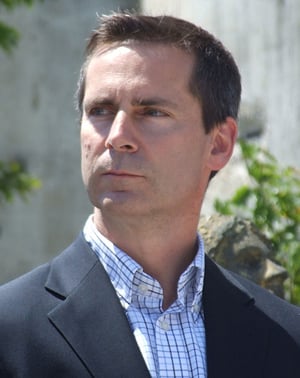
Ontario Premier Dalton McGuinty

Ontario Premier Dalton McGuinty won't support the 'petro dollar.'

Related

A growing political spat between Alberta Premier Alison Redford and Ontario Premier Dalton McGuinty has highlighted the deleterious impact of fast-growing oil exports on the rest of the Canadian economy.

When Redford, whose party has supported rapid oil sands expansion, recently asked McGuinty to support the petroleum mega-project as a national economic driver, McGuinty refused to do so.

The premier of Canada's manufacturing base then explained that the project had turned the loonie into a petro dollar and thereby undermined the competitiveness of Ontario's economy.

"That has knocked the wind out of Ontario exporters and manufacturing in particular," explained McGuinty.

"The only reason the dollar is high -- it's a petro dollar, right? It's been driven by the global demand for oil and gas to be sourced in Western Canada.

"So if I had my preferences, as to whether we have a rapidly growing oil-and-gas sector in the West or a lower dollar benefiting Ontario, I'll tell you where I'd stand -- with the lower dollar."

The controversial oil project accounts for more than five per cent of Canada's GDP and more than 30 per cent of its exports, as well as multi-billion dollar revenues for Ottawa.

Redford, whose party has ruled Alberta for 40 consecutive years on the basis of its oil wealth, called McGuinty's analysis faulty. But a growing number of economists and reports say the facts solidly support McGuinty.

They argue that the Dutch Disease, a well-known affliction of oil exporting nations, has already damaged Canada's economy by raising the value of the Canadian dollar and eroding central Canada's manufacturing base.

Symptoms appear in manufacturing

Avrim Lazar, head of the Forest Products Association of Canada, was one of the first to sound the alarm.

"The obvious signs of Dutch Disease have been in place in Canada for some time, yet there was a collective complacency in the Canadian economic establishment," said Lazar in a 2008 speech. "This complacency has allowed policymakers to remain adamant that everything is fine. Only now are policymakers beginning to wake-up to the realization that the Canadian economy is not as immune to Dutch Disease as some had predicted."

Statistics Canada reports, for instance, that between 2004 and 2008 one in seven manufacturing jobs disappeared in Canada (322,000). The majority of these losses took place in Quebec and Ontario.

Just last November, two Montreal economists writing for the Institute for Research On Public Policy concluded that Canada's manufacturing base was suffering Dutch Disease-like symptoms and that commodity exports driven by oil had been hollowing out the nation’s economy since 2002.

"The initial problem with the Dutch Disease is that massive exploitation and export of natural resources erodes the competitiveness of the manufacturing sector through the appreciation of the exchange rate."

Added the 2011 IRPP report: "The effects of higher raw materials prices and of a stronger Canadian dollar on various sectors of the economy are a particular concern for regional wealth distribution. In Canada, 95 per cent of oil reserves are located in Alberta, whereas 75 per cent of manufacturing output is produced in central Canada (Quebec and Ontario)."

The economists called for a national policy that stabilizes the currency and that would also encourage both Alberta and federal governments to save more of their oil wealth in a sovereign fund. But a Canadian program to deal with the Dutch Disease caused by oil exports would not be easy because it "would likely require the participation of the different levels of governments," they said. 

An 'entrenched' syndrome

An independent investment firm MacroResearchBoard reached even more damning conclusions last April 2011:  

"A severe case of Dutch Disease has dramatically reduced the breadth of the Canadian business sector over the past decade, hollowing out manufactured goods exporters and making the nation increasingly reliant on commodity demand. Canada has often been referred to in jest as the 51st state, due to its historical reliance on the U.S. as a key export market. However, it is becoming more accurate to regard Canada as another Province of China," wrote MRB partner Phillip Colmar.

Economist Robyn Allan also cited the Dutch Disease in her critical report on the economic impact of the Northern Gateway Pipeline: 

"To the extent that the Dutch Disease does exist in Canada, Northern Gateway represents an entrenchment of the syndrome. The project promises a sustained increase in the price of crude oil which will serve to appreciate the Canadian dollar, raise inflation and interest rates. Those pressures will work negatively on Canada's other exporting sectors to decrease output and employment further."

A 2012 study by European and Canadian economists found that 42 per cent of the appreciation in the Canadian dollar was due to the resource boom and that the Dutch Disease accounted for between "196000 and 220000 jobs lost in the manufacturing sector for Canada."

The phenomenon takes its name from the rapid development of natural gas reserves off the coast of the Netherlands in the 1970s. Gas exports changed the value of the guilder and totally rattled that nation’s economy.  

Ever since then, oil-exporting regions including Alaska, Venezuela, Iran and Louisiana have experienced the disease, which often makes petro states highly vulnerable economic monocultures.

"Persistent Dutch Disease provokes a rapid, even distorted, growth of services, transportation and other non-tradeables while simultaneously discouraging industrialization and agriculture -- a dynamic that policymakers seem incapable of counteracting," wrote Stanford political scientist Terry Lynn Karl in 1997.

Her classic book on oil booms and petro states, The Paradox of Plenty, has now become required reading for Canadian politicians.  [Tyee]

24  Comments:

Login or register to post comments

  • retsof

    1 year ago

    The article is correct &

    The article is correct & MacQuinty is doing the right thing. As the Canadian $ increases in value the manufacturing sector will suffer. This will result in job losses. The tar sands will not compensate for these job losses. Alberta will of course make lots of money as will the oil corporations but manufacturing in the rest of the country will disppear increasing unemployment to record levels.

    The tar sands may increase GDP or whatever but it can only sustain so many jobs. With no jobs there will be an increase in poverty and a lower standard of living.

    Norway also was faced with the "dutch disease" and took alternative action. We need to take a look at that.

    We can not let Canada's $ be based on its tar sands. We actually should not be expanding the tar sands, period.

    When people look at the "strong" Canadian $ always think, how many of those "strong" Canadian $s are in my pocket. If they arent in your pocket then its time to change things.

  • Jeffrey J.

    1 year ago

    Foreign Oil Cartel Owns Alberta

    Always a pleasure to read Canada's most courageous author, Andrew Nikiforuk. And this article indicates what happens when Alberta is occupied by a foreign invasion. Alberta elites are totally captive to the foreign owned oil cartel.

    Like BC's foreign owned forest industry. Only worse. Our 'leaders', holding fistfuls of beads, are helping to sell off our resources. Our birthright.

    Linda McQuaig described this best in Holding the Bully's Coat.

    http://www.lindamcquaig.com/HoldingTheBullysCoat/index.cfm

    Great coverage as always.

  • Fiat lux

    1 year ago

    The loss of Canadian

    The loss of Canadian manufacturing is not caused by the so called "high dollar", but by the "free trade" and WTO rackets, destroying real productivity and lifestyle potentials for citizens, by opening up the country to takeovers and the flood of products from slave labour countries.

    The Canadian dollar was pegged .05 cents and up to .10 cents higher back in the 50s and 60s, and Canadian manufacturing was booming, with new shops and factories, including mine, opening up all over the county, every day, employing skilled people making long lasting, high quality products with decent wages.

    There's no question about the terrible damage done to our economy with the forced reliance on the sale of resources, including and especially the tar sands crime wave, but let's look at all the facts and realize where the real causes are and why politicians now scream over the 1/3 cent "high dollar".

    The more "competitive" we get, the more poorer and more reliant on the sale of the ground from under our feet, with our young people sentenced to wage slavery under a worldwide corporate dictatorship.

    This alone shows how fraudulent the GDP and "growth" figures are, because they account destruction, damages and the constant replacement of shoddy, imported junk as "benefits" and "consumer confidence".

    The sordid fact is that the Canadian economy is now controlled by an international corporate mafia from abroad and we don't have the politicians with decency, knowledge and guts to stand up and tell them to bugger off !

    Economies built on and for exports are economies for and by fools. If our economists and politicians had any brains they would build an economy based on the highest degree of self sufficiency, where we are the bosses and not the Bilderberger, or Trilateral, or World Economic Forum criminals.

    Ed Deak.

  • Skywalker

    1 year ago

    Andrew Nikiforuk...

    ...never disappoints. Excellent piece.

  • Talon

    1 year ago

    The loss of local manufacturing.

    Thank you Andrew Nikiforuk for the review of this pressing situation and thank you Ed for wonderful clarity. I agree with those who would slow the development of the tar sands and treat the resource as a valuable and rare commodity which should be made available to future generations as well as ourselves. The tar sands goo should be refined in Canada. Canadians need to start manufacturing more of our needs locally and employing Canadians. We saw what has happened to the USA after it decided to export so much of its manufacturing to lower wage countries. I attended a conference in Cumberland, WV and it was my first experience with seeing a city devastated so badly. Virtually all the prominent manufacturers in Cumberland moved their plants to Mexico and the city was devastated. Housing prices collapsed and when I checked in at the only hotel still open, most of the rooms were available! Don't let this happen in Canada.

  • woodworker

    1 year ago

    No oil, no money

    Take away the wages fromt he oil industry and see what happens to the rest of the economy. That is the only thing keeping the country going right now. It isn't hurting Ontario manufacturing. Just keeping what is left alive. People with no jobs don't buy new cars.

  • Fiat lux

    1 year ago

    There are millions of jobs in

    There are millions of jobs in making things if and when politicians have brains, are not crooked and not hooked up to fraudulent theories to sell off their resources and peoples.

    Some us can remember when Canada was an independent, democratic country, making decisions for our own benefit and didn't have to rely on communist cadre coming over to buy up everything with our own money, we send them to flood us with garbage, and our PM didn't have to go to kiss their feet, begging them to come and buy up and enslave more, while calling it "wealth creating foreign investment".

    But then, we're not all members, or admirers, of the conservative/communist conspiracy to rule the world.

    Ed Deak.

  • realisticman

    1 year ago

    I opened my mouth and the words popped out...

    "Note to Alison Redford from Dalton McGuinty: I’m sorry I said the high “petro dollar” has hobbled my province, but that’s what happens when I work in “real time” and have no opportunity to self-edit.

    In fact, he said, he thinks he can make “common cause” with Ms. Redford by pursuing the same thing she wants: a national energy strategy. Such a strategy, he said, can incorporate much more than the oil sands in Alberta. "

    www.theglobeandmail.com/news/national/toronto/infographic-behind-canadas-oil-sands-boom/article2350603/?from=2353967

  • Langley

    1 year ago

    Remember when...

    They told us the strong Canadian dollar would lead to lower prices all around. Still waiting for the big reductions and only seeing increases.

  • realisticman

    1 year ago

    Squelch that Spat!

    What a Great Country! now pleads McGuinty.

    Great political comedy. He squirmeth like the best.

    www.torontosun.com/2012/02/29/mcguinty-tries-to-clarify-oilsands-remarks

    Please Andrew, go and interview McGuinty on the oil sands.

    By the way, why isn't Venezuela's currency booming?

  • Frank

    1 year ago

    r'man

    I read your link and I didn't see McGuinty retract. Perhaps Andrew knows if he has decided Alberta's oil revenue and the high Cdn dolalr are suddenly good for Canada.

    By the way, I note you have time for this article but have yet to join the discussion on Conservative dirty tricks and vote suppression.

  • RickW

    1 year ago

    The only "policy maker"......

    Quote:
    Only now are policymakers beginning to wake-up to the realization that the Canadian economy is not as immune to Dutch Disease

    ...is the Harper "government" (cough, cough), and he is prefectly content with the Dutch Disease.

    As for Ontario, it relied far too long on auto hand-me-offs from Detroit. Perhaps (and it may not be too late) Mr. McGuinty should encourage the manufacture of "stuff" the world needs and isn't being replicated by every Tom, Dick, & Harry.

  • realisticman

    1 year ago

    Frank

    Politicians don't often retract. McGuinty sure won't be badmouthing the oil sands again soon though.

    You've been away for a while too Frank.

    The dirty tricks you refer to have yet to be proven. Any interference with the election shall be investigated and it certainly has yet to be shown who was responsible. Don't jump to any conclusions. Apparently the parties made 20 million telephone calls during the election. Do you suppose Stephen Harper made them all?

  • RickW

    1 year ago

    R/M old man....may as well make it 23

    http://thetyee.ca/Opinion/2012/02/29/Tories-Dirty-Tricks/

  • Sam Gunsch

    1 year ago

    Nikiforuk and Tyee news coverage and editorials versus MSM

    Ok...for the readership here, this is probably obvious to most...

    By comparison to Nikiforuk's work I find most MSM coverage on tarsands re Dutch disease is really quite thin gruel.

    Really an awful situation for the citizenry in a democracy when an issue this significant is mostly ignored.

    While I'm quite certain of my MSM assessment re coverage of tarsands induced Dutch disease, it's my sense this may be the case for a lot of topics.

    And some days it just gets to me.

    On this one it's just such an injustice in so many ways that hundreds of thousands of manufacturing jobs that offer a relatively decent life where people can work and live and get home after work to have a life with their spouse and children each day... have been lost to tarsands jobs, many thousands of which are on-site short-term construction related boom-and-bust jobs, that require people leave their families and live in work camps for weeks at a time.

    My Alberta's corporatist politics transforming Canada. Awesome.

    And Canada's so subject to corporatist politics that McGuinty has to invent an 'oops' after he merely states the facts.

  • Fiat lux

    1 year ago

    The tragedy of human

    The tragedy of human enslavement and environmental destruction will continue, as long as we permit a predator sector to use imaginary monetary figures to warp physical realities and alter dimensions by fraudulent economic theories.

    Economic theories and ideologies have always been pseudo religions to capture the inborn herd instincts of humanity by predators, but never to the same extent as now.

    At the same time, humanity never had more effective weapons, in the form of instant communications, to fight and free itself from total enslavement.

    We'll see which way all this will go ? Total enslavement by the perceived energy of imaginary values, or democratic freedoms?

    Ed Deak.

  • stver

    1 year ago

    It's for Real

    If you think that Dutch Disease is something that those in Ontario are just making up, take a look at this article from the Melbourne Age in Australia

    http://www.theage.com.au/business/victoria-slumps-as-mining-soars-20120301-1u61a.html

  • Fiat lux

    1 year ago

    When the communists took over

    When the communists took over countries, millions of people have lost their jobs, homes, farms, businesses, forcibly collectivized into the hands of a ruling cadre in the name of "freedom", common ownership and internationalism.

    When the conservative/capitalists take over, millions of people are losing their jobs, homes, farms, businesses, collectivized into the hands of a ruling cadre in the name of "right to own property", "free trade", "free enterprise" and "globalization"

    Now let's hear the conservative/capitalist/communist/parasitic/predator opinions that anybody who dares to question this kind of collectivization is against "free enterprise" and "property rights".

    Prices are better now, on account of shortages, but in the past 10, or so, years hundreds of BC ranchers have lost their lands, sometimes in their families for generations, because of the control of the feedlots, grain supplies, and the price fixings by a US owned multinational corporation. In other words, because of monopolization and oligopolization by a criminal, capitalist ruling class.

    We didn't lose our land, but had to get rid of our cattle, with only a few left for our own and some friends' use, because we couldn't afford to feed them in the winters on account of the fixed prices.

    Well, let's hear it Kredit, that all this is because of good business practices and "property rights", and those who didn't make it "didn't succeed" and "failed".

    But at the same time, let's also have an explanation on the differences between communist and capitalist collectivization to feed insatiable "wealth creating" demands of their ruling cadre in China and here.

    Ed Deak.
    .

  • OleumBenevolus

    1 year ago

    It's more than the Petro dollar

    Can't deny that the appreciation of the Canadian $ relative to the greenback hasn't slowed down Eastern Canadian manufacturing.

    It's a lot more complicated than just that though. The hollowing out of manufacturing is a common problem to all the first world democracies. They cannot currently compete with the Chinese for cheap labour and materials. Added to that, we have punitive levels of corporate taxation to underpin the western welfare state and over regulation.

    The 50s are over folks. The days of high paying low productivity union jobs, developing crappy products for consumers with few choices are long gone. As difficult as times are now in eastern Canada, many a European country or American State would just love to have their problems.

  • Frank

    1 year ago

    OleumBenevolus

    You say the old days of good jobs are over but we never hear about where the good jobs are now. Or will there be any in our new globalized paradise?

    Because I know for certain there won't be many.

  • jimmmmy

    1 year ago

    there is no manufacturing

    there is no manufacturing base in ontario rae, peterson, harris, and mcguinty ,destroyed it with their free trade agendas there are a few branch plants but even these are moving to china to take advantage of slave labor. the rest of this article is gobbly-gook holland owns its reserves, canada does not nafta and wto made sure of that

  • OleumBenevolus

    1 year ago

    No time for despair

    Frank
    I'm saying that the good jobs are right here in the Canadian resource sector. All the western provinces are in dire need of innovative professionals and skilled trades people. Anyone from Ontario or Quebec that needs a challenging high paying career will find one in the WestCan resource sectors.

    The West also needs the innovation and technical know how of Ontario's manufacturing sector. A lot of technological innovation is required and will be required for years to come to unlock the vast potential of the Wests resources. The East can and should avail of it's opportunities to benefit.

  • Frank

    1 year ago

    OleumBenevolus

    Resources don't last forever. You can't build a sustainable economy on the extraction of unsustainable resources.

    And besides, even if our energy resources could last indefinitely, they don't produce enough jobs to employ all the people that have lost good jobs. Even Alberta has lots of unemployed.

    Now if someone had an idea on how we could benefit from using those resources ourselves instead of allowing foreign companies to profit from their extraction and then leave town, we'd be better off.

  • Fiat lux

    1 year ago

    The sale of resources is the

    The sale of resources is the sale of capital and not an income.

    The present destruction of rational economies is caused by deregulated money creation by the banks, licencing gross overcapitalization, colonization and enslavement.

    Economies built on exports are economies for fools and suckers, and are bound to collapse.

    Of course, there must be certain degree imports and exports, but one day, when our politicians and so called "economists" learn the art of simple addition and subtraction they may be able to figure out that the sending resources to Asia and then buying back the products is not "cheaper", but more expensive and the system is bound to collapse around their stupid ears.

    The only sustainable economy is the greatest degree of self sufficiency, with the efficient use of resources and inborn human talents.

    Ed Deak.

    • The discussion for this story is closed. No more comments can be added.