- Ms Kaye is a Tyee Builder. You can be, too.
- Mary Carlisle is a Tyee Builder. You can be, too.
- Prem Gill is a Tyee Builder. You can be, too.
- Nancy Flight is a Tyee Builder. You can be, too.
- Justin Everett is a Tyee Builder. You can be, too.
- John Westover is a Tyee Builder. You can be, too.
- Nora Etches is a Tyee Builder. You can be, too.
- Edward Henderson is a Tyee Builder. You can be, too.
- Bharadwaj Chandramouli is a Tyee Builder. You can be, too.
- Dean Chatterson is a Tyee Builder. You can be, too.
- Marius Scurtescu is a Tyee Builder. You can be, too.
- Robert Parkes is a Tyee Builder. You can be, too.
- James Murton is a Tyee Builder. You can be, too.
- Susan Doyle is a Tyee Builder. You can be, too.
- Vincent Strgar is a Tyee Builder. You can be, too.
- Helen Spiegelman is a Tyee Builder. You can be, too.
- Subir Guin is a Tyee Builder. You can be, too.
- Kimball Finigan is a Tyee Builder. You can be, too.
- Joanne Manley is a Tyee Builder. You can be, too.
- David Leach is a Tyee Builder. You can be, too.
Lessons of Attawapiskat on Vancouver Island
The Nuu-chah-nulth want to raise their standard of living by returning to fishing. Why is Canada still making that so hard?
Before the Canadian press beamed pictures of Attawapiskat into our living rooms, five First Nations on Vancouver Island's west coast were fighting to raise their communities' substandard living conditions by regaining access to commercial fishing. These nations took Canada to court to rebuild an economy broken by colonization.
The result? Both the BC Supreme Court and the BC Court of Appeal handed them victories in 2009 and 2011, recognizing their right to sell fish (and Canada's infringement of that right). Yet so far Canada has ignored the courts' directions, while the people in Nuu-chah-nulth communities live in poverty.
In December, the Assembly of First Nations voted to intervene in the court case (known officially as Ahousaht et al vs. Canada) if the Supreme Court of Canada decides to hear Canada's appeal of the Nuu-chah-nulth victory. The Union of BC Indian Chiefs and the First Nations Summit adopted similar resolutions.
It's a case with the potential to put at least five of Canada's First Nations back on the road to self-sufficiency and replace a history of government dependency. So why does the Government of Canada refuse to recognize the previous decisions?
That's a question many First Nations stopped asking long ago, because they already know the answer. For them, overcrowded houses and black mold are just more evidence that Canadian control of their lands and resources will never allow their people to rise above the aboriginal status quo. For the Nuu-chah-nulth Nations involved, Ahousaht et al vs. Canada is the latest in a string of missed opportunities by Canada to demonstrate real reconciliation with First Nations.
A fishing people
Long before Captain Cook set foot on the shores of Nootka Island in 1778, Nuu-chah-nulth Nations had a sophisticated system of economic trade that included fish and other seafood. When Canada assumed control of Nuu-chah-nulth territories, government agents confined Nuu-chah-nulth to small reservations with the understanding that they were a fishing people and not dependent on the land for survival. No treaty or informal handshake spelled out the details of a future that would see their grandchildren arrested for selling fish. Instead, they continued to catch, trade, and sell seafood through community-based fisheries ruled by small boats and sustainable livelihoods.
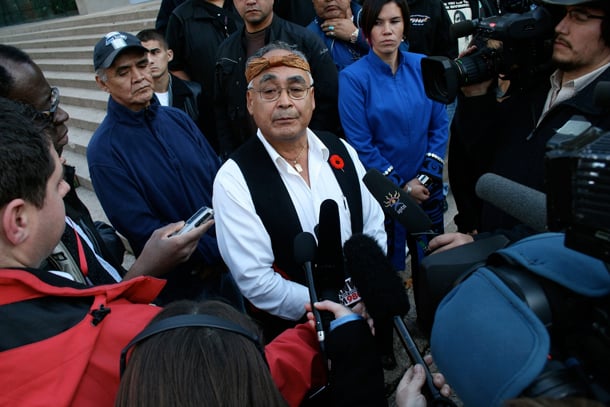
"When I was growing up over 50 years ago, every family in Ahousaht was independent," says Cliff Atleo, referring to one of 14 Nuu-chah-nulth Nations located on Canada's remote west coast. Now president of the Nuu-chah-nulth Tribal Council, Atleo is also uncle to the Assembly of First Nations' National Chief, Shawn Atleo. "I started fishing from a canoe, and by the time I was 13, my parents no longer had to give me a dime."
Then came changes to Canada's fisheries policy in the 1970s, '80s and '90s, which limited small-boat fishing in favour of an integrated, industrial model. Big boats, big nets, and big costs were now the norm. A series of new regulations also determined who could keep those licences and who couldn't.
"In 1969, Canada started 'rationalizing' the fleet. Part of this was based on fiscal earnings. If you didn't earn enough, your licence faded away... In 1977 and '78, they required 3,000 pounds of landed halibut to retain licences. Many of our guys had 1500, 2000 lbs, but it wasn't enough," Atleo says.
Unable to afford the sizable licences, gear, and vessels required by the new fisheries, Nuu-chah-nulth fishermen and communities lost access to their seafood economy.
The conflict years
For some, this economy went underground and resulted in gunpoint standoffs and hand-cuffed parents dragged from rivers in the dead of night. For others, a fishing livelihood became something from the past, like communal living and cedar tunics. Still others clung to the idea that even the Canadian government could be reasonable under the right circumstances. Between 1985 and 2006, Nuu-chah-nulth Nations put forward proposals to "licence split" larger licences into smaller ones.
To be clear, licence splitting doesn't mean more people catching more fish. It means more people catching the same amount of fish, so the benefits reach more people. In the Nuu-chah-nulth proposals, licence splitting also equalled community-based fisheries, often from smaller boats that reduce harm to the environment. While Canada's regulations (under the Aboriginal Communal Licensing Regulations) could permit community-based fishing of this sort, Canada has consistently refused to do so.
"Canada did permit one Aboriginal fishery on the Somass River," says tribal council fisheries manager, Don Hall, referring to a pilot sales agreement that began in the late 1990s. "Each year this creates opportunities for over a hundred people in Port Alberni. The same amount of fish could easily be harvested by one seine boat in a few days of fishing."
Employed by the nations since 1992, Hall wonders why Canada never extended this opportunity to other nations. He's not the only one. When treaties and other negotiations failed to put boats back on the water, Nuu-chah-nulth Nations took Canada (and British Columbia) to court.
What they wanted was recognition of their Aboriginal right to fish and sell fish. They also wanted acknowledgment that Canada was wrong to stop them from fishing "Nuu-chah-nulth style." After 123 days in court, they got both.
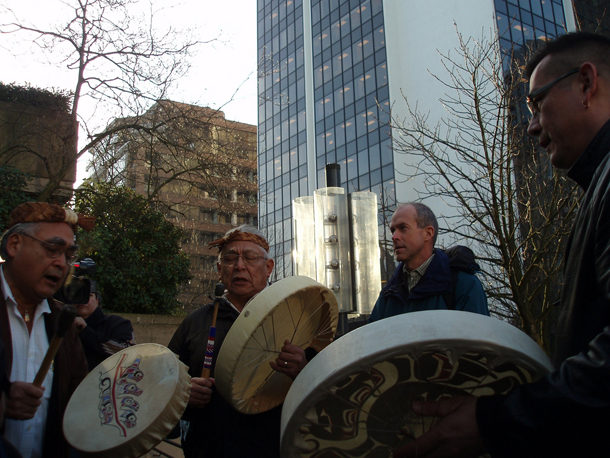
Cliff Atleo Sr. (far left) sings on the courthouse steps before the B.C. Court of Appeal hears arguments in Ahousaht et al. vs. Canada. Pictured with Atleo are supporters Robert Dennis Sr., Don Hall, and Bob Chamberlin. Courtesy of the Nuu-chah-nulth Tribal Council.
"There were grown men crying from relief and joy in the courtroom that day," Hall says. "Some of them had seen their parents arrested for fishing."
Others understood their children would not suffer the same grinding poverty they had faced, while fishing boats owned by B.C. millionaires like Jimmy Pattison fished their ancestral waters. The judge gave the parties two years to design a fishery based on the newly recognized right.
'Glacial' negotiations
From the beginning, negotiations between the nations and Canada have moved at a glacial pace. Some would argue they haven't begun. "Don't let anyone tell you there has been any negotiating. There hasn't," Atleo says. "Our ability to go out fishing tomorrow is there -- and it's not on a scale that would threaten anyone. But there's a blockage in their way of thinking."
Instead of responding to Nuu-chah-nulth proposals or generating new ideas, Canada has offered slim opportunities with regular commercial licences. These licences come with the same restrictions previously deemed insufficient by both the BC Supreme Court and the Court of Appeal.
In one example, Canada's offer would require a monitoring system costing more than $45,000 per boat, per year, even though most of the Nuu-chah-nulth boats are the same size as those active in the sport fishery, where no monitoring is required. Those costs would negate any revenue made by the meagre offer.
Says Atleo: "It has been two years plus, and we haven't gone fishing yet... All we have is a proposal and an offer from DFO that is insulting when you read the court decision."
Concurrent to these negotiations, Canada has appealed the decision to the Supreme Court of Canada. Nations believe this directive came from the Prime Minister's office, and not from the local Pacific Region where fisheries managers seem equally tired of the standoff. If they are right, the Conservative government is sorely out of step with local opinion. In a public perception audit conducted in late 2010 by the First Nations Fisheries Council, 87 per cent of those surveyed support fishing by First Nations for food and ceremony. Sixty-nine per cent of those supported First Nations right to a commercial fishery.
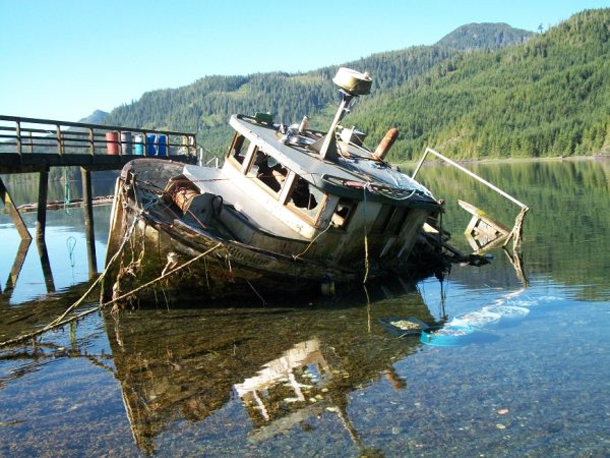
One of many derelict boats in Nuu-chah-nulth communities left over from the days when fishing supported families. Courtesy of the Nuu-chah-nulth Tribal Council.
"It's very telling in many ways," says Atleo, summing up the Harper government's response to Attawapiskat, Ahousaht, and other issues. "Canada has never acknowledged First Nations as the original owners and occupiers of this land. They constantly display ignorance of our people and our way of life -- and they choose not to learn ways that could make things better for us to work together... They also have no appreciation for the reality that they survived here because of our help. They have never recognized us and still don't."
Until that happens, Atleo believes, nothing is going to change -- an unfortunate reality for all Canadians, who are finally ready to see change happen. ![]()


31
Login or register to post comments
Salty
20 weeks ago
Nuuchahnulth fishery
Where are the other sides to this story? Where are the impartially gathered views of the sports and commercial sectors that the Nuuchahnulth now share the fishery with, or the federal government with whom the Nuuchahnulth are negotiating a fishing regime? Maybe they didn't want to comment but I won't know that until you ask and report it. I understand this is an opinion piece but some fairness and balance with all sides is in order here.
Andy
20 weeks ago
Looking to the future
For a bit more positive news about a West Coast Nation looking ahead instead of backward....http://www.youtube.com/watch?v=-ERqhADnds4
woodworker
20 weeks ago
black mold
No one is forcing these people to live in overcrowded houses with black mold. They have many choices. first of get a job and move off the reserve. or do some maintenance on their homes. Why is it a home off reserve with maintenance will last over 50 years but reserve homes built the same last 10 to 20max. Always ticked me off that the nicest homes in many communities are the ones on the reserve and ten years later they are junk.
cboo44
20 weeks ago
Yes, it's always someone else's fault.
It's telling that a reserve which receives a 100 million a year in revenue from the taxpayer and a diamond mine can't provide for 2000 citizens. It's telling that AFN can't stop whining long enough to broker a solution and lead the way in financial responsibility. It's telling that a community can't seem to find economic stability, other than to look at the "old ways", but with modern exclusivity and affirmative action on the part of government.
Illahie
20 weeks ago
Good Article
The move towards self government, and the management of resources including fisheries is on the right path.
Some West Vancouver Island communities are further along on this process than others.
The Nuu-chah-nulth tribal council itself is a large beaucratic entity. Some of the more progressive communities seem to be doing an end run around Nuu-chah-nulth, and are negotiating self government directly with the feds.
Self government will bring up its own set of challenges, Roberts Rules of Order and all that for instance. Many community members are not used to paying for accomodation and electricity.
anne cameron
20 weeks ago
west coast
I live in Tahsis, a small village on the west coast of Vancouver Island. small, and getting smaller. I am mumma'knee, and grandmother to four registered status first nations grand-daughters who, with their mother, live off-reserve.
Every year this village balloons in size as sports fishers from everywhere-you-can-think-of pour in here in pursuit of the last salmon and halibut. It's a blood bath and DFO could do a lot more to monitor and enforce the regulations. The simplest rules could avoid depopulation: any halibut over seventy pounds is sure to be a female, capable of returning a million young ones to the sea. You can tell how much they way by how big they are, easy peasy. Put a size limit on them, big ones, called "smileys", should be catch-and-release. Hell, if they can do it in Alaska surely we can do it here, Alaskans aren't any smarter than we are. Or are they?
I fully support the First Nations fishery. If it comes to the sad point of blockade and civil disobedience, I predict it will not be exclusively Nuu Cha Nulth on the line, there will be many many mumma'knee there, too.
anne cameron
20 weeks ago
housing
Years ago my adopted grandfather moved into a new house on his home reserve. I went to visit him. His house was laid out in the same floorplan as my mother's house, in the city. All similarity stopped there, however. The material used was substandard, the workmanship was shoddy, the new house wouldn't have passed inspection off reserve.
Contractors came in from "outside". Nobody on reserve was hired, not even for shovel work. I have no idea how much the contractor charged the government for material but what was used was shoddy.
And after all that the house did not belong to my adopted grandfather, it belonged to the government. He could not DO anything to that place without permission. Even fixing the front steps required a red tape tangle.
"Free" houses? How many zillions of dollars have been logged from the slopes and how much "royalty" was ever paid First Nations. Jimmy Pattison is one of the wealthiest people in Canada, how much "royalty" does he pay First Nations for fish hauled out of their traditional territory? ANY extraction of natural resources should be subject to a royalty payable to those who have never been given compensation for the theft of their traditional territory.
Ed Deak's financial analysis is spot on. And fortunes have been stolen from First Nations because otherwise "nice" people have been brainwashed into racist attitudes.
Granville
20 weeks ago
I hear Anne Cameron. What is wrong with us Canadians?
Why should it be so frigging hard for someone who lives on the west coast of Vancouver Island to make a living from fishing? The First Nations have a right to self-determination, and shovelling money at native bands is not the same as giving them the right to work. Building a house for someone and giving them the keys is not the same as making them build it themselves.
Just by way of comaprison, try changing the registration details on your recreational boat licence. Last year you could walk into your nearest federal building and get it done on the spot. This year you have to write to Fredericton, New Brunswick and it could take you a month to get the paperwork done. Every year, someone thinks up a new way to make life more complicated, by "increasing efficiency" somewhere.
The fishery should be managed as a community resource, not as a globalised industry, with licences traded as a commodity.
snert
20 weeks ago
Here's an example why FNs can never get anywhere.
Their own worst enemy is themselves.
http://www.vancouversun.com/First+nations+chief+defends+hydro+project/5938451/story.html
http://www.theglobeandmail.com/incoming/province-green-lights-vancouver-island-wind-farm/article2282901/?utm_medium=Feeds%3A%20RSS%2FAtom&utm_source=Home&utm_content=2282901
woodworker
20 weeks ago
substandard housing.
Substandard workmanship occurs on and off reserve. If it is bad then the contractors should be made to fix it. As for hiring FN to help build the house I have one relative and one good friend that have worked on housing on reserves and in most cases they won't help. Beneath them to actually work it seems. Also as for the red tape to fix the front steps. Do like it is done in the rest of the country and just fix the dang thing. How many people actually get a building permit to put a rec room in the basement.
Kreditanstalt
20 weeks ago
Really?
"...the people in Nuu-chah-nulth communities live in poverty."
We do hear a lot about Port Alberni & vicinity being an economically depressed area. But if that's true, the number of Indians - and others! - driving around here in $30,000-$50,000 Dodge & Chev late-model pickup trucks belies that...
Either all that taxpyer money fed to natives is not going for the basics or they're already doing quite well.
And what about the price of fish here? Small salmon steaks, when available in the supermarkets, run about $6-12. The only affordable fish here - in Port Alberni, "the fishing capital of Vancover Island!", is Thai- or Vietnam-sourced whitefish or shrimp. Hard to believe, but true.
Where does all this supposedly-abundant and profitable salmon go?
Someone in the fishing industry is already doing VERY well, but who?
Response 4 U
20 weeks ago
Destructive Criticism
I find it hard to believe that any part of society that can have some good or bad happen in their lives, will have a critic such as "woodworker" and his comments. After reading the comments left by others who by the way, may or may not have had any experience in this matter can voice so much about the opposite thing than that is being presented. Until you have lived in their shoes and lived thier life...no one should be able to speculate what one society over the other is really dealing. I consider this a victory out of many others in this world that a community can stand up for what is right for their people and thier lands without the dictatorship of someone who has never met you, seen where you come from or now what has happened to become what is now only a bright future for not yourselves involved but for the future generations to come. ONLY MY OPINION!
anne cameron
20 weeks ago
woodworker
Yeah, but if you put a rec room in the basement and get found out, nobody evicts you from the house. Fix the front steps on a reserve house without proper permission and go looking for somewhere else to live.
I'm not living on the banks of Walden Pond dreaming of the Noble Savage or claiming that every FN person is a persecuted saint. There are arstles in every population. And no one solution to the myriad of problems and challenges. We can, however, do a lot better than has been done and it's time to re-examine "the system" they've brainwashed us into accepting. People don't get as rich as Jim Pattison or the Weston family unless a lot of other people are going without.
It's too easy to take the lazy road and blame the have-nots. After all, we've been very carefully taught to do that and just as carefully conditioned not to question capitalism and "free enterprise" which really isn't free at all.
Time after time the FN "win" in court and time after time both federal and provincial governments ignore the court decision. And get away with it when otherwise nice people don't put pressure on government to do more and do it better. After all, WE aren't being subjected to third-and-fourth world conditions! WE'RE all right.
Hi Ed Deak! Keep on keepin' on, my friend.
kasi_visvanath
20 weeks ago
it's about time
thank you Anne for your description of what's going on with the people you know. to any human with a functioning heart, and a desire for "fair play", for justice for all of our peoples. your stories, and the stories of the Nuu Chah Nulth, are alarming, saddening, and very depressing....for how long does this mistreatment have to go on? when First Nations Peoples can't even fish in their own backyards...that really sucks....
it's about time, that we did as you suggested, Anne....actually sit up, pay attention, and finally, finally do the right thing by our First Nations brothers and sisters, who have done nothing wrong to merit the gross disrespect and unequal opportunities that they have been suffering ever since the Europeans first came here....at least compensate the FN for the losses they have suffered, and pay them some royalties for the riches taken from the lands stolen from them.
that is the least we could do....oh...and a change of attitude towards them from "hostile", arrogant, and domineering to friendly, co-operative, and helpful.
come on Canada.....we can do this....otherwise we will continue to look like the disgusting hypocrites we are...and the FN peoples will continue to suffer from our lack of caring.
Illahie
20 weeks ago
Recommended Reading
Dances with Dependency; Out of Poverty Through Self-Reliance by Calvin Helin
ISBN 978-1-932824-07-0
Ravencrest Pub, 2008
A book about a possible way out for our native communities.
oeanda
20 weeks ago
Privilege
What comments like woodworker's show, above all else, is that the privileged majority of Canadian society really have no idea of the degree of handholding they receive from the state. Clean water, paved roads, building codes, reliable telecommunications and emergency response aren't things that small communities simply throw together by pooling their resources and cooperating. They are *forced* to do these things by the state and whine constantly about having to pay for it.
That woodworker and his neighbours could build a society like the one they take for granted now out of sheer pluck and determination is a quaint fantasy. This is a colony established by an ancient bureaucratic tradition, one that actively withholds its advantages from First Nations.
snert
20 weeks ago
kasi_visvanath
It's not Canada that has to pull itself up by it's bootstraps. Continuing to hold to tribal territories and hang on to the dream that the old ways were somehow or other way better than life , now, could be will do nothing but drag down any efforts to alleviate any problems.
Native populations, in Canada, are no longer sustainable when clinging to tribalism. (There I used it, the most over worked word in the English language.) We, as Canadians must stop trying to subsidize this way of life. It just won't work.
FNs are responsible for maintaining their own connections to their previous ways of life and there is nothing the matter with that but, and it's a big but, this should not be to the detriment of their present and future lifestyles.
Woodworker is not unrealistic with his assessment. You can go on reserve after reserve and find exactly what he is talking about.
Tribalism and subsequent isolation will not preserve the unique west coast FN cultures. It will ensure their destruction.
Cynic
20 weeks ago
Good one, oeanda, and anne.
Good one, oeanda, and anne. The white supremacist campaign against aboriginals is clearly in shocking evidence everywhere on our planet, yet the elite's perception management blinds us to the reality. When will we face the stark record of dominant white men lying and monkeywrenching every agreement they've ever signed on to? Bury my heart at Wounded Knee. When will we face it? The white psychopaths who run our lives will never allow equality and justice.
Illahie
20 weeks ago
If woodworker
If woodworker were interred in a federal institution, not a native community but a federal prison, he would get free room and board. If the cell in which he was interred was substandard, he could try to fix it up to his own standards. If he wanted to spruce up the cell a bit, he would have to bring in all the materials himself. He does not own the cell, so all the hard work that he would have to perform would be enjoyed by those who followed him after he leaves. His fellow inmates would not be amused by his efforts, and would probably try to tear down his efforts when he was out of his cell.
Imagine being imprisoned in your own community that your ancestors have lived in for thousands of years.
1 4 a sustainab...
20 weeks ago
A sustainable fishery
I completely agree with this article. We need to support First Nations rights to fish so that there is more pressure on government to manage fisheries in a more sustainable manner. We don't want to lose our west coast fishery like we have seen in the east coast. By supporting First Nations rights to fish we will have one more strong voice for proper management of this resource that is essential for our future as well as important for our coastal ecosystems (including orcas). I think we should balance fishery management by providing more opportunities for First Nations and sports fishermen - this would create many more jobs, and much more direct and indirect revenues for our province.
mary jane
20 weeks ago
Harpo changed the RRAP or
Harpo changed the RRAP or residencial rehab assistance program that was to fix the homes of poor - seniors - disabled people until this last year or so it seems its only been this year, Now its only for First Nations people - I will bet, no one told them there was a grant so they could repair their homes Check with your MP for details. Non Fist Nations people have to to another source Your MP can find the placr
freebear
20 weeks ago
We all can't be commercial fisherman-not enough fish
So the fisheries need to be managed (mange the fishers not the fish!)and that means not everyone can be commercial fishers.
DFO finds it is easier to deny Aborigianl commercial fishers than non-native ones; simple as that!
freebear
20 weeks ago
DFO - easier to deny Aboriginal commercial fishers
than deny non-native fishers!
There is only so much commercial fish to go round!
Only right to give part to aboriginal commercial fishers!
anne cameron
20 weeks ago
didn't know that
I didn't know the RRAP programme had been cancelled for non-FN people. And I guess the RRAP people hadn't been notified, either, because they just helped me get a storm porch added to the side of my house exposed to the hurricane-force winds which slam in from the sea. They also picked up the tab to have one entire wall of my house (the exposed one) replaced because of the damage done by the storms. I'm not FN, I don't live on reserve, and the paperwork I had to fill out suggested to me that they have different requirements for on-reserve repairs. I guess I misunderstood the entire process. Two of my neighbours must have misunderstood, as well; like me, they are seniors, on limited pensions, who couldn't have afforded the repairs without the help of RRAP.
Mind you, I do believe Harpo would love to cancel every social programme we have and use the money to buy bullets and bombs to drop on helpless people. He's militarising a nation which used to be known as "Peacekeepers".
freebear
20 weeks ago
Comments not posting?
My last 2 comments diod not post; having problems at the TYEE?
devils advocate
20 weeks ago
There is nothing stopping
There is nothing stopping these natives from going out and buying a commercial fishing license...just like everyone else can do...But they want something for nothing as usual.
North Coast natives just lost a similar case about commercial fishing 'rights'.
anne cameron
20 weeks ago
nothing stopping....
you want the people with the lowest average income in the nation to buy licenses which, by and large, can better be afforded by dentists and doctors?
That might be part of the problem with the commercial fishery... too many licences bought up by people who never go fishing, just stay at home, and pocket the profit. If the licence holder had to actually fish...
If the ISA virus gets loose in the wild population the whole thing will be moot, anyway. DFO is doing it's usual poor job of protecting wild fish. They don't seem to have learned a thing from the collapse of the east coast cod fishery.
It's so easy to say FN want "something for nothing as usual" but some people seem unable to see or admit the corporations are the ones wanting (and getting) something for nothing.
devils advocate
20 weeks ago
money
according to DFO Grants & Contributions webpage, the Nuu-Cha-Nulth received over 1.75 million dollars in 2011 in 3 grants related to fisheries.
first off: what happened to that money?
and second: you could probably BUY all the fish needs for the few natives in these communities with all that money.
Now they are crying the blues and wanting more it seems....So hard done by.
I guess the Feds are appealing because a north coast native group recently lost in court about the same issue.
oeanda
20 weeks ago
Insinuation...
devil's advocate, I suspect the force of the implication contained in your question would be diminished if you'd presented some evidence (i.e. links) of the existence and intent of the grants, and an accounting of what was done with them.
devils advocate
20 weeks ago
dfo grants
http://www.dfo-mpo.gc.ca/GCSC/reports_e.asp
just pick any year/quarter and see the hundreds of thousands of dollars these groups get annually.
what happens to these dollars??
bfearn
20 weeks ago
Fairness
I live in the Chilcotin close to native communities. I have also hired native workers to build snake fencing for me. Not only are they good workers they are the only workers I could find to do this work.
There are many white guys in BC and on this site that think the natives have all sorts of advantages that are denied to them. Although much of that is exaggerated these people always seem to forget the disadvantages that are also denied to them.
Even today native people deal with substandard housing, which they can't own, how do white renters treat the properties they live in? Substandard schooling, how many great teachers want to teach in a native school? Substance abuse problems, how much of the huge tax grab on booze goes to solve problems in native communities? Unemployment, how much of the resource wealth that have made the likes of Patterson a billionaire end up in native communities? Bureaucratic bungling, how much of the billions spent on native issues ends up actually solving those native issues? Does the Aboriginal Affairs department, who has control of these billions, make sure that this money is wisely and fairly spent? Forced cultural changes. How many white guys have been forced to speak another language, have been removed from their parents, have had all of their traditional way of life drastically changed?
Tragically this list is a long one and the efforts to make it shorter are far less effective than they should be.