
ENERGY & EQUITY: How we turned a blessing into a curse, and ways to atone. Part one.
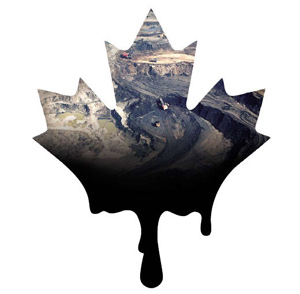
Five per cent of Canada's GDP comes from oil; bitumen makes up 25 per cent of exports.

-
Billing itself as 'grassroots', EthicalOil has close ties to a top oil sands law firm.
-
-
Former premier Lougheed is right. Piping raw bitumen to US is a lousy deal for Alberta's people.
Canada has joined the ranks of exporting oil nations and now supplies more petroleum to the United States than Mexico or Saudi Arabia. The unconventional character of mined bitumen as well as the startling revenue it generates for government coffers has irrevocably changed the country. Five per cent of the nation's GDP comes from oil while bitumen makes up 25 per cent of the nation's exports.
As the wild debate about the Keystone XL pipeline illustrates, Canada's $200-billion energy project has also become a global lightning rod. No oil exporting nation, whether Christian or Muslim, is immune from the corrosive influence of oil money and its dirty politics. Yet Canada has anointed bitumen as the nation's new "economic engine" without setting clear public policy goals or assessing the economic risks. The exploitation of bitumen has also proceeded without a national vision or even an energy strategy.
The environmental risks are now well documented. In fact both the Alberta government and Ottawa have systematically failed to monitor pollution as well as cumulative impacts. In 2011, the Office of the Auditor General declared the obvious: "incomplete environmental baselines and environmental data monitoring systems needed to understand changing environmental conditions in northern Alberta have hindered the ability of Fisheries and Oceans Canada and Environment Canada to consider in a thorough and systematic manner the cumulative environmental effects of oil sands projects in that region."
Although North America's greens have focused on carbon pollution and landscape degradation, the project poses other ethical challenges for the nation. These moral issues include the scale and pace of the project as well as the nature of the Dutch Disease, the absence of a savings plan, severe technology gaps, diminishing energy returns, the Chinese gamble, and the dysfunctional persona of petro states.
Until Canada's elites and its citizens address these critical issues, the project will become an increasing source of global and national conflict. In simple terms too much has been developed too quickly without the proper fiscal, political and environmental safeguards. What should have been a slow-moving blessing has turned into a rapidly developing curse. Moreover, Canada's reputation as a fair and democratic nation has now been blackened. It cannot redeem itself without democratically addressing the following ethical issues:
Ethical Challenge One: Bigness (Scale)
Since 1996 the global oil industry has invested nearly $200 billion in bitumen mines, upgraders, pipelines and steam plants. Seven of the world's largest companies (ExxonMobil, Shell, BP, Sinopec, Petro China, Total and Chevron) now propose to invest another $180-billion on the resource over the next two decades to boost production from 1.6 million barrels a day to more than 3 million barrels. By 2030 industry will have dug a 40-metre hole in the boreal forest the size of Rhode Island. It has already created lakes of mining waste (170 square kilometres) great enough to flood Washington, D.C. or downtown Vancouver. Moreover, the world's longest and therefore least secure pipelines are all connected to the project. Everything about the project gives a new meaning to the word big.
But the project's Hulk-like scale invites vulnerabilities that should alarm politicians and citizens alike. The development's brittleness can be found in the project's basic economics, engineering complexity and long supply and delivery chains.
As the world's most expensive hydrocarbon ($60 to $80 a barrel) the oil sands are highly vulnerable to oil price shocks. During the 2008 recession companies cancelled or shelved $150-billion worth of investments that became uneconomic at $40 a barrel. Just one improperly installed piece of pipe at an oil sands plant can create a half-billion dollar fire. Just one Enbridge pipeline leak can raise the price of oil by ten dollars and nearly shut down half a dozen U.S. refineries. And the failure of just one large dam of toxic mining waste can pollute a watershed all the way to Beaufort Sea.
A Calgary law firm acknowledged the project's fragility this way: "When it comes to the oil sands, the reality is that small mistakes can lead to big problems."
Fifty years ago, the Austrian economist Leopold Kohr identified bigness as the source of all social misery. In other words, big projects, like big corporations, big cities and big economic unions, invariably fail because they transgress important human scales and the resilience associated with smaller enterprises. Nassim Nicholas Taleb, the astute business critic, has repeatedly warned that big systems are highly vulnerable to improbable events (black swans) and possess little robustness. He has shown mathematically "that a certain class of unforeseen errors and random shocks hurts large organism vastly more than smaller ones." Unless slowed or scaled down, the oil sands could become a Titanic for the Canadian economy.
Ethical Challenge Two: Pace
In 2011 the government of Alberta released a startling infrastructure plan for the world's largest energy project. It forecasts that oil sands production will grow from 1.6 million barrels a day to 6 million by 2035. At the same time the population of the Regional Municipality of Wood Buffalo could more than double and grow to 240,000 people.
Yet this rapid expansion poses more risks than benefits for Canada. For starters, the U.S. demand for oil is in steep decline due to the global recession and rising domestic production from North Dakota's unconventional oil fields. That leaves Communist China as a core market for expanding bitumen supplies. Yet renewable energy reforms combined with slowing growth in its industrial megacities could also lesson demand for imported oil. Moreover oil remains the world's most volatile commodity. The Deutsche Bank has predicted that oil price volatility alone could diminish demand for petroleum as a transportation fuel and cripple high cost projects such as the oil sands as early as 2015.
Given such market uncertainties former Alberta premier Peter Lougheed has persistently advocated for a dramatic slowing down of the project. Until Albertans, true owners of the resource, insist that bitumen be developed in a deliberate and prudent timeframe, overexpansion could expose both the Alberta and Canadian economy to unacceptable risks.
In the 1970s Norway strove to create a "qualitatively better society" by maintaining "a moderate pace in the extraction of petroleum resources." However, industry undermined that public mandate and Norway embarked on a high-speed liquidation program just like Alberta. To date there has been no serious public debate in Canada about the pace of bitumen development.
Ethical Challenge Three: The Dutch Disease
Every oil exporting country invariably suffers a bad case of the Dutch Disease or the "petrolization" of its economy. Even David Emerson, Canada's former industry minister, now defines the Dutch Disease as a major national concern in which "opportunities from natural resources create destructive pressures on other businesses and industries."
The symptoms have been well defined. They start with a currency that becomes tied to the vagaries of global oil markets. In the 1970s Holland experienced the curse when it discovered natural gas off its shores. Its rising currency greatly eroded the ability of its manufacturing and agricultural sectors to compete and export their goods abroad.
The same hollowing out of the economy has begun in Canada. According to several studies by StatsCan, Desjardins and other groups, approximately half of the 340,000 jobs losses reported in the nation's manufacturing sector are now due to Canada's rising petro dollar. Even a 2007 parliamentary report on the decline of Canada's manufacturing base blamed the nation's new petro dollar and rising energy costs as major contributors.
A damning 2011 report by a Montreal investment group, MRB, concluded that the nation has crossed a critical threshold: "A severe case of Dutch Disease has dramatically reduced the breadth of the Canadian business sector over the past decade, hollowing out manufactured goods exporters and making the nation increasingly reliant on commodity demand. Canada has often been referred to in jest as the 51st state, due to its historical reliance on the U.S. as a key export market. However, it is becoming more accurate to regard Canada as another Province of China."
Without the creation of a national stabilization fund, Canada's petro dollar could fracture the country and tie the nation's economic fate to catastrophic oil price volatility.
Ethical Challenge Four: The Money
According to Bruce March, CEO of Imperial Oil, both federal and provincial governments stand to make more than $500-billion in income from the oil sands over the next 25 years. Yet unlike most oil exporting nations, neither Alberta nor the government of Canada have exercised any fiscal accountability over this sweat-free income. (Ottawa makes more money from the oil sands in form of corporate taxes than Alberta does due to the province's "give-it-away" bitumen royalties.) To date neither jurisdiction has saved this one-time inheritance for future generations.
One 2007 study bluntly warned that Alberta could look like a ghost town by the end of the century if it didn't save $100 billion by 2030.
In contrast to Canada and Alberta, Norway has saved 90 per cent of its oil wealth for future generations. Modeled after Alberta's now debilitated Heritage Fund, the Norwegian Government Pension Fund holds more than $500 billion. The fund has a two-fold purpose. It tames the volatility of oil revenues and saves for the future. The growth of capital in the fund also reflects the physical depletion of finite oil resources.
Unlike Canada or Alberta, the Norwegian government runs responsibly on taxes as opposed to non-renewable oil wealth. Both the OECD and International Monetary Fund have criticized Alberta and Canada for their libertine approach to oil revenue. The current system allows political parties to manipulate oil rent for their own self-serving purposes. Although the bitumen boom provides all Canadian governments with an opportunity to rethink their management of resource revenues and to save responsibly for the future, the nation's baroque political leadership remains asleep at the wheel.
Only ordinary citizens can force their governments to bank resource revenues. Government that run on taxes, represent their citizens; government that run on effortless oil revenue, ultimately represent the dark interests of petroleum.
Ethical Challenge Five: Energy Security
As Canada floods U.S. markets with more bitumen than Americans can burn, both Quebec and Atlantic Canada have become increasingly reliant on foreign oil from the North Sea, Venezuela, Iraq and Algeria. In fact eastern Canada is more dependent on imported oil than the United States (70 per cent). This growing dependence mocks arguments that bitumen is somehow "ethical."
It also highlights the priorities of the North American Free Trade Agreement, which prevents oil from being shipped east. In addition eastern Canada's perilous oil dependence reflects the absence of any national energy plan. While bitumen fuels the western half of the nation, eastern Canada now relies on petro states such as Iraq and Saudi Arabia for its energy security.
Given declining oil reserves from the Middle East, Larry Hughes of Dalhousie University's Energy Working Group has warned that "Eastern Canadians will have to reduce their reliance on oil products; replace insecure supplies of crude oil with ones that are secure; and restrict new demand to non-oil products."
An innovative Canada could turn this challenge into an opportunity. It could even experiment with green renewables in the region in order to lessen its costly dependence on fossil fuels and decrease Canada's unethical carbon footprint at the same time. Yet the issue goes missing in the Canadian media.
Next week: Canada's oil sands ethical challenges six through 10. ![[Tyee]](http://thetyee.cachefly.net/ui/img/ico_fishie.png)
Andrew Nikiforuk, whose column Energy & Equity runs regularly on The Tyee, is the author of the national best seller, Tar Sands: Dirty Oil and the Future of the Continent. His award-winning book called for a national debate on the pace and scale of bitumen production and its impact on Canada's politics three years ago.
36
Login or register to post comments
boondoggle
1 year ago
How do we take back the commons?
Canadians own these resources yet our political system is so corrupt and dysfunctional we have lost all control. The future of the human race is at stake and unless we, the people, take back the commons we will most certainly go the way of the dinosaurs taking the majority of life on earth with us. Time to hit the streets! Thanks Andrew!
pwlg
1 year ago
My Fellow BC Citizens
Nikiforuk writes:
"Only ordinary citizens can force their governments to bank resource revenues. Government that run on taxes, represent their citizens; government that run on effortless oil revenue, ultimately represent the dark interests of petroleum."
Andrew states that Alberta and the Canadian government who take in billions of dollars of taxes, royalties and fees from oil and gas exploitation neither of these governments save any of this revenue for future generations.
Before BC residents look scornfully at our eastern partners in confederation we should look at our own government and its selling and signing long term leases of NE oil and gas reserves and spending as fast as they can those revenues (in the billions) on discretionary items like stadium roofs, expansions to convention centres and other fruitless endeavours that do not serve the future needs of our own citizens.
These billions have been used to prop up a failing balance sheet and neo-liberal ideology during election campaigns. Since 2008 provided the economic shock that Nikiforuk writes about, the government had to cook the books in a favourable light for the last provincial election campaign. It had no more petro dollars to prop up its destructive policies and agenda.
Unfortunately, enough BC residents fell for it and even though we got rid of the architect of BC's economic woes, we have another ideologue in the driver's seat just as, or perhaps more, deceptive and destructive.
Fish-counter
1 year ago
Fot McMurray is the new Sudbury, then
The Sudbury nickel mines were the world's largest single point source of SO2 pollution in their day and today it is the Alberta Tar Sands. The Sudbury Solution was to build bigger smoke stacks to spread the joy. The Fort McMurray Solution is develop and be damned. So what has changed since the 1970's?
Well, today we have Peter Kent and Stephen Baird (deliberate error) minding the store and everyone says we need to understand more.
Canada has always tried to look both ways on environemntal issues, so it is no surprise we have a stiff-neck in Ottawa. I would like to wring the neck, but we can't really do that, can we?
RickW
1 year ago
Too Bad Current Ottawa "Thinking" Precludes Ethics
As an "aside":
Could it be that the ramping up of the Chinese navy would include guarding the route of the tankers that will be carrying Tar Sands bitumen once the (inevitable) northern pipeline is built? If so, how long will it take for there to be an "understanding" for the Chinese Airforce/Army to also "guard" the pipeline itself?
Dan the socialist
1 year ago
The environment is hardly on
The environment is hardly on the agenda of the Harper and Alberta Governments (probably Sask's and BC's as well). Not enough people in this country care either, they may say it but at the end of the day people seem more concerned about oil profits than how oil companies are ripping off the people that own the resources with various governments help.
People that are against it are hurled shaming language like 'get a job' 'you are a bum' ' get off welfare' 'lazy hippy' and so on and so on. Go to any story on the Tar sands at CBC, CTV or any other mainstream media in Canada or to the morning coffee crowd at the local A&W to see what I mean.
You would think people would be outraged at the potential damage or how bad we are being ripped off for oil. Just look to Norway to see how it is done right. I yearn for the day when we no longer need oil. We probably really do not know or would not if big oil did not slow things down with the politicians they 'own'....Canada nor any province with oil should have any debt or run a deficit..Just look to Alberta to see how poor things are run and how the oil is basically given to the big (many which are foreign) companies..Why are they in deficit? Why is their heritage fund down?
Dan the socialist
1 year ago
As well I would bet my life
As well I would bet my life that Keystone Pipeline will go through. I do not see any way of stopping it. Harper has a majority, Alberta is on board and the US will be come after next years elections, if they are not already. Will Obama reject it? I really doubt it as from what I seen he is just more of the same old and 'you can take that to the bank'..lol
Deep Green Resi...
1 year ago
Remember Mr. Smith?
I'd like to share a revelation that I've had during my time here. It came to me when I tried to classify industrial civilization and I realized that civilized human beings aren’t actually mammals. Every mammal on this planet instinctively develops a natural equilibrium with the surrounding environment but you civilized humans do not. Civilized human beings move to an area and you multiply and multiply until every natural resource is consumed and the only way you can survive is to spread to another area. There is another organism on this planet that follows the same pattern. Do you know what it is? A virus. Industrial civilization is a disease, a cancer of this planet. Industrial civilization is a plague and small scale, ecosystem based communities are the cure.
Deep Green Resistance: In Defence of the Earth
Stonebreaker
1 year ago
34 tonnes per Canadian
The well-to-wheels climate footprint of the tar sands is already 280,000,000 tCO2 per year. That's 9 tonnes per Canadian. In total it is more than the climate emissions from over 86 nations *combined*. If we hit 6 million barrel a day as Alberta plans the climate destabilizing pollution will be 1.1 billion tCO2 per year or 34 tonnes per Canadian. Over 300 tonnes per Albertan. Nice economy Alberta is building eh? Just from the tar sands.
As far as it being a financially sound thing to do all I can say is do the carbon math. The tar sands generate $650 in GDP per tonne of CO2. Canada averages $1850. Ontario, Quebec and BC average over $2500. Building such a climate dirty economy at this point -- one that will require the world allow Albertans to pump out 300 tonnes per person without penalty -- is fiscally irresponsible if you think climate impacts will keep getting worse. The social cost of carbon as computed by economists is rising yearly and is already so high as to threaten the Alberta economy if they had to pay for their climate pollution. Think tobacco company liability. Think carbon bubble popping as extreme weather damages intensify.
The tar sands are not only an ethical disaster they are a fiscal disaster riding on top of a carbon bubble that Lord Stern of UK called the greatest failure of market capitalism ever.
Cool Hand
1 year ago
pwlg
Well, not entirely correct.
The $billions$ that the BC provincial treasury received from land grants/drilling licenses over the past few years were derived from the Horn River/Montney basins, which are essentially tight gas/shale plays.
The same ng plays that require water for fraccing. You are against fraccing right? And because of that BC shouldn't/wouldn't receive those $billions$ right?
And BC gov't employees wouldn't have received a pay increase during the last round of negotiations inclusive of a $4,000 - $5,000 per employee signing bonus as well as annual wage increases right?
And other gov't services also wouldn't have been funded without the ensuing royalty revenue from fracced gas right?
Now the BC NDP has always been dysfunctional. On the one hand, BC NDP energy critic John Horgan basically says "drill baby drill" and "sell baby sell" in reference to these fracced natural gas reserves:
Read more: http://www.ctv.ca/generic/generated/static/business/article2195213.html#ixzz1aoDN0o1r
But BC NDP environment critic Rob Flemming, among other NDP MLA's, are against NE BC fracced natural gas drilling and selling of same.
A very strange political party. Don't ya think?
G West
1 year ago
Lukie
WRONG!
On every single score..
As usual
Jeffrey J.
1 year ago
Nikiforuk: Master Journalist
Nikiforuk proves yet again, he is a master journalist, author and analyst on the issue of Canada's tar sands.
With his trade-mark brilliant literary style, demonstrating a command of the language unsurpassed, we are treated to yet another powerful essay about the insanity of Canada's approach to exploiting the Alberta tar sands.
Needless to say, this policy is totally short sighted and doomed to catastrophe.
But thus far, this hasn't stopped the ideologues in charge.
Great coverage, as always.
RickW
1 year ago
Cool Hand
First thing popped into my head was the $3.5 billion wasted on the S2S highway. How far would that have gone in providing well-deserved raises for gov't employees?
Cool Hand
1 year ago
RickW
Why not just say $10 billion - it would sound better. haha
Capital cost was actually ~$690 million. And that was for a 80 km/hr design speed, RAD (rural arterial divided) for only a relatively short 4-lane portion between HSB and Squamish.
In that vein, I agree that the Libs Fu#$#ed up!
In 1999, an engineering firm commissioned by the then NDP guvmint recommended a 100 km/hr design speed, RED (Rural Expressway Divided) with a capital cost of ~$2 billion. A much higher highway standard involving viaducts, tunnels, bridges, and wider median/shoulders.
It's obvious that you don't understand highway design, standards, functionality, and classifications.
Now, guess what? Quebec NDP MPs want a highway public sector/private sector partnership (a P-3)!!!
Read more: http://www.montrealgazette.com/Critical+Montreal+bridge+terminal+cancer+says+engineering+expert/5224211/story.html#ixzz1apE99iMd
And the capital cost of a new Champlain Bridge in Montreal is estimated at $5 billion.
Since you have stated that the S2S, with an actual capital cost of $690 million, is for some absurd reason $3.5 billion, I could then extrapolate that a new Champlain Bridge, with a capital cost of ~$5 billion, is actually $25 billion using your math? haha
BTW, what's up with the Quebec NDP and P-3s? I'm all ears. ;)
igbymac
1 year ago
Clearly, Cool Hand
...you fail to take seriously the allegation that the NDP is just a welfare state capitalist, but pure-blooded capitalist nonetheless. The vehicle of NDP politiks just moves a little slower, but on the same road, as that of the CPC. They are family all the same.
ErinD
1 year ago
broken link
First one in the article. Seems like an important one.
DonValley
1 year ago
re: broken link
http://www.oag-bvg.gc.ca/internet/English/parl_cesd_201110_02_e_35761.html
G West
1 year ago
Actual cost of the sea to sky highway
Is yet to be determined - the capital cost was just sky of $700 million but the future costs are not included in that amount - as you no doubt know Lukie...BC is using a design-build-finance-operate approach to modernize the (non-toll) Sea-to-Sky Highway in time for the 2010 Winter Olympics. The concession for project will run for 25 years, and the government will provide shadow toll payments over the life of the agreement.
By the time it's all added in, the costs to the province will be wayyyy more than a billion dollars....but no ACTUAL tolls for the folks from West Vancouver.
How come?
woodworker
1 year ago
CO2
All that CO2 should really boost agriculture production. And since it has been pretty much proven that Co@ has little to do with climate change but it is proven to improve plant growth. Also if the global warming people are by fluke right about CO2 then as a country Canada really stands to benefit as we will be able to grow crops where it is presently too cold and where now we get one crop we will be able to grow two due to the warmer climate. I can never figure out why people figure global warming is a bad thing. I live in Canada, basically a cold country. Warmer is better all round.
igbymac
1 year ago
woodworker
try google and look for 'greenhouse gases'.
In today's world, nothing reveals a person's bombastic nesceince quite as shamefully as his or her denial of climate change.
Rationalizing away the systemic impact of global warming because 'Canada is a cold country and could stand a little warmth'?
I understand there are not stupid questions; it's the willful ignorance I am worried about.
Moderator
1 year ago
ErinD
Thanks for the heads up. Link is now fixed.
RickW
1 year ago
Cool Hand
http://powellriverpersuader.blogspot.com/2009/08/what-is-true-cost-of-sea-to-sky-highway.html
Note:
You can read the rest...........
George Sourligas
1 year ago
The Selling of Our Resources
My name is George Sourligas. I am a Canadian, an expat, and ESL teacher who has been working and living in China since 2005.
While in China, I have come to know its everyday workings. It is a corrupt and money hungry society especially its government and business culture. There are no food and safety mechanisms in place and a huge disregard when comes to environmental protection. Is this what Canada intends to import when it comes to the selling of our beloved oils sands to foreign interests?
The selling of Canadian natural resources is economic suicide. This non-sense has to stop before its too late. What is the next generation of Canadians going to inherit if we continue to do this? Absolutely nothing.
Mr. Harper did not attend the 2008 Summer Olympic Games in Beijing because of China’s human rights record and now he wants to sell Canada to Chinese hands in the name of money and self-interest. He is a flip flopper.
Canada is not for sale. We should protect our natural treasures because they belong to all Canadians. Whatever happened to: “ Oh! Canada we stand on guard for thee”? I do not see this anymore. We have lost our true spirit.
Governments are elected by the people and should serve the people. Help me to restore my faith in Canadian governance. Nothing more and nothing less.
Please hear my voice because I speak on behalf of all Canadians who do not want to see this great nation lose itself.
Great article Andrew!
realisticman
1 year ago
igbymac
I detect no ignorance in woodworkers statement. I do hear bombast and distasteful conceit coming from the 'believers' but 'twas always thus. Remember the Inquisition?
When one has lived a few decades one can easily count many certain predictions that never materialize. One also hears of many terrible things that are considered by some to be bad for us. Later we need those things, according to others.
Fact is this. Warming, if it is really here, will help both Canada and the planet. We will burn less fuel, and as a people that consumes perhaps the most per capita on earth, this will consumption will be reduced, therefore creating less nasty GHGs.
Worship the sun! The hotter it gets might be our only chance, if the Cassandras are right - for once.
G West
1 year ago
r/man
Your attempts at both 'wisdom' and humour fall a little flat when a comment starts with something as incoherent and your first paragraph.
perhaps you should try again. There are lessons to be learned from Torquemada and Auto-da-fé. And Dick Cheney certainly learned them - the suggestion that there is any parallelism with the scientific evidence (and those who support it) for anthropogenic global warming (or climate change) is absurd.
Do you actually know anything about the Inquisition?
realisticman
1 year ago
West
Yes, of course. Your 'new' scientists that must not be questioned are Paul Krugman and Al Gore. Anyone that doesn't swallow their dictum whole is anti science and an heretic. We understand that this narrative of hysteria slots in well with the rest of the ideology coming from the anti free-market socialists but the subject currently being discussed is whether Canada, and the planet, will be better or worse off as the planet warms.
G West
1 year ago
Al Gore and Paul Krugman are 'scientists'?
Don't think so and certainly not in the sense YOU implied: And they're not inquisitors either - which was what YOU wrote, remember?
The scientists are actually the fellows cited in SCIENCE...you can read about what they have to say here:
http://www.sciencemag.org/content/306/5702/1686.full.pdf?sid=dfe40cf8-ff52-478d-a9cf-a4f33b73c391
you need to expand your reading material - or get a subscription to some scientific journals.
Truly.
RickW
1 year ago
More Ethical Oil.....
http://www.youtube.com/watch?v=Zlnri_scklA&feature=share
I find it amazing the lengths that environmentalists will go to to implicate the heros of our generation - namely the oil companies, without which we would surely freeze in the dark.
realisticman
1 year ago
I'm Impressed
The best you can do is a seven year old essay by an an American science historian, and Professor of History who was mentioned in Al Gore's movie.
Krugman:
"As I watched the deniers make their arguments, I couldn’t help thinking that I was watching a form of treason — treason against the planet. "
Al:
“There’s no longer a shared reality on an issue like climate even though the very existence of our civilization is threatened. People have no idea! "
Still avoiding the important question, which is whether warming benefits Canada and the planet because of less fuel burned. Last call.
RickW
1 year ago
R/M old man....
Define "benefits". Are you talking about the "greater good"? Or are you talking about individual "good"?
RickW
1 year ago
PS R/M
And please show the connection between warming and less fuel burned. You are making a leap of faith here unless you can put numbers to it.
realisticman
1 year ago
Rickie the Younger
Like many people we have a thermostat in our dwelling. When the temperature drops the heating system fires up, burning fuel to heat the space. If the climate is warm, this system stays off.
i.e. Warmer, less fuel burned. If we believe the warmists, planet earth lives longer.
Does this help you?
RickW
1 year ago
Not really R/M
How about the cost of either having to provide extensive irrigation to the prairies because of the warming, or abondoning them completely, along with the cities. Have you factored that into your "equation"?
http://www.canadiangeographic.ca/magazine/oct10/south_saskatchewan_river4.asp
Or are you of the persuasion that "others must suffer to ensure my prosperity"?
realisticman
1 year ago
Come on Rickie
Lots of land in Saskatchewan and Manitoba, they just have to move a bit further north. If they go far enough it will be cold and wet again and just because it's getting warmer Rickie it doesn't mean it won't rain. Maybe they will grow sugar. A long, long time ago Rickie it was all ice there, even in the southern prairies. It's a long time since that and it's been getting warmer and warmer for ages and ages.
If we are going to save our little planet
we must reduce the burning of all these nasty heating fuels Rickie. Ask your mommy, she'll tell you that being nice and cozy and warm is much nicer than being chilly and cold. Don't you worry now.
zalm
1 year ago
Wrong again
"Still avoiding the important question, which is whether warming benefits Canada and the planet because of less fuel burned. Last call."
Warming benefits Canada - and Russia, Finland and Norway among the few others. But it increases air conditioning loads, not to mention power consumption, farmland irrigation losses, and power plant inefficiencies for roughly six billion people in the hot zone of the planet around the equator. You're being wayyyyy to simplistic on focussing on what might possibly be good for Canada, without taking the harm done to the rest of the world into account.
Here's the data on big buildings:
http://www.ide.titech.ac.jp/~icuc7/extended_abstracts/pdf/375712-1-090521100743-005.pdf
Here's an interesting one that gives you the expected consumption and global warming effects of increased use of air conditioning up to 50 years in the future - except you have to do the calculations yourself.
http://www.ipcc.ch/pdf/special-reports/sroc/sroc05.pdf
And though I know you don't like the IPCC's conclusions, you can't ignore them. All the things you haven't thought about - deaths from heat waves, excess moisture loss from previously-fertile farmlands, not to mention generating excess power for 7.8 million more air conditioners every year, including transmission losses, system inefficiencies, atmospheric harm due to refrigerant losses, and pollution burden from the ever-growing coal-burning Rankine cycle powerplants.
http://www.global-warming-forecasts.com/heat-waves-global-warming.php
It's quite obviously from the facts that warming is undeniably costly, wasteful, harmful, and even deadly for the planet.
So, R'man, unless you're prepared, together with Russia and the Baltics, to resettle most of those 6 billion climate refugees in our countries, I'd keep a little more quiet if I were you, and not try to use common sense. It's very apparent it doesn't work for you.
RickW
1 year ago
R/M old man....
You don't live on the prairies, do you.....
...which kinda puts paid to the notion that others must suffer to ensure your prosperity.
And to add to zalm's missive - don't forget the whole plethora of diseases that will come with all that warming.
Could this be a portent:
http://www.bclocalnews.com/news/132023143.html
realisticman
1 year ago
Alright
I accept it. We have to go nuclear and so should everyone else. We have the technology and we must build nuclear power plants all around the world as part of a new Canadian foreign aid programme. We'll give them away to save the planet and maybe we can stop this terrible warming caused by burning fossil fuels and at the same time keep Canada a really cool place.