
A Visit with the Income Gap Doctor
The Spirit Level author Richard Wilkinson on how inequality hurts more than the poor, the wages of stress, and more.
Wilkinson: 'Equality makes sustainability easier.'
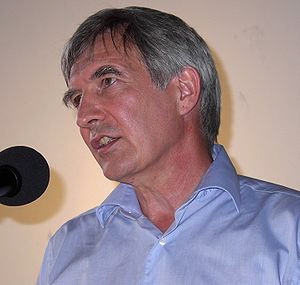
In a series of books, British researcher Richard G. Wilkinson has built a growing case for income inequality as a major factor in health, life expectancy, and the levels of destructive behaviour in any society. As he told The Tyee recently, "It's always the same book," but with increasingly solid evidence. The Tyee has often mentioned his work, including here, and here.
It seems at first a very hard case to prove: That the relative gap between poorest and richest in any country is a major factor in its population's health and well being. The key word is "relative": poor Americans and Canadians enjoy standards of living much higher than poor Cubans.
But Cubans actually enjoy lower infant-mortality rates than Americans, and their life expectancies are closely comparable: According to WHO, Cuban life expectancy is 77, and American is 78. (We're at 79.) This is remarkable, considering how much less Cuba can spend on health care. The difference, says Wilkinson, is that rich Cubans aren't much richer than poor ones.
But why would other people's income matter so much? Wilkinson's argument has clarified through several books: It is psychosocial stress, caused by the feeling of insecurity in the poor. This was even noticed in the 19th century, when autopsies on English poor people showed far larger adrenal glands than those in the rich. The doctors actually thought the rich suffered from mysteriously shrunken adrenal glands. In fact, the poor were simply far more stressed.
This stress can lead to higher rates of diseases like diabetes, as well as to harmful behaviours that also cause disease: drugs, smoking, drinking, and violence.
Stress levels tend to compound the problem by reducing "social capital": People don't trust one another, and often with good reason. The poorest cling to whatever shreds of status they can, often by responding violently to "disrespect."
While North Americans still believe that anyone can make a million if only they work hard enough, Wilkinson shows how little social mobility we actually have, and how easy it is to slip down the ladder. (It's tempting to think that our concern about getting the kids into the best schools doesn't stem from our desire to see them well-educated, but our anxiety about losing whatever status we've achieved.)
A theory of everything?
Wilkinson has been charged, even by his admirers, with turning income inequality in a "theory of everything" that explains obesity and homicide, depression and addiction. Even so, it explains a great deal: Canada and the U.S. states with the narrowest income gaps, like Vermont and New Hampshire, also share low crime rates. States with wide gaps, like Louisiana, have the highest murder rates.
Unsurprisingly, Americans tend to dismiss Wilkinson's argument as just another pretext for "income redistribution" from the rich to the poor. But it is gradually becoming a political issue, and may well become still more so as millions of Americans remain hopelessly unemployed.
Richard Wilkinson's most recent book, The Spirit Level, co-authored with Kate Pickett, appeared in Britain in March 2009 and in North America earlier this year. Wilkinson was in Vancouver earlier this week. During his busy visit organized by SFU's Centre for Dialogue, he gave a free public lecture, spent a second day of meetings and workshops with poverty reduction groups, and carved out a bit of time to sit down with The Tyee to talk about The Spirit Level's themes -- and its impact.
On the response to the book in the UK:
"It's been astonishingly positive. It got lots of reviews. BBC discussion programs also. [Prime Minister David] Cameron agreed; he said that if we really know poverty, we're all diminished by it. Even The Economist gave it a good review . Then the attacks started coming from the far right, accusing us of 'picking and choosing evidence.' In fact, we used all the evidence we could find, but the same evidence wasn't always available from every country."
On the response in the US:
"We got fewer reviews except in the blogosphere, but we did a series of about 30 talks in six cities. We had some trepidation about the American response, because our graphs show the U.S. is doing the worst among industrial nations. But we were pleased with the radio time we got, and with an interview by Bill Moyers."
On the response in Canada:
"So far we haven't seen much response except from Jack Layton."
On the response elsewhere:
"Since the crash, people are thinking about where we need to go from here. The success of the book is an indication that the political pendulum is swinging back. We've given over 450 talks since March 2009, and the book is going into 15 or 16 foreign editions and translations. We also had a huge number of invitations from the EU in Brussels, and major European papers are taking it up -- Germany, Spain, Sweden."
On where we might be in 20 years if the income gap continues to widen:
"I haven't thought about that because it would be too depressing. Actually, I'm rather optimistic. We should be putting ideas together on where to go. For example, equality makes sustainability easier to reach."
On the evidence for the harm done by income inequality:
"The evidence for harm done to health is the weakest in the book. Evidence is very strong for inequality's impact on diet and psychosocial effects. It leads to behavioural issues and feelings of superiority and inferiority that in turn create more stress."
On the least understood aspect of income inequality:
"We're talking about relative incomes, not an absolute standard of living. And it's not yet understood that the vast majority of the population is affected by inequality." ![]()


21
Login or register to post comments
samuidave (not verified)
1 year ago
Be careful who you disrespect
"The poorest cling to whatever shreds of status they can, often by responding violently to "disrespect."
As opposed to the violence inflicted on humanity and the planet itself if one dares get between a rich man and his millions or billions?
Still, the book sounds like it is full of ideas and pop-psychology which, for me, is always a fun way to spend an afternoon. ;)
VivianLea Doubt
1 year ago
actually...
The research in Wilkinsons' earlier book -The Impact of Inequality - was quite impeccable. I cited it in dozens of academic papers: the overall effect was a little earth-shaking to be honest. I expect I will have to wait for Spirit Level to get to the library, but if it resembles his other work I shall read and re-read it.
Booker
1 year ago
on the defensive
The United States has been a great laboratory for a return to laissez-faire economics. They have seen income disparities skyrocket to "Gilded Age" levels as their educational performance falls lower and lower and the life-expectancy lags. As their conservative political party becomes more extremist, the progressives lose ground trying to compromise with positions that are farther and farther to the right. Even the idea of modest income redistribution has essentially been removed from mainstream discourse. There is class warfare going on -- it is the rich vs. everyone else, and the rich are winning hands-down.
morechatter
1 year ago
Stress Kills and so does Sugar
And so does malnutrition which the doctor didn't acknowledge as an issue with the poor and disabled and nor does government as it increases the stress up on notch on the elderly and the poor. The Think Tank has a similar theory only its about turning the stress on to keep those in need on the down and out and easier to turn away and have them disappear as life expentancies drop.
However with the rise of rickets and diabetes and obesity as low income become dependent on food banks and cities garbage for its nutrients as hand outs are more about disease. The food bank volunteers are the first to be fed while families fight over moldy bread. The Doc advised an audience of DT residents food wasn't an issue because the poor and homeless were getting all the protein they needed.
The poor man's diet is Quest's junkie candy carried around in the backpacks of the homeless to keep them on their feet.
The generosity of the stores is unbeatable as no one could accuse them of being a grinch as last years candy is a real treat as Quest stores shelves are filled to the brim to sell to those on government assistance. Sugar keeps longer on the shelves.
Ed Seedhouse
1 year ago
The Class war is real.
I know it isn't polite to say it, but the observable, obvious, fact is that there is a class war going on right now, and right here.
It's the rich class against all the rest of the classes, and they are currently winning, hands down, not even close.
Unless we wake up soon it will be all over for good, and the rich guys will have their final victory without even a struggle.
G West
1 year ago
VivainLea
I concur absolutely. I read, and re-read this book - anyone who can should pick it up at their library.
There is nothing 'pop' or psychological about it.
And, Ed, you're right about the class war and who's prosecuting it.
Anyone who doubts this can refer to no less an expert than Warren Buffet for evidence.
frank2
1 year ago
The Spirit Level is a real
The Spirit Level is a real eye-opener. The world might start improving if reading it were a requirement for anyone aspiring to elected office -- in government, corporations, churches, or where ever.
samuidave (not verified)
1 year ago
There is nothing 'pop' or psychological about it: GWest
Wilkinson's argument has clarified through several books: It is psychosocial stress ...
Really?
G West
1 year ago
Umm Sammy boy
This is what you said:
"Still, the book sounds like it is full of ideas and pop-psychology which, for me, is always a fun way to spend an afternoon. ;)"
And that's why I took issue with it.
Are you having memory lapses - the post in question was yours - it's the first one after the article itself.
Cheers
samuidave (not verified)
1 year ago
another typical reply to my post by GWest...
rude and without merit.
I simply asked 'really?' in reply to your stating unequivocally that there is 'nothing psychological about it'.
I showed you one passage in the article explicitly mentioning 'psychosocial stress, caused by the feeling of insecurity in the poor' from which I, in part, derived my supposition -- not fact -- as to the type of book it may be.
It might be useful to note that one working definition of pop-psychology is:
Further, I am not a 'boy' nor is my name 'Sammy' nor am I suffering from 'memory lapses'.
G West
1 year ago
Whatever?
But you did write this:
"Still, the book sounds like it is full of ideas and pop-psychology which, for me, is always a fun way to spend an afternoon. ;)"
Which, from a guy who hasn't 'read' the book isn't very funny. As for not using your 'handle', my apologies for not typing it out in full - I thought you'd be pretty clear who I was talking about.
You used an emoticon - I poked fun at the unusual name you use here at Tyee - it was a joke. Get it?
The disconnect between what you wrote and your comment was unambiguous - I suggested it was a memory lapse, which was, I'd say, pretty gentle given the other possibilities. I ‘know’ you’re not a ‘boy’. ;) (See, you’re not the only one who can use those ‘emoticons’!)
In conclusion, I recommend you read the book and not just a reviews. IT has nothing to do with pop psychology - however defined - which was the original point of contention.
Wilkinson's work is serious analytical scholarship and, it's fairly hard going for the 'general public' - still, I think you could benefit from reading it.
Cheers.
KWD
1 year ago
Wilkinson needs to dig deeper
Aside from the obvious benefits one receives from equalities associated with material well-being, the picture Wilkinson paints, in his claim that inequality as a result of psychosocial stress factors (status, social integration and psycho-history) can have serious health and social implications, is actually that the countries with the greatest spread in inequality are the ones where society has succumbed to and relies on judgmental, distortional thinking as a means of avoiding dealing with everyday realities. Folks are being taught to believe the judgments are reality.
An example of judgmental, distortional thinking occurs when folks try to justify behaviour by claiming others are responsible for the way they think and feel. Unless someone is biting, burning, hitting, or kicking you, or a direct threat to your physical well-being they are not responsible for the way you feel; you are.
The fact folks are triggered by these cues, and can respond with violence, tells us the problems associated with inequality go way beyond Wilkinson’s claim that it is a result of the relative spread in inequality.
Wilkinson quotes J. Gilligan who claims, "I have yet to see a serious act of violence [refering to prison inmates] that was not provoked by the experience of feeling shamed and humiliated, disrespected and ridiculed, and that did not represent the attempt to prevent or undo this 'loss of face'— no matter how severe the punishment..."
This is an excuse. Shame, humiliation, disrespect, ridicule and loss of face are not feelings they are the product of tho’t processes distortional thinkers use to avoid examining the truth behind the violence. Provocation,by itself, does not justify or explain acts of violent behaviour. The perpetrators of violence rely on a litany of judgmental labels to excuse their actions.
Wilkinson also claims, “A large number of studies have reported that homicide rates are consistently higher in societies where income differences are greater.”
On the surface this looks to be supported by the numbers and we can safely assume a positive relation between income inequality and homicides. But what he doesn’t do is break down homicide rates within societies. If he did he would discover that, in most societies, women, who are still far from gaining income equality, not to mention status, commit a fraction of the homicides. And not only that, even in societies that have the greatest spread in wealth women still outlive most men. So one has to wonder about the connection Wilkinson is trying make between inequality, violence and longevity.
VivianLea Doubt
1 year ago
@ KWD...
Can you help me dig deeper? I read "The Impact of Inequality" as pointing out the correlations between relative inequality and a variety of negative connotations for society. The point being that the correlations are statistically valid...
It seems to me that it is the absence of hope or relief that is a great factor in the attitude of those of us at the bottom, not the only factor but a large one. Surely if I believe that I might one day have an income, and even an income sufficient to live on, my thoughts and feelings and day-to-day behaviour may be altered?
samuidave (not verified)
1 year ago
GWest, I appreciate your reply
Thanks and thank you for clarifying your intention. I see that my emoticon could have lead you to hear a different voice than the one I thought I was conveying.
KWD
1 year ago
VivianLea Doubt
You’re right, the correlations are valid. I’m not overly concerned about statistical correlation, although he does try to sway his argument by excluding variables that don’t fit his thesis. For example, he finds that the occurrence of rape, which is a violent crime, is at odds with his belief that violence is directly linked to relative inequalities in income distribution. Because it doesn’t fit, rape is excluded as violent crime variable. He justifies this omission by claiming, “Rape statistics are notoriously affected by differences in reporting”. Huh? What he isn’t saying is that if we had unbiased reporting we would find that the occurrence of rape is actually much greater than we are lead to believe and that the occurrence of rape has no relationship to relative income inequality.
Further, much of his data comes from stats on men, and mostly men in prison. I see no references to the other half of the population.
As far as the benefits of having an income sufficient to live on are concerned: there’s no doubt that they will find expression in the way we feel and think.
My main beef is with the idea that feelings of pride, dishonour, shame, humiliation and disrespect are the psychosocial factors that determine or promote violent behaviour.
They’re not feelings, they are judgments, but the claim is made, and the thesis is based on the belief that these “feelings” are “crucial to human social relations and may often become issues of life and death.”
Wilkinson makes no attempt to examine and expose the fallacies behind the distortional thinking that arrives at these judgments.
From my take on his argument he believes the criticisms and judgments are real, their meanings are common (the same for everyone), they’re not a product of a life-long conditioning process that determines how we think, and all we have to improve our health, life expectancy and reduce levels of destructive behaviour is to reduce the disparity in the distribution of income.
VivianLea Doubt
1 year ago
well, thanks...
Correlation and causation are not the same things, I think is what the professor was trying to teach me in statistics class. But I understand your criticisms now, KWD...I suppose I read into this (it may not be there): income equality first, meaning that in the same way we talk about rescuing the homeless from their 'condition', we recognize that we must house them first to have any effect on rescuing them.
I do not diasgree with anything you have written; our degree of conditioning is ferocious. (I just heard a news anchor complaining about how much money she has spent on Christmas, somehow I doubt that she has any idea how deeply ofensive her words are to anyone that is struggling to eat.) Still and all, I wonder and ponder about how we could tease out the 'judgements' in light of the fact that most societies - at least in the last few hundred years - have been marked by gross inequalities of income.
Country Mouse
1 year ago
Spirit Level
This sounds like an interesting and informative book. I cannot quibble with the author's intentions or the value of his work.
But: does anyone honestly believe that the "titans of business", as the CBC recently called them, will be in the least bit swayed by the concerns raised in research such as this?
It is not only a question of redistributing income from the rich to the poor. It is a matter of bringing under social control the privately-held institutions that provide both shelter and opportunity for the growing inequities plaguing industrial economies in general and the U.S. in particular. Until someone brings forward a realistic plan to put a bell on the corporate cats of this world, the notion of income redistribution is no more than idle and cruel fantasy.
I know it is unfashionable to say so in today's "business friendly climate", but inequalities of power, wealth, and status are not merely costly and socially disfuntional; above all, they are morally repugnant.
KWD
1 year ago
VivianLea Doubt
How can we tease out the judgments?
Without addressing the structural components of the mental frameworks we have erected, that define our individual (and cultural) identity, we cannot address the structural inequalities that afford one individual access to inequalities in social power and other social benefits, while blocking others.
To believe that inequality will give way to equality simply by redistribution of wealth is as naïve as thinking that we will become more egalitarian by examining the way we think (although I hold more hope for the latter). The reality is … inequality (in all of its disguises) exists. It’s part of the infinitely pieced jigsaw puzzle we call life.
The best we can do, in trying make sense of our evolutionary journey, while trying to make it less painful, is to examine as many of the pieces as possible, while exposing those that prevent effective interconnections or those that may lead us along an evolutionary dead end.
VivianLea Doubt
1 year ago
there are inequalities ...
of myriad sorts, between people, KWD. I cannot imagine that these would ever go away, unless we resort to eugenics. There will be inequalities of intelligence & of artistic ability, for sure. Some will be taller or stronger...does this matter when we are talking about relative income inequality? Wilkinson makes the point that reducing the gap makes society better for both the rich and the poor and those in between.
I don't see his ideas as being primarily about the redistribution of income from the rich to the poor, I see them as being about the acknowledgement that there is a cost to everybody for allowing the gross inequalities to continue. Certainly, the poor bear the burden of these costs more proportionately than the rich. But what about the example of the news anchor complaining of how much she spent on Christmas? We do not begrudge her joy of the holidays, but I think that is precisely what she is articulating, that she finds little joy in spending a lot of money in that particular way.
I pity the cost she has to pay, because in psycho-social terms it is far higher than the cost I would be willing to pay.
jnewcomb
1 year ago
dictatorship's medicine hard to swallow - some don't
Using Cuba as the primo example of how a dictatorship can have a positive impact on life expectancy is like saying Mussolini made the trains run on time. If Cuban medical care is so great, doesn't seem to slow down the hundreds of thousands of Cubans fleeing that dictatorship by any means possible. Obviously, they feel that the risk of flight means more than cheap hospital beds.
G West
1 year ago
Inequality is the simplest thing in the world to address
Structure the tax system so every dollar of income earned (in whatever way) is a dollar which can be taxed, progressively, to provide the kinds of equality of opportunity which will lead to a more egalitarian society.
This has nothing to do with evolution - and everything to do with a recognition that we are all part of the same human family.