
News

What's Making These BC Miners Sick?

Workers say illness is rampant at Endako Mines expansion camp, and they want an investigation.

By Andrew MacLeod, 13 Jun 2011, TheTyee.ca

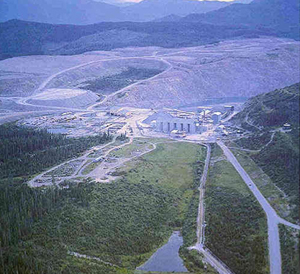
Endako Mine, near Fraser Lake

Aerial view of Endako Mines near Fraser Lake.

Related

Graham Gardner says that in 44 years he has seldom missed a day of work due to illness, but at a recent job on the Endako Mines expansion near Fraser Lake he got ill several times, the last time severely. All his co-workers were sick also and one died unexpectedly in January, leaving colleagues wondering whether it was conditions at the work camp that led to his death.

That the camp is on First Nations land has complicated getting the problem investigated, and so has his union's reluctance to raise concerns, said Gardner.

"I've never, ever in my life missed work because of being sick," said the 63-year-old welder based in Kamloops. He'd had the occasional camp flu working in Fort McMurray, but never anything like he experienced on the Endako project, he said.

Workers are assigned to the project, which will expand processing at the molybdenum mine, on a rotation where they go into the camp just west of Fraser Lake for 21 days at a time, with seven days off in between.

By the end of his first stay at the camp, he had flu-like symptoms that made him weak and tired, Gardner said. It took him his whole week off to get back to normal. "I couldn't go downtown, I couldn't do nothing," he said.

During his second stay, he didn't get as sick, but had what seemed to be a cold, he said. But on his third stay at the camp, which ended in early May, he got so sick that paramedics were called and he left the job early in an ambulance.

"Scared the hell out of me," he said, recounting a night where he had so much trouble breathing that he was scared to go to sleep.

His doctor told him he was showing signs of heart failure, he said, but test results that came back on June 9 showed his heart was fine. With drugs and rest he got better, he said, adding that his doctor's still trying to figure out what caused the illness. "It feels wonderful to breathe normal again."

Coughing up blood, missed work

Illness at the camp was rampant, with many having similar symptoms, Gardner said. "All this time everyone's getting sick," he said, noting many of the guys were coughing up blood and missing lots of days of work.

Gardner and others working on the project are members of Ironworkers Local 97, out of Vancouver. At a meeting with union officials in the camp kitchen, a millwright asked how many of the 150 or so members in attendance had been sick during their stay at the camp, said Gardner.

Everyone put up their hand, he said.

When the question was how many had been sick more than once, all the hands stayed up. "You're looking at the whole camp," Gardner said. The superintendent has been sick at least twice, he added. "It hasn't left anybody out."

Around 400 people live at the camp at any given time.

An unexpected death

"There's something definitely going on there," said another person who got sick during each of three stays at the camp but asked not to be publicly identified. His symptoms included a dry throat, a thick-feeling head and frequent urination, he said.

"There's definitely something wrong with that camp. Everyone knows about it, but nobody's doing anything about it," he said.

He and Gardner both mentioned Lonnie Popoff, who died in January after a stay at the camp. There's a memorial for him on the Ironworkers website that notes, "Lonnie has many freinds who will miss listening to him talk like only he did."

An obituary on the Grand Forks Gazette's website said the 58-year-old "passed away peacefully with his family by his side at the Trail Regional Hospital."

Word among ironworkers was that Popoff got pneumonia, and for some reason was too unhealthy to get better. But Gardner said he remembers working with Popoff two years ago and didn't think he seemed in any way unwell or unfit. He wonders, he said, whether conditions at the camp made Popoff sick

Despite workers raising concerns about the camp, nothing seems to be happening, said Gardner. "The company itself wasn't doing anything about it," he said. "The union doesn't seem to want to do nothing."

Unions have been shut out of mine work in the north for the last 15 years, he added. Now that they're back in with this project, they don't want to be seen as troublesome, he said. "They want to get the work and they don't care what happens."

Outside provincial jurisdiction

There's some $28 billion worth of work on mines expected in northern B.C. over the next decade, and unions want to be a part of that, a couple sources said.

The Endako operation mines molybdenum oxide, and its production is expected to rise from 10 million pounds to 16 million pounds annually.

Reached by phone, Ironworkers Local 97 business manager James Leland said he would not comment on the situation at the Endako expansion camp.

A call Friday to the Vancouver office of Lockerbie and Hole Contracting Ltd., the company doing the work, was automatically forwarded to a Toronto area office where the person who answered the phone said everyone in the office who could answer questions had stopped work at 9:15 to start the weekend early. Try back Monday morning, she said.

Nor was a call to Hatch, the company managing the Endako expansion project, returned by posting time.

Adding to the difficulty of drawing attention to the problem, the camp is on land owned by the Nadleh Whut'en First Nation. It's unclear whether the First Nation owns the camp itself or just the land. A call to the band office was not returned. *

The provincial authorities that investigate working conditions and public health -- WorkSafeBC, Employment Standards and the Northern Health Authority -- each say the location on a First Nation's land means they don't have jurisdiction. The Ministry of Labour, which is responsible for employment standards, and the Northern Health Authority, which has some responsibilities for health inspections under the Industrial Camps Health Act, each say they can't investigate on a First Nation's land. And WorkSafeBC's responsibilities do not include either housing or mines.

Various theories about sickness

Instead, regulation of the site belongs to First Nations and Inuit Health, a branch of the federal Health ministry. A call to the FNIH office in Prince George was not returned by posting time. A spokesperson for Health Canada in Ottawa took questions Friday morning but said not to expect any answers until Monday.

In the absence of a thorough investigation into the problems, those who've gotten sick at the camp have developed various theories about what's causing the illnesses.

Gardner noted that of the people working in the kitchen, only one has a Foodsafe certificate for having completed a course on how to handle and prepare food safely. There's also a large garbage bin right by the kitchen door, instead of at a distance from the area as it would be at other camps, he said.

Another worker wondered if the problems were caused by black mould, perhaps in the ventilation system. Or maybe it's airborne viruses from rodents or another source, he said. Radon gas and methane were also on his list of suspects.

The buildings are old, and are believed to have been used in the Olympics last year and somewhere up north before that, he said.

Gardner, who said he's considering filing a complaint with the Labour Relations Board against his union, said he realizes he's taking a risk talking publicly about the camp conditions, but something needs to be done. "I'm not concerned about myself," he said. "I'm more concerned about the people who are working at the camp."

* Paragraph corrected on June 15, 2011.  [Tyee]

17  Comments:

Login or register to post comments

  • A Drop in the Bucket

    49 weeks ago

    Here`s a comment and a question for the miners.

    No one is forcing you to work there.

    If you are all getting sick, very sick why do it?

    Coughing up blood, almost dying, death, all for a fistful of dollars.

    I have one other suggestion, go see the local First Nation Elders, ask them why everyone is sick..

    Reminds of the story of the Panama canal and St Lawrence seaway construction, thousands died.

    Money is no good if you can`t breathe and have blood leaking out of your orifices.

  • Sask Resident

    49 weeks ago

    Health Canada

    Call Health Canada, they have responsibility on federal lands held in trust. Provincial health would have to get permission from Health Canada to investigate. It isn't rocket science, surely someone knew the answer.

  • dorishray

    49 weeks ago

    sickness at Lejac?

    I don't believe Lejac is owned by the Stellaten First Nation, but is on land owned by the Nadleh Whut'en Band (Fort Fraser)

    There is a huge problem with pollen reactions in the area this year. Also moulds pop up in trailer homes. (Especially with this long unseasonably wet spring.)

    I live on allergy meds - talk to the pharmacists in Fraser Lake. George at the Medicene Centre is always willing to give advice. He's a longtime resident and well informed. Hope this helps!

  • BigPapa714

    49 weeks ago

    What's Making These BC Miners Sick?

    Check this out.

    http://www.wrongdiagnosis.com/m/molybdenum_poisoning/intro.htm

  • Fish-counter

    49 weeks ago

    Heavy metal poisoning would be the first guess

    There are probably other heavy metals besides molybdenum in that rock.

  • doggone

    49 weeks ago

    Sounds more like a "Cruise Ship" outbreak

    Though the people affected are likely career miners their exposure in this new camp to heavy metals wouldn't have so many go down in such a short period. Generally healthy old workers don't just up and die for no reason. I hope I know because I are one.
    This reminds me of some of the things written about the Flu thing around 1919: "Pale Horse, Pale Rider". Some of the worst casualties were in Army Camps. Young, fit, hardworking men were dying.
    I'm going with the possible reasons mentioned by the guys who are there: Sick buildings or bad food preparation

  • Gary

    49 weeks ago

    What's missing here....

    is the fact that these miners don't appear to realize that They are the union. It doesn't matter what some guy says in Vancouver. These people are the ones on the ground. If it is unsafe to work there then "shut her down". Now.
    In this province they don't have to work in unsafe conditions. And that includes the camp not just the jobsite.

  • Skywalker

    49 weeks ago

    @ a drop in the bucket

    No one should have to decide between working in an unsafe condition to put food on the family table or to exist on unemployment. That is the choice faced by many. It is a failure of a civilized society where such decision have to be made every day. Miserly governments too preoccupied with tax cuts for the wealthy and corporations are neglecting their duty to the population. They have a responsibility and it is their job to ensure that when a person chooses to work they do not risk their health.

  • Cool Hand

    49 weeks ago

    Union/Managment

    Sounds like a legitimate concern is being expressed here (I trust) and that the Ironworkers Union local should file the appropriate grievance.

    And if something else is going on here then all parties should be transparent.

    I'm surprised that management also doesn't take a leadership role in this matter as a healthy workplace leads to better financial returns for the company. Simple as that.

    Quote:
    There's some $28 billion worth of work on mines expected in northern B.C. over the next decade, and unions want to be a part of that, a couple sources said.

    Frankly, I also believe that most, if not all of these contemplated mines should be unionized - as they always have been.

    Most private sector unions in BC are very credible IMHO. Imagine that!

  • happy

    49 weeks ago

    Skywalker

    I don't see government, the wealthy and corporations being at the root of the problem here.
    I see the fact that the mine being located on Indian territory is preventing Worksafe BC, Employment Standards, Northern Health Authority and the Ministry of Labour from doing thier jobs to protect workers.
    Maybe we should start there?

  • snert

    49 weeks ago

    Since when

    does someone get over heavy metal poisoning in a week?

  • Fish-counter

    49 weeks ago

    Blood tests would provide the answer

    If it is heavy metal poisoning. Those are the easiest of all diagnostic tests to do.

  • auptcu

    49 weeks ago

    Chlorine Gas

    Chlorine is a reagent used to separate molybdenum from the host rock.

  • rcoppin

    49 weeks ago

    Silicosis?

    The symptoms described (bloody cough, pneumonia, flu-like symptoms, chest pain) make me think of silicosis.

    Silicosis results from the inhalation of fine dust (typically silica) and has been a problem for concrete workers and miners in situations where fine dust is produced and inhaled.

    I haven't seen what the worker protections are at the mine this article mentions, so this is a purely speculative suggestion.

    It would make sense for health care and government representatives to conduct a site visit immediately and determine what next steps need to be taken.

    If there is a location-based or occupational-based tie to the health problems this group of people is experiencing, then surely there is a responsibility for some level of government to get involved... ideally before the hospital-stage.

  • pwlg

    49 weeks ago

    whoa!

    First, thanks for the article and I hope the Tyee follows up on this because I doubt you will hear about this from any other source.

    Diagnosing illness from an online news article, hmmmm, unless you have the diagnostic magic of Gregory House, a fictitious TV character, its better to leave this mystery up to those with some medical and research abilities.

    Since I am not House but also intrigued by the possibilities let me have my two bits. If you have ever spent any time in a construction camp, not the executive camp in Fort Mc but the normal trailer camp, there are many ways a bunch of people huddled in small personal cubicle called a room and sharing 6 toilets and six showers amongst 30+ others a variety of viruses and bacteria can spread rapidly.

    On most worksites when one guy gets really sick and continues to come to work its not long before work site is full of guys (and women) getting sick.

    But my hunch is pure speculation and hopefully the Tyee will keep us posted.

    Toba Inlet camp also had a rash of illnesses a few years back.

    Its time for the union execs to earn the money they receive from Gardner and his fellow workers in fees and dues. The union needs to advocate on behalf of its members.

  • DenisB

    49 weeks ago

    nothing will happen

    A tecaher in a BC high school taught in a classroom that had 5 lbs of mercury under the floor. He died of Mercury poisoning, but first he lingered for several years without his mind. Worksafe BC refused to compensate him because it could not proven that his classroom exposure of 25 years lead to his condition. same thing will happen here.

  • jwlaurie

    49 weeks ago

    Sick miners

    Could it be the Hantavirus carried by the dust from field mice droppings. This is common in musty old camp buildings that have sat dormant for long periods. The buildings all need a supper clean or replacement for a start whether that's the cause or not. IMHO

    from Wikipedia:

    Hantavirus has an incubation time of two to four weeks in humans before symptoms of infection occur. The symptoms of HFRS can be split into five phases:

    Febrile phase: Symptoms include fever, chills, sweaty palms, diarrhea, malaise, headaches, nausea, abdominal and back pain, respiratory problems such as the ones common in the influenza virus, as well as gastro-intestinal problems. These symptoms normally occur for three to seven days and arise about two to three weeks after exposure.[4]
    Hypotensive phase: This occurs when the blood platelet levels drop and symptoms can lead to tachycardia and hypoxemia. This phase can last for 2 days.
    Oliguric phase: This phase lasts for three to seven days and is characterised by the onset of renal failure and proteinuria occurs.
    Diuretic phase: This is characterized by diuresis of three to six litres per day, which can last for a couple of days up to weeks.
    Convalescent phase: This is normally when recovery occurs and symptoms begin to improve.

    Formerly known as Korean hemorrhagic fever, HFRS is the term accepted by the World Health Organization.
    [edit] Hantavirus (cardio-)pulmonary syndrome

    Hantavirus pulmonary syndrome (HPS) is an often fatal disease caused by hantavirus infection. The symptoms are very similar to those of HFRS and include tachycardia and tachypnea. Additionally, patients will develop difficulty breathing, coughing and shortness of breath.[4] Such conditions can lead to a cardiopulmonary phase, where cardiovascular shock can occur, and hospitalization of the patient is required. HPS was first recognized in 1993 in the southwest of the United States and was originally called "Four Corners disease". It has since been identified throughout the United States. Although rare, HPS is fatal in up to 60% of cases.[6] Rodent control in and around the home remains the primary strategy for preventing hantavirus infection. People suspecting illness are encouraged to contact their local health department.

    • The discussion for this story is closed. No more comments can be added.