
News

Why Six Petro Giants Are Obsessed with Oil Sands

Boxed out of most global oil plays, ExxonMobil, BP, Royal Dutch Shell, Total, ConocoPhillips and Chevron see their fates tied to Alberta crude.

By Geoff Dembicki, 17 Jan 2011, TheTyee.ca

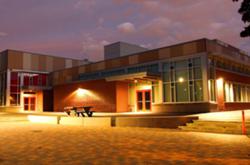
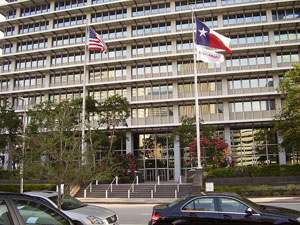
Exxon Mobile, Houston

Limited options: ExxonMobil offices in Houston, Texas. Source: Wikipedia.

Related

Six of the planet's largest corporations, once masters of the global oil market, now control a tiny fraction of world energy reserves. And as their stock prices stagnate, these so-called "supermajors" are shovelling billions of dollars into Alberta's oil sands.

Green observers fear industry expansions, those underway and projected, could shred Canada's climate change commitments and accelerate a global shift to higher-carbon fossil fuels. Still, aggressive oil sands development appears to be one of the few viable growth strategies left for ExxonMobil, BP, Royal Dutch Shell, Total, ConocoPhillips and Chevron. These six energy giants are among the top-earning private companies on Earth. Yet their continued corporate existence, at least in its current form, is far from assured.

National governments and state-owned fossil fuel firms such as China National Petroleum Corporation produce 93 per cent of the world's oil. The formerly dominant supermajors are now seeking out riskier and riskier reserves, drilling in the ultra-deep waters of the Gulf of Mexico and mapping the Arctic Ocean floor. In their continuing struggle to appease investors, they've also become increasingly reliant on major oil sands expansions, suggests groundbreaking new research detailed later in this story.

"The supermajors just don't have all that many options," said Alexandros Petersen, director of research for the London-based Henry Jackson Society, a global studies think tank. "And so if you get boxed out of places like Venezuela -- or Angola by the Chinese -- you go after whatever you can get. The oil sands are one of those 'whatever-you-can-get' places." 

The Seven Sisters

Today's realities would have sounded like fantasy several generations ago. An informal oligopoly of Anglo-American oil companies ruled the global oil market throughout the mid-20th century. These "Seven Sisters" -- named by Italian oil diplomat Enrico Mattei in the 1950s -- gained huge concessions from weak, corrupt and colonial regimes across the Middle East and other developing countries. Until the early 1970s, they enjoyed a virtual monopoly, controlling 85 per cent of global reserves and dictating oil prices to Arab producers.

"The whole style of the corporations, grown smoother and more confident over the decades, suggested a lofty superiority to all governments," wrote Anthony Sampson in a seminal 1975 history of the Sisters.

Yet increasingly nationalistic oil-producing countries soon began to rebel against the onerous price controls imposed on them by western multinationals.

Venezuela and Iran led the formation of the Organization of Petroleum Exporting Countries (OPEC) in the early 1960s, now a powerful cartel of 12 developing countries. The group's Arab members sent tremors through the western world with their 1973-74 oil embargo. And a wave of nationalizations over the next decade cut production controlled by the Seven Sisters and other private players in half.

That continuing power shift now leaves Sister-descendants ExxonMobil, BP, Chevron and Shell -- alongside fellow supermajors ConocoPhillips and Total -- with unrestricted access to only seven per cent of global oil reserves.

"Certainly," PFC Energy analyst Claire Wong-Low told The Tyee, "I think the current picture is not going to change."

Running out of options

That leaves the former masters of the global energy sector in a vulnerable position. The supermajors are still considered some of the planet's biggest private corporations (Royal Dutch Shell was named second largest last year by Fortune Magazine, losing out only to Walmart). But many analysts argue their international influence peaked decades ago -- and is fast declining.

With the exception of Chevron, supermajor share prices have not gained any value over the past five years. "It would tend to indicate that these companies are not growing," said Robert Walsh, an energy consultant who spent 26 years with Royal Dutch Shell. Though all the supermajors hold top ten spots in Petroleum Intelligence Weekly's oil company rankings for 2010, they're still placed lower than Saudi Arabia's Saudi Aramco and Iran's NIOC.

And the Financial Times in 2007 handed the "Seven Sisters" mantle to a new generation of energy firms, all state-owned. Much of that is a function of the reality that supermajors actually control very little of the world's oil and gas. Resource figures from 2008 place ExxonMobil in a distant 17th among all energy firms, the highest even, of the western-owned private players.

With global oil demand expected to slope upwards over coming decades, there's more pressure than ever to expand reserves and production. But lacking the resource access of their state-owned competitors, the supermajors are running out of options.

"The big challenge is replacing reserves every year," Walsh told The Tyee. "And it keeps getting more challenging for them because a lot of the big oil fields are off limits."

The oil sands factor

It should come as no surprise then, that all the supermajors own -- or plan to develop -- huge operations in Alberta's oil sands. Canada is one of the few countries left on Earth offering unbridled private sector access to major known oil reserves (in this case, the planet's second-largest).

The supermajors increasingly rely on oil sands expansions to help maintain their stock prices, a new report prepared by Washington-based Oil Change International suggests. One of several measures used by analysts and investors to assess an oil company's performance is the reserve replacement ratio. If the ratio is 100 per cent, it means the company found exactly as much as oil as it produced in a year. Any lower, and investors start to worry.

The report estimates that of all new liquids reserves added to ConocoPhillips' resource base over the past five years, 71 per cent came from the oil sands. The breakdown for the other supermajors is as follows: ExxonMobil (51 per cent), Shell (34 per cent), Total (26 per cent) and Chevron (7 per cent).

BP has not yet developed any oil sands operations, but intends to invest at least $2.5 billion.

Overall spending in Alberta's oil patch over the next decade is projected to hit $180 billion, peaking a full 20 per cent higher than at the height of the last boom. That sort of rapid expansion is being driven by high oil prices, soaring U.S. demand and relatively low royalty rates. But supermajor growth strategies are also a factor. "At the end of the day, the fiduciary duty of all of these oil company managers is to maximize profits for their shareholders," Oil Change International executive director Steve Kretzmann told The Tyee.

Old measures inhibit clean energy

Observers fear that the environmental repercussions of unrestrained oil sands development could be shattering. The industry is Canada's fastest growing source of greenhouse gas emissions. And with no real reductions plan in the works, it could by 2020 be releasing more than double the carbon now emitted by New York City. That estimate comes from the Calgary-based Pembina Institute, which last year predicted oil patch growth would scuttle Canada's medium-term climate change commitments.

The oil sands, meanwhile, are serving as a model for other countries eager to exploit their own unconventional reserves. Several supermajors, capitalizing on expertise gained in northern Alberta, have signed extraction agreements with governments in Russia, Madagascar and Jordan. They're also eyeing hungrily the potentially massive oil shale deposits spread across Utah, Colorado and Wyoming.

The International Energy Agency predicts such high-carbon fuel sources -- including oil sands from Alberta -- will comprise 11 per cent of global oil production by 2030. This could complicate efforts to reduce greenhouse gases to a level deemed safe by scientists.

Oil Change's Kretzmann argues that "anachronistic" value measures such as the reserve replacement ratio inhibit the kind of thinking necessary to avert climate catastrophe. They instead drive the supermajors and others to environmentally risky plays in deep waters, frozen seas and sludgy oil sands deposits.

"We're probably going to need to find new (valuation) measures," Kretzmann said. "You can't continue to simply reward companies for the amount of new oil found and then expect them to go into clean energy."  [Tyee]

24  Comments:

Login or register to post comments

  • Fiat lux

    2 years ago

    Wealth can not be created,

    Wealth can not be created, only taken.....

    With present and future generations paying for the transferred, real costs with their health and poverty, to satisfy the insatiable demands of the temples of the monetary religion, the stockmarkets, now the biggest killers in human history.

    This is what happens when crazy religions and ideologies are accepted for economics.

    Suicide bombers on one side, deaths by pollution on the other.

    Will humanity ever wake up to the stupidity of their so called "leaders" ?

    Ed Deak.

  • Van Isle

    2 years ago

    Isn't it interesting:

    Isn't it interesting: Governments around the world are taking charge of their oil resourses, and I think of Stats-Oil of Norway as an example. But, oh no not here in Canada, we give our oil (and receive royalty sraps in return), to the big boys and and get promises of 'good paying jobs' and 'ethical oil spin'. Didn't Paul Martin sell off the last of Petro-Canada? And right at the point where the price of oil started to go thru the roof? Ya Canada, smart, real smart. So, dear reader, one has to think; are our political elite dumb as a stick or in the pocket of big oil?

  • Van Isle

    2 years ago

    Another point. Canada does

    Another point. Canada does not have oil security. We have oodles and oodles of oil off the coast of Newfoundland and Labrador but not one drop of that oil is consumed in Canada. Not one drop of that oil is refined in Canada. All that oil goes to the US. How about eastern Canada and the Maritimes, where do they get their oil from? They get it from Venezula, Trinidad and the Persian Gulf.

  • Okanagan Orchardist

    2 years ago

    I was surprised...

    This article lent a new light for me insofar as the reason why the push of the major oil companies into Alberta. Easy profits, of course, based on easy exploitation, as well as low taxation; but, it didn't dawn on me that most countries are now prohibiting the big 6 from oil exploration and exploitation. As Van Isle suggested, why aren't we limiting oil companies from outside Canada? If we are going to process tar sands, at least it should be done by Canadian companies. I'm sure some of our own billionaire entrepeneurs would be more than willing to put some of their money into such a lucrative entreprise.

  • grapeman

    2 years ago

    "Free" Trade is a problem

    Our free trade agreements, especially NAFTA, make it difficult - if not impossible - for Canada to limit the ownership of oil, the export of oil, and the price of oil.

    This article is another example of why these deals have little to do with free trade, and much to do with corporate rights.

  • freebear

    2 years ago

    Obsessed to feed our Addiction!

    The pusher and the junkie, we are!

  • whatthe

    2 years ago

    great piece

    You so rarely hear about the fact that Canada has so completely capitulated to the descedents of the seven sisters it is to weep.

    It is welcoming to scratch the surface but lets talk more about the real implications of the free for all our government has orchestrated for these majors.

    The impacts are relevant and the underpinning of our failing economy and 50 billion dollar deficit.

    Lets hear more details about Tarsands "investment" and who is really benefiting.

    Then lets compare that to the potential for all Canadians to benefit if we simply toward the model the rest of the world uses that produces 90 percent of the product.

    Like:
    1) no more deficit but surpluses
    2) well funded social programming
    3) well funded infrastructure
    4) higher standard of living
    5) higher quality of life

    Just look to Kuwait, a place we spent a billion dollars "liberating" and note that oil is the only industry yet with a lower per capita GDP they enjoy an average income that is near twice the per capita income of Canadians! Additionally, Kuwaitis enjoy subsidized housing, health care, day care, water, transportation and many other perks.

    Yet here in Canada we are required to foot the water bill, natural gas bill and clean up so the majors can make the most money in the history of making money.

    This all before we talk cash infusions and subsidies that ensure the profitability of the tar sands. They had to send Steve to Ottawa to find the bottomles pit of cash and subsidies for the majors and we are now supposed to think its all "ethical"

    What is wrong with this picture?

  • Sooke

    2 years ago

    Petrocan

    Is anyone here old enough to remember the 70s, when the Liberal government decided they wanted to own an oil company? Remember how that turned out?

    If you like the way the post office is run, you'll love it when the government owns the oil companies.

  • whatthe

    2 years ago

    Sooke

    Yes we do remember.

    Have you since noticed how successful it has become after this government gave it away?

    Odd that.

  • Fiat lux

    2 years ago

    How do we define "success"?

    How do we define "success"? The most money and resources stolen from the public?

    Stalin has done it with the ideology of communism, leaving millions to live in poverty and starvation, today's racketeers are doing it under the name of capitalism, collectivizing the economy in a few hands in the best Soviet fashion, building up communist China, while millions live in daily increasing poverty and starve in thew richest country on Earth and all over the globe.

    Ed Deak

  • Mikemah

    2 years ago

    oil sands

    I say let the Oil companies invest and build all the infrastructure and then NATIONALIZE the oil sands . Yes that's the plan . That way we can recoup some of those billions that they have overcharged us and hopefully we can bankrupt a handful of greedy lowlifes.

  • whatthe

    2 years ago

    Right except

    The oil companies already leaned on us to build to it and profit throught our continued subsidy and provision of water and natural gas.

    They beat us to the finish line on that one.

  • alberta citizen

    2 years ago

    Fat and Lazy

    Well written article! I would like to see the Tyee continue its vigorous examination of the annoying PR blather coming from the political-industrial complex.

    please See this excellent article http://thetyee.ca/News/2010/11/09/GasBillForOilSands/ which examines steam consumption for SAGD. It was 2.4 bbl steam per bbl oil in the 1980's and is now running about 3.7 bbls steam per bbl oil.

    The steam consumption trend undermines any credibility of the multinationals; it takes a special degree of incompetence to actually get worse with time.

    In fact, there is no detectable evidence that these multinational companies will ever deliver any of the benefits we expect from competitive free markets. So far all the only skills these companies appear to have are related to lobbying and political interference.

  • North of Hope

    2 years ago

    Sooke - Public vs. Private

    Much the same is true with health care. In the public health care system, the government pays for all the costs of health care and we pay the govt for taxes and fees to cover these costs. With private health care, the insurance companies pays for these costs and we pay our fees to the companies. But the private insurance companies need to make a profit so they must charge more. Ergo it costs more for private coverage than the public system. I am assuming that the administrative costs are the same for both the private company and the public system. As well the private companies will do everything in their power to find ways to reduce the payment of these costs. Look at what happened in the US when Obama tried to bring in some form of public health care. The insurance companies fought very hard to stop this inroad to their monopoly. They spent billions trying to stop this. Where did they get this money? It came from their clients who paid their fees to have health insurance. If this money was devoted to paying for health care costs the premiums could be decreased. This is why public health care and other services are better in the public hands than in the hands of the privates.
    I used to work for a health insurance company as an adjuster. We did everything in our power to reduce payments to our clients to increase our profits. It was because of this poor coverage that public health insurance was needed. And along came Tommy Douglas and people could live longer and healthy lives.

  • frank2

    2 years ago

    Our politicians can't bring

    Our politicians can't bring themselves to charge reasonable fees for exploration and royalties on production. Result, we all suffer, including local folks forced to accommodate over-rapid development & unnecessary pollution in extraction areas. The eternal question is, "why does the voting public never get it?"

  • Fiat lux

    2 years ago

    The sole purpose of economic

    The sole purpose of economic competition is to cut payments and increase profits.

    This is why we have millions in poverty and going hungry, while prices are going up in the stores every day and corporations and their executives are stealing the public blind, enforced by "conservative" politicians on the advice of "prestigious conservative economic think tanks" otherwise known as advertising agencies selling BS. .

    The only way to survival and wellbeing is cooperation with physical realities and each other, leaving nobody behind.

    Ed Deak.

  • Marysue52

    2 years ago

    It's TAR Sands--not oil sands

    Nothing like using corporatespeak to water down reality. What is it about The Tyee that it gives into doublespeak so often, and lets its writers wimp out? There's a lack of courage and a lack of reality in print everywhere. One would have thought The Tyee wouldn't give in to such crap. Notice that Fiat Lux has the guts to tell it as it is, and so too, the writer who said that Petrocan was good when it was ours and uncorrupted by rightwingers.

  • samuidave (not verified)

    2 years ago

    economies of scale ...

    in both the political and corporate realms have no limit, and will thus carry on until the entire planet is amalgamated and consumed into one. This is what is happening now as we march toward the New World Order (scarcely hidden from our view), and this has been the growth pattern since the start of western civilization.

    With increased size of territorial control (political and commercial) come the benefits of increased power. In turn, this increases the control over the lives of the people who are governed by such organizations. And an over-governed life must naturally lead to rebellion, as that is our human nature. That is, it is natural for man -- positively or negatively -- to fight to retain an acceptable amount of self direction.

    But as the power grows and concentrates in politics and corporations, more and more people are removed from having an agreeable command over their lifes. Now unless the planetary government can abolish all ideology or impose a single one on all, rebellion will likely come in a violent uprising.

    I would suggest that what is needed is the opposite of increased scale, namely smaller, more localized political and business organizations. Accordingly, I champion voter-accountable, Independent political candidates (and far more protectionist economic policy).

    By design, (selected from the grassroots with ongoing community interaction to facillitate true 'representation') Independents provides people with a meaningful connection to the community, and the process gives some necessary sense of empowerment / self-direction.

  • el

    2 years ago

    Good-bye to the oil sands?

    From the January 17 Globe -

    NEIL REYNOLDS
    A brave new world of fossil fuels on demand
    NEIL REYNOLDS | Columnist profile | E-mail
    From Monday's Globe and Mail
    67 comments

    In September, a privately held and highly secretive U.S. biotech company named Joule Unlimited received a patent for “a proprietary organism” – a genetically adapted E. coli bacterium – that feeds solely on carbon dioxide and excretes liquid hydrocarbons: diesel fuel, jet fuel and gasoline. This breakthrough technology, the company says, will deliver renewable supplies of liquid fossil fuel almost anywhere on Earth, in essentially unlimited quantity and at an energy-cost equivalent of $30 (U.S.) a barrel of crude oil. It will deliver, the company says, “fossil fuels on demand.”

  • seth

    2 years ago

    Shell GTL plant Qatar and the nuclear transition

    There was a cold fusion breakthrough announced/demo'd in Italy the other day. So I guess the bacteria guy is too little too late.

    Can't wait for the report on the cold fusion front.

    Shell has a first of a kind plant in Qatar, making diesel and propane from natural gas at $15 a barrel. 1.6B cuft/day makes 280K barrels.

    http://www.ameinfo.com/150124-more2.html

    By contrast tar sands by 2012 will use 2B cuft/day to make 2M barrels. Reflecting the fact that everything costs double in Qatar and with mass plant production that cost should drop to under $10 a barrel at current gas costs.

    With dirt cheap nuclear power available to transition all heating and generation load from coal and natural gas to electricity, there will be plenty of gas available to supply liquid fuels from these plants for our transportation needs.

    As the nukes are built they can start to supply hydrogen to the synfuel plants to phase out the natural gas.

    Payback on the nuke conversion/synfuel investment is less than three years.

    This national nuke conversion would overnight end unemployment end the global warming/peak oil menace, save the lives of thousands of Canadians every year from coal/gas air pollution and create the greatest construction boom in history.

    Brimstone Harper has been ordered by his bosses at Big Oil to give away AECL to anybody who will take it, just to make sure no more lucrative gas sale profits are replaced with nuclear sales at a ten to one savings to the taxpayer.

    The Fiberals believe in nuclear power and a clean energy future for Canada.

    Brimstone's fascists have sold out their country for Big Oil lolly. Canada's energy and industrial future depends on giving them the boot.

  • Fiat lux

    2 years ago

    Sam.... The German - Brit

    Sam.... The German - Brit economist, E F Schumacher, one of the few sane ones, wrote his "Small is Beautiful" book in 1973, explaining and proving that the collectivization of the economy in a few hands leads to disasters.

    As we can see it progressing now.

    The only purpose of the "economics of scale" is colonization, collectivization and the creation of incompetence, so that people are jammed into the human zoos of cities where they have to buy everything, making the Lords of the Universe rich and in total control.

    We stopped the world and got off 32 years ago, in search of the highest degree of self sufficiency and independence, and never looked back.

    There's no such thing as total independence, or total freedom, but a high degree can be achieved, especially here in Canada, in cooperation with others, exchanging products and services.

    In other words, real "trade", to drive the economists and politicians to despair, with the cutting of their stupid GDP figures.

    Ed Deak,

  • samuidave (not verified)

    2 years ago

    A great read, Ed Deak

    is Bertrand Russell's short book called Authority and the Individual (1949) available here to download safely in pdf form on one of the mirror sites:

    http://avaxhome.ws/ebooks/0415487331.html

    It was one of, or maybe the first 1948 BBC Reith Lectures, available in part on youtube here:

    http://www.youtube.com/watch?v=I0-_9hiVc70&feature=mfu_in_order&list=UL

    Enjoy :)

  • DickGordonCan

    2 years ago

    Oil Sands and Quitting Imported Oil Cold Turkey

    The oil sands may prove an important transition step en route to large scale replacement of fossil fuel by biofuel. See:

    Gordon, R. (2011). Cosmic Embryo #2: Quitting Imported Oil Cold Turkey. http://www.science20.com/cosmic_embryo/cosmic_embryo_2_quitting_imported_oil_cold_turkey.

  • realisticman

    2 years ago

    We'll always have Paris...

    In hills outside Paris, tapping vast oil reserve presents risk but promises profit:

    http://www.csmonitor.com/World/Europe/2010/1217/In-hills-outside-Paris-tapping-vast-oil-reserve-presents-risk-but-promises-profit

    Many opportunities still exist. We can be sure that obsessing over northern Alberta will become less pronounced as Paris becomes the new Fort McMurray.

    • The discussion for this story is closed. No more comments can be added.