



 SHARE:
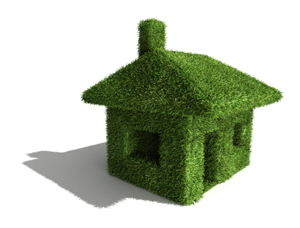
Green buildings have earned a reputation for being large, complicated and absurdly expensive. This is particularly true in Vancouver, where taxpayers are still forking out millions of dollars a month in interest payments on the world's first LEED Platinum neighbourhood -- the 2010 Olympic Village.
But this reputation is increasingly at odds with the next-generation of green homes, schools and workplaces. These green buildings -- most of which are certified by organizations such as the Canada Green Building Council or Built Green -- tend to be small, simple, and surprisingly affordable.
What's more, these green buildings represent the fastest growing sector within the North American construction industry, one that McGraw-Hill Construction estimated to be worth $60 billion last year.
During the next several weeks, The Tyee Solutions Society will explore trends within green building -- call it Green Building 2.0 -- with an eye for ideas that could pay off by helping create sustainable jobs in British Columbia, lower energy bills and make a real dent in emissions causing costly climate change.
Today: A look at five common misperceptions about green building.
Myth #1: Green buildings cost more.
It's easy to see what spawned this idea.
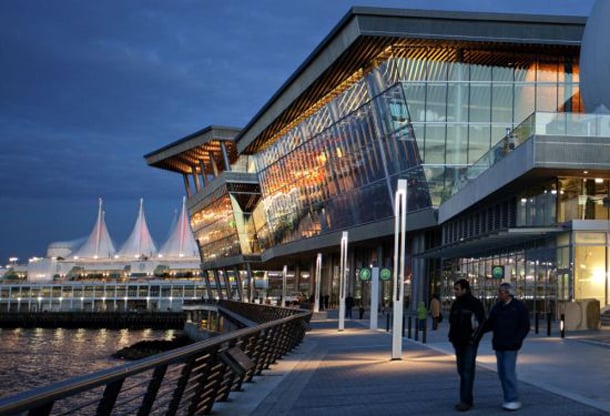
The Vancouver Convention and Exhibition Centre (pictured below) is the world's first LEED Platinum conference hall. It boasts an artificial reef as well as a five-acre living roof. And it cost B.C. taxpayers more than double the promised price.
Likewise, the Olympic Village and Southeast False Creek neighbourhood were also awarded Platinum status by the Canada Green Building Council's LEED (Leadership in Energy and Environmental Design) program. The 32 hectare reclaimed industrial site features an innovative district heating system as well as one of Canada's first net zero buildings (designed to produce as much energy as it consumes). But the project bankrupted its developer and left Vancouver taxpayers on the hook for hundreds of millions of dollars.
These high-profile megaprojects appear to confirm the widely held opinion that green design costs more. Indeed, respondents to a survey by the World Business Council for Sustainable Development were found to believe that green buildings cost an average of 17 per cent more than conventional buildings.
But there's another question to be asked: Did Vancouver's signature green projects run over budget because of sustainable design? Or did costs skyrocket because these megaprojects were spec'd by ambitious politicians, built by loosely supervised public-private partnerships and rushed to completion at the peak of a record-smashing real estate bubble?
There's evidence that green design does not influence construction cost. A study that compared 221 new buildings found no difference in cost between 83 LEED buildings and 138 similar conventional buildings.
"There is no significant difference in average costs for green buildings as compared to non-green buildings," concluded Davis Langdon, the firm that conducted the 2006 study, Cost of Green Revisited.
The Davis Langdon study compared LEED libraries to non-LEED libraries, LEED community centres to non-LEED community centres, LEED laboratories to non-LEED laboratories, and so forth. The study found "no significant statistical difference" between the average costs per square foot for LEED versus conventional buildings.
Developers who persist in thinking about green building the same way they think about Sub Zero kitchens -- as something to be "added" on to a conventionally designed building -- will incur higher costs, the study warned.
"We continue to see project teams conceiving of sustainable design as a separate feature. This leads to the notion that green design is something that gets added to a project -- therefore they must add cost," the Davis Langdon study concluded. "Until design teams understand that green design is not additive, it will be difficult to overcome the notion that green design costs more."
Myth #2: Green building materials must be imported.
This notion appears to combine the misunderstanding that green design is an additive feature with the misimpression that the preferred additions include elements such as European plumbing, exotic plants and tropical materials such as cork or bamboo.
The truth is that none of the major green building certification systems require exotic materials, and several actively discourage the use of such products.
Granted, as recently as a decade ago, it was still difficult to obtain green fixtures such as efficient lights or low-flow toilets. But that's no longer the case. High-efficiency fixtures of all types are now available at competitive prices in nearly every hardware store in North America.
Likewise, some first generation green roofs did experiment with exotic plants. But LEED and other certification systems now reward the selection of native and locally adapted plants, as well as the use of building products manufactured within 500 miles of the construction site.
Where forest products must be shipped from afar, most green building certification systems reward the use of wood that is grown and harvested in certified forests. These policies create a competitive advantage for Canadian wood products because Canada boasts more hectares of certified forest than any other nation.
Myth #3: Green buildings' energy savings are more hype than reality.
Buildings account for up to half of energy use and consume up to 72 per cent of electricity, according to statistics compiled by the U.S. Energy Information Administration.
Reducing the amount of energy used in buildings is widely regarded as the cheapest and easiest way to lower dependency on fossil fuels and reduce emissions of associated greenhouse gasses. (Green building may also be among the few carbon reduction strategies that create jobs in both the short and long terms.)
But misperceptions and misleading claims about green building have left many with the impression that green buildings are not energy efficient.
Since the 1970s, many green technology promoters installed expensive solar photovoltaic arrays or geothermal heat pumps on existing buildings as a way of demonstrating their products. In so doing, they created facilities that generate carbon-free power, then squander that energy in drafty and poorly insulated buildings. Such kluge-like constructions are the antithesis of green design, but it's understandable that passersby could confuse them for green buildings.
Likewise, the prototypical Vancouver condo building -- towers of (poorly insulated) glass separated by (heat radiating) concrete balconies -- provides about a tenth of the insulation value that a wood-frame home does. Yet, through the addition of a few energy efficient appliances, unscrupulous (or merely ignorant) marketers have succeeded in labeling condo towers as "green" buildings.
The truth is that mainstream green building certification systems such as LEED, Built Green Canada, and Green Globes all reward strategies that lower energy demand, while next-generation standards such as Passivhaus and Living Buildings are whittling building energy use very close to zero.
Research has confirmed that certified green buildings save energy and money. A study by the New Buildings Institute found energy use in green buildings to be 24 per cent lower than in conventional buildings. And a survey by the US General Services Administration found that the first dozen LEED buildings in its portfolio consumed 26 per cent less energy and produced 33 per cent lower carbon dioxide emissions than comparable government-owned buildings.
Myth #4: Green buildings are less comfortable.
This idea may be rooted in a Victorian perception of "comfort," which cherishes plush drapes and thick carpets and lavish wallcoverings.
The Victorian approach to interior decorating made good sense in an era when homes were exceedingly drafty and everything was made from natural materials.
But buildings changed. By the 1970s, curtain walls had led to office buildings with controlled ventilation. And by the 1990s, better quality windows and doors had made many homes relatively air-tight.
So did furnishings. By the late 20th century, the use of toxic chemicals had become commonplace in the manufacture of paint, carpet and furniture. Many of those chemicals, such as formaldehyde and vinyl, continue off-gassing for years. For a time, consumers were persuaded that the resulting "new car smell" was a benefit. But as buildings became tighter, people started to get sick.
Studies by the U.S. Environmental Protection Agency found that, on average, Americans spend 90 per cent of their time indoors, where they are exposed to concentrations of chemical pollutants that are 100 times greater than outdoors.
Green design aims to improve indoor air quality by eliminating toxic building materials. Many first-generation green buildings eliminated carpet and drapes altogether. These were replaced with nontoxic -- but hard -- surfaces such as wood or concrete. Some people found the hard surfaces within these first-generation green structures to be cold, uninviting and acoustically annoying.
In the past decade, the supply of non-toxic finishings and furnishings has caught up with the demands of air-tight green buildings. Nontoxic paints and carpets are now commonplace. And the choice of interior finishings is once again a matter of taste rather than toxicity.
Myth #5: Green building is a fad.
As was the case with the previous myths, past is prologue.
Alternative building exploded in the 1970s. Backyard inventors pioneered ideas about solar design and natural material selection that have evolved into today's green building standards. But an awful lot of those do-it-yourself homes were, in a word, awful. A few buildings survived, but the movement did not.
Having watched that fad come and go, construction industry veterans should be forgiven for believing that this green building boom will do the same. Many are quick to point out that few of those early alternative buildings held value relative to conventional properties.
But there is evidence that in addition to spawning a $60 billion-a-year industry, this generation of certified green buildings is fetching a premium in the marketplace.
A University of California study compared the rents at 694 certified green office buildings with 7,489 conventional office buildings. All of the comparison properties were located within a quarter mile of the green building.
The study found that, on average, certified green building rent for two per cent more than comparable buildings. After adjusting for factors including age and occupancy levels, the University of California researchers figured that green certification added an average of $5 million to the market value of each green office building.
Next: Three affordable homes that could change the way you think about green building. ![[Tyee]](/design-article.thetyee.ca/ui/img/yellowblob.png)
Read more: Environment, Urban Planning + Architecture











Tyee Commenting Guidelines
Comments that violate guidelines risk being deleted, and violations may result in a temporary or permanent user ban. Maintain the spirit of good conversation to stay in the discussion.
*Please note The Tyee is not a forum for spreading misinformation about COVID-19, denying its existence or minimizing its risk to public health.
Do:
Do not: