
News

A Tyee Series

Here Comes the 'Smart Grid' Way to Save Power

The US is investing billions in a wired feedback loop telling consumers how to be electricity misers. A BC firm is on the cutting edge.

By Colleen Kimmett, 13 May 2010, TheTyee.ca

BCITMicroGrid

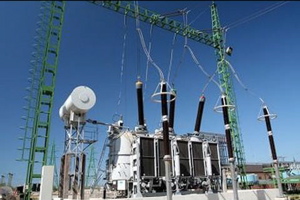
The Intelligent Micro-Grid at BCIT's Burnaby campus.

Related

Though pop culture credits Thomas Edison with inventing the light bulb, in reality, it had been around for decades by the time he got his hands on it. Edison and his lab took it to the next level by creating a safe, practical and affordable system in which to put those bulbs in people's homes. His real contribution to society was the first electrical transmission grid, which, in 1882, provided nighttime lighting for a few dozen customers in lower Manhattan.

Over the next century, transmission grids across North America grew to criss-cross the continent, until just about everyone was able to flip on a switch and have power and not have to think much about where it came from. Aside from getting bigger, this grid hasn't fundamentally changed much in the past century: meter readers still have to walk from house to house to bill customers, utilities often don't know about outages until someone calls it in.

But now, utilities and governments are rolling out smart grid technologies, the first wave in a virtual sea change of how we use and think about electricity.

Imagine a world in which you could switch off an oven with your cell phone while sitting on the Skytrain. Where washing machines run off electric vehicles plugged in at night. Where homes become not just consumers, but also producers of electricity, able to meet peak demands without bringing expensive new power projects online. All possible, with a smart grid.

The savings aren't just measured in your bank account. Cutting power consumption reduces greenhouse gases causing climate change, too.

'Smart grid', defined

Smart grid is really blanket term that covers many aspects of the modernization of the existing grid. These include highly technical aspects of monitoring and managing transmission and distribution components (for more, see this Carnegie Mellon paper) as well as advanced metering systems -- or smart meters -- that measure electricity use at its final destination.

The fundamental difference between a smart grid and a regular grid is that it turns our existing one-way electricity delivery system into a two-way system, one that communicates real-time information to utilities from points across the entire grid.

"The core of the smart grid is this: Can we put a layer of intelligence on a built-up environment where electricity is the primary source of energy?" asks Hassan Farhangi, director of the Group for Advanced Information Technology (GAIT) at the BC Institute of Technology.

BCIT's student housing experiment

The answer is yes.

GAIT is helping create the Intelligent Micro Grid on BCIT's Burnaby campus. Farhangi calls it a "skeleton" grid at this point -- a kind of blank slate for testing all kinds of smart grid technologies.

Now in the second year of the six-year project, they've installed smart meters at seven campus buildings and created a 'central control' station, where computers collect information from the smart meters (via power lines or wireless networks) and then spit it out in a way that the average homeowner would understand. (Like how much electricity they used when they came home and turned everything on, and how much it cost them.)

Central control can also talk, via the smart meter, to appliances in the buildings; it can turn the air conditioning down, for example. And the smart meters can even communicate with each other -- in fact, BCIT recently held a contest in which building residents compared electricity usage, and competed to be the most frugal. Faranghi recalls walking by the residences, seeing students studying with flashlights.

"Within two weeks, we were able to reduce electricity consumption by 20 per cent," he says. "It was amazing, absolutely wonderful."

This two-way communication is what, in effect, makes a grid smart, explains Farhangi.

With the regular grid, "we do not have any information whatsoever as to how much load do we have on our distribution network, what's the rate at which the consumption is moving, what are the areas that requires more feed and different type of distribution.

"Simply due to that absence of information," says Farhangi, "we have, over the past 100 years, over-engineered the system."

This has led to redundancies and waste. The grid is built for peak demand, but that demand isn't always there. During those times BC Hydro runs turbines at its hydroelectric dams backwards, dumping water back into the reservoir and introducing 20 to 25 per cent wastage on the system, says Farhangi.

"I believe the legacy of our existing electrical grid will basically evolve into a network of integrated, distributed micro grids," he says. "The old system is hierarchical. We need an evolutionary approach."

With more funding, and a small, nearby source of clean electricity and heat, the BCIT's Intelligent Grid could become an "island" -- completely independent of the main grid. Farhangi sees this as the model for other dense and urban areas.

Creating market incentives for smart grids

Especially since the "layer of intelligence" that makes up a smart grid can be built on existing infrastructure. If there's a power outage, for example, and the transmission line is outfitted with sensors and networked communications capabilities, the utility would instantly know where and how to fix it. It even opens up the potential for self-healing software that could fix the problem without human intervention.

"You're going to have increased reliability, security, flexibility. You're going to be able to integrate renewable energy a lot easier. You'll have a more efficient system -- not just consumer energy efficiency, but grid efficiency," explains Katherine Hamilton, president of the Washington D.C.-based GridWise alliance.

GridWise is an industry advocacy group. Its goal is to "try to create market incentives for smart grids that allow everybody to participate, whether you're a large company or a small company."

"We think there's room for everybody in this because it is sort of a brand new technology area that we think is ripe for innovation," says Hamilton.

Hamilton says her organization lobbied hard -- and successfully -- for smart grid stimulus funding. President Barack Obama has made smart grid technology a pillar in his clean energy plan, and last year put $3.4 billion of federal stimulus funding into 100 smart grid projects across the country.

"It allows our state regulators to see projects being put in place that are 50-50 cost shared so that the state isn't putting the entire onus on their own customers," Hamilton says. "That cost-share with the federal government limits the risk and it's going to really prove out all these different technologies. We think that's a huge piece of it."

How Tantalus of Burnaby is wiring rural US

Burnaby-based Tantalus Systems Corp. is one company taking advantage of this boom in the U.S. Most of its clients are publicly owned utilities in rural regions of the southern states. Tantalus provides complete systems: smart meters, sensor devices in transmission and distribution gear, and the wireless communications network.

Rob Lauridsen-Hoegh, manager of marketing and communications, says rural utilities were early adopters of their technology because of its practical applications. For example, customers at the very end of a distribution line can often experience spikes in power, which can blow appliances and fry computers.

"Tantalus is able to go in and in a matter of a day or a couple hours, remotely measure the power quality so the utility can make the necessary adjustments. That's a time-save and prevents the utility from getting sued or having to pay a customer for appliances that were lost," he says.

Theft detection is another obvious example. "We can measure how much power is going into a neighborhood and how much is being used. You can determine that some place within a range of houses is pulling power illegally off the grid," says Lauridsen-Hoegh. "One of our customers was able to find out several hundred thousands dollars worth of theft. That used to be hit or miss whether a utility was able to do it."

Customer education is key

Tantalus currently has no clients in B.C., and Lauridsen-Hoegh says only about 10 per cent of utilities across North America have deployed advanced metering systems. "But the industry is forecast for double-digit growth in the foreseeable future," he says. "I think B.C. is in a great position now because the technology has matured, benefits are proven, and people understand that changes to the way we use and manage energy are needed."

Social engineering is in fact a key component. You can't have a smart grid without a smart meter, and the information that a smart meter provides is useless unless customers know how to use it. In effect, the days of mindlessly turning on a light switch -- or any other appliance -- are gone.

"Right now, most people don't see energy as a commodity. They don't know how much it costs, they don't know what it's worth," Hamilton says. "They just get a bill at the end of the month, but they don't exactly know what they did to get it to that level."

Next week, a closer look at how smart metering programs are being rolled out and three BC companies working on this technology here.  [Tyee]

27  Comments:

Login or register to post comments

  • Janie Jones

    2 years ago

    Smart Grid, Stupid Radiation Fields

    Students studying by flashlights. Now that's progress.

    Just more lucrative contracts for government insiders.

  • Takuan

    2 years ago

    so now the power company

    ,and therefore the government, will have an in-home,real-time window into the behaviour and activities of every citizen. There is NO way they could abuse that.

  • telus employee

    2 years ago

    "Smart Meters"

    One big problem with the introduction of so-called 'smart meters' is taht it only reduces demand slightly, but installing the meters is costly. The BCUC turned down Fortis application to install them due to the lack of benefits in proportion tot he cost, but now that the BCUC has been defanged, this billion dollar boondoggle won't be an issue.

    The second problem is that with smart meters will come time of day billing, but the $60 billion + long term contracts for electricity from private power, do not pay different rates for time of day from the producers. This means Hydro could be selling power at a huge loss depending on the time of day (not to mention that most of the power is going to be sold at a huge loss anyway because of extremely generous subsidized contracts to private producers)

  • G West

    2 years ago

    @ telus employee

    You're correct.

    The only way smart metering makes any sense is if consumer control of timing will result in a cost savings to the customer on their hydro bill directly.

    Reducing demand does nothing positive unless it actually is accompanied with a savings for the customer - sweetheart deals help the producer and address their bottom line.

    What should be happening is developing a system where a consumer who decides to wash clothes and dishes at non-peak times (for example) will immediately get the positive feedback of a reduction in the hydro bill.

    Otherwise, the reward is too distant and diffuse and, for the most part, simply contributes to the bottom line of the folks who are the real problem in this equation - ie the for-profit private power pirates.

  • mopled

    2 years ago

    Orwell be praised

    Smart metering may give new meaning to "freezing in the dark.".
    I can only hope the gas company doesn't go the same way.

    "Consumer advocates fear the costs could be greater than the savings for many households. They also worry that the meters will make it easier for utilities to terminate service -- so easy that they will disconnect power for small arrearages that wouldn't have caused a termination in the past.

    What's more, the cost to consumers could go beyond the extra charges imposed by utilities. That's because consumers usually are left to their own devices (literally) when it comes to adding the in-home displays and home-area networks that use data from the meters to control appliances and other pieces of equipment.

    "What we're most concerned about is that consumers realize real benefits from the meters" from the start, says Michelle Furmanski, general counsel for the Texas House Committee on State Affairs, which is considering legislation that could establish more protections against disconnections.

    Ms. Furmanski says that her committee is also looking into the lack of information on meter deployments that is available to the public. The utilities have claimed "trade secret" protections for important financial details about their meter programs, including contract terms with vendors. Such secrecy makes it impossible for consumers to analyze why costs for what appear to be similar services vary so much among utilities."
    http://www.turn.org/article.php?id=848

  • dave49

    2 years ago

    Cost of being a small producer is prohibitive

    In reality, it will cost you about $3,000, beyond the two-way meter & generating equipment to become a net producer. You have to have a safety interrupt that disconnects you if the grid goes down. This is to prevent the line workers from getting shocked.

    Second, as a net producer you get paid little for your electricity, not even what you would pay for it as a residential customer.

    The theory of selling to the grid is a great thing. In reality, it will never earn back it's cost in your lifetime.

    You're better off hooking up your solar PV panels to batteries and use them in your home, recharge an all-electric car, run a DC fridge or freezer (Sundanzer), etc.

  • dave49

    2 years ago

    GWest - power is too cheap in BC

    The reason it is so difficult to accomplish anything in BC is because electricity is too cheap to justify any significant actions. It's part of our birthright to have the second cheapest power in Canada and one of the lowest in North America. Even our stepped rate saved money for a lot of people, reducing the incentive for conservation.

    Europe has had high prices for years for two reasons: higher 'fuel' costs and the fact that after WWII, cash-strapped governments heavily taxed electricity to raise money to rebuild their war-ravaged countries. Add to that a generation of people who suffered through the privations resulting from years of war and therefore treated energy as a valuable resource. This attitude was passed on to following generations.

  • G West

    2 years ago

    I don't disagree Dave49 - however, consider the following:

    Cheap and abundant Hydro Power provides BC with a classic economic competitive advantage and the reason this place once was an attractive place for industry - for example Alcan/Kitimat - to locate here.

    Given the fact nearly all the rest of our advantages over competitors have been frittered or given away, why would we not continue to try and use cheap power wisely? I encourage you to read this to look at how California has managed to keep their per capita energy use down while use has increased everywhere else.

    http://www.energy.ca.gov/commissioners/rosenfeld_docs/2000-10_ROSENFELD_AUTOBIO.PDF

    We may need higher electricity prices - but not to provice energy for private businesses to export it across the 49th parallel for profit.

    These are public resources - they should only be usd to advance the public good - private profit has not, and is not, proving to be what I'd call a public good.

    Cheers.

  • G West

    2 years ago

    erratum

    last to paras should read:

    We may need higher electricity prices - but not to provide energy for private businesses to export across the 49th parallel for profit.

    These are public resources - they should only be used to advance the public good - private profit has not, and is not, proving to be what I'd call a public good.

  • alive

    2 years ago

    Orwell indeed!

    Right, the stores keep track on which items we purchase and now the utilities will keep track on our power Consumption, when and how we use it.
    Seems every governmemt department keeps tab on everything!
    Yup 1984 is here! only a few decades late.

  • marine1941

    2 years ago

    Smart metering and the future for BC Hydro

    BC Hydro is now required to have smart metering in place in BC by 2012...part of the deal that lets them build Site C with as little oversight as the government can manage.This will be easy in BC since there are so few accounts t o smart meter. It quite different in the UK.Smart meters will have to be in place in all locations in the UK by 2020..There its a huge problem since there are some 20 plus kinds of electrical suppliers, and legally you may switch your electrical supplier every day at no cost to you with a simple on line keystroke. There is no fixed preferred technology for smart metering within the industry and the government has declared that ALL the costs for the switch will be borne by the companies and the consumers. Only one electricity supplier has started...they raised their rates, and picked a supplier...which is causing fear both among the multiple suppliers of electricity, and consumers.

  • Takuan

    2 years ago

    rather than sell surplus power back to the grid

    I'd sell it to my neighbours directly at our own terms. Of course, they will try to make that illegal for "safety reasons", they never miss a chance to criminalize the citizenry where monopoly is involved.

  • seth

    2 years ago

    Another gouge from the Gordo

    This entire smart meter scam is crock, designed primarily to allow crooked American utilities and corrupt governments to gouge the taxpayer by stealth. For BCHydro the idea is to cover up the doubling of rates need to payoff the Gordo's stockbroker cronies in the pirate power business.

    Ripping people off for peak power so they will stay up late losing sleep trying to save money doing the wash at 1 am, watching old TV movies at 3 am, saving lighting cruising the net and reading newpapers at 4 AM and running the dishwasher at 5 Am is absurd. Turning off the power on their super energy efficient water heaters, fridges and freezers while at work so they can come home to a cold shower, warm beer, and soft ice cream is not going to happen. All this inconvenience so Gordo can stuff his and his stockbroker pals pockets over at Pirate power with more moolah.

    Farhagi's silly 20% saving would disappear soon as people got over the novelty. Machines are here to serve the people not the reverse.

    Puget Sound Energy installed advanced meters in 2001 but discontinued time-of-use prices in 2002 after most customers saved less than $2 a month.

    BCHydro dumps power from its dams in peak periods and lets the river flow fill em up in off peak. As such the main advantage to BCHydro in the unlikely event that much load shifting occurred would be to make more money selling peak power to California taking advantage of our sleepless citizens.

    News to Farhangi, BCHydro does not run its turbines backwards to store power - a specially designed extremely expensive facility is required to do this.

    The other supposed benefit to the overall grid is that there will be less of a need for high capital cost generation plant to supply power for fossil generated peak load. This is only true for American utilitys that face high costs to build, and fire up, "peaking" plants that operate only the 10 to 15 stifling summer days when electricity usage soars. BCHydro already has Burrard Thermal for those few very cold winter days.

    If we assumed $500 a pop average for the entire smart meter gig, we'd need about $1B to do BC's 1.8 Million meters. That seems to be what BCHydro has budgeted.

    If that $1B was spent on nuclear power it would increase BCHydro's capacity by more than the Site C dam - between 10 and 20% - depending on when the nuclear build took place. This is a much better return than than the miniscule 3% return on investment Californias PG&E is expecting from Smart meters.

    Other than saving a few bucks laying off its meter readers, the main benefit to BC would be an almost free 1 Gigabit a second broadband link into every home and business in BC. The cost of ovelaying the Smart meter communication channel with 1 gigabit/sec broadband would amount to less than $100 bucks one time per power meter.

    Unfortunately, all that would do is allow Gordo to stuff his pockets with campaign donations by using it as a threat to gouge Shaw and Telus.

  • frank2

    2 years ago

    Smart meters are the way to

    Smart meters are the way to go (and smart grids). Electricity costs in BC are NOT LOW -- that is, at the margin. More specifically, the cost of producing extra kwh when capacity is operating at 100% is much higher than the average cost we pay on our bills. Smart meters will (if they are properly designed and introduced) lead to major changes in consumption as folks shift to non-peak times for high demand activities, and take measures to get rid of the current waste (appliances and lights that are always on..). That's not to say the Liberals have it right: their heritage rates for big industries, their willingness to pay high prices for power that doesn't serve the peaks, etc. are a travesty. But the issue is to make proper use of this technology, not to ignore it.

  • G West

    2 years ago

    Don't disagree frank2

    But I think the key to success is passing on the savings to customers - not creating more profits for IPP pirates.

    That's what the CEOs program is all about - it certainly isn't about conservation and sensible ways of keeping costs down.

    California has shown the way - for the last 30 years - Campbell has done nothing and will do nothing - unless there is something in it for the folks who put him (and keep him) in power.

    Furthermore, the current system for selling individually produced consumer power back into the grid is as big a joke as Campbell is.

  • seth

    2 years ago

    smart meter security

    Isn't.

    There appears to be no surefire way to keep the hackers out of the system shutting down individual homes, appliance, neighbourhoods or even cities. Some utilities have already cancelled net access to critical pole mount switches,

  • seth

    2 years ago

    consumption shift NOT

    Puget power found no consumption shift.

    BC Hydro has tons of capacity and Burrard Thermal when it needs it.

    Burrard Thermal is much cheaper than Pirate power.

  • G West

    2 years ago

    seth

    You're right - most everything is cheaper than Pirate Power!

  • YCSTS

    2 years ago

    Smart Grid - Not so Smart.

    Mark my words, the public will rue the day that the so-called Smart Grid was every shoved down their throats.

    First off, the USA, after their deregulation, can't even manage the Stupid Grid, so how can you believe they will manage the Smart Grid? The Worst Blackout in North American History was caused by a Lawyer run Utility, big fat bonuses and unlimited corporate perks for the executives. Cutbacks in maintenance, cutbacks in engineering, piss-off low level managers with the idiotic decisions of incompetent senior management, so the best quit or become apathetic.

    Result:

    http://www.redorbit.com/news/general/22704/firstenergy_blamed_for_blackout_in_report/index.html

    How about getting the trees trimmed from High Voltage Power lines. “you mean we’d have to cancel our corporate junket to Tahiti to pay overtime for f---ing Tree Trimming? Screw that.”

    So big Heat Wave, summer in BC, the Wind Turbines are idle, the run-of-river hydro is low, power exports are required by contract to supply air conditioning to California. Simple solution, change pricing so first 100 watts to BC residents is regular 10 cents per kwh, after that any power consumption is $1 per kwh. In other words, BC residents - no air conditioning, use the propane fired barbecue instead of the stove. And if you don't like it buy a cheapo Wal-Mart generator, with 10% efficiency and burn gasoline to generate your electricity. Big Oil is going to love that. And business & industry will switch to small, inefficient NG power plants or fuel cells, and burn fossil fuels like there is no tomorrow. Another Bonus for Big Oil/NG. This distributed energy is just a plan to shift energy production to Fossil fuels and away from Nuclear.

    It would make vastly more sense to mass produce home battery systems, 1 kwh per household @ $150 per kwh, would do more to supply peaking energy and cheaper than the entire Smart Grid, and give the Household control rather than the Big Utility.

    Instead of the “Smart Grid”, what we need to focus on is the Robust Grid, which has low vulnerability to Natural Disasters, Solar Flares and EMP weapons. If the 1859 Solar Storm recurred, as it may in 2012, we will face the collapse of our power distribution system, which would take years to repair, and this wonderful Smart Grid, with Wind Farms, Solar Power plants and Run-of-River Hydro spread out over thousands of sq. miles WOULD BE TOAST!

    The coming Solar Storm:

    http://newpapyrusmagazine.blogspot.com/2010/03/solar-storm-of-century.html

    EMP Weapons:

    http://alfin2100.blogspot.com/2009/03/iran-north-korea-building-emp-weapons.html

    http://www.wnd.com/news/article.asp?ARTICLE_ID=43956

  • realisticman

    2 years ago

    Off-Peak system is for loosers

    Pity those poor slobs that have to work nights if they have to run their washing machines or cook themselves something just as peak usage time has come around.

    A Charter challenge perhaps?

  • G West

    2 years ago

    loosers?

    What is a looser?

  • Takuan

    2 years ago

    "a

    less-than-rich person"

  • realisticman

    2 years ago

    Someone who's on a loose schedule

    Those that work shifts; doctors, nurses, transit workers and many other working men and women that provide services. They shouldn't have to lose out and pay more if they find themselves using energy at a time that coincides with businesses starting up for the day. Those workers are on tight schedules, you can call them tighters.

  • G West

    2 years ago

    Nope -

    There is no such noun - although Oxford does suggest that someone who, for example, looses an arrow might be called a looser.

    Please try again - without dissembling.

    Smart metering has worked very nicely in California - along with a number of other programs; in fact, per capita demand for electricity in Ca. is essentially flat since the 70s while consumption of the rest of the States (and here in Canada) has increased by around 50% in the same period.

    Many of these programs are successful because they give consumers a way to adapt their behavior AND save money into the bargain.

    In fact, the architect of these changes (you can look it up) says quite clearly that that's one of the main reasons why these methods have succeeded.

  • YCSTS

    2 years ago

    California

    How has smart metering worked out in California, when it has only just begun to be installed? With just electricity consumption monitoring for some households available, and an optional market pricing option for some business. Meanwhile electricity consumption has been rising about 2% per year.

    It is disengenuous to claim California per capita electricity demand has been flat since the 70's whereas the rest of the States has increased. The per capita electricity demand vary's widely from state to state - not "the rest of the states". Per capita energy consumption varies from 1062 MBTU (alaska) to 207 MBTU (Rhode Island).

    In actual fact the stability in California Electricity consumption, predates Energy Efficiency programs, and is largely attributable to 1)California’s electricity prices have risen far faster than those elsewhere – 35 percent between 1970 and 2005, compared with 4 percent across the nation 2) moderate climate has meant low growth in air conditioning & heating vs elsewhere 3) migration of heavy industry from California 4) increasingly large househoulds vs elsewhere 5) consumer popularity of Green behaviour (i.e. turning lights out 6) more multi-family housing units than elsewhere 7) less commercial floor space than elsewhere.

    Undoubtably, Energy Efficiency efforts have had some benefit, but not a lot. Canada is actually way ahead of California on building Energy Efficiency standards - required since the late 70's. In spite of this Canadians per capita energy consumption is 40% higher than Americans.

  • YCSTS

    2 years ago

    smart metering to reduce peak demand

    A superficial analysis would indicate that the use of smart metering to reduce peak demand, by charging for electricity based upon Market Price is a good idea. This would certainly encourage conservation during the peak & shoulder demand periods. And for Air conditioning, basically you are making it much more expensive so it means poorer consumers will simply do without.

    Unfortunately there are BIG PROBLEMS with this idea.

    1) It means the poor will be most effected by the high peak power rate. i.e. The Aged will be dying of heat related trauma. The rich will be unaffected.

    2) It will encourage homeowners, business & industry to generate their own power, using low efficiency, GHG belching and Foreign Oil power generators. Like Fuel Cells or Diesel Generators. Rather than the Public Utility supplying Peak Energy via the Zero GHG, high efficiency method of Nuclear Power, CCGT's, Hydro storage & Pumped Hydro.

    3) This market pricing will be a TOTAL DISASTER, when combined with intermittent Renewable Energy. This will essentially become a form of Energy Rationing and the poor & middle class will pay dearly. The rich will be unaffected. When the Wind is low, market price will skyrocket - forced conservation. Inefficient GHG belching generators owned by IPP's will sell high priced power. Electricity Traders will skim billions of dollars, manipulating the market Enron style, taking advantage of highly fluctuating power generation.

    The energy efficiency / ISO program in California resulted in tripling of electricity prices and a huge expansion in GHG belching power generation during the 2000-1 California Electricity Crisis. That is an indication of what will come when Electricity Generation will become the Master and the Consumer the Slave, rather than electricity being the servant of demand, as it should be. See:

    http://en.wikipedia.org/wiki/California_electricity_crisis

    Fundamentalist Renewable advocates would just love to use their intermittent energy sources to punish the naughty consumers for being energy gluttons in their eyes.

    The choice is, you can advocate a fundamentalist Renewable Religious blame-the-sinners philosophy or just build an efficient, low cost, reliable, zero emissions power generation system with Nuclear Power plants, Hydro & Pumped Hydro.

    And use of home battery systems quite simply blows away the Smart Grid, as a way of supplying Peak & Shoulder power. It's fairly obvious that instead of doing the logical, the Smart Grid is being pushed to create the Fossil Fuel Guzzling, GHG belching, Wall st Profiteering, super expensive Renewables / Fossil Fuel Energy supply.

  • Machiatto

    2 years ago

    BC

    I am glad I read/found this as there was some hub-bub about this recently in Ontario. Good to see BC'ers are on the cutting edge of it as well.

    • The discussion for this story is closed. No more comments can be added.