

- Ms Kaye is a Tyee Builder. You can be, too.
- Mary Carlisle is a Tyee Builder. You can be, too.
- Prem Gill is a Tyee Builder. You can be, too.
- Nancy Flight is a Tyee Builder. You can be, too.
- Justin Everett is a Tyee Builder. You can be, too.
- John Westover is a Tyee Builder. You can be, too.
- Nora Etches is a Tyee Builder. You can be, too.
- Edward Henderson is a Tyee Builder. You can be, too.
- Bharadwaj Chandramouli is a Tyee Builder. You can be, too.
- Dean Chatterson is a Tyee Builder. You can be, too.
- Marius Scurtescu is a Tyee Builder. You can be, too.
- Robert Parkes is a Tyee Builder. You can be, too.
- James Murton is a Tyee Builder. You can be, too.
- Susan Doyle is a Tyee Builder. You can be, too.
- Vincent Strgar is a Tyee Builder. You can be, too.
- Helen Spiegelman is a Tyee Builder. You can be, too.
- Subir Guin is a Tyee Builder. You can be, too.
- Kimball Finigan is a Tyee Builder. You can be, too.
- Joanne Manley is a Tyee Builder. You can be, too.
- David Leach is a Tyee Builder. You can be, too.
BC Charts a 'Clean Tech' Future, but Is the Map Right?
Too many mega-projects, say some experts, who see big gains from lower-impact, local community projects.
Premier Campbell addresses the GLOBE conference.
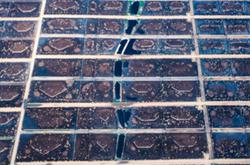
Cool Tech vs. Global Warming: BC'S Cutting Edge against Climate Change
- BC Charts a 'Clean Tech' Future, but Is the Map Right?
- Here Comes the 'Smart Grid' Way to Save Power
- Is BC Ready for Smart Meters?
- Out With The Old Engine, In With The New
- Geothermal Just Got Hotter
- Turning Waste Wood into Gas-Fueled Energy
- King of Poop Power
- Green You Can Use, at Vancouver's Olympic Village
- Breeding Trees to Be Better Biofuel
"You are here," says a smooth male voice, as an animated map of British Columbia appears onscreen. "Right here, in the windy, sunny, hydroelectric, geothermic, hydrogen-celled, bio-energy heart of the clean energy future."
This is the opening segment of a new video produced by Clean Works BC that was aired for foreign business contingents during the Olympics -- a kind of coming-out party for B.C.'s nascent clean tech sector -- and again last month at GLOBE, an international conference on business and the environment. There, in one of the Vancouver Convention Centre's expansive ballrooms, Energy Minister Blair Lekstrom told delegates that clean tech is the oil and gas of the future.
"In British Columbia," he said, "we're open for business, we're open for innovation and together we're going to build a clean, green economy."
Last week, with the release of its Clean Energy Act, the provincial government promised to build that economy by combining increased conservation within the province, while producing more power to export outside of B.C.
The act comes on the heels of a slew of other energy legislation and funding initiatives like the carbon tax, greenhouse gas emissions targets, a biofuels mandate, and an Innovative Clean Energy Fund with $174 million earmarked to develop clean and renewable energy technologies. British Columbia has one of the lowest corporate tax rates in North America, and increased the amount of tax credits available to clean tech investors. In many ways, these policies put us ahead of other jurisdictions.
But still, this so-called "windy, sunny, hydroelectric, geothermic, hydrogen-celled, bio-energy heart of the clean energy future" has no solar, wind or geothermic electricity generation to speak of. At GLOBE, Nexterra president and CEO Jonathan Rhone was optimistic about what the future would bring.
"We'd like to see some explicit policies around supporting the development and adoption of all manner of small-scale generation technologies," he said. "So small communities can develop, own and operate solar facilities or wind turbines and be able to feed that into the grid. I think some of the policies that government are working on will hopefully move us in that direction."
'Feed-in tariff' would promote competition
Small scale, community ownership -- these are the same elements of a truly green energy plan that environmental organizations also advocated for in advance of provincial legislation on energy development. While the Clean Energy Act outlined clear directives around export in a bid to increase investment in this sector -- some aren't sure that it has what it takes to create a sustainable and green economy.
In December 2009, Ernst and Young LLP hosted a brainstorming session in Vancouver, in which members of the municipal and provincial governments, as well as industry executives, were invited to share their thoughts on what would help or hinder clean tech and clean energy growth.
According to a subsequent report, "There is a risk that the province's more obvious natural advantages may actually cause people to overlook other resources that have the potential to be viable, such as geothermal energy... There needs to be greater competition in the province to encourage smaller, more entrepreneurial players to be able to bring their innovations to market."
One of the recommendations gleaned from the brainstorming session was that government create a feed-in tariff (FIT), offering higher prices for electricity in order to encourage unconventional types of generation. In Germany, this mechanism stimulated what is now one of the largest solar manufacturing markets in the world. Ontario's new feed-in tariff program requires that developers procure 50 per cent of project material from within the province. The rationale for this contentious rule is that the subsequent job creation will justify higher electricity rates.
Alison Thompson, chair of the Canadian Geothermal Energy Association and vice president of corporate relations for Vancouver-based Magma Energy Corp., says the inclusion of a FIT in the Clean Energy Act is good news. She said she'd also like to see the industry receive the same kind of government assistance that oil and gas currently do -- such as relief on infrastructure costs and funding for training programs.
"We have some catching up to do as the ministry of energy hasn't allowed land tenure for geothermal since 2004 which has prevented geothermal projects from going ahead," Thompson pointed out.
The British Columbia Sustainable Energy Association also recommended that the province adopt a voluntary FIT program.
That "would do wonders for the development of solar, tidal, wave biogas, biomass, geothermal, run-of-river hydro, and wind energy in B.C.," wrote president Guy Dauncey on the BCSEA website in February. "B.C.'s market price system locks the first six of these energy types out of the B.C. market, creating much frustration among solar and tidal energy [etc.] companies, and stymying [sic] the government's desire to make B.C. a Clean Energy Powerhouse."
Raise rates to promote conservation?
Though the Clean Energy Act opens up the possibility of a FIT, "to foster the development of emerging technologies in renewable power production," Minister Lekstrom said it's a mechanism that the government "may or may not use" and assured reporters that it would not involved subsidies.
"This is not about subsidies," said Lekstrom. "This is about working with our clean tech sector, looking at new emerging technologies to build the infrastructure and to build opportunities here in British Columbia."
Paying a subsidized rate for as many as 695 projects under the FIT program will cost the Ontario government -- and ultimately taxpayers -- $8 billion. According to a recent CBC article, residential electricity rates could increase by as much as $300 per year.
"I'm not sure that would go over at all well here in British Columbia," said Lekstrom. "We don't compare ourselves to Ontario, to be honest. It is a different world in British Columbia."
But for a province that puts energy conservation high on its list of priorities (the act also calls for BC Hydro to meet 66 per cent of new demand through conservation efforts), an FIT resulting in higher prices for ratepayers could be the best way to encourage conservation, argue some.
"The truth is that rising energy costs are going to happen," the Green Party's Philip Stone told The Tyee during last year's provincial election, when his party campaigned for a FIT. "The question is whether we're going to use the money to subsidize large mega-projects or put the money into a public-owned utility."
It was during this election that the Liberal's energy plan came to the forefront of public debate. The issue quickly became polarized; a question of private vs. public, all or none. Not long after the election, four environmental groups -- Watershed Watch Salmon Society, the Pembina Institute, the David Suzuki Foundation and West Coast Environmental Law -- made recommendations on how the province should move forward with renewable energy development.
"Many British Columbians -- including those deeply concerned about climate change -- harbour concerns about how renewable electricity is currently planned, promoted and developed in B.C.," reads the first paragraph of the report, which was endorsed by 22 other organizations. "They want to see renewable electricity projects, but they want to be confident that those are planned and developed in a way that limits impacts and maximizes benefits for British Columbians."
Key recommendations included a strategic planning strategy, to identify which types of electricity projects could be developed with the least impact, and where they shouldn't be developed at all. They asked the government to create guidelines to prioritize low-impact projects that provide maximum benefits to communities.
Approvals too politicized?
Josh Paterson of West Coast Environmental Law said part of the new act includes an integrated resource plan. BC Hydro has 18 months to conduct the plan, from the time the bill gets royal assent.
As part of this planning process, there are specific questions that the act requires BC Hydro to answer, such as how much capacity, and what kind of transmission lines, will be required. But Paterson says there are also "a whole bunch of weaknesses" with the plan.
"They don't explicitly have to consider trying to find the best low-impact way of generating electricity," he said.
"Also, the integrated resource plans will be approved by cabinet in a political process, not independently vetted by the BCUC [BC Utilities Commission]. This is cause for concern."
Paterson said a lack of details around the planning process makes it hard to say what kind of an impact it might have.
"It remains to be seen whether the process is going to have a really robust systematic way of weighting the potential benefits of these projects against the potential drawbacks."
With files from Andrew MacLeod. ![]()


20
Login or register to post comments
Grumpy
2 years ago
Ha, ha ha
The only thing "Green" in Campbell-land, is the $billion$ of taxpayer's $dollars$ being funneled to Gordo's corporate pals.
BC is as ecologically 'black' as bituminous coal.
Urbanismo
2 years ago
Green
Green (as in naive) is the colour of the eager beaver believers.
Architects and engineers cat fight (very unprofessional) among themselves: who gets to gum up the "envelope".
Green roofs add dead load and increase energy loss when wet but hey ducks love it!
And la, la, la it sounds so good from the podium!
So all that's left is compound interest . . . and boy oh boy no one will touch that!
Hugh
2 years ago
Here's some
Here's some thoughts:
People can use a lot less electricity.
New technologies like LED lights can conserve.
The old turbines at BC Hydro's plants can be replaced with more efficient ones.
We are entitled to the power from the Columbia Treaty, produced in the U.S.
BC's population is aging, not really growing. Electricity usage has leveled off in the past few years.
We don't need all those expensive, unreliable wind farms and ROR projects.
max von smartt
2 years ago
wilderness fragmentation
The many projected run of the river projects are not so green when considering they are mostly in wilderness areas and will come with access roads and transmission lines which will fragment the environment. Moreover the energy is intended for export to Kalifornia so they can keep their pools heated and air conditioners running. They will need our water soon too. Let's emphasize small scale projects and conservation.
freebear
2 years ago
Remember E.F. Shumacher?
Small is beautiful!
Decentralize energy production at various scales including individual buildings.
Also use less energy.
Gets in the way of selling 3D TVs though!
morechatter
2 years ago
First I recommend BC stop supporting the rich
Before it moves towards clean air inatives as the waters will be mudded if residents don't as certain wouldn't want to see what happened in the Gulf happen here now would we Mr. Campbell? Another no brainer as they brainstorm away do mostly no one has a complete thought to share so must group.
poetician
2 years ago
wtf is up with green?
I think I now understand why British Columbians smoke so much of the green stuff. We like to think that it makes us hip and edgy, gives us that cool laid back west coast lifestyle, tolerated to some extent by governments both provincial and municipal (give us our soma), but real it's the equivalent of sticking your head in the sand and pretending that these problems don't exist. In the end it just makes it easier for those who want to, to sneak up behind you and screw you in the ass.
I've said it before, if we want to shake up the nature of BC's democracy (or lack there of) then we must move the Legislature back to New Westminster and off the Ivory Island!!!
Green Party, are you listening?
Somebody has to hold these brigands accountable, and failing that, at least out the window by their ankles!
Stonebreaker
2 years ago
FIT yes!
It costs well over 50 cents a kwh to generate electricity from solar panels on your roof. But BC is currently only willing to pay homeowners and small biz about 7 cents for those solar kwh.
Without a FIT like Germany or Ontario the dream of small scale renewable power will remain just that...a dream.
The reality will remain gigantic power plants and gobs and gobs of climate-shocking fossil fuels.
The primary energy source in BC today is imported oil...far out pacing all BC Hydro clean electricity.
We have been choosing for decades to inflate a "cheap and dirty" energy bubble that is about to pop. Time to pay the full price and create something we can be proud of and want to live with.
Janie Jones
2 years ago
Bring back the capital!
It's true, the big problem with Vancouver Island is that it's not part of the North American continent.
And as I was born in New Westminister, I concur with poetician.
seth
2 years ago
no subsidies
The rest of the western world is wasting hundreds of billions on silly renewables schemes that reduce GHG's not a whit. Let them waste money on some way out fairyland breakthrough technology. If it works we'll use it here.
BC has already contracted for $65B in worthless subsidized run of river and wind power. We've done our share.
Enough!!!!
If some company wants to develop for suckers in the renewable market, or feels they can make a profit selling power at market rates they should be encouraged.
It's doubtful though with current US nuke power cost at 3 cents a kwh (OECD data) and new nuke power dropping to under one cent in the ten year time frame. Most of the entire $75B in IPP purchases/Site C investments are already close to worthless.
One $3B (2 cents a kwh) Candu complex at Burrard Thermal would produce the same amount of power as Gordo's $75B but of the much more valuable baseload type saving hundreds of square miles of BC forest, farmland and rivers, and ending the billions of tons of GHG's these distinctly dirty hydro technologies produce.
There is no reasonable argument against nuclear power. Cost, terrorism, proliferation, waste disposal, meltdowns, and fuel supply issues have all been resolved. With all the facts on the nuclear side, studies have shown that when the public becomes informed on Nuclear power support becomes overwhelming.
Despite the almost continuous spew of anti nuke disinformation from Big Oil, their MSM subsidiary and astroturf organizations like Pembina/Suzuki/Greenpeace, 65% of Canadians where polling has been done support nuclear. After the controversy in the US over Obamas loan guarantees support has been rock steady at 75%.
Worldwide, 95% in Asia, over 500 new nukes are on the drawing board or under construction. Here leaders Gordo, Harpo, and Dolton McWhinney on orders from their owners at Big Oil are investing more than $100B in tax payer funds on worthless wind solar and hydro schemes making $billions for Big Oil in natural gas sales while working to eliminate Big Oil's greatest fear, Canada's ticket to the 21st century, Atomic Energy Canada.
We need to educate ourselves on the nuclear solution - the only practical answer to Global warming/air pollution/ peak oil/ocean acidification in time frames that can head off disaster.
RickW
2 years ago
poetician
And what is the rest of the province -- chopped liver??
You wanna move the capital, move it to a central location. The lowermainland sucks too many resources as it is.
Skywalker
2 years ago
Center of B.C.
That is Vanderhoof folks. Run the province form there and see how soon rural B.C. gets a fair shake>
seth
2 years ago
Big high sell low
BChydro now buying Pirate power at 12.6 cents and selling today on the spot market for 3.4 cents.
Now that's Gordonomics.
Frank
2 years ago
seth
That's pretty funny.
Cue the usual Liberal apologists to tell us why we're getting a great deal..
North of Hope
2 years ago
John Calvert article
Check out this article by John Calvert, the author of "Liquid Gold," at the Georgia Straight.
http://www.straight.com/article-321013/vancouver/john-calvert-bc-clean-energy-act-escalates-private-power-agenda
G West
2 years ago
Seth
Where else have those facts about what Hydro's paying for (and then selling on the spot market for less) IPP power available?
I know you've done due diligence on all this stuff but I have a lot of people I'd like to circulate some of this information to so I'd appreciate a reference or two.
Thanks.
G West
cfvua
2 years ago
Subsidies
I guess I'm not the only one thinking that natural gas producers are subsidized. Well she called it "government assistance" and "relief from infrastructure costs". The government prefers "royalty credit" "drilling programs" and now "investment". Better all save up to pay the light bill if you are able to actually afford it as the $65 Billion catches up with us as well as decommissioning costs when the deals with IPPs end and the taxpayer gets to assume ownership of these used up facilities.
North of Hope
2 years ago
@ G West
You may find the info you're looking for in John Calvert book, "Liquid Gold."
G West
2 years ago
Thanks North of Hope
I also found a Vancouver Sun story about the same phenomenon.
Cheers.
pneves
2 years ago
Wind Mills are bad for birds.
Hey folks, one thing they learned in Europe is that wind farms are bad for bird populations. They often find dead birds on those farms. So much for green energy.