


 SHARE:
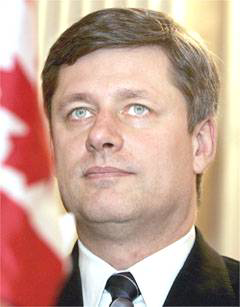
Prime Minister Stephen Harper, Foreign Affairs and International Trade Minister David Emerson and B.C. Forest Minister Rich Coleman were among those who took credit in 2006 for ending the softwood lumber dispute with the United States.
But now it turns out much of the $1 billion the Canadian negotiators relinquished to the United States has been used to reward the American lumber industry and other friends of President George Bush's administration. Concerns the money would be used for a slush fund may well have been fulfilled.
"We don't like where the money went," said Peter Goldman, the director and managing attorney of the Washington Forest Law Center. "I personally would not call it a political slush fund; I'd call it a timber industry slush fund."
Then again, he said, Canada's role disbursing the money could still be viewed as a favour to President Bush. "That's very much part of the Bush administration's M.O., taking care of your friends in the industry."
Where the money went:
- $200 million to the U.S. Endowment for Forestry and Communities, an organization created to receive the funds and dominated by timber industry executives
- $150 million to the American Forest Foundation, which "promotes the interests of small forest landowners"
- $100 million to Habitat for Humanity
- $500 million to the Coalition for Fair Lumber Imports, the American lobby group that sparked the latest round in the softwood lumber dispute in the first place
- $50 million to the Bi-national Council, a pro-logging lobby group active in both the U.S. and Canada.
'Meritorious initiatives'
The softwood lumber agreement earmarked the money for the CFLI and the Bi-national Council, but it also said $450 million would be spent on "meritorious initiatives" to be identified later by the U.S. in consultation with Canada.
Those initiatives were to include "educational and charitable" causes in timber-reliant communities, low-income housing, disaster relief and projects addressing forest management and sustainable forestry.
The money should be spent on things that help the environment, not hurt it, said Goldman. "We didn't want to see a half billion working against the environment for the next few decades."
(Goldman, by the way, said he has some sympathy for the American industry's charge that Canada was oversupplying the market. "We share the concern that B.C. in particular is cutting too much wood," he said. "Everybody's got blood on their hands.")
While nobody disputes the value of Habitat for Humanity's work, he said, the rest of the money raises questions about how it was decided who would be cut a cheque. The WFLC is still arguing in court for access to some 300 U.S. documents that would show the process for choosing recipients of the money.
Meanwhile, he said, Canada helped deliver the slush. "These are monies we believe would normally have gone into the United States Treasury," Goldman said. Had that been the case, the U.S. Congress would have had a say in how it was spent.
Instead, as part of the deal, the U.S. returned the $5.4 billion it had accumulated in tariffs and interest to Canada. Canada then turned around and sent the $1 billion worth of cheques directly to groups identified by the Bush administration, he said.
'Money laundering'
"It was very sophisticated money laundering," Goldman said. "Canada was willing to participate with money laundering. Part of the deal was Canada would help the United States launder this money."
Or as the WFLC's spokeperson Kenan Block put it, "We believe Canada was either a willing or an unwitting partner in creating what's become a pro-timber industry slush fund in the United States."
A spokesperson in the Ottawa office of Canada's minister of foreign affairs and international trade, Vancouver Kingsway MP David Emerson, took questions, but the minister was unavailable.
Nor was B.C. Forest Minister Rich Coleman available. Coleman has been under fire from the NDP for his failure to act while the provincial forest industry goes through a downturn, including numerous mill closures. In recent weeks Premier Gordon Campbell pointed to the softwood lumber agreement as one of Coleman's successes as minister.
Quick deal wanted
NDP forest critic Bob Simpson said there was no need to agree to sending $1 billion back to U.S. groups. Canada had been winning decisions in the softwood dispute, which was within months of being completed. Court decisions that came down after the deal was signed, he said, found it was illegal for the U.S. to collect the tariffs and all of it should be returned.
"We did not have to leave that billion dollars," said Simpson. "Stephen Harper wanted a quick deal with Bush. It's that simple."
B.C. signed on because there was no consensus in the industry, he added, and Campbell did not want to risk federal funding for the Olympics and Gateway project.
Now that money is being used against us, he said. A recent farm bill cruised through the American Congress and Senate with last minute provisions that will likely hurt B.C.'s softwood lumber industry. Said Simpson, "I would argue the half billion that went to the lumber industry lobby, that's their first purchase."
Industry resigned
A Washington, D.C. lawyer and expert on international trade law, Elliot Feldman, said the farm bill breaks the softwood lumber agreement, and probably NAFTA too, but there's been little protest from the Canadian government or forest industry.
Nor have they raised much concern about how the $450 million for "meritorious initiatives" from the softwood lumber agreement is being spent in the States, he said. "My clients have pretty much given up. It's kind of the resignation of the entire industry in Canada."
The Canadian government has too much vested in having the agreement seen as a success, he said. "It was the great contrast between it and the Liberal government, so how can it say anything negative about it?" he asked. "The last thing this government wants is to appear antagonistic to the United States. This is called walking away from your sovereignty."
"There were very clear indications this was going to be a political fund," said Peter Julian, the federal NDP's critic on international trade and the MP for Burnaby-New Westminster. "The concerns continue to be there."
Had Canada kept disputing the tariffs, he said, the country would have likely got every penny back from the United States and would not have had to accept restrictions on lumber exports.
"It's been by far the worst agreement I think, economically, in Canada's history," he said. "Who knows how many thousands of jobs would have been saved. There are literally thousands of families who have lost a breadwinner because of the actions of the Liberals and the Bloc [Quebecois] in propping up Stephen Harper."
Federal politicians and the national press failed to give the deal enough scrutiny, he added. "It was just a sell out at all levels."
Related Tyee stories:
- Bush 'Slush Fund,' Courtesy of Canada
Softwood deal pours $450 million straight into White House, says U.S. lawyer. - The Softwood Hard Sell
Deal a bitter pill for some B.C. lumber firms, especially 'remanufacturers.' - Softwood Deal: Follow the Money
Pact lets dollars pour into mergers, not jobs and communities.
![[Tyee]](/design-article.thetyee.ca/ui/img/yellowblob.png)
Read more: Rights + Justice, Politics, Labour + Industry, Environment








Tyee Commenting Guidelines
Comments that violate guidelines risk being deleted, and violations may result in a temporary or permanent user ban. Maintain the spirit of good conversation to stay in the discussion.
*Please note The Tyee is not a forum for spreading misinformation about COVID-19, denying its existence or minimizing its risk to public health.
Do:
Do not: