News

Top Bush Adviser Made Millions Lobbying for BC Forest Biz

Ed Gillespie is 'New Karl Rove.'

By Will McMartin, 27 Aug 2007, TheTyee.ca

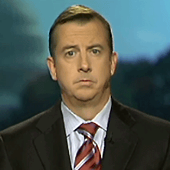
Ed Gillespie

Gillespie: Peddled softwood deal.

Tabbed to succeed Karl Rove as chief political adviser to U.S. President George W. Bush, 46-year old Ed Gillespie is a veteran Republican operative and a high-profile Washington, D.C., lobbyist. Surprisingly, he also has a keen understanding of British Columbia and our province's largest industry, forestry.

That's because for the last seven years or so, Gillespie's lobbying firm was contracted to represent B.C. lumber exporters seeking a resolution to the Canada-U.S. softwood lumber dispute.

And what a lucrative contract it was. Between 2000 and this past April, the British Columbia Lumber Trade Council paid Quinn Gillespie & Associates nearly $3.7 million -- or an average of more than half a million dollars per year.

Teamed with Gingrich, Armey

Born in New Jersey to Irish-American parents in 1961, Gillespie is a graduate of The Catholic University of America in Washington, D.C., and once worked as a parking lot attendant at the U.S. Senate.

In the mid-1980s, after serving briefly as a low-level staffer with the Republican National Committee, he was hired as an aide to Dick Armey, then a little-known Texas congressman. Over the next several years, Gillespie helped Armey to become, along with Newt Gingrich, one of the GOP leaders in the Democratic-controlled House of Representatives.

In early 1994, in anticipation of that year's mid-term elections, Armey and Gingrich published a campaign manifesto entitled "The Contract with America." Pledging lower taxes and smaller government, the document was credited with helping the Republicans win control of both houses of Congress for the first time in four decades.

Armey and Gingrich subsequently were elected by their fellow GOP lawmakers to the two most powerful positions in the House of Representatives (respectively, majority leader and speaker), and Gillespie -- who was acclaimed as a "principal architect" of The Contract with America -- found himself an increasingly influential party strategist.

In 1998, after putting in more than a decade of service with Armey, Gillespie returned to the Republican National Committee, this time as director of communications and congressional affairs under chairman Haley Barbour. The following year, when Barbour left the RNC to rejoin his prominent Washington, D.C., lobbying firm, Gillespie went with him to set up a subsidiary consulting agency, Policy Impact Communications.

Key to getting Bush elected

George W. Bush, the then-Texas governor who was vying for the GOP presidential nomination, was among the many Republican politicians who sought Gillespie's political and communications advice.

In July 2000, Gillespie was asked to co-ordinate the party convention in Philadelphia, where Bush was nominated as the Republican candidate for president; then, in September, he moved to Austin, Texas, to work with Rove and other senior strategists on Bush's campaign team; and later, in November, he was in Miami managing communications during the lengthy Florida ballot re-counts.

Not long after the U.S. Supreme Court ordered an end to the ballot-counting -- a controversial decision which effectively put Bush into the White House -- Gillespie volunteered to help Texas businessman Don Evans, a Bush friend and his appointee as secretary of commerce, set up operations at the U.S. Commerce department.

It was widely rumoured that Gillespie himself was offered any number of top-level jobs in the Bush administration, but the political insider already had laid the foundation for a more lucrative career.

Big-ticket clients

In January 2000, eleven months before Bush prevailed over Democrat Al Gore in the contest for the U.S. presidency, Gillespie partnered with Jack Quinn, an influential Democratic party insider, to found a new lobbying company.

With a political resume that stretches through the 1970s and 1980s, Quinn served in the White House in the 1990s as chief of staff to then-vice president Gore, and then legal counsel to president Bill Clinton.

In its first year of operation, while Bush and Gore battled for the White House, Quinn Gillespie & Associates began recruiting a staff of well-connected operatives from both the Republican and Democratic parties. And by the end of 2000, the newly founded firm could boast of having more than 30 well-heeled clients, with billings of close to $7.7 million.

Among those purchasing Quinn Gillespie's services were such well-known corporate names as Daimler Chrysler, which paid the lobbying firm $360,000 in 2000; (all figures are in U.S. dollars and were tabulated by the Center for Responsive Politics); Verizon Communications, $340,000; Cisco Systems, $285,000; Viacom, $360,000; SBC Communications, $440,000; Instinet, $575,000; Hughes Electronics, $280,000; Atlantic Richfield, $165,000; and PriceWaterhouseCoopers, $350,000.

A range of special-interest associations and coalitions also sought the services of Quinn Gillespie in 2000, including the American Hospital Association, $216,000; the Health Insurance Association of America, $180,000; the Recording Industry Association of America, $120,000; and the Repeal the Tax on Talking Coalition, $297,000.

But one of the earliest clients to retain Quinn Gillespie -- and among the highest paying -- was a Vancouver-based coalition of B.C. lumber exporters. In April 2000, bare months after opening its doors, the lobbying firm registered with Congress as representatives of the British Columbia Lumber Trade Council.

By the end of 2000, after just nine months of work, the B.C. lumber producers had paid Quinn Gillespie $540,000 -- or $60,000 per month.

Softwood setback

Canada and the United States have been entangled in four softwood-lumber trade disputes over the last 25 years. American lumber manufacturers claim their Canadian counterparts enjoy an unfair price advantage because of a variety of government policies, including below-market stumpage rates for logs from publicly-owned lands.

In 1996, the two countries negotiated a five-year agreement that put a quota on lumber exports from B.C., Alberta, Ontario and Quebec. That agreement was due to expire in April 2001 -- one year after Quinn Gillespie & Associates first registered to represent the B.C. Lumber Trade Council -- and U.S. producers had vowed to renew their efforts to obtain restrictions on Canadian imports.

In August 2001, notwithstanding Quinn Gillespie's efforts, the U.S. Commerce department issued a preliminary finding that Canadian sawmills were unfairly subsidized. The following year, in March 2002, a "final determination" imposed countervailing and anti-dumping duties of more than 27 per cent on Canadian softwood lumber imports.

Still, the B.C. lumber producers continued to send sizeable monthly cheques to Quinn Gillespie. On top of the $540,000 paid in 2000, the Vancouver-based council sent $900,000 to the lobbying firm in 2001, and then another $520,000 in 2002.

Firm lobbied for Enron

Although unable to shield Canadian lumber producers from U.S. tariffs, Quinn Gillespie nonetheless enjoyed considerable success in convincing the Bush administration to buck its free-trade dogma in order to protect the American industries from foreign competition.

Stand Up for Steel, an industry-labour coalition, enlisted the lobbying firm to stop a surge in steel imports and was rewarded in March 2002 with a Bush-imposed tariff. Later that year, on behalf of USEC Inc. (parent of the United States Enrichment Corp., operator of the country's sole uranium enrichment facility), Quinn Gillespie succeeded in persuading the administration to restrict shipments of enriched uranium from Russia.

For its services, Quinn Gillespie & Associates earned almost $2.2 million from Stand Up for Steel between 2001 and 2006, and more than $1.5 million from USEC between 2000 and 2004.

Meanwhile, the lobbying firm's annual revenues continued to grow ever higher, as billings reached $10 million in 2001, and surpassed $15 million in 2005. Its roster of clients grew to include Microsoft, General Electric, Sony, Bristol-Myers Squibb, Burlington Northern Santa Fe, the Bank of America and, for a time, the ill-fated Enron.

$3.6 million to push deal

In February 2006, after working on the lumber trade file for nearly six years, Ed Gillespie visited Vancouver to make the keynote speech at a forum on the softwood lumber dispute, NAFTA and American trade policy. He was quoted by the Canadian Press as telling delegates that he saw "a window" of opportunity, "somewhere between Memorial Day [May 29] and the Fourth of July," when Canada and the U.S. might reach a new softwood agreement.

If a deal wasn't reached by the latter date, he said, "it's going to get tougher in the political environment of the Senate mid-term elections."

Those remarks proved prescient, as the two countries signed a "Basic Terms" agreement at the end of April, and then initialled a final legal text on July 1 in Geneva, Switzerland.

The British Columbia Lumber Trade Council continued to pay Quinn Gillespie and Associates through the final negotiations and beyond. In addition to the sums listed earlier, the B.C. council paid fees of $240,000 in each of 2003 and 2004; $580,000 in 2005; $600,000 in 2006; and a final $40,000 in 2007.

All told, B.C. lumber manufacturers paid Quinn Gillespie $3,660,000 US over seven-plus years. During that period, the council also retained two other Washington, D.C. lobbying firms at a cost of $2,280,000. The total of fees paid to U.S. lobbyists since 2000 came to more than $5.9 million.

'First among equals'

In June, Ed Gillespie took a leave of absence from his lobbying firm to accept a position in the Bush White House. The move puzzled many Washington, D.C., politicos, but began to make sense two months later when Karl Rove announced he was quitting as Bush's senior political adviser.

"It appears that Gillespie will emerge as the first among equals," reported the Washington Post following Rove's departure. "He is likely to be called on to handle political strategy and message management for the president, becoming the dominant voice in determining where and how often Bush appears and what he says during the final 17 months of his tenure."

For the next year and a half, then, the White House will have a senior official with first-hand knowledge of British Columbia and our provincial forest industry. It remains to be seen if that is a positive development, but it probably can't hurt.

Related Tyee stories:

 [Tyee]

33  Comments:

  • Capitalism

    27-08-2007

    Oh Boy

    There are a lot of scary words in there; "Republican", "Enron", "Bush".

    I am not sure what this article is trying to tell us. I don't agree with the lobby trade either. Unfortunately, our neighbours to the South have made it part of the fabric of politics - left and right.

    Personally, I think Lobbying should be outlawed. However, it never will be, because the lobbyists help bankroll the expensive leadership and nomination campaigns that you see in the US.

    So, this is the way it works. BC Forests hired an insider to help push its agenda. It happens all the time. Does it irritate me that the system is designed in such a way?....yes! I may not like some of the rules of Hockey, but I still play the game.

    As far as I know, the Council is self-funded. It is none of our business what they do with their own money.

  • Fiat lux

    27-08-2007

    It is indeed our business

    It is indeed our business what they do with their money, because it comes out of our pockets in the form of high prices we have to pay for everything we buy and the stolen wages of the employees.

    This is exactly the purpose of capitalist privatization. While government actions and services are accountable for at least a certain degree, with the exception of the daily growing dictatorship of the Harper and Campbell gangs, corporations can get away with murder, based on the claim that it is "their money" and sue anybody who dares to question their dirty deals.

    I have built a lot of things for corporate executives, way back, when they were still at the chickenfeed level in comparison of what they can get away with it now, billing
    private work to the companies, "hospitality suites", where they could entertain top level call girls at company (public) expenses , etc etc. This is one of the reasons how I know of their dirty dealings, now globalized.

    The multimillion salaries, etc, are all coming out of the public's pocket in the form of high prices and tax deductible expenses. Anybody who's ever been in business, or understands business, must know this simple, elementary fact.

    As far the bum in the article is concerned, scum always floats to the top and the sucker public is eager to lap it up.

    The biggest crooks and maniacs in history are now called "great".

    I hope to see the return to democracy one day, with a slew of these "characters" either pushing brooms, or sitting in jails.

    Ed Deak.

  • The brain

    27-08-2007

    I easily concur, Ed

    You are on the money in every respect.

    The "contract with america", aside from the appeal of "smaller government" and "lower taxes" to the average joe who somehow thinks we are all overtaxed and administration costs are too high, means just one thing. Give corporations more power.

    Smaller government means less corporate regulation. Lower taxes means lower corporate taxes. The bottom line to any such "contract with america" is that it means more power to corporations and considering that all politicians are these days is lobbiests sluffing themselves off as politicians, it comes as absolutely no surprise that such an agenda not only exists, but is supported by most if not all political parties due to human weakness... greed. Where are the options? Is there a political party that isn't full of "yes" men and corporate lobbiests? Look long and hard at the people running in your riding, folks. One in four running might be able to be trusted to serve the public instead of just their selfish selves.

    How many politicians are sitting in the provincial and federal legislature that have had fat directorships with share options given to them for their "job well done"? Its called a legal bribe, folks and we had better start waking up to it.

    Its offensive and obscene that the public is too dumbed down to get just how bad it has gotten. There are dozens of lobbiests/directors in Campbells government. Harper was so desparate to get a lobbiest in the minister of trade, he took on David Emerson of all people.

    The definition of a crook is someone who steals, and that so happens to include the taxpayers money. When any government lowers corporate taxes in the best of economical times when the result is an overheated bubble economy and lowered resource royalties with multi billion dollar giveaways to economic sectors like oil that have never seen such boon times, with directorships as perks, common sense has to ask just how crooked our governments are... how bad is it?

    Well, its bad. Oil subsidies are still in the billions in this country, as though the industry still needed help through "hard times" at $70+ a barrel. Corporate taxes are reaching historic lows, investors now pay taxes on only 67% profits in the markets, and like I say, there are dozens of MLA's in BC alone that are sitting on directorships that can only be seen as nothing more than stock option bribes for their "jobs well done." They spend the first four years learning how to steal. They spend the next term perfecting it.

    Between us all, fellow voters, its time for a political change in this province and country. Like Ed says, scum rises to the top. Its time to get clean.

  • brianhayes

    27-08-2007

    Thanks for excellence

    Thanks Will.

    It's true that we require informed voters and it's true that healthy journalism is critical. This article truly carries out its duty.

    The people behind candidates are too often ignored. The industrialists in Ronald Reagan's Kitchen Cabinet comes to mind.

    I think of Ed Gillespie as a 'candidate whisperer', and Karl Rove too. The data is available. You've filtered the lists and background and helped build insight.

  • skeptikool

    27-08-2007

    Follow the money - if you can

    Though we elect, to various levels of government, those we hope will represent the public interests, we need to ask, as this article indicates, where the power truly resides.

    Is the politician's loyalty to the Joe and Jill Sixpacks with their issues, or to or the heavy donors to the campaign to re-elect?

  • Capitalism

    27-08-2007

    Tax Cuts, Schmax Cuts

    Tax cuts have nothing to with this divide you people speak of. If I were you, I'd brush up on monetary economics and money supply, which the Federal Reserve (in the USA) no longer discloses.

    It is estimated that the government prints 10-12% more money each year. CPI ranges from 1.8 (on the low end) to around 3.0 on the high end, in 2006, it was higher.

    Ask yourselves where the difference goes??? Our monetary system is corrupt. Mr. Deak has often written about this before. A $10 bill isn't worth more than the paper it is printed on.

    Basically, the banking system creates money, in part, through its overnight lending rate (what it charges the banks). The lower the rate, the lower the rates a bank charges to borrowers - - the more is borrowed. The people that win in this game are the ones with first access to this money - the Uber Rich.

    Nobody really takes the time to understand what money is, and why. Trust me, you won't like the answer. We know, it once, was backed by Gold. Now, it is backed by the government's promise, and well all know what good that is.

    The most powerful man in this country in David Dodge. The most powerful man, arguably, in the world is Ben Bernacke. The Federal Reserve was actually created by the Banks. Believe it or not, it is a private corporation - owned by the banks.

    Concentrate on the tax cuts all you like. They are about the only good economic policy I've seen.

  • The brain

    27-08-2007

    Firing on most cylinders, Cappy, but...

    Last I checked, the government gets its revenue from corporate and personal taxation, along with resource royalties. Taxation plays huge in a nations ability to pay down debt or add to it. Borrowing creates money out of thin air, so I ask you... how does a reduction in corporate taxation reduce debt which is the primary driver for all that new money?

    If governments print money to the tune of 10 to 12% a year, currency ends up like the american dollar... falling fast, in case anyone wants to compare international currencies and there's no secret as to why. The U.S./Canadian population growth combined with GDP growth percentages, aren't growing fast enough to offset the new money printed/created by more debt and higher interest rates.

    http://www.treasurydirect.gov/NP/NPGateway

    This chart puts it in perspective. Highlights include U.S. debt growing from 4.3 billion in March of 93' to 5.3 billion in March of 2001, or 1.4 trillion in new debt over 8 years. But since 2001 to now, just over 6 years later, the U.S. has added a whopping 3.6 trillion of fresh debt. This next link provides the breakdown.

    http://www.treasurydirect.gov/NP/BPDLogin?application=np

    Note the private vs governmental breakdown of debtload.

    While you talk about the reduction of taxes being a good thing, keep in mind that the only way U.S. currency will recover from this kind of debt load is if they cut military spending in half (if not more) and raise taxes straight across the board, as well as the introduction of new banking regulations to curb new debt. Not going to happen because greedy CEO's won't allow it, and its easy to predict where the U.S. economy and currency will go from here.

    Like a free fall currency and a recession or worse?

    When their currency drops like a rock... and it will... their empire is over. The only thing the U.S. can do from there, is exercize military power/bombs and with the reduction of currency buying power, the manufacturing base they once had but have no longer due to their own globalized outsourcing of manufacturing and jobs, their reign as a superpower is done.

    So, cappy, while you so love capitalism and all of its corporate jazz, it is corporate greed left unchecked, "smaller government and reduced taxes" that will be the ruin of the U.S. . All that is left, is to watch the pieces crumble... and to actually support these thieves and politician pretenders, is to contribute to the very madness that will lead to whats coming next. cont.

  • SharingIsGood

    27-08-2007

    Brain's big question

    The Brain asks:

    Quote:
    How many politicians are sitting in the provincial and federal legislature that have had fat directorships with share options given to them for their "job well done"? Its called a legal bribe, folks and we had better start waking up to it.

    I can't count them all, Brain, but Brian Mulroney is one ex-politician that has done well at the directorship trough for having sold out his country. His millions don't come from having done work, they come only from who he met and the unending neofascist-capitalist esteem he hods for so doing.

    The following article outlines some of his doings:

    The Prime of Brian Mulroney:
    If you've long since stopped thinking about our former PM's career path, you're in for a surprise:He's more powerful than ever By Konrad Yakabuski, Report on Business Magazine, April 2004

    http://www.konradyakabuski.com/articles/2004_02.html

  • RossK

    28-08-2007

    Kudos to Mr. McMartin

    Thanks for this Mr. McMartin.

    And thanks, as well, to The Tyee for rolling it out before the fall TeeVee/Propaganda season begins.

    .

  • Capitalism

    29-08-2007

    Cappy isn't Influenced

    First off - I have always questioned the U.S. economic system. They are way past Capitalism. No such thing as market forces anymore. I have always agreed that the U.S. has a system that resembles a Ponzi scheme.

    Might I also add is that I've never applauded President Bush. I think he's been a disaster and his economic policies stink. I disagree with high taxes, but I don't believe in unsupportable tax cuts. I said the Liberals teetered on the edge with their 01 cuts. They probably cut too much, too early. In the end, I believe we are far better off.

    What I have said, is that Canada's banking system is much better. It isn't perfect and it is still tilted against the middle class. The middle class (ask Lou Dobbs) lifts the weight in this country.

    The problems we all speak of are created by our banking system, which is unfair - NOT taxes.

  • ov

    29-08-2007

    Cappy

    Life, Money and Illusion by Mike Nickerson is a good back for differentiating between legitimate economics and the corruption of speculation. He covers a lot of issues but doesn't harp on about them and I was really impressed with his objectivity.

  • The discussion for this story is closed. No more comments can be added.