- Ms Kaye is a Tyee Builder. You can be, too.
- Mary Carlisle is a Tyee Builder. You can be, too.
- Prem Gill is a Tyee Builder. You can be, too.
- Nancy Flight is a Tyee Builder. You can be, too.
- Justin Everett is a Tyee Builder. You can be, too.
- John Westover is a Tyee Builder. You can be, too.
- Nora Etches is a Tyee Builder. You can be, too.
- Edward Henderson is a Tyee Builder. You can be, too.
- Bharadwaj Chandramouli is a Tyee Builder. You can be, too.
- Dean Chatterson is a Tyee Builder. You can be, too.
- Marius Scurtescu is a Tyee Builder. You can be, too.
- Robert Parkes is a Tyee Builder. You can be, too.
- James Murton is a Tyee Builder. You can be, too.
- Susan Doyle is a Tyee Builder. You can be, too.
- Vincent Strgar is a Tyee Builder. You can be, too.
- Helen Spiegelman is a Tyee Builder. You can be, too.
- Subir Guin is a Tyee Builder. You can be, too.
- Kimball Finigan is a Tyee Builder. You can be, too.
- Joanne Manley is a Tyee Builder. You can be, too.
- David Leach is a Tyee Builder. You can be, too.
'We Weren't Supposed to Survive'
Seeking reconciliation with BC's First Nations. First in a series.
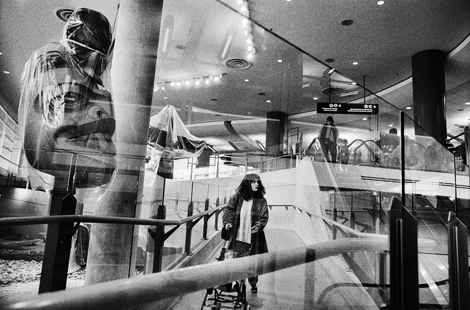
Vancouver International Airport. Photo by David Campion
Tyee Interview »
Kathryn Gretsinger interviews Sandra Shields about First Nations reconciliation.
Subscribe: iTunes | More Tyee podcasts
[Editor's Note: This weekend we should learn whether the first final agreement reached under the B.C. treaty process has been accepted by its community, the Lheidli T'enneh First Nation near Prince George. Two years ago, the government of British Columbia and First Nations leaders laid out a vision for a "New Relationship," spurring initiatives aimed at "closing the gap" between Aboriginal and non-Aboriginal British Columbians. In this four-part Tyee Solutions Reporting Fellowship series, writer Sandra Shields looks at steps being taken in her home community of the Fraser Valley, and explores whether all this talk is changing things on the ground. To learn more about Shields, her series and Tyee fellowships, go here.]
"Ask the average person in the valley who the Stó:lo are," Gwen Point says, "and they will say, 'I don't know.'" A Stó:lo cultural leader and long-time educator, Point recently became one of a handful of Aboriginal professors at the University College of the Fraser Valley.
"Before reconciliation can occur," she says, "people have to know who we are and they have to understand what happened here."
Like most of my non-Aboriginal neighbors, I knew next to nothing about the Stó:lo when my husband, photographer David Campion, and I moved from downtown Vancouver to a farmhouse on the side of a mountain across the Fraser River from Chilliwack. It was when a friend lent us the Stó:lo Atlas, a beautiful and fascinating book, that we began to learn something of the history that lies outside our back door.
People of the river
Stó:lo means river. Archeologists say that the Stó:lo have been living in the floodplain along the Fraser River for more than 350 generations. Part of the Coast Salish peoples, the Stó:lo include 24 bands located between Vancouver and the Fraser Canyon north of Yale.
First contact with Europeans came in the form of smallpox in 1782. The disease traveled along Native trade routes and when it reached the valley it is believed to have killed two out of every three people, decimating the estimated 60,000 Stó:lo living here. Thirty years later, when Simon Fraser made it to the lower reaches of the river that would soon bear his name, he encountered abandoned villages and a people still in recovery.
In the 50 years after Simon Fraser passed through, life along the river continued much as it had for generations. The Hudson's Bay set up forts, some of the Stó:lo men traded salmon, and some of the Stó:lo women married Hudson's Bay men. It was in the spring of 1858 that everything changed. Within four months, 30,000 miners arrived fresh from the rowdy California frontier and began digging up the banks of the river in search of gold. Settlers followed and B.C. implemented a policy of "benevolent assimilation." The priests at St. Mary's Mission established a boarding school to educate Stó:lo children and the Stó:lo were confined to reserves that amounted to less than one per cent of their territory.
Within a generation, by the 1880s, there were more settlers than Stó:lo. Canada passed the anti-potlatch law and the drumming, singing and winter dances that had ordered Stó:lo cultural and spiritual life became illegal. The first person in Canada to go to jail under the new law was a man from Chilliwack and fear spread throughout the valley. Until the 1960s, those who continued to practice their traditions did so in the utmost secrecy.
"The idea was to colonize," Gwen Point says. "We weren't supposed to survive. The devastation that happened to the Stó:lo community since contact, we are still living with that today. Our children are struggling in education. Our people are over-represented in the prisons. We are only beginning to come into our own and that's because many of our people are turning back to our culture and taking an active part in the decisions being made in all areas such as education, health and self government."
More than sorry
The way history is remembered affects all of us deeply. Again and again, in countries around the world, the experience of having been victimized travels through generations carrying with it a call for truth and justice.
South Africa's Truth and Reconciliation Commission was part of a growing international movement that links reconciliation with healthy democracies. Simply put, reconciliation is about moving from antagonism to trust and respect. It is linked to the functioning of democracy because it creates the kind of relationships that increase social capital. In B.C., reconciliation moved out of the shadows in the spring of 2005 when Premier Campbell announced the creation of the Ministry of Aboriginal Relations and Reconciliation.
Vancouver-based author and community organizer Jessie Sutherland has been involved in frontline reconciliation work in communities across Canada as well as the Middle East, Africa and South America. She warns that reconciliation is often used as a buzz word by those in power who think they can say Sorry and then move on without addressing the underlying issues or doing the long hard work of sorting through contested histories, rooting out injustice and learning to share power.
Wary of a cultural understanding that sees reconciliation in terms of contrition and forgiveness, Sutherland prefers to use a broader definition that views reconciliation as a process by which systems of domination are transformed into relations of mutuality. She explains that reconciliation must come from political leaders and from ordinary people. Even those who have suffered or benefited little from the past absorb the beliefs and attitudes that underpin conflict, so while systemic restructuring is essential, the hearts and minds of the people must change too.
The steps are as familiar as they are difficult: a joint search for truth, justice, and healing. Every reconciliation process is unique, but it is generally agreed that if tough issues aren't dealt with, they only get worse with time - which goes a long way towards explaining the complex knot that the B.C. government and First Nations leaders have begun to try and unravel.
New relationship
The waterslide in the resort community of Cultus Lake near Chilliwack was closed on the gray December day when I went looking for the Soowahlie Band Office. The directions from the gas station clerk took me down a road that turned to gravel and disappeared between pine trees. Two kilometers of mud and potholes later, I found Grand Chief Doug Kelly in the campground headquarters that doubles as his office.
Kelly works with Stó:lo Tribal Council, an alliance of eight Stó:lo bands. When I confessed that the muddy rutted road to his office made me wish for four-wheel drive, he laughed and told me about a letter to the editor that appeared in a local paper.
"It was basically saying we're a tax burden, that everything First Nations get is a handout and all we do is take, we don't pay taxes, all those old arguments. Well, our national chief had done some work and concluded that First Nations governments receive approximately half the funding that other local governments get."
Kelly did a bit more research, came up with some figures, and wrote his own letter to the editor. "Chilliwack residents," he said, "receive something like $12,000 per person in terms of value of services from Canada, B.C. and the city. Stó:lo residents living on reserves in and around Chilliwack receive about $7,700. That's why our roads aren't paved, that's why we don't have sidewalks, that's why we don't have light standards."
Kelly cut his political teeth young, first serving as chief of Soowahlie in 1983 when he was 22 years old. He was a founding member of the B.C. Treaty Commission and in the spring of 2005, he was on the executive of the First Nations Summit when Aboriginal leaders and the provincial government drafted the vision for the "New Relationship."
"It was exciting," he says. "Three years earlier we had been fighting the referendum on treaty-related issues and suddenly we were talking about doing business in a new way."
These days, he wonders when the change in perspective at the upper level of government will make its way down the chain of command. "The premier talks about it being a new relationship but right now it's from the neck up," he says. "It hasn't got to the arms and legs, all those civil servants who actually do the work of the province of B.C."
To ensure that happens, he says "First Nations need to make clear and pronounced statements about what we want and how that change ought to be carried out."
Reconciliation season
The farmhouse where I live sits on the north shore of the Fraser River in the traditional territory of the Leq'á:mél First Nation. There were once several large villages here and the Stó:lo say this is where the Halkomelem language likely originated.
A 20-minute drive to the west, the Xá:ytem Interpretive Longhouse stands on the site of a 9,000 year-old Stó:lo village. This past October, a gala ceremony here drew the lieutenant-governors of both British Columbia and Washington State to celebrate the return of the site to the Stó:lo.
The ceremony at Xá:ytem was part of an unprecedented spate of reconciliation-themed events that took place in the Fraser Valley last year. They began in February when Washington State acknowledged responsibility for the murder of a 14-year-old Stó:lo youth in 1884 -- an acknowledgement that was helped along by a powerful locally-produced film, The Lynching of Louie Sam. In August, a somber ceremony marked the return of the land and buildings of St. Mary's residential school to the Stó:lo. Then in October, the Stó:lo celebrated the repatriation of T'xwelatse, an ancient stone statue, from the Burke Museum in Seattle.
Grand Chief Clarence Pennier was on the podium at several of these ceremonies. A long-time Stó:lo leader, he first sat on council in his home community of Scowlitz in the early 1970s. These days, Pennier is the president of the Stó:lo Tribal Council. After more than 30 years of fighting for the recognition of Aboriginal rights and title, he has no illusions about the government's motivation for the new relationship.
"We have to ask Campbell: 'What made you do a 180?'" he says. "It's not his heart. It's court cases. When he lost his own case, he couldn't appeal it because he had been elected by then, but he understands why he lost. As a province, B.C. doesn't actually own the land and resources. That's what the courts say. That's what the constitution says."
Pennier points out it has been First Nations' persistent search for justice that lies behind the pivotal court cases that changed the government's position and led to the recent spate of ceremonies in the valley. "The return of St. Mary's took 20 years," he says. "It was 15 years for Xa:ytem and T'xwelatse took 14 years."
"The ceremonies are important," he says. "They raise people's awareness that things can change at the political level and they help to establish relationships." But he is quick to say that much more is needed. "Unless people see change happening in communities, in policies, in legislation, then people will gear up again. If we can't get anything politically, we have to try direct action."
"It's about respect," he says. "It's how we live together and create a better future for all of us."
Australia says 'Sorry'
Reconciliation caught the attention of ordinary Australians in 1997, the same year that the Delgamuukw decision rewrote the nature of Aboriginal-Crown relations in B.C. While newspapers here tried to convey the meaning of a complex legal case that left most British Columbians bored, scared or confused, headlines in Australia told the riveting tale of a judge and WWII fighter pilot who was transformed into a passionate advocate demanding his country apologize to indigenous Australians.
When Sir Ronald Wilson took on the job of leading a public inquiry into Australia's residential schools, he believed, like most Australians, that Aboriginal children had been taken out of wretched conditions and given the benefits of white society. Instead he heard months of testimony about the tragic repercussions of a policy that severed children from their language, culture and lands, destroyed families, and left an intergenerational legacy of lost parenting skills, shattered physical and mental health, and high mortality rates.
Sir Ronald demanded that Australia acknowledge its crime and make reparations to the "stolen generations." Prime Minister John Howard thought indigenous Australians had won too many concessions already, so he said "No." The furor that ensued plunged Australia into an intense debate about the responsibility of present generations for past crimes.
The tide peaked on May 28, 2000, when a quarter of a million Australians walked across the Sydney Harbor Bridge. Planes flew overhead and wrote "Sorry" in the sky. Aboriginal and non-Aboriginal Australians looked one another in the eye and smiled. The walk inspired Australian author Kate Grenville to write Secret River, an acclaimed novel that uses her ancestors as a jumping off point for exploring the consequences of settling on land that already belongs to someone else. Last year, at Vancouver's Writers Festival, she said the walk came about because people felt in their guts the need to do something.
Moving out of denial
"Do British Columbians feel the need for reconciliation in their guts?" Chilliwack writer Stephanie Gould asked me one afternoon. She thought not.
I met Gould last spring when she helped organize a film festival about the survival and revival of Indigenous culture in the Pacific Northwest. Hugh Brody, the author, filmmaker and anthropologist who currently holds the Canada Research Chair in Aboriginal Studies at the University College of the Fraser Valley (UCFV), was the motivating force behind the festival that played first at the British Museum in London and a month later at UCFV.
Opening night drew a 100 people to Chilliwack City Hall. During the discussion, a young girl of Aboriginal ancestry raised her hand.
"The films made me think about what we have lost," she said and her quiet voice broke. She recovered and continued. "I feel like here at the film festival, what was taken away from us is being given back."
That weekend, while the rest of the valley basked in the first warm weather in months, a group of several dozen of us, mostly middle-aged white people, sat in a darkened theatre and watched film after film that showed a version of history none of us had learned in school. After one film, a man blurted out, "This history is so recent -- it happened yesterday. And it's so embarrassing." Late on Sunday afternoon, a woman asked, "How do we, as non-Aboriginal people, support others in moving out of denial about what happened here?" To sit through the film festival was to feel the need for reconciliation in your guts. And it wasn't comfortable.
"What has taken place in the Fraser Valley," Hugh Brody said in a recent conversation, "happens all over the world where cultures collide and then have to deal with the fallout of these encounters and the pain and disarray that always seems to come with them." He pointed out that when people are in denial, or when they are unaware of the history they live with, they create risks to themselves and to one another.
"If communities are to live together in a healthy way," he said, "they must avoid these non-truths."
The right path
From the field above my house, you can see the lights of Chilliwack, 10 kilometres away across the Fraser River. This central region of the valley has been home to a concentration of Stó:lo communities for thousands of years. Prior to the smallpox epidemic, this was one of the most densely settled areas of the continent north of Mexico. Today, while communities like the Leq'á:mél live on rural reserves, across the river in Chilliwack nine of the Stó:lo bands have much of their land base within the boundaries of the steadily growing municipality.
Joe Hall is chief of one of those bands, the Tzeachten First Nation. He is also the president of Stó:lo Nation, an alliance of 11 bands from throughout the valley. I met him at his office just south of Chilliwack's Wal-Mart and Canadian Tire in the Stó:lo Nation Government House. This used to be the site of the Coqualeetza Industrial Institute, a residential school that closed in 1940 and was replaced by an Indian hospital that operated until 1969 when Canada ended its policy of segregated health care for Aboriginal people.
"This is a new path," Chief Hall says about the provincial government's reconciliation efforts. "It's the right path, and the bugs are going to work themselves out, maybe not as quickly as we would like, but it did take many years to develop the situation we're in."
After decades of sparring with the city of Chilliwack, Hall now enjoys a good relationship with the municipality. "Maybe we had to go through that to get to here, but the importance of having a better working relationship is priceless because it's so much easier to work in an environment of cooperation than one where there is constant controversy and debate."
He feels these good news stories need to come out of the closet. "A tiny example in the Tzeachten community is the shopping centre we built. We didn't lease it out, we own it. We got Save-On-Foods, Tim Hortons, and Royal Bank to come on and that was unheard of in this area. It's made us a player in the local economy."
As Hall sees it, politicians in B.C. are leading; citizens and bureaucrats are lagging behind. "I know it's been said a lot, but we need to educate the public. Unfortunately the loudest and most controversial people who speak about these initiatives are often the redneck component of our society and the people who are probably in support of reconciliation stay quiet -- they don't want to run into their redneck neighbor and have to battle it out."
"And in some cases the bureaucrats, as a component of the community, don't understand what the new relationship is trying to achieve. Then they are left to implement initiatives and the danger is that it never actually filters down."
Bottom up or top down
In Australia, the challenge has been to get reconciliation to filter up. The last week in May has become National Reconciliation Week, organized by the non-governmental organization Reconciliation Australia which is working to close the 17-year life expectancy gap between Indigenous and non-Indigenous Australians. Public pressure has led the government to introduce sweeping policy changes, but they have come under fire for being disorganized, under-funded, and failing to include Indigenous voices.
In B.C., the courts have acted as our conscience, and economic pain motivated politicians to finally respond. The resulting reconciliation process has been mostly top down, but ultimately it must take root among ordinary British Columbians.
The unfinished business of reconciliation may be uncomfortable, but it is not going away. Later this year, as part of the settlement with residential school survivors (who continue to wait for cash compensation), Canada's first Truth and Reconciliation Commission will begin traveling the country to acknowledge the legacy of residential schools. National Chief Phil Fontaine, himself a residential school survivor, has said that, "First Nations are determined to send the message to the world that 'Never again' will such a racist agenda be tolerated in Canada."
In B.C. one of the main thrusts of the new relationship is closing the socio-economic gap. The efforts of the province and Aboriginal leaders to change the realities of shorter life expectancy (seven years below the provincial average for First Nations), higher incarceration rates, and lower incomes and graduation rates will ensure the statistical gap, with its subtext of injustice, continues to make headlines.
Treaties will also continue to appear in the headlines, starting this weekend with the results from Prince George of the Lheidli T'enneh vote on the first final agreement to be reached under the B.C. treaty process. Two other agreements, these with the Tsawwassen and Maa-nulth First Nations, will also be voted on by their communities later this year, while 51 First Nations remain engaged in the process. In the Fraser Valley, the nations affiliated with Stó:lo Tribal Council are among the 40 per cent of B.C. First Nations currently abstaining from treaty talks, while Stó:lo Nation (which represents eight bands at the treaty table) is pushing to have a final agreement in place by spring 2008.
In the summer of 2008, the People Together Foundation, under the leadership of Chief Leonard George and Lt. Gov. Iona Campagnolo, is reaching out to ordinary British Columbians and inviting them to join a Walk for Reconciliation that will be held in Vancouver to mark B.C.'s 150th birthday.
In a good way
You can catch a glimpse of the Kilgaard longhouse while driving the #1 Highway from Abbotsford to Chilliwack. Last October, when the stone statue T'xwelatse was repatriated from Seattle's Burke Museum and returned to Stó:lo territory for the first time in over 100 years, the longhouse was filled with a capacity crowd that included many non-Aboriginal valley residents who had never seen the inside of a longhouse before, never heard the honor songs of the Stó:lo or seen the sacred masks that were danced that night.
Standing four feet high, with elliptical eyes, a curious smile and an undeniably strong presence, the granite statue is far larger than any other Pacific Northwest stone sculpture that survives from pre-contact times. According to Stó:lo history, the stone holds the shxweli or life force of a Stó:lo ancestor, a man named T'xwelatse who got into trouble for fighting with his wife and was turned to stone. For generations, the stone stood before Stó:lo longhouses as an embodiment of the teaching that human beings must learn to live together in a good way.
Since receiving this fellowship, I have discovered a great deal about the place that I now call home. The Stó:lo are as much a part of the Fraser Valley as the cedars that grow on the mountains and the salmon that spawn in the rivers. The human history of the valley runs back thousands of years, a reality that many of us newcomers are only just beginning to appreciate.
In the following weeks, this series explores what is being done in the valley to move away from the divided past of the last 150 years and create a shared future. Upcoming articles visit the valley's schools, forests, and negotiating tables to find out if the new relationship is changing things on the ground, and to search for answers as to how we can all learn to live together in a good way.
Next Friday: A new relationship in the classrooms? ![]()


161
Login or register to post comments
zalm
5 years ago
Quote:While newspapers here
Nice parallel. I watched my cuz in Oz do a volte-face on this issue over three years, and it surprised me. Things aren't perfect there, but now there is acknowledgement that the "superior race" that wrote the history, only wrote it because they could, not because it was correct.
Not sure about Sto:lo president Clarence Pennier's opinion about Campbell, however. While I have little respect for Campbell, my buddy the Okanagan mayor spent time fighting for (on one hand) business opportunities and title for aboriginal assets, and (on the other) against mistrust and stereotype, not to mention the empire-building of a certain Penticton band chief who became a multimillionaire at the expense of his own people. My buddy got nothing but help from Gordo and Coleman, of all people, both of whom recognized that ownership mattered little, as long as the province remained open for business.
Which it has, Delgamuukw not withstanding.
flattax
5 years ago
First Nations! HAHAHAHAHA!
I believe this term, if I am not mistaken, is a made up CBC word that helps soothe our white guilt.
Like the word Fisher being used to describe a fisherman. Or like using the word militants to describe terrorists.
The correct term here is Aboriginal. They are aboriginals. Let's not make up names.
morechatter
5 years ago
Where I first learned how to hate/discriminate
It was the first grade and teach would not let up on this little native girl who was kinda dirty, and unkept but very shy and sweet. Well teach didn't like her at all and would take her into the back where the coats where and you could hear the little girls cry day in and day out. We never were sure then why teach would not leave the little native girl alone but one thing for sure we were glad it wasn't us because it was awful to watch as this young girl was being persecuted for being poor and native. Teach is now a principal married to a prominent liberal leader.
Yes teach is sorta reflective of many of the attitudes to-wards the aboriginal people and I have watched it all my life from inferiors just like teach.
morechatter
5 years ago
open for business?
although campbell and coleman will do what ever it takes for business what about the people - what about your sisters, mothers, aunts, uncles, nephews, and nieces who are not open to business? What about them don't they count aren't they people thats right they are people and not money and don't look for excuses in case you become the excuse.
Booker
5 years ago
Resentment
The people of British Columbia do indeed need to change their attitudes. It can't just be a top-down process or nothing will ever change. I'm always amazed at the middle-class racism that still exists in BC toward the First Nations. We took nearly everything from them, and yet, when one tiny little nugget is given back, there is an outcry of self-righteous indignation and resentment. Then we pat ourselves on the back for being so much nicer than Americans. The whites of Canada need a Truth and Reconciliation Commission at least as much as the First Nations do. Maybe it could make a dent our Canadian smugness.
POC04746160
5 years ago
Program of The Truth Commission into Genocide in Canada
We Call and Work for:
1. The immediate identification by the Government of Canada and the Roman Catholic, Anglican, Presbyterian, Methodist and United Churches of Canada of all burial sites of aboriginal children and others who died in Indian residential schools, hospitals, and associated facilities, along with a list of all persons who died, and their date and cause of death.
2. The immediate and unconditional repatriation of the remains of all of these deceased persons to their families and to their traditional territories by and at the expense of the Government of Canada and the aforementioned churches.
3. The declaration of a National Aboriginal Holocaust Remembrance Day on April 15, as a national statutory holiday, during which awareness projects into genocide in Canada, and other events, are held to commemorate those who suffered, were tortured, killed or otherwise died in Indian residential schools, in order to keep alive their memory and the Genocide deliberately committed by state and church against the indigenous peoples of "Canada".
4. The creation of Aboriginal Holocaust Museums, and related traveling exhibits and memorial monuments inscribed with the names of the dead, on the site of former Indian residential schools, at which the complete history, artifacts, evidence and testimonies of survivors of the Genocide of First peoples are publicly recorded and displayed, in order to educate and mobilize the public towards understanding and justice.
5. The convening of an International War Crimes Tribunal into Genocide in Canada by independent human rights and aboriginal communities around the world, under the auspices of indigenous nations in Canada not funded or influenced by the Canadian state and churches.
6. The immediate surrendering to this Tribunal of all persons who have or are presently engaged in acts of genocide, violence and abuse of native people in Canada, including but not restricted to the theft of aboriginal lands and resources, acts of pedophilia, child prostitution and pornography, rape, murder, torture, kidnapping, forced labour, ethnic cleansing, sexual sterilization, medical and psychic experimentation, and any form of religious practice, assault, coercion, legislation, segregation, impoverishment or discrimination designed to eradicate or lessen indigenous peoples and their way of life.
Cont.
POC04746160
5 years ago
Program of The Truth Commission into Genocide in Canada
7. The surrendering and publicizing of all documents, records, and other evidence held by the government of Canada and the aforementioned churches which relate to any of the crimes listed herein, or any other acts against indigenous people committed by their officers, employees or agents.
8. The immediate and unconditional revoking of the charitable, tax-free status of the aforementioned churches, and the collection of all back taxes owed by these bodies, because of their systematic violation of the Income Tax Act, and their criminal role in planning, executing and concealing the deliberate Genocide of non-Christian aboriginal peoples across Canada for more than a century.
9. The immediate and unconditional surrendering without compensation of all aboriginal lands, cultural artifacts, and derived revenues held by these churches and government, and their associated bodies, to their original aboriginal nations.
10. The immediate, complete and unconditional revoking of the Indian Act of Canada.
11. The immediate disbanding of the Royal Canadian Mounted Police and the federal Department of Indian Affairs because of their racist nature, and their foundational genocidal purpose and historical practice of exterminating indigenous nations and cultures across Canada.
12. The immediate and unconditional revoking of all "treaties" and other fictitious and fraudulent agreements between all levels of government in Canada and all aboriginal nations, and the re-establishment of sovereign, independent and self-governing indigenous nations, free of all funding and control by non-indigenous agencies and governments, and exercising absolute ownership and root title over all traditional aboriginal lands and resources across Canada.
13. The diplomatic recognition of all of these sovereign indigenous nations by the world community and the United Nations, and the according of full diplomatic status and rights to these indigenous nations at the General Assembly of the United Nations.
14. The convening of a National Continental Congress of elders and representatives of these indigenous Nations to declare their sovereignty and independence from "Canada", to reclaim their traditional lands and resources, and to create a system of aboriginal law, courts and police in which the perpetrators of genocide against their people, both past and present, will be tried and sentenced according to customary natural and aboriginal law.
Issued to the world, March 15, 2005 by the Elders of The Truth Commission into Genocide in Canada on Unceded Coast Salish Territory, Turtle Island (Vancouver, Canada")
For more information see: http://www.hiddenfromhistory.org
bob the cat
5 years ago
flattax
you poor man...
you poor..poor.. man
Yammer
5 years ago
Taking from "them"...
...means giving it back.
Yes. But to whom?
No one is alive who contracted or gave smallpox to the Stolo in 1782. It's really time to get over that.
The continuing source of oppression has not been Whitey, whose introduction of smallpox, whiskey, and Don Cherry has surely been more than amply balanced by writing, metallurgy, electricity, democracy, antibiotics, refrigeration, and Bjork.
The villain is the Indian Act and the underlying principle of racial segregation, which is, at best, a paternalistic anachronism. At worst, it normalizes the shockingly ugly idea that government should treat people differently because of inherited characteristics.
That's repulsive. And everyone reading this knows that.
Where we differ, maybe, is in how best to recognize the historical injustices, prevent them from reoccuring, help the people who need it, preserve language and culture from being forgotten, and promote social harmony.
These are all worthy goals, but the process to get there, I suggest, should not be to further entrench and sugarcoat racist tropes about "people A" and "people B." There are only people.
G West
5 years ago
Yammer
I saw a travel piece on TV a while back.
British guy sort of slumming around various iconic places in American history, you know the kind of thing: Ellis Island, Statue of Liberty, Monticello.
Spent a lot of time talking about Jefferson and the Declaration of Independence and some more time on what a fine place Monticello was. Even looked at the cot where, presumably, old Jeff bedded Sally Hemmings. Showed fine panoramic vistas of the land where ole Jeff’s property worked on his property too – if you know what I mean.
I assume you know about her?
Later the narrator has a discussion with a black American veteran. He described how he had been talking to a white Engineer friend about the Clinton/Lewinsky 'coupling' and the Engineer had compared the incident with Jefferson and Hemmings – as a kind of trope on politicians and their appetites.
The Black man related that he'd replied this way:
'But you have to remember that Monica Lewinsky did what she did of her own free choice; Sally Hemmings was Jefferson's 'property'. There is a difference.'
Then the black man told the narrator the Engineer - who had been his friend - hadn't spoken to him since.
In the past 30 - 40 years we have 'paid off' the Chinese and the Japanese Canadians who were treated like dirt by the 'system' - we're now considering paying off Sikhs, Ukrainians and I don't know who all else.
I don't think the fact that most of the Indians we treated like dirt for 300 years are dead absolves today's Canadians of any responsibility - the obvious case of the Indian Act included of course.
However, that's just me: Hope that’s plain enough and un-trope like for your taste.
flattax
5 years ago
Wrong Yammer
Quote:
The villain is the Indian Act and the underlying principle of racial segregation, which is, at best, a paternalistic anachronism. At worst, it normalizes the shockingly ugly idea that government should treat people differently because of inherited characteristics.
Rebuttal:
It is the aboriginals that want segregation to preserve the dregs of what is left of their cultiure. As evidenced by the band called "Kashechewan" that does not want to relocate to Timmins where there are jobs and something else to do besides abuse themselves.
They want taxpayers to foot the bill for a whole new town. As I remember this was done in Labrador, but nothing ever changed. The shipments of glue continued.
If a paleface calls for integration, they are accused of trying to dilute and destroy aboriginal culture, if they call for preservation of the culture by keeping the reserve system going, they are accused of apartheid.
There is no winning here because of political correct, logically confused, self loathing shmucks like you!
bob the cat
5 years ago
Yammer man
Dude...you`ve got it.. Sto:Lo...just...get over it..everythings groovy now.
bob the cat
5 years ago
Little Rhodesia
flattax..blood pressure going up a little?
hmmmmm?
anarcho
5 years ago
Thanks POC04746160
I am glad you posted about the Truth Commission as well as giving the URL for Hidden From History. Also let's not forget that April 15 is Aboriginal Holocaust Memorial Day. Get out in front of your favorite United, RC or Anglican Church and ask them "Where are the 50,000 missing children?"
anarcho
5 years ago
It is Solidarity, not guilt.
Flattax, it has nothing to do with guilt, self-loathing our any other right-whiner excuse for not dealing with the issue. It has to do with solidarity, a concept that you are obviously ignorant of. If the FN win, we win as well, for we face a common enemy - the sociopathic system of corporate capitalism and its corporate state. We the immigrant working population, are the decendants of peasants that were pillaged by the spiritual, and in some cases the actual ancestors of our contemporary ruling class. They practiced on us before they set off to rape and plunder in the rest of the world. We are the "first Indians", so to speak and thus we should stand together with the Aboriginal peoples.
bob the cat
5 years ago
surrounded by acres of glue
flattax
Guess the kids in these remote places can`t get ahold of pot like the kids down here..
ship `em up a couple tonne...maybe a couple of crates of condoms..let `em find themselves.
If I had to go to Timmins for a job I`d be reaching for the glue pot too.
SaveOurRivers
5 years ago
Attempts to steal from aboriginals continues
Aboriginal land rights and titles are being attacked by the BC government through the private electric power agreements inked by BC Hydro.
Watch a short video with Chief Wayne Christian at SaveOurRivers.ca or HydroFactsBC.ca about this.
SaveOurRivers
5 years ago
Watch the videos with Chief Wayne Christian
Here are the video links:
SaveOurRivers.ca
and
HydroFactsBC.ca
SaveOurRivers
5 years ago
The correct links for Chief Wayne Christian's videos
http://saveourrivers.ca
and
http://hydrofactsbc.ca
G West
5 years ago
SaveOurRivers
Thank you.
Did you hear that the Lheidli T'enneh First Nation REJECTED the Treaty Deal?
Thank heaven for small mercies. The First Nations of this province may have to lead the rest of us in a concentrated movement against the sell out of this land's future to Campbell and his usurpers.
I especially liked the way Chief Christian so clearly cut through Campbell's tactic of ‘manufacturing consent’ among First Nations in order to actually alienate them from the land and the water resource. The malign imperial project simply continues using other means.
snert
5 years ago
Anybody care to guess....
just how many full blood indigenous people are left in the province. My guess is under 100, maybe 1000. What rights do the others claiming status really have?
BLONDE PITBULL
5 years ago
how many are there?
You actually have to have more than 50% to be a status indian so a "half breed"'s child is not included so I'm thinking your numbers are way off. Funny thing though, you don't have to have the pedigree to get the shit our society gives out.
snert
5 years ago
You don't need 50%
1% will do. You wouldn't believe the number of people that have an 'status' card in their pocket. Oddly (and sadly) enough a blood test alone won't get you one.
Read here.
The question was, how many are full blood.
You're absolutely right. You can certainly bring a lot of it on yourself no matter who you are.
G West
5 years ago
doesn't read like 1% to me
WHO IS ELIGIBLE FOR REGISTRATION?
Over the years, there have been many rules for deciding who is eligible for registration as an Indian under the Indian Act. Important changes were made to the Act in June 1985, when Parliament passed Bill C-31, An Act to Amend the Indian Act, to bring it into line with the Canadian Charter of Rights and Freedoms.
The amendments:
* repeal discriminatory provisions of the Act, such as those related to gender, marriage and enfranchisement
* restore status and membership to persons who lost their status under previous legislation
* give First Nations the option of assuming control of their membership
If you are in one of the following categories, you may be able to restore your status as a Registered Indian:
* women who lost their status by marrying a man who was not a Status Indian
* children who lost their status because of their mother's marriage
* most people who were enfranchised (agreed to give up their status)
* children who lost their status at age 21 because their mother and their father's mother did not have status under the Indian Act before marriage
* children of unmarried women with status under the Act whose registration was successfully protested because their father did not have status under the Act
You may also be eligible to be registered as an Indian if one or both of your parents are eligible for registration.
To find out more about eligibility for registration under the Indian Act, contact your First Nation office or the nearest DIAND regional or district office.
anarcho
5 years ago
Blood line not traditional method
The notion of bloodline is a European invention. Traditional Native societies did not use bloodline to determine who was a member of their group. If you adopted their ways, you were a member of the group whether you were biologically Aboriginal or not. Thus we have Black Indians in the Southern US who are the decendents of the intermarriage of run away slaves and FN. We also have White Indian tribes in part of the Eastern States, where residual populations intermarried and intermarried with Europeans over the years. Of course, since then some FN groups have adopted the white man's concept of bloodline to determine who is Native and who is not.
BLONDE PITBULL
5 years ago
Snert ...
You usually have something to say that I find interesting or intriguing today you're so far off the mark I won't even go there. Cheers.
snert
5 years ago
1% 'll do it.
G West
If you read the parameters there is no reason why 1% would not be possible. All that is required is a traceable registered family history.
anachro
I guess that worked for the ones they didn't kill. I'm also sure it happened all the time....mostly to women.
If you didn't prove yourself worthwhile you were toast. Should we use the same values?
Further to that you may want to question the whale killers (Makah) on the Olympic Peninsula as to why they still have a two tiered society where people know that they are descended from slaves and reportedly are treated differently by their own "people".
Go figure.
G West
5 years ago
Oh baloney
THis is obviously the main consideration:
1% is just a crock as ususal.
All the folks who seem so "jealous" of anyone with a status card aren't so envious of First Nations representation in the gaols of the nation, or their rates of infant mortality, or diabetes, or life expectancy.
You go figure.
DPL
5 years ago
Not wishing to rain on
Not wishing to rain on anyone’s parade but the Supreme Court of Canada has written that Aboriginal tile may well exist but a group must prove their title. Two ways were decided upon. Prove it in court, or negotiate it with their preference being negotiations. That way an unknown "bundle of rights" would be sorted out, agreed upon and it would be part of modern treaty.
I do recall being at a conference where a case was trying to be developed. The government lawyers had been collecting a vast amount of paper and weren’t even close at that time to going into court. A particular band would have to prove they and they alone occupied a piece of land at first contact. Hard to do as a few years ago the bands claimed over 110 percent of the province in their opening salvo heading toward the treaty table. Such things are called overlaps and the deal was that the bands overlapping had to sort it out among themselves. All that was well before Campbell showed up as a BC Liberal.
Another conference spent a day covering two words. Consult and Consent. Governments must consult said the top court but how long does an agency wait for the other side to show up to consult? And of course consent isn’t always the final stage if the government decided, for the common good it's their way or the highway. Way back when Trudeau was PM, the idea was to assimilate Indians into the mainstream. Chrétien was the Indian affairs Minister at the time. The idea was to get rid of the Indian Act a very powerful bit of legislation, which everyone claims to hate, but many cling to with a great passion. each time a Indian affairs Minister tries to get rid of that piece of paper which protects the land more than the Indian , the noise level gets raised and not much chnages. The Human Rightas Act is overriden and the Charter of rights can be circumvented. women's rights are limited and on it goes. Check out DIANDS web site someday as to their advise if a woman is getting beaten by her partner. If he holds the location ticket( locatee) he stays in the place. I could go on but it's tought to regurgitate stuff that most folks don't bother to find out about but by Gosh they sure figure they know the score.
snert
5 years ago
Not a crock.
G West
You keep ignoring your own words. If you sat down and actually figured it out if not now at some point in the near future 1% would fit. With only one parent required to be registered it can theoretically take only 7 generations to reach that end. Has it happened? I don't know. Could it? Certainly.
You will also note that I said that a blood test is unacceptable at the moment. An individual could be 100% and still be disenfranchised under certain circumstances.
The benefits of the status card are many up to and including free post secondary education. As far as the negative aspects that you point out are concerned they can all be remedied by the people involved. There is such a thing as taking responsibility for your own actions and that is not race specific.
Certainly some natives have suffered greatly at the hand of others but not all by a long shot. What is going on now is a collective guilt trip by respective governments and they are going way overboard in trying to address the problems that currently exist. In other areas they are being just plane stupid and throwing good money after bad.
G West
5 years ago
Good money - you must be joking
We're talking about now, not 7 generations into the future. Your statement was patent nonsense and the subsequent backing and filling simply proves it.
The fact of the matter is, that, just as is the case with slavery, generations of segregation, discrimination and isolation - not to mention cultural genocide - leaves a terrible and lasting legacy….something that may take more than 7 generations to counteract and remedy – if it’s possible at all.
We, as a nation, are currently paying out millions of dollars to Chinese Canadian citizens and the families of Chinese Canadian citizens who paid a head tax to COME to Canada and we paid similar compensation to Japanese Canadians who were interned during WWII. These are both things that I don’t necessarily disagree with….
…But….
when you and others are quibbling and being obtuse about acknowledging the debt we owe the people from whom we stole this continent - among other indignities - I think there is a fundamental problem with that behavior and that attitude.
Moreover, I don't think I care to discuss this with you any longer
anarcho
5 years ago
Red Herring, Snert
Snert is involved in an old propaganda trick, a logical fallacy called the red herring. We are talking about crimes committed against FN and the need to deal with them in an adequate manner. Snert comes along trailing his red herring which is to bring up the facts that few FN people are “pure blood” and that their traditional society had its own contradictions. But logically these have nothing to do with the crimes the Invaders committed against them or absolves the ruling class of them, any more than you would be acquitted by a judge for armed robbery by claiming the person you robbed had some unpleasant personality quirks.
snert
5 years ago
The 1% stands.
G West
You can squirm all you want to try and wiggle out from the fact that it is not an impossible number. That is my only point and it was a counter to BLONDE PITBULL's 50%.
Now, as far as stealing the continent is concerned you can take your assumed guilt and shove it where ever you like preferably somewhere in the lower mainland 'cause the sun don't shine there.
What's done is done and we ain't gonna turn it back. That is not the issue. We have to address these small native communities in such a manor as to allow them to develop some degree of self sufficiency. They simply have to have some way of productively biding their time on this planet preferably as full citizens and not just as status indians. In the past it was subsistence hunting and gathering. That just won't work anymore.
Funny, isn't it, that although the Japanese and the Chinese people got raw deals on different occasions for some strange reason they managed to overcome any 'lasting legacy' that may have existed and prospered long before one red cent was ever paid out.
The goal should be to encourage and help those that are not quite so well off to reach a reasonable level of self sufficiency. I am not adverse to reasonable land claim settlements to that end but those are no guarantee in and of themselves that the current problems would be resolved.
All you are doing is encouraging blame shifting. There are lots of prosperous native people in the province and a few prosperous tribes as well. How did they get that way?
Forget the guilt it does nothing for your case.
snert
5 years ago
Red Herring Expert
anachro
What's the name of the trick you're using? Blowing smoke, maybe?
G West
5 years ago
The guilt isn't mine
In fact, you're the one who brought it up. I assume it has something to do with your own pathology.
I'm talking about debt, accountability and responsibility and fairness. The people, the laws and the courts recognize the rightness of finally addressing the debt we owe the First Nations peoples of this country.
Guilt is your problem, not mine.
This blame can't be shifted - it goes with the territory - the land as it were.
There are NOT lots of prosperous native people. There are a few prosperous individuals.
You do not solve more than 200 years of taking advantage with a few precious words like self-sufficiency or prosperity. The Native people of this nation have the right to live however they please. If it suits them to live in a sustainable relationship with a land and an environment that we've done our best to destroy and alienate, that is their choice. They have a right to do it privately, independently and on their terms.
Both the Chinese and the Japanese people came to this country from somewhere else. The First Nations people were here before any of the rest of us arrived. As I said before, there is no point in trying to discuss anything with someone whose idea of civil discourse amounts to this:
As I said, discussion with someone like you is a complete waste of effort.
Right to Bear
5 years ago
Accountablity...
snert said:
Maybe it will maybe it won't, but either way, it is not our business to decide this. It is their culture and their land to do with what they want, not ours. As G said, these people have a right to live how they want to live, period...
Old colonialism: Kick 'em to their knees
New colonialism: Why the hell won't they get up?
We cannot assume to know what is best for these people, but if they want financial assistance or any other assistance, we need to give it to them.
Myself, I cannot imagine a world absent of FN cultures, so what ever we can do to ensure their survival, we do owe it to them to do it. One of the things we need to do is find out where their children are buried and why they died. The Canadian Government has to held accountable…
Peace,
Bear
Right to Bear
5 years ago
Accountablity...
snert said:
Maybe it will maybe it won't, but either way, it is not our business to decide this. It is their culture and their land to do with what they want, not ours. As G said, these people have a right to live how they want to live, period...
Old colonialism: Kick 'em to their knees
New colonialism: Why the hell won't they get up?
We cannot assume to know what is best for these people, but if they want financial assistance or any other assistance, we need to give it to them.
Myself, I cannot imagine a world absent of FN cultures, so what ever we can do to ensure their survival, we do owe it to them to do it. One of the things we need to do is find out where their children are buried and why they died. The Canadian Government has to held accountable…
Peace,
Bear
snert
5 years ago
200 years
G West
Isn't that 10 generations?
That's because you already have your mind made up.
I'm sorry about the guilt. You're right of course. It's not your problem. You just try and cram it down people's throats.
Remember the 1% discussion. There are a lot more people out there than those that are visible. Enough to allow the comment to stand.
So you're into comparing apples, er salmon berries with pomegranates. You're good at that.
Right to Bear
In a sense we can simply because we now know what's worst for them.
It won't. There's just not enough deer, salmon and huckleberries to go around any more. Modern medicine has seen to that.
BLONDE PITBULL
5 years ago
prove your 1%
I looked over your link and nowhere do I read how you can get status at 1%. On a personal level snert, I know that my step daughter who's grandmother is fullblooded native (status), her father who is a half breed(status) IS NOT eligble for status. The only way he or I can think of some one getting status at 1% would be adoption so prove you 1% or give it up.
BLONDE PITBULL
5 years ago
"There's just not enough
"There's just not enough deer,salmon and huckleberries to go around anymore. Modern medicine has seen to that."
You sure its modern medicine and not the rampant destruction of the food chain since our arrival?
anarcho
5 years ago
Solidarity, Not Guilt
Their fight is our fight, if they win we win too. We of the immigrant population, whether European, Asian or African, have also had similar things done to us in the past, by the very same sort of people, the European ruling classes and their contemporary manifestations in the New World. We, the descendants of the European peasantry, were the group that the rulers practiced on before they set out to conquer, enslave and murder in the rest of the world. If the FN get justice, why not the rest of us? What we need is a Biblical Jubilee, all the wealth that has been stolen over the centuries should be divided up and given back to its rightful owners, the Aboriginal people, the descendants of slaves, indentured servants and pillaged peasants.
anarcho
5 years ago
Not acurate portrait, Snert
Hunting and gathering is not an accurate portrayal of West Coast FN's. Fishing and permaculture is more accurate. Hunting and gathering can only provide sustainance for a small population. The West Coast was heavily populated prior to small pox and this large population (at least 200,000 and up to 500,000 maybe) could only be fed through other methods.
Right to Bear
5 years ago
It will...
snert said:
anarcho cleared it up here snert, there IS enough kinds of food for coastal FN's to live off sustainably with use of the land and the sea. I shouldn't have to say that the populations of FN communities sadly, have been seriously reduced since WM disease killed so many. This would clearly suggest that their impact on the environment is even LESS then it was before, and "before" it was completely sustainable. Unlike WM industry and general Earth abuse today, FN people could never negatively impact the Earth this way , and consistent with most FN's way, might I suggest, nor would they want to...
Peace,
Bear
flattax
5 years ago
Noble Savage
This thread is making me ill.
Don't buy into the myth of the noble savage, living off the land in utopian bliss. Life was nasty brutish and short.
The coastal indians were SLAVE TRADERS AND CANNIBALS, let's not forget that. A very noble and sustainable culture indeed.
BLONDE PITBULL
5 years ago
flattax
You say "...Life was nasty brutish and short."
Sounds like Europe for most of the population for the same time periods.
snert
5 years ago
I'll spell it out.
BLONDE PITBULL
1st marriage: Registered native parent + non native parent gives registered offspring with 50%.
2nd marriage: Registered 50% parent and non native parent gives registered offspring at 25% and so on down.
1% is a theoretically possible number that may or may not actually exist. Once again the point is that there are more people entitled to status than this group seems to want to acknowledge. Not only that but the blood line can be really thin under the right circumstances.
G West
5 years ago
How many years ago did England forego the Slave trade?
Do you have any idea?
And the British were the best of a very bad lot. If you're British I can understand why you'd feel a little ill.
And for the vast majority of FN peoples in this country not much has changed if that's your analysis.
Right to Bear
5 years ago
flattax...
Man oh man flattax,
I am not even sure how to respond to your useless, dark comments about such a persecuted people. While others are seeking solutions, or share in conversation with a caring heart about this issue, you tend towards dehumanizing these people...Why?
Bear
snert
5 years ago
Bad Hunter Gatherers. Bad, Bad Hunter Gatherers
anachro
I didn't realise that the Union wouldn't allow hunter gatherers to fish. How silly of me.
Calling them a permaculture is a bit of a stretch.
I will grant you this that they did live in villages and in a lot of cases waited for the food to come to them but that still leaves them in the hunter gatherer category. Oh, and when they did over extend themselves they did relocate the their villages from time to time.
If you include the whole west coast from California to Alaska then your 200,000 pre contact population figure may be realistic. I would be interested in seeing a link to some numbers. I posted one a while back that gave the whole NA population at between 1 and 10 mln. G West disputed that with his usual flare by using figures for all of the Americas.
G West
5 years ago
snert
I'm not aware of any throng of Canadian citizens climbing over each other to obtain a status card; any more than I'm aware of an exodus of folks to live on reserves anywhere in this vast country.
Are you party to any special information about this phenomenon?
I got quite a shock last week, as a matter of fact, when I discovered that someone I knew - not well, but someone for whom I had a modicum of respect and from whom I'd purchased a print (he was a teacher and artist in the far north for years, in addition to sailing twice around the world on his sailboat with his wife) was convicted in 1996 in Nunavut of serial sexual assault of some of the young people he had taught from the 70s through the 80s.
I was even more appalled to learn that, between the preliminary hearing and the actual trial, one of his victims, (by this time an adult), had committed suicide because of the shame 'she' felt about the whole affair.
In the middle of the trial the accused reclaimed his soul and withdrew his not guilty plea. He was sentenced to 10 years in jail. Anyone who thinks that the kind of thing that happened two generations ago in Christian and Government schools was the end of it, is quite wrong. As Tacitus put it: Proprium humani ingenii est odisse quam laeseris.
As you know, if you've been following the stalled financial settlement process between the Federal government and the thousands of victims of abuse in residential schools - which is currently held up by disputes among lawyers for God's sake - we can't even seem to get our compassion right.
Moreover, you are talking about blood and percentages?
snert
5 years ago
I'm not your gopher
G West
Check it out for yourself.
There is a difference between people already registered and those wishing to acquire status. Check the numbers for each throng.
G West
5 years ago
Further, your reference to a
Further, your reference to a previous debate about the pre 1492 population of the Americas is disingenuous, as usual.
I was very clear that the scholarly estimates for both continents ranged from 57 - 112 million. Even the highly questionable William Deneven (a geographer) puts the number at 54 million.
As I pointed out at the time of our previous discussion the population of Spain in 1492 was between 6.5 and 10 million.
Obviously, there were no census records prior to Columbus - but, in 1496 his brother Bartholomew counted 1.1 million Indians on one-half of the Island of Hispaniola (present day Haiti and the Dominican Republic). A generation later the Indian population of the same area was 11,000.
By 1650, virtually all the academic records indicate fewer than 6 million Indians were alive in all of North America, South America, and the Caribbean combined. Subtract 6 million from even a conservative estimate of the 1492 population--like Denevan's, and there is no other conclusion possible than that the first 150 years after contact are the record of an almost unimaginable genocide.
You can call it what you like.
skumeek
5 years ago
Definitly an article pointed
Definitly an article pointed in the right direction.With British Columbia being without treaties we need to look at our places from many differant angles.So many things: the Indian Act, the Indian Act is fine, a good starting place it is just a matter of how it is used or interpeted.Taxion- all of the taxion is derived from our resouces no longer under our control. not handouts.
anarcho
5 years ago
Permaculture is not an
Permaculture is not an exaggeration if you pay any attention to the ethnobotanist Nancy J. Turner. And by your standards I guess Newfoundlanders were hunter gathers for most of their existence, as were a lot of New Brunswickers, Nova Scotians. A fish-based economy gives rise to a far different society than a hunter-gatherer economy, compare the Nuu- chal-nuulth with the Cree for example.
snert
5 years ago
Taxion
skumeek
If you are referring to the product from Yew trees that is used as an anti cancer drug then this is a prime example of a resource that can be turned over to local bands for management and harvesting.
Each treaty area must have some renewable resources for harvesting or some other long term activity available in order to be viable for the present and the future. Otherwise it's just back to square one or worse.
What has to be avoided is just contracting out the work and sitting back to watch the money, if any, roll in.
As distasteful as it may seem to some aquaculture is also another area to look at. Either actual farming or just managing of areas to provide a livelihood for people.
The Stó:lo people have a very large farm on Seabird Island just east of Aggasiz. It has been in operation for years. The band seems to be reasonably prosperous. I don't know just how much work is done by all the band members to sustain the businesses but they do run a pretty good truck stop cafe.
snert
5 years ago
Not fish based
anachro
To the best of my knowledge the coastal peoples did not do a booming trade in supplying fish to the people in Europe, Japan or anywhere else for that matter.
They were blessed by the fact that if they put their village in the right spot a whole bunch of food would swim up to their doorstep once a year. Certainly they fished but they also hunted and gathered as well and I see no problem with lumping them into one category.
If you want to call them anything opportunists would be a better choice. They took advantage of anything that was at hand.
I guess if you are working on a thesis it might add substance to argue otherwise but for all intents and purposes it just doesn't matter. Sorry.
BLONDE PITBULL
5 years ago
Snert I think where we're
Snert I think where we're having trouble understanding each other is between your use of registered and my use of status. My step daughter looks and has the family tree of native but she is not and can not be. Her birth was registered like all modern births. My family tree connects me to Queen Eliabeth and further back to King Henry VIII but only the truly foolish would believe I'm in line to the throne England.
BLONDE PITBULL
5 years ago
Correction/completion
...My step daughter looks and has the family tree of native but she is not and can not be STATUS...
anarcho
5 years ago
Wrong, Snert
The point I am trying to make, Snert is that you cannot engage in this sort of narrow economic reductionism. The Coastal Natives did not have a hunting and gathering culture in the broader sense of the term. Once again compare them with the Cree or Ojibwa. Since when do hunters and gathers build houses 100 ft long? Or live in villages of 500-1000 people? etc. Furthermore, they did engage in long distance trade. Ever hear of the Grease Trails? And all cultures are opportunistic. Why those lazy Sumerians had only to throw some grain on the Tigris mud and it would sprout - (applying your contemptuous attitude to other past civilizations.)
G West
5 years ago
European reductionism
Depictions of Indians as savages who wandered aimlessly and fecklessly through the wilderness are the product of Europeans' imagination and they have little if anything to do with the way the First Nations of this continent actually lived in pre-Columbian times.
Even the use of the word 'wilderness' ought to be re-evaluated in the sense that the Native peoples of the continent left the natural environment 'untouched' - which they most certainly did not.
If fact, it is the existence of evidence of the ways in which the First Nations have affected and been affected by the conditions around them that have often proved persuasive to courts considering whether or not their descendants have a claim to land and resources in the present day.
To pretend otherwise is anachronistic at best.
The fact is that native cosmology sees human existence as part of the natural and material world - a world in which plants, animals and inanimate objects also have deep cultural and religious significance.
TO suggest that these cultures did not have complex and permanent relationships with the world around them and lived, instead, some kind of brutal animalistic existence in a Lockean or Hobbesian version of unorganized society as facile as Rousseau's equally ridiculous concept of the noble savage.
In fact, if truth be told, it was the arrival of Columbus in Mesoamerica in 1492 that heralded a Holocaust of awe-inspiring proportions which eventually spread to cover both continents.
Unhappily, native North Americans had a better social relationship with game animals, crops, fish and other elements of the natural world than they had subsequently with many of their fellow human beings who came here from across the seas. As the title of this piece says, "We Weren't Supposed to Survive."
inkioko
5 years ago
SNERT:
well buddy, i think you ought to pop a hit of acid, head'er up into the bush and think about some of the tripe you are spewing here.
gwest, anarcho and blonde pittie: thanks for taking the time to argue with this character. you folks have lots of patience...
snert
5 years ago
Yes I can.
anachro
You are the one applying the narrowest of contexts. I won't argue that these people didn't trade and didn't live in villages etc.
This covers it.
"Hunter-gatherer settlements may be either permanent, temporary, or some combination of the two, depending upon the mobility of the community. Mobile communities typically construct shelters using impermanent building materials, or they may use natural rock shelters, where they are available, while more settled communities build more durable structures."
This is the context I will stick with. You can carry on with your version of reality.
snert
5 years ago
And your contribution to the discussion is what?
inkioko
Put up or shut up.
bob the cat
5 years ago
bush
Excellent recommendation inkioko
I can remember doing just that with a
Kwakiutl friend up North Island some years back. Kind of a Castaneda , Don Juan weekend.
Learned a whole lot that weekend.
snert
5 years ago
Interchangeable
BLONDE PITBULL
I was using registered in the same context as status. There are many like your step-daughter who should be entitled but cannot attain status.
anne cameron
5 years ago
response
I am non native. I was born on Vancouver Island. I live on the west coast of the Island and only three of my grandchildren are not status First Nations. Reading some of the comments here is a lot like looking at untreated sewage. I don't know what those guys are afraid of, and I don't know of what or why they are so jealous and hate-filled, but I do hope they get treatment, and maybe some medication.
Treaty negotiations in this province are flawed from the get-go if the governments approach the table with the idea in mind that the First nations are asking US for something. This province and this Island are not ceded territory. WE are the ones with our hands out, asking. And until we have an ethically based morally sound treaty agreement we are squatters.
WHOEVER you bought your land for was selling stolen property. Every time you have to pay taxes to municipality or province you are being rooked. They don't have any claim to the land, they have no right to levy taxes on someone else's property.
The governments which are screwing the First Nations people are screwing YOU, too.
You can wave your ownership papers all you want, they don't ethically or morally mean a thing. When you're through waving them around and spewing hatred, use them to wipe the drool off your chins
skumeek
5 years ago
correction
My spelling ablities are just about nonexistant it was taxation i wanted to comment on and what has been called hand outs. With no treaties being signed in British columbia , all of the rescouces of the territory are still native,just no longer in our control.And even when treaties are signed they will still be our resouces, they just wont be under our control. The first treaty talks in British Columbia with James Douglas were to set up a process that returned 25% of the taxation relized to the natives of that area of the resouces used, every year.25% to the crown 25% to the country 25%to the province 25% to the native people.And that may still be the only fair treaty. It is so sick that if Native people get govenment money it is a hand out.
Fish-counter
5 years ago
First Nation rights
Sad though it may be, the history of the contact between the Indigenous people of North America is just that; history. We cannot change the past, and no amount of agonising over the injustices of the past two centuries is going to alter it.
The bequeathing of special rights to any group within a society is problematic. In Europe, it took centuries to establish democracy. The priveleges of the ruling aristocracy were not easily relinquished.
In Africa and the Americas, the natives were treated hideously by the Europeans, but independence has not been the universal liberator it was hoped for, either. With freedom came the struggle for power and the control of wealth.
The First Nations have the right to reject thse treaties, but they risk losing the support of the white population if they do. Everyone has to negotiate at some point. There are large tracts of land being offered, and large sums of money that could be used as a springboard for future enterprises which could in turn provide opportunities for the First Nations to develop their culture and improve their standard of living. This might be enough to restore the First Nations sense of self-respect and no one should define themselves by the opinions of others.
Everything changes and we have to adapt or die. When opportunity knocks, only a fool would refuse to open the door.
The future of the First Nations, and of the rest of Canada does not lie in building new casinos and lotteries. We all have to work if we want to eat.
The First Nations people did survive, and they teach us white folks valuable lessons in conservation and sustainable practices. They fished salmon for 10,000 years. Europeans have more or less destroyed the fish stocks in 150 years. Likewise, we have destroyed our forests. We need to think about that and stop abusing the land.
tenor27
5 years ago
blargh
So where are all the benefits for the black people? They got screwed over BIG TIME....where's their share?? How about the Mexican natives? They got it just as bad as the northern native cousins of theres...where is their cut? How about the JEWISH people?? They don't even have a homeland!! Who is going to give them anything? In this world life is not fair. Bad things happened, people move on, learn to survive and continue. They ADAPT.
Unfortunately one of the very few cultures that I have seen out there unable and/or unwilling to do this is the native culture. Don't get me wrong. The native population is a very beautiful culture, and is beautiful people. But what is different now, as compared to the years before the pioneers came over? One culture I like to compare is the Mexican population...the Mexican natives were anything from Mayan, Incan, etc.etc. The conquistadores came over from Spain/Europe, raped and pillaged, murdered. It was not a very nice time. What did the Mexican natives do? Rather than run and hide, they kept their traditions and decided that this could be a positive thing for their people. They learned to evolve and advance with another culture, while maintaining their roots, and beliefs. The same for any culture that has been intertwined with modernization.
Why can't the native population decide that in order to better themselves they need to become diverse, they need to expand and mix with the cultures of Canada. Just because you don't live in a reserve, and don't have a status card DOES NOT mean you are not native. Is the reserve the only place where these things can be expressed? Canada belongs to anyone who was born there. You are Canadian, with a native background. STAY TRUE to that native background, stories, religion, art, culture, teach your children to maintain that piece of your history. But do this in a healthy society, blending with the communities.
I firmly believe that the first nations, aboriginals, native American people. Are stunting their growth living with and accepting what the government is giving them. Someone needs to go into parliament and cut them off. What happened to the aboriginals of Canada really sucked. But everyone civilization on this planet has learned and evolved from their past. I think it's time for the natives to move on and mesh with who they are, while maintaining their roots. CANADA is one of the places where people are given the freedom to do that. Duel citizenship, etc. The US will accept one nationality and one only. you are American, if you want to live there you are a part of that country. Canada is very liberal in that sense. So be proud that you live in a country that is so diverse and open, be Canadian and proud of it, you were born here, and you have no rights above anyone else here.
tenor27
5 years ago
cont...
Who are the natives to believe they get anything? What have they contributed to society? What am I getting out of this deal? My taxes go to someone who was wronged in the past. My Family immigrated to Canada from another country. My ancestors probably have no idea the Native people existed. Why should I pay for someone else’s mistake? At this point the population of Canada is so mixed, we should all be complaining to get our cut back from the native people. The Asians who live here want their cut, they didn't do anything to that natives. How about the black population? How about the white population who just moved here from another country? People from Mexico, Hawaii, anywhere else? I want my cut for having to pay into something that I have been made to feel guilty for that is NOT in my history. I want my free housing and status card, I don’t want to pay taxes, I’m a native from somewhere, somehow. Isn’t everyone? Everyone deserved a status card. Heck, the government should just let us take over! Everyone everywhere has some tie to a native person right? We all came from somewhere. Where’s my cut?
bob the cat
5 years ago
Cut
Yer walkin` on it ain`t ya?
bob the cat
5 years ago
Power
What I fail to understand is why there are not at least 12 First Nations members in the House..in the B.C. Legislature..
A number corresponding to their population..elected from First Nation regions
and only First Nations would vote for their representatives.
The Eagle feather and the mace.
Twelve Reps to start? Fifteen? Twenty?
They would then have a voice and at least have their foot in the door.
Think of First Nations coming into the House on opening day! In their cedar hats and traditional robes! What a sight!
The Eagle feather and the mace.
zalm
5 years ago
Tenor
Whole lotta anger going on? Most of your post is revisionist history - the "Mexican" natives have not moved on - they are still being screwed over, stolen from, abused and killed in uncounted numbers. Only you never hear about it in the mainstream press. Why not?
The most enduring hallmark of all Latino-American societies, from the tip of Argentina to Ciudad Juarez is how light your skin colour is. If it isn't light, you are clearly subhuman, and every one of those societies has a problem with you - thinks "you're throwing your weight around, demanding unfair benefits," and demanding to know "why don't you just get up and work for a living."
Only they mostly don't have welfare in those countries. That's why more than 40 million have illegally entered the US, forcing them to rethink their "melting pot" society, which is proving to have some rather large lumps floating about in it. And as a result, whole Latin American nations are reserves, with small privileged enclaves in and outside the cities for the wealthy that are better suited to that term.
Why do you think the struggle against Chavez in Venezuela is so great? He's dark, pulling for the "darkies". Or have you been reading CanWest newspapers too long?
One of the hallmarks of our civilization is whether we are able to say "sorry" to each other, make amends, and then move on, hopefully together. That's what I learned in school some thirty-forty years ago, when our school system still tried to teach what was then known as Britain's finest principles ever exported.
Which weren't British, as we are now finding out. They were humanistic - British principles involved the privileged classes screwing anybody to maintain their lifestyle, whether that was the lower classes, French, citizens of other countries, captured subjects, colonial inhabitants or basically anyone else.
Trust us. Many people were wronged in the creation of this country, including my grandfather. Somebody needs to make amends, or our thoughts about our much-vaunted civilization stays revealed for the bullshit that we like to feed ourselves.
zalm
5 years ago
And further....
Black people are just now starting to get their share. Give the US a break! They only abolished slavery in practice in and state legislatures forty years ago! Or weren't you taught that?
Trust me, that is an argument you DON'T want to start here. Ostensibly, the Jewish people DO have a homeland in Israel, but there is considerable doubt about what makes Jewish person eligible to have a homeland at all, never mind one stolen from the Middle East "niggahs", the Palestinians. Yeah....the Palestinians....why didn't you mention the Palestinian homeland?
They don't believe they should get anything. If you actually had any contact with the vast majority of them, especially in Vancouver's biggest reserve, the DTES, you'd know they don't expect anything - they're so conditioned to think this is their fate that they don't complain. Even when beaten, they think they deserve it. Did you ever hear of anybody from any other land thinking that?
All the rest of your second post is sheer bullshit, unworthy of reply. If you can't recognize the privileges you have been granted you by birth to live in this great land of ours, you're ignorant. If you can't recognize that all of those privileges have been gained at the expense of someone else's life, whether on the ridge at Vimy, in the mines of northern BC, or on the reserves, then you're blind as well. And I don't really think you're either. You're just trotting out some racist trash that usually falls out of the mouth of some fat white middle-aged male with too much gripe time on his hands on the Bill Good show.
zalm
5 years ago
Memo to Tyee
Jeez, you guys gotta fix that text font thing that happens after nearly every quote....
Colin
5 years ago
Survived or not
Sorry Gwen, but the Brits really didn’t care whether you survived or not, going by their past history they generally did not go for genocide, in fact I can’t think of any case where the Brits went on a genocidal campaign. Subjugate and control yes, but not wiping people out. The British generally seem to try to do everything on the cheap, preferring to get a local on their side to control the other locals, much easier that way than to expend over stretched Imperial resources. By the time the Brits reached the Interior of BC, they had the expansion & control thing down to a fine art and the natives really didn’t stand a chance.
Being of Scot blood, I guess I should be seeking redress from the Brits, Normans, Romans, Saxons and the Danes for all of the harm they did to my people. My wife gets even better being of mixed Malay-Indian blood. She can ask redress of the Brits, Portuguese, Dutch, Japanese, Chinese’s, Arabs, Punjabi’s (She is South Indian) and likely a bunch of others.
The only amazing thing about the First Nations here is that they have only suffered one invasion as opposed to the rest of the world that has generally lost count of the number of times their area has changed hands and people.
Right to Bear
5 years ago
Amends...
Zalm said: One of the hallmarks of our civilization is whether we are able to say "sorry" to each other, make amends, and then move on, hopefully together.
This is good Zalm…
We need to, and should, help these people to help them in any way they would like us too. Amends are not made yet. Just walk through a FN village in B.C. and anyone would agree. We are STILL living on stolen land, their stolen ancestral bones are STILL held up and displayed in museum around the world, and our history books STILL have the "White Man Conquered and "Settled" this land in spite of adversity (FN's)" crap still being told. I am wondering when truth about this land being “settled” by the FN people, is going to be told to our youth to replace these convenient fundamental lies. Maybe we can "move on" when the truth is told and apologies given and accepted...maybe. But until then correct would be maintaining a sympathetic and humble heart in dealing with this issue because we still fall short of treating these people the way they deserve to be treated…
Peace,
Bear
zalm
5 years ago
Colin
If you haven't learned by now that genocide is a synonym for subjugation and control, then I have little to teach you.
The slaughter of nearly 2000 men, women and children at Amritsar in 1919 (more than 400 died) by a small force of British regulars was not the first stain on the British record. The diaries of senior commanders make clear the dominant motive was racism. The 2nd Boer war saw British burning farms, interning Boers (hey! Whiteys! only not like us) in concentration camps, using rape as a tool of warfare, slaughtering dozens who resisted, all for the commercial aspirations of Cecil Rhodes and others, and using racism as the motivator of their men. But when their men, typically lower classes or foreigners such as Breaker Morant took too enthusiastically to their work, they were summarily killed, either by their commanders or by British military "justice".
Read on, read on Colin. There's lots to be ashamed of for being British. Your suit for being Scot might well succeed. Unfortunately, nowhere else in the world seems to have been any better at healing past prejudices. My mother's Finland is only now starting to have the same conversations about the Sami.
What is important is what amends have been made - what opportunity for healing and correction has been given as a result, what progress is being made toward treating all equally, not just in the eyes of the law, but in the classroom, in the store or office, in the church, or over the back fence.
Regretfully, many Canadians don't seem to want to lean over the back fence to find a FN there.
zalm
5 years ago
Bear
God, I get worried when I see words like "any". But then I think back to my time in a hospital that served the DTES and I remember that ever single one of the FN patients that came in there was grateful for anything they got, didn't want much, and whenever they dreamed their dreams and told us about them, I remember being surprised that they were so modest and reasonable.
Probably not how I would be in the same circumstances.
So perhaps you're choice of words is exactly right. I, for one, am willing to trust that the abused, having been abused, and being given the opportunity to move past that, will not seek to abuse in return.
Right to Bear
5 years ago
zalm
Nice words my friend...:-)
Peace,
Bear
zalm
5 years ago
Zalm vs. zalm
I've a correction to make.
Actually they now all have welfare benefits available. It used to be in countries like Paraguay and Argentina and Honduras that one could only get welfare if you were a single mother whose husband had left you and couldn't be found for more than a year, or if you had a disabling injury that left you unable to do anything but beg. But the last of the countries - Panama and Honduras have now removed those requirements, so that in every Latin American country, welfare benefits are now available to everyone in a reasonably equitable form.
Which isn't to say one can live on them - in any of the countries. One can't. Just like here.
Right to Bear
5 years ago
Colin
Colin said:
Hi Colin :-)
Yeah, hell of an invasion it was eh...and the important point you forgot to mention bud, is that it is still going on...
Peace,
Bear
snert
5 years ago
A fix
Zalm
"/quote""quote" []s removed. If you reverse the html quote instructions it will produce the result you are getting. Next time you preview and it occurs make sure that the don't appear as above. The brackets have been removed so the instructions appear in the text.
snert
5 years ago
Spanish or Russians.
Hmmmm? I wonder what the West Coast would be like today if the Spanish or Russians had wound up in control?
Would there be anyone around to carry on the same arguments?
G West
5 years ago
Zalm formatting
Just start your next line of text a full line after the quotation tag. It moves the text down one step and avoids the format overflow following the html tag.
apathysux
5 years ago
As a 12.5 % FN with...
...2 56.25% FN children with a full blooded father,(mother; 100% Iriquois/Cree;father; 50% Cree, actually that makes him 150% FN), who should all be status BTW but are not due to being unable to find appropriate written records for a tribe that had been disenfranchised, I am annoyed by the BS of a few posters who feel that FN are on the receiving end of undeserved handouts, blahblahblah.
...I am pleased with those who have come out in FN defense. I agree there are no easy answers, and yes, at some point a person regardless of circumstances, has to take responsibility for themselves. How do you deal appropriately with the cruel theft of all that you are or were??
Unlike much of the rest of the population, FN are disadvantaged in many areas. All disadvantages being a direct result of first contact and continued attempts at assimilation, sterilization, discrimination, (right up until the 1970's btw), and criminalizing of important aspects of their culture (ie, the potlatch prohibition), to name just a few.
The reason you will most likely not get many of us who are FN not replying is there is no point in arguing with those who have already made up their minds and refuse to see the forest for the trees. That and the issues are so huge, so convoluted and so many one does not even know where to start.
I feel sorry for those who accept the BS printed in the history books as truth and who live their lives without questioning everything that has gone before and the why and the how of it all. These are people who are disconnected from humanity and that is truly a pity.
apathysux
apathysux
5 years ago
Oooops, I meant...
...sterilzation right up unitl the 1970's, the discrimination has not ended to date, and as can be seen from some of the posts above that it will not be ending any time soon.
apathysux
Colin
5 years ago
Sigh.
Sorry zam the brits weren’t nice and were arrogant but genocide was not their aim, if it was, they had the resources to remove many of the more troublesome people they met along the way. Yes the natives got screwed, but compared to the rest of the worlds population they were able to avoid most of the major upheavals. Also the natives were terribly innocent, waging war, raids and taking of slaves was as much a part of their history as ours.
G West
5 years ago
British Genocide - yeah...Right
writes Colin.
Lord Jeffrey Amherst secured his place in history as the inventor of modern germ warfare with this notorious command: "Infect the Indians with sheets upon which smallpox patients have been lying, or by any other means which may serve to exterminate this accursed race." MacGregor, Chief, 1990: pp 56 -57.
Fort Pitt's commander offered to parley with besieging chiefs; then made them gifts of contaminated blankets. The epidemic raged all summer. One by one, the leaders who survived sued for peace. Jennings, Empire of Fortune, 1988: 446 - 48.
These events immediately preceded the Proclamation of 1963.
inkioko
5 years ago
Hi Colin
Excerpt from the Convention on the Prevention and
Punishment of Genocide
"Article II: In the present Convention, genocide means any of the following acts committed with intent to destroy, in whole or in part, a national, ethnical, racial or religious group, as such:
(a) Killing members of the group;
(b) Causing serious bodily or mental harm to members of the group;
(c) Deliberately inflicting on the group conditions of life calculated to bring about its physical destruction in whole or in part;
(d) Imposing measures intended to prevent births within the group;
(e) Forcibly transferring children of the group to another group.
zalm
5 years ago
But anyway....
Uh, Snert - your thoughts on the quotes thing didn't come through too clearly, but if it's the same as GWest's comment....well... here goes! Quote tag....insert quote...snip....end quote tag
If you reverse the html quote instructions it will produce the result you are getting.
Extra carriage return...
Let's see...
zalm
5 years ago
Now what'd I do wrong???
Actually, all I did was the same thing I always do, but this is an even more different result than before!
Oh well, as it is said, the definition of insane is doing the same thing over and over and over again expecting a different result.
anarcho
5 years ago
Aboriginal peramculture
According to the British Columbian ethnobotanist, Nancy Turner there is "often little distinction between hunter-gatherer lifestyle... and diversified agrarian lifestyle..." (1.) In fact, there is a "continuum" between the two economies. This is a position I came to as well from reading about so-called primitive peoples. The distinction between hunter-gatherers and agriculturalists was part of the 19th century concept of Progress and linear social evolution. As though our ancestors, who have the same brains we have, who had an encyclopedic knowledge of plants and animals, were not capable of noticing that if seeds spill on the ground, plants would eventually grow.
For Turner there is an added misconception about hunter-gathers. They simply did not wander around looking for food, but were systematic about it, having regular territories with seasonal "crops" in different locations. The European invader was oblivious to Native economies, except where self-interest prevailed, like the fur trade. Racist arrogance precluded discussion or inquiry into how they gathered or produced fruit or vegetables. They were written off as "ignorant savages" stumbling aimlessly until they happened upon a berry patch.
British Columbian First Nations were certainly not just "gatherers." They engaged in controlled burning to encourage the growth of berry bushes and roots. Fruit trees and bushes were pruned, thinned and the soil tilled around them. Roots and berry bushes were transplanted to better or closer locations and fertilized with fish and seaweed. They often planted berry bushes near streams and waterfalls to allow for natural watering. Roots and bulbs were carefully selected, some for the harvest, others for replenishment of the crop. The Salishan peoples of Southern Vancouver Island depended upon fields of camas, a starchy tuber, the growth of which they encouraged by various means.
Some of these Native methods sound like permaculture. And if First Nations peoples engaged in permaculture, why not our own Mesolithic or even Paleolithic ancestors? This would help explain the ease of transition from hunter-gatherer to agriculturalists in Europe-Anatolia and the underlying cultural continuities which seem to run from the Paleolithic to the Chalcolithic or even Early Bronze Age. (2)
G West
5 years ago
Absolutely correct anarcho
There's an excellent essay on the way North American native cultures interacted with the environment and later with Europeans in very sophisticated ways that brings together a lot of the primary research on the subject.
It's titled:
Ecological Change and Indian-White Relations. by Richard White and William Cronon.
It appeared originally in the Handbook of North American Indians, vol 4, History of Indian White Relations, ed. Wilcomb E Washburn, series editor. William Sturtevant (Washington: Smithsonian Institution Press, 1989), pp 417 - 27
It's not a perfect essay from the British Columbia perspective but, given the facts on the ground and the evidence of long-established villages and town sites in BC, the fact that if mostly deals with US examples can probably be overlooked.
The point is, quite simply, that First Nations had complex and permanent relations with other tribes, the land, the animals and the forests that were, in their own way, every bit as sophisticated as the culture Europeans brought with them from across the Atlantic.
climber
5 years ago
Pack my bags, I'm going on a
Pack my bags, I'm going on a guilt trip. The chief of the Oysoyoos band has got it right, so do a few other brave native people. He said Natives should either, if able, be in school getting an education, or working and paying thier own way. The white mans new response to Natives is, we treated you like shit for years, now we are like the Germans, feeling guilt for shit we didn't do, to the point of never being able to criticize or even debate without the race card being flung at us, by whitey. Beat ourselves, whip ourselves, women and children on reserves are all treated equally. there is no nepotism, no corruption, the chief and his buddies got thier new 4x4 pickups by working hard at logging.......All this b.s. comes from people who never went to school with Natives, never partied with them, never worked with them, would be uncomfortable around them. Yes, I know things were just peachy till whitey showed up, but he did, no one is going back, lets deal with it honestly.
G West
5 years ago
Well climber
This is one issue where the place you stand DOES make a big difference to how big a man you actually are.
Where've you been dude?
ethel
5 years ago
we weren't supposed to survive
We weren't supposed to survive. As the first people inhabiting this continent, we did survive against all odds. We are fighting for what is truly ours. Non natives say we should try to assimilate. To what? Look at the condition of the land (earth even) since so called civilized people took what was not theirs. Today as we carry on over this treaty making, the taking over of lands in other native traditional territory goes on. I saw this chief in south america, they were removed from their land because of course business wanted it for resource extraction. The cheif was so angry at the condition of his land. There was this lady in Mexico also very angry that this canadian company wanted them removed from their land for resource extraction. I am native and felt so ashamed: and angry because i knew what she was feeling.
As for other races: blacks, chinese getting compensation. They were not the original inhabitants. They don't have the land that gov. business wants. ethel
apathysux
5 years ago
Climber...
... I recommend you walk a week in their shoes. How would you feel if YOUR grandmother or grandfather was forced out of their home as a young child, ripped away from their family, punished for speaking their own language, abused sexually, beaten repeatedly, etc, etc. I am not speaking about your Great grandmother, I am speaking about your mother's mother. Not 200 years ago, but 50 years ago.
How would you feel if you repeatedly had to watch every year as land that was previously your family's was raped for the lumber, for the fish, putting money in the pockets of the province, foreign company's, and lower mainland lodge owners but returning nothing to the local economy? Watching while the salmon numbers dwindle more and more each year? Wondering when it will be that you will no longer be able to depend on the land for sustenance? Lands and resources that your family and their ancestors used for 10000 years?
FN people had amazing oral traditions, traditions that governed their people. Few elders remain to pass on these traditions as the link between generations was lost in the residential schools. This is RECENT history NOT ancient history. These wounds are still fresh and a bandaid isn't going to heal them neither is 'a heal thyself' attitude going to work.
apathysux
climber
5 years ago
Apathy
Uh, I am well aware of the terrible things that happened following contact, probably worse than we know. The point I am making is that that is the past, the future is all that anyone can change. This resentment and pain over the past, a large part of it encouraged by white lawyers is clouding the future. I want to see equality on reserves, accountability (it is not racist to ask how the band council spent the gov't money), housing for all band members, etc. regardless of relatives. And so on, if you think money is going to solve anything you are deluded. A return to old ways, while using benefits provided (no taxation, free education, treaty payoffs etc.) to create thier own wealth is the way to go. They can do it, some are, like the Osoyoos band, the McLeod Lake band, good for them. The status of "victim" is not positive, not at all. And speaking of B.S. what about the big garbage dump the Stolo have right on the banks of the Fraser, beside the Aggasiz-Rosedale bridge? Do you know what I'm talking about? It is outrageous, check it out sometime.
Colin
5 years ago
Lord Jeffrey Amherst
G west
I suggest this is a good read
http://en.wikipedia.org/wiki/Pontiac%27s_Rebellion
The events you mentioned took place during a time of open warfare where both sides where killing each other wantonly, the Indians also tortured and killed captive soldiers and civilians and apparently tried to use their own form of biological warfare against the soldiers by dumping animal carcasses into wells.
Also these events took place 40 years before the British colonized British Columbia.
As I have said before, the First Nation need to resolve the issues, get agreements and treaties in place, because as the population of BC shifts to a more immigrant base the “collective guilt” will wane and the voters will have no interest in righting past wrongs which would hold little water compared to their own histories.
I also find that working with the bands who have made the shift from blaming to carve out their own future very refreshing. Checks and balances need to be established within the communities to ensure that monies being gained right now are properly spent and invested for the future.
bob the cat
5 years ago
Clam Gardens
Read something recently Anarcho about how the Clam Gardens cultivated by Coastal paoples before contact is a lost art..aquaculture..can`t remember..but someone has written a book on the subject.
snert
5 years ago
New Shoes.
I think what climbers is suggesting is that maybe the old shoes should be thrown away and a fresh pair put on. That way one may be able to walk properly in their own shoes.
G West
5 years ago
Colin
You were the one who claimed the British weren't into genocide when they clearly were - and not just in N America as Zalm has pointed out.
The German genocide of the Jews took place in wartime - so, no, tell me another one, please. This was their land and the Europeans were the invaders. END of debate on that subject. Period
As for your link, why would I look at wikipedia articles as a research resource when I have the other books on my shelves. Sorry.
The point was clear and it's been made.
That the Indians tried their best to get rid of the invaders when their intentions became clear is hardly earth-shattering.
When you've learned to cope with that reality about our British forebears I have several excellent source books about the British role in slavery if you're interested.
This is not a question of guilt - it's a question of ownership and the Europeans need to understand that very clearly.
There's an interesting post from a Haida fellow named michael on the other Shields (Beers article) thread if you're interested.
Yammer
5 years ago
So, you have to be FN to have an opinion?
My kids are Metis. Oh, I am so much more credible now!
Alternatively, we could try to be reasonable.
With respect to Anne Cameron -- and welcome back to the boards, by the way -- I don't think it is a reasonable position to say that the land belongs to the FN. Was it stolen? Probably. But it's impossible to replace the spoils now. Along with what whitey took, whitey brought, you know, technology -- e.g. the gillnetters that the FN use to catch the traditional use salmon that I buy from their traditional pickup truck in the traditional parking lot of the traditional mall.
It's not 300 years ago. It's not even 50 years ago. Can we not try to plan for a future, in which we all know perfectly well is going to be integrated, race-mixed, and rightly so?
apathysux
5 years ago
With this I agree...
I agree with this, however there are great obstacles that are a result of the recent past that must be overcome. Much harder for some to move on than others. I agree very strongly that there must be accountability and that money is not an answer, (in many cases causes more problems than it fixes) What I am saying is that wounds heal when wrongs are righted the best way possible. This has not ever happened and is not truly being worked towards honestly. The money is just an appeaser, and not a very good one.
I understand this...refer to above comment.
New shoes would be nice and I am sure FN would all like to put them on, however, there are many obstacles to overcome. Not the least of them being the settling of land claims.
As Gwest says above, it is a question of ownership and until the ROC recognizes that FN are entitled to a reasonable return of traditional lands and compensation for stolen resources and are willing to negotiate reasonable terms it will continue to be an issue. Until then, the 'new shoes' will not fit.
apathysux
apathysux
5 years ago
Yammer...
...no one said you had to FN to have a credible opinion. But a clear view of issue and an objective look at the actual history of both sides might be good.
Everyone agrees that we will have to work together and get along. Part working of together is negotiating a fair and just treaty. The problem is that fair and just appear to be different to both sides. Since FN were here 1000 of years before Europeans and the Europeans are the ones who displaced them, and have marketed billions of dollars of resources over the years that were not theirs, then it is only fair and just that the FN be reasonably compensated. To date and as a whole, they have not been.
So-called 'whitey's' technology has caused much damage in inumerable ways. That is not just compensation for what was stolen.
apthaysux
apathysux
5 years ago
ugghhh...spelling, grammar...
that should be
...clear view of the issues
...Part of working together
and...1000s of years before
anarcho
5 years ago
Solidarity not guilt
I repeat, we support the FN out of solidarity not guilt. We face a common enemy, the Corporate State and the psychopaths that run it. Climber talks about victimization, well we are all victims of this system, it is just that the FN are more so than those of us who are of working class immigrant origin. Furthermore, for every FN there are probably 10 of us who have some FN ancestry - almost any working class family that has been here for more than 100 years has a FN great grandmother somewhere. I know I do and I support that part of my ancestry. There is one way to cease being victims and that is to fight back,like the folks in Oaxaca or Chiapas, to organize for a society that is genuinely democratic and egalitarian and not authoritarian and divided by ethnicity and class. In fighting back we shed our victimhood like a set of dirty old clothes.
skumeek
5 years ago
lets forget compensation and
lets forget compensation and just start getting 25% return on our resouces every year. And start doing things. so many things are possible
Right to Bear
5 years ago
"new shoes"...???
We recognize that to support those that need support in society is an effort towards, as anarcho said, solidarity. Democracy, has to be implemented once again, and voice given to the people who have been shut down for hundreds of years.
apathysux said: "As Gwest says above, it is a question of ownership and until the ROC recognizes that FN are entitled to a reasonable return of traditional lands and compensation for stolen resources and are willing to negotiate reasonable terms it will continue to be an issue. Until then, the 'new shoes' will not fit".
Spot on. It is not enough to forget about injury of a people and simply put on "new shoes", if the injury is STILL being done to them over and over again. The "injury" in this case, includes the complete dismantling and the destruction of a people...genocide no less.
I listen to top industry leaders in my job all the time, and imo, they DO want assimilation of the FN's into whitey's world. That is for sure... Harper is surrounded by people who have stepped out to say as such.
Things have not changed for FN's people enough to register on any scale no matter what these charlatans say. They haven't even admitted they were wrong; just look at the history books. So, until apologies are heartfelt and retribution is paid, their sincerity towards these people is pathetic and I, along with many, do not trust it as of yet.
Give these people back what can be given back, for the internal struggles are much bigger than anything, and much more complex and difficult to overcome. But at the least, for them to receive that which can be received, would be a place to start, and it might demonstrate a sincere effort towards the healing of these people…
Peace,
Bear
snert
5 years ago
Guilt and self pity.
Right to Bear
I don't think anyone is really suggesting that we go into a state of denial over the past but guilt and self pity should have no part in the bargaining process if a long lasting solution is to be reached.
Secondary (stated or unstated)agendas should also be kept out of the solution process.
Right to Bear
5 years ago
Who needs to benefit...?
There are feelings on both sides that can be healed (what-ever they may be) by reacting in a way that would benefit a people who needs to benefit. In this case it is the FN's people. By their benefit, we all benefit...Don't you see snert?
Peace,
Bear
snert
5 years ago
I see
Right to Bear
People have always had the ability to heal themselves. That is not the issue. The end result of treaty negotiations must be a practical solution for all parties. A solution that allows everyone to go forward.
Too many people are looking for excuses rather than solutions.
anarcho
5 years ago
No one is looking for
No one is looking for excuses. We are stating facts. An individual who has been abused rarely overcomes it fully, and usually passes it on to the next generation. All the more for an entire people. It will take several generations for the FN. Refusal to see this fact IS an excuse.
All of us are inteconnected.when one group suffers, we all suffer. When one group succeeds in overcoming their exploitation and oppression, we all succeed. Or as the IWW says "An Injury to One Is An Injury to All." Why is that so difficult to grasp?
G West
5 years ago
Quote:People have always had
I disagree.
And I cite the example of slavery and its insidious after effects (on both the descendants of slaves and the inheritors of owners) as my proof.
An individual may have the resources to heal him or herself, a culture and a society cannot overcome centuries of advantage/disadvantage in the same way. Generalizing from the particular to the general is always fraught.
Furthermore, I believe that many tribes have already spent, on the incomplete treaty process as it sits, as much as 60 % of the value of potential settlements. Clearly, this is not a trivial matter and has far more to do with the agenda of the dominant culture. It cannot, as you yourself write, be a part of the solution.
And yet, it is.
A fact that was widely observed as little more than 14 months ago in the aftermath of the Auditor General's report on the progress of the treaty tables.
climber
5 years ago
G West, Anarcho move on.
Quit telling people they can't get over something or come back, its all so much b.s. Some of the most positive people I have been around are Native. From the guy who showed me how to sharpen my first chainsaw (this was huge, if you have any knowledge of saws), to the fishboat skipper who helped me work on his boat although he didn't have too, to the guy who picked me up hitchiking and told me about some one who had the parts to fix my truck (in the middle of nowhere) So many good things and experiences, it has gone on and on, what the hell do you want, people to sit around drinking and crying about all the bad shit that happened to them? Seven generations, feck off, many Native people have decided that the shit and abuse they suffered directly or indirectly because of past raced based inhumanity would stop, with them. Good for them, moving forward, on the right path.
BLONDE PITBULL
5 years ago
Healing
"...they say time heals everything ...well, I'm still waiting...
Anybody recognize the line? If you don't its okay; its those of you who don't understand the pain behind it....
snert
5 years ago
Individuals
G West
To the best of my knowledge any culture is made up of individuals. From personal experience I would say that a significant portion of the indigenous population do not bear the crushing burden that you try to make it appear they do.
It's also debatable as to just how many of the people who could be in that category really are. I suspect that there are a lot of other issues that can lead to the inability to heal one's soul.
Interestingly enough I don't think that the restoration or at least the attempted restoration of older cultural values is going to be the panacea that people think.
People have to be busy doing something productive (I don't mean that in the industrial sense) in order to acquire a sense of self worth. There are a myriad of ways that this can be accomplished but sitting on a reserve in the middle of nowhere collecting gov't money is usually just a recipe for disaster. Why would anybody want to perpetuate this behaviour?
There is always the possibility that if people did become more self aware and self assured that they could dump the romantic version of their culture or modify it beyond recognition. After all a culture is just a set of acquired practical values that help a society function to it's benefit. If some of these values no longer work they are tossed aside pretty quick.
anarcho
5 years ago
No panaceas
Snert, no one is talking of panaceas. It is going to be a long process. Climber, you are refusing to look at the problem. I have already explained it in terms of an abused individual and how an entire culture can act like an abused individual. Sure, everyone knows individuals who have overcome the most apalling abuse. But then most people don't. The streets and jails are full of people who don't make it. Quit making excuses for the system.
anarcho
5 years ago
Support, not arrogance
I also think it the height of arrogance for people to be telling the FN people how they should think and act. A first step to overcoming the problem would be for non-FN's to quit doing this and let them - and not the state's appointed "Government Indians", but FN people in general - do what they think is best for themselves. This is what I mean by support and solidarity, something that some people find hard to understand, people who want to manufacture excuses for the staus quo.
anarcho
5 years ago
Other oppressed cultures
FN's should not be seen in isolation. While few other cultures have been as badly treated, other historically oppressed peoples have been overcoming their tragic histories. The Catalans and Basques, the Maoris, Australian Aboriginals, the Sami etc. But we don't have to go that far afield. Take Quebec for example. 20 old Quebecois are not hard-line nationalists full of resentment for the Anglo overlords. They are as confident and worldly as any young people you will find anywhere in NA. Yet, 50 years ago Quebecois were second class citizens mired in backwardness. How did this change come about? 1. They got rid of the crooks and compradors like Duplessis and the Church who worked hand in glove with the Anglo elite 2.They took back a huge chunk of the economy by nationalizing Hydro, setting up the Caisse de depot etc 3. An enormous effort was taken to protect and extend the French language, develop an autonomous Quebecois culture in literature, film, art and pop culture as well as teach their history which does not ignore their historical oppression. 4. Inculcate a pride of being Quebecois. 5. In no uncertain terms they forced Anglophone Canada to recognize them and to understand the history behind it, to the point where only the most bigoted, ignorant and backward minority of the Anglophone population refuse to admit that Quebecois – and French Canadians in general, were not particularly well treated in the past.
Aren't some of these what the FN are trying to do?
Right to Bear
5 years ago
Support and Solidarity...
These days I do see the FN's people making a stand and not waiting for some comprador riddled government to "give" them their healing. If they wait, they may wait forever and run the risk of slowly loosing everything that has supported their culture such as the forests the animals, their language, their identity, and then ultimately, their culture itself... (Pickings would be easy then for the takers if that were to happen eh).
No, I do see strength and leadership rising up in these societies, and I have a great deal of confidence in the clarity of their visions... These are a strong people. Strength from suffering is true strength...
anarcho: "In no uncertain terms they forced Anglophone Canada to recognize them and to understand the history behind it,"
The Quebec people were a good example of strength. Recognition was not given, but taken back by these tough people. I see the FN people rising up the same. My thoughts are that in every way possible, I and many others will continue to support these people and their efforts towards solidarity...
Peace,
Bear
Ps,
Climber\snert, you are both looking at these people in superficial way. You do not really understand these people if you do not understand their history and where they came\and come from. If you think the individuals that you met were the representative of a society, you never met their uncles, grandparents, parents, and children... Withing this culture is STILL a great deal of suffering... I knew a wonderful man from a Central B.C. coastal village who died recently. His loss is felt by many. During his life, 6 out of 10 or his children died, 4 of which from suicide. This is the reality of what is STILL happening today...
climber
5 years ago
RTB, I am not saying that
RTB, I am not saying that all the Natives I have met were positive people, I have seen lots of sadness, lots of problems. I went to school with them, worked with them, partied with them. I know a lot of the history, like I said, its probably worse than we know. I am looking ahead, for the future, you got to move on, its the only way.
snert
5 years ago
Sorry to see you withdraw your support
anachro
I wouldn't want to see you become a hypocrite unless you have sampled the opinions of all of the people involved to make sure you are not trying to tell them how "they should think and act".
Actions may speak louder than words.
G West
5 years ago
snert
Why don't you actually deal with what I've written. Not what you think I've written.
I'd suggest you consult a few comparative statistics about natives on reserves as opposed to non-natives.
Reference please:
1) life expectancy;
2) infant mortality;
3) senior morbidity;
4) Tuberculosis;
5) Diabetes;
5) Rates of incarceration;
6) Literacy;
7) Poverty;
8) Nutrition;
9) Alcoholism;
10) Drug use;
11) Post secondary education;
12) Suicide.
Then, when you've educated yourself a little, you might not make such foolish statements as you have above.
Once again, as I posted earlier, Tacitus puts it best: "It is part of human nature to hate the man you have hurt" - it applies perfectly to the situation relative to first nations in this country.
The sad part of all this is that the movement to establish a legal relationship between the owners of this land and the land's current occupiers is not being driven by the people, it is being fostered by commercial and business interests who want some certainty in the course of exploiting this provinces' natural resources.
Were it not for the whip of business, it's clear to me that the Campbell government wouldn't have acted at all. Moreover, without the decision of the Supreme Court in Delgamuuku, I fear even that wouldn't have happened.
anarcho
5 years ago
FN only
Actions may speak louder than words
.
My statement is in reference to FN people. We have no right to tell them what to think and act. Non-Native folks on the other hand have a duty to fight prejudice. Fighting bigotry is not telling people how they should think and act any more than stopping a mugger from robbing you is a coercive act. There is also a difference between well thought out opinions and ignorance. You are damn right I will challenge the ignorance I see so often in these discussions. If that is "telling people what they should think" well, TFB.
SharingIsGood
5 years ago
Post Colonial Psychology
I suggest that everyone reads
Native American Post Colonial Psychology by Bonnie Duran and Eduardo Duran, 1995 State University of New York (SUNY) Press, Albany.
It has helped me gain deeper insights; and I have lived among and worked with First Nations people in my community for the better part of the last two decades. In my community, Euro-Canadians are in the minority (60-40). The ancestors of the people of this valley first came here thousands of years ago; it is their land/homeland.
After a little over 100 years of habitation, Euro-Canadians have destroyed the salmon runs and have pushed most of the moose and deer away with rifles and beef ranching. The valley bottom wetlands are increasingly drained so that the industrial model of agriculture can take the place of balanced ecosystems.
European reductionist/objectivist goals have destroyed much of the Eden that was here in North America. The old people of this valley say that most of their great-grandfathers and great-grandmothers lived into their 80s, 90s and 100s. They were a healthy and strong people.
Right to Bear
5 years ago
Old and New Colonialism...
Climber: "RTB, I am not saying that all the Natives I have met were positive people..."
Climber,
Does that make the broken spirited people "negative"??
There they are, these "negative", broken, disenfranchised people, and after being brought down to their knees, the government said to them, you can live that way if you want, BUT... for prosperity and success, it's whitey’s way, or the highway...oh, but you are free to choose. This Climber is New Colonialism.
"Old Colonialism: Kick 'em to their knees.
New Colonialism: Why the hell won't you get up."
Peace,
Bear
lynn
5 years ago
Real Life versus Real Estate
It is such an interesting read, The Delgamuukw Decision, especially in regard to the differences between aboriginal title and ordinary land ownership. They define the very nature of our cultural differences and clearly reveal the superior qualities of the aboriginal system of land ownership.
It leads me to wonder that the saving grace of This Land may be for us to return all our lands to First Nations where under the aboriginal land system, title is a communal right "and decisions made about the land must be made by the community as a whole."
It goes on to say:
It also includes this;
That is the great irony here...we have a premier who would like to paint himself a hero when it comes to First Nations and yet through his ruthless privatization policies he has shown he honours none of the above values. Any sense of community in this province has been fatally fractured through the dismantlement of the very social services that make us one - "a community" that is. Our land and resources are being sold from our hands with little or absolutely no public consultation.
As the aboriginal chiefs state in this article everything is a matter of respect.
Read The Delgamuukw Decision. It highlights that under aboriginal title land use "must not impair traditional use of the land by future generations."
If only we could be that progressive!
When was the last time the Fiberals gave a real damn (as opposed to marketable spin) about the state of the land, water, air... well.... anything that future generations would inherit from the result of their greed-fueled policies... and their incessant prayers to their God of All Gods - Real Estate.
snert
5 years ago
I'm sorry you felt ignored.
G West
Oddly enough with the exception of #2 and #3 above all of the items on your list are under some degree of control of the individuals involved.
My part in this whole discussion is about changing all of those numbers for the better. You are just too blind to see that. I don't know why you choose to dwell on that. Just because I do not agree with the method that you wish to follow doesn't mean that I don't care.
I think you are totally and absolutely wrong if you feel that guilt should be a part of the process. All it does is reinforce the feelings of self pity. They feed on each other.
I'm not arguing with the facts and I am not ignoring them. There is more than one right in this instance and I think that dwelling on guilt and self pity should not be part of the process. If it is done correctly then any healing that is required should be accommodated after all is said and done.
IF you don't like that then I'll quote another individual who BTW speaks with 'forked tongue'. "TFB"
snert
5 years ago
New Knees
RTB
Quit sounding like a broken record.
There's a new set of knees around. Quit treating them like they're not. You are perpetuating the sorrow.
anarcho
5 years ago
No Guilt, again, and again and again!
Snert you are like a broken record. For the umpteenth time, no one is talking about guilt. This is a straw man, typical of the logical fallacies that people with indefensable arguments use. We are talking about solidarity which means recognition of the crimes of colonialism and capitalism. Both working class immigrant populations and FN have suffered at the hands of these two inter-related evils, though, of course the FN have suffered more. Since 90% of the land mass of BC is in the hands of the state and the corporations, there is plenty to return to the FN's if that is what they wish. Though Lynn's idea, the saving grace of This Land may be for us to return all our lands to First Nations where under the aboriginal land system, title is a communal right "and decisions made about the land must be made by the community as a whole." is the best idea I have seen yet on this thread
G West
5 years ago
SNERT
Where did I write anything about guilt?
I don't mind it when you criticize what I do write, that's fair game, but I deny your attempt to criticize me for something I don't believe. We ought not reach agreements because of guilt, we ought to do it because it is the just and the right thing to do; and because accountability and responsibility are important features of a just society, in my opinion.
And, I think and hope that the majority of British Columbians and Canadians agree with me.
Period.
I think you must be the one with guilt on your mind since it appears to be at the centre of most of what YOU write, btw.
snert
5 years ago
No Guilt Here
G West
The fascinating thing about the word guilt is that you never actually have to use it except for a plea or a judgement in court. The message rightly or wrongly can be delivered in a myriad of ways.
anachro
It doesn't matter how many times you deny it you are one of the biggest purveyors.
You would be likened to the missionaries and residential school teachers who caused half of this mess. I'd be willing to bet they never used the word either.
anarcho
5 years ago
Bye, Snert!
Snert gives us a fine example of how someone twists arguments and ignores reality. Over and over again, I point out how guilt is not the issue but solidarity is - do you know what "solidarity" means, perchance? and how both FN and immigrants face a common enemy in the corporate state. But in spite of this, he tries to claim that I am a perveyor of guilt. And even goes so far in his bigotry and hatred of anyone he considers "Left" - what ever that word is supposed to mean - to smear me as one of those hypocritical, racist,eugenisist, pervert scumbags who abused, molested and even murdered, FN children. As someone who works as an activist with Hidden From History - http://www.hiddenfromhistory.org/ I am especialy angry with this insult. You and I have nothing more to say to each other, ever.
Right to Bear
5 years ago
Cold...
snert said: "Quit sounding like a broken record.
There's a new set of knees around. Quit treating them like they're not. You are perpetuating the sorrow".
First snert I want to say, it was inconceivable the angle you approached anaracho. You must be very scared of either him or simply the Truth...
And interesting, because all you can say to me for expressing compassion towards the historic and on-going injustices which lead to the intense and ongoing suffering of a people, is "quit sounding like a broken record". Wow, cold snert. The only thing broken here is my heart for these people, while your's seems like ice...
Peace,
Bear
ps,
Look up Chester Knights song "Cold, Cold World".
snert
5 years ago
"Left"
anachro
I have been very careful to never use the word 'left' in any of these articles at least in the context to which you are referring, ever. I learn my tactics from watching you.
The only comparison I drew was to your use of guilt as a method of trying to get your message across. If you wish to draw a full comparison then you do so of your own volition. That's a good tactic though. Righteous indignation, I'll have to remember it.
Right to Bear
I make a passionate remark and you call me "cold." Once again both you and anachro are perpetuating the sorrow by taking the approach you do. If you wish to deem my thoughts as uncaring and cold and heartless then so be it but you had better examine your own emotions as there seems to be some confusion between passion and lack of it.
anne cameron
5 years ago
If concepts like integrity,
If concepts like integrity, ethic , and morality mean anything at all, then we have got to redress the historic horrors visited on our cousins.
Of course, if they don't mean jack **** we can just spout red-necked bigotry and go on our merry dipper way.
This challenge has been more than 300 years in the making and we won't solve it in this exchange.
Those who take the position "my grandparents came here from somewhere else so we don't owe anything because we didn't harm anyone" are dumb. MY grandparents came here from somewhere else and there was employment waiting for them, hewing the coal for which the native people were never paid. Their kids got work and prospered based on resource extraction for which corporations earned huge profit and the aboriginal people got residential school.
My grandparents and their children could vote (well, the guys could, the women had to wait a bit but eventually got it) Native people had no say in choosing which government would oppress them.
My grand daughters are status registered Nu Cha Nulth. Their mother's family has been here for more than twelve thousand years. I feel honoured that family now makes it plain that I am accepted as a member.
G West
5 years ago
Then why snert
Then why snert is that word the central feature of your posts?
Tha fact of the matter is, you're probably the most manipulative poster on these threads - all time. Your method is very clear - despite your attempt to pretend something else.
You never actually engage in discussion, which is fine, but then you drop in with personal remarks (just above here are excellent examples of exactly that delivered first at me and then at anarcho) not about the issue - but about the people who are involved in the discussion.
I don't think you learned that tactic from anyone - I think it's exactly typical of you from the first day you started posting here.
I thought at the time it was the kind of thing an immature 12 year old would adopt.
Perhaps that wasn't such a bad analysis.
* * * * *
Thanks again Anne.
snert
5 years ago
Which word?
G West
You might wish to be a bit more specific.
You asked a question, I answered it. Just because you do not like the answer doesn't mean I am not engaging in a discussion.
I'm a bit perplexed. I can't figure out if you are blathering or babbling when you are referring to the "above examples" of 'dropping in with personal remarks'. Maybe you are just trying to redefine the phrase "drop in".
If the 20 or so comments I've made in this thread constitute 'dropping in' then I guess when compared to your rather prodigious number of comments on all manner of topics you might be right.
It would seem that your idea of a discussion is such that all parties must agree with each other or else. See below for the or else.
Nothing worse than a hypocrite though, oh Master of the Personal Remarks, is there?
G West
5 years ago
Wrong again snert
This started - that is, my response to you did, with these words YOU addressed to me:
Since, as I pointed out subsequently, I had never used the word "guilt" I objected.
You've been off on one of your not-infrequent berry picking expeditions ever since.
I don't think, however many posts you've made, 10, 20 or whatever it amounts to a meaningful or to the point contribution. It’s a free world however and – as long as you don’t go over 3000 characters, you can say what you like. The only question being whether anyone cares to read the material or consider that it has anything more than the most trivial and transitory significance.
As for my observation that the way you contribute amounts to childishness - nothing hypocritical about it. That's the truth as I see it. I think all you're here for is to bait people and stir up dust.
It's pretty typical, as I said above, of the childishness you've shown since the first day you arrived here.
These articles about Native Issues are meant to (pace David Beers' description) address a solutions-based approach to investigative journalism. So far, I haven't seen any solutions from you beyond repetitious arguments about what qualifies a First Nations individual to be so designated and some rather obvious observations that some First Nations people don't have any problems.
Would that be an unfair description of your positive and solutions-orientated approach to an area that the Supreme Court of Canada and the majority of the citizens of British Columbia have confirmed are matters of importance and legal significance?
Now, if you actually are 12 years old then that’s fine – this may be a learning experience for you; but, if you’re an adult and acting this way instead of trying to make a real contribution on a serious issue, well, I’m afraid I’m finished with you and I’ll happily ignore your efforts in the future whether they’re addressed to me directly or not.
Moreover, I’ll be perfectly sanguine if you do the same with mine. I have children of my own to play silly games with.
snert
5 years ago
I rest my case.
What else can I say. Your last comment just reinforces everything I said.
snert
5 years ago
FWIW
G West
Just to address the following.
You keep insisting that you never used the word guilt and nowhere have I said you did.
The above remark does not say that.
Do you use shame as a verbal weapon? Do you use it to support your arguments? You bet! Therefore you must feel guilt has a place in the debate as shame has no other purpose other than to try and induce feelings of guilt.
The tactic enters the debate in other arenas as well and I just don't think it is part of any rational argument towards a positive solution.
Oh, AFAIK you've never used the word shame either.
G West
5 years ago
I've said my piece snert
My remarks stand - in my view they require no revision.
snert
5 years ago
So do mine.
There ya go.
apathysux
5 years ago
climber...
... unfortunately, the positive experiences you have had with the local natives is not a true reflection of the internal issues. Many natives have managed themselves and their lives very well. However, as a whole, there are, I repeat MANY MANY issues. For a people that has been treated as they have, and continue to be treated, even here on Haida Gwaii, they have actually faired better than others may have in their place.
Of course there is a desire to move-on. It is how we move on that is the important thing. The problem is that the main barrier to moving on is the pain it may cause in the non-native pocket book. Too bad. Corportae interests have rulled here long enough without giving back to the local economies and to those whom originally owned the resources.
I am with skeekum...altho I think 33.3% off the top from ALL resource industries including sportsfishing would be fair. Retroactive about a decade or two.
Snert...it is not about guilt and shame. It is principle...ALL PRINCIPLE.
Awesome comments anarcho, bear, Gwest, anne cameron and Lynn
This I particularly like..
And FN are moving forward...in many ways, as shown in the next installement. This reawakening of the culture and traditions and sharing them with those living around us is working to the unification and solidarity anarcho speaks of. FN continue to strengthen themselves in may ways, despite the barriers they must hurdle.
apathysux
snert
5 years ago
A silly question.
apathysux
What do you envisage being done with all that money?
apathysux
5 years ago
snert....
..how about implementing some of the programs wonderful Chief Louie is implementing in his band? Better medical care, adult programs, upgrade substandard homes, etc. etc. In my opinion, it should be no different as if they were running a company selling the resources to the ROC.
apathysux
snert
5 years ago
apathysux
Those are noble goals and are not totally unrealistic however throwing money at people will not solve the more serious issues.
In my opinion these can only be resolved by creating a situation where people can develop a meaningful existence for themselves by becoming self sufficient.
The reliance on handouts is one of the reasons for the situation as it stands today on many reserves.
apathysux
5 years ago
snert...
... just compensation for stolen resources and a percentage of what is still being taken on a daily basis is a sale, a business transaction, not a hand out. This is, IMO, what would give them the help needed to work out unresolved issues and the self-sufficiency required for them to live a meaningful life.
climber
5 years ago
Does every band member get
Does every band member get an equal share? Not freaking likely.
apathysux
5 years ago
Under Chief Louie...
...does everyone get an equal share? Not freakin' likely.
snert
5 years ago
The man certainly is forward thinking
at least on the surface.
An article in BCBusiness Magazine.
"Truth is, the 46-year-old's pro-business views are grounded in a belief that the only way forward for First Nations is to break the cycle of poverty and dependence on government handouts - that have plagued his people since the Indian Act became law in 1876 - through self-sufficiency and economic development. His track record as chief of the 420-strong Osoyoos Indian Band, now in his 22nd year, has garnered attention around Canada and abroad. The accolades are nice, and Louie's got the financial cred to back it."
Emphasis added.
apathysux
5 years ago
snert...
... I have read up on him, and on the surface it seems he is doing right by his people. Definitely something I would like to see be done on all reservations. Notice that he is addressing the underlying issues such as alcoholism, adult education, youth programs, etc, which are major issues that are horrible underfunded on most reserves. That I admire.
As I have said, a financial return of the profits made on the stolen resources would NOT be a handout, and with the right manager could do wonders, as apparently Chief Louie has shown.
Colin
5 years ago
Genocide
Gwest
Despite the attitudes and attempts by various Brits, they never set out with a long term polices to promote genocide throughout the empire. In fact it would have been counter productive, they saw the local population as a resource to be used and exploited for the benefit of the empire, groups that caused problems were crushed and used as an example to other. Brutal yes, but genocide was not a overarching policy of the British Empire. If you wish to claim this as genocide then pretty well every race that has held power over another, can then be branded the same. If I recall there had been some nasty massacres between First Nations prior to contact and as for slavery, the FN here can not point any fingers at anyone, slavery was a well established in this region long before whiteman arrived.
climber
5 years ago
Colin
Colin shhh, the slave thing ain't cool to bring up here, it doesn't jive with the pc bullshit.
G West
5 years ago
No question on that point Colin
A lot of native groups are pretty quiet on that score too.
But that's not the issue. The issue was, as I think I spelled out quite clearly, that the British, the French and the Spanish had a colonial project here in North America.
It doesn't have to be explicit to be genocide although it certainly was in many cases - as I demonstrated. The effect is enough. As this article's title says: They weren't meant to survive and even those who did were and still are subject to cultural genocide.
There simply are no excuses. And the Constitution and the Supreme Court in Delgamuukw have made it the law - we stole much of the continent and all of BC from its rightful owners.
We now have to find a way to settle up and after that what happens to First Nations is up to them.
My view.
skumeek
5 years ago
I dont think any body should
I dont think any body should try to recover the lost revenues. We can expand the tax exemp for that. It would be a token for lost resouce revenue. But all future treaty making needs the equal partership aspect instead of buying or whatever it is from the Indains Natives or however they calling us at the moment.The first Salish treaty makers were working on that 25% returning every year.Douglas said like a fruit tree it would return. The letters from the 1850 on, are in the book that is used in this article, in the back. The Stolo Historial Atlas.Those early people put alot of effort in trying to get the treaty thing right.
apathysux
5 years ago
Skumeek...
...I agree if certain resource extractions, such as sport fishing lodges, either stop all together or are at the very least heavily taxed by the local bands under whatever treaty. Especially since this resource extraction grows year by year in spite of the dwindling salmon populations in the NW. The DFO continues to cut the commercial quotas but allows sportsfishing to continue without letup.
This has no real economic benefit to local communities. At least this is the reality in Haida Gwaii. I guess I tend to take a more regional lean in my opinions.
To my knowledge, we are 'first nations' or 'native' as 'Indian' is no longer politically correct and is confusing us with those whose origin is India. :-)
northernwoman
5 years ago
Indian blood - interesting
even up to 25 years ago, if you had any native blood, even a small amount and whites called you native, dirty native,half breed etc....Now whites are complaining that the "indians" have very little indian blood and shouldn't have status. WILL YOU WHITE PEOPLE MAKE UP YOUR MINDS! YOU conditioned people to be ashamed of who they are, like the Germans who traced people's families to find the "jew" you've done the same to the Indians and NOW you say they shouldn't be indian?
snert
5 years ago
northernwoman
The problem is not how much native blood is in a person but why the other part of the mix is being totally ignored. That's the paradox.