
News

A Tyee Series

Reconciling with First Nations: A Reader-funded Solutions Series

You made possible Sandra Shields' hopeful look at the 'New Relationship' in her community.

By David Beers, 30 Mar 2007, TheTyee.ca

SandraShieldssm.png

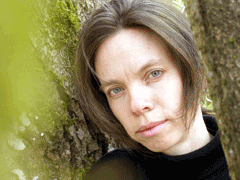
Shields: a personal journey. Photo by David Campion.

We are proud today to present further fruits of your donations to The Tyee's Fellowship Funds for Investigative and Solutions-oriented Reporting.

Writer Sandra Shields returned from Africa with fresh eyes -- eyes that longed to see how First Nations people in British Columbia might achieve a more just and equitable relationship with the descendents of their European colonizers. The result is a four-part series, funded by a Tyee Fellowship for Solutions Reporting, exploring how the officially declared "New Relationship" is faring in the Fraser Valley.

Shields and partner photographer David Campion, an award-winning team, spent months with the Himba tribe of Southern Africa, documenting the impact of development on their grazing culture and seeing first hand the importance of land rights to the well being of indigenous people. The couple returned home and moved to B.C. shortly before the 1997 Delgamuukw decision by Canada's Supreme Court ruled that in the absence of treaties, First Nations retained their title and rights to the land.

"For me as a non-Aboriginal Canadian," Shields says, "that was when the penny dropped. David and I realized this was the same story we had followed in Africa, just 150 years further along the colonization process." At the time, says Shields, "We were living near Vancouver's Downtown Eastside, the largest unofficial reserve in Canada. There we were in the heart of the trauma that affects First Nations people across Canada."

Then two years ago came Premier Campbell's declaration of a "new relationship" with Aboriginal people in B.C., a commitment, said the premier, to "opening up new dialogue, new understanding and new access to resources - to close the gaps in health, education, housing and economic opportunity that have failed Aboriginal people throughout Canada's entire history."

A 'lightening'

Such lofty promises caused Shields to want to make a fine-grained report on how First Nations people and non-Natives might be working out new relationships in the schools, the timber lots, the negotiating rooms and even on the sidelines of kids' soccer games. She chose to focus her reporting in and around Deroche, the small community in the Fraser Valley where she lives.

Shields was supported in her project by a $5000 Tyee Fellowship for Solutions Reporting, which is funded by Tyee readers' donations and awarded by an independent jury of expert journalists. "I wanted to explore the story in my own community. The Fellowship allowed me walk out the door, pick up threads and follow them. The journey went much further than I expected." In fact, Shields sees a book in the making.

And she has emerged from the process cautiously hopeful, sensing "a lightening" in relations, "at least provincially" - but at the same time saying, "This is really just the beginning."

"People who are experts in reconciliation talk about the need to be clear about what really happened, to find ways to address injustice, to root it out, to find ways of sharing power differently. That's generations of work," says Shields. "Thank god we are embarking on it, but there is a lot of work ahead of us and it will require an enduring commitment on all parts."

Important projects

Previously The Tyee published the prescient and much cited series "Rough Weather Ahead: How Global Warming Will Hit BC," written by Chris Wood, recipient of a Tyee Fellowship for Investigative Reporting. Two more Tyee fellowship-funded series are slated for publication in the near future, and journalists will be invited to submit new proposals in the months ahead.

If you are interested in making a tax-deductible donation to The Tyee's Fellowship Funds please read this.  [Tyee]

14  Comments:

Login or register to post comments

  • bob the cat

    5 years ago

    Home

    Quote:
    The couple returned home and moved to B.C. shortly before the 1997 Delgamuukw decision.

    Where was home before B.C.?

    Personally I feel business has put forward and will use the "New Relationship".. as a Trojan Horse to get at the resources on land under First Nations claim. Divide and conquer. Use the First Nations as a buffer between the environmentalists and anyone else
    who would in any way impede resource extraction and its accompanying environmental
    harm.
    Buy off certain Band councils and pit First Nations against First Nations.
    Who would want to in any way impede First Nations economic development?
    Everyone else is polarised now in this now colony of the chamber of commerce...the racist referendum failed..lets try another route.
    Its a changed world! Who needs fish and wildlife ..birds and bees and trees stuff?

  • anarcho

    5 years ago

    Their Fight Is Our Fight

    We should deal with the fact that the European invader stole the Native People's land and practiced genocide, not out of guilt, but out of solidarity. Their fight is our fight, if they win we win too. Why? To start off with, we of the immigrant population, whether European, Asian or African, have also had similar things done to us in the past, by the very same people, the European ruling classes and their contemporary manifestations in the New World. We, the descendants of the European peasantry, were the group that the rulers practiced on before they set out to conquer, enslave and murder in the rest of the world. If the FN get justice, why not the rest of us? What we need is a Biblical Jubilee, all the wealth that has been stolen over the centuries should be divided up and given back to its rightful owners, the Aboriginal people, the descendants of slaves, indentured servants and pillaged peasants.

  • skumeek

    5 years ago

    A great project and wise use

    A great project and wise use of the fellowship. keep going

  • yahgulanaas

    5 years ago

    reconciliation versus conciliation

    By way of introduction I have spent 25 years working within the Council of the Haida Nation governmental structures in various delegated roles.

    Reconciliation essentially speaks to a set of actions designed to repair that which was once joined but subsequently estranged. As such "reconciliation" hides the critical fact that Indigenous and Canadian constitutional and sub hierarchical structures were never joined.

    The current moment of Treaty making in BC is not a re engaging or re uniting or re affirming....not returning, recovering or re doing anything of comparative substance. This is something new.

    This new thing has been avoided so vigorously that we can still statistically measure the destructive costs.

    Arguably for the first time in the vast majority of lands claimed as British Columbia, the government of the Province has committed to engage in a formal process that may create legal bridges between these differences. Treaties.

    We, both Indigenous and Settler populations are building a proper legal relationship between two fundamentally foreign constitutional realities.

    Regardless how we may view the substance and positions in the dispute the fact that both parties appear prepared to work to settle the dispute is a significant moment.

    Every opportunity to draw attention to the fact that we are committing to lose our virginity may mean that in future times we will have greater cause to celebrate. Better that than spending time regretting how we conducted ourselves the very first time.

    "Reconciliation" does not properly describe that we are preparing to commit ourselves to a relationship that will endure as long as we both shall live.

    "Conciliation" is a more honest description.

    michael nicoll yahgulanaas

  • G West

    5 years ago

    Some concerns for yahgulanaas

    Michael,

    I think your contribution to the debate here is interesting and insightful. Especially this:

    Quote:
    Arguably for the first time in the vast majority of lands claimed as British Columbia, the government of the Province has committed to engage in a formal process that may create legal bridges between these differences.

    You'll notice I've emphasized two words in your text and I guess that's the key to my query.

    From virtually everything I've read on this subject the emphasis has not been on legal bridges but upon economic and business 'opportunities'. Many of these appear to have as much or more in them for the non-native participants than they do for First Nations people themselves. Is this a mistaken impression?

    Secondly, I noticed that, in January of 2006, a good many of the most advanced treaty tables had already incurred expenses (for the bands involved) which were, cumulatively, running to an amount that represented between 40 and 60 percent of the eventually anticipated cash settlement that such treaty settlements might entail. This situation can only have gotten worse in the year just past.

    Thirdly, I have also heard native spokespeople express the view that there is an aspect to many of the potential agreements that amounts to a mortgage on each band's future.

    If some or all of these things are factual, doesn't that indicate that what you see as the basis for a new legal relationship between separate constitutional entities may also lead to an even more problematic long-term conclusion to these efforts.

    Legal contracts can work both ways and, given the fact that many of these agreements (I'm thinking of the Tsawwassen one at the moment) also set up a process whereby certain of the traditional rights and priviledges natives have had (I won't insult you by saying enjoyed) will be extinguished by the agreement when it is approved, is it possible that this new relationship may be characterized by binding agreements with a lot of interested commercial, governmental and business entities and a huge burden of new debt for new native governments?

    I doubt that it's an accident that one of the big drivers of treaty negotiation has been a push by business and commercial interest who have their eyes on the resources that are, for much of the province's lands, part of First Nations' patrimony.

    It is something that bothers me quite a bit.

    I sense some of the same sort of concern might be behind these words of yours:

    Quote:
    This new thing has been avoided so vigorously that we can still statistically measure the destructive costs.

    I hope you'll see this comment and won't mind responding.

  • bob the cat

    5 years ago

    GWest

    http://mny.ca/

    michael nicoll yagulanass

    wow

  • bob the cat

    5 years ago

    error

    should be yahgulanaas

    my apologies Michael

    I admire your work very much!

  • climber

    5 years ago

    yahgulanaas

    Hi, nice work you have on your site, very cool. I lived up on your islands recently, what a unique awesome place. Now, about treaties, the Haida Nation wants it all, both Graham and Moresby islands as well as all the little ones, the whole Charlottes, is that not so? And what else?

  • bob the cat

    5 years ago

    climber

    He wouldn`t take the bait huh?

  • climber

    5 years ago

    The bait?

    Bob, do you have any idea about what I am asking?

  • bob the cat

    5 years ago

    well..I can guess

    Quote:
    Now, about treaties, the Haida Nation wants it all, both Graham and Moresby islands as well as all the little ones, the whole Charlottes, is that not so? And what else?

    You`re asking a Haida about wanting it all...?

    The Charlottes?
    Its Haida Gwaii climber
    "And what else?"

    A little in your face rude wouldn`t you say?

    Its a no brainer to whom it has in past, does now and will in future belong to.
    How can anyone even conceive that Haida Gwaii is not Haida land?
    Maybe its about minding your own business.

  • climber

    5 years ago

    Queen Charlotte Islands

    In fact, it is officially known as the Q.C.I., in law and on maps, a.k.a. Haida Gwaii. Where do you live? I am sure thats claimed too, the Natives were moved out of the major centers to reserves, and its ok to claim bush and remote islands but not downtown Vancouver. The whole lower mainland was Native land, why don't the guilty whites posting here tear thier houses down, plant trees and move thier sorry asses out? Minding my own business?, I worked on the Q.C.I. along with many Haida, it is my business, I have right to be anywhere in Canada and to survive, its in the Constitution. Do you have a problem with that Bob?

  • greengreen

    5 years ago

    Thank you Tyee for this

    Thank you Tyee for this series; thank you yahgulanaas for your comments.
    Climber...relax. It has never been the intention of aboriginal peoples to take settled lands back - ie., Vancouver, etc. As a people, they are not into the "tooth for a tooth" philosophy. That is why treaties reached in urban areas will have a high ratio of money to land, while those in rural areas will be the reverse.
    I have no worries that aboriginal folks will shaft "us" in treaty negotiations; unfortunately, it will be the other way round.

  • climber

    5 years ago

    Land is cheap in rural

    Land is cheap in rural areas, expensive in cities, land is land, money is money. Money for land-same thing. Listen to what you are saying, sounds like a politician. And, the Haida do claim the entire Q.C.I., although they respect private land there (which is less than 1%). I am relaxed about the Haida, they are calm, decent people, they are not really going to screw people over there, its too small of a place, people there get along even with thier differences (for the most part).

    • No best comments selected by an editor for this story yet. To see all comments, click the All Comments tab, above.
    • The discussion for this story is closed. No more comments can be added.