

 SHARE:
This is a plea for all Canadians to stop and think about how we define "progress" in our cities and towns.
We are bombarded daily by the message that social well-being is best measured by economic growth and indicators such as housing starts. It is as if our only gauge of progress is more -- more housing at higher prices.
And yet, we continue to create housing that fewer people can afford. The trend should be alarming for all Canadians.
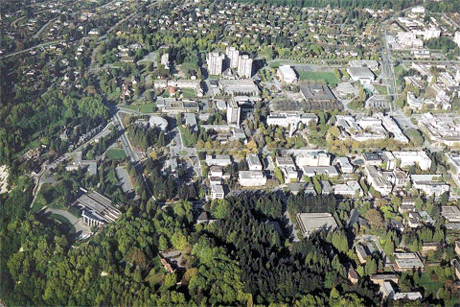
As a professor engaged in research and teaching on health inequities, I believe the University of British Columbia and its community provides a compelling case to study. The UBC Mission & Vision states that we will "promote the values of a civil and sustainable society", and acknowledge our obligations as citizens to "secure a sustainable and equitable future for all." The current situation in Vancouver suggests that the UBC community should greatly strengthen these commitments, particularly when it comes to engaging the poorest and most vulnerable.
Unreal estate
Canada Mortgage & Housing Corporation places the average resale price in 2007 for a Vancouver home at $464,500, after 10 straight years of price escalation.
Around UBC, a million dollars has become a low price for a home. The RealtyLink website on January 25th, 2008 in the UBC area showed 4 houses for sale at minimum cost of $929,000 and a maximum of $7.68 million. For 13 available townhouses, the minimum was $458,000 and the maximum was $2.38 million. The 57 listed apartments had a minimum price of $348,000 and a maximum of $1.87 million. For a typical mortgage (7 per cent interest, 5 per cent down, 5 year term, 25 year amortization), the minimum household income to purchase the average house ($3.9 million) was $1.1 million with monthly payments of $27,000. For the least expensive apartment, the minimum household income was just under $100,000, with monthly payments of $2,700. This is in a neighborhood where much of the land is leased, not owned.
In 2007, public data showed that UBC had roughly 11,748 employees. There were 12 employee groups, including union members, faculty and administrators, and some 43,000 students.
At the above prices (with two incomes per household), none of the almost 12,000 employees had a sufficient household income to purchase the average listed house ($3.9 million).
Only two per cent could qualify to buy the average townhouse ($1.2 million). Sadly, only 11 per cent could buy the average apartment ($724,000).
Finally, UBC had just over 5,000 people in six unionized groups. None of them could afford to buy any of the 74 properties above.
Slamming the gates
In sum, only 3.5 per cent of the almost 12,000 employees in Canada's third-largest university could afford to purchase property in the "neighborhood." Appropriate/affordable housing is even more problematic for the 43,000 UBC students who are generally younger and less affluent.
Magnify this problem across Canada where full-time post-secondary enrolment is expected to grow to 1.3 million in 2013.
Like many other universities, UBC can be very proud of several recent initiatives such as Community Service-Learning and the Community Health Initiative by University Students. To its credit, UBC has also built small amounts of non-market and rental housing. But as some of the foremost communities in Canadian society, our universities should be champions for change. They should be leading the charge for affordable housing for their staff and students, and for our most vulnerable citizens.
Given the obvious need and UBC's apparent resources, where is the housing for single parents, immigrants/refugees, the working poor, the homeless and low-income students in the new UBC community now taking form on and around campus?
Big long term costs
Our recent work (led by colleagues from SFU) shows that the cost of providing adequate housing and support to the absolute homeless in B.C. is $179 million. Provisions for adequate housing in the new UBC community (and elsewhere) would reduce costs for health care, corrections, and emergency shelters. There would be a net cost avoidance of $33 million per year to the province of B.C.
We in the richest neighborhoods across Canada should be doing the most, not the least in addressing inequities and improving the 'health' of our region. Why are our poorest citizens and increasing numbers of the middle class being priced out of home ownership in our towns and cities? Housing (like health services) is a "social" good that is too important to leave to the free market in Canada or elsewhere. Human well-being is not a commodity. Canadians must move toward a more sustainable model that adopts a "triple-bottom-line" mentality by giving equitable weight to our economic well-being, environmental preservation, and the promotion of social justice.
As a starting point, an immediate, cooperative and substantive investment in affordable and non-market housing for staff and students would go a long way toward meeting the vision statements of universities such as UBC. Second, we must lead and foster a comprehensive public conversation with all Canadians about the true determinants of health -- not just health care but housing, education, income, early child development, and social relations. At present, Canadian media give inordinate coverage to health care issues and largely ignore the 'non-medical' determinants of health. This coverage is at odds with our research which shows that Canadians see homelessness as an urgent social and health issue. They are eager and impatient to have their political, academic and community leaders address the health, social, legal and economic challenges associated with poverty in Canadian cities.
Walk the talk
Over the long term, universities across Canada could readily assume a place of greater regional and national leadership in "promoting the values of a civil and sustainable society." In part, this can be done by educating the next generation of decision leaders on the evidence regarding the real determinants of the health of this and future generations. Otherwise, we are all at risk of losing key opportunities and failing in our stated obligation to "secure a sustainable and equitable future for all."
The world is coming to Vancouver, and Canada, in 2010 and beyond. If we fail to change, the world will find communities that are increasingly unaffordable, inaccessible, and unfriendly.
If so, they surely won't see any real sign of "progress."
Related Tyee stories:
- Up to 15,500 Homeless: Report
Tally of BC homeless by health profs far higher than housing minister's. - Who's Been Densified, Who Hasn't
It's time for 'equal density.' Vancouver's Westside should absorb its share. - Seven Solutions to Homelessness
Each is working somewhere else, and will save money and lives here.
![[Tyee]](/design-article.thetyee.ca/ui/img/yellowblob.png)
Read more: Rights + Justice, Housing, Urban Planning + Architecture








Tyee Commenting Guidelines
Comments that violate guidelines risk being deleted, and violations may result in a temporary or permanent user ban. Maintain the spirit of good conversation to stay in the discussion.
*Please note The Tyee is not a forum for spreading misinformation about COVID-19, denying its existence or minimizing its risk to public health.
Do:
Do not: