

 SHARE:
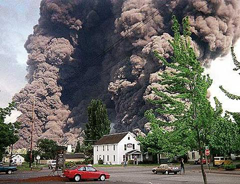
For an industry that likes to keep its business underground, pipeline companies create a hell of mess when they allow it to surface. And the shipping industry, which prefers to stay on the surface, creates a hell of a mess when it tanks.
Oil in pipelines and oil in ships -- when accidents let the oil get out, it's a human and environmental disaster. Industry bigwigs and the governments that regulate them go to great lengths to show that a lot of oil is moved safely and without incident. But for both methods of transportation, disaster is almost inevitable.
Despite a history of spills, B.C. ports are increasingly being considered as the conduit of choice for Alberta crude to reach foreign markets, meaning more spills can be expected.
Both government and industry officials tell us not to focus on the exceptions -- like last week's ruptured Kinder Morgan pipeline in Burnaby -- but B.C.'s complex and insufficient system for preventing and responding to spills is an invitation for more of those exceptions to happen.
Summary, please
British Columbia and Canada both have work to do to match the regulatory and reporting standards enforced in the United States.
There, the Office of Pipeline Safety (OPS), which oversees more than two million miles of pipelines, ensures statistical and detailed information is readily available to the public. That same information is either very difficult or impossible to obtain in B.C.
The Pipeline Statistics section of the OPS reports immediately on the incident rate in "liquids" (as opposed to natural gas) pipelines. In 2006, for example, you can read that there were 110 incidents, no fatalities, two injuries, $55 million in damages, and 136,000 barrels of fuel losses. There are also year-to-date figures online for 2007.
In Canada, a more cursory summary appears in the annual report of the Transportation Safety Board to Parliament. The most recent year available is 2005, and that report lumps natural gas in with liquids, noting that there were 79 incidents reported for the year.
That number, the report reads, was up from 74 in 2004 and from the five-year average of 44. "In all, 90 per cent of those incidents involved uncontained or uncontrolled release of small quantities of gas, oil and high vapour-pressure products," it continues.
Puzzle pieces
In B.C., good luck. The Oil and Gas Commission (OGC) is supposed to provide citizens and stakeholders with information, but appears to have great difficulty in doing so.
In 2001, it took my group nearly a year -- and a call from the Office of Privacy and Information Commissioner -- to dislodge any information about past pipeline incidents from the OGC.
In 2005, a similar request for a simple pipeline incident summary took a couple of weeks.
Compare that with the availability of the same information is the U.S., where OPS standing reports are instantly available to the public and require no request whatsoever.
Information is available on the OGC website, but it is very difficult to locate, and aggregate information must be pieced together from myriad small queries. How does the OGC report to government if it's this painful to get the most rudimentary of summary reports? Clearly, this is one area in which the OGC has not figured out how to rise to the challenges of its mandate.
Cap it
The first thing that generally happens when these spills take place is that well-intentioned agencies -- including the companies who own the boats and the pipelines -- and self-sacrificing employees and communities make superhuman efforts to stop the hemorrhage of oil, rescue people and animals, and start repairing the damage.
Within minutes, however, the questions start. Who is at fault? Who did what when? Who's gonna pay?
Anybody who might be held liable clams up. Cusano Contracting, the company whose excavator caused Kinder Morgan's "Burnaby Gusher," hasn't commented on the event since it happened. Kinder Morgan, despite its exemplary behaviour with the cleanup, has dropped a similar cone of silence around the events prior to the rupture.
It's almost pointless speculating on who did what when.
BC policy: where's Waldo?
It's only marginally less frustrating to figure out who was supposed to do what, when.
Some pipelines in B.C. are in federal regulatory jurisdiction, such as Kinder Morgan's Trans Mountain line, and Spectra Energy's B.C. Mainline and Southern Mainline natural gas systems.
To these pipelines, federal legislation applies and the National Energy Board, Transportation Safety Board, and Environment Canada engage in incidents on those systems.
Other pipelines are in provincial jurisdiction; examples are Pembina Pipelines B.C. system and Fortis Inc.'s Terasen Vancouver Island system. The provincial Oil and Gas Commission, WorkSafeBC, and BC's Ministry of Environment step in when problems happen on these systems.
If something goes wrong at sea, both environment ministries, the federal Coast Guard, and Fisheries and Oceans Canada, will be involved, at a minimum. The Transportation Safety Board may get involved.
A tangle of laws
The legislation involved is daunting, and comes from unexpected places. In B.C., for low-pressure distribution pipelines (the ones delivering gas to our homes), the Gas Safety Act applies, and it's pretty clear as to what steps a company and an excavator must take in terms of notification, locating, marking and manually exposing pipelines in the ground.
With the Burnaby Gusher and other transmission pipelines, it appears the Occupational Safety and Health Regulation stipulates the notification and locate steps, but leaves some ambiguity with respect to where the machines must be put aside and manual excavation must take place to locate a pipeline.
What it will come to with the Burnaby incident -- likely only once the case is heard in court -- is whether Kinder Morgan's maps were used, how accurate the maps were, whether onsite marking took place, whether there was manual exposure of the pipeline and/or if the excavator ignored the locate information and plowed in with a machine.
One Call
Most jurisdictions in North America use what's called a "one call system" to bring anyone who plans on digging just about anywhere -- whether to plant a tree in a backyard, or install a sewer mainline in a city neighbourhood -- in touch with all the companies and other organizations that may have infrastructure underground in the vicinity of the proposed work.
In the U.S., all pipeline operators are required to be registered with the one call system. Carl Weimer, the executive director of the Pipeline Safety Trust in Bellingham, Washington, says states like Virginia and Minnesota, which have systems in place that include strong enforcement elements, have demonstrated how their one call systems have significantly reduced pipeline incidents from excavation.
"U.S. Congress recognized the need for greater consistency and enforcement of these one call laws last fall when they passed the Pipeline Inspection, Protection, Enforcement, and Safety Act," says Weimer, emphasizing the word "enforcement."
In Alberta, mandatory registration was implemented in 2006. In a province with about three-quarters the population of that of B.C., that system had nearly 600 members and received over 422,000 requests for information that year.
British Columbia's registry, known as BC One Call, is voluntary, and only 130 members are indicated on the website.
Weimer says, "From all the confusion about who did what and when surrounding the Burnaby oil spill, it seems clear that the public needs to push the government to take another look at how well the one call system in B.C. is working."
Spill waiting
Thank goodness responders are quick when disaster strikes. If they were taking cues from the agencies that write up the reports in the aftermath, or that make enforcement decisions, oil would still be spewing.
With the Pembina Pipelines spill in Pine River, it took four years for the previous owner of the pipeline to agree to make a conservation payment of $195,000 and for Pembina Pipelines to settle on a $1.4 million payment to the District of Chetwynd to cover costs associated with the spill.
The Transportation Safety Board (TSB) decided the Westwood Anette spill in Howe Sound wasn't significant enough to warrant an investigation. Ditto for Tersasen's Abbotsford pipeline spill in 2005, which sent 70,000 litres (440 barrels) of crude, diesel, and gasoline into nearby streams.
For the Queen of the North, which by now has presumably released 246,400 litres (1550 barrels) of diesel into the waters of the Inside Passage, the TSB is still deliberating.
For KM's Burnaby spill, we're probably looking at 2009, or later, for a report.
Penalties and litigation can drag out final resolution of an incident for a decade or more. The US$5 billion damages against ExxonMobil for the Exxon Valdez incident have still not been settled, and are still being appealed in U.S, courts.
Citizen action
Government agencies are slow to act, and are encumbered by political considerations that may interfere with doing the right thing, promptly.
What it took for action in Alaska after the Exxon Valdez disaster was the emergence of a shocked and pissed-off citizens' alliance.
The Pipeline Safety Trust, now a vital NGO with considerable influence on pipeline legislation in the U.S., and a tireless monitor of pipeline companies, emerged out of a group of outraged citizens, and grieving parents, when a gasoline pipeline exploded in a Bellingham park in 1999, killing three local youth.
Nothing like it exists in Canada or in B.C. yet.
But if a lasting public legacy is to come out of the Queen of the North and the Kinder Morgan Burnaby tragedies, and all the other disasters large and small that have happened in B.C., it will take citizens to make it happen.
With an era of pipeline mega-projects like Kinder Morgan's Trans Mountain expansion and Enbridge's Gateway projects upon us, the odds are not if, they're when.
Fool us once.
Related Tyee stories:
- Oiling up the Coast
Harper shrugs off 35-year ban on risky tanker traffic. - Kinder Morgan Marked by Spills
Terasen suitor's many pipelines figure in several U.S. disasters, including a very deadly one. - As Pipelines Expand, So Do Fears of Clearcuts, Spills
Affected communities want more say. - BC's Big Pipeline Plans Draw Fire from First Nations
Massive Gateway project faces serious legal obstacles.
![[Tyee]](/design-article.thetyee.ca/ui/img/yellowblob.png)


Tyee Commenting Guidelines
Comments that violate guidelines risk being deleted, and violations may result in a temporary or permanent user ban. Maintain the spirit of good conversation to stay in the discussion.
*Please note The Tyee is not a forum for spreading misinformation about COVID-19, denying its existence or minimizing its risk to public health.
Do:
Do not: