'Thin' Looking

A photojournalist's close-up of women who starve themselves.

By Vanessa Richmond, 8 Nov 2006, TheTyee.ca

shelly.png

From 'Thin' by Lauren Greenfield.

One in 15 young Canadian women suffers from anorexia or bulimia. More than one in 10 of those women will die as a result of their condition. That makes eating disorders not only one of the most prevalent mental illnesses in this part of the world, but also the most deadly.

In Thin, her chilling documentary and book, Lauren Greenfield tracks women at a Florida eating disorder treatment centre. For the film, she follows four main characters as they complete treatment. For the book, she follows about 15, and includes photographs, interviews and excerpts from their journals.

Possibly the most frightening thing about the photographs is that the women mostly look normal, even attractive. In addition to being thin and toned, they dress well, and pay attention to their hair and makeup. In the film, by and large, they come across as compelling -- they're people pleasers of one variety or another and are predominantly well educated and articulate. With the exception of a few who are visibly skeletal, complete with protruding collarbones, even the women under a hundred pounds resemble the women in magazines and on the street.

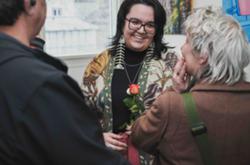
It's a kind of wake-up call to the audience, it seems. Underneath the photo of a thin but fairly normal looking woman, is a caption stating that Shelly, 25, a psychiatric nurse, has a feeding tube in her stomach. When Shelly entered treatment, she was 82 pounds and hadn't eaten a meal in five years. This round cost almost $100,000. Her family has spent over half a million dollars on treatment to date.

It was my own initial non-reaction to Shelly that made me feel the most sick.

From fashion to fear

Mainstream talk about of eating disorders has been around for a long time, now. Most women, me included, can jadedly list off symptoms and supposed causes. As a high-school teacher, looking for signs of eating disorders in my female students was a daily task: preoccupation with food and calories, rapid weight loss, baggy or bulky clothing too warm for the weather, combined with perfectionism and so on.

Greenfield says she chose the topic after completing Girl Culture, her previous book, because she wanted to look more in depth at the consequences of something called the body project -- the fact that for most women, their bodies are their central preoccupation. More than friends, school, jobs, or relationships, women currently aspire and work to be beautiful and perfect -- paying attention to their bodies, hair, clothes, nails and so on. The amount of time women spend on their bodies continually increases according to Greenfield and also to Joan Jacobs Brumberg, a professor from Cornell University who writes the introduction. And the requirements of "normal" continue to increase -- more toned muscles, a six pack, Brazilian waxing, and so on.

While one out of seven American women suffer from eating disorders, six out of seven women are affected by it. Mea culpa, it seems. Or I would have been more immediately struck by the illness, instead of its normalcy.

"Do I look thin?" a friend asked recently.

"Very thin." I said. "Skeletal," I joked. She smiled.

"Anorexic?" she asked, hopeful, laughing.

"Oh yes," I replied.

"Don't I wish," she said.

The morality of size

"To be thin is to be beautiful, disciplined, and even moral," writes Greenfield in the introduction. "Fat is equated with laziness, slovenliness, a lack of regard for oneself, and a deficiency of self control."

"Our bodies are an extension of the American Dream," she continues, "blank canvases of a meritocracy where we can paint our own dreams and achieve our goals if we devote enough hard work, money and time to get the job done -- the Puritan ethic interpreted within the culture of narcissism."

The film premieres on HBO on Nov. 14. It's toured film festivals around North America, winning awards. Greenfield will be on American talk shows this week discussing it, along with the upcoming exhibition at the Women's Museum in Dallas. And the new website, where people can go to find out more about eating disorders.

The Tyee sat down with Lauren Greenfield when she was here for the Vancouver International Film Festival. Here is what she had to say...

On how beauty kills

When I did Girl Culture, I was looking at how girls turn their bodies into projects. And I went from the most innocuous and everyday body projects like makeup and fashion, to the most self destructive and pathological body projects like eating disorders and self-harm and promiscuity. And I was interested in eating disorders from that perspective as the most pathological, most self-destructive body project, and this very extreme example of how girls use their bodies as their voices.

And I thought it would be interesting as a film because, for one, it was something I struggled to show with photography -- I think it's a hard story to tell in photography, especially the story about treatment, because you kind of need to tell it over time. It's also such a psychological illness you really need the "backstory," the verbal elements.

I went in thinking it was this pathological, marginal piece of the body project story, and when I came out I felt like it is an epidemic illness that affects one in seven American women. Almost everyone I have met -- from the film crew to friends -- is affected or knows someone who is.

On 'anorexic head'

I think you're always surprised by the insanity of eating disorders. I mean, the women who are in treatment and the women who are in this film are smart, capable, articulate women, and I think that that's one of the things that's really shocking about this illness. The sufferers are high-achieving, perfectionistic, seemingly successful women. And then they're in the middle of something that is completely irrational; it's a form of slow suicide, and that never ceases to surprise you.

Shelly and I have now been friends for a long time, and you know, I talk to her like I would talk to any of my friends, and then I realize that she's relapsed again or you know she's in her anorexic mindset, her anorexic head, and I think it's always a shocker.

On the treatment 'magic bullet'

At the end of the film, three out of the four people are still sick.

Shelly seemed great. She had an almost perfect linear rise in treatment, then six months later she was back to the weight she started at. But you know, when I see her now, even though she's at a low weight, she has some tools that can help her. She's not back where she started even thought weight-wise she's back where she started.

But you can see how frustrating it would be for families and for insurance companies. Not only is it not an exact science, there are really no good statistics that show it's effective. That said, people need to get treatment. If you're sick, you need professional treatment. But it's certainly no magic bullet.

On thin dreams

I'm still in touch with all four of the main subjects. I think they're really proud of their participation in the film. Three of the women, the adults, came with me to the Sundance film festival and did "Q & A" and I think it was stunning for them to see the impact they had on other people, you know, to see people crying at the end, and thanking them for their courage. I think that they feel really proud. It doesn't mean it's not hard sometimes to look at yourself. And sometimes the hardest part is looking at the book or the film and thinking, "I wish I was as thin as when I started," or, "I'm not as thin as this other person," because that's how people with eating disorders think. But I think they are very proud of the contribution they made.

On filming secrets

Usually the way it went was, first of all, everyone there could choose whether or not to be in the film. And even if they'd chosen to be in the film, they could say I don't want to be filmed right now, or filmed with my mom or filmed at this meal, or I don't want the name of my job in this film. And we just worked with them and their concerns. And often, we'd just have to stop filming and say, "OK, what are your concerns right now?" then we'd work though those. I think relationships with my subjects are one of my strengths as a photographer. That's what I do.

Related Tyee stories:

 [Tyee]

26  Comments:

Login or register to post comments

  • Right to Bear

    5 years ago

    Comments on "'Thin' Looking"

    Thank you Vanessa Richmond for an informative and heroic article on this very serious disorder...!!

    Lauren Greenfield is a modern day hero for helping to spread awareness to unaffiliated, and support to the afflicted, when it comes to dealing with this deadly disease. It is a widespread illness which knows no boundaries indeed...

    Quote:
    If you're sick, you need professional treatment. But it's certainly no magic bullet.

    From what my experience with this disease has offered me is the understanding that this is a very difficult disease to "cure". But, in saying this, I also have seen, that it is possible for freedom to be found for the afflicted... :-)

    Studies have found eating disorders to be not a lot different than alcoholism; similar problem, different manifestations. A fact also remains that many of the afflicted come from an families where alcoholism or drug abuse issues, are prevalent. The difficulty is, yes, it is possible to stop drinking altogether and achieve abstinence, but one cannot stop eating altogether. These people have to learn to eat...

    So the journey for the afflicted is long and arduous on the road to achieve abstinence from eating disorders...but freedom is possible from what I have seen, although it is tough, very tough...

    Thanks again to Tyee, and all responsible for this highly supportive article...
    Peace all,

    -Bear

  • freebear

    5 years ago

    "The sufferers are high-achieving, perfectionistic, seemingly successful women"

    The same can be said of men, however they may have different symptoms.

    The idea of 'perfection' may be an important factor.

    I also think that our way of life: promotion of consumption; always selling (including yourself); media; fashion; sports, and the rush to judgement by people in general makes many of us a mess (sex addictions, drug addiction, adrenalin addictions; power addictions, control addictions [control of the environment]etc.!)

    Our society is dysfunctional, and the dysfunction is expressed and revealed in a myriad of ways - anorexia/bulnimia (sp!).

    Hopefully we can heal together.

  • BC Mary

    5 years ago

    Wouldn't it help if we detached ourselves just a little bit more ... wait, a whole lot more ... from the relentless U.S. promotion of their way of life?

    Quote:
    I also think that our way of life: promotion of consumption; always selling (including yourself); media; fashion; sports, and the rush to judgement by people in general makes many of us a mess (sex addictions, drug addiction, adrenalin addictions; power addictions, control addictions ... says Freebear.

    Is it really our way of life?

    Yesterday told us otherwise. Why did so many Canadians yearn over every disheartening detail of what the U.S.A. mistakenly calls "free and fair" elections? "Because the U.S.A. is so important," people say. It's only important if we make it seem important. Why in the world would we pledge allegiance to their "way of life"?

    We let our own film industry fade while absorbing some truly terrible stuff coming -- promoted -- by Hollywood. Fashion comes from New York. Music comes from Nawlins.

    Toronto stages more live plays than New York, but where do we look for stage plays to attend? New York.

    People worry politically about Deep Integration. As they should. But I think Deep Integration begins with these simple decisions: whether or not to allow our eyes, ears and brains to be used in service of U.S. ... and to think about whether or not to be proud of our golden opportunity to be something all our own.

    Allowing ourselves to be drawn into bulimia is the physical aspect of allowing our minds to be captive to U.S. advertising. And everything in the U.S. seems to be about advertising ... nothing more so than their "free and fair" electoral process and the people from afar who couldn't stop watching it yesterday.

    OK, I'm ready. Troll alert. Heads down.

  • Alcibiades

    5 years ago

    Makes sense to me sister!

  • BC Dude

    5 years ago

    Sorry Tyee but bulimia is the least of our worries.
    http://www.commonground.ca/iss/0607180/cg180_Olson.shtml
    http://www.friendsoffreedom.org/

    This is off topic but has everything to do with 60 percent of these Tyee blog's.
    We'd better start looking at the "BIG PICTURE" for our future generations!
    Just some very worrisome things that are going on right now?
    All we have to do is look at how the mainstream media have been saying nothing in the last how many Years!
    The giving away of all our Publicly Owned B.C. Hydro and B.C. Rail Scandal is just the start of many more giveaways and backroom deals.
    Just take at the B.C. Legislature scandal of 2003 and that's the biggest scandal of the Century for British Columbians and Canadians leading up to OUR Federal Government!
    A Very Black Time For the People British Columbia and DEMOCRACY.

  • BC Dude

    5 years ago

    May I make a suggestion that we all get together and go on the General Strike to Show These Greedy Power Hungry Idiots That the People Still Hold Power!
    Remembrance Day November 11 2006 isn't that the day that we're supposed to remember why so many men and women died for US during the first and second world wars for OUR DEMOCRATIC RIGHTS AND FREEDOM OF SPEECH!
    We have lost a lot of these rights and will continue to lose these rights if we don't take a stand now and kick Gordon Campbell out of government along with all of his lackeys and stop this disgraceful sellout of our natural resources which we as taxpayers have bought and paid for with our hard earned cash!
    ON NOVEMBER THE 11TH 2006 WE WILL REMEMBER OUR FALLEN BROTHERS AND SISTERS BY ASKING THESE POLITICIANS THAT ARE GOING TO STAND UP AT THE PODIUM AND SHED CROCODILE TEARS WHILE SLICING UP OUR DEMOCRATIC RIGHTS SO WE HAVE TO ASK ALL THESE QUESTIONS.
    If they can't answer these simple questions then there should be General strike across Canada and especially here in OUR BEAUTIFUL BRITISH COLUMBIA!
    I see British Columbia as the battleground against DEMOCRACY.

    http://www.freepress.net/issues/internet to
    http://www.time.com/time/magazine/article/0,9171,1531304-1,00.html
    http://www.rense.com/general74/make.htm
    http://www.savethemales.ca/001102.html
    http://en.wikipedia.org/wiki/Corporation
    Thank you all

  • Kano

    5 years ago

    An important issue, for sure.

    I'm having a little trouble with the statistics at the beginning of the story. So 1 in 15 young women suffers from anorexia or bulimia (please define usage of "young" and give source) and 1 in 10 of those will die because of an/bul?

    That means close to 1% of young women will die because of anorexia or bulimia.

    I'm not saying that these problems are not important, but I think something is being misrepresented with these statistics. Like perhaps the 1 in 10 figure applies to diagnosed severe cases of anorexia or bulimia... I'm not sure.

    Anyone with more in-depth knowledge of this want to confirm/refute the use of these numbers?

  • Nana

    5 years ago

    Here's another case where a condition will respond to orthomolecular treatment (85% improvement) and instead is treated with talk. I helped get a young woman turned around with a simple zinc supplement. It's ten years later and there has been no relapse.
    http://www.alternativementalhealth.com/articles/anorexia.htm

  • BC Mary

    5 years ago

    Where is Truman Green when we need him? Didn't he always get our heads straightened out on these matters?

  • Right to Bear

    5 years ago

    BC Mary said:

    Quote:
    Allowing ourselves to be drawn into bulimia is the physical aspect of allowing our minds to be captive to U.S. advertising.

    So true Mary.

    Both men and women are bombarded with warped information, twisting and messing up our personal comfort with ourselves and our uniqueness, and all this via the media. Everyone’s body is beautiful if they believe it to be imo. So it is sad when we and our children, are told it is not beautiful. Thanks Mary...

    freebear said:

    Quote:
    Our society is dysfunctional, and the dysfunction is expressed and revealed in a myriad of ways - anorexia/bulimia (sp!).

    Hopefully we can heal together.

    So true freebear, and yes, I love it, hopefully we can heal together...

    BC Dude said:

    Quote:
    Sorry Tyee but bulimia is the least of our worries.

    You know Dude, I love and appreciate all that you said, and it all sounds very right to me. We do have to stop the destruction of our "Mother", but let's never forget to hug a tree, while we are saving a forest .

    Bulimia\anorexia were not the least of the worries of the young women before they died. That is all they thought about...

    Peace friends,

    -Bear

  • BC Dude

    5 years ago

    Right to Bear Thanks, I needed that! My Bad
    I'm sorry for sounding so Callous as it was not my intension, again my Humble Apologies to the Tyee and Blogers.
    BC Dude

  • woody

    5 years ago

    BC Mary says,

    Quote:
    Where is Truman Green when we need him? Didn't he always get our heads straightened out on these matters?

    I also hope to read again from Truman Green, although I would strongly suggest that he attain a “nom de plume” for himself, that would prevent another personal family discussion.
    Several times I have read where some one would berate some else for not displaying or using their personal name, I certainly do not agree with this practice, what occurred with Truman Green is only one of many things that can go wrong when one uses their name, this was most unfortunate, but there is a lesson for all to learn here.

  • Avicenna

    5 years ago

    On the other side of the coin is the diagnosis of any nervosa being misconstrued - and essentially normalized by media. Obesity is clearly the most prevalent eating disorder across all ages and genders - and it is also influenced by consumer marketing. My experience with true anorexia nervosa sufferers is that it is rarely induced by standards of beauty at its worst (bulimia has a greater correlation between a struggle with living up to unachievable standards and loss of control). The one common theme amongst the anorexics is a fear of losing the locus of control. They have often been traumatized early in their years - in a situation in which they had no control over. Food, and often exercise, become the one thing they fixate on for control. It is this rigid self-discipline that often marks anorexics and their over-achievement/perfectionist characteristics. Many of the anorexics I know often shun social settings - withdrawing from the world - and they aren't women beautifying themselves - rather the opposite. Like many mental illnesses, I think severe self-induced weight loss is given the same label (anorexia and/or bulimia) - but represent very different syndromes which need to be teased apart and treated separtely. Some have an organic source, some represent a way of coping with post-traumatic stress, and others may simply be diet-obsession gone overboard.

  • pure

    5 years ago

    Some people are born large. Some people are born not so large. Some people just eat themselves to death and some people do the opposite. It is called control yourself. If Billy jumps off the bridge should everyone else do the same. I don't think so.
    * I have said this before and I will say this again," there is your way, my way and the right way ".
    ** Shelly as a nurse has probably seen so many ill people from being over weight that she altered her brain by not eating. I would suggest she eat some honey as it is a fantastic brain food and any other person that is now committed to get back on track.
    *** You can lead a horse to water but can you get that horse to drink water?

  • pure

    5 years ago

    My brother called my daughter fat when she was about 12 years old. My daughter never forgot that and she was not fat by any stretch. She is now 35 and continues to watch her weight.
    * The moral of the story = be carefull what you say to children as they are very sensitive to everything.
    My brother-in-law put my oldest son on an elevator in a high rise when the child was about 3 years old. He is now 40 and this continues to bother him. Mind you my brother-in-law was a used car salesman at the time with a UBC degree and you think he would know better.
    ** You can lead a horse to water but the horse may not want to drink. Have you got the answer?
    *** All the Doctors in the world could not help with this one...

  • Right to Bear

    5 years ago

    BC Mary said:

    Quote:
    Where is Truman Green when we need him? Didn't he always get our heads straightened out on these matters?

    Miss him too Mary... I hope he comes back soon

    Peace Truman,

    -Bear

  • Percy

    5 years ago

    http://www.femininebeauty.info/news.php/weblog/comments/naomi_wolf/

    I'm having trouble with the statistics quoted in the article (see the blog analysis above). Typical feminist exaggeration/sloppy research? Somebody help me.

  • vicki

    5 years ago

    Percy, I'm assuming there are women in your family and circle of friends. If we're to change society for all the reasons people in this thread have already identified, we need to drop the the rhetoric and act on an issue that affects so many Canadian children. Facts speak louder than words: as adults, it's our responsibility to listen and do something.

    "It is estimated that at least 1 in 8 Canadian girls will be seriously sexually abused and 1 in 5 will be physically abused before the age of 18 years (Duffy, 1998). At least 10% to 25% of women will be battered by their husbands or common-law spouses (Benson, 1995; Statistics Canada, 1993). Abuse rates are 8 times higher among Aboriginal women (Duffy, 1998) and 4 times higher among women with disabilities (Razack, 1994). The psychological and health impacts of violence against women and girls can be serious and enduring. Eating disorders represent particularly life-threatening consequences for survivors of abuse. Across a 20-year period, 1 in 5 people with anorexia and at least 1 in 20 people with bulimia will die (Woodside, 1995). Girls and women constitute 90% of those fatalities (Gagnon, 1996). In addition, 56% of those with anorexia experience severe medical illnesses (Herzog et al., 1997). Both violence and eating disorders affect predominantly girls and women, and both appear to be rising in prevalence (American Psychiatric Association, 1994; Hsu and Zimmer, 1988)."

    (From 'Swallowing the Hurt: Exploring the Links between Anorexia, Bulimia and Violence Against Women and Girls'
    by Shelley Moore, with the assistance of Kelly D’Aoust, Donna Robertson, Christina Savage and Yasmin Jiwani, of the FREDA Centre for Research on Violence against Women and Children, for the Family Violence Prevention Unit, Health Canada.)

  • Percy

    5 years ago

    http://www.nimh.nih.gov/publicat/eatingdisorders.cfm

    I'm wondering why the National Institute for Mental Healty (U.S.) website above cites American Journal of Psychiatry sources to calculate the indicence of anorexia among females as between 0.5 and 3.7% during their lifetime. That's an extraordinarily different stat that one cited, unless one careless fudges the "during their lifetime" limitation. So, that's why I'm wondering why the stats are so wildly different.

  • Percy

    5 years ago

    The National Institute for Mental Health (U.S.) also extimates the female mortality rate from anorexia as follows, citing sources in the American Journal of Psychiatry:
    "The mortality rate among people with anorexia has been estimated at 0.56 percent per year." That would mean that, over a 20 year period, about 5% would die, not the 20% you've cited. That's a 400% difference! See my point?

  • giantartificial...

    5 years ago

    While I have no idea about mortality rates, I'm pretty sure there are a lot more people with eating disorders out there than one might see, although I admit I have only anecdotal evidence to support this.

    I have at least 3 friends who had (and still have) eating disorders. One had a fairly severe case of anorexia. But no one would ever guess this about them. They look fine. They seem pretty normal, except for an obsession with dieting, but that's not an unusual focus for women, unfortunately. Except for a few strangely skeletal victims, I think this problem is almost invisible. You'd be surprised at who in your family or circle of friends is puking in the bathroom when nobody's around.

    Without exception, everyone I know who has had an eating disorder began their self-destructive slide in high school. (I myself was probably borderline at one point in Grade Ten.) This brings me back to BC Mary's comment about a culture of American-style advertising that is pervasive in Canada. It's not easy for an adult to tune out the messages that if you're not thin, you're worthless. Imagine how hard it is for kids to tune it out.

    We are harming girls more than we know when we accept ads and TV programs showing wafer-thin models as a normal part of society.

  • Right to Bear

    5 years ago

    giantartificialmonkey said:

    Quote:
    It's not easy for an adult to tune out the messages that if you're not thin, you're worthless. Imagine how hard it is for kids to tune it out.
    We are harming girls more than we know when we accept ads and TV programs showing wafer-thin models as a normal part of society.

    Well said giant.

    I am thinking, there is a war on uniqueness and spirituality happening that is also responsible for this issue... I guess we are "easier" to control if "we" do not "step out" and embrace our distinctiveness eh?? It is so “sad”, as we are NOT all thin, we are Not all fat, we are NOT all loud, we are NOT all quiet, we are NOT all anything, as we are unique and beautiful within our own individuality. Why does society attempt to conform and mold its citizens in accordance to "its" standards?? Why does society impose standards on humans anyways…?? Again, I question if it is a control issue. Are we not evolved enough to recognize that this “standard” creates a society of failures and defeated humans. It is a capitalist mentality imo. Capitalism suppresses the spiritual and unique part of being fully human...and this is sad.

    Peace friend,

    -Bear

  • Fii

    5 years ago

    Education is the key. I worked as a weight room instructor at a woman's gym for a little over a year and it is MIND BOGGLING how few women understand that a little muscle tone= high metabolism, low body fat. Start young and be consistent and you're well on your way for life. I started feeling like a broken record telling women (of all ages and body types, walks of life, etc) that no, they won't "bulk up" (uh, excuse me, but do you REALLY think it's that easy??).
    Now what really bothers me is the idea (clearly cultural), that a little muscle tone on a woman is not a good thing. Travelling in foreign (less rich lands), the women doing hard labour are ripped... and beautiful... and healthy... and concerned with getting food on the table, rather than on "not eating for five years". That's completely idiotic.
    Just today a 23 year old female Latin student asked me how I "stayed so thin"-this from a woman more than a decade younger than me. So I switched gears and gave her the weight trainer speech.
    One other thing- the author writes "Possibly the most frightening thing about the photographs is that the women mostly look normal,.....even the women under a hundred pounds resemble the women in magazines and on the street". As far as I'm concerned any woman who is under 100 lbs should not look to be a "normal" weight by any standards. Unless she stands 4'11". If we think women this size "in magazines or on the street" are anywhere near a "normal" weight there really is no hope for change.

  • Korky Day

    5 years ago

    None of the author, the interviewee, or the commenters have mentioned Peggy Claude-Pierre's story. It is a world story that happened in BC--and it is being forgotten. I found very little on the Internet. Her Montreux Clinic was run out of BC by the NDP provincial government, I suspect just because her treatment was more successful than the establishment's. Her method was more compassion, less medicine. Barbara McClintock wrote a book slamming her: Anorexia's Fallen Angel. I looked through it, but it seemed biased, though I'm not sure. Claude-Pierre's own book, the Secret Language of Eating Disorders, all of which I read, was inspiring, insightful, and compassionate. Some reporter should follow this up and write what Claude-Pierre is doing now and what she thinks of her banishment and of McClintock's critique.

  • saraphin

    5 years ago

    My eyes glaze over when I read about rich peoples diseases. Honestly, you ain't eating enough? Please.

    Try being poor in this First-World country. Try feeding your children before yourself. Try going to bed hungry night after night.

    I have zero sympathy for rich b*ches that choose to kill themselves, nay, draw attention to themselves, in this manner. Drama Queens of the first order. Die already.

  • dave49

    5 years ago

    A Vancouver filmmaker, Eileen Hoeter, made a film called “Dying to be Perfect”, which was nominated for a Genie Award in 1989.

    Interesting comment Nana posted about orthomolecular medicine approaches. I saw the results of a study done twenty tears ago that found that most adult Americans do not get enough calcium in their daily diet.

    When you consider how processed much of our food is, and how agribusiness cares little for nutritive value when picking varies and species of plants , it is not surprising that we are undernourished in spite of over-eating. Anexoria and bulimia only compound those problems. I could not hurt to try orthomolecular medicine in concert with the usual treatments.

    A friend with premature osteoporosis also claims high consumption of carbonated drinks (i.e. carbonic acid) contributes to the problem.

    The scary thing is how crazy our media industry is going with all this digital technology. There is no reason to be so connected to a flow of drecky video and multi-media content that warps our thinking while trying to sell something.

    • No best comments selected by an editor for this story yet. To see all comments, click the All Comments tab, above.
    • The discussion for this story is closed. No more comments can be added.